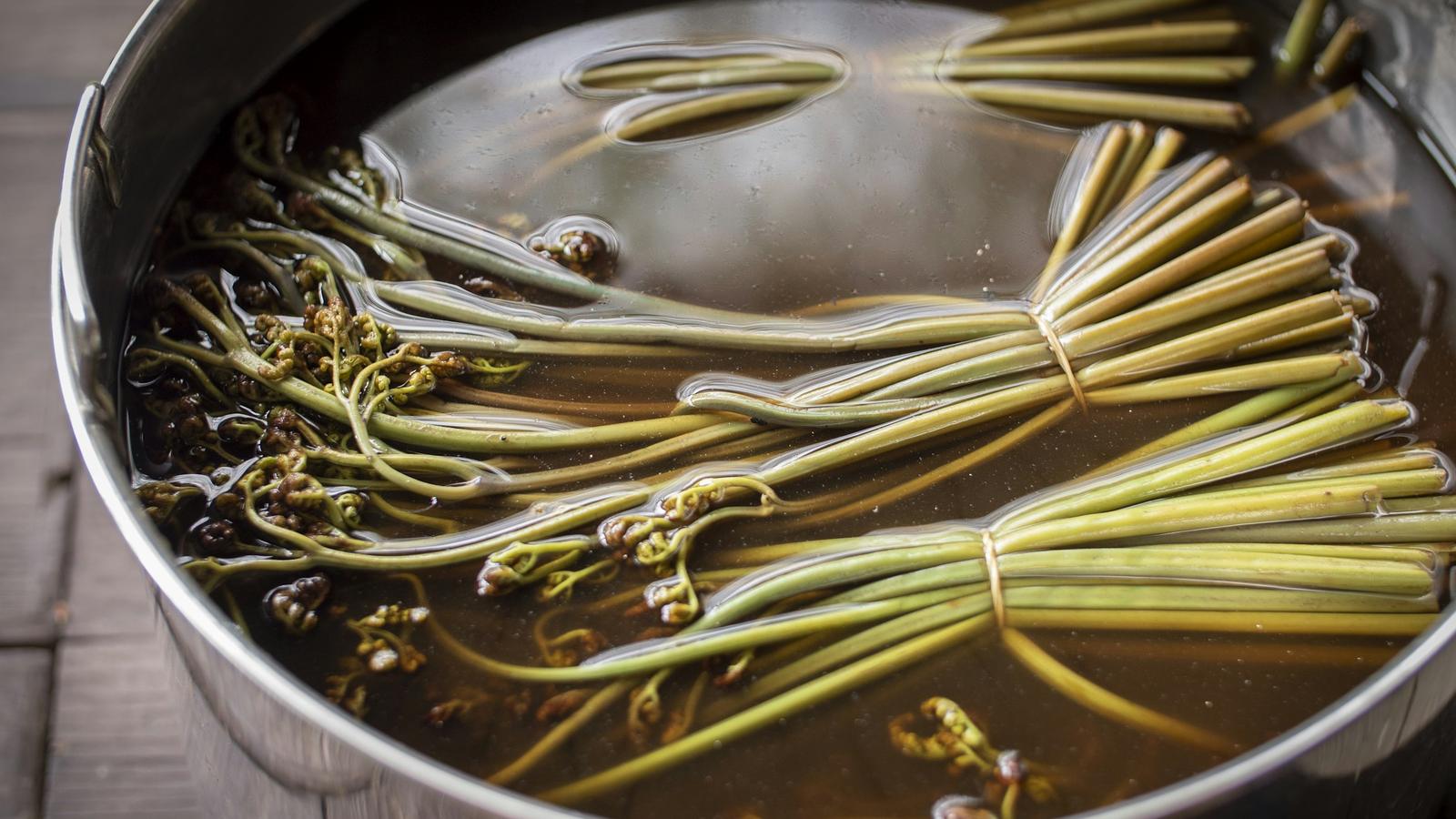
Japan can feed a Jain family beautifully, at a quiet counter or in a ryokan dining room, provided the kitchen is told exactly what to leave out. The difficulty is that Japanese cooking and Jain practice draw their lines in different places. A Japanese chef thinks first about meat and fish. A Jain guest may also be thinking about onion, potato, ginger, honey, the alcohol in a seasoning, and the hour of sunset.
This guide sets out the Jain rules a Japanese kitchen needs to hear, why dashi stock is the invisible wall, how shojin temple cooking compares, which fine restaurants in Tokyo and Kyoto publish vegetarian or vegan menus, how ryokan meals work, and what to settle before you travel. We read Jain religious texts, the Pew Research Center, Japan's Tourism Agency, agriculture ministry and National Tax Agency, the Japan National Tourism Organization (JNTO), the MICHELIN Guide, the restaurants' and hotels' own pages, a reservation service and a newspaper on November 2, 2026, and contacted no restaurant. The sources are listed at the end. For vegetarian kaiseki and temple restaurants more generally, see Vegetarian Kaiseki and Vegan Fine Dining in Japan →.
Key points
- Japan's official restaurant guides on vegetarian and vegan guests do not mention Jain rules or root vegetables. A kitchen will not infer them, so each item has to be named.
- Dashi, the stock under most Japanese dishes, is usually made with kombu and bonito flakes. The common vegetarian stock of kombu and dried shiitake contains seaweed and a mushroom, which some Jain families also avoid.
- Shojin ryori is not automatically Jain friendly. The one star shojin restaurant Daigo in Tokyo uses a little bonito and egg unless asked, by the day before, for fully plant based cooking.
- Several fine restaurants publish plant based menus: a vegan omakase at Les Saisons in the Imperial Hotel Tokyo from ¥29,000, vegan and vegetarian kaiseki at KATO'S in the Hotel New Otani at ¥12,000, and a vegan course at NARISAWA.
PLAN A JAPAN TRIP AROUND THE WAY YOU EAT →
HOW JAPAN UNDERSTANDS VEGETARIAN
Japan's tourism authorities have written in detail about vegetarian guests, and India features prominently. The Japan Tourism Agency's 2020 guide for restaurants found India's share of vegetarians the highest among the twenty countries and regions sending the most visitors to Japan, and describes the lacto vegetarian diet, without meat, fish or egg but with dairy, as the most common in India. JNTO counted 315,062 visitors from India in 2025, up 35.2 percent, and 277,700 in the first nine months of 2026.
The agency's guides are practical. They warn that it is not enough to take out the meat, that vegans also avoid honey and gelatin, that dashi made from bonito must be replaced with a stock of kombu or other plants, and that seasonings and processed foods should be checked by label. They describe the five pungent vegetables avoided by some Buddhist vegetarians from Taiwan: garlic, Chinese chives, rakkyo, green onions including onion, and asatsuki chives. Neither guide mentions Jain diets or root vegetables. JNTO's own advice is to say plainly that you eat no meat, seafood or animal products including dashi, to carry a written card in Japanese, and to give notice when booking, especially for a set menu.
THE JAIN RULES A KITCHEN NEEDS TO KNOW
A 2021 Pew Research Center survey found that 92 percent of Jains in India call themselves vegetarian, and that about two thirds abstain from root vegetables such as garlic and onion. JainWorld gives two reasons: vegetables grown underground hold countless small creatures, and uprooting them destroys the whole plant.
Jain texts list foods traditionally avoided. A Hand Book of Jainology puts eating at night first, then the four maha vigai: meat, liquor, honey and butter, with eggs counted as meat. It also names stale food, and among the root foods, called anantkay, garlic, carrot, sweet potato, onion, turmeric, ginger and potato. Young Jains of America, part of the Federation of Jain Associations in North America, gives a modern restaurant list: no meat, alcohol, honey or butter; no fish sauce, oyster sauce, gelatin or egg; no root vegetables, including fresh ginger, carrot and radish; and no fungi, such as mushrooms and yeast. It also lists seaweed, sprouts and aubergine among foods some avoid, and encourages each person to follow the diet as far as they are able.
Practice varies by family. JainWorld describes milk as acceptable and notes some laxity about root vegetables and eating at night. A Jain writer in an undergraduate journal of Jain studies at the University of North Texas describes veganism as uncommon among Jains but growing, and stricter observance during Paryushan, the eight day festival of reflection and forgiveness. The useful conclusion for a kitchen in Japan is a family's own list, written down, with nothing left to assumption.
DASHI, THE INVISIBLE WALL
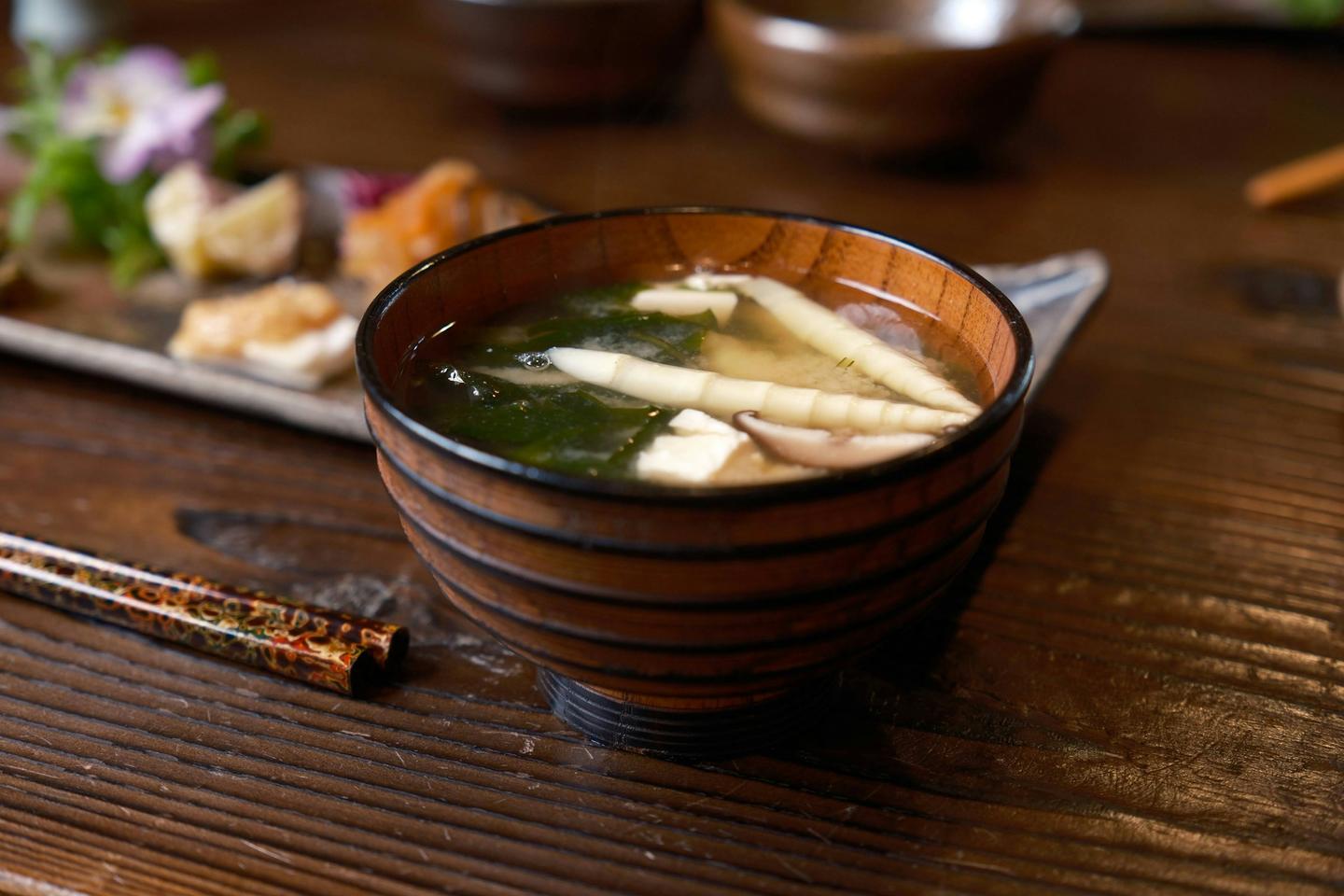
Japan's agriculture ministry calls umami the base of Japanese flavour, and explains that cooks have drawn it out as dashi from kombu and bonito flakes for about five hundred years. The ministry calls this stock the core of Japanese cooking. It goes into soups, simmered vegetables, sauces and dressings, so a plate of vegetables alone can still carry fish. JNTO adds that even the sauce packed with natto is often made from dashi.
Seasonings carry the second risk. Japan's National Tax Agency describes hon mirin, the sweet rice seasoning, as a brewed alcoholic seasoning with about 14 percent alcohol, while mirin style seasoning has under one percent. For a Jain guest who takes no alcohol in any form, hon mirin and cooking sake should both be named.
The usual vegetarian answer is a stock of kombu and dried shiitake, and many of Kyoto's plant based kitchens are built on it. For a lacto vegetarian family that is ideal. For a strict Jain family it may still not be, because kombu is a seaweed and shiitake a mushroom. Other stocks are possible: the MICHELIN Guide notes that Joël Robuchon in Tokyo serves a bouillon of chickpeas and other vegetables on its vegetarian menu.
SPECIAL MENUS AT FINE RESTAURANTS
These are restaurants whose own pages, or the MICHELIN Guide's, describe a vegetarian or vegan menu. We read them on November 2, 2026. None states a Jain menu, so each would be asked about root vegetables, alcohol, mushrooms and honey in writing.
| Restaurant | What it publishes | Price and notice |
|---|---|---|
| Daigo, Atago, Tokyo. One MICHELIN Star, shojin | Shojin kaiseki in eight private rooms. A little bonito and egg are used unless fully plant based cooking is requested | ¥17,800 (lunch) to ¥34,000, tax included, plus 15% service. Ask by the day before |
| Les Saisons, Imperial Hotel Tokyo. One Star | Vegan Omakase Course, with a plant based version of the chef's black truffle pie | From ¥29,000, tax and service included |
| KATO'S Dining & Bar, Hotel New Otani Tokyo | Vegan and vegetarian kaiseki. The vegan course has no seafood, meat, egg, dairy or honey. Same kitchen as other dishes | ¥12,000 each, plus service |
| NARISAWA, Tokyo. Two Stars | A vegan course tailored to each guest, according to the MICHELIN Guide. No changes on the day | Omakase ¥78,200 in November 2026, tax and service included. State needs when booking. No guests under 18 |
| Hiramatsu Kodaiji, Kyoto. One Star | Vegetarian and vegan French courses | At least three days ahead |
| Muromachi Wakuden, Kyoto | Vegan requests with kombu dashi, yuba and vegetables grilled on magnolia leaves | At least three days ahead |
Read the details as well as the headline. KATO'S vegan menu lists a tofu steak flavoured with ginger and daikon radish sprouts, both of which a Jain guest may avoid, and states that cross contamination cannot be fully ruled out. The truffle at the heart of Les Saisons' vegan course is a fungus. NARISAWA warns that some requests may mean a booking cannot be accepted. At Den in Jimbocho, the kitchen says it will do its best with dietary requirements but cannot guarantee every request. A clear, early message makes the difference between a menu that is adjusted and one that is truly rebuilt.
SHOJIN RYORI AND JAIN PRACTICE
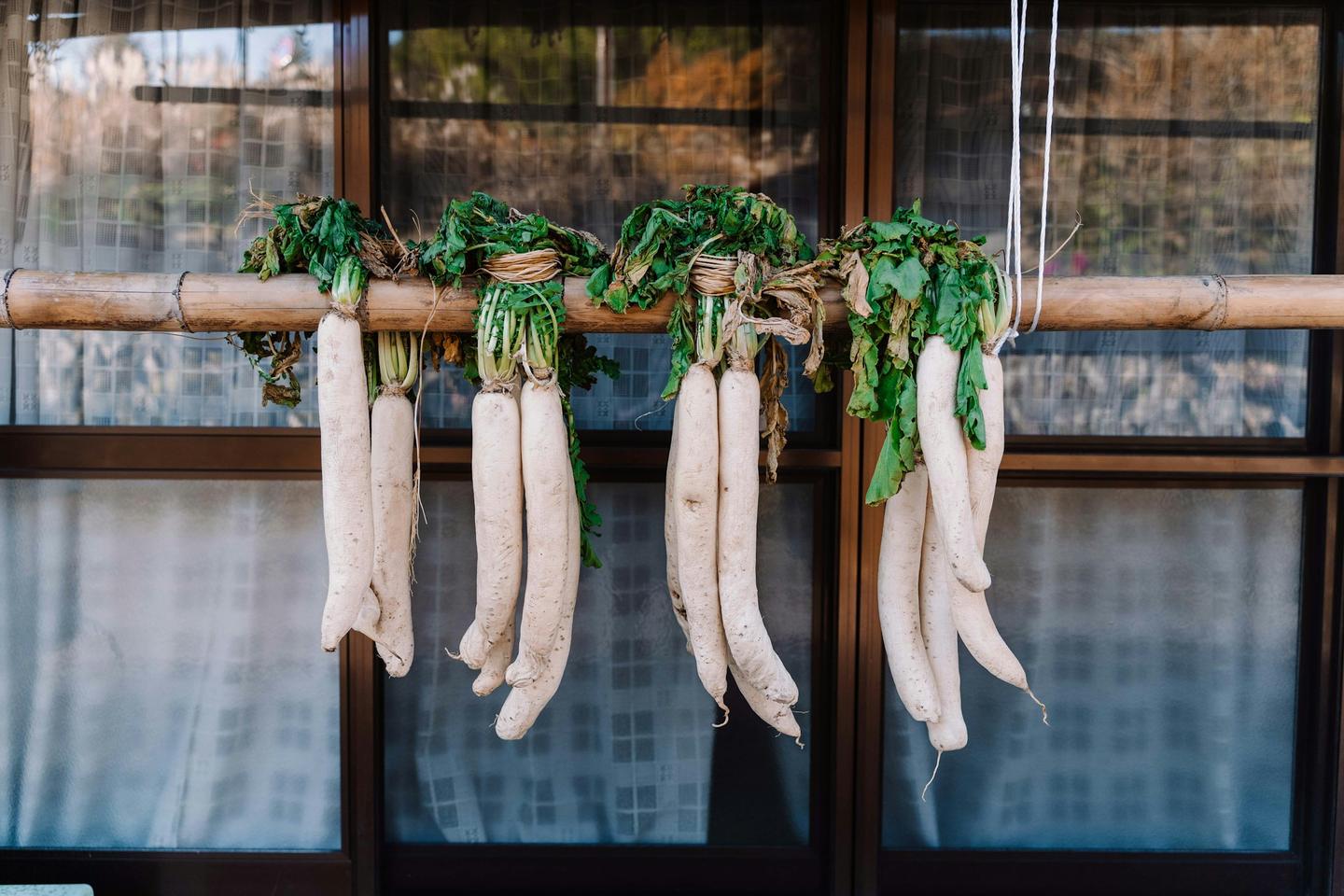
Shojin ryori, the cooking of Buddhist temples, is often suggested to vegetarian visitors, and it is a lovely meal. JNTO writes that it is traditionally vegan and leaves out pungent flavours such as garlic and onion, though some modern temples use dairy, and that it is found almost only in temples. The Tourism Agency's glossary defines it as cooking that avoids taking life, and adds that some restaurants now use egg.
The overlap with Jain practice is real and partial. Shojin avoids meat, fish, garlic and onion. It does not set out to avoid root vegetables, mushrooms or seaweed, and its stocks are built on kombu and shiitake. Some shojin restaurants also use bonito: the MICHELIN Guide notes that Daigo's vegetarian menu uses a broth of shaved bonito, and Daigo's own site says so too, while offering fully plant based cooking on request. A temple meal is a fine choice for a Jain family once the same list has been sent ahead.
MEALS AT A RYOKAN
A ryokan dinner is a set kaiseki prepared for each guest, so notice matters even more than at a restaurant. Some inns publish a vegetarian kaiseki with a deadline; others ask for three days' notice; one Kyoto inn states it cannot change its dashi. Our guide to Japan's finest ryokans for Indian travellers sets out each inn's rules. The Tourism Agency's 2024 guide gives an honest example from a Yokohama hotel: it keeps no cookware that has never touched the five pungent vegetables, and serves such guests only after explaining this and receiving their agreement. Expect the same candour from a good ryokan, and ask for it.
SUNSET, PARYUSHAN AND THE SHAPE OF THE DAY
Many Jain families avoid eating after sunset, a practice called chauvihar, and keep it more strictly during Paryushan. In Japan most fine dinners begin in the evening, and Daigo takes its last dinner guests at 20:00. The simplest answer is to make lunch the main meal: Daigo serves from 11:30, and KATO'S serves its vegan and vegetarian kaiseki at lunch until a last order of 13:30. An unhurried lunch at a private room, then a garden or a gallery in the afternoon, keeps the day calm.
There is a Jain community in Japan too. In Kobe's Kitano district, where the Kobe Shimbun counts eleven religious corporations including Jain within a small area, Travel.jp writes that a Jain temple was built in 1985 with gifts from Jain families living in Kobe.
BEFORE YOU TRAVEL
Settle the family's list before any table is requested, and keep it the same for every restaurant and inn.
- Dairy: yes or no, and whether butter is excluded.
- Egg, honey, gelatin and any alcohol in cooking, including hon mirin and cooking sake.
- Bonito and fish stock, fish sauce and oyster sauce, and whether kombu stock is acceptable.
- Root vegetables by name: onion, garlic, potato, sweet potato, carrot, daikon radish, ginger, turmeric.
- Mushrooms, including shiitake, and seaweed, if the family avoids them.
- Meal times around sunset, and any days of Paryushan within the trip.
- Whether shared cookware is acceptable, since some kitchens state they cannot separate it.
Then send the list in Japanese, at booking, and ask each kitchen to confirm in writing. JNTO recommends a printed card for the table as well.
WHERE STAYGO COMES IN
We write your family's list in clear Japanese, send it to each restaurant and inn when we request the table or room, and keep their written replies for you. We arrange lunches as the main meal when sunset matters, choose kitchens that state their plant based menus, and tell you plainly when a kitchen cannot meet a rule, so you can choose another. We arrange everything in your names, and you pay the restaurants, inns and drivers directly at their own prices, with no commission or markup from us. Trips are planned on the Signature plan, for 7 to 14 days and USD 3,500 for your group, or as Bespoke for longer or more complex journeys. For the whole journey, see Luxury Japan Travel for Indian Families →, and for the budget, How Much Does a Luxury Trip to Japan Really Cost? →.
SOURCES AND HOW WE CHECKED
We read the pages below on November 2, 2026: Jain texts and organisations and the Pew Research Center for the rules; the Japan Tourism Agency, the agriculture ministry, the National Tax Agency and JNTO for dashi, seasonings and guidance; the MICHELIN Guide and the restaurants' and hotels' own pages, with a reservation service, for menus and prices; and a newspaper and a travel magazine for Kobe. We did not contact any restaurant, inn or temple.
- Pew Research Center, diet in India, July 8, 2021: Jains, vegetarianism and root vegetables
- Young Jains of America (JAINA), Jain Dietary Restrictions: the restaurant list
- A Hand Book of Jainology, Jain eLibrary: night eating, the four maha vigai, anantkay
- Essence of Jainism, Part 1, Jain eLibrary: the 22 abhakshya
- JainWorld, Jain Food: why root vegetables are avoided, milk
- Samyak: An Undergraduate Journal of Jain Studies, University of North Texas, 2025: veganism, chauvihar, Paryushan
- Japan Tourism Agency, vegetarian and vegan guide for food businesses, 2020 (Japanese): India, lacto vegetarians, five pungent vegetables
- Japan Tourism Agency, vegetarian, vegan and Muslim hospitality guide, 2024 (Japanese): dashi, labels, the Yokohama hotel example
- JNTO, A Vegetarian and Vegan Guide to Japan: shojin ryori, natto sauce, cards and notice
- JNTO, visitor arrivals statistics, October 21, 2026 (Japanese): visitors from India
- Ministry of Agriculture, Forestry and Fisheries, dashi and umami (Japanese): kombu and bonito stock
- National Tax Agency, the history of hon mirin (Japanese): alcohol in mirin
- MICHELIN Guide, 7 of the Best Vegetarian Menus in Tokyo, October 2026: Daigo, NARISAWA, Les Saisons, Joël Robuchon
- MICHELIN Guide, Best Vegetarian Restaurants in Kyoto, 2025: Hiramatsu Kodaiji, Muromachi Wakuden, kombu and shiitake
- MICHELIN Guide, Daigo: One Star, 2026
- Daigo (Japanese): bonito and egg, prices, hours
- Imperial Hotel Tokyo, Les Saisons menu: Vegan Omakase Course
- Hotel New Otani Tokyo, KATO'S vegan and vegetarian courses: menu, price, shared kitchen
- NARISAWA, reservations (Japanese): how bookings open
- OMAKASE, NARISAWA (Japanese): course price, dietary notes, age
- Den, Jimbocho: dietary requirements
- Kobe Shimbun, Kitano and its religions, 2017 (Japanese): eleven religious corporations including Jain
- Travel.jp, religious buildings of Kobe Kitano (Japanese): the Jain temple of 1985
QUESTIONS TRAVELLERS ASK
Can we eat Jain food at fine restaurants in Japan?
Often, with notice and a precise list. Japan's official restaurant guides cover vegetarian and vegan diets but do not mention Jain rules or root vegetables, so a kitchen will not infer them. Name each item in writing: fish stock, onion, garlic, potato, carrot, radish, ginger, honey, alcohol in seasonings, and mushrooms or seaweed if you avoid them.
Is shojin ryori automatically Jain friendly?
No. It traditionally leaves out meat, fish, garlic and onion, but it does not set out to avoid root vegetables, mushrooms or seaweed, and some shojin restaurants use bonito or egg unless asked. Daigo in Tokyo cooks fully plant based meals when asked by the day before.
What is the hidden problem in Japanese food?
Dashi. Japan's agriculture ministry calls stock of kombu and bonito flakes the core of Japanese cooking, so a vegetable dish can carry fish. Hon mirin contains about 14 percent alcohol. The usual vegetarian stock of kombu and shiitake contains seaweed and a mushroom.
How far ahead should we tell a restaurant?
When booking, never on the day. NARISAWA asks for needs in the booking and makes no changes on the day, Daigo asks by the day before, and the MICHELIN Guide notes three days' notice for plant based courses at Hiramatsu Kodaiji and Muromachi Wakuden.
Can we keep chauvihar on a trip to Japan?
Yes, with planning. Most fine dinners begin in the evening, so make lunch the main meal. Daigo serves lunch from 11:30, and KATO'S at the Hotel New Otani serves its vegan and vegetarian kaiseki at lunch.
PLAN A JAPAN TRIP AROUND THE WAY YOU EAT
Your journey through Japan, thoughtfully arranged. Explore bespoke travel with STAYGO.
Begin planning →We reply within 24 hours, in writing
Some of the restaurants, bars and private places we arrange take guests only by introduction or membership. We do not publish their names.