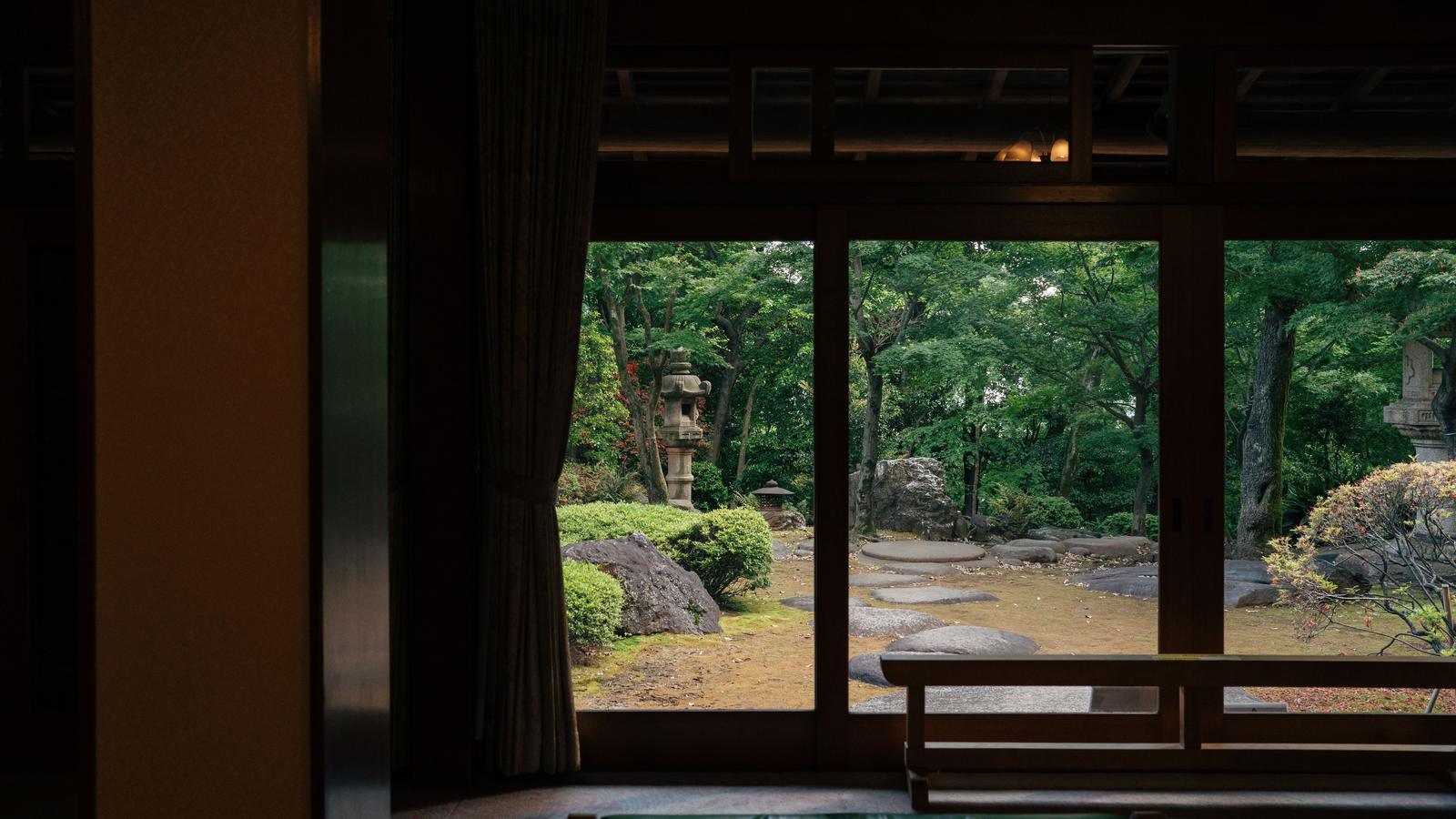
Families from India are arriving in Japan in numbers the country has not seen before, often three generations together: a grandmother who keeps a strict vegetarian kitchen, children on school holidays, parents who would like the trip to run quietly. Japan rewards that family well, provided the rooms, the meals and the pace are settled before anyone lands.
This guide is written from Tokyo for Indian families planning a private journey of ten to fourteen days: which rooms suit several generations, how to make vegetarian and Jain meals certain, how to move with children and elders, which seasons fit the Indian school calendar, and what the quieter parts of Japan look like. We read Japan's Ministry of Foreign Affairs, the Japan Tourism Agency, the Japan Meteorological Agency, Japan's national tourism organisation, India's Department of Personnel and Training, Delhi's Directorate of Education, the airlines, the rail operator, and the hotels' and restaurants' own pages on November 2, 2026, and did not contact any hotel, ryokan or restaurant; the sources are listed at the end. For what such a journey costs, see How Much Does a Luxury Trip to Japan Really Cost? →.
Key points
- Japan counted 315,100 visitors from India in 2025 by its national tourism organisation's preliminary estimate, up 35.2 percent on 2024. Non-stop flights connect Delhi with Haneda and Narita, Mumbai with Narita, and Bengaluru with Narita.
- Residents of India apply for the tourist eVISA through an accredited agency. It is a single-entry visa for stays of up to 90 days, and the visa issuance notice must be shown online at the airport.
- Japan's tourism agency lists what a strict Jain diet excludes: meat, fish, egg, honey and vegetables grown underground, including potato, carrot, ginger and garlic. Fish stock is the hidden problem, and kombu stock is the usual answer.
- Delhi's government schools broke for summer from May 11 to June 30, 2026. Japan's rainy season begins on average around June 6 in the Kyoto region and June 7 in the Tokyo region, so late May comes before it.
PLAN A FAMILY JOURNEY TO JAPAN →
WHY JAPAN SUITS WELL TRAVELLED INDIAN FAMILIES
Japan's national tourism organisation counted 233,061 visitors from India in 2024 and estimates 315,100 for 2025, the first year above 300,000. What families notice first is the order of things: trains that leave on the minute, calm streets at night, and service that anticipates without hovering. With young children and grandparents, that steadiness matters more than any single sight.
Japan also has a vegetarian temple cuisine, shojin ryori, cooked in its monasteries for centuries. Japan's tourism agency notes that India has the highest share of vegetarians among the twenty countries sending the most visitors to Japan, at 28 percent, and that the lacto-vegetarian diet, with dairy and without egg, is the most common there. Japan can feed that family well, once it is told precisely and in advance.
Getting there is simple. ANA flies daily between Haneda and Delhi, and from September 1, 2026 daily between Narita and Mumbai. Air India moved its Delhi service to Haneda on March 31, 2025, flying a Boeing 787-8 with 18 flat beds in business class; it notes that Haneda is about 18 km from central Tokyo and about thirty minutes from Tokyo Station. JAL flies twice daily between Delhi and Tokyo, to Narita and Haneda, and daily between Bengaluru and Narita; its daily Narita to Delhi service began on January 17, 2026, the travel trade paper Travel Voice reported. Japan's tourist eVISA for residents of India is applied for through an accredited agency, and the visa issuance notice must be shown online at the airport, since printouts and screenshots are not accepted.
WHERE TO STAY: TOKYO, KYOTO, HAKONE AND PRIVATE RYOKANS
Rooms in Japan are counted by guests, strictly, and a beautiful ryokan suite is often for two. At Gora Kadan in Hakone, which the MICHELIN Guide lists with 41 rooms, the Bettei Suite Akebono is 70 m² with a terrace, garden and open-air stone bath, and it takes one or two guests. A family of five at a ryokan of this kind is usually two or three rooms, and the question becomes which rooms sit close together and share a corridor.
City hotels solve this differently. Four Seasons Hotel Kyoto offers connecting rooms across its Deluxe, Premier and Heritage Garden categories and in two of its suites, and describes them as made for multigenerational families moving between rooms without using the hallway. In Tokyo, The Peninsula Tokyo has a 20 metre indoor pool and a spa menu that includes Ayurvedic treatments, a slow afternoon for children and grandparents in a busy week.
Our usual shape for a first family journey is a Tokyo hotel with connecting rooms, two nights at a ryokan with private baths, and a Kyoto hotel close to the gardens the family most wants to see. A ryokan night includes dinner and breakfast, a gift for a vegetarian family once the kitchen has agreed the menu, and a private bath lets grandparents and children bathe on their own schedule. How to choose among the great ryokans is set out in Japan's Finest Ryokans for Indian Travellers and how to choose a ryokan, and inns with in-room hot springs near Kyoto in Kyoto ryokan with a private onsen.
A THOUGHTFUL TEN TO FOURTEEN DAY FAMILY JOURNEY
Ten to fourteen days allows four bases without hurrying anyone. Arrive at Haneda in the morning, rest, and spend four nights in Tokyo with gardens, museums and one long lunch each day. Then two nights at a ryokan in Hakone, and four or five in Kyoto, where mornings in temple gardens and afternoons at the hotel suit children and elders alike. Fourteen days adds Kanazawa, the Seto Inland Sea or a second ryokan.
Two rules make the difference. Change hotels as rarely as possible, because every move costs half a day. And plan each day around one fixed point, so a grandparent can rest in the afternoon without anyone missing anything. The fuller shape of family travel, by age, is in luxury family travel in Japan.
VEGETARIAN, JAIN AND OTHER DIETARY CONSIDERATIONS
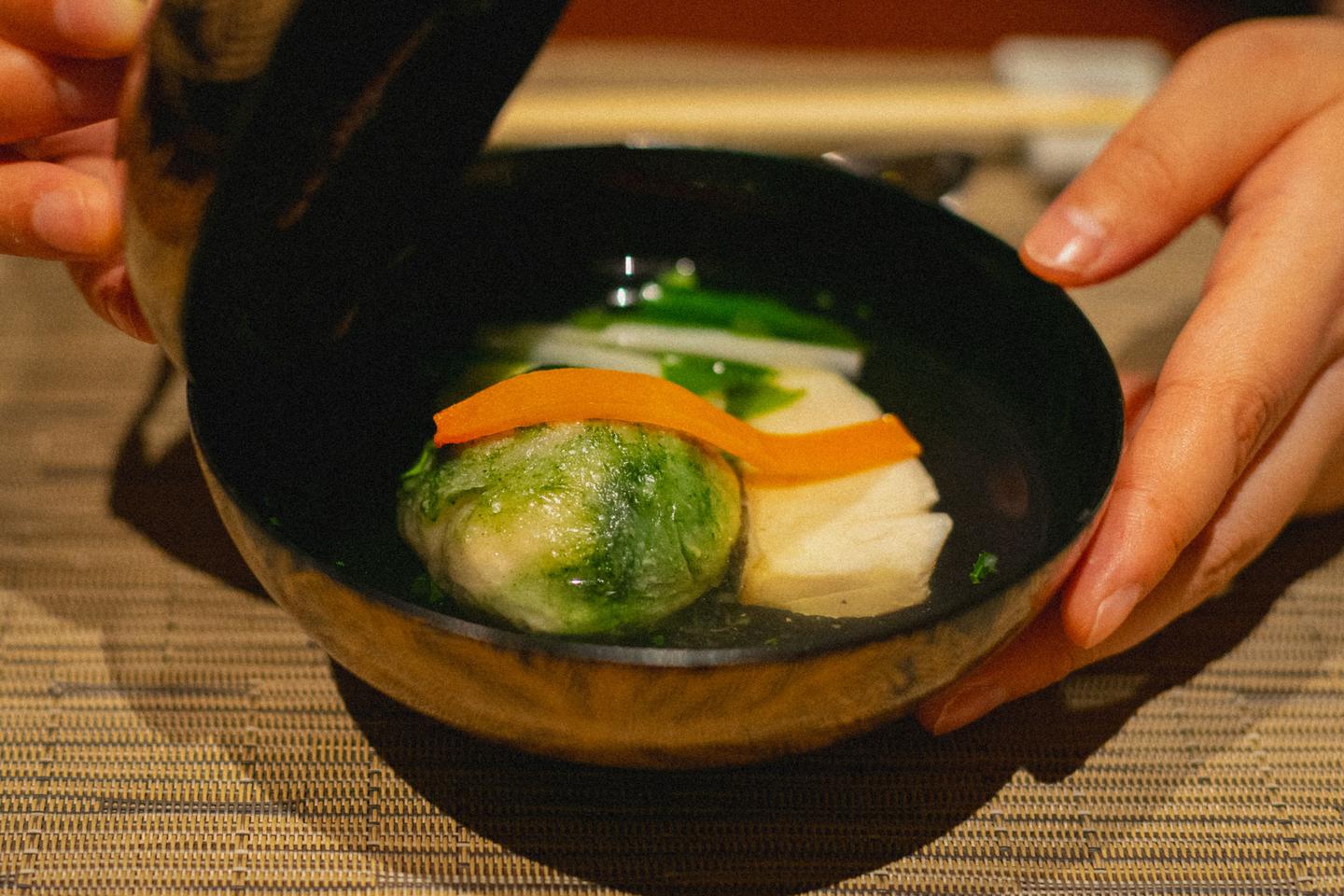
Japanese cooking is built on dashi, a stock usually made from bonito flakes, and it appears where a vegetarian would not look for it: in soups, simmered vegetables, noodle broth and even the sauce packed with natto. Japan's national tourism organisation advises vegetarian visitors to say plainly that they take no meat, seafood or animal products, including dashi or stock. Shojin ryori, the temple cuisine, is traditionally vegan and omits garlic and onion, though the same guide warns that some modern kitchens use dairy.
A Jain kitchen asks for more, and Japan's tourism agency explains it to Japanese restaurants in exact terms. A strict Jain diet excludes meat, fish, egg and honey, and also vegetables grown underground, which it lists as potato, carrot, ginger, garlic, sweet potato, daikon, burdock and turnip. Bonito dashi must be replaced with kombu or another vegetable stock. Some strict Jain guests also avoid utensils used to cook meat, and some eat only in daylight. The agency also lists the five pungent vegetables avoided by strict Buddhist and some Hindu diners: garlic, Chinese chives, rakkyo, onion and asatsuki.
What we have learned from Tokyo is that the request must be written, specific and early. Gora Kadan asks for dietary restrictions by 6 p.m. the day before arrival, will not change the menu on the day, and says it cannot serve guests who must avoid all trace contamination. It offers children's meals for children under 13. Tenryu-ji's Shigetsu in Kyoto, a MICHELIN Bib Gourmand, serves shojin ryori from 11:00 to 14:00, closes on Thursdays, and asks parties of two or more to reserve three days ahead for its ¥6,500 and ¥9,000 sets. For each family we write one note per diner in Japanese, naming every ingredient to leave out, and send it to every kitchen with its own deadline. Restaurants that do this well are gathered in Vegetarian and Jain Dining in Japan and vegetarian kaiseki and vegan fine dining.
PRIVATE CARS, THE SHINKANSEN, CHILDREN AND GRANDPARENTS
A private car is the calmest way to arrive. Tokyo MK publishes Haneda transfers in an Alphard or Mercedes V-Class from ¥17,000, Narita from ¥45,000, and eight hours in Tokyo from ¥74,000, tax included, with tolls and parking on top and child seats charged separately. Its cars are requested at least three days ahead. Its fixed fare by car from Minato in central Tokyo to Hakone starts at ¥154,000. More on rates is in private driver costs in Japan.
Between Tokyo and Kyoto, the Shinkansen has its own rules for families. JR Central charges children aged 6 to 11 half the adult fare and reserved seat charge, while a Green Car seat costs a child the same as an adult; children aged 1 to 5 travel free unless they take their own reserved seat. On the Tokaido Shinkansen, any bag whose three sides add up to 161 to 250 cm needs a seat with an oversized baggage space reserved in advance, and nothing larger is allowed on board. A family with several large cases usually sends them ahead: Yamato Transport runs Hands-Free Travel counters for luggage storage and same-day delivery, and points out that free hands let parents hold their children's hands in a crowded station.
EXPERIENCES BEYOND THE USUAL ROUTE
The places families remember are rarely the famous ones at noon: a temple garden early in the morning, a lunch of temple vegetables beside a pond, an hour with a craftsman while the children watch, an evening bath in cedar with the window open to the hills. They are reached by timing and by asking early, and chosen for the ages in the family. The private side of Japan is set out in Japan's Most Exclusive Private Experiences and Private Japan, and for business families combining a company trip with a holiday, in corporate incentive travel to Japan.
A MORNING IN KYOTO
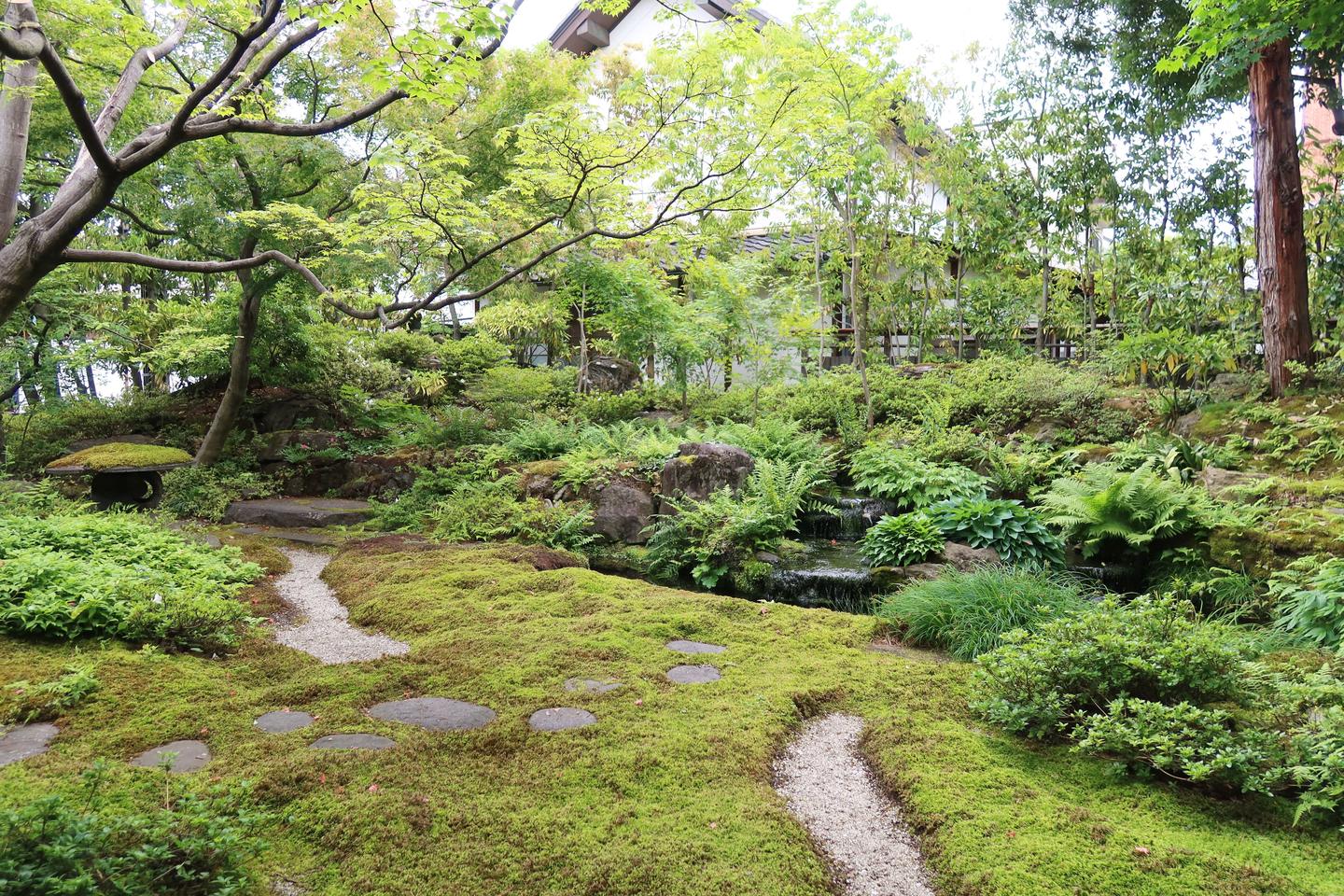
The car waits at eight. The children are still sleepy, their grandmother has her shawl, and the driver already knows which gate is closest to the garden. Inside, the moss is wet and nobody speaks much. At eleven, lunch is laid out on red lacquer: sesame tofu, simmered greens, rice and a clear soup made from kombu, every dish checked the week before. Afterwards the family goes back to the hotel, and the afternoon belongs to them.
WHEN TO VISIT
The Indian summer holiday is the longest window. Delhi's government schools broke for summer from May 11 to June 30, 2026. In Japan, the Japan Meteorological Agency puts the average start of the rainy season around June 6 in the Kinki region, which includes Kyoto, and June 7 in Kanto-Koshin, which includes Tokyo, with both ending around July 19. Late May falls before those averages. The agency publishes rainy season dates for twelve regions from Okinawa to northern Tohoku, and Hokkaido is not among them.
Diwali falls on Friday, October 29, 2027, according to the Government of India's holiday list. That week comes before the maples turn: the agency's averages put the maple colour at November 28 in Tokyo and December 5 in Kyoto. In spring, Holi falls on March 23, 2027, about a week before cherry trees reach full bloom in Tokyo on March 31 and in Kyoto on April 4 on average. Those blossom weeks are Japan's busiest, and rooms for a family of five should be settled well in advance.
HOW STAYGO DESIGNS A PRIVATE JOURNEY
We begin with the family: who is travelling, what each person eats, how far the eldest can walk, and what the children will remember. Then we arrange the rooms, the cars, the trains, the restaurants and the private visits around that, and send every kitchen its written dietary note before the journey begins. We arrange everything in your names, and you pay the hotels, ryokan, restaurants and drivers directly at their own prices, with no commission or markup from us. Journeys of 7 to 14 days are planned on the Signature plan, USD 3,500 for your group, and longer or more complex journeys as Bespoke, priced after a first conversation.
Your journey through Japan, thoughtfully arranged. Explore bespoke travel with STAYGO.
SOURCES AND HOW WE CHECKED
We read the pages below on November 2, 2026: the governments of Japan and India for visas, statistics, holidays and seasons; the Japan Tourism Agency and Japan's national tourism organisation for dietary practice; the airlines and a travel trade paper for flights; the rail operator, the car company and the luggage service for getting around; and the hotels', ryokan's and temple's own pages, with the MICHELIN Guide, for rooms and meals. We did not contact any hotel, ryokan or restaurant.
- Ministry of Foreign Affairs of Japan, The JAPAN eVISA system: India among residents who apply through an accredited agency, single entry for up to 90 days, the online visa issuance notice
- Japan National Tourism Organization, visitor arrivals, December 2025: visitors from India in 2024 and 2025
- ANA Group, revised schedule for the second half of fiscal 2026, August 18, 2026 (Spanish): Haneda to Delhi and Narita to Mumbai
- Air India, press release, March 3, 2025: Delhi to Haneda, aircraft, distance to central Tokyo
- Japan Airlines, flights from Delhi to Tokyo (India): twice daily Delhi flights to Narita and Haneda, the daily Bengaluru route
- Travel Voice, JAL to launch daily Narita and Delhi flights, October 16, 2025: the start date of the Narita and Delhi service
- Government of India, Department of Personnel and Training, holidays for 2027, Office Memorandum of July 2026: Diwali and Holi in 2027
- Directorate of Education, Government of NCT of Delhi, circular, May 2026: summer vacation dates
- Japan Meteorological Agency, rainy season, Kinki (Japanese) and Kanto-Koshin (Japanese): average start and end, the regions covered
- Japan Meteorological Agency, cherry blossom full bloom (Japanese) and maple colouring (Japanese): averages for Tokyo and Kyoto
- Japan Tourism Agency, manual for serving foreign guests with diverse food customs (Japanese): the Jain diet, root vegetables, the five pungent vegetables, kombu stock
- Japan Tourism Agency, vegetarian and vegan guide for food businesses, 2020 (Japanese): India's vegetarian share, lacto-vegetarian diets
- Japan National Tourism Organization, A Vegetarian and Vegan Guide to Japan: dashi, shojin ryori, how to ask
- Tenryu-ji, Shigetsu: hours, closing day, sets and prices, notice, Bib Gourmand
- Gora Kadan, Bettei Suite Akebono and meals: room size and guests, dietary deadline, children's meals
- MICHELIN Guide, Gora Kadan: number of rooms, room styles and baths
- Four Seasons Hotel Kyoto, offers: connecting rooms and their categories
- The Peninsula Tokyo, rooms and suites: pool and Ayurvedic spa treatments
- JR Central, adults and children: children's fares
- JR Central, luggage information: oversized baggage on the Tokaido Shinkansen
- Yamato Transport, Hands-Free Travel: luggage storage and same-day delivery
- Tokyo MK, private hire rates: airport, hourly and Hakone rates, extras, notice
QUESTIONS TRAVELLERS ASK
Do Indian citizens need a visa to visit Japan?
Yes. Residents of India can apply for Japan's tourist eVISA through an accredited agency. It is a single-entry visa for stays of up to 90 days, and the visa issuance notice must be shown online at the airport, since printouts and screenshots are not accepted.
Are there direct flights from India to Tokyo?
Yes. ANA and Air India fly non-stop between Delhi and Haneda, JAL between Delhi and Narita from January 17, 2026, ANA between Mumbai and Narita, and JAL between Bengaluru and Narita.
Can a Japanese kitchen prepare a Jain meal?
Many can, if told precisely and early. Japan's tourism agency explains that a strict Jain diet excludes meat, fish, egg, honey and vegetables grown underground such as potato, carrot, ginger and garlic, and that bonito stock must be replaced with kombu. Ryokan often set deadlines; Gora Kadan asks for dietary restrictions by 6 p.m. the day before arrival.
When is the best time for an Indian family to visit Japan?
Late May suits the Indian summer holiday, because Japan's rainy season begins on average around June 6 in the Kyoto region and June 7 in the Tokyo region. Diwali falls on October 29, 2027, about a month before the maples turn in Tokyo and Kyoto.
Do children pay full fare on the Shinkansen?
No. JR Central charges children aged 6 to 11 half the adult fare and reserved seat charge, while a Green Car seat costs a child the same as an adult. Children aged 1 to 5 travel free unless they take their own reserved seat.
PLAN A FAMILY JOURNEY TO JAPAN
Tell us who is travelling, when the school holidays fall and what each person eats. We will come back with the rooms, the kitchens and the days we were able to confirm.
Begin planning →We reply within 24 hours, in writing
Some of the restaurants, bars and private places we arrange take guests only by introduction or membership. We do not publish their names.