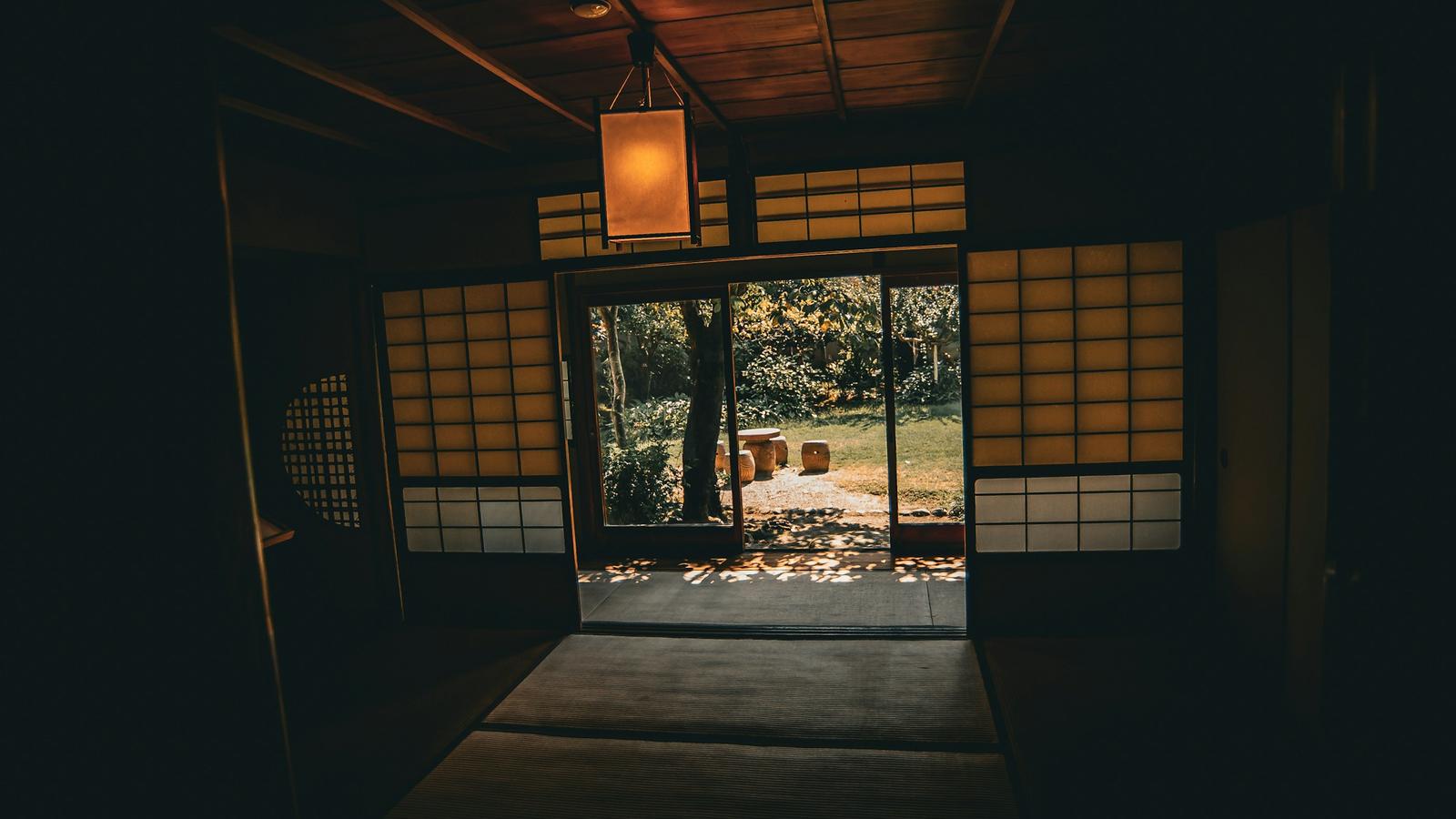
A night at a fine ryokan is the part of a Japan journey that families remember longest. The room is laid with tatami, the bath is filled from a spring, dinner arrives course by course, and by morning the garden has changed its light. For travellers from India the questions come before any of that: will the kitchen cook vegetarian or Jain food, can the children come, will three generations fit, and how does one bathe without discomfort.
This guide answers those questions inn by inn. It covers what a ryokan is, how it differs from a luxury hotel, private and family baths, inns in Kyoto, Hakone and the regions, meals for vegetarian and Jain guests, and what families should know. We read the inns' own pages, Japan's Ministry of Health, Labour and Welfare, the Japan Tourism Agency, the Japan National Tourism Organization (JNTO), the MICHELIN Guide, two newspapers, Condé Nast Traveler and two booking services on November 2, 2026, and contacted no inn. The sources are listed at the end. For how we rank ryokan more generally, see How to Choose a Ryokan in Japan →.
Key points
- Japan's law has made no distinction between a ryokan and a hotel since June 15, 2018. The difference is in the stay: tatami, futon, yukata, a kaiseki dinner and Japanese breakfast, usually priced per person.
- Meal rules differ by inn. KAI Sengokuhara serves a vegetarian kaiseki when asked by 4 pm five days ahead. Hiiragiya asks for three days' notice. Sumiya says it cannot change its dashi stock.
- Age rules differ too. Bettei Otozure admits no one under 13, Nishimuraya Honkan only guests aged 10 and over, and Tobira Onsen Myojinkan has no age limit.
- Rooms for five or six exist. Nishimuraya Honkan's Honjin room is 124 m² for up to six, and Hiiragiya's largest room is 97 m² for five.
WHAT A LUXURY RYOKAN IS
JNTO writes that the ryokan is said to date back to the eighth century, and lists what most share: tatami floors, futon bedding, baths that are sometimes outdoors, yukata robes, a multi-course kaiseki dinner and a traditional Japanese breakfast. Staff explain the customs on arrival, from where to leave your shoes to how to wear the yukata. Prices are quoted per person, with dinner and breakfast included.
The word itself carries no legal weight. Japan's revised Inns and Hotels Act, in force since June 15, 2018, merged the old ryokan and hotel categories into a single one, and the MICHELIN Guide notes that the ryokan has no official legal definition. What makes an inn a fine ryokan is the house, the water and the kitchen. The MICHELIN Guide's 2026 hotel selection for Japan, published on September 18, 2026, gives one outside measure: seven Three Key hotels, 23 with Two Keys and 115 with One Key, several of them the inns described below.
Interest from India is growing quickly. JNTO counted 315,062 visitors from India in 2025, up 35.2 percent on the year before, and 277,700 in the first nine months of 2026. Its market report notes that Indian families often travel as a large party including relatives, and that the busiest seasons are the school holidays from April to June and Diwali in October and November.
HOW IT DIFFERS FROM A LUXURY HOTEL
At a ryokan the stay itself is the day's plan. You arrive in the afternoon, bathe before dinner, and the evening belongs to the meal. The rhythm suits one or two nights in the middle of a trip, between cities, when everyone is ready to slow down.
Three practical differences matter to Indian families. Dinner is the inn's own kaiseki, so the kitchen needs to know about diets days ahead, while a hotel offers a menu on the night. Rooms are usually set for two to four guests, and JNTO's market report lists room size among the worries Indian travellers have about Japan. And the inn sets the dining times; JNTO notes that Indian families often eat dinner after 8 pm, so it is worth asking when the kitchen serves and whether dinner comes to the room or to a dining room.
PRIVATE BATHS AND FAMILY BATHS
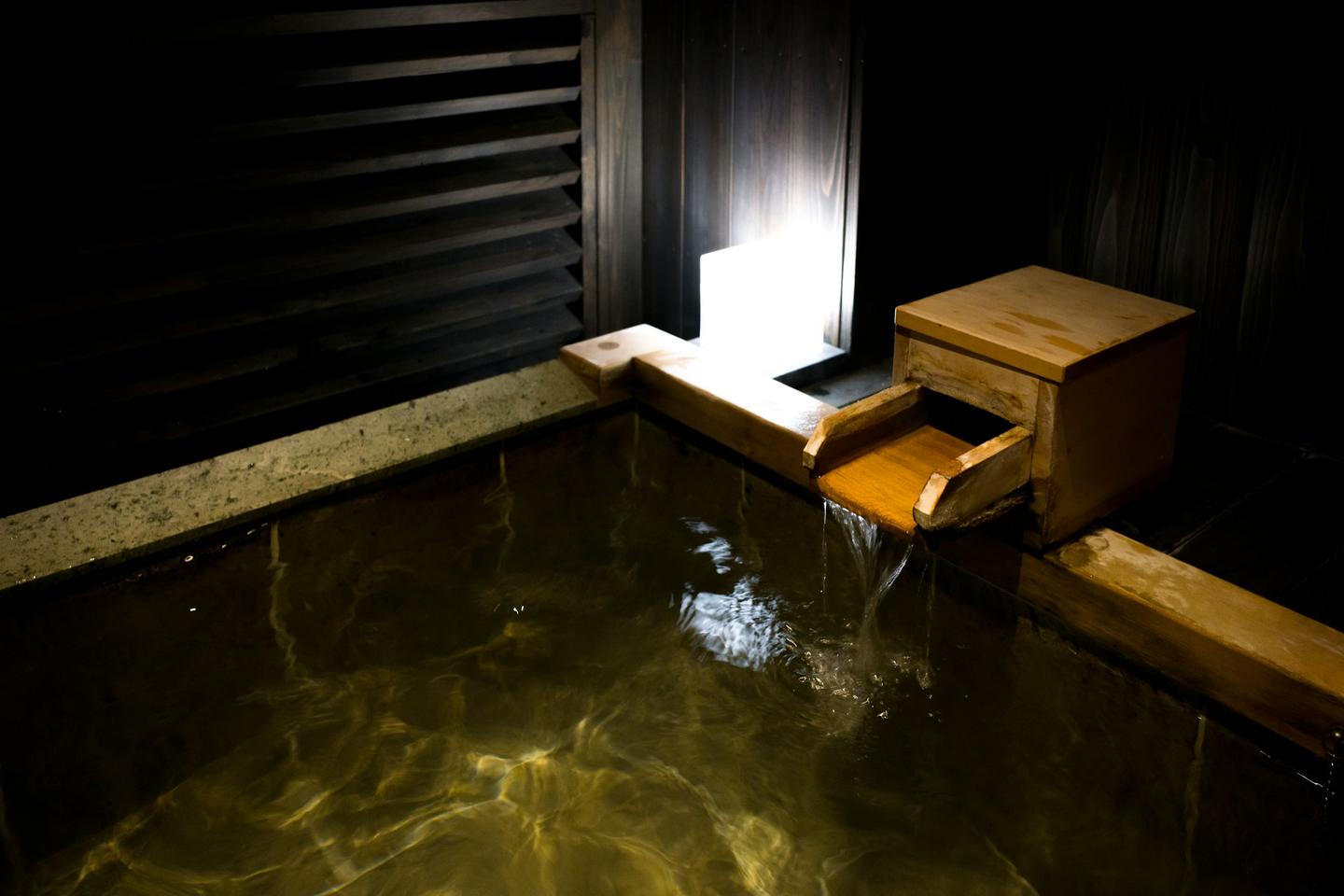
Onsen are bathed in the nude, and JNTO says so plainly. For guests who would rather not share, it suggests a private bath, kashikiriburo, or a room with its own open-air bath, rotenburo. At a fine inn there are three kinds of water to consider: the large shared baths, separated for men and women; a family bath reserved for your party by the hour; and a bath that belongs to your room.
Every room at Bettei Otozure, Zaborin and KAI Sengokuhara has its own open-air hot spring bath; at Zaborin each villa has one indoor and one outside. In Kyoto, Hiiragiya's rooms have baths of koyamaki wood filled with gentle well water, and two family baths take two or three people. Sumiya reserves its larger bath for one room at a time.
The manners are simple and the same everywhere. Wash and rinse before entering the water, keep the small towel out of the bath, tie up long hair, keep voices low and never take photographs. Japan's Ministry of the Environment advises against bathing straight after a meal or after alcohol, and against elderly people and children bathing alone, which matters when grandparents travel.
INNS IN KYOTO, HAKONE AND BEYOND
These are inns whose own pages we read on November 2, 2026. Rates are a guide for 2026 and 2027 and change with the date and the room. We have left out Kagaya in Noto, which has been closed since the Noto Peninsula earthquake; the Hokkoku Shimbun and Nikkei report a planned reopening at the end of fiscal 2028.
Kyoto
Hiiragiya stands in central Kyoto, near Anekoji, with 22 rooms and One MICHELIN Key. Condé Nast Traveler describes it as run by the sixth generation of the Nishimura family. Its largest room, number 30 in the old wing, is 97 m² for up to five. Children of primary school age and younger are accepted by arrangement, in a limited number of rooms. One booking service listed a room with dinner and breakfast for two from ¥172,480 a night, tax included, with Kyoto's accommodation tax on top.
Sumiya, a few streets away on Fuyacho, serves its meals in the room as each dish is ready. It does not take children aged five and under, and it charges half the adult rate for children of six to nine.
Hakone
KAI Sengokuhara, a Hoshino Resorts inn in the highlands of Hakone, has 16 rooms for one to three guests, each with an open-air bath on its terrace. It publishes a vegetarian kaiseki and a vegetarian breakfast, and children's menus in two age groups. Dinner is served in semi-private dining rooms. A family of five would take two rooms.
Beyond the cities
Zaborin in Niseko, Hokkaido, has 15 villas and Two MICHELIN Keys; some add a 12 m² tatami room for a family. One booking service listed dinner and breakfast for two from ¥156,261 a night in March 2027, with the bathing tax included. Tobira Onsen Myojinkan, above Matsumoto in Nagano, gained One Key in 2026 and serves dinner in its dining rooms. Nishimuraya Honkan in Kinosaki, with Two Keys and 29 rooms, offers dinner in the room on some plans and lists rates on its own booking page from ¥60,500 per person for two sharing. In Yufuin, Oita, Yufuin Tamanoyu (One Key) has 16 rooms, each with a wooden bath of spring water, and welcomes children, while Kamenoi Besso (Two Keys) sets eleven detached cottages in its grounds and carries dinner to them. Bettei Otozure in Nagato, Yamaguchi, has 18 rooms, each with an open-air bath, and lists rates from ¥57,200 per person for two sharing.
VEGETARIAN, JAIN AND RELIGIOUS MEALS
The kaiseki kitchen starts from dashi, and the usual dashi is made with dried bonito. JNTO's market report for India says it directly: animal based dashi made from fish or shellfish is not acceptable to Indian vegetarians, and a stock of kombu or shiitake is needed. It adds that whether a guest eats dairy or egg varies from person to person, and that vegetarian travellers tend not to touch a dish when they cannot tell what is in it. Jain guests usually add root vegetables, onion and garlic to that list, and some avoid mushrooms. Our guide to vegetarian and Jain dining in Japan goes through each ingredient.
Inns state their rules differently, and the difference matters.
| Inn | Special meals | Children |
|---|---|---|
| KAI Sengokuhara, Hakone | Vegetarian kaiseki and breakfast, by 4 pm five days ahead | Children's menus for 6 and under, and 7 to 11 |
| Hiiragiya, Kyoto | Within what is possible, three days ahead. No halal or kosher | Primary school age and younger by arrangement |
| Sumiya, Kyoto | Three days ahead, may be declined. Cannot change the dashi. No halal or kosher | Not aged 5 and under |
| Tobira Onsen Myojinkan, Matsumoto | Dietary restrictions handled when told at booking | No age limit, except in some Western rooms |
| Nishimuraya Honkan, Kinosaki | Not stated | Aged 10 and over |
| Kamenoi Besso, Yufuin | Not stated | Primary school age and younger in the cottages only |
| Bettei Otozure, Nagato | Not stated | Not under 13 |
None of the inns we read says in writing that it can remove onion, garlic or root vegetables. Where an inn publishes nothing, it is neither a yes nor a no; it is a question to ask in writing, in Japanese, naming each item: no fish or bonito dashi, no egg, dairy or honey if that applies, no onion, garlic or other pungent vegetables, no root vegetables for Jain guests. An inn that cannot change its dashi, as Sumiya states, is better kept for a night when the family dines elsewhere.
TRAVELLING AS A FAMILY
Age rules are the first filter, and they are firm. Bettei Otozure states that children under 13 are not admitted. Nishimuraya Honkan has accepted only guests aged 10 and over since April 1, 2024. Sumiya does not take children aged five and under. At Kamenoi Besso, younger children stay in the cottages, not the main building. Tobira Onsen Myojinkan has no age limit and asks families to use its Japanese style rooms, and Yufuin Tamanoyu prepares smaller meals for children.
Room size is the second. Most inns cap a room at three or four. The larger rooms are few: Nishimuraya Honkan's Honjin room is 124 m² for two to six, Tosen Goshobo in Arima has suites of about 130 m² for four or five, Hiiragiya's room 30 is 97 m² for five, and Tamanoyu's largest is 140 m² for up to four. A family of three generations often takes two rooms, so the grandparents keep their own quiet.
Yukata are laid out in the room, and staff explain how to wear them, where shoes are left and how the baths work. Children settle into the customs quickly, and it helps to tell them about the bath before the first evening. JNTO notes that many onsen welcome families with children and advises checking each bath's rules in advance.
QUIET INNS AND WHAT INTRODUCTIONS CAN DO
Much of the pleasure of a fine ryokan is how few people share it. Zaborin has 15 villas, Tamanoyu 16 rooms, Bettei Otozure 18. The value lies in choosing the right one for your family and the right room within it, and in asking early, because the rooms that suit a party of five are often the first to go.
Then there is the question of inns that take guests only by introduction. None of the inns in this guide states such a rule on its own pages, and we do not claim special access to any of them. What we can do is ask clearly, in Japanese, for the room, the dates, the meals and the times your family needs, and tell you honestly what each inn was able to confirm.
WHERE STAYGO COMES IN
We choose the inn and the room for your family, check the age rules and the room size, and write to the kitchen in Japanese about vegetarian or Jain meals and dashi, days before the deadline. We arrange the car to the door, a family bath at the hour you prefer, and the dinner time. We arrange everything in your names, and you pay the inns, restaurants and drivers directly at their own prices, with no commission or markup from us. Trips are planned on the Signature plan, for 7 to 14 days and USD 3,500 for your group, or as Bespoke for longer or more complex journeys. For the whole journey, see Luxury Japan Travel for Indian Families →, and for the budget, How Much Does a Luxury Trip to Japan Really Cost? →.
SOURCES AND HOW WE CHECKED
We read the pages below on November 2, 2026: the ministries and the Japan Tourism Agency for the law, bathing and meals; JNTO for ryokan, onsen and the Indian market; the MICHELIN Guide for Keys; the inns' own pages and two booking services for rooms, rules and rates; and two newspapers and a magazine for background. We did not contact any inn.
- Ministry of Health, Labour and Welfare, notice on the revised Inns and Hotels Act, 2018 (Japanese): the single ryokan and hotel category from June 15, 2018
- Ministry of Health, Labour and Welfare, Q&A on the Inns and Hotels Act (Japanese): categories of lodging
- Ministry of the Environment, bathing precautions for hot springs, 2014 (Japanese): meals, alcohol, children and the elderly
- Japan Tourism Agency, vegetarian and vegan guide for food businesses, 2020 (Japanese): lacto vegetarian diets and India
- JNTO, Japanese Ryokan Guide: what a ryokan includes and how it is priced
- JNTO, How to Best Enjoy Japan's Onsen: bathing manners and private baths
- JNTO, A Vegetarian and Vegan Guide to Japan: dashi and asking ahead at a ryokan
- JNTO, visitor arrivals statistics, October 21, 2026 (Japanese): visitors from India, 2025 and 2026
- JNTO, market handbook: India (Japanese): family travel, seasons, dashi, dining times
- MICHELIN Guide, All the Key Hotels in Japan 2026: Keys for each inn
- Hiiragiya, questions and rooms (Japanese): rooms, baths, children, meals
- Sumiya: children, meals and dashi
- KAI Sengokuhara, dining (Japanese): vegetarian kaiseki and the five day deadline
- Zaborin, guest villas: villas and private baths
- Tobira Onsen Myojinkan, questions (Japanese): children and meals
- Nishimuraya Honkan, rooms (Japanese): age rule, Honjin room, rates
- Tosen Goshobo, rooms (Japanese): suite sizes
- Yufuin Tamanoyu, rooms (Japanese): baths, room sizes, children's meals
- Kamenoi Besso, rooms (Japanese): cottages and children
- Bettei Otozure: age rule, baths, rates
- Hokkoku Shimbun, Kagaya reopening plan, August 26, 2026 (Japanese): Kagaya's closure
- Nikkei, Kagaya delays reopening, August 25, 2026 (Japanese): Kagaya's closure
- Condé Nast Traveler, Hiiragiya: the family that runs it
- Ikyu, Hiiragiya (Japanese): rate for two with dinner and breakfast, children on this plan
- Ikyu, Zaborin (Japanese): rate for two, bathing tax, children
- Ikyu, Yufuin Tamanoyu (Japanese): rate for two with dinner and breakfast
QUESTIONS TRAVELLERS ASK
Can a ryokan cook strictly vegetarian or Jain food?
Some can, when asked well ahead, and the rules differ by inn. KAI Sengokuhara in Hakone serves a vegetarian kaiseki when asked by 4 pm five days before. Hiiragiya in Kyoto asks for three days' notice. Sumiya says it cannot change its dashi. Ask in writing, naming fish dashi, egg, dairy, onion, garlic and root vegetables.
Can we bring young children to a luxury ryokan?
It depends on the inn. Bettei Otozure admits no one under 13, Nishimuraya Honkan only guests aged 10 and over, and Sumiya no children aged five and under. Tobira Onsen Myojinkan has no age limit, and Yufuin Tamanoyu prepares children's meals.
How is a ryokan different from a luxury hotel?
In law there has been no difference since June 15, 2018. The difference is the stay: tatami and futon, yukata, a kaiseki dinner and Japanese breakfast, often a bath of your own, with prices usually quoted per person including both meals.
We would rather not bathe with strangers. What are our options?
Choose a room with its own open-air bath, as every room has at Bettei Otozure, Zaborin and KAI Sengokuhara, or reserve a family bath for your party. Wash before entering, keep the small towel out of the water and never take photos.
Are there rooms large enough for three generations?
A few. Nishimuraya Honkan's Honjin room is 124 m² for up to six, and Hiiragiya's largest room is 97 m² for five. Most inns cap a room at three or four, so larger families often take two rooms.
ASK US ABOUT A RYOKAN STAY
Your journey through Japan, thoughtfully arranged. Explore bespoke travel with STAYGO.
Begin planning →We reply within 24 hours, in writing
Some of the restaurants, bars and private places we arrange take guests only by introduction or membership. We do not publish their names.