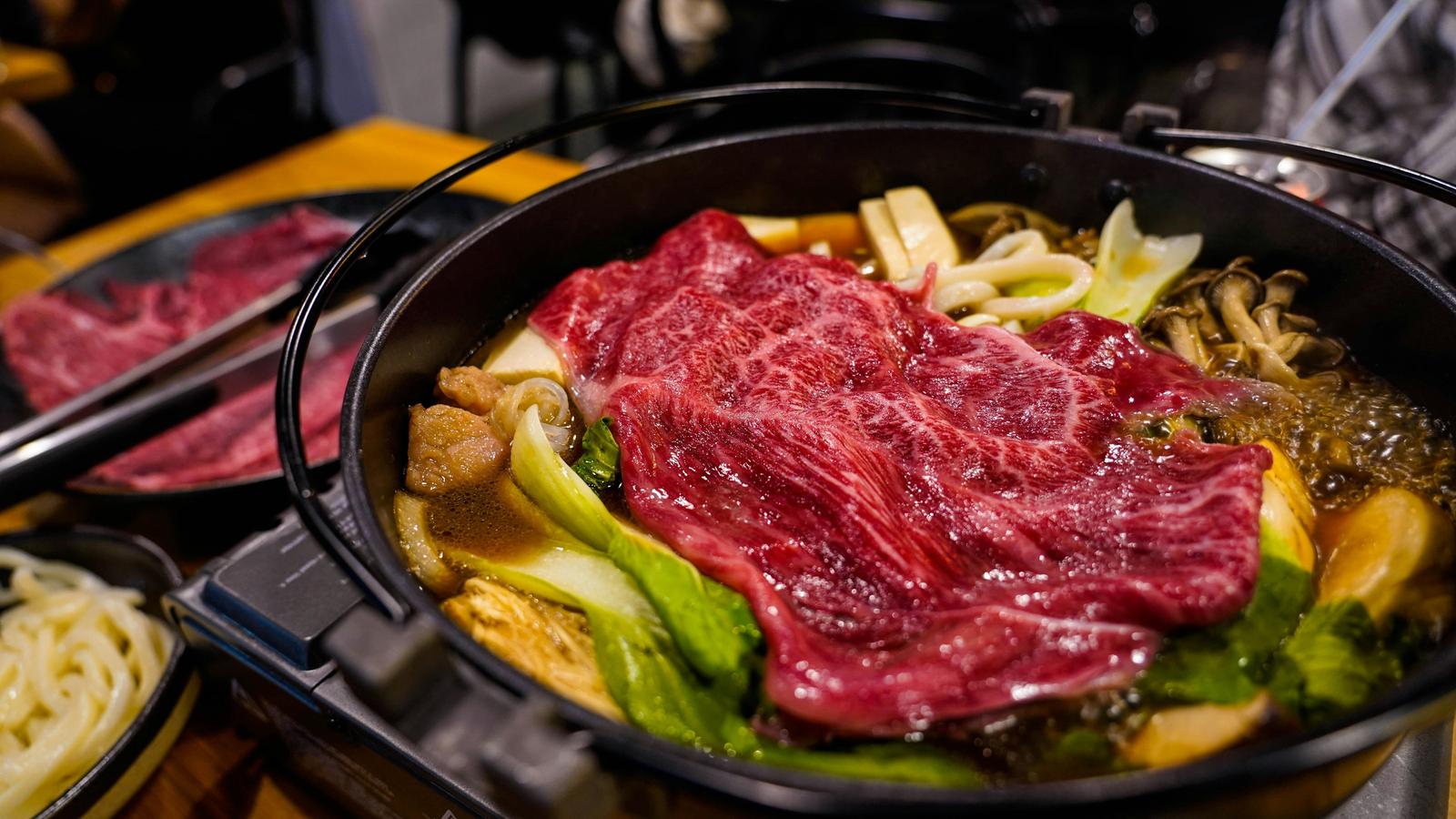
Sukiyaki and shabu-shabu are the two beef dishes most travellers have heard of before they land, and both are easy to eat badly. A tabletop burner, a plate of beef and a sauce from a bottle will feed you. The old houses of Tokyo and Kyoto give you something else: a room of your own, a server who cooks each slice at the moment it is ready, and beef chosen by people who have bought it for a hundred years or more.
This article is about where those evenings happen and why the difference is worth an evening of a Japan journey: the two schools of sukiyaki, east and west; the Tokyo and Kyoto houses that have served it since the Meiji era; the Osaka restaurant that gave shabu-shabu its name; and how the rooms and the beef work. We read the pages of the restaurants, two reservation services, a government magazine, a soy sauce maker's survey, a travel publication and the Kobe Beef council on November 5, 2026, and contacted none of them; the sources are listed at the end. For how to tell Kobe beef from other wagyu, and where to eat it as teppanyaki, see Authentic Kobe Beef: How to Check It and Where to Eat It.
Key points
- In the Kanto style, beef is simmered in warishita, a sauce of soy, mirin and sugar mixed in advance. In the Kansai style, the beef is seared first and seasoned in the pan with sugar and soy.
- Mishima-tei in Kyoto has served sukiyaki at Teramachi Sanjo since 1873; most of its interior dates from the founding, and it has 18 private rooms.
- In Tokyo, Ningyocho Imahan traces its line to a beef-pot house of 1895, and Chinya in Asakusa has been a sukiyaki specialist since 1903.
- Shabu-shabu took its name at Suehiro in Osaka, which put the dish on its menu in 1952.
- At the old houses, a server cooks the pot at the table. A private room, the beef grade and a Kobe Beef course are things we arrange in advance.
ASK US FOR AN EVENING AT ONE OF THE OLD HOUSES →
TWO WAYS TO COOK THE SAME POT
Japanese cooks divide sukiyaki into two styles. Kikkoman, in a 2024 survey of 1,158 households, defined the Kanto style as making the sauce into warishita first, searing the beef lightly, then adding the other ingredients and the sauce and eating as they simmer. The Kansai style sears the beef first, seasons it in the pan with sugar and soy, and eats the beef before the vegetables are cooked. In the Kinki region around Osaka and Kyoto, only 11 percent of respondents made warishita, while 57 percent cooked with the seasonings directly; the survey placed the gentle border between the two in the Tokai region.
The difference shows on the plate. The Kanto pot tends to be sweeter and rounder, the beef lying in a shallow sauce with leeks, tofu and shirataki. The Kansai pan begins with the sound of fat on iron and a first slice tasted almost on its own, which suits a guest who wants to taste the beef before anything else. Many houses blend the two, and the house decides. We tell you which style a restaurant keeps, so the evening matches what you hope to taste.
THE OLD HOUSES OF TOKYO
Ningyocho Imahan traces its history to a gyunabe, or beef-pot, house opened in 1895 at Honjo Azumabashi. After the rebuilding that followed the Great Kanto Earthquake, the family divided the business in 1928 into two houses, one of which is today's Asakusa Imahan. The Nihonbashi branch opened in December 1952 on the site of a storytelling hall in Ningyocho and became independent in 1956. At the main restaurant the second floor serves sukiyaki and shabu-shabu. Its sukiyaki uses mainly heifers of Japanese Black cattle, aged for about 20 days, and an experienced cook at the table judges when each slice is ready and serves it; the meal ends with beaten egg set over rice in the last of the pan.
Asakusa Imahan, on Kokusai-dori, uses only heifers, is a designated Kobe Beef restaurant, and names two contract farms in Hyogo. Its second and third floors hold private rooms with sunken kotatsu or chairs, and two special rooms on the third floor open into one for up to 16. Chinya, also in Asakusa, began as a restaurant in 1880 and became a sukiyaki specialist in 1903. It closed in August 2021 and reopened on a new Asakusa site on March 18, 2022. It uses only heifers of Japanese Black cattle raised for about 30 months and aged for about a month, and does not let its warishita boil down in the pan. It keeps three private rooms, one Japanese and two Western, for six to eight guests.
MISHIMA-TEI IN KYOTO
Mishima-tei stands at Teramachi Sanjo, where its founder, Kanekichi Mishima, opened in 1873 after learning to cook beef in Nagasaki with his wife, Tei. The house says that most of what you see inside, the small courtyard garden, the railings, ceilings and lattices, remains as it was at the founding, and the cherry wood of the rooms dates from then. A carved transom of deer and maple leaves is the work of the lacquer artist Shogo Banura. The restaurant seats 180, with 18 private rooms and a large hall.
Its sukiyaki is cooked on electric heaters chosen for an effect close to charcoal, with a warishita the fifth-generation owner has refined. He trained in Japanese cuisine and keeps up tea and ikebana, and his Hana course frames the sukiyaki with seasonal appetisers, a sweet and a bowl of thin tea. It is served from 5 pm, needs two days' notice and is limited in number. The house's top course offers prize-winning cattle and Kobe Beef. For a first evening in Kyoto, we would place Mishima-tei over a newer counter: the room itself is part of the meal, and the city has eaten beef there for more than 150 years. Mishima-tei closes on Wednesdays and some other days, so we set it early in the plan.
SHABU-SHABU AND THE OSAKA NAME
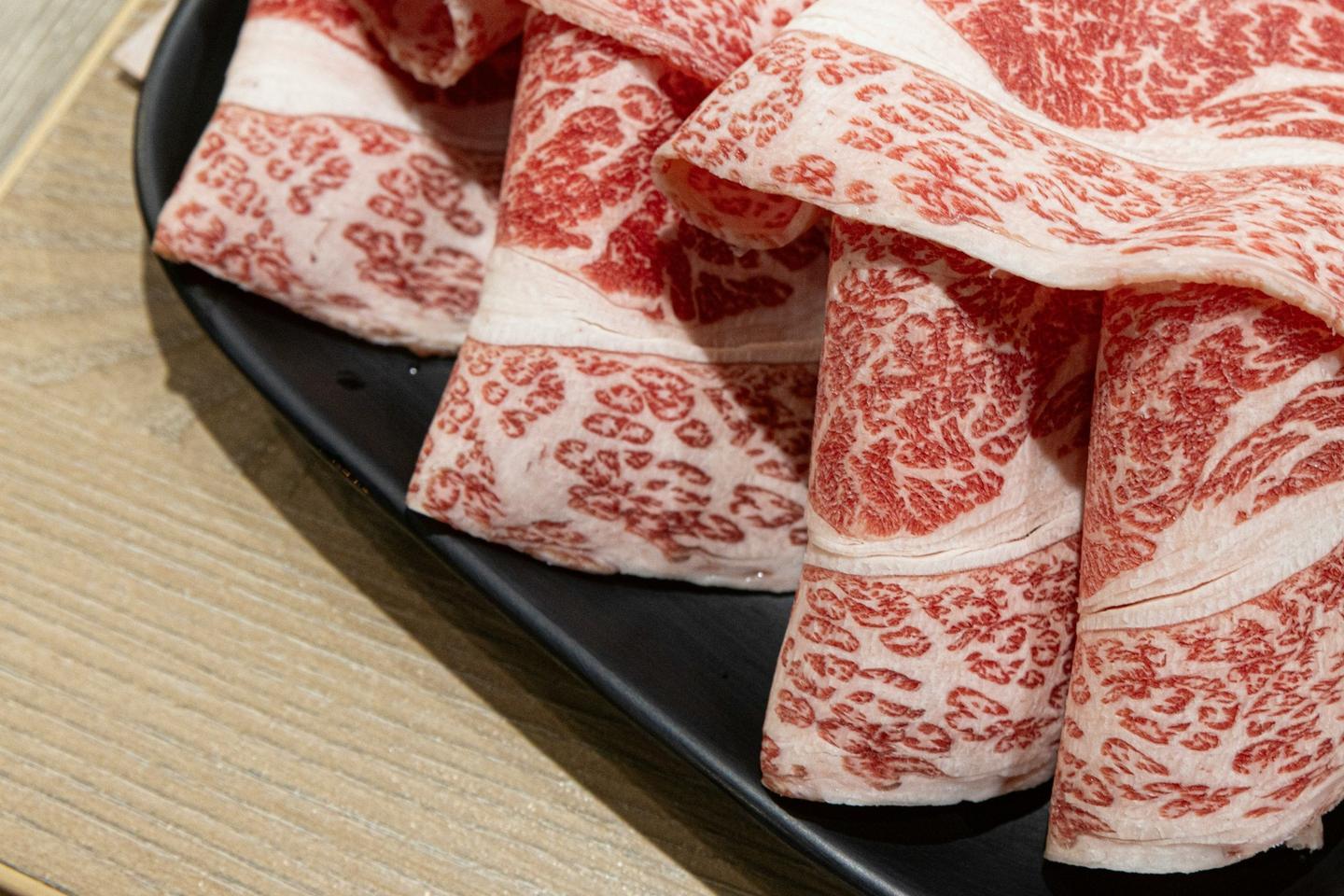
Shabu-shabu is younger. The Government of Japan's magazine Highlighting Japan traced it to Suehiro, a steak house founded in 1910 near Osaka Station. The grandfather of the present owner had the dish, a pot of vegetables and thin slices of Matsuzaka beef with a sesame sauce, before he had a name. Watching a member of staff rinse hand towels in a bowl, he heard the sound of beef drawn through broth. Suehiro put shabu-shabu on its menu in 1952. The broth is kombu and water; the character of the meal is in the sesame sauce, which Suehiro grinds fresh each day.
Shabu-shabu suits a guest who wants the beef as plain as possible, and it is the lighter choice on a long day. Mishima-tei serves it as mizutaki, cutting the beef slightly thicker than usual so the flavour carries, and in winter, from November to February, adds a version with grated daikon. Ningyocho Imahan, Chinya and Mishima-tei all serve shabu-shabu as well, so a family with different tastes can sit at one table.
THE SERVER THE ROOM AND THE BEEF
At the old houses, someone cooks for you. A Tokyo travel publication noted that at Chinya the staff handle all the cooking, and Ningyocho Imahan describes its cooks reading each slice. The nakai, the server who tends your pot, controls the heat and the timing, and the guest's part is to dip the beef in raw egg and eat. For a family or a business dinner, a private room keeps that service to your party alone; the rooms at these houses are few.
The beef is named by its breed, Japanese Black, and often by its sex, since several houses buy only heifers for their fine fat. Some go further: Kobe Beef can be sold only by designated registered restaurants, which display a bronze statue and are checked by DNA testing, according to the council that manages the brand. We note the breed and grade a house serves, and ask for a Kobe Beef course where one is offered. The detail of the brands is in our Kobe beef article.
HOW WE ARRANGE THE EVENING
We choose the house for the city and the evening: Mishima-tei for a first night in Kyoto, Ningyocho Imahan or Chinya on a day around Nihonbashi or Asakusa, Asakusa Imahan when Kobe Beef is the point. We ask for a private room and a course in advance, pass on allergies and whether anyone avoids raw egg, and set the time with your other plans in mind. Rooms and courses are the house's decision, and we confirm them to you in writing once the house has replied.
Within Signature, our planning for journeys of 7 to 21 days, one sukiyaki or shabu-shabu evening usually sits beside a kaiseki dinner and a counter or two. Each meal is settled in the simplest way available, usually on your hotel bill or on the day. For the rhythm of a kaiseki meal, see Kaiseki Etiquette.
SOURCES AND HOW WE CHECKED
We read the pages below on November 5, 2026. We did not contact any restaurant, company or other body. Hours, rooms and courses change, and each house decides its own tables.
- Ningyocho Imahan, history (Japanese): beef-pot house of 1895, division in 1928, Nihonbashi branch in December 1952, independence in 1956
- Ningyocho Imahan, sukiyaki (Japanese): Japanese Black heifers aged about 20 days, warishita, cooks who serve each slice, egg over rice to finish
- Ningyocho Imahan, main restaurant (Japanese): sukiyaki and shabu-shabu on the second floor, a room for 2 to 20 guests, hours
- Asakusa Imahan, Kokusai-dori main restaurant (Japanese): heifers only, designated Kobe Beef restaurant, two contract farms in Hyogo, private and special rooms
- Chinya, story (Japanese): founded 1880, sukiyaki specialist from 1903, reopened March 18, 2022, heifers of about 30 months, warishita not boiled down
- Chinya, private rooms (Japanese): three rooms for six, seven and eight guests
- TableCheck, Chinya: sukiyaki and shabu-shabu courses, private room charge, house rules on late arrival
- LIVE JAPAN, Chinya in Asakusa reopens (2022): the staff handle all the cooking
- Mishima-tei, about (Japanese): founded 1873 at Teramachi Sanjo, the Nagasaki origin, interior from the founding, electric heaters, the fifth-generation owner
- Mishima-tei, cuisine (Japanese): Hana course from 5 pm with two days' notice, Kobe Beef on the top course, mizutaki sliced thicker, winter version November to February
- Mishima-tei, main restaurant (Japanese): cherry wood rooms, transom by Shogo Banura, hours and closing days
- Ikyu Restaurant, Mishima-tei (Japanese): 180 seats, 18 private rooms and a large hall, aged Japanese Black beef
- Kikkoman, sukiyaki survey, October 2024 (Japanese): definitions of the Kanto and Kansai styles, 1,158 respondents, 11 percent warishita in Kinki
- Government of Japan, Highlighting Japan, February 2018: Suehiro founded 1910, shabu-shabu on its menu in 1952, the origin of the name, kombu broth and sesame sauce
- Kobe Beef Marketing and Distribution Promotion Association (Japanese): designated registered restaurants with a bronze statue, DNA verification, Tajima cattle
QUESTIONS TRAVELLERS ASK
What is the difference between Kanto and Kansai sukiyaki?
Kanto sukiyaki simmers the beef in warishita, a sauce mixed in advance. Kansai sukiyaki sears the beef first and seasons it in the pan with sugar and soy, so the first slices are tasted almost on their own.
Will someone cook the sukiyaki for us?
At the old houses, yes. A server cooks at the table and judges each slice, and you dip it in egg and eat. We tell you in advance how a house serves.
Can we have a private room?
Mishima-tei has 18 private rooms, and Ningyocho Imahan, Asakusa Imahan and Chinya all keep rooms. They are few, so we ask for one when we plan the evening; the room is the house's decision.
Is sukiyaki or shabu-shabu better for a first evening?
Sukiyaki for the sweetness and the theatre of the pan, shabu-shabu for the beef at its plainest. Several of these houses serve both, so a party can share a room and order different pots.
What if someone does not eat raw egg?
Tell us when we plan. We pass it to the house so the server can offer the beef without the egg dip.
ASK US FOR AN EVENING AT ONE OF THE OLD HOUSES
Tell us your dates, who is travelling and how you like your beef. We will set out the houses, the rooms and the courses, with the reasons, so that you can choose.
Begin planning →We reply within 24 hours, in writing
Some of the restaurants and bars we arrange seat guests only by introduction or membership. We ask on your behalf; the table and the evening are the house's decision. We do not publish their names.