Authentic Kobe beef is beef from a Tajima-gyu animal born in Hyogo Prefecture, raised by a designated Hyogo farmer, processed at a designated Hyogo slaughterhouse, and graded A or B for yield, 4 or 5 for quality, with a marbling score of BMS No.6 or higher and a carcass weight under 500 kg. The safest place to eat it is a restaurant on the Kobe Beef Marketing & Distribution Promotion Association's designated list, which shows a bronze statue and a registration certificate and can tell you the 10-digit individual ID of the animal on your plate. At the designated Kobe restaurants we checked, a Kobe beef lunch with a lean cut started at ¥8,020 per person, and sirloin or fillet courses ran from ¥12,650 at lunch to ¥45,980, tax included.
This guide explains the rules as the association and the Ministry of Agriculture, Forestry and Fisheries write them, how to check what you are served, how Kobe beef differs from Matsusaka, Omi and Yonezawa beef, and what five designated restaurants in Kobe and Kyoto charge on their own menus. We read every rule and price on the official pages on October 14, 2026, and the sources are listed at the end. If you are planning the rest of your dining, how to get a reservation at Japan's best restaurants covers the booking side.
Key points
- Kobe beef must come from Tajima-gyu born in Hyogo and finished in Hyogo, graded A or B and 4 or above, with BMS No.6 or higher. Carcass weight is 270 kg to 499.9 kg for heifers and 300 kg to 499.9 kg for steers.
- Every certified carcass carries a stamp in four places and its own Kobe Beef Certificate of Authenticity. Designated restaurants display a bronze statue and a registration certificate.
- The 10-digit individual ID lets you look up the animal on the association's Tajima Beef Certification System. Japanese law already requires steak, sukiyaki, shabu-shabu and yakiniku restaurants to show this number.
- Prices on official menus, October 14, 2026: Mouriya Honten Kobe beef lunch from ¥8,020, Kobe Plaisir counter dinner from ¥17,710, Misono Kobe dinner course from ¥25,300, Aragawa chef's course ¥45,980, and Mouriya Gion in Kyoto Kobe beef sirloin dinner from ¥24,500.
- Lunch is the better value. The same beef costs less at midday, and the 10% service charge at Misono and Kobe Plaisir applies only at dinner.
WHAT MAKES BEEF KOBE BEEF
Kobe beef is a certified name, owned and policed by the Kobe Beef Marketing & Distribution Promotion Association in Hyogo. The association registered it as a regional collective trademark in 2007, and it is also protected as a Geographical Indication by Japan's Ministry of Agriculture, Forestry and Fisheries, registration No. 3, under the names Kobe Beef, Kobe Niku and Kobe Gyu. The registered production area is Hyogo Prefecture.
The animal
Tajima-gyu only. The animal must be a Tajima-gyu, a line of Japanese Black cattle that the association says has been kept as a pure bloodline since the Edo period. It must be born in Hyogo from Tajima parents, bred and raised by a designated farmer in the prefecture, and slaughtered at a designated meat centre in Hyogo. Only virgin heifers and steers qualify. The ministry's register adds that the line has been bred only with Hyogo's own prefectural sires.
Raising. The association writes that calves are fattened for about two years after the calf market and go to market at around 30 to 32 months, two to four months longer than Japanese Black cattle in general. On the old stories, it says almost no farms feed beer, and neither music nor massage has been shown to improve the meat.
The grading thresholds
Once the carcass is graded, it must meet three numbers, as set out on the association's official Kobe beef site and in the ministry's Geographical Indication register.
| Criterion | Requirement |
|---|---|
| Yield grade | A or B |
| Quality grade | 4 or 5 |
| Marbling | BMS No.6 or higher, on a scale of 1 to 12 |
| Carcass weight, heifers | 270 kg to 499.9 kg |
| Carcass weight, steers | 300 kg to 499.9 kg |
The weight ceiling surprises people. The association explains that Tajima-gyu carcasses average around 420 kg, about 50 kg lighter than the national average, and that farmers believe the fine texture of the breed is lost if the animal grows much larger. Of the roughly 7,000 Tajima-gyu taken to market each year, about 5,500 are certified as Kobe beef, and the association puts Kobe beef at less than about 0.2% of the beef eaten in Japan.
A Tajima-gyu that misses one of these thresholds is still Tajima-gyu, and it carries its own certificate. It is simply not Kobe beef, and a restaurant should not describe it as such.
A5 AND BMS IN PLAIN TERMS
The letter and number on a Japanese menu come from the Japan Meat Grading Association, which grades carcasses of every breed against the same national standard. The association's Kobe beef FAQ confirms that all Tajima-gyu carcasses are graded by this body.
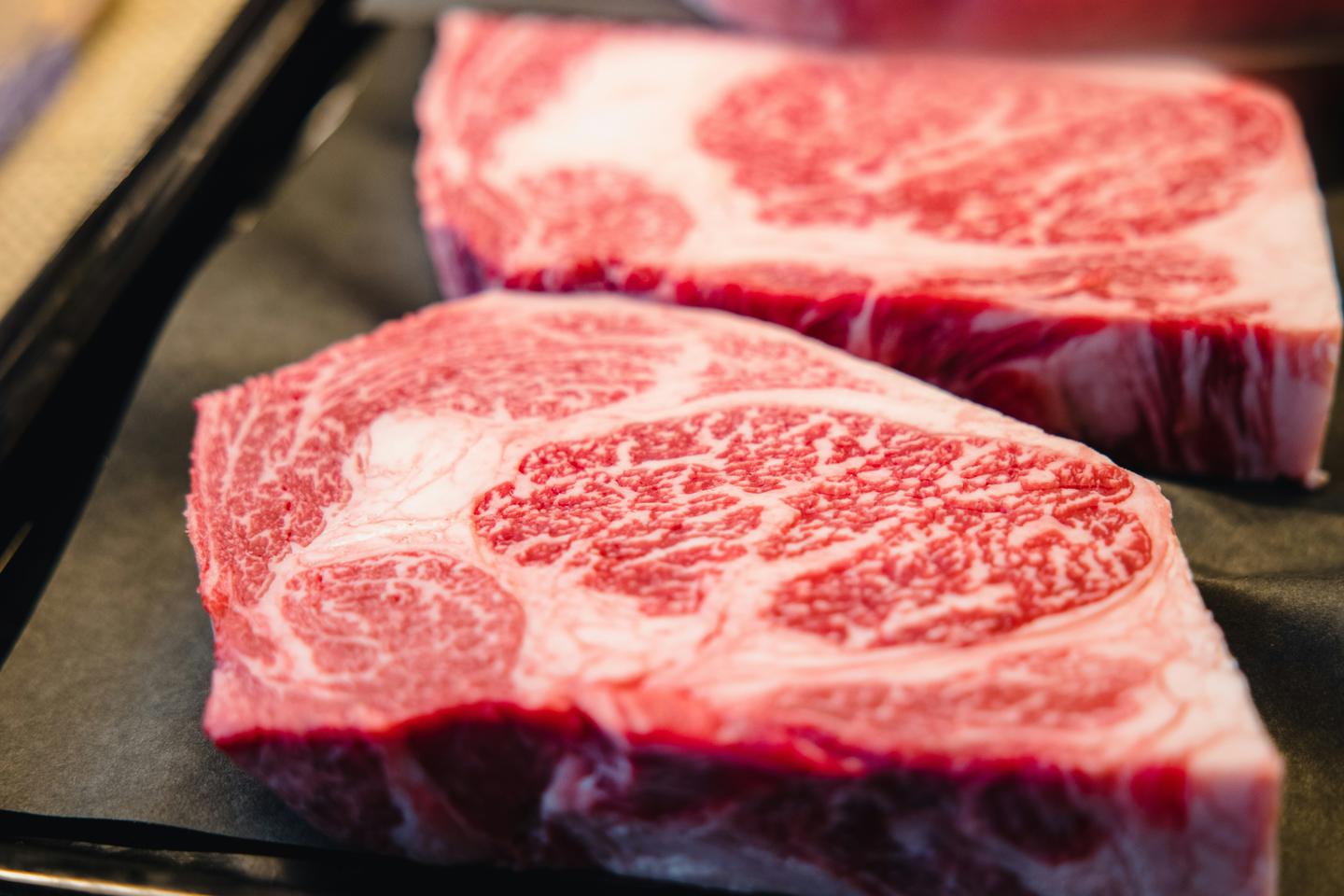
The letter is yield. It measures how much usable meat the carcass gives. A means the yield is above standard, with a yield score of 72 or more; B is standard, 69 to just under 72; C is below standard.
The number is quality. It runs from 1 to 5 and is judged on four things: marbling, the colour and brightness of the meat, its firmness and texture, and the colour, lustre and quality of the fat. The carcass receives the lowest of the four scores, so a 5 must be excellent on all of them.
BMS is the marbling scale inside the quality grade. The Beef Marbling Standard runs from No.1 to No.12. For marbling, grade 5 requires BMS No.8 to No.12, grade 4 requires No.5 to No.7, and grade 3 requires No.3 or No.4.
Two things follow. A5 is a grade any well-raised animal can reach, and it does not mean Kobe beef. And Kobe beef can be A4, B4, A5 or B5; because the rule asks for BMS No.6 or higher, a Kobe carcass graded 4 sits in the upper part of the grade 4 band. Several restaurants show both: Mouriya, for example, lists its Kobe beef cuts and its own selection of other A5 wagyu side by side, at very different prices.
HOW TO CHECK IT AT THE TABLE
The association sets out a chain of evidence from the farm to the restaurant, and a guest can see most of it.
- The bronze statue. The association states that every designated wholesaler, shop and restaurant displays a bronze statue and its designated registration certificate at the shop front, as proof that it may handle Kobe beef. Its Japanese home page puts it plainly: Kobe beef can be handled only at designated registered shops that have the bronze statue.
- The designated list. The association publishes every designated shop and restaurant on its site, by prefecture and abroad, with a registration number. Chains register branch by branch, so check the branch you will visit, under its own name.
- The certificate. Each certified carcass is stamped in four places and issued its own Kobe Beef Certificate of Authenticity. The certificate carries a DNA management number.
- The 10-digit ID. The association says designated butchers and restaurants display the animal's 10-digit individual ID number. Entered on its Tajima Beef Certification System, the number shows the lineage, where the animal was born and raised, the market where it was sold, and whether it was certified as Kobe beef.
- The law behind the number. Under Japan's cattle traceability law, restaurants serving yakiniku, shabu-shabu, sukiyaki or steak must display the individual ID of the beef they serve and keep records, according to the Ministry of Agriculture, Forestry and Fisheries. Any of those restaurants should be able to show you the number.
- The DNA check. A meat sample from every certified animal is stored, and the association runs DNA tests on beef taken from designated shops and publishes every result. A result marked Pass means the beef was distributed correctly.
If you do not see the number, ask for it; a restaurant serving steak is required to display it. On a trip we arrange, we ask the restaurant in writing beforehand to show the certificate and ID number at the table.
KOBE BEEF AND THE OTHER NAMED WAGYU
Japan protects several beef names as Geographical Indications. The ministry's register describes each in its own terms, and the rules are not the same.
| Name | Region | What the register says |
|---|---|---|
| Kobe Beef, No. 3 | Hyogo | Tajima-gyu finished as beef, graded A or B 4 or higher with BMS No.6 or higher |
| Tokusan Matsusaka Ushi, No. 25 | 22 former municipalities around Matsusaka, Mie | Virgin Japanese Black heifers brought in from Hyogo by 12 months of age and fattened for 900 days or more |
| Yonezawa Gyu, No. 26 | Okitama area, Yamagata | Valued since the Meiji era; traded at about 20% above the wagyu average |
| Omi Beef, No. 56 | Shiga | Fat rich in oleic acid with a low melting point; produced for about 400 years |
One detail is worth knowing. The registered Tokusan Matsusaka Ushi, the long-fattened top category of Matsusaka beef, starts as heifer calves bought from Hyogo, so it shares its origins with the Tajima line. The two are finished and certified under separate rules in separate prefectures. Omi beef is described by its own register entry as one of the oldest beef brands in Japan. Which you prefer is a matter of taste.
TEPPANYAKI SHABU-SHABU AND SUKIYAKI
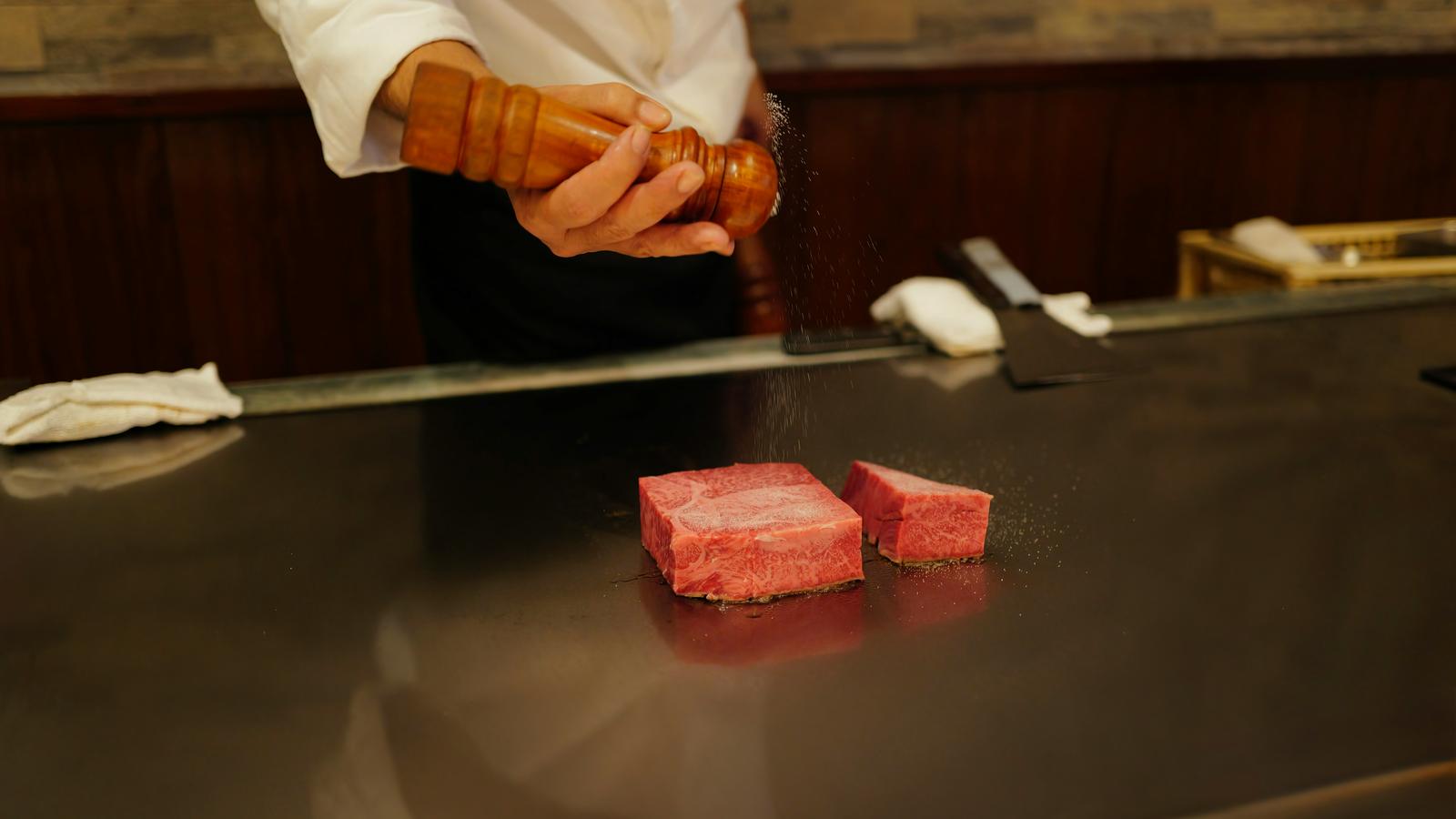
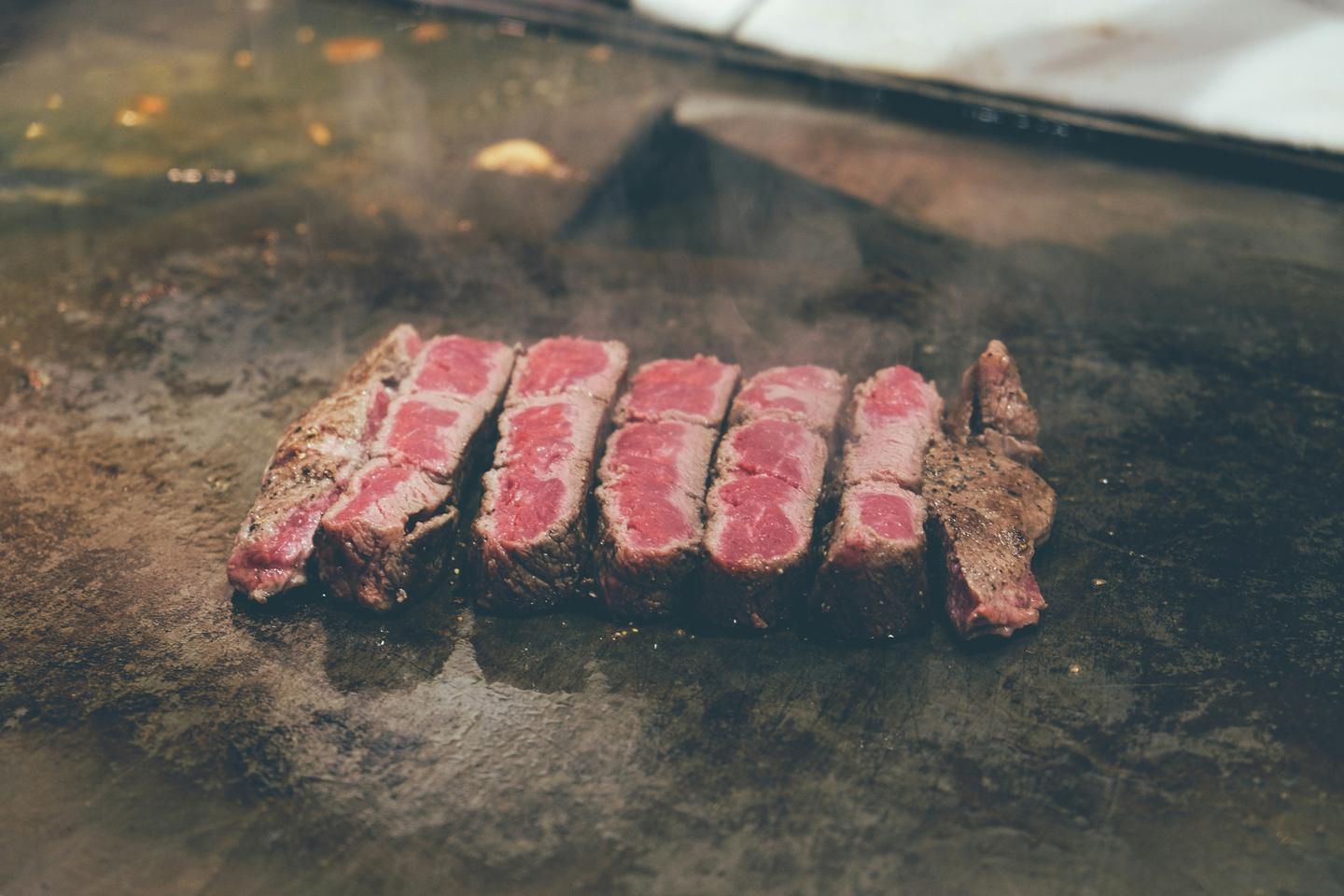
Teppanyaki. This is how most visitors eat Kobe beef. A chef cooks the steak, vegetables and often seafood on a steel griddle in front of you. Misono, which opened in Kobe in 1945, describes itself as the restaurant that first served teppanyaki steak, and at its Kobe branch a dedicated chef cooks at each table. Courses are priced by cut and weight: usually sirloin, fillet, or a leaner cut such as rump or round, in portions from 80 g to 200 g.
Charcoal grilling. Aragawa in Kobe skewers the meat and grills it over binchotan charcoal in a kiln, a method it describes as the Aragawa style. It serves one chef's course with a choice of steak.
Shabu-shabu. Thin slices are swished through hot broth and dipped in ponzu or sesame sauce. Fat renders off, so it suits guests who find a marbled steak too rich. Kobe Plaisir serves Kobe beef shabu-shabu and a steamed version, seiro-mushi, at lunch and dinner; both need advance booking and are for two guests or more.
Sukiyaki. Slices are cooked in a sweet soy broth and dipped in raw egg. It is the richest of the three and a good choice for a family meal. Several designated restaurants serve sukiyaki and shabu-shabu together; we pick one for the city and the day.
WHERE TO EAT IT AND WHAT IT COSTS
The five restaurants below are all on the association's designated list, which we checked on October 14, 2026, and all publish their Kobe beef prices on their own websites. The prices are per person, from the lowest to the highest Kobe beef course or set on each menu, with tax included. Lean cuts such as round and rump cost far less than sirloin and fillet. Where a restaurant also serves other wagyu, we left those dishes out.
| Restaurant | Designated list | Lunch | Dinner |
|---|---|---|---|
| Kobe Plaisir Honten, Sannomiya, Kobe | Yes, No. 447 | Counter course, Kobe beef round 80 g ¥9,570; sirloin 80 g ¥12,650 to 150 g with foie gras ¥23,650 | Counter course, fillet 100 g or sirloin 120 g ¥17,710, up to ¥32,010 with spiny lobster; plus 10% service |
| Misono Kobe, Sannomiya, Kobe | Yes, No. 661 | Kobe beef lunch, 150 g loin steak, ¥23,100; the dinner courses can also be ordered at lunch | Kobe beef A course, 150 g, ¥25,300; special course with half a lobster ¥37,400; plus 10% service after 17:00 |
| Mouriya Honten, Kobe | Yes, No. 207 | Kobe beef inside round 120 g set ¥8,020; sirloin (A5) 130 g ¥21,780 to fillet (A5) 150 g ¥34,480 | B course, inside round 120 g ¥9,090; sirloin (A5) 130 g ¥22,850 to fillet (A5) 150 g ¥35,550 |
| Aragawa, Kobe | Yes, No. 1989, listed under the company name | Chef's recommended course ¥45,980 including tax and service; the site gives one course price | |
| Mouriya Gion, Kyoto | Yes, No. 898 | Kobe beef rump 120 g ¥9,000; sirloin (A5) 120 g ¥21,000 to fillet (A5) 180 g ¥40,800 | Kobe beef sirloin (A5) 120 g ¥24,500 to fillet (A5) 180 g ¥44,300 |
Kobe Plaisir is run directly by JA Zen-Noh Hyogo, the agricultural cooperative federation of the prefecture, and opened in 2008 in the Hotel The B Kobe building, a five-minute walk from the Sannomiya stations. Counter courses come with soup, salad, Hyogo vegetables, rice and dessert. It is closed on Mondays. Lunch is 11:30 to 15:00 and dinner 17:00 to 22:00.
Misono Kobe sits on the seventh and eighth floors of its own building, two minutes on foot from Hankyu Sannomiya, with a view of the city at night from the dining room. A chef is assigned to each table. Lunch runs 11:30 to 14:30 and dinner 17:00 to 22:00, and it closes only from December 30 to January 3. Its cancellation terms charge 30% of the food plus tax if the menu was fixed, or ¥3,300 per person if it was not.
Mouriya Honten says it has handled Kobe beef at the same address since 1885. It seats 50 over three floors and opens 11:00 to 22:00. Mouriya publishes its closing days by month for its Kobe branches, so we check the calendar for your date.
Aragawa opens 12:00 to 15:00 and 17:00 to 22:00, is closed on Sundays and asks for casual chic dress. The course runs from bite-sized starters to the charcoal-grilled steak, salad and dessert, in a room of 29 seats with one private room.
Mouriya Gion in Kyoto is the branch to choose if your trip does not reach Kobe. Dinner adds an amuse and a starter to the lunch set.
Drinks are on top: Misono lists wine by the glass from ¥880, and Kobe Plaisir's bottles start at ¥6,050. How dining fits into a full trip budget is set out in what a bespoke Japan trip costs.
KOBE KYOTO OSAKA OR TOKYO
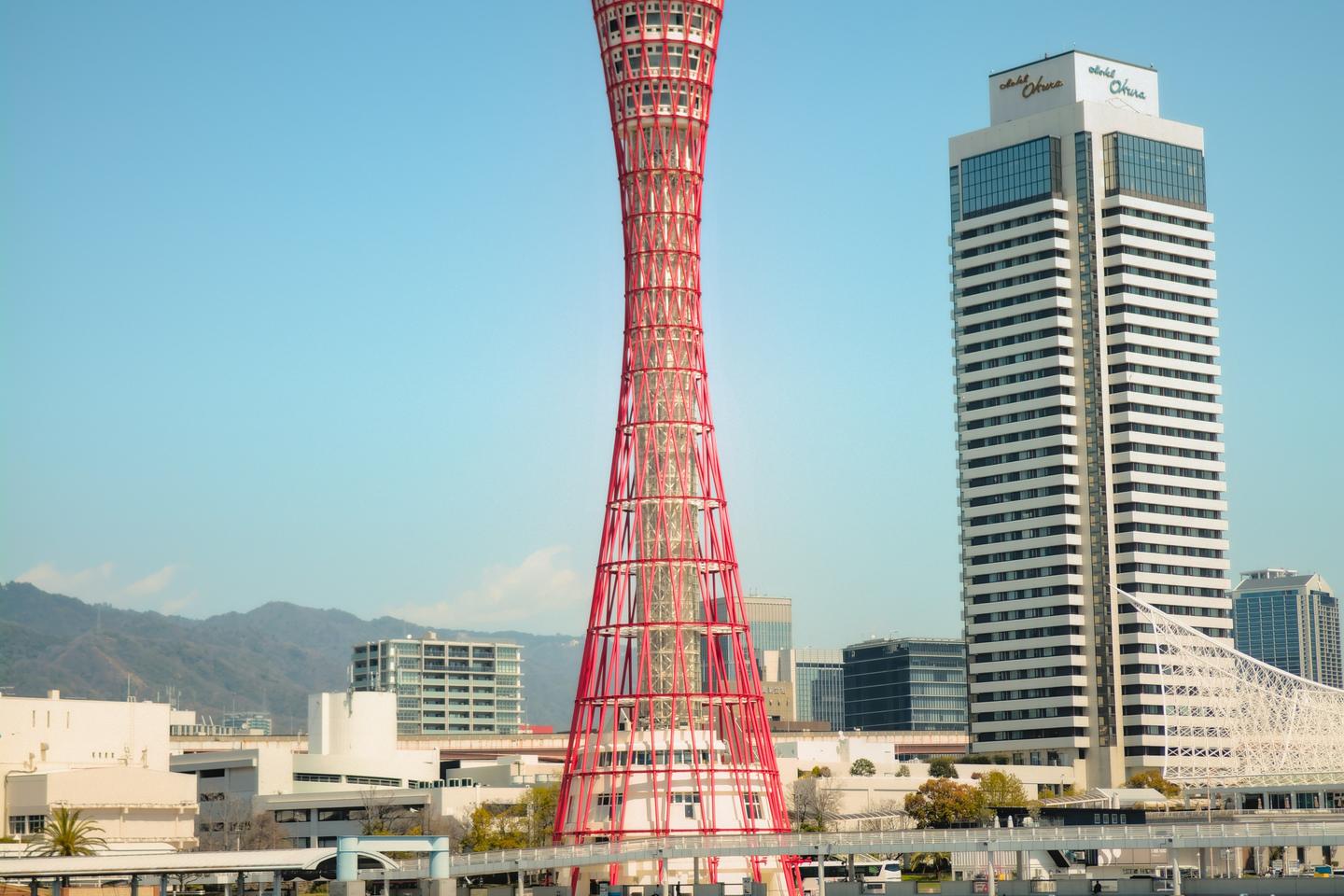
Kobe beef is certified the same way wherever it is served, and the association's list covers restaurants across Japan and abroad. The case for eating it in Kobe is choice and price. The designated list for Kobe city alone is long, and most of the restaurants above are a short walk from Sannomiya station.
From Osaka, Kobe is an easy half day or a dinner out; Aragawa gives Shin-Kobe station as ten minutes by car and Sannomiya as ten minutes on foot. We cover Kobe as a day out in Osaka beyond Dotonbori.
In Kyoto, Mouriya Gion lets you keep the Kobe beef dinner without leaving the city.
In Tokyo, the list includes many designated restaurants and hotels, from Shibuya to Akasaka and Roppongi. If a Tokyo menu says Kobe beef, the branch should be on the list. A menu that says wagyu, Tajima beef or A5 is describing something else, which may be excellent in its own right.
LUNCH OR DINNER
Lunch costs less for the same beef. At Kobe Plaisir, the counter course with 120 g of Kobe beef sirloin is ¥17,050 at lunch and ¥17,710 at dinner, and the dinner price then carries a 10% service charge. At Mouriya Honten, a Kobe beef sirloin of 130 g is ¥21,780 as a lunch set; the dinner B course is ¥22,850. At Misono, the 10% service charge applies only after 17:00.
Dinner gives you the view and the time. Misono's upper floors face the lights of the city, and Mouriya sells a dinner plan with a night view. If the meal is the main event of the day, dinner is the better setting.
A practical pattern. Coming from Osaka or Kyoto, take lunch near Sannomiya and an afternoon in Kitano or at the port. Staying in Kobe or at Arima Onsen, dinner is easier.
HOW WE ARRANGE A KOBE BEEF MEAL
We arrange the table in your name and write to the restaurant in Japanese beforehand with the details that matter for beef.
- The cut and the weight. Sirloin or fillet, and 80 g to 200 g. Fillet is limited at several restaurants; Kobe Plaisir notes it may not always be in stock.
- The certificate and ID. We ask for both to be shown at the table.
- Dietary needs. Shellfish allergies matter at teppanyaki, where seafood is cooked on the same griddle; Mouriya Gion says plainly that cross-contact cannot be ruled out. Misono offers a halal Kobe beef sirloin course at ¥38,500, cooked in a style chosen at booking.
- Timing. Shabu-shabu and seiro-mushi at Kobe Plaisir need advance booking and two guests or more, and some restaurants close on set days each month.
Table manners at the counter are in Japan etiquette for luxury travellers.
SOURCES AND HOW WE CHECKED
We read each rule, list entry and menu on the official websites listed below on October 14, 2026. We did not contact the restaurants. Prices change, menus change with the season, and some restaurants revise prices once a year; we confirm the current menu when we arrange the table. Prices are as published, tax included, unless noted.
- Kobe Beef Marketing & Distribution Promotion Association, FAQ: eligibility, raising period, carcass weight, annual numbers, the 10-digit ID
- Kobe Beef official site, certification standards: yield grade, quality grade, BMS No.6, weight ranges
- Association, designated registered shops: 2007 trademark, bronze statue and registration certificate
- Association, certification: four stamps and the Certificate of Authenticity
- Association, DNA testing system: stored samples and published results
- Association, designated store list: registration numbers for the five restaurants
- Japan Meat Grading Association, beef carcass standard: yield grades, quality grades, BMS bands
- Ministry of Agriculture, Forestry and Fisheries, beef traceability: ID display rule for restaurants
- Ministry of Agriculture, Forestry and Fisheries, GI register: Kobe beef No. 3, with No. 25, 26 and 56 for Matsusaka, Yonezawa and Omi
- Kobe Plaisir Honten, menu: lunch, dinner, shabu-shabu and plate prices, hours
- Misono Kobe, menu and shop page: courses, hours, service charge, cancellation
- Mouriya Honten, menu and Mouriya Gion, menu: Kobe beef set and course prices
- Aragawa, Kobe: chef's course price, hours, seats, dress code
QUESTIONS GUESTS ASK
How can I tell if a restaurant serves real Kobe beef?
Check that the branch appears on the Kobe Beef Marketing & Distribution Promotion Association's designated list, and look for the bronze statue and registration certificate the association asks members to display. Then ask for the 10-digit individual ID, which you can look up on the association's Tajima Beef Certification System.
Is all A5 wagyu Kobe beef?
No. A5 is a national grade from the Japan Meat Grading Association that any carcass can earn. Kobe beef must also be Tajima-gyu born and raised in Hyogo, and it can be graded A4, B4, A5 or B5, provided the marbling is BMS No.6 or higher.
How much does Kobe beef cost per person in Kobe?
On the official menus we read on October 14, 2026, a Kobe beef lunch with a lean cut started at ¥8,020 at Mouriya Honten, and a sirloin course at ¥12,650 at Kobe Plaisir, tax included. Dinner courses ran from ¥17,710 at Kobe Plaisir to ¥45,980 for Aragawa's chef's course, and drinks are extra.
Can I eat Kobe beef in Tokyo?
Yes. The association's designated list includes many restaurants and hotels in Tokyo. Kobe beef served in Tokyo is certified in the same way, so the same checks apply: the branch on the list, the statue and certificate, and the ID number.
Is lunch or dinner better for Kobe beef?
Lunch is better value: at the restaurants we checked the same beef costs less, and Misono and Kobe Plaisir add a 10% service charge only at dinner. Dinner suits a meal that is the main event of the day.
LET US ARRANGE YOUR KOBE BEEF TABLE
Send us your dates, the cities on your route, and any dietary needs. We will come back with two or three designated restaurants that fit the day, the cut and course we suggest at each, and the published price per person, and we arrange the one you choose.
Begin planning →