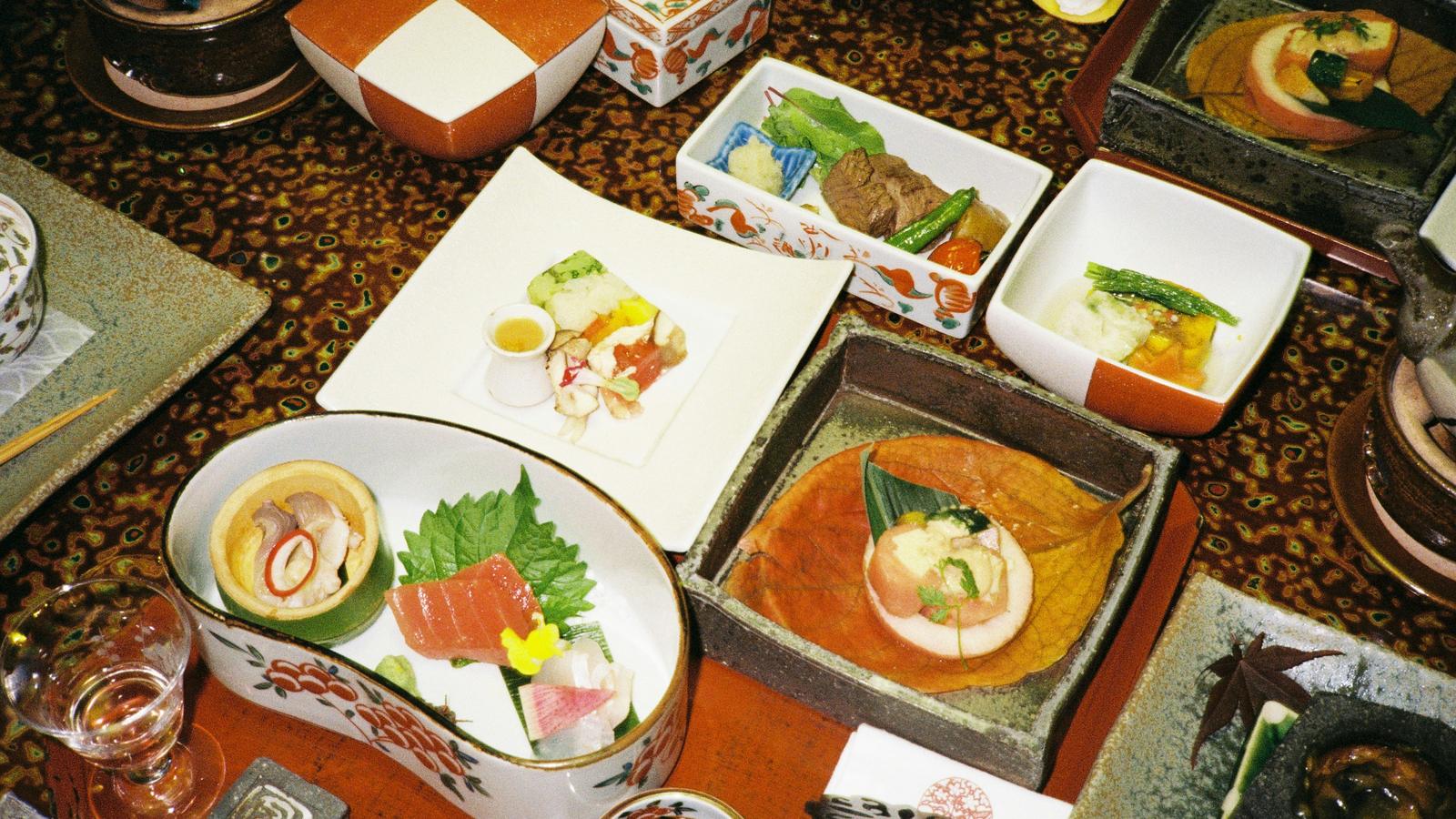
A kaiseki dinner is a set sequence of eight to twelve seasonal courses, served one at a time over roughly two and a half hours, and the etiquette that matters is short: arrive on time, wear no strong scent, take your shoes off where the floor turns to tatami, put each lid back when you finish a bowl, and tell the restaurant about allergies and dietary needs when the table is booked. In Kyoto in autumn 2026, the published prices at the well-known houses run from ¥13,200 for a lunch course to ¥110,000 for the most elaborate dinner, and most add a service charge of 10% to 20% on top.
This guide walks through a kaiseki meal in the order it reaches you, then covers the choices that change the evening: a ryokan or a restaurant, a counter or a private room, lunch or dinner. It ends with a table of five houses in Kyoto and Tokyo and the rules each one publishes. We read every price, hour and rule on the restaurant's or inn's own website on October 14, 2026, and list the pages at the end. How to secure the table itself is covered separately in how to get a reservation at Japan's best restaurants.
Key points
- A kaiseki menu moves from a seasonal opening bite, through a platter, sashimi, a lidded soup, a grilled dish and a simmered dish, to rice, miso soup and pickles, then fruit or a sweet. The exact order differs from house to house.
- Kikunoi Honten in Kyoto publishes dinner courses at ¥33,000, ¥55,000, ¥77,000 and ¥110,000, plus a lighter ¥22,000 course, with tax included and a 15% service charge added.
- Kyoto Kitcho Arashiyama asks for smart casual dress and no strong perfume, does not admit children under six according to its English page, and charges 30% of the booking from five days before.
- Hyotei, the Nanzenji house, lists its dinner course from ¥37,950 with tax and service included, rising to ¥50,600 from November 1, 2026.
- Dietary needs go in writing, in advance. Kitcho asks for them at the time of reservation and Hiiragiya, the Kyoto ryokan, at least three days before arrival.
WHAT A KAISEKI MEAL IS
Kaiseki is the formal multi-course cuisine of Japan, and Kyoto is where it is most closely kept. Two words share the reading. One is written with the characters for a banquet seat and grew out of drinking parties, where sake comes first and rice comes last. The other is written with the characters for a warmed stone, after the stone a monk would hold against his stomach, and refers to the meal served before the tea ceremony. The restaurant kaiseki you will eat today draws on both: the season and restraint of the tea meal, the pace and generosity of the banquet.
Three things define it in practice. The menu is set. You choose a price level when you book, and the kitchen decides what you eat, usually changing the menu every month. The season is the subject. Ingredients, the dishes they sit on and the scroll in the alcove all follow the calendar, so a matsutake soup in October will not appear in May. The vessels matter as much as the food. Lacquer, porcelain and old pottery are chosen for each course, and the staff will often tell you about a piece if you ask.
Portions are modest, the courses arrive at an unhurried pace, and you leave comfortably full by the time the rice comes.
THE COURSE ORDER DISH BY DISH
There is no single fixed sequence. Each house sets its own order and names, and the same house will move dishes around through the year. Kikunoi Honten's illustrated autumn course on its website runs sakizuke, hassun, mukozuke, a simmered dish, a lidded dish, yakimono, sunomono, a little cup course, shiizakana and rice. Its published example for October, titled with Kannazuki, the old name for the month, runs in ten steps from a little cup of baby turnip with walnut miso to chestnut ice cream. Use the list below as a guide to the vocabulary, and expect the menu on the night to vary it.
Sakizuke
The opening bite, sometimes listed as tsukidashi or, at Kikunoi in October, choku, after the little cup it comes in. It is one or two mouthfuls that announce the season, served with the first sake.
Hassun
A seasonal platter of several morsels arranged together, named after the tray of eight sun, about 24 centimetres square, used in the tea meal. Kikunoi's October hassun lists mackerel sushi, sake-cured prawn, trout roe, sweetfish simmered with its roe, a chestnut wrapped in cloth-pressed form, ginkgo nuts, ginkgo taro and pine-needle somen. In some houses the hassun comes later in the meal.
Mukozuke
Sashimi, named for the dish set on the far side of the tray. At Kikunoi in October this is wild sea bream from Akashi with Ise lobster, and tuna with egg-yolk soy sauce.
Futamono or wanmono
The lidded course, usually a clear soup. Many cooks treat it as the centre of the meal, since the dashi shows the kitchen's hand most plainly. Kikunoi serves it in October as dobin-mushi, a broth of matsutake, conger eel and mitsuba in a teapot-shaped vessel.
Yakimono
The grilled course, most often fish. Kikunoi's October menu lists sweetfish with roe, salt-grilled.
Takiawase or nimono
Vegetables, and sometimes fish or tofu, simmered separately and then served together in one bowl so each keeps its own flavour.
Shiizakana sunomono and other extra courses
Many menus add a dish to go with the sake. Shiizakana is a heartier course, often meat; Kikunoi's October menu gives beef grilled with sansho pepper. Sunomono is a vinegared dish that refreshes the palate. Some houses add a fried course or a hot pot in winter.
Gohan with tomewan and konomono
Rice, a closing soup, usually miso, and pickles arrive together and mark the end of the savoury meal. The rice is often cooked with something seasonal; Kikunoi lists matsutake rice in October. Once the rice arrives, the sake service usually winds down.
Mizumono or mizugashi
Fruit or a sweet, sometimes followed by matcha. Kikunoi's October menu ends with chestnut ice cream and an old-style pudding.
AT A RYOKAN OR AT A KYOTO RESTAURANT
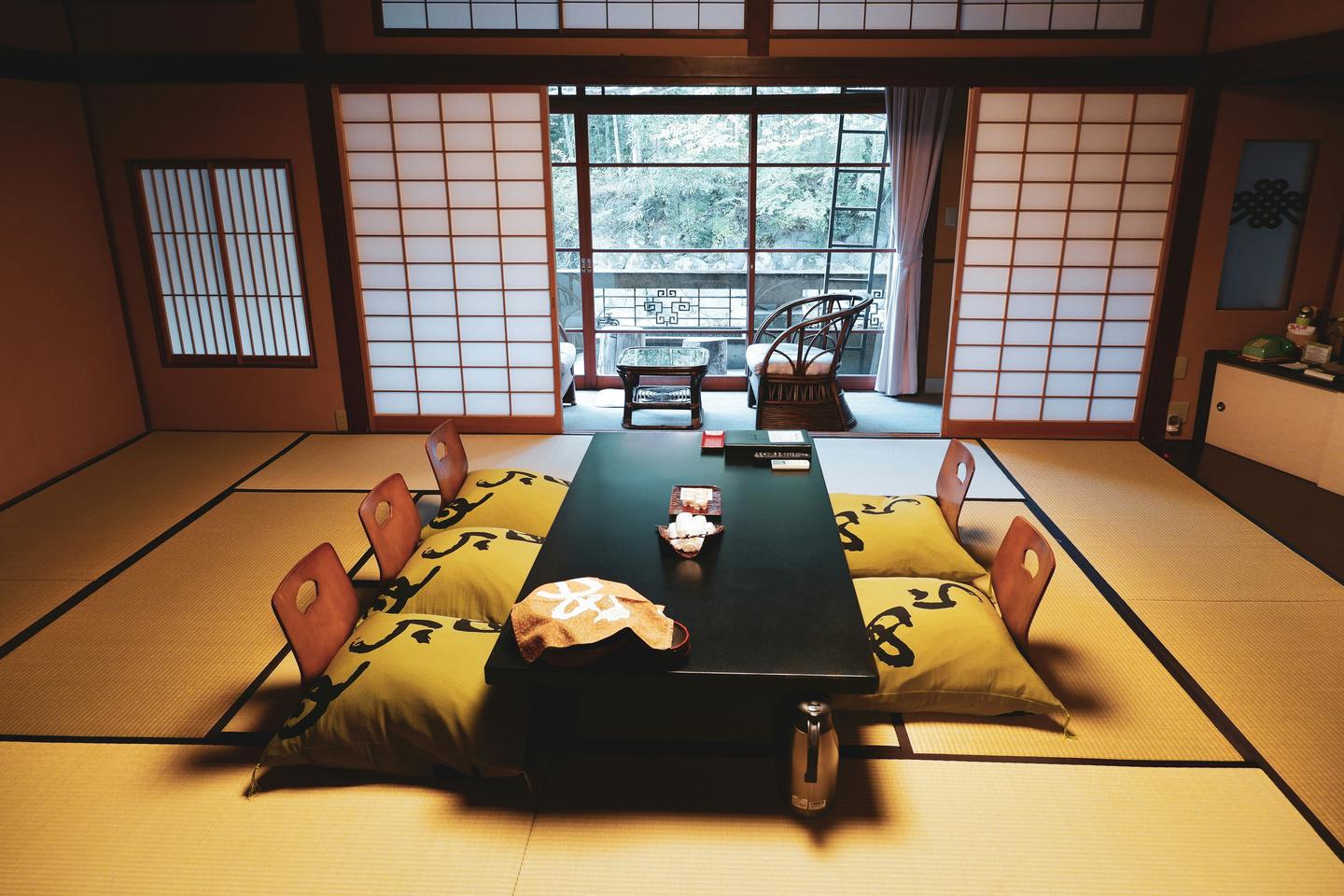
A kaiseki dinner at a ryokan is part of the stay. You choose a time when you check in or before, and the inn prepares the meal for its guests that night. Hiiragiya, the Kyoto inn, states on its English FAQ that dinner is served from 6:00 or 7:00 pm and breakfast from 7:30, 8:00 or 9:00 am. It asks guests to tell it about dietary needs at least three days in advance, and states that its kitchens cannot prepare halal or kosher meals. Check-in is from 3:00 pm, so a 6:00 pm dinner leaves time for a bath first.
A restaurant kaiseki is the evening itself. You travel to it, often to a house with its own garden and gate, and the kitchen cooks only for diners. The difference you will notice is range. A house such as Kikunoi or Kitcho has a whole team of cooks and a long run of courses, and offers lunch as well as dinner. Many travellers plan both, a ryokan dinner on the night they stay at an inn and one great restaurant meal in Kyoto on another night. How to choose the inn is in how to choose a ryokan.
COUNTER OR PRIVATE ROOM
Most of the historic houses seat guests in tatami rooms, and many now also have a counter. The two give quite different evenings.
At the counter you sit in a row and watch the cooks prepare each course, and the chef can explain the dishes as they come. Roan Kikunoi, Kikunoi's restaurant in Kiyamachi, has a nine-seat counter where its website says you can watch the cooks at work. Akasaka Kikunoi in Tokyo has a counter of thirteen seats and a second of six on its ground floor. A counter suits two people, people who enjoy the craft, and anyone who would find kneeling for two hours uncomfortable.
In a private room you are alone with your party, a server brings each course, and the garden or the alcove is the view. Kikunoi Honten lists ten tatami rooms for parties of two to forty. A room suits families, business dinners and anyone who wants conversation without neighbours. It can cost more: Akasaka Kikunoi adds a 20% service charge in its tatami rooms against 15% elsewhere for dinner, and its rooms require the ¥22,000 dinner course or higher and are not used at lunch.
Many tatami rooms now have a sunken table, or tables and chairs, which removes the question of kneeling. If you need chairs, it is one of the things we put in writing when we arrange the table.
THE ETIQUETTE THAT MATTERS
The staff at a good kaiseki house do not expect overseas guests to know every custom, and no one will correct you at the table. A handful of habits, however, make the evening easier for everyone. The wider picture is in Japan etiquette for luxury travellers.
Shoes
In houses with tatami rooms you take your shoes off at the entrance or at the step up to the room, and the staff will put them away and bring them back when you leave. Wear socks or tights, choose shoes you can slip on and off without sitting down, and avoid tall lace-up boots.
Fragrance
Scent travels in a quiet room and sits on top of delicate food. Kyoto Kitcho states it in its reservation policy: guests are asked to refrain from strong perfume and heavily scented hair products, because aroma is part of the food. Treat that as the rule everywhere.
Lids
For a lidded bowl, hold the bowl with one hand and lift the lid with the other, letting the condensation drip back into the bowl. Set the lid upside down beside the bowl. When you finish, put it back on the bowl the right way up, as it came. If a lid will not lift, press the sides of the bowl gently to release the seal.
Chopsticks
Rest them on the chopstick rest between bites, never across the bowl. Do not pass food from your chopsticks to someone else's, and do not leave them standing upright in the rice; both are associated with funeral rites. Lift rice and soup bowls towards you to eat. Lifting the larger plates is not expected.
Timing
The kitchen times every course from your arrival, so arrive on time and let the house know at once if you will be late. Kikunoi Honten lists a lunch entry window of 12:00 to 12:30. Kitcho's policy treats a booking as cancelled if it cannot reach you within 30 minutes of the reserved time.
Photographs
None of the houses we checked publish a photography rule. Taking a quiet picture of a dish is common at many restaurants. Ask first, use no flash, keep it brief, and do not photograph other guests, the private rooms of others or the staff without asking.
Dietary needs in advance
This is the rule that matters most. A kaiseki kitchen buys for your booking, often days ahead, and cannot substitute on the night. Kitcho asks for allergies and disliked ingredients for every guest at the time of reservation, says that requests made on the day may not be accommodated, and asks guests with pregnancy-related needs to consult it in advance. It accommodates vegan, vegetarian and religious diets where possible. Dashi, the base of almost every course, is usually made with bonito, so a vegetarian or vegan request has to be stated plainly. When we arrange a table, we write to the restaurant in Japanese with each guest's needs and confirm the reply in writing before you travel.
LUNCH OR DINNER DRESS AND TIMING
Lunch
Lunch is the gentler introduction. The rooms and gardens are seen in daylight, the menus are shorter and the prices lower. At Kikunoi Honten lunch starts at ¥16,500, with the two lowest courses listed as having fewer dishes; dinner there starts at ¥33,000, or ¥22,000 for a lighter course. Kitcho Arashiyama lists lunch from ¥40,000 and dinner from ¥50,000, before tax and service. Lunch also leaves the evening free, which helps on a day of travel.
Dinner
Dinner is the complete meal, often with more courses and the house at its most formal. Most houses seat dinner guests between about 5:00 pm and 7:30 pm. Kikunoi Honten's dinner entry window is 17:00 to 19:30, and Kitcho Arashiyama's last order for dinner is 18:30.
How long it takes
Plan on two to three hours. Kitcho Arashiyama takes its last dinner order at 18:30 and closes at 21:00; Hyotei's main house takes its last lunch order at 13:00 and closes at 15:00. Leave the time after a kaiseki dinner unplanned.
What to wear
Smart casual is the usual standard. Kitcho states it and asks guests to avoid shorts, sandals and sportswear. A jacket for men is never wrong at dinner, and a skirt or trousers that are comfortable for sitting low is sensible if you will be on tatami. Clothes that are tight at the knee are hard work on a floor cushion.
FIVE HOUSES AND WHAT THEY PUBLISH
The table below gives the published prices and rules from each house's own website on October 14, 2026. Read the tax and service column with care, since it changes the total: a ¥33,000 course at Kikunoi Honten comes to ¥37,950 once the 15% service charge is added, before drinks.
| House | Lunch | Dinner | Tax and service | Rules it states |
|---|---|---|---|---|
| Kikunoi Honten, Higashiyama, Kyoto | ¥16,500 to ¥110,000, entry 12:00 to 12:30 | ¥22,000 (lighter), ¥33,000 to ¥110,000, entry 17:00 to 19:30 | Tax included, 15% service added | Closed 1st and 3rd Tuesdays and over New Year; ten tatami rooms |
| Roan Kikunoi, Kiyamachi, Kyoto | ¥13,200 or ¥16,500, seating 11:30 to 13:30 | ¥22,000, ¥27,500 or ¥33,000, seating 17:00 to 19:30 | Tax included, 10% or 15% service added | Closed Wednesdays per its reservations page; nine-seat counter and three tatami rooms |
| Akasaka Kikunoi, Tokyo | ¥14,300, ¥17,600 or ¥22,000 | ¥22,000 (lighter), ¥33,000, ¥55,000 or ¥77,000 | Tax included; 10% service at lunch, 15% at dinner, 20% in tatami rooms | Closed Sundays and Mondays; tatami rooms at dinner only, from the ¥22,000 course |
| Hyotei, Nanzenji, Kyoto (main house) | From ¥31,625, ¥44,275 from November 1, 2026 | From ¥37,950, ¥50,600 from November 1, 2026 | Tax and service included | Closed Wednesdays; parties of two or more; 50% fee from three days before, 100% on the day |
| Kyoto Kitcho Arashiyama | From ¥40,000, last order 12:30 | From ¥50,000, last order 18:30 | Tax and service added | Closed Wednesdays; smart casual; no strong perfume; no children under six (English page); 30% fee from five days before, 50% the day before, 100% on the day |
Two price changes are already announced. Hyotei's English page gives new prices from November 1, 2026, shown in the table. Kitcho Arashiyama has announced higher course prices for reservations received from January 1, 2027, and says reservations made by December 31, 2026 keep the current prices. On Kitcho's children rule, its Japanese page goes further than its English one and says all seats are for guests of elementary school age and above, so we read the stricter version when we plan a family trip.
Drinks are on top in every case. Sake, wine and tea pairings are priced separately and can add a great deal; our notes on sake and whisky cover what to order. For how a dinner of this kind sits in a whole trip's budget, see what a bespoke Japan trip costs.
A CHECKLIST FOR THE DAY
- Every guest's allergies, aversions and dietary rules sent in writing when the table is booked, and the house's reply kept.
- Chairs or a sunken table requested in advance if anyone in the party cannot kneel.
- The cancellation terms read: at Kitcho the fee starts five days out, at Hyotei three.
- No perfume, aftershave or scented hair product that evening.
- Smart casual clothes that are comfortable for sitting low, and clean socks without holes.
- Shoes that slip on and off easily.
- Arrival planned for ten minutes early, with a taxi booked back.
- An accepted card. Kitcho lists American Express, Visa, Mastercard, Diners, JCB and several Japanese cards.
- Two to three hours left free, and nothing heavy planned for the morning after.
SOURCES AND HOW WE CHECKED
We read each restaurant's and inn's own website on October 14, 2026, in Japanese and in English where both exist, and took the prices, hours, closing days and rules directly from those pages. Where the English and Japanese pages differ, we say so. We did not contact the restaurants. The course descriptions for October come from Kikunoi's published example menu, which notes that dishes change with what is available. Prices change, and two of these houses have already announced increases; we confirm the current figures in writing when we arrange the table.
- Kikunoi Honten: lunch and dinner prices, service charge, entry times, closing days, rooms
- Roan Kikunoi: prices, service charge, seating times, counter and rooms
- Akasaka Kikunoi: prices, service charges by room, closing days, seating
- Kikunoi, reservations: closing days for each restaurant
- Kikunoi, seasonal kaiseki and this month's menu: course order and the October dishes
- Hyotei: prices before and after November 1, 2026, hours, closing days, party size
- Hyotei, cancellation policy: fees by day
- Kyoto Kitcho Arashiyama: starting prices, hours, closing days, children
- Kyoto Kitcho, reservation policy: cancellation fees, dress, fragrance, dietary needs, cards
- Kyoto Kitcho, price revision notice: new prices from January 1, 2027
- Kyoto Kitcho Arashiyama, Japanese page: children of elementary school age and above
- Hiiragiya, FAQ: dinner times, dietary notice, halal and kosher, check-in
QUESTIONS GUESTS ASK
How much does a kaiseki dinner cost in Kyoto?
At the well-known Kyoto houses, published dinner courses on October 14, 2026 ran from ¥22,000 at Roan Kikunoi to ¥110,000 at Kikunoi Honten, with most adding a 10% to 15% service charge. Hyotei listed dinner from ¥37,950 with tax and service included, rising to ¥50,600 from November 1, 2026. Drinks are extra.
How long does a kaiseki meal take?
Plan on two to three hours for dinner and about two hours for lunch. Courses arrive one at a time and the kitchen sets the pace, so it is best to leave the rest of the evening free.
Can a kaiseki restaurant cater for allergies or a vegetarian diet?
Often yes, if you tell the restaurant when you book. Kyoto Kitcho asks for every guest's allergies at the time of reservation and says same-day requests may not be possible, and Hiiragiya asks for three days' notice. Mention that the dashi is usually made with fish, so a vegetarian request is understood to cover the stock.
What should I wear to a kaiseki dinner?
Smart casual is the usual standard, and Kyoto Kitcho asks guests to avoid shorts, sandals and sportswear. Choose clothes that are comfortable for sitting low, shoes that slip off easily for tatami rooms, and no strong perfume.
Are children welcome at kaiseki restaurants?
It depends on the house. Kyoto Kitcho Arashiyama does not admit children under six according to its English page, and its Japanese page limits seats to guests of elementary school age and above. Many others publish no rule, so we ask in writing before arranging a table for a family.
LET US ARRANGE YOUR KAISEKI EVENING
Send us your dates, the city and every guest's dietary needs, and we will come back with the houses that suit your party and the courses they offer on those days. We arrange the table in your name, write to the kitchen in Japanese, and you pay the restaurant directly.
Begin planning →