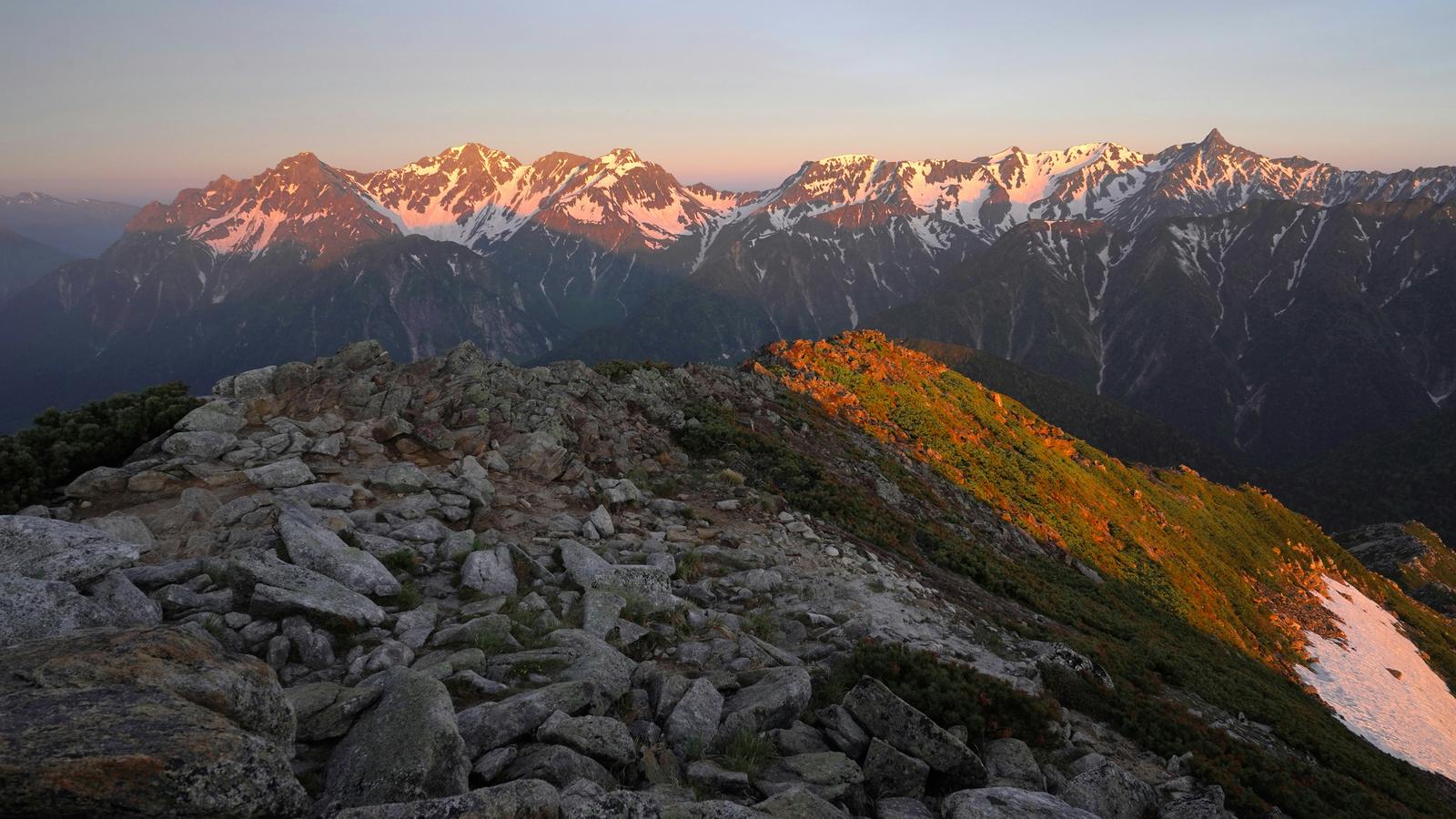
The Australian winter school holidays fall in the Japanese summer. In July Tokyo is hot and humid, and Kyoto hotter still, but three hours from the capital the Northern Alps are green, the gondolas that carry skiers in February carry walkers instead, and the high ponds still hold the last of the snow. For a family or a couple who know Hakuba from the ski season, it is the same valley turned inside out.
This article covers the Northern Alps in July and August: the walks above Hakuba, the double-decker ropeway in Oku-Hida, the bus to Norikura and the inns to stay in, with the school holiday dates that frame the trip. We read the official pages of the lift and ropeway companies, the tourism bodies, the prefectures, the Japan Meteorological Agency, the state education departments of New South Wales and Victoria, ANA and the inns, and contacted none of them; the sources are listed at the end. Kamikochi and the Tateyama Kurobe Alpine Route have their own articles, linked below.
Key points
- In 2027 the winter school holidays run from early to mid July in New South Wales and from late June to mid July in Victoria.
- Hakuba's valley averages an August high of 28.4°C against 31.3°C in Tokyo, with nights about five degrees cooler; the heights reached by gondola are cooler still.
- From Hakuba, gondolas and lifts reach about 1,830 m in some 40 minutes, and the pond of Happo-ike at 2,060 m is about an hour's walk beyond.
- In Oku-Hida, the Shin-Hotaka Ropeway's double-decker gondola climbs to 2,156 m and can be chartered privately.
- Norikura's Tatami-daira, at 2,702 m, is reached only by bus or taxi; private cars are not allowed.
ASK US ABOUT THE ALPS IN SUMMER →
THE CALENDAR FITS
The 2027 school calendars are already published. In New South Wales, Term 2 ends on Friday 2 July and Term 3 begins on Tuesday 20 July. In Victoria, Term 2 ends on Friday 25 June and Term 3 begins on Monday 12 July. Those two to three weeks sit squarely in the Japanese summer, when the mountain lifts are running and the alpine flowers are out.
It is also the quiet season for Australians in Japan. JNTO counted 50,174 Australian arrivals in July 2025 and 41,250 in August, against 140,185 in January, the height of the ski season. The flights are direct: ANA flies from Sydney to Haneda daily, and from Perth to Narita on a schedule that in 2026 ran three days a week in the summer season.
The lowlands are the reason to go up. The Japan Meteorological Agency's normals give Tokyo an average August high of 31.3°C and an average low of 23.5°C, and a July and August journey built around the cities is a journey built around the heat.
HOW COOL THE MOUNTAINS ARE
It helps to be precise. Hakuba village sits at about 700 m, and its valley is warm by day: the agency's normals at the Hakuba station, at 703 m, give an August high of 28.4°C, about three degrees below Tokyo. The difference is at night, with an average low of 18.5°C, five degrees cooler than the capital, and above all in the heights. The gondolas lift walkers well over a thousand metres in under an hour, and the air at a pond above 2,000 m is a different season from the valley floor.
We plan summer days in the Alps around that: up early on the first lifts, the walk done in the cool of the morning, lunch on a terrace and the afternoon in the hot spring below.
HAKUBA AND THE WALK TO HAPPO-IKE
The classic summer walk in Hakuba starts on the Happo-one ski runs. The Happo Alpenline, a gondola and three chairlifts, carries walkers to the First Cairn and Happo-ike Sanso at 1,830 m in about 40 minutes; in 2026 it ran on May 30 and 31 and then daily from June 6 to November 3, with an adult return fare for the whole line of ¥3,500. From the top, a stone path climbs to the pond of Happo-ike at 2,060 m, about 60 minutes on the shortest route or 90 on the boardwalk route around it. On a still morning the peaks of the Hakuba range stand reflected in the water.
THREE MORE SUMMER HEIGHTS
The valley holds three more summer heights, each with its own character. At Tsugaike, the gondola Eve and a ropeway climb in about 25 minutes to the Tsugaike Nature Park, a high marshland of boardwalks and alpine flowers; in 2026 the green season ran from June 6 to October 25, the gondola started at 7:00 on the busiest July and August days, and the adult return fare including entry to the park was ¥4,000.
Iwatake is the gentle one. Its gondola reaches the summit at 1,289 m in about seven minutes, where the HAKUBA MOUNTAIN HARBOR terrace looks across the valley at the full wall of the Alps; in 2026 it opened for the green season from April 23 to November 15, from 8:30 to 17:00. At Goryu, a gondola of about eight minutes leads to an alpine botanical garden on the summit area at 1,515 m, with about 300 species and two million plants, open in 2026 from June 20 to October 18.
For a family, the three make an easy rhythm across a week: one long walk, one morning of flowers, one lunch with the view. Hakuba Tokyu Hotel, in Hakuba Happo, has suites of 68 m² and a bath of Hakuba Happo Onsen, an alkaline spring of pH 11.2.
OKU-HIDA AND THE DOUBLE-DECKER ROPEWAY
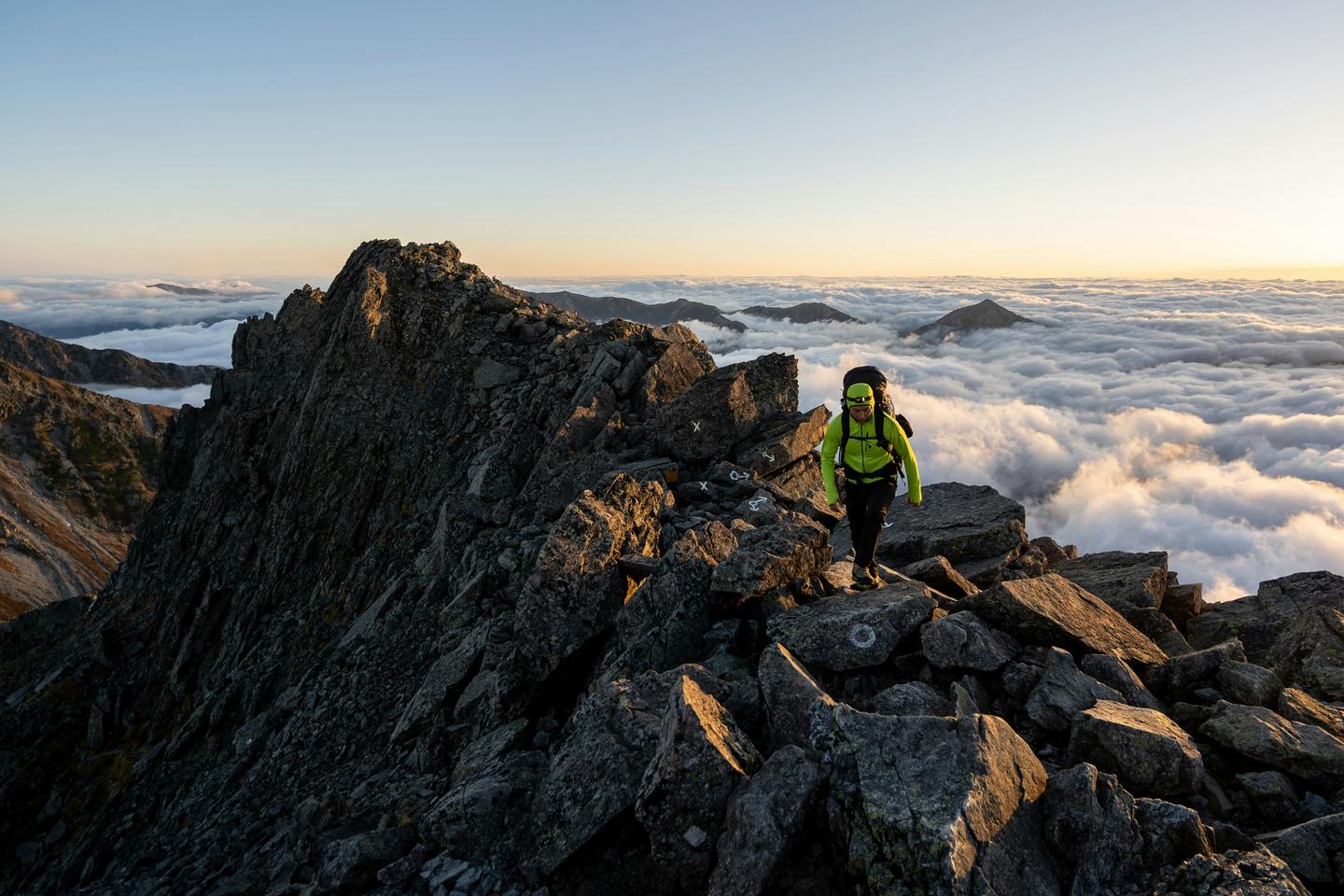
On the far side of the range, in Gifu, the hot spring villages of Oku-Hida lie at the foot of the Hotaka peaks. The Shin-Hotaka Ropeway runs all year and carries visitors in Japan's only double-decker gondola to Nishi-Hotakaguchi at 2,156 m, with the Hotaka peaks above. The adult return fare is ¥3,800. The double-decker second ropeway can also be chartered for a private party: in the period from July 21 to August 31, the charter for one to nine people is ¥200,000 plus the fares. For a family who wants the mountain to themselves in the first light, that is the finest seat in the Alps.
The inns here are the reason to stay several nights. At Hirayu, Miyama Ouan has eight detached suites, Himekomatsu no Sho, each of 51 m² with its own open-air hot spring bath fed straight from the source and, since a renovation in July 2026, a foot bath. At Shin-Hotaka, Yarimikan is a single inn in the style of an old farmhouse, whose open-air bath looks up at Yarigatake; it also has four private open-air baths, free to guests, and uses its spring without recirculation.
NORIKURA AND THE ROAD WITHOUT CARS
From Hirayu, Mt Norikura offers what few mountains in Japan can: a road to 2,702 m. Since 2003, private cars have been barred from the Norikura Skyline, which climbs 14.4 km on the Gifu side. Visitors park at Honokidaira or Akandana and continue by bus or taxi to Tatami-daira, in the alpine meadows below the summit. On the Nagano side, the Echo Line is closed to private cars from July 1, with only buses of eleven seats or more, taxis and bicycles allowed. In 2026 the Nohi Bus service to Tatami-daira began on May 15. A private guide and a chartered taxi make it an easy morning above the clouds.
A FORTNIGHT IN JULY
A shape that suits the school holidays: two or three nights in Tokyo on arrival, four nights in Hakuba for the walks and the lakes, a day through Matsumoto, then three nights in Oku-Hida for the ropeway, Norikura and the baths, ending in Takayama or by train to Kanazawa. Hakuba is about two hours fifty minutes from Tokyo at the shortest, by the Hokuriku Shinkansen to Nagano and the express bus onward; we prefer a car from Nagano Station. For the valley of Kamikochi, see Kamikochi and Matsumoto: The Northern Alps from the Castle Town →, and for the crossing to Toyama, Tateyama Kurobe Alpine Route and Toyama: The Crossing, the Dam and the Gorge →.
Travellers who know Nagano under snow may also enjoy the prefecture in autumn: see Beyond the Snow: Nagano in Autumn for Walking and the Table →. Within Signature, our planning for journeys of 7 to 21 days, we arrange the inns, the cars between the valleys, the guides for the high walks and the private ropeway charter where it is offered, and send the luggage ahead. Each part is settled in the simplest way available, usually on your hotel bill or on the day.
SOURCES AND HOW WE CHECKED
We read the pages below on November 5, 2026. Seasons, hours and fares are those for 2026 and change each year. Temperatures are the 1991 to 2020 normals. We did not contact any lift company, inn, airline or other body.
- NSW Department of Education, 2027 school calendar: Term 2 and Term 3 dates
- Victorian Government, school term dates and holidays: 2027 dates
- JNTO, Visitor arrivals by month and nationality (XLSX): Australian arrivals in January, July and August 2025
- ANA, international route information: Haneda to Sydney daily, Narita to Perth schedule
- Japan Meteorological Agency, Hakuba normals (Japanese): July and August temperatures
- Japan Meteorological Agency, Tokyo normals (Japanese): July and August temperatures
- Hakuba Happo-one, Alpenline (Japanese): 2026 season, time to 1,830 m, fare
- Hakuba Happo-one, Happo-ike: altitude 2,060 m, walking times
- Tsugaike Mountain Resort, gondola and ropeway (Japanese): green season, times, fare
- Hakuba Iwatake Mountain Resort (Japanese): green season, hours, summit altitude
- Goryu, press release on the alpine botanical garden, June 19, 2026 (Japanese): season, altitude, species
- Shin-Hotaka Ropeway, about (Japanese): double-decker gondola, 2,156 m, year-round
- Shin-Hotaka Ropeway, fares and charter (Japanese): return fare, private charter
- Gifu Prefecture tourism, Norikura Skyline (Japanese): Tatami-daira 2,702 m, 14.4 km, no private cars
- Gifu Prefecture, Norikura Skyline vehicle restrictions (Japanese): since May 2003, Honokidaira and Akandana
- Nagano Prefecture, Norikura Echo Line (Japanese): 2026 restrictions
- Nohi Bus, Norikura line 2026 (Japanese): service from May 15
- Hakuba Valley, access (Japanese): Tokyo to Hakuba about 2 hours 50 minutes
- Miyama Ouan, rooms (Japanese): detached suites with open-air baths
- Yarimikan (Japanese): open-air bath, four private baths
- Hakuba Tokyu Hotel, rooms and spa (Japanese): suites, Hakuba Happo Onsen
QUESTIONS TRAVELLERS ASK
Is Hakuba worth visiting in summer?
Yes, for the mountains above it. Gondolas and lifts carry walkers to about 1,830 m in some 40 minutes, and the pond of Happo-ike at 2,060 m is about an hour's walk beyond. Tsugaike, Iwatake and Goryu each open their own summer heights.
How hot is Hakuba in August?
Warm by day in the valley and cool at night. The Japan Meteorological Agency's normals give Hakuba, at 703 m, an average August high of 28.4°C and low of 18.5°C, against 31.3°C and 23.5°C in Tokyo. The heights reached by gondola are cooler.
Can you drive to Norikura?
Not in a private car. Private cars have been barred from the Norikura Skyline on the Gifu side since 2003; visitors park at Honokidaira or Akandana and continue by bus or taxi to Tatami-daira at 2,702 m.
How long does it take to get from Tokyo to Hakuba?
About two hours fifty minutes at the shortest, by the Hokuriku Shinkansen to Nagano and the express bus onward, according to Hakuba Valley's official access page. A private car from Nagano Station is also possible.
When are the Australian winter school holidays in 2027?
In New South Wales, Term 2 ends on Friday 2 July and Term 3 begins on Tuesday 20 July. In Victoria, Term 2 ends on Friday 25 June and Term 3 begins on Monday 12 July. Other states publish their own dates.
ASK US ABOUT THE ALPS IN SUMMER
Tell us your school holiday dates, who is travelling and how much you like to walk. We will draw a route through the Alps with the inns, the lifts and the quiet hours, and the reasons for each.
Begin planning →We reply within 24 hours, in writing
Some of the restaurants and bars we arrange seat guests only by introduction or membership. We ask on your behalf; the table and the evening are the house's decision. We do not publish their names.