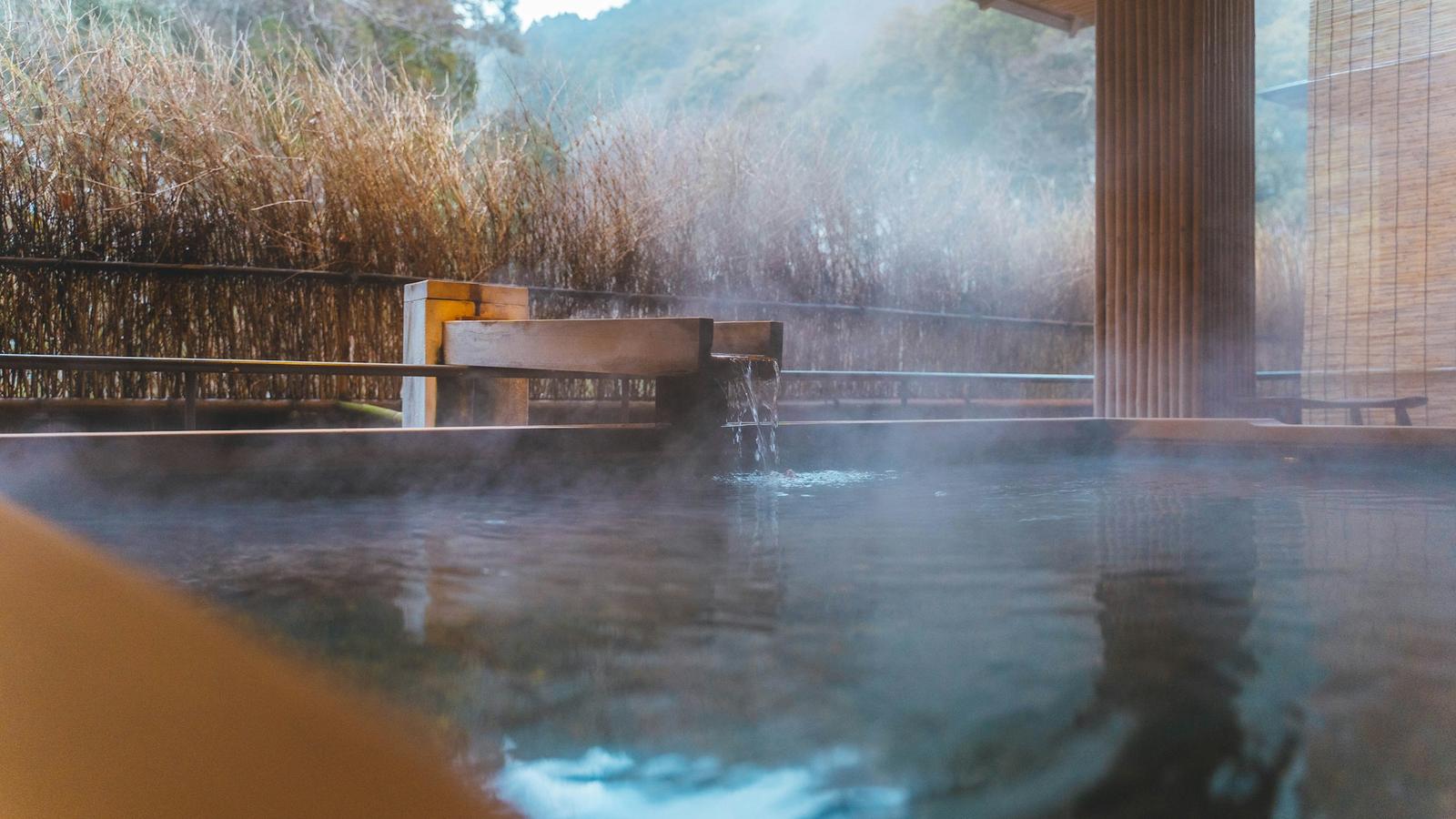
Japan has nearly 28,000 hot spring sources. That number alone tells you something: onsen is not a tourist attraction in Japan. It is a fundamental part of how the country rests, recovers, and connects with its landscape. For any visitor spending more than a few days in Japan, understanding how onsen works, and how to access the best of it, is essential planning knowledge.
This guide is for travelers who want more than a single obligatory hotel dip. It covers the different formats, the etiquette that determines whether you are welcome, the destinations worth building a trip around, and how STAYGO handles the logistics.
Key points
- Japanese law defines onsen as water that is 25°C or warmer at source, or that contains enough of any one of 19 listed substances. Japan has nearly 28,000 hot spring sources (Ministry of the Environment, year to March 2025).
- Wash thoroughly before entering, keep the small towel out of the water, and bathe without swimwear.
- Many shared baths still refuse visible tattoos. A room with its own bath, or a private bath reserved by the hour (kashikiri), avoids the question.
- Hakone is the most accessible onsen destination from Tokyo and the most competitive to book; book three to four months ahead for peak season.
WHAT ONSEN ACTUALLY IS
Onsen is thermal spring water, water heated naturally by geothermal activity and defined in Japanese law by its temperature (25°C or more at source) or by its mineral content. Not all hot water qualifies. The law lists 19 substances, any one of which in sufficient quantity makes water an onsen, and the springs range from simple alkaline springs to sulfuric, iron, and radium-bearing waters, each associated with different therapeutic properties and dramatically different aesthetics.
Japan sits on the Pacific Ring of Fire. Volcanic activity has created thousands of natural thermal sources across the country, from Hokkaido in the north to Kyushu in the south. The culture around these springs, the bathing rituals, the architecture of the ryokan, the tradition of travelling specifically to soak, has been developing for over a thousand years. It is not a spa treatment. It is closer to a pilgrimage.
"The Japanese do not go to onsen for entertainment. They go for recovery. Understanding that distinction changes how you experience it."
THREE WAYS TO BATHE
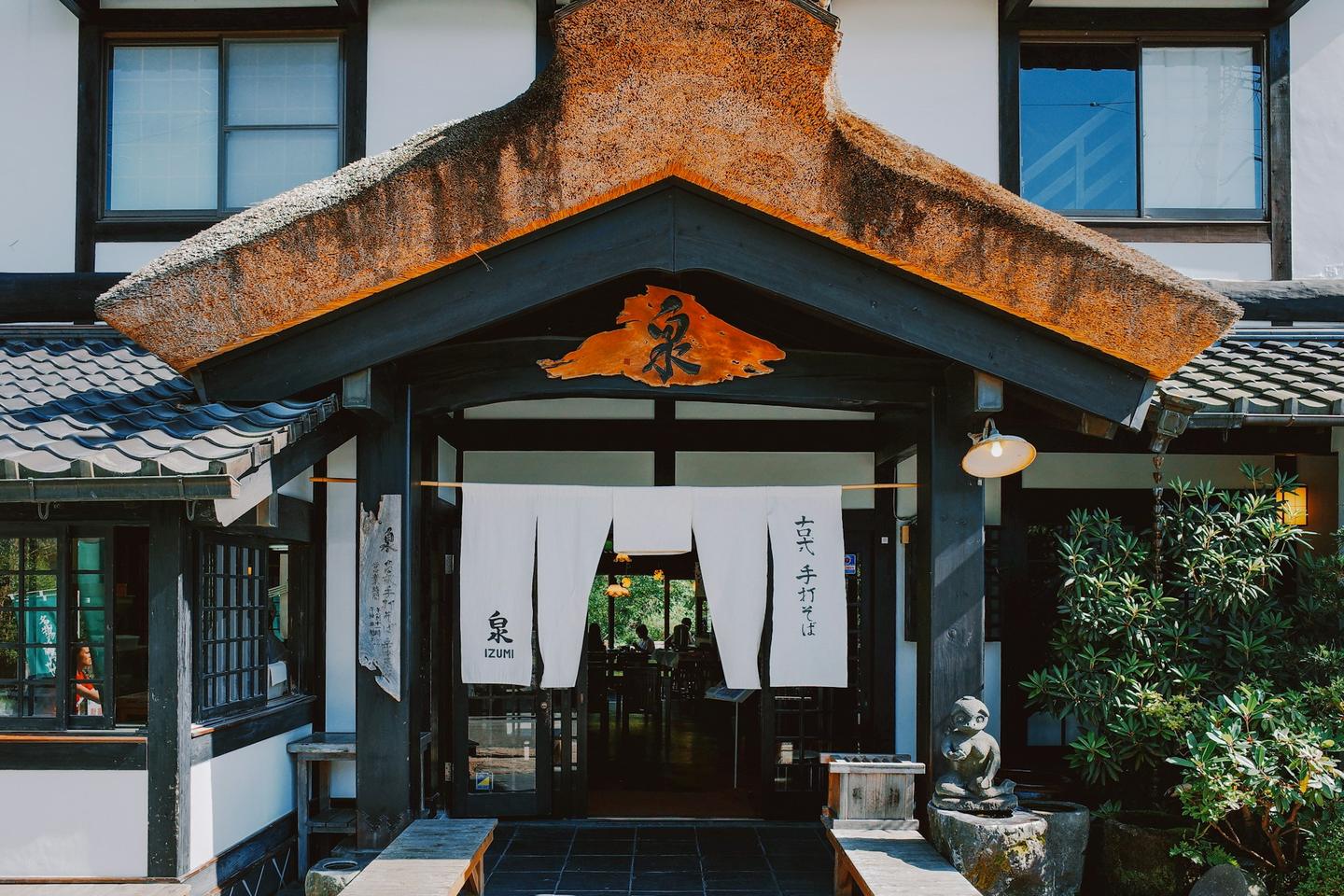
Japanese onsen divide into three broad formats. Each has its appropriate travelers and situations.
FIVE DESTINATIONS WORTH PLANNING AROUND
The most accessible luxury onsen destination from Tokyo, and consequently the most competitive to book. Hakone sits in volcanic terrain above Sagami Bay, with views of Mount Fuji from well-positioned properties. The spring waters are strong-smelling sulfurous and sodium chloride types. The best ryokans here, Gora Kadan and Hakone Ginyu, combine exceptional onsen facilities with kaiseki dining and private garden access. Book 3–4 months ahead for peak season.
One of Japan's most concentrated onsen towns, Kusatsu's yubatake (湯畑, "hot spring field") is a central open-air wooden structure through which thousands of litres of thermal water flow daily. The spring is highly acidic with strong antibacterial properties, said to cure everything except heartache and debt, according to local lore. Less polished than Hakone, but authentically Japanese in atmosphere. The best properties near the yubatake also offer access to the traditional yumomi water-cooling ritual.
One of Japan's three great onsen, Arima sits above Kobe in the Rokko mountains. Its two spring types are distinctive: the kinsen (gold spring) is a deep amber-brown iron-salt water with visible mineral content; the ginsen (silver spring) is a clear, high-carbonate radioactive spring. Both emerge from different geological layers beneath the same mountain. The town is historic, walkable, and close enough to Osaka and Kyoto to combine with a city itinerary.
Beppu has some 2,800 hot spring sources, on the city's own count, and seven of Japan's ten spring types. The jigoku meguri ("hell tour") circuits seven dramatically coloured spring pools, cobalt blue, blood red, boiling grey, that are observed rather than bathed in. The bathing facilities range from communal sand baths (sunamushi) to high-end ryokan with private pools. Best visited as part of a Kyushu itinerary.
Hokkaido's most famous onsen destination draws its thermal water from Jigokudani ("Hell Valley"), a raw volcanic landscape of steaming vents, grey mineral pools, and sulphurous terrain directly above the town. Nine spring types emerge from different geological layers. The large resort ryokans here offer some of Japan's most extensive bathing complexes. Best experienced in winter, when outdoor baths sit under heavy snowfall.
WHAT FOREIGN GUESTS GET WRONG
TATTOOS
Many public and semi-public onsen in Japan still prohibit visible tattoos, a policy rooted in the historical association between tattoos and organised crime. The situation is changing slowly, but the policy remains common at communal facilities. The practical solution for tattooed guests is simple: book private onsen access. Most premium ryokans offer private baths (kashikiri) with no tattoo policy, and some properties are entirely tattoo-friendly. STAYGO researches and confirms tattoo policy at every onsen property we arrange.
SHOWER BEFORE ENTERING
Washing thoroughly before entering the communal bath is non-negotiable. Every onsen facility provides shower stations, seated, with soap and shampoo, immediately before the bath area. The communal water is shared; entering without washing first is considered a serious breach of etiquette. At high-end properties, this is also where guests acclimatise to the temperature before entering.
THE TOWEL RULE
The small tenugui hand towel provided is for personal modesty and wiping. It does not enter the water. It can be balanced on your head, folded on the side of the pool, or left at the shower station. The large bath towel is for drying in the changing room only. Bringing a large towel into the bathing area is immediately conspicuous.
NO SWIMWEAR
Traditional onsen are bathed in without swimwear. Some outdoor facilities and designated mixed-gender baths (konyoku) permit swimming attire, but standard onsen do not. This surprises Western guests most consistently. At private ryokan onsen, the format is the same, but the setting is exclusive, which is precisely why private access is worth arranging.
HOW ONSEN BOOKINGS WORK
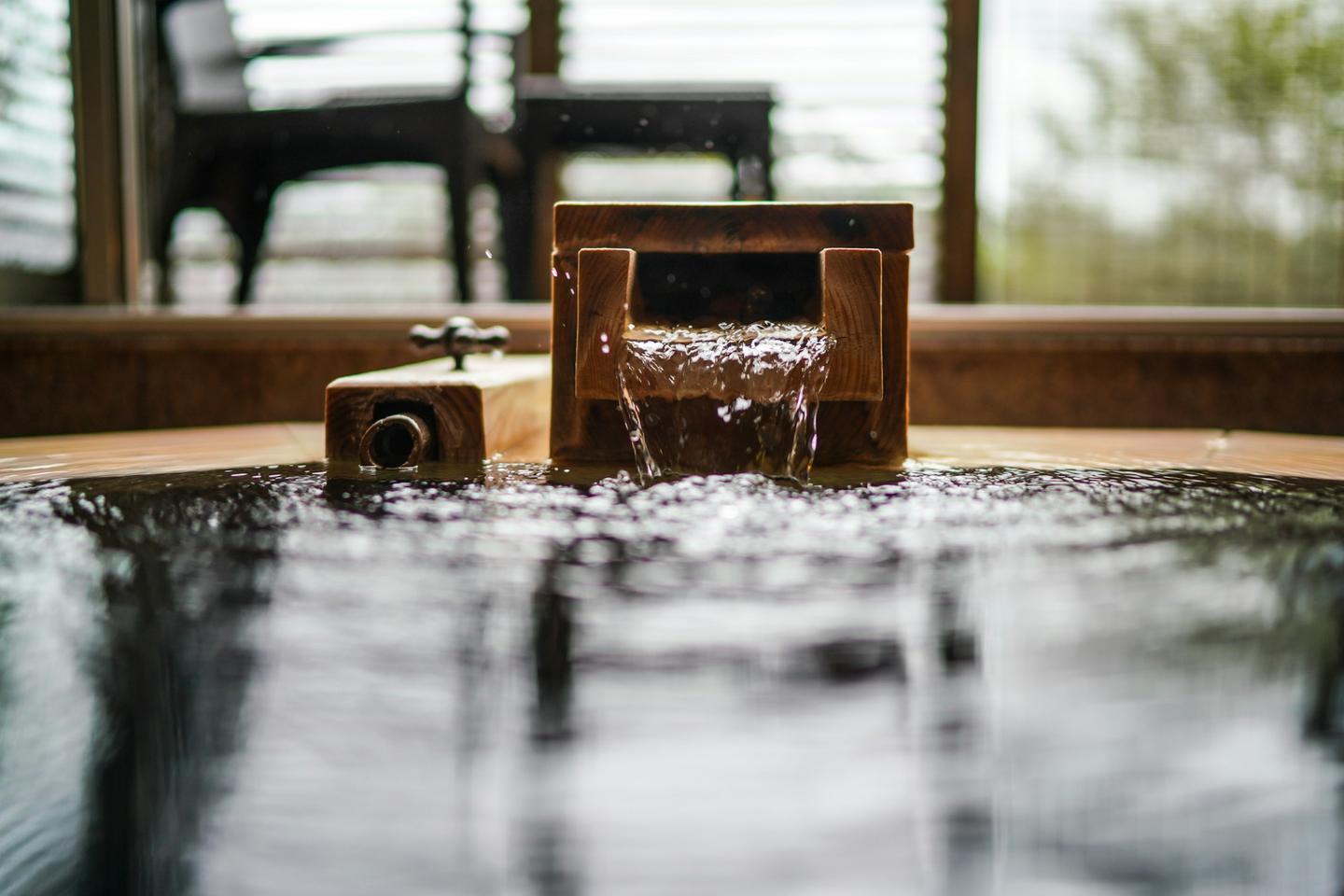
For most luxury ryokans, onsen access is integrated into the accommodation itself. A premium room often includes a private in-room or adjacent bath (heya-buro) as standard. In some cases, guests also have access to the communal large baths at specified times.
Kashikiri, private bath reservation, is a separate service at properties where the large communal baths are the primary facility. Reservation windows are typically one hour, bookable at reception or online. Availability is limited and high-demand properties fill their kashikiri slots quickly.
STAYGO Signature clients have all onsen logistics handled: ryokan selection based on spring type and setting, private bath arrangements, confirmation of tattoo policy, and transport from the nearest city. If an onsen experience is a priority for your trip, and for most visitors to Japan, it should be, it requires the same advance planning as your accommodation and restaurant bookings.
SOURCES AND HOW WE CHECKED
The legal definition and the figures on this page come from desk research. We read the pages below on October 5, 2026, and did not contact the ministry or the city.
- Hot Springs Act (e-Gov, Japanese): the schedule defining onsen by a temperature of 25°C or more at source, or by any one of 19 listed substances
- Ministry of the Environment, hot spring use (Japanese): 27,899 hot spring sources at the end of March 2025
- Beppu City, hot spring data (Japanese): 2,831 sources and seven of the ten spring types
QUESTIONS, ANSWERED
What is onsen and how is it classified in Japan?
Onsen is thermal spring water as defined in Japanese law: water that is 25°C or warmer at source, or that contains enough of any one of 19 listed substances. Not all hot water qualifies. The classification is legally defined and carries significant cultural meaning.
Can visitors with tattoos use onsen in Japan?
Many public onsen still prohibit visible tattoos due to historical association with organised crime. The practical solution is to book kashikiri, a private reserved bath at a ryokan, which typically has no tattoo policy. STAYGO confirms tattoo policy at every onsen property before clients arrive.
What is the etiquette for using a Japanese onsen?
Always shower thoroughly at the provided bathing station before entering the communal pool. The small hand towel is for modesty only and must not enter the water. Traditional onsen do not permit swimwear. Keep voices low. Onsen are places of rest and quiet recovery.
What is kashikiri and how do you book a private onsen bath?
Kashikiri is a reserved private bath, typically booked in one-hour increments. Most premium ryokans offer it either as a room feature or as an add-on reservation. Availability is limited at popular properties and fills quickly. STAYGO arranges kashikiri in advance for guests.
Which onsen destination is best for first-time visitors to Japan?
Hakone is the most accessible from Tokyo (90 minutes), offers potential Mount Fuji views, and has some of Japan's finest ryokans. For a more traditional atmosphere, Kusatsu in Gunma or Arima near Kobe provide excellent alternatives with highly distinct mineral spring types.
JAPAN'S BEST ONSEN ARE BOOKED WEEKS AHEAD
STAYGO handles ryokan selection, private bath arrangements, and all onsen logistics, so your experience matches the setting.
Start planning →