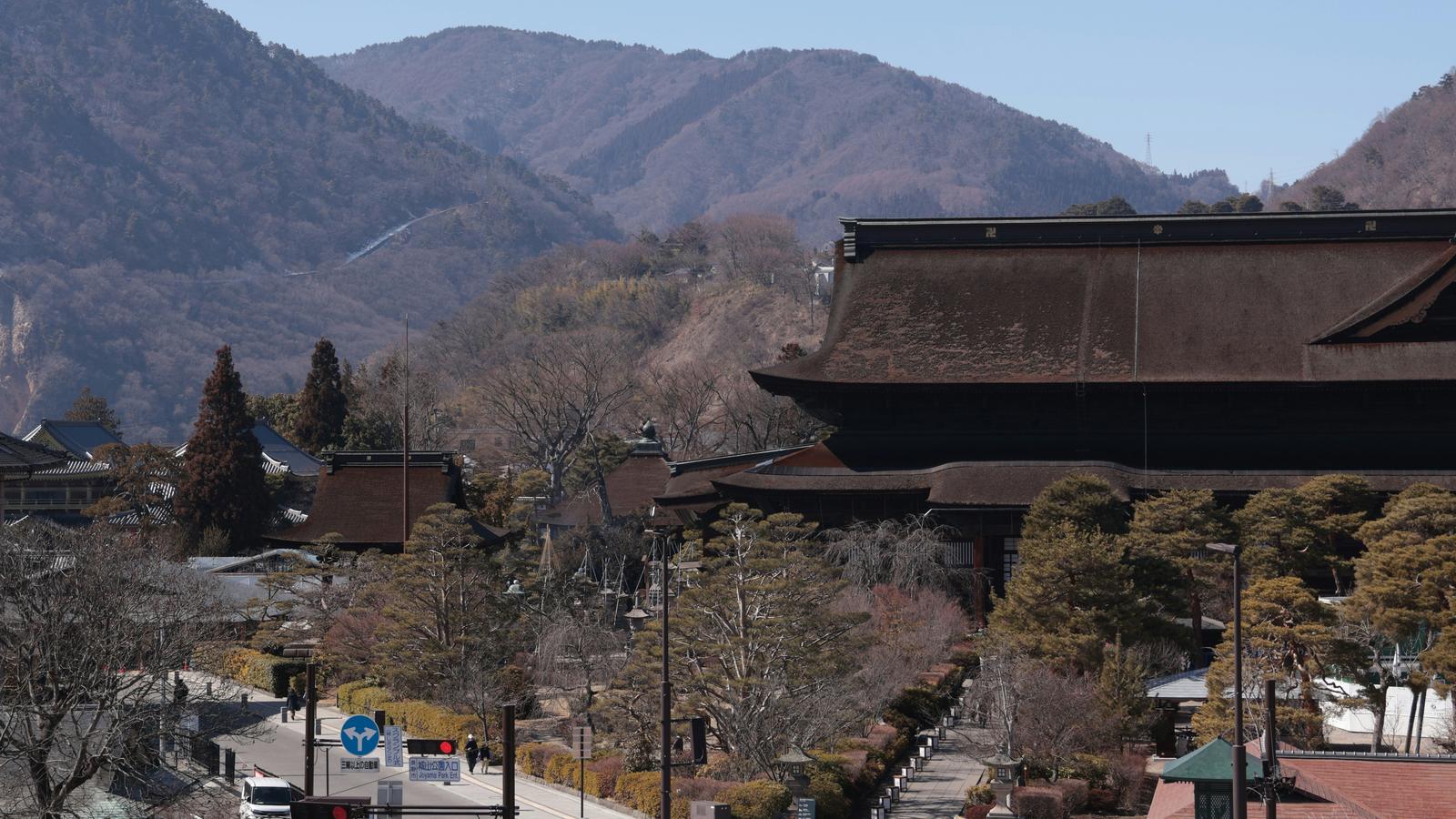
Many Australians know Nagano under snow. Hakuba, Nozawa Onsen and Shiga Kogen have drawn them for years, and the shinkansen from Tokyo has made the prefecture an easy first stop for the powder. Fewer have seen the same mountains in autumn, when the lifts are still and the valleys turn to harvest: new soba in Togakushi, chestnuts in Obuse, grapes along the Chikuma River and colour climbing down from the high plateaus.
This article is for the traveller who already knows the ski fields and wants the other Nagano, from mid-September to early November. It covers the walk to Togakushi's inner shrine, the table of the northern valleys, the morning service at Zenkoji and the places to stay. We read official pages from the shrines, temples, breweries, hotels, transport operators and tourism bodies, and the statistics of the Japan Tourism Agency and JNTO, and contacted none of them; the sources are listed at the end. For winter, see Japan in Winter: Snow Monkeys, Powder Snow, and Empty Temples →.
Key points
- Nagano is about eighty minutes from Tokyo on the fastest Hokuriku Shinkansen, and Togakushi about an hour beyond.
- The approach to Togakushi's Okusha runs about 2 km through cedars more than 400 years old; it closes in deep winter and usually colours from mid-October.
- Obusedo serves its chestnut dish Shusaku only from mid-September to mid-October, with reservations opening around August.
- Zenkoji's morning service begins at sunrise every day, and visitors may join it in the inner sanctuary.
- The prefecture counted 93 wineries in February 2026, 48 of them in the Chikumagawa Wine Valley.
ASK US ABOUT NAGANO IN AUTUMN →
THE SAME MOUNTAINS IN ANOTHER SEASON
Australians come to Japan for long and they come back. Among Australian visitors travelling for leisure in 2025, the Japan Tourism Agency's survey records an average stay of about 13.2 nights, and about 42 percent were on at least their second visit. Seventeen percent of them went to Nagano, more than went to Hokkaido. JNTO counted 1,058,396 Australian arrivals in 2025, up 15.0 percent on the year before.
That makes Nagano familiar ground, and familiar ground is where a second journey can go deeper. The Hokuriku Shinkansen reaches Nagano Station in about eighty minutes on the fastest Kagayaki. From there, everything in this article lies within about an hour: Togakushi in the hills to the northwest, Obuse and the hot spring towns of Yudanaka and Shibu to the northeast, the wine valleys to the south and east.
TOGAKUSHI AND ITS CEDAR AVENUE
Togakushi Shrine is five shrines spread along the foot of a jagged mountain: the Okusha, Chusha, Hokosha, Kuzuryusha and Hinomikosha. The walk that matters is the approach to the Okusha, the inner shrine. Cars cannot enter it. From the entrance it is about 15 minutes to the Zuishinmon gate and about 40 minutes to the shrine, some 2 km in all, and from the gate onward the path runs for about 500 m between cedars more than 400 years old.
In autumn this is one of the finest short walks in the country. The local tourism association gives the colour as usually best from mid-October, and the shrine noted the first faint colour on October 1 this year and the Chusha area turning on October 17. The season is also the reason to come now: the Okusha and Kuzuryusha close from January 7 until late April, and in winter the bus does not reach the Okusha entrance at all.
For a longer day, the Togakushi Kodo is the old pilgrims' road between the Okusha and Zenkoji, listed among Japan's hundred historic roads. Thirty stone markers stand along it. The association asks walkers to carry a bear bell, which tells you how wild the forest still is. A guide and a car waiting at the far end turn it into an easy day.
Below the Chusha and Hokosha shrines, the old pilgrim lodgings line the slope. The district is a nationally designated preservation area, and some of the lodgings, called shukubo, still take guests. Gokui, at the Chusha, has kept its house for about 400 years, and its thatched roof is a registered tangible cultural property. A night there, with the shrine at the door before the day visitors arrive, is a quiet counterpart to the chalets of the ski towns.
SOBA AT ITS SOURCE
Togakushi soba is one of the best known in Japan. The prefecture's official tourism site traces it to the portable food of mountain ascetics in the Heian period, and describes its signature serving, bocchi-mori: five or six small bundles of noodles laid on a round basket woven from Togakushi bamboo. In autumn the new buckwheat comes in. This year the soba festival's tasting tour ran from September 1 to October 4, and the offering ceremony at the Chusha square was on October 30.
The pleasure is simple and depends on timing: a late lunch after the Okusha walk, cold noodles from new flour, eaten where the buckwheat is grown. We plan the walk so that the table comes after it.
OBUSE FOR CHESTNUTS AND HOKUSAI
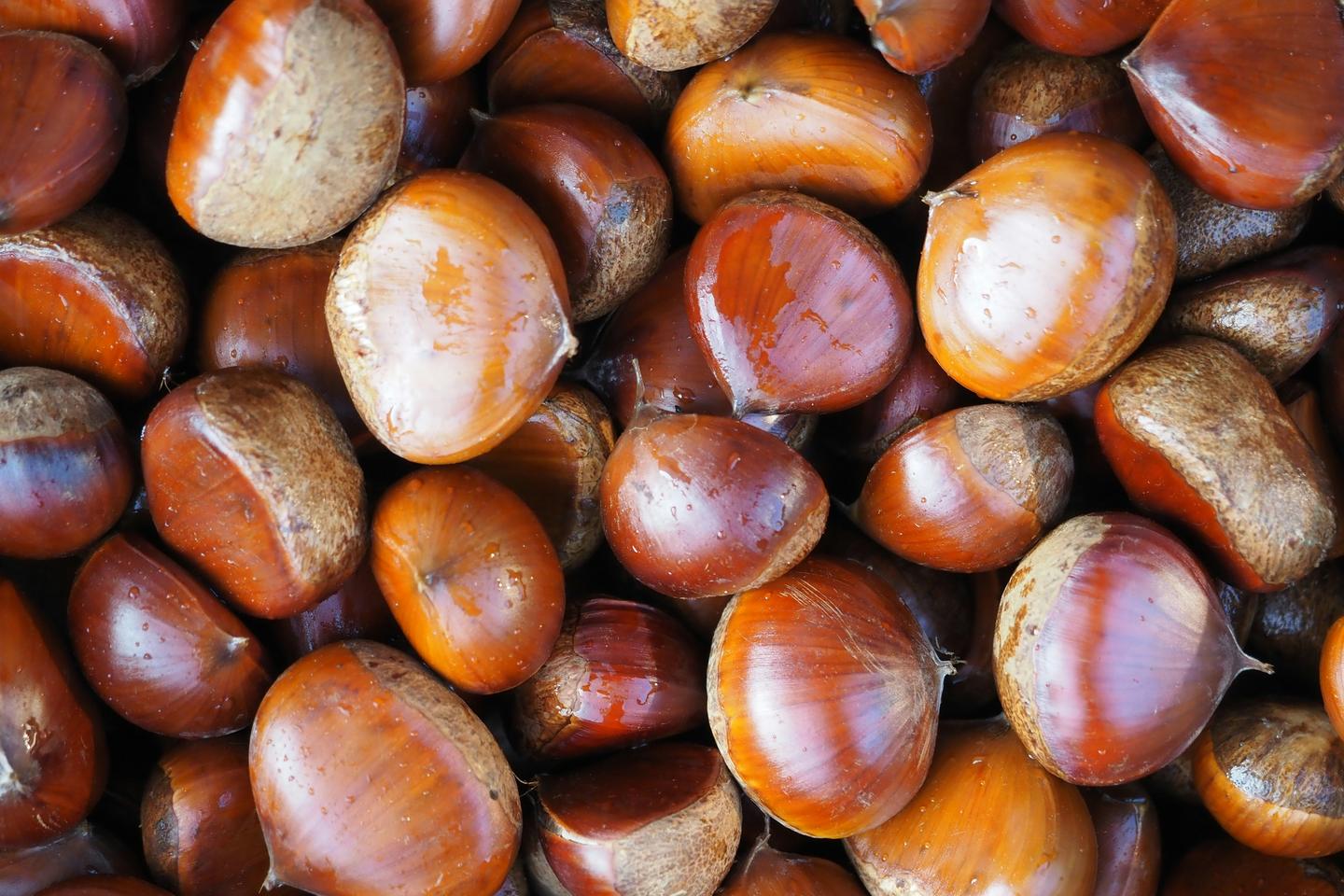
Obuse is a small town of chestnut orchards and old storehouses, about ten minutes on foot from its station to the centre. According to one account, chestnuts were first planted here in 1367, and in the Edo period the Matsushiro domain sent Obuse chestnuts to the shogun in Edo every autumn. Obusedo has made chestnut sweets since 1923. Its most sought-after dish, Shusaku, is served for only about a month, from mid-September to mid-October, and reservations open around August.
The town's other draw is Katsushika Hokusai. The Hokusai Museum shows the ceiling panels he painted for two festival floats, the great waves of the Kanmachi float and the dragon and phoenix of the Higashimachi float, and marks its fiftieth year in 2026. It opens from 9:00 to 17:00.
In the same streets, Masuichi-Ichimura Sake Brewery has been brewing since 1755. It ferments in wooden vats and makes only about 300 koku a year, around 54,000 litres, small among the roughly 97 breweries of Nagano. Its tasting room, Teppa, opens from 9:30 to 17:00. An afternoon here, a chestnut lunch and an hour with Hokusai make one of the most complete small-town days in Japan.
ZENKOJI AT SUNRISE
Zenkoji, in Nagano city, holds a morning service every day of the year. The temple's own words are that it begins at sunrise in the main hall, and those attending may sit in the inner sanctuary. It is followed by the ojuzu chodai, a blessing given with the head priest's rosary, held four times each morning; the temple says anyone may receive it. To be there means rising before dawn, which is easiest from a hotel in Nagano or Obuse with a car at the door.
THE WINE VALLEYS AND THE HIGH PLATEAU
For an Australian palate the vines may be the surprise. The prefecture counted 93 wineries in February 2026, and 48 of them are in the Chikumagawa Wine Valley, the vineyards along the Chikuma River that flows past Obuse and Ueda. A day among them works best with a driver and a short list chosen in advance. For Japan's other great wine country, see Japanese Wine in Yamanashi: Koshu and the Wineries of Katsunuma →.
Above it all, Shiga Kogen shows the season in a single drive. Its tourism association describes the colour starting in late September around Mt Yokote and the Shibu Pass, at up to 2,307 m, reaching the plateau as a whole in early October and lasting until late October, with the ponds at around 1,500 m turning from about October 10. In some years the first snow falls in mid-October.
WHERE TO STAY
Masuichi Kyakuden in Obuse opened in 2007 on the site of the Ichimura family's soy sauce brewery. It has twelve rooms in relocated earthen storehouses and an Edo-period document store, designed by John Morford. Breakfast is served across the street, and dinner at Obusedo's main house by reservation, which places a guest at the centre of the chestnut town.
For a hot spring, Yudanaka and Shibu lie at the foot of Shiga Kogen. Yorozuya in Yudanaka is known for its Momoyama bath, built entirely of wood and registered as a tangible cultural property in 2003, fed by three of the inn's own springs. Kanaguya in Shibu is a wooden building listed as a cultural property, with eight baths running straight from the source. Further south, at Togura-Kamiyamada, Kamesei Ryokan has eight baths, including private open-air baths and rooms with their own.
A shape that works over five or six nights: two nights in Obuse for the chestnuts, Hokusai and the brewery, one night at a shukubo in Togakushi for the Okusha walk and the soba, and two or three at a hot spring inn in Yudanaka or Shibu for the plateau and a day among the vines. Nagano then leads on to the Japan Alps, or south by train to Kyoto for November in Japan: Autumn Colour and Walking →. For the Alps in summer, see Australia's Winter Is Japan's Summer: The Northern Alps →.
Within Signature, our planning for journeys of 7 to 21 days, we arrange the inns, the shukubo, the cars, the guides for the Kodo and the winery visits, and ask Obusedo for Shusaku on the dates you have in mind; the table and the seating remain the house's decision. Each is settled in the simplest way available, usually on your hotel bill or on the day.
SOURCES AND HOW WE CHECKED
We read the pages below on November 5, 2026. Figures from the Japan Tourism Agency are for Australian visitors travelling for leisure; the share on a repeat visit is 100 percent less the share on a first visit. Travel times are rounded. We did not contact any shrine, temple, brewery, hotel or other body.
- JNTO, Visitor arrivals by nationality and purpose, 2025 (Japanese, PDF): 1,058,396 Australian arrivals, up 15.0%
- Japan Tourism Agency, International Visitor Survey 2025 tables (Japanese, XLS): average nights, first visits, visit rates for Nagano and Hokkaido
- JR East, Hokuriku Shinkansen guide (Japanese): Tokyo to Nagano about 80 minutes by Kagayaki
- Alpico, Togakushi express bus (Japanese): about 59 minutes to the Okusha entrance, April 1 to December 4, 2026
- Togakushi Shrine, the five shrines (Japanese): walking times, winter closure of the Okusha and Kuzuryusha
- Togakushi Shrine, English guide: the 2 km approach, cedars over 400 years old
- Togakushi Tourism Association, Togakushi Kodo (Japanese): the pilgrims' road, 30 stone markers, bear bells
- Togakushi Tourism Association, seasons (Japanese): colour usually from mid-October
- Go NAGANO, Togakushi soba (Japanese): bocchi-mori, origins, 2026 festival dates
- Japan Tourism Agency, multilingual commentary: Togakushi shukubo (Japanese): preservation district, Gokui and its thatched roof
- Zenkoji, events (Japanese): the morning service at sunrise and the ojuzu chodai
- Obusedo, official site: chestnut sweets since 1923, Shusaku season and reservations
- nippon.com, Obusedo and the chestnut town: chestnuts in 1367, tribute to the shogun
- Hokusai Museum (Japanese): hours, the festival float ceilings, fiftieth year
- Masuichi-Ichimura Sake Brewery (Japanese): founded 1755, wooden vats, about 300 koku, Teppa
- Go NAGANO, Nagano wine (Japanese): 93 wineries, 48 in the Chikumagawa Wine Valley
- Shiga Kogen Tourism Association, autumn colour (Japanese): timing by altitude
- Masuichi Kyakuden, official site: opened 2007, storehouse rooms, meals
- Yorozuya, official site: the Momoyama bath, registered 2003, three springs
- Kamesei Ryokan (Japanese): eight baths including private open-air baths
QUESTIONS TRAVELLERS ASK
When is the best time to visit Nagano outside the ski season?
From mid-September to late October. Obuse's chestnut season, the soba harvest in Togakushi and the autumn colour in the highlands all fall in these weeks; at Togakushi the colour usually peaks from mid-October.
How far is Togakushi from Nagano Station?
About an hour. The reserved Togakushi express bus from Nagano Station reaches the Okusha entrance in about 59 minutes, and runs from April 1 to December 4 in 2026. A private car takes a similar time.
Can you walk to the Togakushi Okusha in winter?
The Okusha and Kuzuryusha shrines close from January 7 to late April, and the bus does not reach the Okusha entrance in winter. Autumn is the season for the full approach on foot.
Where should we stay in Obuse?
Masuichi Kyakuden, twelve rooms in former storehouses on the site of a soy sauce brewery, with dinner at Obusedo across the street by reservation. For a hot spring, Yudanaka and Shibu are a short drive away.
Is Nagano a good wine region?
It is one of Japan's most active. The prefecture counted 93 wineries in February 2026, 48 of them in the Chikumagawa Wine Valley along the river that runs past Obuse and Ueda.
ASK US ABOUT NAGANO IN AUTUMN
Tell us when you can travel and which parts of Nagano you already know. We will suggest the inns, the walks and the tables for the weeks you have, with the reasons for each.
Begin planning →We reply within 24 hours, in writing
Some of the restaurants and bars we arrange seat guests only by introduction or membership. We ask on your behalf; the table and the evening are the house's decision. We do not publish their names.