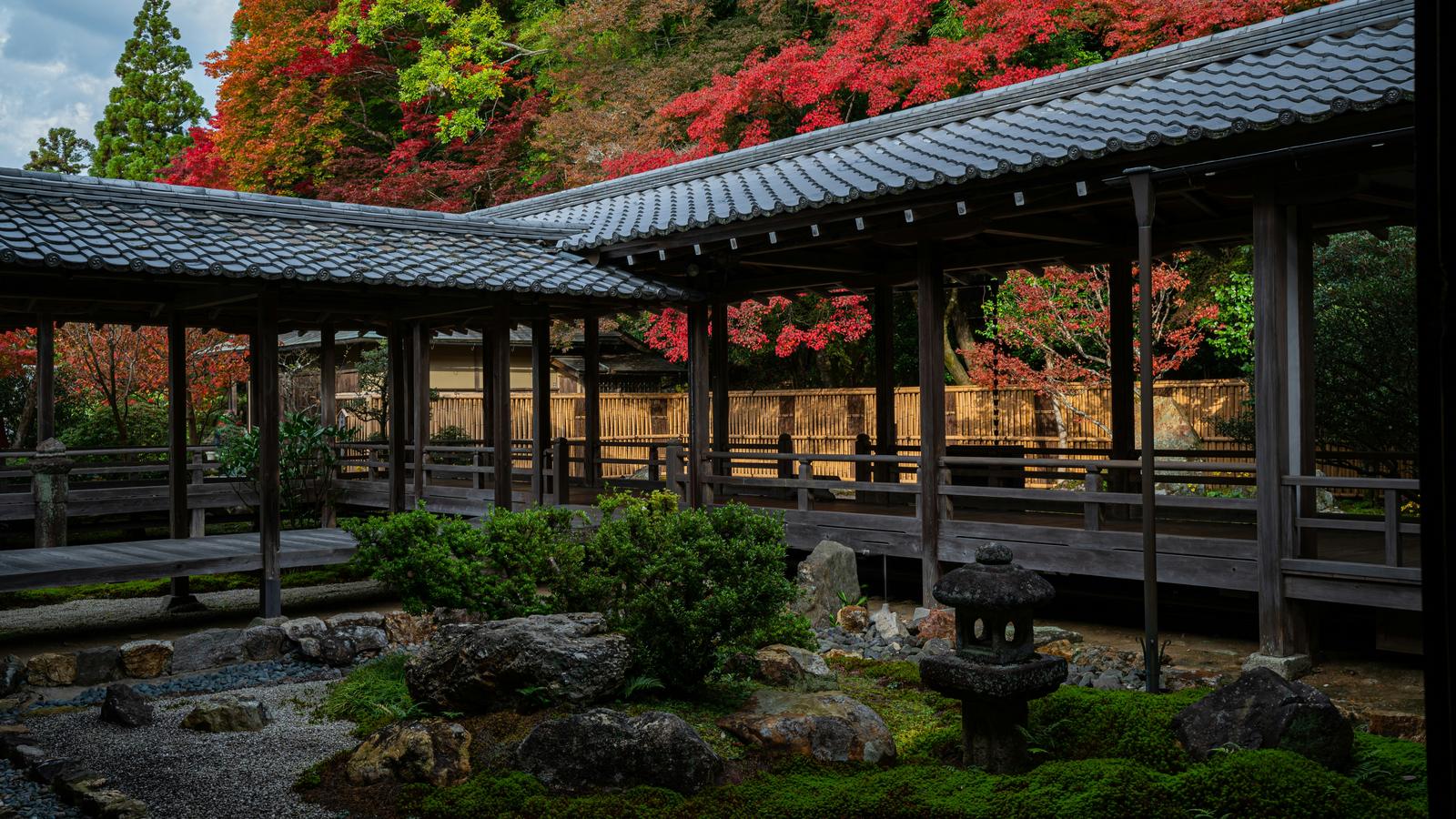
November in Japan falls in late spring at home for Australian travellers, and it has become one of their favourite months to go. Traveltalk reported in July 2026 that gross bookings to Japan were up 47 percent for the year to June 30, 2026, with November performing almost on par with the spring peaks. The reason is the colour. Through the month, the maples and ginkgo turn from the mountains down to the cities, and a journey can follow them.
This article sets out where to be in early, mid and late November, which walks suit each part of the month, and how the shorter days shape the plan. We read the Japan Meteorological Agency's records, the forecasts of the Japan Weather Association and Weathernews, the pages of the temples, gardens and tourism bureaus, the National Astronomical Observatory's sunrise tables and Australian trade press, and contacted none of them; the sources are listed at the end. For choosing between spring and autumn, see Cherry Blossom vs Autumn Leaves in Japan: Which to Choose →.
Key points
- The colour comes first to the mountains: Koyasan usually peaks from late October to early November.
- Mid-November suits the hills north of Kyoto and Mt Takao outside Tokyo.
- Late November is the time for Kyoto's Higashiyama temples, Nara and the gardens of Tokyo.
- In Kyoto the sun sets at about 16:46 by the end of the month, so walks are best begun early.
- Night viewings at Eikando and Rikugien run from late November into early December; dates change each year.
ASK US ABOUT A NOVEMBER JOURNEY →
HOW THE COLOUR MOVES
The Japan Meteorological Agency records the day on which most of the leaves of a reference maple have turned. Its normals for 1991 to 2020 put that day at November 21 in Nara, November 28 in Tokyo, December 5 in Kyoto and December 6 in Wakayama, and the yellowing of the ginkgo in Tokyo at November 23. These are dates for single trees in observatory grounds. The famous temples, in cooler valleys and on hillsides, usually peak earlier. The normals show the order of the season; the best days at each place come from the forecasts and the usual peaks.
The forecasts fill in the rest. On October 28, 2026, the Japan Weather Association expected the colour to arrive at or later than normal across the country, and gave Arashiyama in Kyoto from November 13 and Mt Takao from November 15. Weathernews, on October 29, put Arashiyama at its best from around November 23 and Mt Takao around November 13. Two forecasters ten days apart on the same valley is the honest picture: a November journey should be planned with room in it.
EARLY NOVEMBER: KOYASAN AND THE KUMANO KODO
The month begins in the mountains of the Kii Peninsula. Tenki.jp gives the usual peak at Koyasan as late October to early November, and on November 4 this year it reported the colour just beginning there. The temple town held its autumn procession and an evening of light on November 3 this year. A night in a temple lodging, with the morning service at dawn, is the way to see it.
From Koyasan the Kumano Kodo is the natural next step. The Tanabe City Kumano Tourism Bureau gives the most beautiful short section of the Nakahechi route, from Hosshinmon-oji down to Kumano Hongu Taisha, as about 7.5 km and two to three hours, with about 190 m of climbing and 460 m of descent. The longer days on the trail run 17 to 21 km and seven to eleven hours. The bureau's advice for late autumn is plain: night falls early, and earlier still in the valleys, so plan to arrive before dark. The temples and shrines themselves are described in Koyasan and the Kumano Kodo: a temple night, the Nakahechi and Nachi →.
MID NOVEMBER: NORTH OF KYOTO AND MT TAKAO
By the middle of the month the colour reaches the hills around the cities. North of Kyoto, the walk over the mountain from Kurama to Kibune is one of the great half-days of the season. Kurama-dera gives the times: about 30 minutes from the station and gate up the winding approach to the main hall, 30 minutes on to the Maoden hall, and 20 minutes down to Kibune Shrine, with the entry fee to the mountain at ¥500. Tenki.jp gives the usual colour around Kibune as early to late November. Lunch beside the Kibune river closes the walk.
Outside Tokyo, Mt Takao is the city's own autumn mountain, forecast this year for mid-November. In Kyoto itself, Tofuku-ji moves to its autumn hours from November 14, and Eikando opens its autumn treasure exhibition from November 11.
LATE NOVEMBER: THE OLD CAPITALS AND TOKYO
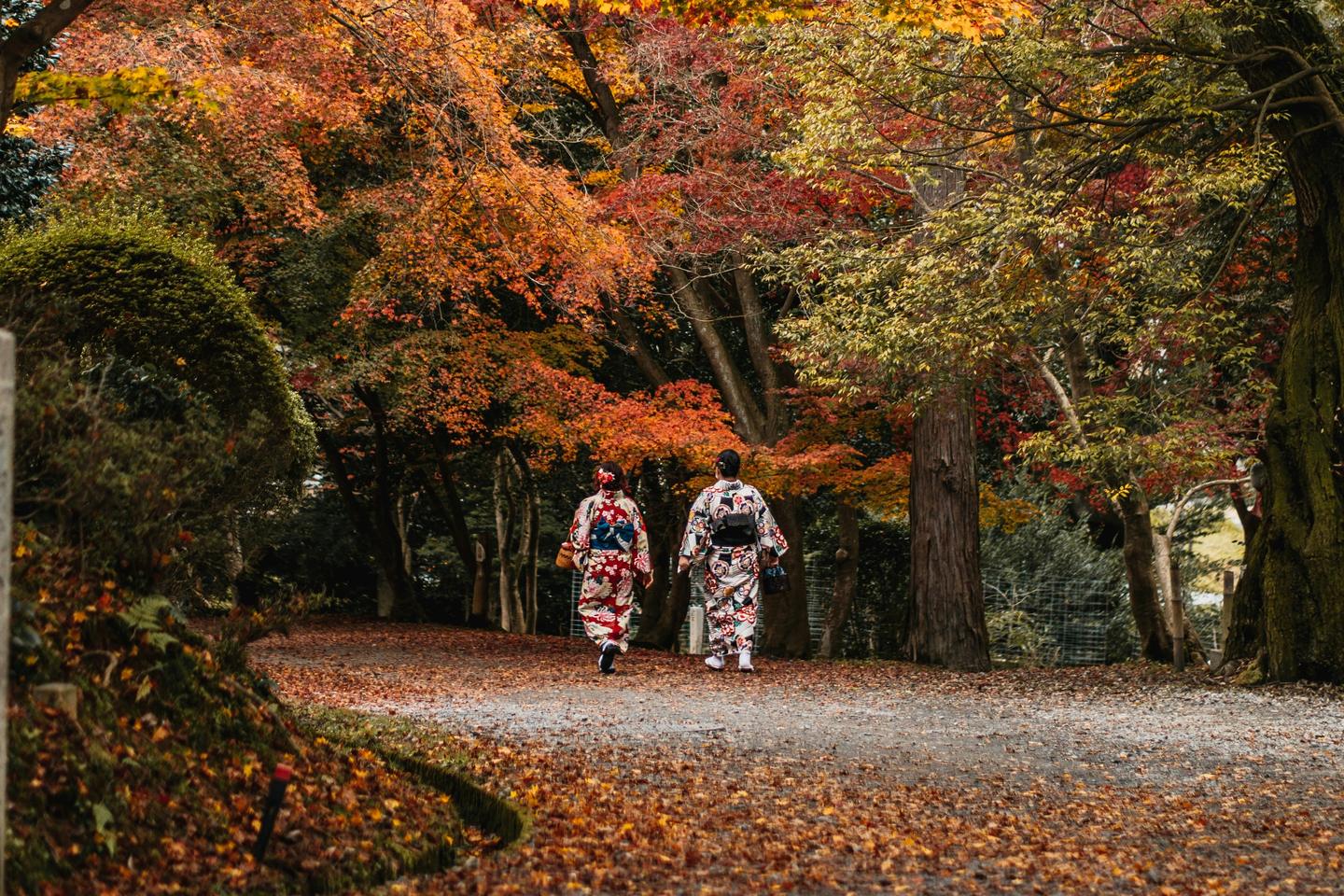
The last ten days belong to the old capitals. At Tofuku-ji, the Tsutenkyo bridge looks over a ravine of maples. In 2026 the bridge opens from 8:30 from November 14 to December 6, with an autumn fee of ¥1,000. The temple notes that it may ask visitors to refrain from photographs on the Tsutenkyo and Gaunkyo bridges, and that tripods are not allowed; the Sanmon gate and the Ryoginan sub-temple open specially from November 7 to December 6. Eikando's autumn exhibition runs from November 11 to December 6, from 9:00 to 16:00, and its evening illumination from November 20 to December 6, from 17:30 to 20:30, with separate entry for each and no advance tickets. Tenki.jp gives the usual peak at Eikando as mid to late November, and at Kiyomizu-dera as late November to early December.
Nara follows close behind. The meteorological normal for its maple is November 21, and tenki.jp gives the usual colour in Nara Park from late October to early December. A quiet morning there is described in A Day in Nara from Kyoto: Todai-ji, Kasuga Taisha and the Quiet Hours →.
Tokyo closes the month. The ginkgo normal is November 23 and the maple November 28. Rikugien, the Edo-period stroll garden, holds its night viewing from November 25 to December 6 in 2026, from 18:00 to 20:30, with advance tickets at ¥1,000 sold online only and ¥1,200 on the day. The gardens are compared in Japanese Gardens in Tokyo: Rikugien, Hama-rikyu, Koishikawa Korakuen and When to Go →.
THE SHORTER DAY
November light is beautiful and short. By the National Astronomical Observatory's tables for 2026, the sun in Kyoto rises at 6:17 and sets at 17:03 on November 1, and rises at 6:45 and sets at 16:46 on November 30. In Tokyo it sets at 16:28 at the end of the month. Mountain walks and valley paths lose the light earlier still.
We shape November days around it. The walk comes first, from the first opening hour; lunch is long; the afternoon is for a garden, a bath or the hotel; and the evening, when it is not a night viewing, is for the table. The early hours are also the quietest at the famous temples, which is where the value of a private guide and a car lies.
A NOVEMBER JOURNEY
A shape that follows the colour over twelve to fourteen nights: begin at Koyasan in the first days of the month with one night in a temple lodging, walk the Kumano Kodo over two or three nights, then settle in Kyoto for five nights from the middle of the month, with a day in Nara, and finish in Tokyo for the gardens and the ginkgo. Travellers who know the north can begin earlier in the high country; see Beyond the Snow: Nagano in Autumn for Walking and the Table →.
Within Signature, our planning for journeys of 7 to 21 days, we arrange the temple lodging, the ryokan on the Kumano Kodo, the guides, the cars and the luggage sent ahead, and move days within the plan as the forecasts change. Where a temple offers a quiet hour, we ask on your behalf; the decision is the temple's. Each part is settled in the simplest way available, usually on your hotel bill or on the day.
SOURCES AND HOW WE CHECKED
We read the pages below on November 5, 2026. Opening dates and hours are those for 2026 and change each year. We did not contact any temple, garden, forecaster or other body.
- Traveltalk, Japan: the land of the rising Aussie interest: bookings up 47%, November almost on par with spring peaks
- Japan Meteorological Agency, maple colouring records (Japanese, PDF): normals for Tokyo, Kyoto, Nara and Wakayama
- Japan Meteorological Agency, ginkgo yellowing records (Japanese, PDF): Tokyo normal
- Japan Weather Association, tenki.jp autumn colour forecast (Japanese): issued October 28, 2026
- tenki.jp, autumn colour by place (Japanese): usual peaks at Koyasan, Eikando, Kiyomizu-dera, Kibune and Nara Park
- Weathernews, autumn colour forecast (Japanese): issued October 29, 2026
- Tofuku-ji, visiting guide (Japanese): autumn hours and fees, photography and tripods
- Tofuku-ji, official site (Japanese): Sanmon and Ryoginan special opening
- Eikando, notices (Japanese): autumn exhibition and illumination dates, hours and fees
- Tokyo Metropolitan Park Association, Rikugien night viewing (Japanese): dates, hours and tickets
- Kurama-dera, access (Japanese): walking times from Kurama to Kibune, entry fee
- Tanabe City Kumano Tourism Bureau, Hosshinmon-oji to Hongu Taisha: distance, time and climbing
- Tanabe City Kumano Tourism Bureau, walking tips: early nightfall in late autumn
- Koya Town Tourist Association, autumn event (Japanese): November 3, 2026
- National Astronomical Observatory of Japan, Kyoto sunrise and sunset, November 2026 (Japanese)
- National Astronomical Observatory of Japan, Tokyo sunrise and sunset, November 2026 (Japanese)
QUESTIONS TRAVELLERS ASK
When is the best time to see autumn leaves in Kyoto?
Usually mid to late November. Tenki.jp gives the usual peak at Eikando as mid to late November and at Kiyomizu-dera as late November to early December. In 2026 the two main forecasters put Arashiyama ten days apart, from November 13 and from around November 23.
Is early November too early for autumn colour in Japan?
Not in the mountains. Koyasan usually peaks from late October to early November, and the high country colours earlier still. Kyoto, Nara and Tokyo come later in the month.
How long is the walk from Kurama to Kibune?
About an hour and twenty minutes from Kurama Station to Kibune Shrine, by Kurama-dera's own walking times, with a climb over the mountain between them. The entry fee to the mountain is ¥500.
Can you photograph the Tsutenkyo bridge at Tofuku-ji?
The temple says it may ask visitors to refrain from taking photographs on the Tsutenkyo and Gaunkyo bridges, and tripods are not allowed. In 2026 the bridge opens from 8:30 from November 14.
How early does it get dark in Japan in November?
In Kyoto the sun set at 17:03 on November 1 and at 16:46 on November 30 in 2026; in Tokyo at 16:28 at the end of the month. Walks are best begun early and finished by mid-afternoon, especially in the valleys.
ASK US ABOUT A NOVEMBER JOURNEY
Tell us your dates and how much you like to walk. We will draw a route that follows the colour, with the inns, the walks and the quiet hours, and the reasons for each.
Begin planning →We reply within 24 hours, in writing
Some of the restaurants and bars we arrange seat guests only by introduction or membership. We ask on your behalf; the table and the evening are the house's decision. We do not publish their names.