
Kanazawa was the castle town of the Maeda lords of Kaga, and the crafts they paid for are still made there and in the hot spring towns of Kaga City, in the south-west of Ishikawa. Gold beaten to a ten-thousandth of a millimetre, bowls turned from zelkova and lacquered by hand, porcelain painted in five deep colours: you meet them across Japan, at the table of a fine ryokan or in a temple hall, and this is where they are made.
This article is for travellers who want to spend their days with those makers: what to see, where the finest pieces are shown, what can be made for you, and where to sleep. For the city itself, its teahouse districts, Kenroku-en and the winter crab, see Kanazawa: The Golden Route Stop to Slow Down →. We read the pages of JNTO, the museums, the makers, the craft cooperative and the inns, and contacted none of them; the sources are at the end.
Key points
- JNTO counted 309,377 visitors from Italy in 2025, 34.6% more than in 2024, and its handbook notes that Kanazawa appears in many of the Japan tours sold by large Italian operators.
- The city's Yasue Gold Leaf Museum states that all of the gold leaf produced in Japan today is made in Kanazawa. For the engitsuke method, the beating paper alone is prepared for about half a year.
- Kutani porcelain has been painted in five colours, red, yellow, green, purple and Prussian blue, since the 17th century. The Kutaniyaki Art Museum in Daishoji shows its finest pieces by style.
- In Yamanaka Onsen, turners shape zelkova, horse chestnut, cherry and chestnut on the lathe, with about 50 kinds of decorative grooves. The inn Kayotei serves its meals on pieces by three generations of one lacquer family.
- In 2027 the National Crafts Museum in Kanazawa holds an exhibition on kintsugi, from February 26 to June 6.
LET US PLAN YOUR DAYS WITH THE MAKERS OF KAGA →
WHY THIS ROUTE SUITS ITALIAN TRAVELLERS
JNTO counted 309,377 visitors from Italy in 2025, up 34.6% on the 229,785 of 2024. Its 2024 handbook for European markets says that beyond the Golden Route, Takayama, Shirakawa-go and Kanazawa are the places Italians favour, and that Kanazawa, admired as a beautiful town of traditional streets, appears in many of the Japan tours sold by large Italian operators.
JNTO's current strategy for Italy names one group in particular: couples aged 40 and over in the top 30% of household disposable income, which it puts at 60,000 euros a year or more. For them it lists historic inns, traditional crafts, traditional performing arts, local food and visits to sake breweries. Kaga brings several of these into a few days: a house that has beaten gold for a century, a kiln that is a national historic site, and an inn above a gorge where dinner comes in bowls turned a few streets away. For travellers who know the goldsmiths of Florence or the majolica of Faenza, the questions are familiar ones: who made this, how long did it take, and could it be made for us. In Kaga those questions still lead to a workshop.
GOLD BEATEN TO A TEN-THOUSANDTH OF A MILLIMETRE
The Kanazawa City Yasue Gold Leaf Museum states that all of the gold leaf produced in Japan today is made in Kanazawa; JNTO's Italian-language page gives 99%. The craft grew under the Maeda. KOGEI JAPAN records Kanazawa craftsmen gilding a palace of the domain in 1817, a rule that required leaf from Edo until 1845, and production allowed for the domain's own use from 1864, before the Meiji era opened markets across Japan. A piece of gold, alloyed with a little silver and copper and no bigger than 23 millimetres across, ends as leaf enough to cover a tatami mat of about 1.6 square metres.
The finest leaf is made by the older method called engitsuke. Hakuza, a Kanazawa maker, explains that its beating paper is handmade ganpi paper soaked in water, lye from straw ash, persimmon tannin and egg white, and worked again and again for about half a year before it is ready. Gold already beaten to about a thousandth of a millimetre is beaten again to about a ten-thousandth, which takes about a week, and it passes through three craftsmen: one who prepares the thin sheets, one who beats them, and one who lifts the finished leaf onto paper.
Begin at the museum in Higashiyama, founded in 1974 from the collection of the gold leaf craftsman Yasue Takaaki, who lived from 1898 to 1997. Since 2010 it has occupied a building modelled on a merchant's storehouse, and it shows the tools and stages of beating beside works in gold. It opens from 9:30 to 17:00 and closes on Tuesdays; its autumn exhibition on leaf as a material for artists runs until December 6, 2026. Nearby, Sakuda, a gold leaf house founded in 1919, keeps its main store in Higashiyama. Laying leaf on a tray is the usual visit. For a longer hour at the bench with a craftsman, or a piece in gold made for your home, we ask the workshops on your behalf; the answer and the time it takes are theirs.
KUTANI AND ITS FIVE COLOURS
Kutani porcelain began in 1655 in the mountain village of Kutani, after a man of the domain was sent to Arita to learn its methods. The first kiln fell silent after about half a century, for reasons still debated. About a hundred years later, in 1807, the Kyoto painter Aoki Mokubei was invited to found the Kasugayama kiln, and a sequence of styles followed, among them Yoshidaya from 1827 and Eiraku from 1865, with its red and gold. The palette called Kutani gosai, the five colours of Kutani, is red, yellow, green, purple and Prussian blue, painted over the glaze and fired at about 800 degrees. Yoshita Minori, who refined yuri-kinsai, gold beneath the glaze, is a Living National Treasure.
The place to see Kutani at its best is the Ishikawa Kutaniyaki Art Museum in Daishoji, Kaga City. It shows the ware by style: aote, dominated by deep greens; gosaide, painting in all five colours; and akae and kinrande, red with gold. It opens from 9:00 to 17:00 and closes on Mondays. Its special exhibition on Kutani through the four seasons runs in two parts, from October 17, 2026 to January 17, 2027 and from January 23 to April 18, 2027.
In Yamashiro Onsen, the Kutani-yaki Kiln Museum preserves the climbing kiln of the Yoshidaya revival, a national historic site, beside working pottery studios. It opens from 9:00 to 17:00, closes on Tuesdays, and takes pottery workshops by reservation. Close by, Iroha Soan, the former residence of the young Kitaoji Rosanjin, holds exhibitions on the potter and gourmet; it closes on Wednesdays.
THE TURNERS OF YAMANAKA
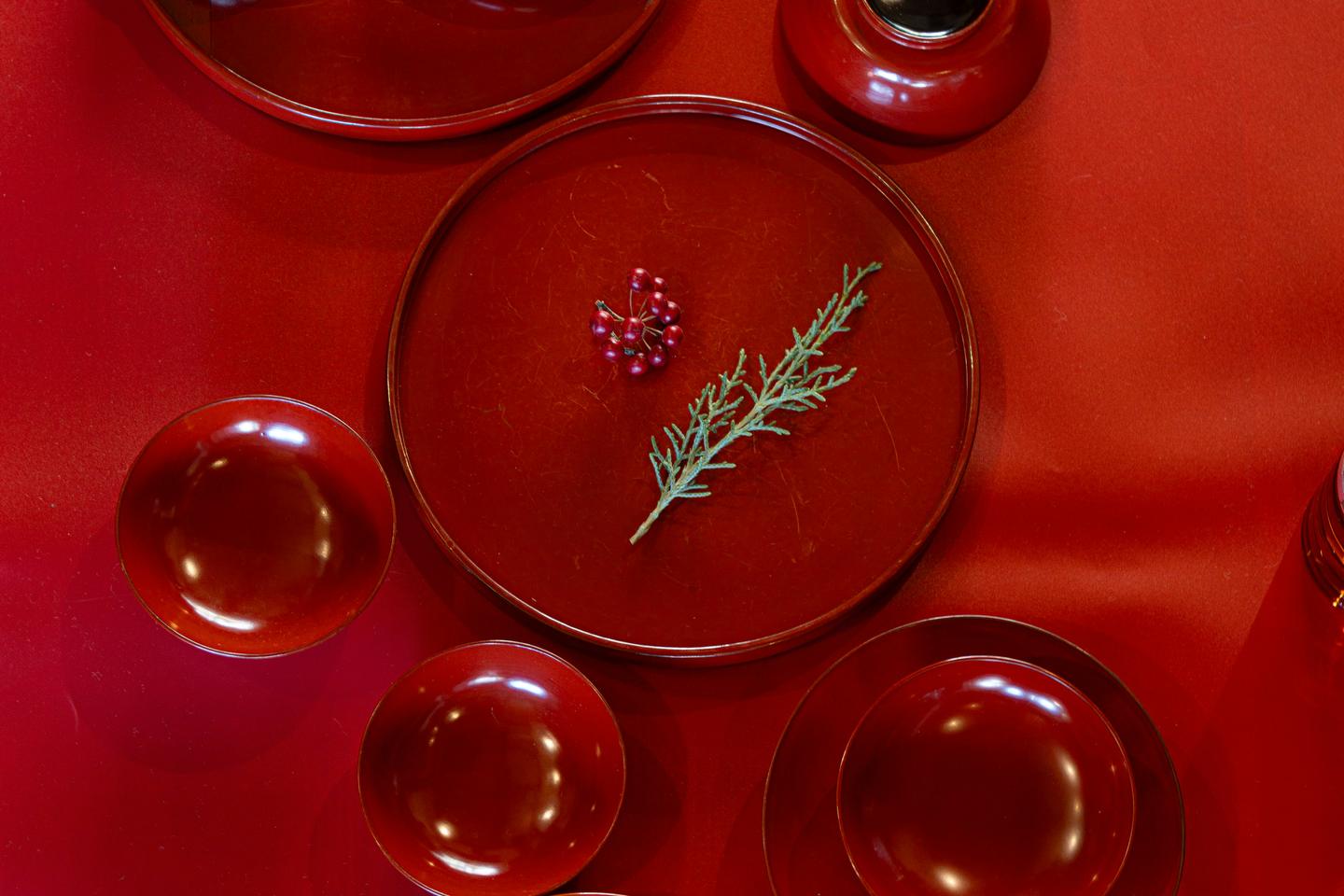
Upstream, in Yamanaka Onsen, woodworkers holding a logging permit settled between 1573 and 1592, according to KOGEI JAPAN, and the bowls and trays they sold to bathers grew into Yamanaka lacquerware. The local cooperative calls the town Japan's leading centre of wood turning. Turners cut zelkova, horse chestnut, cherry and chestnut along the length of the trunk, a method called tatekidori that keeps a bowl from warping, and shape it with tools they forge themselves. About 50 kinds of decorative turning, fine grooves with names such as itomesuji, give a surface that does not slip in the hand. The craft was designated a national Traditional Craft in 1975.
Lacquer follows the lathe: raw lacquer soaked into the wood, linen to strengthen rim and foot, layers of ground and polish, then the final coats in black or vermilion. A piece finished in maki-e can take more than a year. The pleasure of Yamanaka is to see both halves of the work, the lathe and the brush, and to eat from the result the same evening. Kayotei, the inn described below, serves its meals on cups and plates made by three generations of the Satake family, and The Ryokan Collection lists visits to a Satake lacquer studio and to a Kutani studio among its suggestions.
WHERE THE FINEST WORK IS SHOWN IN KANAZAWA
The National Crafts Museum opened in Tokyo in 1977 and moved to Kanazawa in 2020. From October 9, 2026 to January 11, 2027 it shows a chronicle of Japanese design, and from February 26 to June 6, 2027 an exhibition on kintsugi, the mending of ceramics with lacquer and gold, which draws together the threads of this article. It opens from 9:30 to 17:30 and closes on Mondays.
The Ishikawa Prefectural Traditional Industries and Crafts Hall shows the 36 traditional crafts of the prefecture side by side, a good first hour before choosing which workshops to visit. It notes that Ishikawa is home to three of Japan's great lacquer traditions, Wajima, Yamanaka and Kanazawa, and its exhibition Lacquer of the World runs until December 14, 2026. From April to November it closes on the third Thursday of the month, and from December to March on every Thursday. Wajima, on the Noto peninsula, was struck by the earthquake and the floods of 2024; how its makers are rebuilding is covered in our Kanazawa guide.
WHERE TO STAY
In Kanazawa, Auberge Maki no Oto Kanazawa has four rooms in the Higashi Chaya district, two in the main house and two in an annex added in 2020, and a ten-seat kaiseki counter, Higashiyama Wakon. The gold leaf houses of Higashiyama are within walking distance.
In Yamanaka Onsen, Kayotei has ten suites in the sukiya style of a tea pavilion, with private indoor and open-air baths, and suggests the 2.9-kilometre walk along the Kakusenkei gorge. Dinner is kaiseki, begun between 18:00 and 19:00. JNTO advises that Italians prefer to begin dinner after 20:00; a ryokan kitchen keeps its own hours, and we ask about the timing before you arrive. Also in Yamanaka, Hanamurasaki has 25 rooms beside the gorge and shows more than 100 works of art, Kutani, lacquer and turned wood among them, including pieces by Living National Treasures, with a gallery that changes every month. Beniya Mukayu in Yamashiro Onsen is described in our Kanazawa guide.
Two nights in Kanazawa and two in Yamanaka or Yamashiro make a calm close to a route that comes over the mountains from Takayama and Shirakawa-go; for a night in the thatched village, see Shirakawa-go Overnight Stay in 2027: How to Book and Visit →. In a Signature journey of 7 to 21 days, we place the nights, arrange the car between the towns, set the museums' closing days beside your dates, and ask the workshops.
SOURCES AND HOW WE CHECKED
We read the pages below on November 5, 2026. We did not contact any museum, maker, cooperative or inn.
- JNTO, visitor arrivals by nationality and month, 2003 to 2026 (Japanese, Excel): Italy 309,377 in 2025, up 34.6% on 229,785 in 2024
- JNTO, Inbound Travel Promotion Handbook 2024, Europe, Italy chapter (Japanese, PDF): Takayama, Shirakawa-go and Kanazawa popular beyond the Golden Route; Kanazawa in many tours of large Italian operators; dinner after 20:00
- JNTO, marketing strategy for the Italian market (Japanese): couples 40 and over in the top 30% of household disposable income, 60,000 euros a year or more; historic inns, traditional crafts, food and sake
- JNTO Italy, Kanazawa and surroundings (Italian): Kanazawa produces 99% of Japan's gold leaf
- Kanazawa City Yasue Gold Leaf Museum, outline (Japanese): all gold leaf produced in Japan is made in Kanazawa; Yasue Takaaki, 1898 to 1997; new building in Higashiyama in 2010
- Kanazawa City Yasue Gold Leaf Museum, English page: hours 9:30 to 17:00, closed Tuesdays, founded in 1974, what is shown
- Kanazawa City Yasue Gold Leaf Museum, home page (Japanese): autumn 2026 exhibition, October 5 to December 6
- KOGEI JAPAN, Kanazawa Gold Leaf: 23 mm piece covering about 1.6 square metres; 1817, 1845 and 1864; alloy with silver and copper
- Hakuza, how engitsuke gold leaf is made (Japanese): ganpi paper, straw-ash lye, persimmon tannin and egg white, about half a year; from 1/1000 mm to 1/10,000 mm in about a week; three craftsmen
- Kinginhaku Kogei Sakuda, official site (Japanese): founded in 1919; main store in Higashiyama
- KOGEI JAPAN, Kutani Ware: 1655, Arita, revival in 1807 with Aoki Mokubei at Kasugayama, styles and dates, the five colours, about 800 degrees, Yoshita Minori
- Ishikawa Kutaniyaki Art Museum, Kaga City (Japanese): address in Daishoji, rooms by style, hours, closed Mondays, special exhibition in two parts to April 18, 2027
- Kutani-yaki Kiln Museum (Japanese): national historic site in Yamashiro Onsen, climbing kiln of the Yoshidaya revival, hours, closed Tuesdays, workshops by reservation
- Rosanjin former residence Iroha Soan (Japanese): address in Yamashiro Onsen, hours, closed Wednesdays
- KOGEI JAPAN, Yamanaka Lacquerware: settlement in 1573 to 1592, tatekidori, about 50 kinds of decorative turning, woods, 1975 designation, maki-e taking more than a year
- Yamanaka Lacquerware Cooperative (Japanese): Japan's leading centre of wood turning on the lathe
- National Crafts Museum (Japanese): opened in Tokyo in 1977, moved to Kanazawa in 2020, hours, closed Mondays, exhibitions to June 6, 2027
- Ishikawa Prefectural Traditional Industries and Crafts Hall (Japanese): 36 crafts, Wajima, Yamanaka and Kanazawa lacquer, exhibition to December 14, 2026, closing days
- Kayotei, official site (Japanese): address in Yamanaka Onsen, seasonal kaiseki
- The Ryokan Collection, Kayotei: ten suites in the sukiya style, private baths, dinner 18:00 to 19:00, Satake family tableware and studio visits, 2.9 km Kakusenkei walk
- The Ryokan Collection, Hanamurasaki: 25 rooms beside the Kakusenkei gorge, more than 100 works of art, Living National Treasures, monthly gallery
- The Ryokan Collection, Auberge Maki no Oto Kanazawa: four rooms in Higashi Chaya, annex of 2020, ten-seat counter Higashiyama Wakon
QUESTIONS TRAVELLERS ASK
How many nights do Kanazawa and the Kaga crafts need?
Two nights in Kanazawa for the gold leaf houses and the museums, and two in Yamanaka or Yamashiro Onsen for Kutani and the lathe workshops. Four nights let you visit makers in the morning and rest in the afternoon.
Is all of Japan's gold leaf really made in Kanazawa?
The city's Yasue Gold Leaf Museum states that all of the gold leaf produced in Japan today is made in Kanazawa, and JNTO's Italian-language page gives 99%. Either way, the beaters and their paper are here.
Can I commission a piece from a maker?
Sometimes. We ask the workshop on your behalf with your idea, the size and your dates. Whether they accept, the price and the time it takes are the maker's decision, and for larger pieces we settle shipping with the shop before you choose.
Which days are the museums closed?
The National Crafts Museum and the Kutaniyaki Art Museum close on Mondays, the Yasue Gold Leaf Museum and the Kutani-yaki Kiln Museum on Tuesdays, and the prefectural crafts hall on Thursdays from December to March. We set these beside your dates.
Can this be combined with Takayama and Shirakawa-go?
Yes. Italian tours often join the three. With a car you can stop in Shirakawa-go early in the morning before continuing to Kanazawa and then to the Kaga hot spring towns.
LET US PLAN YOUR DAYS WITH THE MAKERS OF KAGA
Tell us when you would like to be in Japan and which crafts draw you. We will set out the nights, the inns, the museums open on your dates and the workshops we can ask, side by side with the reasons, so that you can choose.
Begin planning →We reply within 24 hours, in writing
Some of the restaurants and bars we arrange seat guests only by introduction or membership. We ask on your behalf; the table and the evening are the house's decision. We do not publish their names.