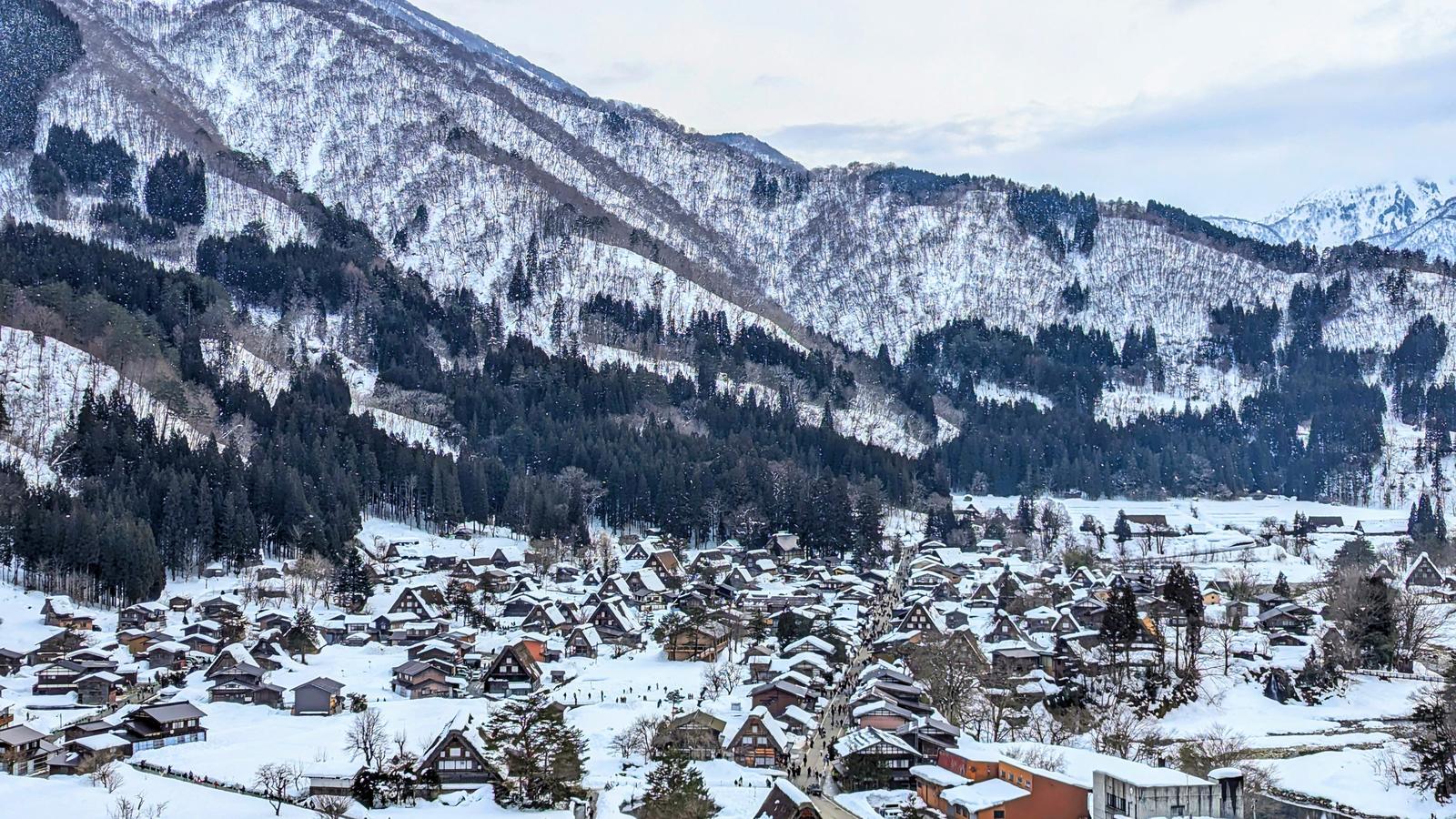
To see Shirakawa-go well in 2027, stay one night in a gassho-zukuri farmhouse inn in Ogimachi. The village is open to visitors from 8:00 to 17:00 and does not accept night sightseeing, so only overnight guests see it after dark and in the early morning. Rooms are booked online through the Shirakawa-go Tourist Association about three months ahead. The winter light-up runs on January 11, 17, 24 and 31, 2027, by advance reservation only, and village rooms on those nights are allocated by an email lottery that closes on October 31, 2026. Takayama is about 50 minutes away by express bus, Kanazawa about 1 hour 20 minutes.
This is how a stay in Shirakawa-go works in practice: how the farmhouse inns are booked, what the light-up asks of you, what the buses cost and which houses you can enter. We checked every rule, date, fare and admission fee on the official pages of the Shirakawa-go Tourist Association, Shirakawa Village, Nohi Bus and the Gokayama tourist information site on October 14, 2026. The sources are listed at the end. If you are planning the wider region, our Hokuriku coast itinerary shows how a village day sits inside a week.
Key points
- Visiting hours are 8:00 to 17:00. After that, the village is open only to people staying in it overnight.
- Farmhouse inns book online through the Tourist Association about three months ahead. The two inn listings we read give check-out at 9:30 and only four or five rooms each.
- The 2027 light-up is on January 11, 17, 24 and 31, from 17:30 to 19:30, by advance reservation and ticket only. Nobody is admitted without a reservation.
- Light-up night rooms go by lottery: one email application per person, in the name of the person who will stay, until 23:59 on October 31, 2026. Results come on November 10, 2026.
- The express bus costs ¥2,800 one way from Takayama and ¥2,800 one way to Kanazawa, and some departures need a reserved seat.
- Gokayama, part of the same World Heritage listing, holds its own winter light-ups in January and February 2027, and cars need no reservation there.
WHY STAY THE NIGHT
Most visitors to Shirakawa-go arrive mid-morning and leave by late afternoon. The Tourist Association's own guidance is that a walk around the village takes two to three hours, and the parking lot at Seseragi Park opens at 8:00 and takes its last car at 16:30. That shape of day puts everyone in the same lanes at the same hours.
The village's rules change what an overnight stay is worth. Shirakawa Village publishes five requests for visitors, and one of them reads, in translation, "we do not accept night sightseeing". People live in these houses, so the village closes to visitors in the evening. Its own wording is that only guests staying in village lodgings can enjoy the starry sky and the early morning. The traffic site run for the village says the same in English: only people staying in the village overnight can tour it at night.
In practice that gives you two windows nobody else has. The first is the hour after 17:00, when the last cars leave the lot across the river and the lanes go quiet. The second is the morning before the first buses arrive. With check-out at 9:30 at the inns we read, you can walk the rice fields and the lanes at 7:00 and be back for breakfast before the day visitors cross the bridge.
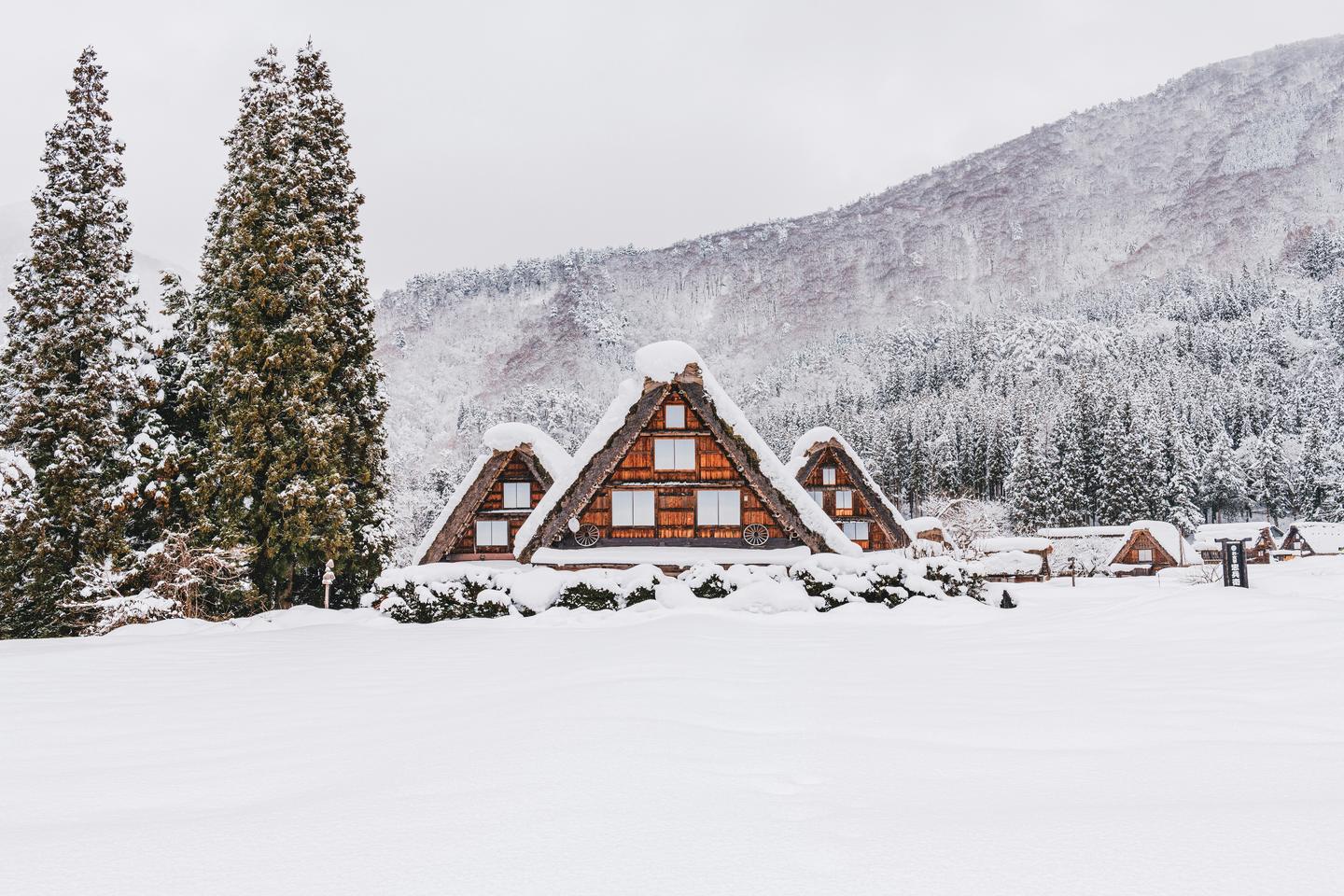
There is also the house itself. Shirakawa-go and Gokayama were inscribed together as a UNESCO World Heritage Site in 1995, and the Tourist Association notes that residents still re-roof the thatch through a mutual help tradition called yui. Sleeping under one of those roofs is the closest you can come to understanding why the houses were built steep, open and close together.
HOW A FARMHOUSE STAY IS BOOKED
The Shirakawa-go Tourist Association runs the village's booking system. On October 14, 2026, its accommodation search returned 41 places to stay in English and 42 in Japanese, across gassho-zukuri houses, ryokan, onsen inns and guest houses in Ogimachi and the surrounding hamlets. The gassho-zukuri inns sit in Ogimachi itself, inside the World Heritage village.
How far ahead
The Association's answer to the booking question is that online reservations open roughly three months before the stay. For dates further out, it points to other booking channels. Cancellations go through a link in the confirmation email, and whether a cancellation fee applies is decided by each inn. If a card payment fails, the room is held for about an hour and then released.
What the individual houses say
Each inn sets its own terms, and the listings are worth reading line by line. These are the conditions we found on the official listings on October 14, 2026.
- Otaya, a gassho-zukuri inn about three minutes on foot from the bus terminal: five rooms, check-in from 15:00, check-out by 9:30.
- Isaburo, a gassho-zukuri guest house about 14 minutes on foot from the bus terminal: four rooms, check-in from 14:00, check-out by 9:30.
- Rihee states that it cannot accommodate guests for consecutive nights.
- Nodaniya takes one group a day, and its rooms are offered without meals. It has two shower rooms renovated in 2019.
- Magoemon's listing said it was closed at the time we checked.
Two things follow. First, a gassho-zukuri night is usually a single night, and the meals, baths and number of rooms vary from house to house, so the right house depends on who is travelling. Second, many of these inns are run by families and work largely in Japanese. Where an inn takes bookings in Japanese only, we handle that for you, together with any questions about dietary needs, futon bedding or the time you will arrive.
For a sense of what a traditional inn asks of its guests, our guide to choosing a ryokan covers meal times, bathing and what is included. A gassho-zukuri farmhouse inn is usually simpler than a ryokan, and the listings are the place to check what each house offers.
THE WINTER LIGHT UP IN JANUARY 2027
On four evenings each winter, the houses of Ogimachi are lit against the snow. The 41st Shirakawa-go Light-Up has been announced for 2027, and it is run entirely by advance reservation and admission ticket. The organisers' page states that visitors without a reservation will not be admitted, even if they arrive on the day, and no tickets are sold on the day.
| Item | Published detail |
|---|---|
| Dates | January 11 (a public holiday), January 17, January 24 and January 31, 2027 |
| Hours | 17:30 to 19:30 |
| Overnight stay in the village | By email lottery. Applications 13:00 October 1 to 23:59 October 31, 2026; results by email on November 10, 2026; payment by card. Includes an Observation Deck Ticket |
| Designated parking, ordinary car | First round from September 10, 2026, now sold out: ¥6,000 for 1 to 5 people, ¥9,000 for 6 to 10. Second round from 13:00 on December 1, 2026: ¥7,000 and ¥10,000. No deck ticket |
| Highway bus tours | Sales open at 14:00 on October 13 (for January 11), October 19 (January 17), October 26 (January 24) and November 2, 2026 (January 31) |
| Travel agency bus tours | Linked from the Tourist Association site from 13:00 on December 2, 2026. No deck ticket |
| Not allowed | Drones anywhere in the village; tripods and pets at the observation deck |
The lottery for village rooms
A night in the village is the only way to see the light-up and stay on afterwards, and it is also the most direct way to the elevated view. Observation Deck Tickets are limited, not sold separately, and come only with a qualifying village stay or certain highway bus tours. Viewing runs in three sessions and the time is assigned to you.
The lottery rules are strict. Each person may send one application by email, giving one date, one inn and one room type. Sending more than one, even for different dates or inns, voids every application. The name on the application must match the name on the reservation, and if you apply for someone else, the application must be in the name of the person who will actually stay. Only winners are notified. If places are declined, a further first-come period may open at 13:00 on November 26, 2026.
This is where we are useful. We prepare and send each application in your own name, choose the inn and room type to suit your group, and handle the payment instructions if you are drawn. With the window closing on October 31, 2026, there are a little over two weeks left from the date of this article.
Practical conditions on the night
- From 15:30 a gate closes the village to anyone without an admission ticket. Regular bus passengers must arrive by the 15:20 bus.
- Highway buses run no return service after the event, and the last regular departures are around 16:00 to 17:00. Without a room in the village, you need parking or a tour.
- The organisers expect temperatures of about minus 10°C to 0°C and icy roads. They ask for warm clothing, waterproof insulated boots, anti-slip gear and a torch.
- Every vehicle must have studless winter tyres. Stopping or dropping off outside designated areas is prohibited.
- The event may be cancelled in a severe cold wave or major transport disruption.
For how a January stay in the mountains fits with the rest of a winter trip, see Japan in winter.
THE RULES THE VILLAGE ASKS YOU TO KEEP
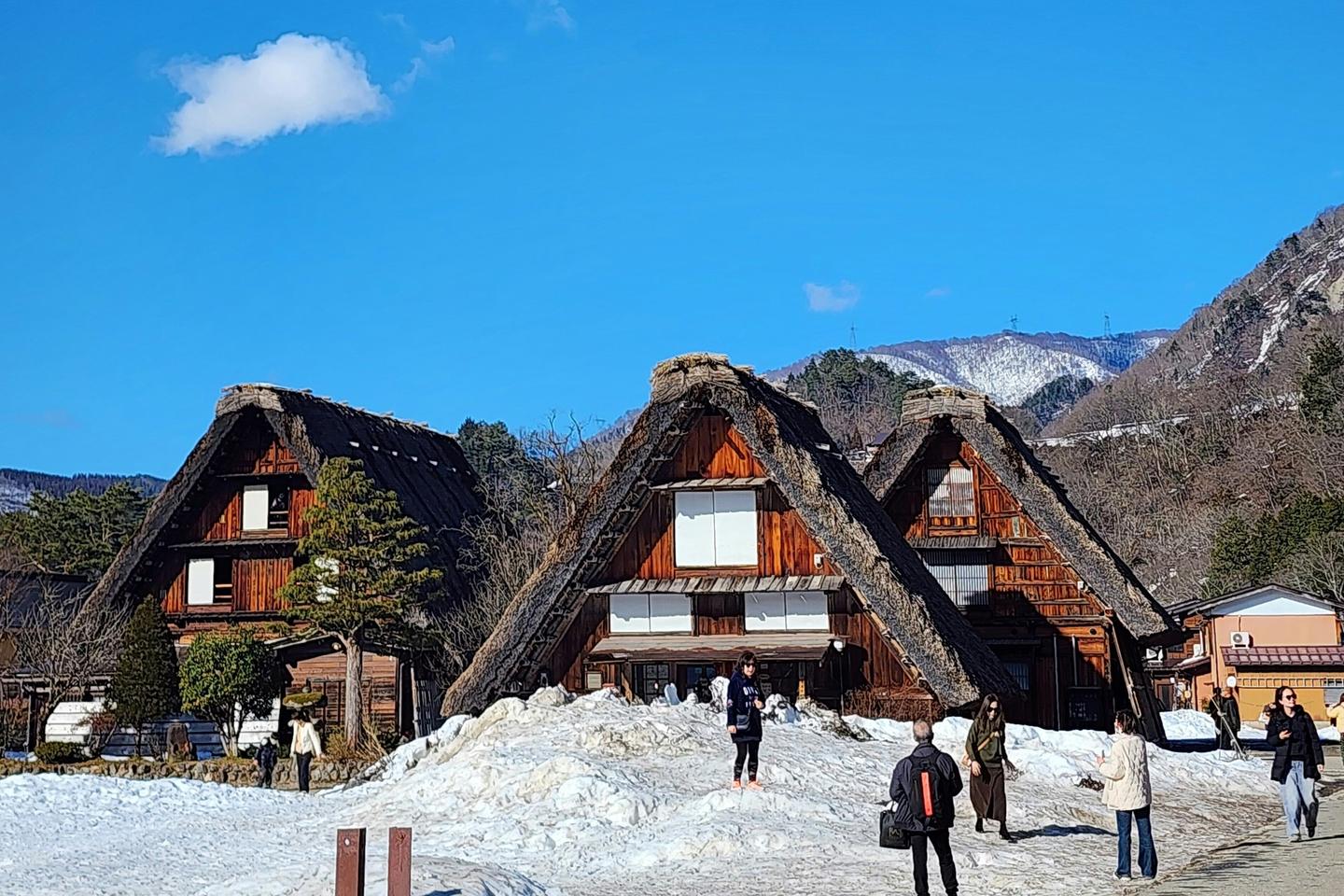
Shirakawa Village sets out five requests for visitors under its responsible tourism programme. They are short, and they apply to overnight guests as much as to day visitors.
- Use the designated parking. There is no tourist parking inside the village. Cars park at Seseragi Park across the river, open 8:00 to 17:00 with last entry at 16:30, for ¥2,000 per ordinary car. Part of the fee goes to preserving the village.
- No open flame. No discarded cigarettes and no fireworks. Smoking is allowed only at Seseragi Park and at three designated spots in the village. These are thatched wooden houses.
- Take your rubbish with you. There are no bins in the village. Rubbish from something you bought can go back to the shop that sold it.
- No night sightseeing. The evening belongs to residents and staying guests.
- No drones. They are banned to protect residents' privacy and the buildings. For the view from above, the village points you to the observation deck.
The deck is about 600 metres uphill from the village, roughly 15 minutes on foot. A shuttle runs from a stop about 200 metres from the bus terminal for ¥300 per person each way, paid in cash on board. On the published timetable, the first shuttle up leaves at 9:00 and the last at 15:40, with a break around midday. On the deck itself, tripods are not allowed during the light-up.
GETTING THERE FROM KANAZAWA OR TAKAYAMA
There is no railway to Shirakawa-go. You arrive by express bus at the Shirakawago Bus Terminal, or by car. The Tourist Association gives about 50 minutes from Takayama, about 1 hour 20 minutes from Kanazawa Station and about 1 hour 20 minutes from Toyama Station by bus. By car, Kanazawa is about 1 hour 10 minutes away by expressway.
| Between | Fare |
|---|---|
| Takayama and Shirakawa-go | ¥2,800 |
| Shirakawa-go and Kanazawa Station | ¥2,800 |
| Shirakawa-go and Toyama Station | ¥2,400 |
| Shirakawa-go and Takaoka or Shin-Takaoka | ¥2,200 |
| Takayama and Kanazawa Station, through | ¥4,200 |
Nohi Bus lists 16 round trips a day between Takayama and Shirakawa-go, and marks some departures as reservation only. On those services a seat must be booked in advance, and mobile tickets are sold only for the unreserved buses. The first bus from Takayama leaves at 7:20 on the current timetable.
Luggage
Coin lockers at the bus terminal are open 8:00 to 17:00, at ¥500 for small and medium and ¥1,000 for large, and a luggage service next to the terminal is open until 17:00. On an overnight stay, the simplest plan is to send large cases ahead to your next hotel and arrive with one small bag. We arrange that forwarding as part of the trip.
By private car
A car with a driver lets you leave Kanazawa after lunch, arrive for check-in, and continue to Takayama the next morning. Ordinary cars need no parking reservation on normal days. From December 1, 2026, every tour bus, including microbuses, must reserve its space at Seseragi Park through the village's bus parking system. From early December to late March, the village advises winter tyres.
The route we usually build
The most comfortable order is Kanazawa, one night in Shirakawa-go, then Takayama, or the same in reverse. Two nights in Kanazawa before the village give you the gardens and the craft districts. Two nights in Takayama afterwards give you the old town. From Tokyo, the Tourist Association routes travellers by Hokuriku Shinkansen to Toyama in about 2 hours 15 minutes, then by bus.
THE HOUSES YOU CAN STEP INSIDE
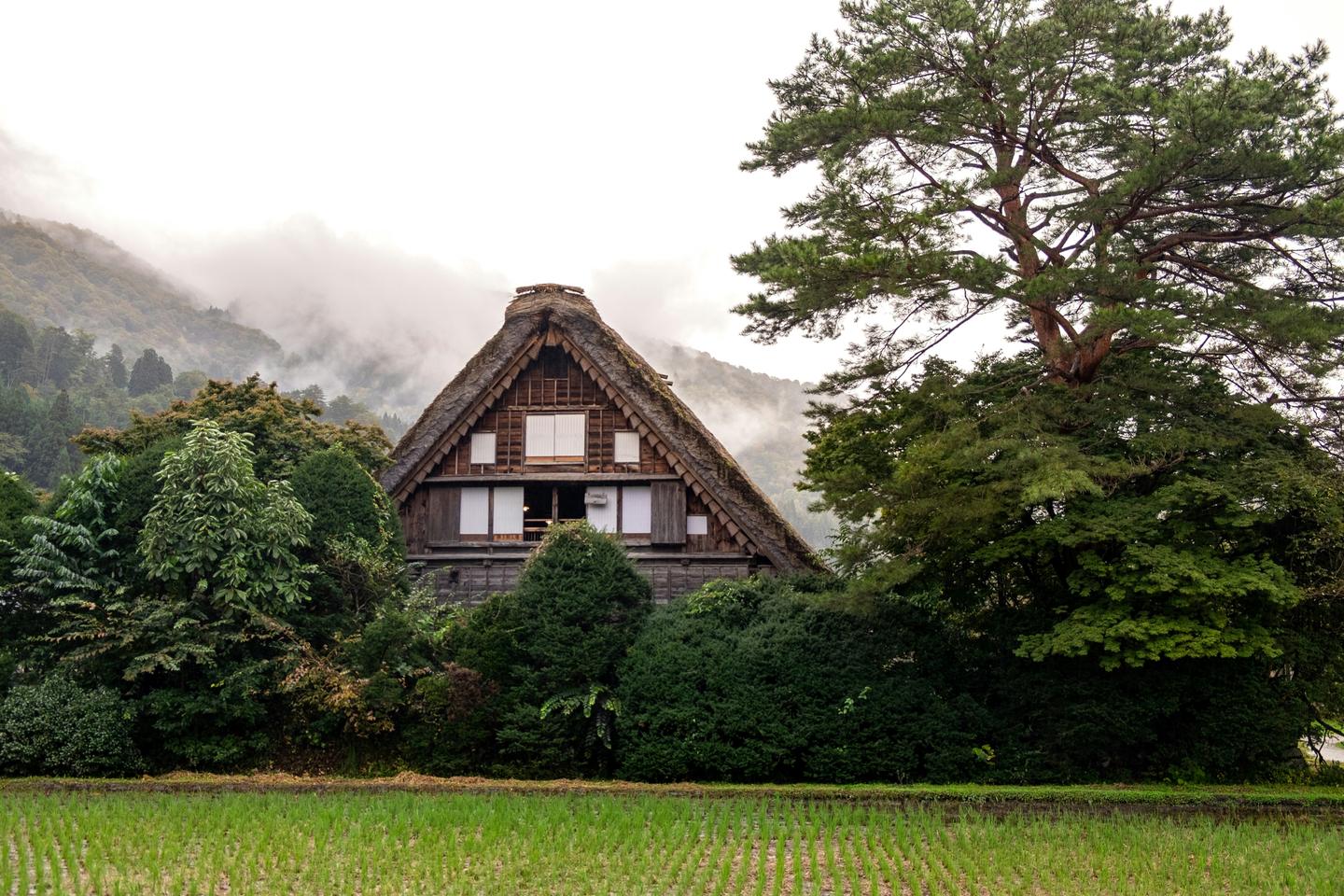
Several gassho-zukuri houses in Ogimachi are open as museums. They are worth a slow hour, because inside you see the timber frame and the upper floors that the thatch hides from the lane. At Wada House, silkworms are still raised in July and August. The Tourist Association's general guidance is that walking the village is free, and that most facilities charge ¥300 to ¥400 per person.
| House | Adult admission | Hours and closing days |
|---|---|---|
| Wada House | ¥400, primary school pupils ¥200, cash only | 9:00 to 17:00, closes irregularly |
| Kanda House | ¥400, children ¥200 | 9:00 to 16:00, closed on Wednesdays unless a public holiday |
| Nagase House | ¥300, children ¥150, cash only | 9:00 to 17:00, closes irregularly |
| The Open-air Museum | ¥600, children ¥400 | March to November 8:40 to 17:00; December to February 9:00 to 16:00; closed on Thursdays from December to March |
Wada House is a National Important Cultural Property and the largest gassho-zukuri house in Shirakawa-go. In the Edo period the family served as village heads and traded in silk and in the raw materials for gunpowder. The first and second floors are open, and the second floor has explanations in English. It takes no group reservations.
Kanda House took about ten years to build, according to its listing, and you can see a gunpowder-making site beneath the floor.
Nagase House is described as the tallest gassho-zukuri house in the area, at five floors. A Buddhist altar said to be about 500 years old stands on the first floor, and a film shows the re-roofing of 2001, when about 500 volunteers helped.
The Open-air Museum brings together 25 gassho-zukuri houses, nine of them designated as important cultural properties by the prefecture, with a watermill, a shrine and temple halls. In some houses you can climb to the third floor.
The Wada House listing was last revised in April 2024, so we confirm the opening on the day of your visit. Closing days marked "irregular" are a reason to see the houses in the afternoon of your arrival and keep the next morning for walking.
GOKAYAMA AS THE QUIETER CHOICE
Shirakawa-go's World Heritage listing covers three villages: Ogimachi in Gifu, and Ainokura and Suganuma in Gokayama, across the prefectural line in Nanto, Toyama. Gokayama is reached from Shirakawa-go or from Takaoka by the World Heritage Bus, and by car from the Gokayama interchange.
Staying overnight in Gokayama
The official Gokayama tourist site lists five gassho-zukuri inns inside the World Heritage villages, alongside onsen inns and other family-run lodgings nearby. As in Ogimachi, these are family houses with few rooms, and we make the arrangements with them for you. Outside special evenings, sightseeing in Ainokura ends at 17:00, so the evening again belongs to residents and staying guests.
Winter evenings in Gokayama in 2027
- Ainokura light-up: February 20 and 21, 2027, from sunset to 20:00. Cars need no reservation and pay ¥1,000; bus applications have closed.
- Suganuma: a light-up on January 26, 2027, and the Yukiakari light-up on February 6 and 7, 2027, each from about 17:30 to 20:00, with the same ¥1,000 car fee.
- Ainokura window-light evenings: January 13 and 27, 2027. On these nights the parking area and viewing spots stay open until 20:00 to see the ordinary lights in the windows.
The World Heritage Bus
The World Heritage Bus, run by Kaetsuno Bus, links Takaoka and Shin-Takaoka with Gokayama and Shirakawa-go. Each run holds 16 reservable seats, bookable from one month ahead until the day before, and the remaining seats are first come, first served. A two-day free pass between Takaoka or Shin-Takaoka and Shirakawa-go costs ¥4,000 for adults. Some runs are suspended for the time being, so we check the timetable for your dates.
Gokayama suits travellers who want the same architecture with fewer people, or who are coming from the Toyama side. Our Hokuriku itinerary, linked above, uses it as a day from Toyama.
SOURCES AND HOW WE CHECKED
We read the official pages of the Shirakawa-go Tourist Association, Shirakawa Village and its traffic site, Nohi Bus, Kaetsuno Bus and the Gokayama tourist information site on October 14, 2026. We did not contact the inns or the Association. We did not use figures from booking sites, travel blogs or press coverage. Inn rates are not listed here because they are shown only for specific dates and change; we confirm them when we ask for your dates.
- Shirakawa-go Light-Up 2027, overview: dates, hours, admission, parking, tours and rules
- Shirakawa-go Light-Up 2027, accommodation lottery: application window, rules and results date
- Shirakawa-go Light-Up 2027, schedule announcement: dates and reservation-only entry
- Shirakawa-go Tourist Association, stay: number of places to stay and inn listings
- Shirakawa-go Tourist Association, accommodation FAQ: booking window and cancellation
- Shirakawa-go Tourist Association, general FAQ: visit length, admission range and lockers
- Shirakawa-go Tourist Association, access: bus and car times, Seseragi Park parking
- Shirakawa-go Tourist Association, about the village: World Heritage inscription and yui
- Wada House, Kanda House, Nagase House, The Open-air Museum: admission, hours and closing days
- Shirakawa Village, responsible tourism: the five requests for visitors
- Shirakawa Village, bus parking reservations: reservations for tour buses from December 1, 2026
- SHIRAKAWA-Going, the village traffic site: visiting hours, shuttle timetable and fare
- Nohi Bus, Shirakawa-go line: fares, reserved services and departures
- Kaetsuno Bus, World Heritage Bus: seat reservations and free passes
- Gokayama, winter light-ups 2027: dates, hours and car fees
- Gokayama, Ainokura evenings 2026 to 2027: light-up and window-light dates
- Gokayama, places to stay: gassho-zukuri inns in the World Heritage villages
QUESTIONS TRAVELLERS ASK
Can you stay overnight in a gassho-zukuri house in Shirakawa-go?
Yes. Several gassho-zukuri farmhouse inns in Ogimachi take overnight guests, and rooms are booked through the Shirakawa-go Tourist Association about three months ahead. Each has only a few rooms, so popular dates fill early.
Can you visit Shirakawa-go in the evening without staying there?
No. Visiting hours are 8:00 to 17:00 and the village does not accept night sightseeing, so only overnight guests can walk it after dark. The four light-up evenings are the exception, and they require an advance reservation.
Do you need a reservation for the Shirakawa-go light-up in 2027?
Yes. The light-up on January 11, 17, 24 and 31, 2027 is by advance reservation and ticket only, and nobody is admitted without one. Village rooms are allocated by lottery, with applications closing on October 31, 2026.
How long does the bus from Takayama or Kanazawa take?
The express bus takes about 50 minutes from Takayama and about 1 hour 20 minutes from Kanazawa Station. Both fares are ¥2,800 one way, and some departures require a reserved seat.
Is Gokayama a good alternative to Shirakawa-go?
Gokayama's villages of Ainokura and Suganuma share the same World Heritage listing and have gassho-zukuri inns of their own. They are reached by the World Heritage Bus or by car and hold their own winter light-ups in January and February 2027.
A NIGHT UNDER THE THATCH PLANNED FOR YOU
Tell us when you would like to travel and who is coming, and we will find the farmhouse inn that suits your group, apply in your names where a lottery applies, and build the days around Kanazawa and Takayama. STAYGO's Signature plan is USD 3,500 for your group for a trip of 7 to 14 days, and you pay the inns and hotels directly at their own rates, with no markup or commission.
Begin planning →