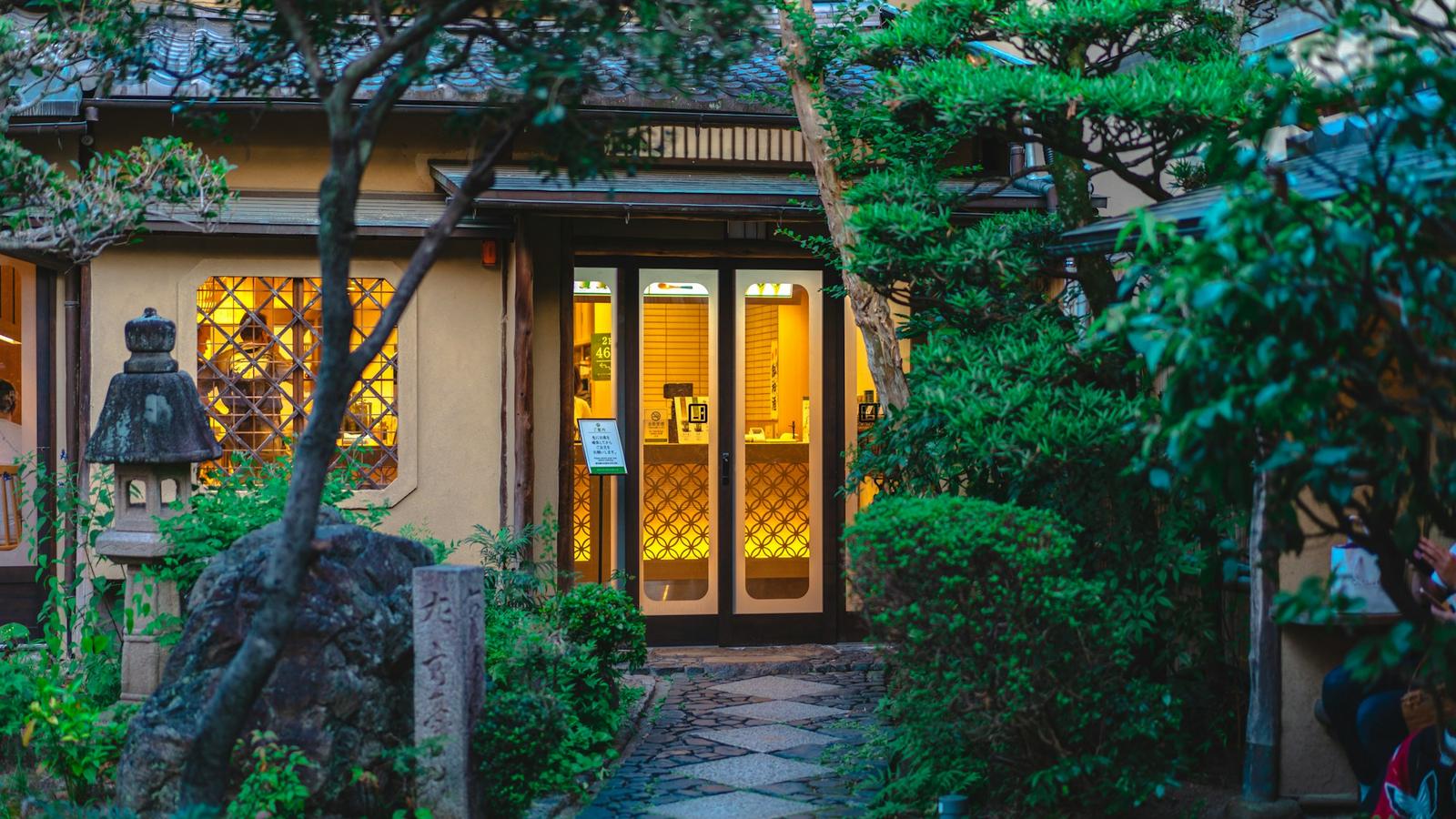
Japan is one of the world's best shopping destinations, though not for the reasons most travelers expect. Every global luxury brand has a flagship here, and several of the buildings are worth seeing. The stronger case is the domestic product: knives, whisky, tea, ceramics, lacquerware, and denim made to standards that rarely survive export.
This guide covers Tokyo's three best shopping districts: Ginza, Omotesando, and Daikanyama. After that, what to specifically buy, Kyoto's specialist shops, the tax refund process, and how to get heavy purchases home.
Key points
- The global luxury brands are priced similarly to elsewhere after tax refund. The real advantage is in categories where domestic quality is world-leading and export is limited: knives, whisky, tea, ceramics, lacquerware and denim.
- In Tokyo, Ginza has the flagships and the department stores, Omotesando the boutiques and the architecture, and Daikanyama the independent shops.
- Go to Kyoto's Nishiki Market before 10am. By mid-morning the tour groups are in and the space is hard to move through.
- Wagyu beef cannot be taken home to most Western countries, so eat it here. Heavy pieces such as ceramics and lacquerware are best shipped rather than carried.
- From 1 November 2026, tax-free shopping works as a refund: you pay the tax at the shop and get it back after customs checks the goods at departure, at an airport kiosk before you check in your bags.
GINZA: THE FLAGSHIP DISTRICT
Ginza is Tokyo's oldest and most formal shopping district, the equivalent of Bond Street or Rue Saint-Honoré, but more concentrated and with better department stores. Hermès, Louis Vuitton, Chanel, and Cartier all have large flagship stores here, several purpose-built for the Tokyo market. The Hermès building on Chuo-dori, designed by Renzo Piano, is a genuine piece of architecture rather than a shop front.
The two main department stores, Mitsukoshi Ginza and Matsuya, are worth visiting even if you don't intend to buy anything. Mitsukoshi is the oldest department store in Japan (established 1673 as a dry goods shop), and its basement food hall, the depachika, is extraordinary. Prepared foods, fresh produce, wagashi, imported goods, and specialist sections that take an hour to properly explore.
Ginza Six, opened in 2017, is the district's newest mall: six floors of luxury retail, a basement food hall, a rooftop garden, and a selection of Japanese designers alongside the international brands. Itoya on Chuo-dori is eleven floors of stationery and office goods, and one of the most unusual shops in the city. Sony Park, a short walk away, is an experimental cultural space rather than a store, but worth knowing about.
A Japanese department store basement food hall, the depachika, is its own retail category: neither supermarket nor food court, but a floor of prepared food, fresh produce, wagashi, and regional specialties. Most visitors spend longer down there than they planned.
OMOTESANDO: TOKYO'S AVENUE MONTAIGNE
Omotesando is a wide, tree-lined boulevard in Minami-Aoyama, Tokyo's closest equivalent to Paris's Avenue Montaigne. The scale is different (more compressed, more walkable), but the concentration of high-end boutiques and the quality of the architecture is comparable to anywhere in the world.
Several of the buildings are worth noting as architecture. The Prada Aoyama building, designed by Herzog and de Meuron (Pritzker Prize winners), is a faceted glass tower. The Tod's Omotesando building, by Toyo Ito, uses intersecting concrete tree-forms for structure and facade simultaneously. Omotesando Hills, by Tadao Ando, spirals around a central atrium with sloping floors that continue from the pavement outside.
Running parallel is Cat Street, a narrower lane with streetwear brands, emerging Japanese designers, vintage stores, and independent cafes. Ura-Harajuku (the backstreets behind Harajuku station) has serious vintage and Japanese streetwear. Takeshita Street itself is youth culture and cosplay, not relevant for luxury travelers, but interesting to walk through once.
DAIKANYAMA: INDEPENDENT SHOPS AND DESIGN
Daikanyama, ten minutes on foot from Shibuya, is where Tokyo's independent shops concentrate. No flagships, no department stores, no obvious luxury branding. Instead there are boutiques, contemporary Japanese menswear and womenswear, design-focused housewares, small galleries, and some of the best cafes in the city.
The Tsutaya T-Site complex, three interconnected buildings of books, music, film, and a Starbucks, is a reference point for retail designers. Sections are organized by lifestyle rather than category, and it carries foreign books and magazines that most cities' bookshops do not. The architecture, by Klein Dytham, is covered in a lattice pattern derived from the Tsutaya logo. Log Road Daikanyama, nearby, is a small retail street built on a disused rail line.
The boutiques on and around Sarugakucho and Hillside Terrace are where you find the contemporary Japanese designers who don't have Ginza flagships. The quality of Japanese cotton, leather-working, and tailoring at this level is genuinely different from what's available in most Western cities.
WHAT TO ACTUALLY BUY IN JAPAN
The global luxury brands are priced similarly to elsewhere after tax refund. The real shopping advantage in Japan is in categories where domestic quality is world-leading and export is limited.
Japanese whisky is significantly cheaper at domestic retail than at export prices. Bottles that are unavailable or multi-hundred-dollar imports abroad (Yamazaki 18, Hibiki 21, Hakushu 25) can often be found at standard retail pricing in department store spirits sections or specialist shops like Liquors Hasegawa. The restriction: most countries limit spirits to 1–2 litres duty-free. Japan Post and Yamato can ship alcohol internationally to some countries.
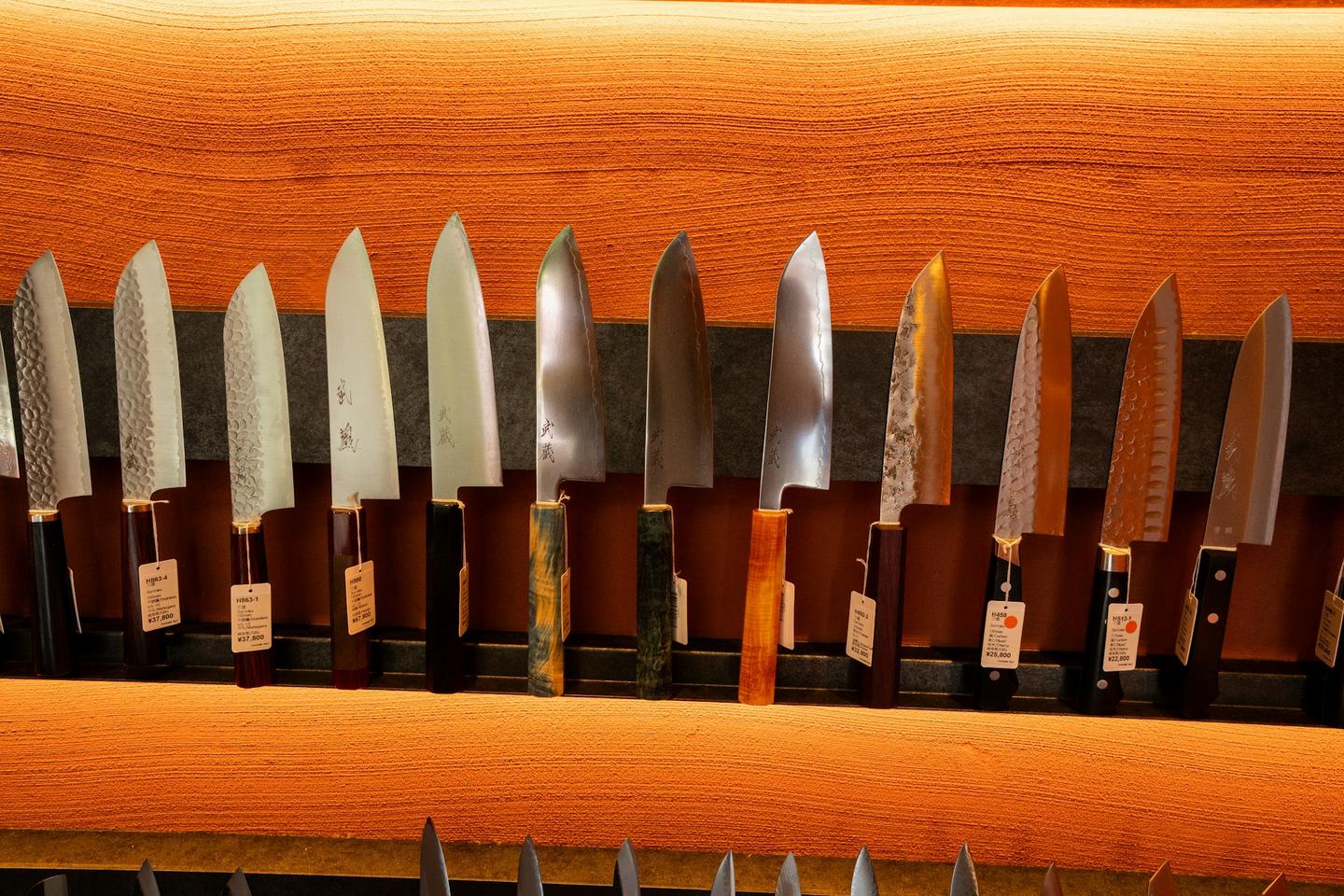
Japanese kitchen knives, particularly hand-forged carbon steel, are among the most technically accomplished cutting tools in the world. The wholesale cooking district of Kappabashi in Tokyo has multiple specialist knife shops. For the highest tier, Aritsugu in Kyoto's Nishiki Market has been making knives since 1560, and still engraves the owner's name on the blade. Carbon steel needs more maintenance than stainless, but holds an edge far longer and takes on a patina as it is used.
Japan produces the finest denim in the world by most objective measures. Labels like Studio D'Artisan, Oni Denim, Samurai Jeans, and Kapital make garments that serious denim collectors travel specifically for. Tokyo has multiple specialist shops; Harajuku's vintage stores carry aged examples.
Kyoto's Kiyomizu-yaki and Kanazawa's Kutani ware are two of Japan's most distinguished ceramic traditions. For lacquerware, Zōhiko on Oike-dori in Kyoto (established 1661) is one of Japan's foremost lacquer houses. Ippodo near Kyoto's Nijo-jo is the standard reference for matcha and sencha. Traditional sweets (wagashi) from Tsuruya Yoshinobu or Suetomi make good edible gifts. Furoshiki, the wrapping cloths, are lightweight, useful, and sold in patterns from classical to contemporary.
Wagyu beef cannot be taken home to most Western countries. Australian and US import restrictions prohibit fresh meat from Japan, so eat it here. It is better here anyway.
KYOTO SHOPPING
Nishiki Market, a five-block covered arcade north of Shijo-dori, is Kyoto's best food market and one of the few genuinely local shopping streets left in the city center. The corridor is narrow, the vendors are specialists, and the product range runs from fresh tofu and pickled vegetables to sake, street food, and knife shops. Go before 10am. By mid-morning the tour groups are in and the space is hard to move through.
The streets around Shijo and Kawaramachi have the highest concentration of Kyoto's specialist shops: kimono and textile merchants, sake dealers, incense shops, traditional paper (washi). The Arashiyama district has craft shops selling bamboo goods, incense, and weaving, though the quality varies significantly.
For wagashi: Tsuruya Yoshinobu near Nijo-jo has a reputation among Kyoto confectioners that predates most Western luxury brands. Suetomi in Nakagyo-ku makes highly seasonal nerikiri sweets that are as much sculpture as confectionery. Both require either same-day purchase or advance order for the best pieces.
TAX REFUND AND SHIPPING HOME
From 1 November 2026, tax-free shopping in Japan works as a refund. At a tax-free shop you show your passport and pay the full price including consumption tax. The tax comes back after customs confirms, as you leave Japan, that the goods are going with you. The refund is paid by the shop or by a refund company working for it, and the shop tells you how to register for it when you buy. The law does not fix one method: bank transfer, credit card, a payment app, or cash at the airport after the customs check are all possible, so ask each store. Most major department stores have dedicated tax-free desks: Isetan, Mitsukoshi, Takashimaya, and Matsuya all operate them. Purchases made up to 31 October 2026 fall under the earlier system, where the tax is taken off at the counter.
Under the refund system, purchases qualify when they reach ¥5,000 or more before tax at one store on one day. The old split between general goods and consumables ends, and so does the special sealed packaging for consumables. Gold and platinum bullion and coins are excluded. Two rules now matter more. Buy only what you can carry out of Japan yourself. And do not use up food, drink or cosmetics before you leave: anything consumed in Japan cannot be confirmed by customs, and if even one item from a receipt is missing, nothing on that receipt is refunded.
On departure day, go to a tax-free kiosk in the international departure lobby before you check in any bags, and scan your passport there. This has to happen within 90 days of the purchase, counted from the next day: something bought on 1 November is confirmed by 30 January. If the screen shows red, customs will ask to see the goods. Bring every tax-free purchase with you to the kiosk, because a suitcase cannot be taken back once it is checked in, and allow extra time, since the check has to be finished before you complete boarding procedures. At Narita, Haneda, Kansai, Chubu, Fukuoka, New Chitose and Naha you can also do it through Visit Japan Web on the dedicated Wi-Fi in the departure lobby. For watches and jewelry priced at ¥1 million or more before tax, the shop records the brand, model and serial number.
| Item | Shipping option |
|---|---|
| Ceramics / lacquerware | Japan Post EMS or Yamato |
| Department store purchases | In-store international shipping |
| Japanese whisky (select countries) | Japan Post (check destination rules) |
| Large / heavy parcels | Yamato Takkyubin international |
Anything bought tax-free has to leave Japan with you. If you post it home yourself, it is not there at the customs check and loses the tax exemption. When a store hands the goods to a carrier at the time of sale and sends them abroad for you, that is treated as an export, a separate route from the departure check; ask the store how the tax is handled on that bill. STAYGO helps clients decide what to carry and what to ship, and coordinates shipping for bulky pieces. The refund itself is settled between you and the store.
SOURCES AND HOW WE CHECKED
The tax-free rules on this page were checked by desk research. We read the National Tax Agency and Japan Tourism Agency material below on October 5, 2026, and did not contact any store or government office. Shipping costs depend on size, weight and destination, so we have not listed them.
- National Tax Agency, Tax-Free Shopping System will be shifted to the Refund Method (April 2025, PDF): the switch to the refund method from November 1, 2026, the minimum of ¥5,000 before tax, the end of the goods categories and special packaging, how the 90 days are counted, the records kept for items of ¥1 million or more, direct shipping by the store, and examples of refund methods
- Japan Tourism Agency, tax-free shopping page for travelers (English): the minimum per store per day, the kiosk check before baggage check-in, the airports where Visit Japan Web can be used, the receipt-by-receipt check, who pays the refund, and the system until October 31, 2026
- Japan Tourism Agency, frequently asked questions for travelers on the refund method (Japanese): when the refund is paid, where refund registration is explained, and why checked bags cannot be taken back
- National Tax Agency, Japan Customs and Japan Tourism Agency, Notice to Foreign Travelers Who Purchase Tax-Free Goods (PDF): buying only what you can carry out, showing the goods when asked, and exporting them without delay
QUESTIONS, ANSWERED
Can foreigners get a tax refund on purchases in Japan?
Yes. Purchases of ¥5,000 or more before tax at one store on one day qualify at tax-free shops, and you need your passport. From 1 November 2026 you pay the price including tax, and the shop refunds the tax after customs confirms at departure, within 90 days of purchase, that the goods are leaving Japan with you. Do the customs check at the airport kiosk before you check in your bags. Purchases made up to 31 October 2026 fall under the earlier system, where the tax is taken off at the counter.
What luxury items are worth buying in Japan?
Japanese whisky is significantly cheaper at domestic retail than at export prices. Quality kitchen knives (especially carbon steel from specialist makers like Aritsugu in Kyoto) are world-class and far better value than in Western markets. Premium Japanese denim, Ippodo tea, Kyoto ceramics, and lacquerware are also excellent purchases. Wagyu beef cannot be taken home to most countries due to import restrictions.
What is Ginza Six and is it worth visiting?
Ginza Six is a large luxury mall that opened in 2017 and has become one of the best-curated retail complexes in Tokyo. It houses high-end Japanese and international brands, a basement food hall, and a rooftop garden. For luxury travelers it is worth a visit, particularly for the combination of international flagships and Japanese designer labels.
Can I ship purchases home from Japan?
Yes. Most major department stores offer international shipping directly from the store. For independent purchases, Japan Post and Yamato Transport (Kuroneko) both offer reliable international parcel services. Heavy items like ceramics and lacquerware are best shipped rather than carried. Goods bought tax-free are different: they must leave Japan with you, so posting them home yourself loses the tax exemption.
STAYGO PLANS YOUR TOKYO AND KYOTO ITINERARY
STAYGO arranges private shopping appointments in Ginza, introductions to the Kyoto craft shops, and the shipping afterwards.
Start planning →