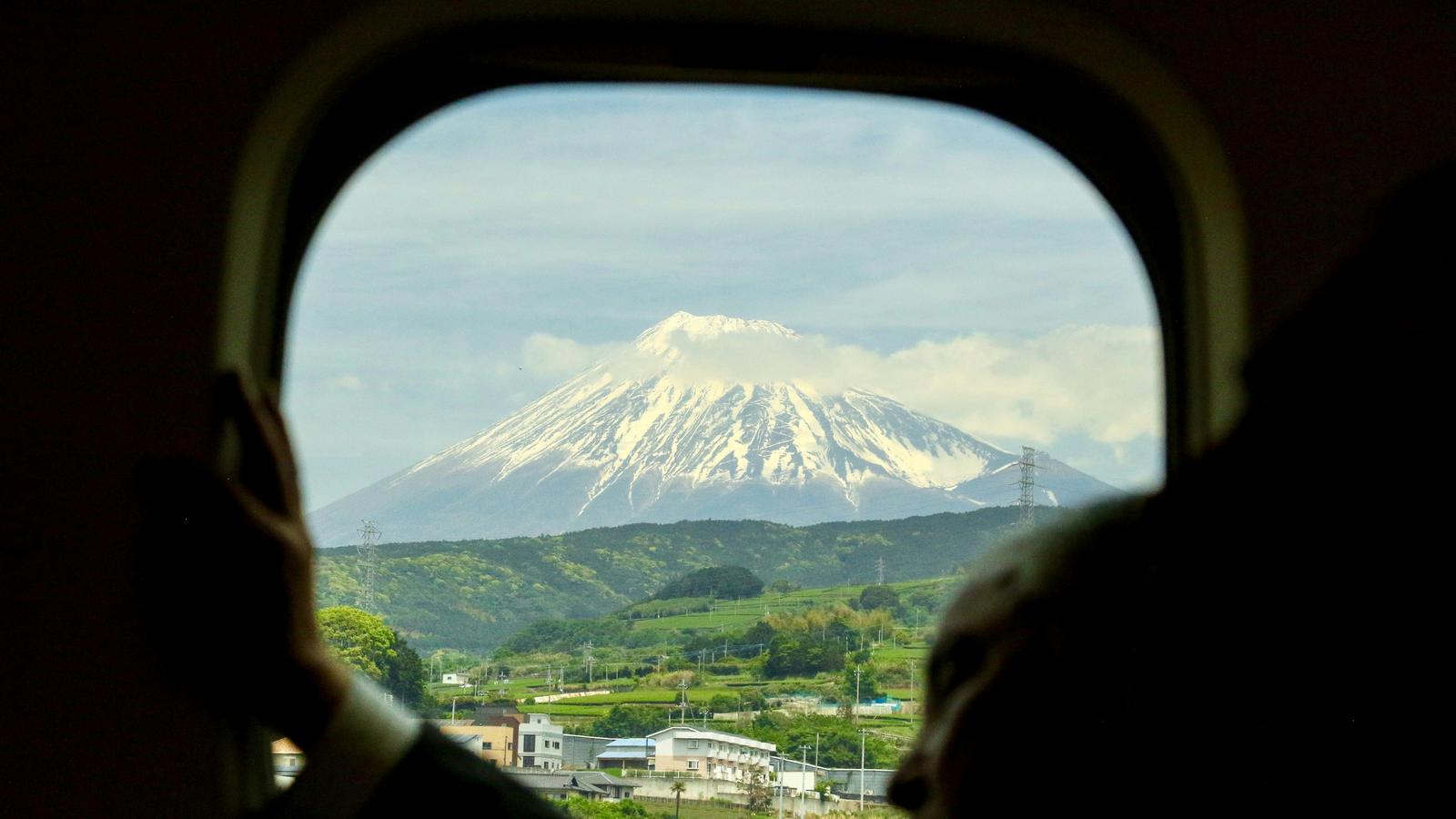
For a first trip to Japan, 10 days is the length we suggest most often. Ten days means nine nights, which is enough for Tokyo and Kyoto with four nights each and one night in Hakone or Kanazawa between them, without packing every other morning. Seven days works for two bases, five days for one base, and 14 days lets you add a third region such as the Japan Alps or Hiroshima. Count the arrival and departure days as half days, because on most trips they are.
Below, each length is set out with where to stay and for how many nights, who it suits and what will not fit. We checked every travel time in this article on the operators' own pages on October 15, 2026: JR Central's notice for the March 2026 timetable, JR West's Hokuriku Shinkansen pages, Haneda Airport, Keisei and Odakyu. Cherry blossom and maple dates come from the Japan Meteorological Agency, and the arrival paperwork from Japan Customs. The sources are listed at the end.
Key points
- Plan in nights. A 10-day trip is usually nine nights and about eight full days once the flights are taken out.
- Five days suits one base, Tokyo or Kyoto. Seven days suits two, Tokyo and Kyoto, with three nights in each.
- Ten days is the first length that fits a third stop, such as a ryokan night in Hakone or two nights in Kanazawa, at an unhurried pace.
- Fly into Tokyo and out of Kansai, or the reverse. On JR Central's 2026 timetable, Kyoto to Tokyo takes about 2 hours 10 minutes by Nozomi before the airport journey starts.
- In the JMA's long-term averages, cherry trees reach full bloom on March 31 in Tokyo and April 4 in Kyoto. A spring trip of 10 days or more has the best chance of catching both cities.
EACH LENGTH AT A GLANCE
The table gives the short answer for each length.
| Length | Where, and for how many nights | Suits | Will not fit |
|---|---|---|---|
| 5 days, 4 nights | Tokyo 4, or Tokyo 3 and Hakone 1, or Kyoto 4 | A stopover, a trip added to business in Tokyo, a return visit to one city | Tokyo and Kyoto both done at an easy pace |
| 7 days, 6 nights | Tokyo 3 and Kyoto 3, flying out of Kansai | A first trip with fixed leave, two cities in depth | A third stop without giving up a full day in one of the cities |
| 10 days, 9 nights | Tokyo 4, Hakone 1, Kyoto 4; or Tokyo 3, Kanazawa 2, Kyoto 4 | Most first trips, honeymoons, a first ryokan night | More than three bases, or Hokkaido and Kyoto together |
| 14 days, 13 nights | Tokyo 3, Hakone 2, Kanazawa 2, Shirakawa-go and Takayama 2, Kyoto 3, Osaka 1 | A first trip that reaches the mountains, a second trip that covers new regions | The main island end to end plus Hokkaido or Kyushu |
| 21 to 30 days | A week in one base, then a region at a time | Sabbaticals, retirements, travellers who want slow weeks | Very little, if the pace stays slow |
HOW TO COUNT ARRIVAL AND DEPARTURE DAYS
Most long-haul flights reach Japan in the afternoon or evening, and the body clock takes a day or two to follow. Treat the arrival day as an evening: check in, walk the neighbourhood, have a light dinner near the hotel. We do not place a tasting menu, a tea ceremony or anything that needs a fixed time on the first night.
The airport you land at changes how much of that evening you keep. Haneda Airport gives about 15 minutes to Shinagawa and about 30 minutes to Tokyo Station on its own access page. Narita is further out, and Keisei gives about 41 minutes for its Skyliner to central Tokyo, before the onward journey from Ueno or Nippori to the hotel.
The departure day is a morning at best. A flight before noon from Haneda or Narita uses it up. If you are leaving from Kansai Airport, Hotel Granvia Kyoto gives about 75 minutes on the Haruka limited express from the airport to Kyoto Station, so a night in Kyoto before a Kansai flight is workable. A last night back in Tokyo after Kyoto costs a little over two hours on the Nozomi before the airport journey even begins, which is why we route most trips into one airport and out of the other.
Before you fly, fill in Visit Japan Web, the government's service for the arrival forms. Japan Customs recommends it for the customs declaration, and its notice of May 2026 says the service is free of charge and warns of paid look-alike websites. At the airport you hold the code and your passport over the scanner at the customs gate.
THE TRAVEL TIMES BEHIND EVERY PLAN
A plan that looks easy on a map can lose half a day to transfers. These are the times we plan around, each from the operator's own page or timetable notice. Add time for the hotel door to the platform and back.
| Journey | Time |
|---|---|
| Haneda Airport to Shinagawa / Tokyo Station | About 15 minutes / about 30 minutes |
| Narita Airport to central Tokyo, Skyliner | About 41 minutes |
| Kansai Airport to Kyoto Station, Haruka | About 75 minutes |
| Tokyo to Shin-Osaka, Nozomi | 2 hours 27 minutes or 2 hours 30 minutes |
| Kyoto to Tokyo, early Nozomi | 2 hours 9 minutes |
| Shinjuku to Hakone-Yumoto, Romancecar | About 80 minutes |
| Tokyo to Kanazawa, Hokuriku Shinkansen | 2 hours 28 minutes |
| Osaka to Kanazawa, change at Tsuruga | 2 hours 24 minutes on average, 2 hours 9 minutes at fastest |
| Hiroshima to Shin-Osaka, Nozomi | 1 hour 19 minutes |
The Tokyo to Shin-Osaka figures are from JR Central's notice for the timetable that began on March 14, 2026, which also raised the peak service to as many as 13 Nozomi an hour. The Kyoto to Tokyo time is the 6:14 Nozomi from Kyoto, arriving at Tokyo at 8:23, in the same notice, and the Hiroshima time is the evening Nozomi 64. Since March 2024, the trip between Osaka and Kanazawa has been a Thunderbird limited express to Tsuruga and the Hokuriku Shinkansen from there, according to JR West. We cover rail passes and luggage in our transport guide.
5 DAYS IN JAPAN
Five days is four nights and about three and a half usable days. It is a complete trip if you give it one base.
Tokyo for four nights
The simplest five days. Stay in one hotel, spend the first evening close to it, and give each full day one part of the city: the old east side around Asakusa and the river, the shrines and design shops of Meiji Jingu and Omotesando, one long lunch or dinner you have booked ahead. Our guide to where to stay in Tokyo sets out the areas.
Tokyo for three nights and Hakone for one
For a first ryokan night without a long journey. The Romancecar reaches Hakone-Yumoto from Shinjuku in about 80 minutes on Odakyu's figure, so you can leave Tokyo after a late breakfast, be in the hot spring by mid-afternoon and return the next day before lunch. Fly home from Haneda or Narita on day five. Our Hakone guide covers the ryokan we ask about first.
Kyoto for four nights
For travellers who already know Tokyo, or who are landing at Kansai Airport. The Haruka brings you to Kyoto Station in about 75 minutes, which leaves the first evening for a walk through Gion. Four nights allows temples at opening time, a tea ceremony and a day trip to Nara, from one hotel. See where to stay in Kyoto for the areas.
Who five days suits and what will not fit
Five days suits a stopover between other countries, a long weekend added to business in Tokyo (see our note on executive Tokyo), and a return trip with one clear purpose, such as a week of restaurants or a single ryokan. It does not fit both Tokyo and Kyoto at an easy pace. If you must see both, fly into Tokyo and out of Kansai, and accept two nights in each with a transfer day between them. Hiroshima, Kanazawa and the Alps do not fit at all.
7 DAYS IN JAPAN
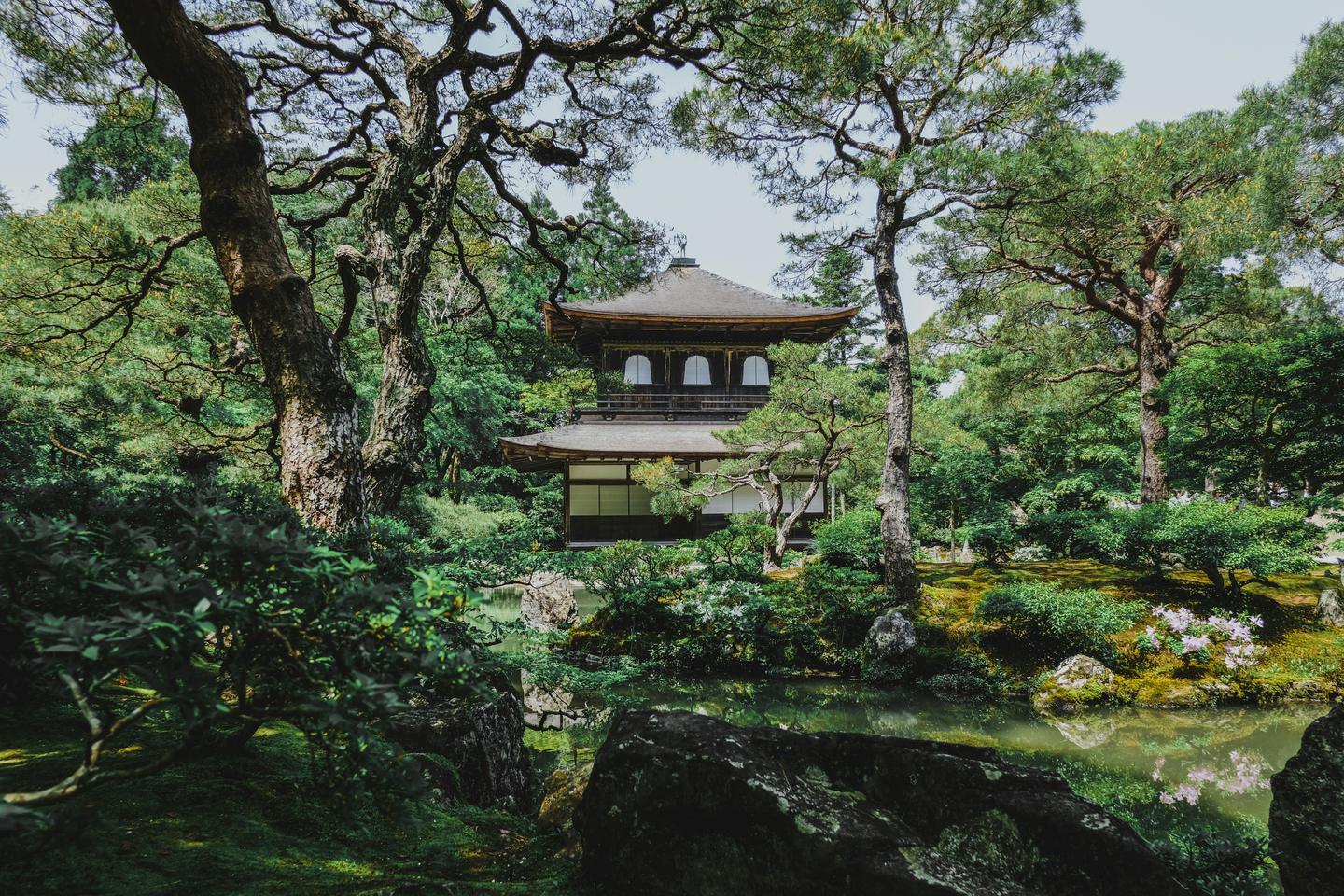
Seven days is six nights. The standard shape is three nights in Tokyo and three in Kyoto, joined by the Nozomi, and flying home from Kansai Airport so the last morning is not spent going back to Tokyo. We go through this length day by day in Japan in 7 Days vs 14 Days, so here are only the decisions that change it.
- Hakone or one more Tokyo night. A night in Hakone takes one night from Tokyo, and the trip still works. Taking it from Kyoto leaves Kyoto with two nights, which is too few.
- Osaka and Nara. Both are day trips from a Kyoto hotel. Neither needs a hotel change on a seven-day trip.
- A second trip. If Tokyo and Kyoto are behind you, a week suits one region. Our sample of The San'in Coast runs seven days along the Japan Sea, from Izumo Taisha to Matsue, the Adachi Museum of Art, the Tottori dunes and Tsuwano.
Seven days suits a first trip when leave is fixed. What will not fit is a third base without losing a full day in one of the two cities.
10 DAYS IN JAPAN
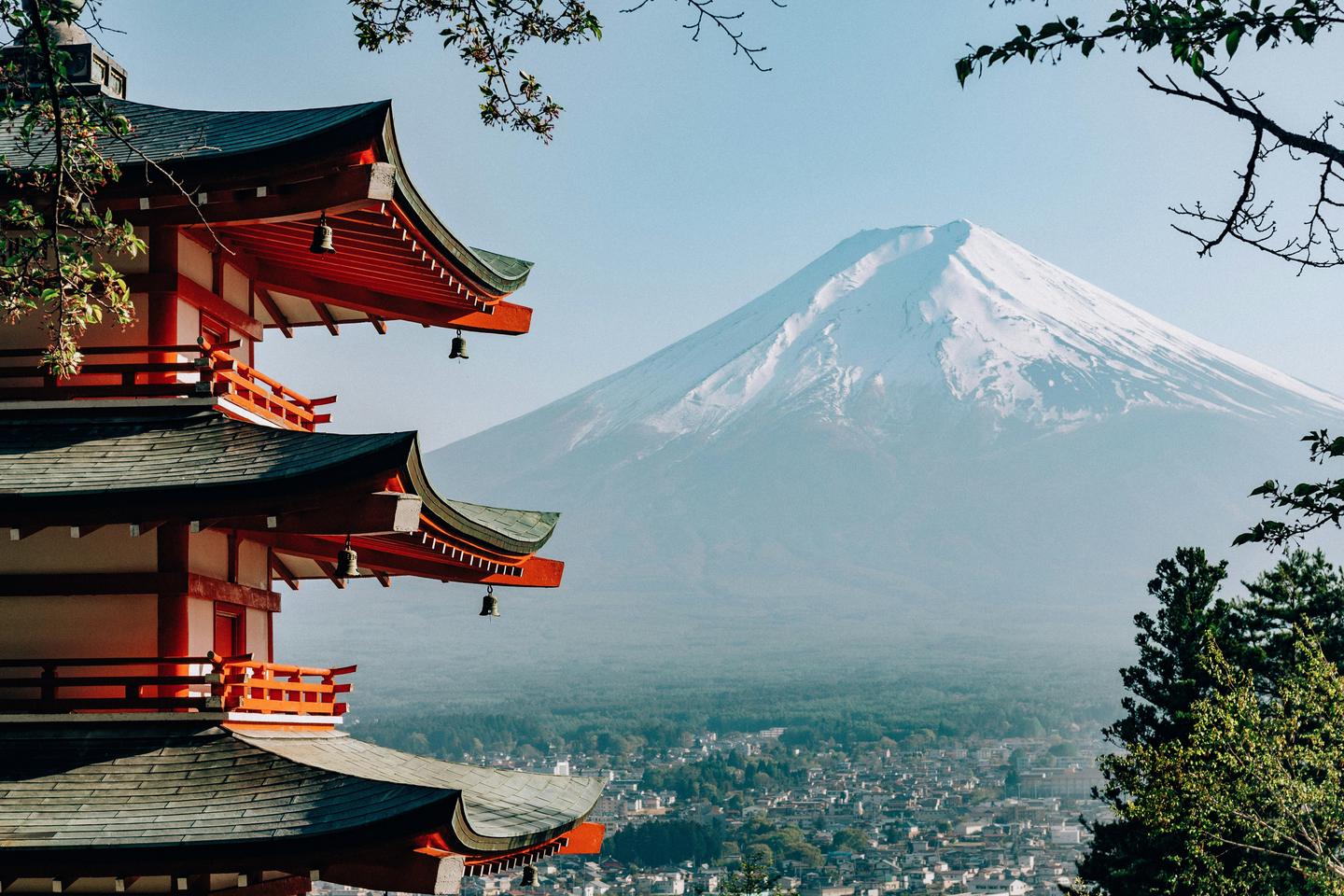
Ten days is nine nights, and it is the length at which the pace becomes your choice. Four nights each in Tokyo and Kyoto leaves room for a free afternoon in both, and the ninth night goes to a third place that you would otherwise only pass through. These are the three shapes we plan most often.
Tokyo to Hakone to Kyoto
| Nights | Where and why |
|---|---|
| Nights 1 to 4 | Tokyo. Arrival evening, then three full days, one of them left open |
| Night 5 | Hakone. A ryokan with its own hot spring, about 80 minutes from Shinjuku by Romancecar |
| Nights 6 to 9 | Kyoto. Three full days and one evening, with Nara as a day trip |
| Day 10 | Haruka to Kansai Airport, about 75 minutes, for the flight home |
This is the gentlest first trip we plan. The ryokan night falls in the middle, when the jet lag has passed and before the busiest days in Kyoto.
Tokyo to Kanazawa to Kyoto
| Nights | Where and why |
|---|---|
| Nights 1 to 3 | Tokyo. Arrival evening and two full days |
| Nights 4 and 5 | Kanazawa. 2 hours 28 minutes from Tokyo on the Hokuriku Shinkansen. Kenroku-en and the old teahouse districts |
| Nights 6 to 9 | Kyoto. Thunderbird and Hokuriku Shinkansen with a change at Tsuruga |
| Day 10 | Kansai Airport |
This shape replaces the hot spring with a smaller city of gardens and craft, and avoids going back over the same line. It suits travellers who like walking and food markets. Our Kanazawa guide covers the city in detail.
Tokyo to Kyoto to Hiroshima
Three nights in Tokyo, four in Kyoto, and two in Hiroshima or on Miyajima, with the evening and early morning on the island after the day visitors have left. Hiroshima is 1 hour 19 minutes from Shin-Osaka on the Nozomi, so on the last day you ride back to Shin-Osaka and continue to Kansai Airport for the flight home. Our Hiroshima guide covers the two days.
Who ten days suits and what will not fit
Ten days suits most first trips and most honeymoons (see our honeymoon guide). It is also the right length for a second trip to one region: our Shikoku and the Inland Sea runs ten days from Takamatsu and Naoshima to the Iya Valley, Matsuyama and the Shimanami Kaido, and Deep Kyushu runs nine days from Beppu to Yakushima. What will not fit is a fourth base at the same pace, or Hokkaido together with Kyoto. Those are 14-day or three-week plans.
14 DAYS IN JAPAN
Fourteen days is 13 nights, and it allows a loop through the middle of the country, with no stretch of track covered twice. Our sample Japan End to End is built this way: Tokyo for three days, Hakone for two, Kanazawa for two, Shirakawa-go and Takayama in the Hida mountains, Kyoto for two days with a day in Nara, and Osaka before the flight home. Our 14-day itinerary sets out a two-week route day by day.
Two weeks suits a first trip that wants the mountains as well as the cities, and a second trip that adds Tohoku or the Hokuriku coast. Our The Tohoku Highlands and The Hokuriku Coast run eight days each and can be joined to a few nights in Tokyo to make two weeks. What does not fit is the main island from end to end plus Hokkaido or Kyushu. That is a three-week journey.
THREE WEEKS OR A MONTH
Beyond two weeks, the main decision is the pace. Our Japan From North to South runs 21 days from Sapporo and Hakodate through the Seikan Tunnel to Hirosaki and Lake Towada, then Tokyo, Kanazawa, Kyoto, Hiroshima and Miyajima, ending in the Aso caldera and Kurokawa Onsen before a flight from Fukuoka. A Month in Japan spends seven nights in Tokyo and seven in Kyoto, with a week in the mountains between them along the Nakasendo, Takayama and Kanazawa, and a last week through Naoshima, Hiroshima, Miyajima, Koyasan and Osaka.
Both are planned as Bespoke journeys, with free days in every week.
CHERRY BLOSSOM AND AUTUMN COLOUR
In spring and autumn, the season decides the order of the cities as much as the length. The Japan Meteorological Agency records the dates on sample trees at its observatories, and its long-term averages give a working calendar.
| City | Cherry first bloom, average | Cherry full bloom, average | Cherry full bloom, 2026 | Maple turned, 2025 |
|---|---|---|---|---|
| Tokyo | March 24 | March 31 | March 28 | November 23 |
| Kyoto | March 26 | April 4 | March 30 | December 10 |
| Kanazawa | April 3 | April 8 | April 3 | November 25 |
| Hiroshima | March 25 | April 3 | March 30 | November 27 |
| Sapporo | May 1 | May 6 | April 24 | November 6 |
Two things follow for the length of a trip. In spring, full bloom in Kyoto falls a few days after Tokyo on average, and in 2026 it came two days later. A trip of 10 days or more that starts in Tokyo and ends in Kyoto stretches across that gap, while five days in one city depends on guessing the right week months ahead. In autumn the order reverses. In 2025 the JMA recorded Tokyo's maple as turned on November 23 and Kyoto's on December 10, so an autumn trip should end in Kyoto, and a short trip to Kyoto alone is better placed in late November or early December.
Both seasons fill Kyoto's best rooms early, and we set out when to book in how far in advance to book Japan, and how each month feels in our guide to the seasons. Golden Week, at the turn of April and May, has its own pressures, covered in our Golden Week note.
OUR SAMPLE ITINERARIES BY LENGTH
Each sample shows what a given number of days looks like on the ground.
| Sample | Days | Where it goes |
|---|---|---|
| The San'in Coast | 7 | Izumo, Matsue, Adachi Museum and Daisen, Tottori dunes, Tsuwano |
| The Hokuriku Coast | 8 | Toyama, Gokayama, Kanazawa, the Noto Peninsula, Kaga Onsen |
| The Tohoku Highlands | 8 | Ginzan Onsen, Zao, Yamadera, Akita, Kakunodate, Lake Tazawa, Hiraizumi |
| Deep Kyushu | 9 | Beppu, Yufuin, Takachiho Gorge, Kagoshima and Sakurajima, Yakushima |
| Shikoku and the Inland Sea | 10 | Takamatsu, Naoshima, Teshima, Iya Valley, Uchiko, Matsuyama, Shimanami Kaido, Onomichi |
| Japan End to End | 14 | Tokyo, Hakone, Kanazawa, Shirakawa-go, Takayama, Kyoto, Nara, Osaka |
| Japan From North to South | 21 | Hokkaido, northern Tohoku, Tokyo, Kanazawa, Kyoto, Hiroshima, Kumamoto and Aso |
| A Month in Japan | 30 | Tokyo, Hakone, the Nakasendo, Takayama, Kanazawa, Kyoto, Naoshima, Hiroshima, Koyasan, Osaka |
The regional samples from seven to ten days are written for a second trip, and each can follow a few nights in Tokyo or Kyoto. See first time vs second time for how the two differ.
HOW WE PLAN THE LENGTH WITH YOU
STAYGO plans and arranges private journeys across Japan from Tokyo. We start from the number of nights you have and the airports you can use, and set the bases, the nights in each and the transport routes between them. Our work is the design of your itinerary, researching and checking each hotel, restaurant and experience for your dates, making your arrangements in your names, and support from us during your trip, by message through your portal or WhatsApp. We ask each restaurant and hotel before arranging anything, and include only those that confirm they can accommodate you. Where a local guide, driver or specialist would genuinely add to a day, we arrange one.
You pay hotels, restaurants and providers directly at their own rates, and we add no markup or commission. Our Signature plan is USD 3,500 for your group for a journey of 7 to 14 days. Journeys longer than 14 days, such as our three-week and one-month samples, are Bespoke, priced with you.
SOURCES AND HOW WE CHECKED
We read each operator's and agency's own page on October 15, 2026. Train times are the ones the railways publish for their current timetables; where a page gave a range or an approximate time, we kept its wording. The cherry and maple dates are the JMA's records for its observatory trees, and real dates in a given year move by a week or more either way. We did not use figures from booking sites, guidebooks or travel blogs.
- JR Central, March 2026 timetable revision notice: Tokyo to Shin-Osaka in 2 hours 27 or 30 minutes, up to 13 Nozomi an hour, the 6:14 Nozomi from Kyoto to Tokyo, and Nozomi 64 from Hiroshima
- JR West, Hokuriku Shinkansen: Kanazawa to Tokyo in 2 hours 28 minutes
- JR West, March 2024 timetable revision notice: the Tsuruga extension, Thunderbird and Tsurugi connection, Osaka to Kanazawa fastest and average times
- JR West, changing trains at Tsuruga: the transfer between the shinkansen and limited express
- Haneda Airport, train and monorail: estimated times to Shinagawa and Tokyo Station
- Keisei Skyliner, FAQ: about 41 minutes from Narita Airport to central Tokyo
- Hotel Granvia Kyoto, access: about 75 minutes from Kansai Airport by the Haruka
- Odakyu, Hakone: about 80 minutes from Shinjuku to Hakone-Yumoto by Romancecar
- Japan Meteorological Agency, cherry first bloom dates: averages and 2026 dates
- Japan Meteorological Agency, cherry full bloom dates: averages and 2026 dates
- Japan Meteorological Agency, maple colouring dates: 2025 dates by city
- Japan Customs, electronic declaration: Visit Japan Web recommended, the code and passport at the customs gate
- Japan Customs, notice on fake websites: Visit Japan Web is free of charge, and paid look-alike sites
QUESTIONS ABOUT HOW MANY DAYS TO SPEND IN JAPAN
How many days do you need in Japan for a first trip?
Ten days, or nine nights, is the length we suggest most often. It allows four nights each in Tokyo and Kyoto and one night in Hakone or Kanazawa between them. Seven days works for Tokyo and Kyoto alone.
Is 5 days in Japan enough?
Yes, with one base. Four nights in Tokyo, or three in Tokyo and one in Hakone, or four in Kyoto make a complete trip. Tokyo and Kyoto together in five days means two nights in each and a transfer day.
Is 7 days enough for Tokyo and Kyoto?
Yes. Three nights in each city, joined by the Nozomi, and a flight home from Kansai Airport. A third base, such as Hakone, takes one night from Tokyo.
How long is the train from Tokyo to Kyoto?
About 2 hours 10 minutes on the Nozomi. In JR Central's March 2026 timetable notice, the 6:14 Nozomi from Kyoto reaches Tokyo at 8:23, and Tokyo to Shin-Osaka, one stop beyond Kyoto, takes 2 hours 27 or 30 minutes.
How many days should I plan for cherry blossom season?
Ten days or more, starting in Tokyo and ending in Kyoto. On the JMA's averages, full bloom comes on March 31 in Tokyo and April 4 in Kyoto, so a longer trip covers both cities across the gap.
TELL US HOW MANY NIGHTS YOU HAVE
Send us your dates, your arrival and departure airports and who is travelling. We will come back with the bases and nights we would plan, the transport routes between them and the hotels we would ask about first.
Begin planning →