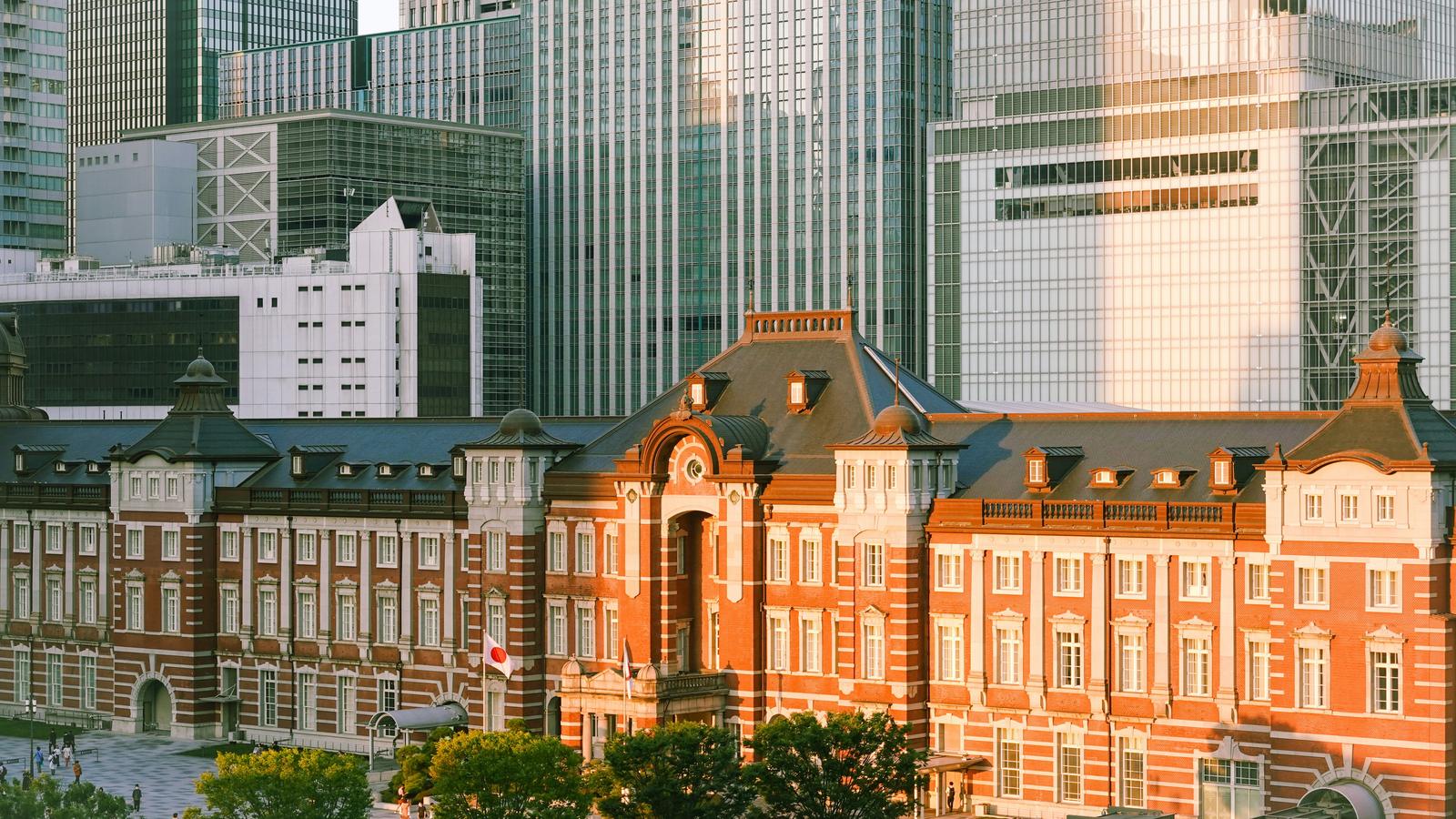
For a first visit to Tokyo, stay in Marunouchi and Otemachi, beside Tokyo Station, or in Ginza and Hibiya a short walk south. Both put the Shinkansen, the Imperial Palace gardens and a great many dinners within easy reach, and the hotels there give Haneda as about 30 to 45 minutes by train and 40 minutes or more by car. Stay in Roppongi, Toranomon or Azabudai if you want the hotels of the newer towers and an evening life on foot, and in Shinjuku or Shibuya if the west of the city, its parks and its shops, is what you came for. Asakusa suits one or two nights for the old streets of Senso-ji, and less often a whole stay.
Below, each area is set out with who it suits, who it does not, how far it is from Haneda and Tokyo Station, and the hotels we would ask about there. We checked every room count, size, access time and house rule on each hotel's own website, and the Tokyo accommodation tax on the Tokyo Metropolitan Government Bureau of Taxation's website, on October 15, 2026. Where a hotel's site did not give a figure, we left it out. The sources are listed at the end.
Key points
- First visit, three nights or fewer: one base in Marunouchi, Otemachi or Nihonbashi, or in Ginza and Hibiya. The Shinkansen to Kyoto leaves from Tokyo Station, so the last morning is short.
- Roppongi, Toranomon and Azabudai suit a second visit or a business trip, with hotels high in towers.
- Shinjuku and Shibuya, in the west, suit a second visit or the nights before Hakone.
- Tokyo's accommodation tax is ¥100 or ¥200 per person per night today. From April 1, 2027 it becomes 3% of the room charge per person per night, with nights under ¥13,000 per person exempt.
- On a room charge of ¥60,000 per person, the tax goes from ¥200 to ¥1,800 per person per night.
THE AREAS AT A GLANCE
Tokyo is large, and the area decides how much of each day goes on getting somewhere. Times are the ones each hotel gives on its own access page; "not given" means none of the pages we read gave one.
| Area | Suits | Less suited to | From Haneda, by the hotels' figures | To Tokyo Station | Hotels we would ask about |
|---|---|---|---|---|---|
| Marunouchi, Otemachi and Tokyo Station | First visits, the Shinkansen, early walks in the palace gardens | Guests who want busy streets and bars outside the door at midnight | About 20 to 60 minutes by car; about 30 to 40 by train | In the station, or a 10 minute walk | Palace Hotel Tokyo, Aman Tokyo, Hoshinoya Tokyo, The Tokyo Station Hotel |
| Nihonbashi and Yaesu | First visits, department store food halls, the Shinkansen | Guests who want a park or a quiet residential street | About 40 minutes by car | An 8 minute walk from Mandarin Oriental | Mandarin Oriental Tokyo |
| Ginza and Hibiya | First visits, shopping, theatre, dinners on foot | Guests who want a view of trees from every window | About 40 minutes by car or train | About 5 minutes by taxi from the Imperial Hotel | The Peninsula Tokyo, Imperial Hotel Tokyo |
| Toranomon and Azabudai | Second visits, business trips, newer hotels with large spas | Guests who want the old city outside the door | About 30 minutes, by Janu Tokyo's figure | 15 to 20 minutes, by Janu Tokyo's figure | The Tokyo Edition Toranomon, Janu Tokyo |
| Roppongi | Art museums, late dinners, a hotel high in a tower | An early Shinkansen every few days | About 40 minutes by car, by Grand Hyatt Tokyo's figure | Not given | The Ritz-Carlton Tokyo, Grand Hyatt Tokyo |
| Shinjuku | Shinjuku Gyoen, views toward Mount Fuji, trains to Hakone | Guests who want to walk to Ginza or Tokyo Station | Not given | Not given | Park Hyatt Tokyo |
| Shibuya and Omotesando | Meiji Jingu, design shops, cafes, a younger city | Guests who dislike crowds on the pavement | Not given | Not given | Trunk(Hotel) Cat Street |
| Asakusa | One or two nights for Senso-ji early in the morning | A whole first stay, if dinners in Ginza matter | About 40 minutes by taxi | About 20 minutes by taxi | The Gate Hotel Kaminarimon |
Car times in Tokyo depend on the hour. The hotels give them as approximate, and the Tokyo Station Hotel gives its own drive from Haneda as 40 to 60 minutes, which is a fair range for most of central Tokyo.
MARUNOUCHI AND OTEMACHI BY TOKYO STATION
Between Tokyo Station and the moat of the Imperial Palace lies the business district of Marunouchi, with Otemachi to the north of it. It is calm early in the morning and at weekends, with the palace gardens a few minutes away on foot. Five subway lines meet at Otemachi, and Tokyo Station has the Shinkansen to Kyoto, Kanazawa and the north.
For a first visit, this is the area we suggest most often: quiet at night, central for day trips, and a short walk to the train on the last morning. The streets are less lively after 10 at night than in Ginza or Roppongi.
Palace Hotel Tokyo
The hotel stands at 1-1-1 Marunouchi, across the moat from the Imperial Palace gardens, and it says every guestroom looks toward them. The present building opened in May 2012, with 284 guestrooms over 23 floors and 10 restaurants and bars. It is connected underground to Otemachi station, exit C13b, and the hotel gives the walk to the Marunouchi North Exit of Tokyo Station as 8 to 10 minutes. From Haneda, it gives about 40 minutes by taxi and about 30 minutes by train.
Aman Tokyo
Aman Tokyo occupies the top floors of the Otemachi Tower, which is connected to Otemachi station. It has 84 suites, the smallest 71 m², and the Garden View Suite is on the 38th floor, the hotel's highest. The hotel gives Tokyo Station as about 5 minutes by car, Haneda as about 40 minutes.
Hoshinoya Tokyo
A ryokan inside the city, a few streets from Aman in Otemachi. Hoshinoya Tokyo has 84 rooms, with each floor run as a small ryokan of six rooms, and a hot spring bath on site. Check-in is 15:00 and check-out 12:00. The ryokan gives the walk from the Marunouchi North Exit of Tokyo Station as 10 minutes, and Otemachi station as just outside. From Haneda it gives about 20 minutes by taxi and about 40 by train. It makes a gentle first ryokan. How to choose a ryokan in Japan explains what to expect.
The Tokyo Station Hotel
The hotel is inside the Marunouchi building of Tokyo Station, which it describes as an Important Cultural Property; its history goes back to 1915, and it reopened after restoration in 2012. It has 150 guestrooms and suites, some of them looking down into the station's domes. Check-in is 15:00 and check-out 12:00. It gives Haneda as about 30 minutes by train and 40 to 60 minutes by car, and offers a Meet and Greet service at the platform, booked in advance.
NIHONBASHI AND YAESU
Nihonbashi, east of Tokyo Station, was the merchant quarter of Edo, and the old department stores, the food halls in their basements and many long-established shops are still here. Yaesu runs along the east side of the station itself. Both share the advantages of Marunouchi: the Shinkansen on foot, and a short ride to Ginza.
It is less green than Marunouchi, and suits a guest who likes food halls and small streets after dinner.
Mandarin Oriental Tokyo
The hotel occupies the upper floors of the Nihonbashi Mitsui Tower, with 157 rooms and 22 suites, reached by a lift from the 38th floor, and a spa on the 37th. Mitsukoshimae station on the Ginza and Hanzomon lines connects directly, as does Shin-Nihonbashi on the JR Sobu line. The hotel gives the Nihonbashi Exit of Tokyo Station as an 8 minute walk, Haneda as about 40 minutes by car.
GINZA AND HIBIYA
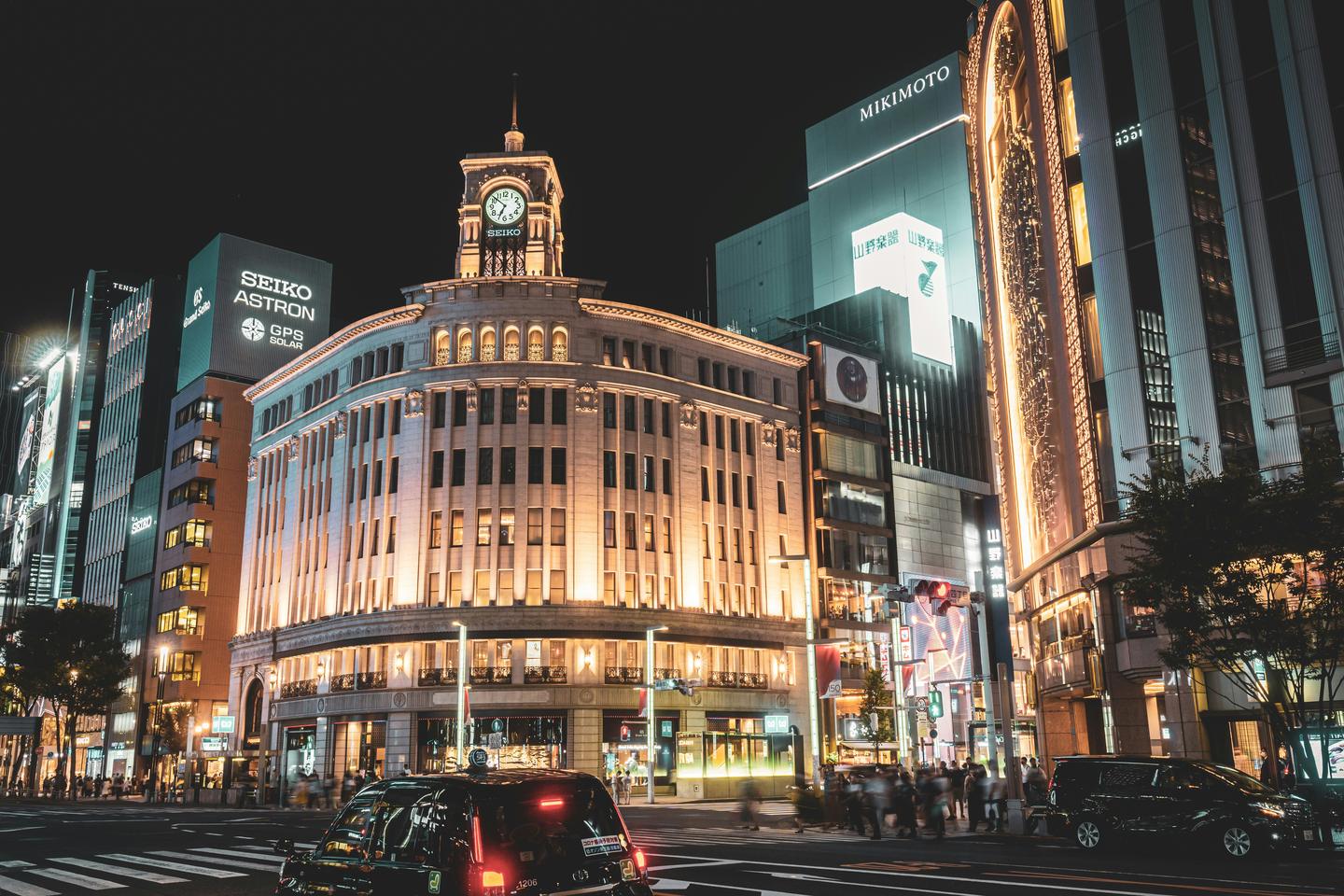
Ginza is the shopping district south of Tokyo Station, with the flagship stores on Chuo-dori, the Kabuki-za theatre and a great many of the city's sushi counters. Hibiya, on its west side, faces Hibiya Park and the palace gardens. Dinner, a bar and the walk back can all be done on foot.
The hotels here look onto streets or the park, and Ginza is busy at weekends. How the counters of Ginza take bookings is in how Tokyo's best tables actually work, and the theatre in our guide to kabuki in Tokyo.
The Peninsula Tokyo
The hotel stands opposite Hibiya Park and the Imperial Palace gardens. Its basement connects to Hibiya station on the Hibiya, Chiyoda and Toei Mita lines, and the hotel gives JR Yurakucho station as a 2 minute walk and Ginza station as 3 minutes. Its access sheet gives Haneda as 40 minutes by car and 45 minutes by train.
Imperial Hotel Tokyo
The Imperial Hotel stands at Uchisaiwaicho, a 3 minute walk from Hibiya station and 5 minutes from JR Yurakucho. The hotel gives Tokyo Station as 5 minutes by taxi and Haneda as about 40 minutes by monorail or Keikyu line. It is rebuilding in stages: the hotel has said the demolition of its Tower building is now set to begin around the end of fiscal 2030, and the new Main Building is planned for completion in 2036.
TORANOMON AND AZABUDAI
Toranomon and Azabudai lie southwest of the palace, toward Roppongi, and most of the buildings are recent: Toranomon Hills and Azabudai Hills, with offices, shops and hotels near the top. It suits a second visit or a business trip, less so a first visit, as the old city is a ride away and the streets are quiet in the evening.
The Tokyo Edition Toranomon
Designed by Kengo Kuma, the hotel has 206 guest rooms including 22 suites, with views of Tokyo Tower and Tokyo Bay, and some rooms with private terraces. It is near Kamiyacho, Roppongi-Itchome and Toranomon stations. The hotel's getting-here page gives no times, so we ask for them.
Janu Tokyo
Janu, from the group behind Aman, stands in Azabudai Hills, with 122 rooms and suites designed by Jean-Michel Gathy, eight places to eat and drink, and a wellness centre with a pool. The hotel gives Haneda as 30 minutes and Tokyo Station as 15 to 20 minutes.
ROPPONGI
Roppongi is the art and nightlife district of central Tokyo, with museums in and around its two big complexes and restaurants and bars open late. The two big complexes, Roppongi Hills and Tokyo Midtown, each have a luxury hotel attached.
It is noisy at night around the crossing and farther from Tokyo Station than the areas above, so it suits a stay built around museums and late dinners more than one with several early trains.
The Ritz-Carlton Tokyo
The hotel occupies the top nine floors of the 53-storey Midtown Tower, with 245 guest rooms and the lobby on the 45th floor. Check-in is 15:00 and check-out 12:00. Roppongi station on the Hibiya and Oedo lines and Nogizaka station on the Chiyoda line are nearest, and the hotel gives Haneda as about 13 km away. It has an indoor pool and a spa.
Grand Hyatt Tokyo
The hotel is part of Roppongi Hills and directly connected to the complex, which has an art museum and an observatory. The hotel gives Roppongi station, Hibiya line exit 1C, as a 3 minute walk, and Haneda as about 40 minutes by car.
SHINJUKU
Shinjuku is the great station of west Tokyo, with Shinjuku Gyoen garden and the department stores around it. The Odakyu Romancecar to Hakone leaves from here, and Odakyu gives the ride to Hakone-Yumoto as about 80 minutes.
It is a long way from Ginza and Tokyo Station. We suggest it for a second visit, or for the nights just before a trip to Hakone; how that day works is in our Hakone guide.
Park Hyatt Tokyo
The hotel opened in July 1994 on floors 39 to 52 of Kenzo Tange's Shinjuku Park Tower, and reopened in December 2025 after a 19-month restoration. It has 171 rooms; the Deluxe Rooms, on floors 42 to 51, are 55 m², with views of the city or Mount Fuji. The hotel runs a shuttle to Shinjuku Station, and Tochomae on the Oedo line is the nearest subway station.
SHIBUYA AND OMOTESANDO
Shibuya and Omotesando, together with Harajuku between them, are the young and fashionable west of the city: the Shibuya crossing, the shops of Cat Street and Omotesando, and Meiji Jingu and Yoyogi Park on the other side of the tracks.
The pavements are crowded around Shibuya Station at weekends, and there are fewer large luxury hotels than in the centre. It makes a good second base.
Trunk(Hotel) Cat Street
A boutique hotel on Cat Street in Jingumae, with rooms that are each designed differently, from standard rooms to suites with terraces. The hotel gives Shibuya Station exit B1 as a 5 minute walk and Meiji-jingumae station exit 7 as 7 minutes. Check-in is from 15:00 and check-out 11:00, with a front desk open 24 hours.
ASAKUSA
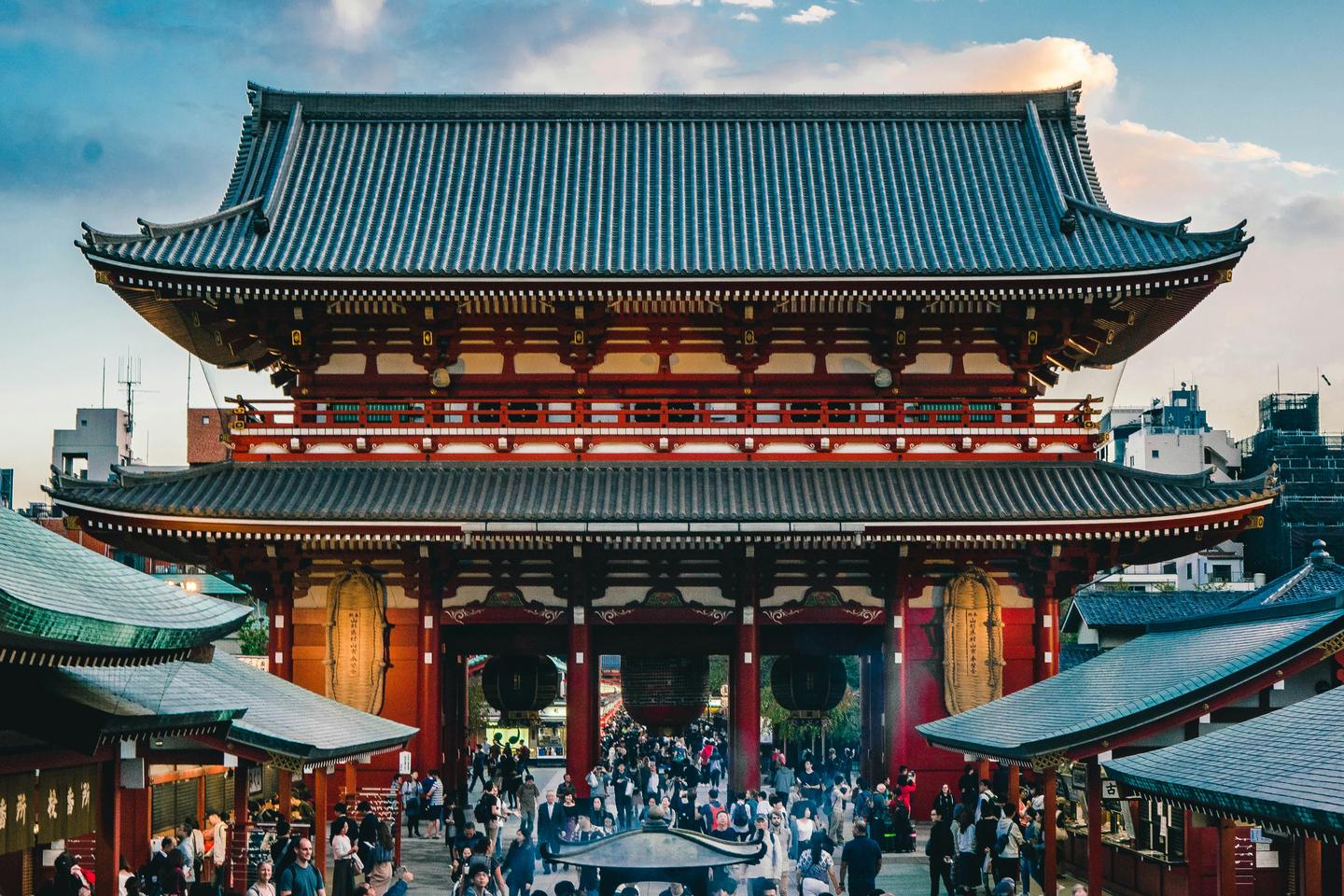
Asakusa, in the northeast, is the Tokyo of Senso-ji temple, Nakamise-dori and the Sumida River, with Tokyo Skytree across the water. Early in the morning the temple grounds are quiet; by late morning they are among the busiest places in the city.
It is far from Ginza and Tokyo Station, so we suggest it as one or two nights inside a longer stay, or a morning visit from a central hotel. How to plan the sightseeing round the crowds is in how to avoid the crowds in Japan.
The Gate Hotel Kaminarimon
The hotel stands near Kaminarimon, with 134 rooms on the 3rd to 14th floors of a 14-storey building. The hotel gives Asakusa station on the Ginza line, exit 2, as a 2 minute walk, and notes there is no lift or escalator at that exit, so exit 1 is better with luggage. By taxi it gives Haneda as 40 minutes and Tokyo Station as 20 minutes.
TOKYO ACCOMMODATION TAX AND THE 2027 CHANGE
Tokyo charges an accommodation tax per person per night at hotels and ryokan. Until March 31, 2027 it is a fixed amount in two bands. The band is set by the room charge per person per night, including any service charge, before meals, drinks and consumption tax. When two people share a room, the room charge is divided between them.
| Room charge per person per night | Tax per person per night |
|---|---|
| Under ¥10,000 | None |
| ¥10,000 to under ¥15,000 | ¥100 |
| ¥15,000 or more | ¥200 |
The Tokyo Metropolitan Assembly passed a revision on March 27, 2026, and it takes effect on April 1, 2027. From that date the tax becomes a percentage, and it also applies to simple lodgings and private rentals.
| Room charge per person per night | Tax per person per night |
|---|---|
| Under ¥13,000 | None |
| ¥13,000 or more | 3% of the room charge |
Take a room at ¥120,000 a night for two, or ¥60,000 per person. Today the tax is ¥200 each, ¥400 a night for the two of you. From April 2027 it is 3% of ¥60,000, or ¥1,800 each, ¥3,600 a night. Children are taxed on the same basis when their share of the room charge is ¥13,000 or more. When we compare hotels for a stay that runs into April 2027, we put every quote on the same basis, tax and service included.
HOW MANY NIGHTS AND WHERE
Every move between hotels in Tokyo costs half a day, so the number of nights decides whether a second base is worth it.
Two nights
One hotel in Marunouchi, Otemachi or Nihonbashi. With one full day, you want to step out into the city and leave by Shinkansen on the third morning without a taxi ride.
Three nights
Still one base. Choose Marunouchi or Nihonbashi if the next stop is Kyoto or Kanazawa by Shinkansen, and Ginza and Hibiya if dinners and shopping matter most. Our 14-day sample journey Japan End to End spends its first three days in Tokyo.
Four nights or more
Four nights in one central base is what we plan most often for a first trip; your first trip to Japan, planned from Tokyo sets out 10, 12 and 14 day routes that begin with four nights in Tokyo. From five nights, a second base in the west, in Shinjuku or Shibuya, or one or two nights in Asakusa, starts to earn the move. On a long journey, one hotel can still be right: A Month in Japan spends seven nights in one Tokyo hotel and takes day trips to Kamakura and Nikko from it.
- Going on to Hakone by the Romancecar: the last night or two in Shinjuku.
- Travelling with children: ask the hotel about connecting rooms or a suite; more in our guide to Japan with children.
- Combining work and rest: Toranomon or Otemachi for the meetings; see business and rest in Japan.
How many days to give Japan as a whole is in how many days in Japan, and the Kyoto half of the trip in where to stay in Kyoto.
HOW WE ARRANGE A TOKYO STAY
STAYGO plans private journeys across Japan from Tokyo. Our work is the design of your itinerary, researching and checking each hotel, restaurant and experience for your dates, making your arrangements in your names, and support from us during your trip. For Tokyo, we choose the area with you first, from what you want your mornings and evenings to be.
We can arrange hard-to-book restaurants, ryokan and private experiences through our contacts in Japan. Each depends on the venue's own conditions and availability, so we tell you plainly what is realistic for your dates, and we never present anything as secured until it is confirmed. Where a local guide, driver or specialist would genuinely add to a day, we arrange one. During the trip, you reach us through your STAYGO portal or WhatsApp messages.
You pay hotels, restaurants and providers directly at their own rates, and we add no markup or commission. Our Signature plan is USD 3,500 for your group, for a journey of 7 to 14 days; longer or more involved journeys are Bespoke, priced with you.
SOURCES AND HOW WE CHECKED
We read each hotel's own website, and the Tokyo Metropolitan Government Bureau of Taxation's pages on the accommodation tax, on October 15, 2026. We did not contact the hotels. Where a hotel's official site did not show a figure, such as a rate, a room count or a travel time, we left it out. We did not use figures from booking sites, guidebooks or press coverage.
- Tokyo Bureau of Taxation, for guests: current rates, the tax base, and the changes from April 1, 2027
- Tokyo Bureau of Taxation, review of the accommodation tax: the 3% rate, the ¥13,000 threshold, the dates of passage, consent, promulgation and effect
- Palace Hotel Tokyo, location: Otemachi connection, walk to Tokyo Station, airport times
- Palace Hotel Tokyo, hotel fact sheet: room count, floors, opening date, views
- Aman Tokyo: location in Otemachi Tower and station connection
- Aman Tokyo, rooms and suites: number of suites and sizes
- Aman Tokyo, getting here: drive times to Tokyo Station and Haneda
- Hoshinoya Tokyo: room count, floors, hot spring, check-in and check-out
- Hoshinoya Tokyo, access: walk from Tokyo Station, Otemachi exits, airport times
- The Tokyo Station Hotel, rooms and suites: room count and reopening in 2012
- The Tokyo Station Hotel, access: airport times and the Meet and Greet service
- The Tokyo Station Hotel, Japanese site: history from 1915, check-in and check-out
- Mandarin Oriental Tokyo, stay: rooms and suites, lift from the 38th floor, spa on the 37th
- Mandarin Oriental Tokyo, getting here: station connections, walk to Tokyo Station, airport times
- The Peninsula Tokyo, hotel access: station connections and Haneda times
- Imperial Hotel Tokyo, access: walking times, taxi to Tokyo Station, Haneda by rail
- Imperial Hotel, A Challenge to the Future: Tower demolition timing and the new Main Building in 2036
- The Tokyo Edition Toranomon: room count, suites, views and nearby stations
- Janu Tokyo: room count, dining, and times to Haneda and Tokyo Station
- The Ritz-Carlton Tokyo: floors, room count, lobby, check-in, stations and Haneda distance
- Grand Hyatt Tokyo, transportation: walk from Roppongi station and Haneda time
- Hyatt newsroom, Park Hyatt Tokyo reopens: opening in 1994, floors, reopening, room count and sizes
- Park Hyatt Tokyo, transportation: the shuttle to Shinjuku Station and the nearest subway
- Odakyu Electric Railway, Romancecar: the limited express from Shinjuku to Hakone-Yumoto, about 80 minutes
- Trunk(Hotel) Cat Street, access: walks from Shibuya and Meiji-jingumae stations
- Trunk(Hotel) Cat Street, stay: check-in, check-out and front desk hours
- The Gate Hotel Kaminarimon, about: room count and floors
- The Gate Hotel Kaminarimon, access: station exits and taxi times
QUESTIONS ABOUT WHERE TO STAY IN TOKYO
What is the best area to stay in Tokyo for a first visit?
Marunouchi and Otemachi beside Tokyo Station, or Ginza and Hibiya a short walk south. The hotels there give Haneda as about 30 to 45 minutes by train, and the Shinkansen leaves from Tokyo Station.
Is it better to stay in Shinjuku or near Tokyo Station?
For a first visit, near Tokyo Station, as the Shinkansen, Ginza and the palace gardens are close. Shinjuku suits a second visit or the nights before Hakone, since the Romancecar leaves from Shinjuku.
Is Asakusa a good place to stay in Tokyo?
For one or two nights, yes, to see Senso-ji early in the morning before the crowds. As the only base, it is about 20 minutes by taxi from Tokyo Station, by The Gate Hotel Kaminarimon's own figure.
How much is the accommodation tax in Tokyo?
Until March 31, 2027, it is ¥100 per person per night for a room charge of ¥10,000 to under ¥15,000 per person, and ¥200 from ¥15,000. From April 1, 2027, it becomes 3% of the room charge per person per night, with nights under ¥13,000 per person exempt.
How many nights should I stay in Tokyo?
Three or four nights suits most first trips, from one base near Tokyo Station or in Ginza. From five nights, a second area such as Shinjuku, Shibuya or Asakusa can be worth the move.
LET US CHOOSE YOUR TOKYO BASE WITH YOU
Tell us your dates, who is travelling and how you like to spend your evenings. We will come back with the area and the hotels we would ask about, the tax and service on the same basis for each, and the dinners that fit around them.
Begin planning →