Japan has four distinct seasons, and each is worth a trip for different reasons. The honest answer to "when is the best time to go?" is that it depends on what you want from the trip. What follows is the plain version of each season: the highs, the logistics, and how far ahead you have to book.
This is not a ranking. Each season has something the others do not, and the work is matching one of them to the trip you want.
Key points
- Cherry blossom peaks for five to ten days in any one place and moves each year, so rooms are booked six to nine months ahead, before the dates are known. May has the same hotels and ryokan with far fewer people.
- June is the rainy season. July and August bring the festivals along with heat and humidity, so the usual answer is to travel in for the festivals and sleep somewhere cooler.
- Autumn colour crosses Honshu over about six weeks, which makes it the most forgiving season. Book four to six months ahead for the peak weeks.
- Winter is the quietest and cheapest time of year, and the season for an onsen ryokan under snow.
Cherry blossom (sakura) season is the most celebrated week in the Japanese year and the hardest to book. Full peak lasts five to ten days in any given location, and the timing moves each year with winter temperatures. You are booking accommodation months before anyone can confirm the exact dates, and the best rooms are gone long before the forecast is published.
The spectacle lives up to its reputation: for those few days, the parks, riverbanks, and temple gardens look like nowhere else on earth. Ueno Park, Maruyama Park in Kyoto, Hirosaki Castle in Aomori, the Chidorigafuchi moat in Tokyo: no two of them make the same trip, and which one you build around is worth settling early.
May, after the crowds clear and before the summer heat arrives, is arguably Japan's best month. Green mountains, comfortable temperatures, few tourists, and the same hotels and ryokan that were impossible to book in April. If your dates are flexible, May is the month to take.
June is tsuyu, the rainy season. Hydrangeas and irises come out across the temple gardens, the countryside turns a heavy green, and visitor numbers drop. The rain is persistent rather than constant: clear days break it up, and the light on them is unlike any other month. If you photograph, or simply want the gardens to yourself, June is worth considering.
July and August are the festival months. Gion Matsuri in Kyoto, one of Japan's three great festivals, runs the whole of July: ancient floats, ceremonial processions, traditional dress, at a scale nothing else matches. Awa Odori in Tokushima in August, Nebuta Matsuri in Aomori, and thousands of local fireworks nights (hanabi) fill the rest of the summer.
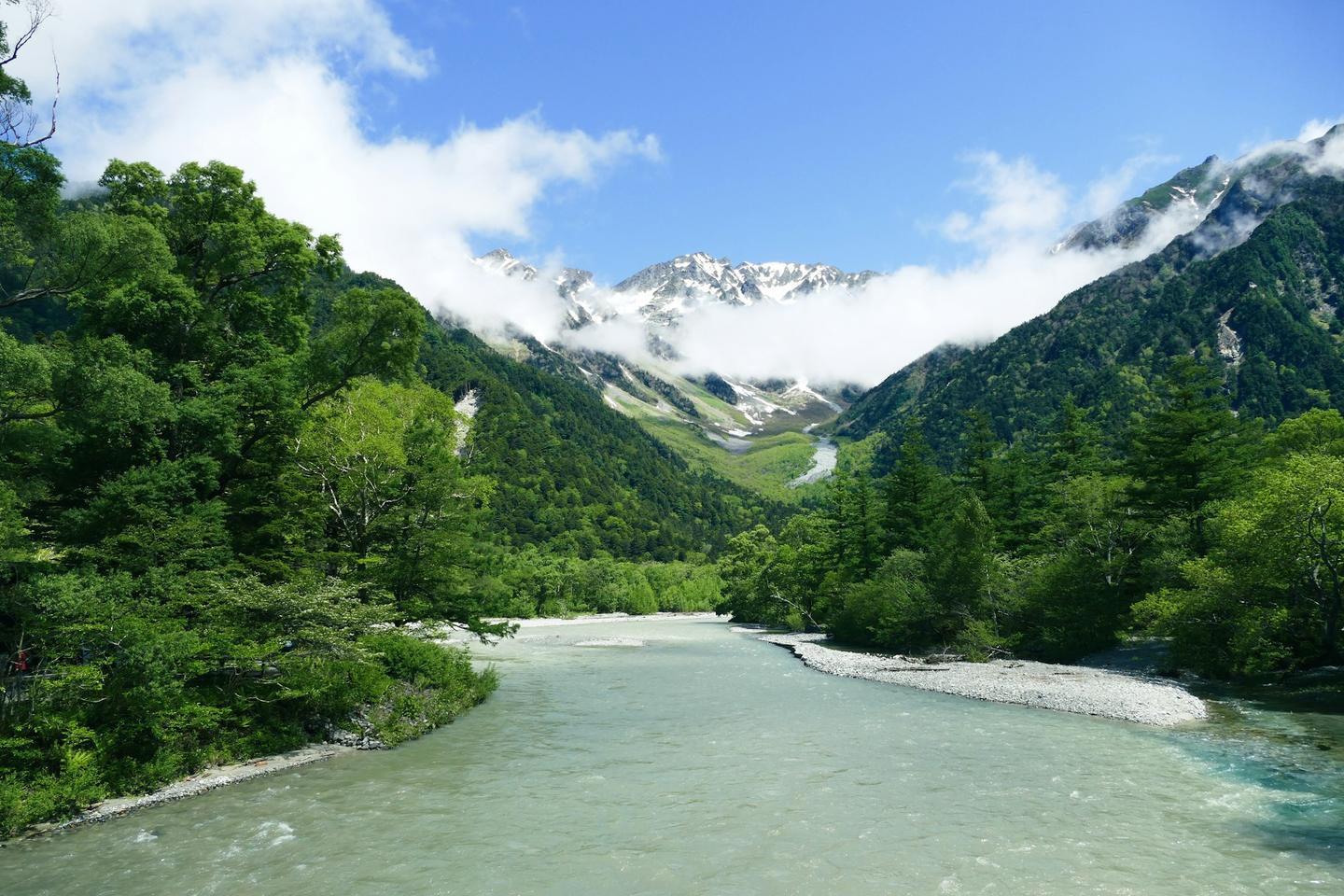
The trade-off is heat and humidity. Tokyo and Osaka in August are hard work for anything that keeps you outside for long. The usual answer is to travel in for the festivals and sleep somewhere cooler: the Japanese Alps (Matsumoto, Kamikochi, Karuizawa) or Hokkaido, where the summer stays mild.
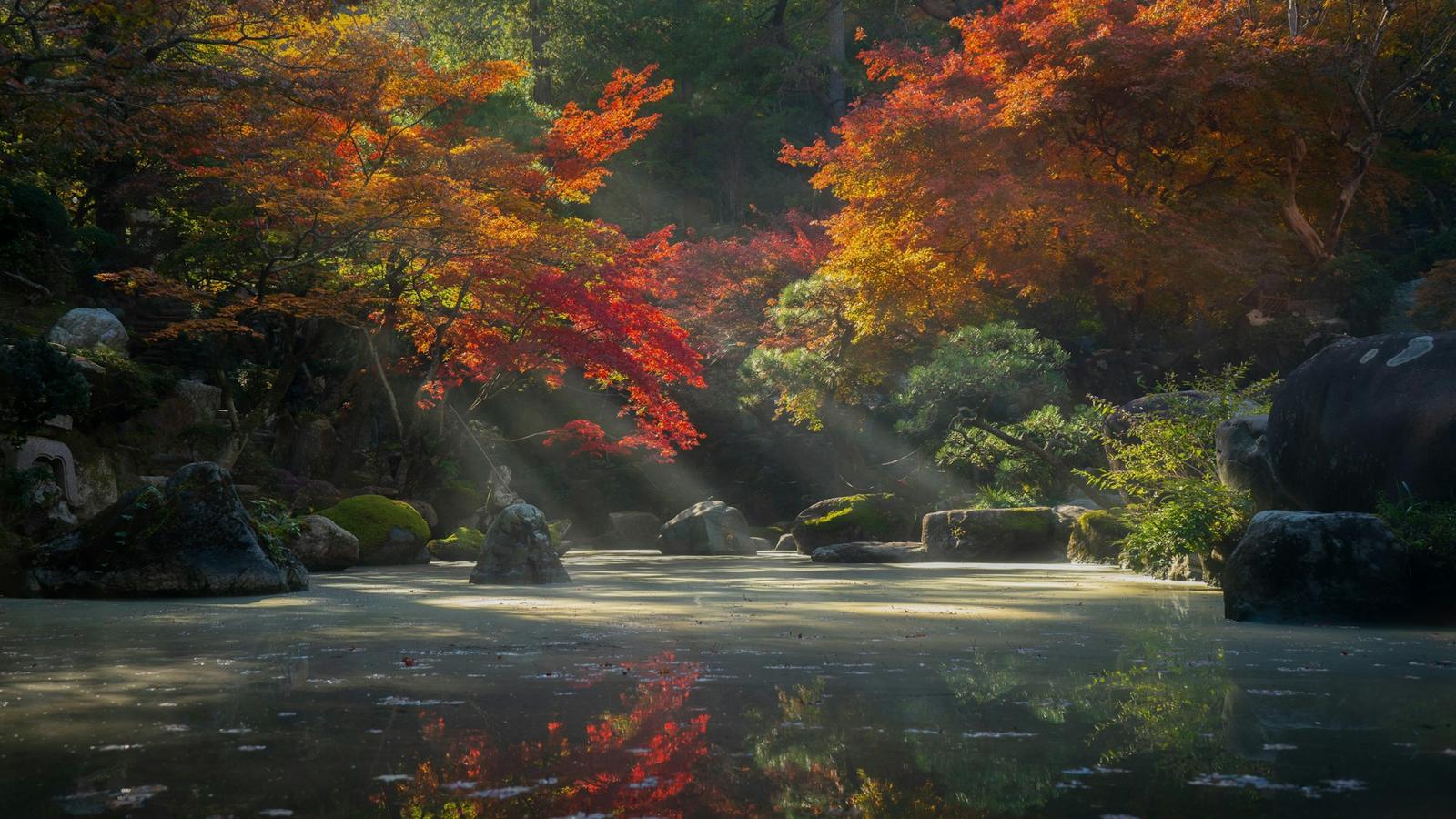
Autumn foliage, koyo, is the most forgiving of the four seasons. The colour moves south from Hokkaido in mid-October and crosses Honshu over six weeks, which gives you room that cherry blossom never does: if one place is past peak, another is coming into it. The weather is clear and dry, and the season is long enough that fixing your dates early is not a gamble.
Kyoto in late November is the benchmark: Eikan-do, Tofuku-ji, and Arashiyama under deep red and gold maples, the night illuminations at the larger temple gardens, tea served under the colour. If the trip is about Japan's culture and not only its scenery, come in autumn.
The ryokans in Hakone, Nikko, and the Japanese Alps have the best of these views, and many have a private onsen looking straight into cedar forest in full colour. Book four to six months ahead for the peak weeks. The shoulder weeks, before mid-October or after late November, hold much the same landscape with far less competition.
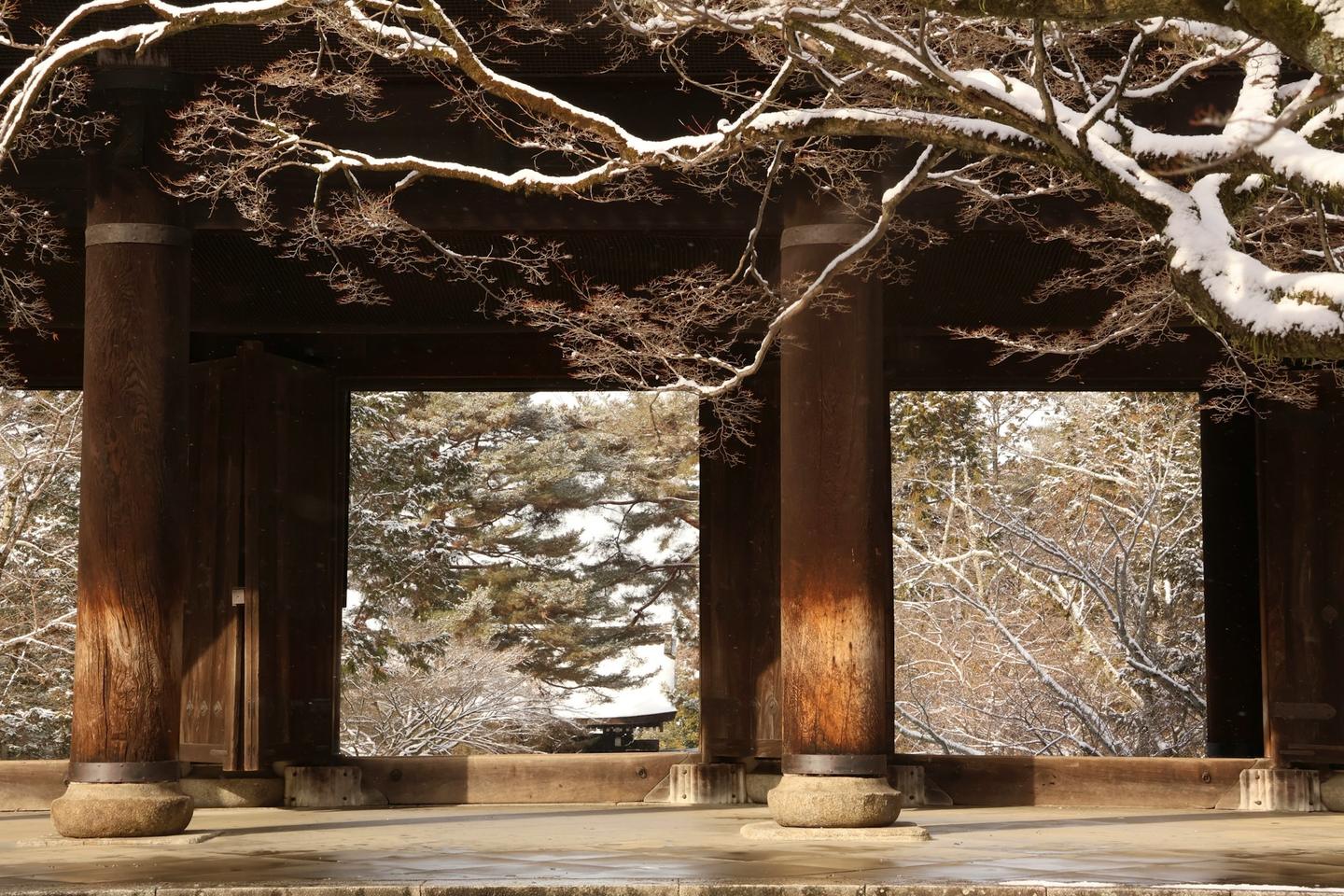
Winter is the quietest Japan gets. The crowds that define spring and autumn are largely gone, temple gardens are empty at dawn, and ryokans run with fewer guests and more attention on each of them. It is also the cheapest time of year: rates fall across the board, and rooms that are impossible in April and November are simply available.
The reason to come in winter is the onsen ryokan under snow. An outdoor bath (rotenburo) in fresh snow, no sound at all, a kaiseki dinner waiting inside. Hakone, Nikko, and the hot spring towns of Tohoku are where to do it.
For skiers, Niseko in Hokkaido and Hakuba in Nagano hold the powder that pulls people from Australia, Southeast Asia, and increasingly Europe. Niseko has the accommodation, restaurants, and concierge services to go with it. Hokkaido powder followed by a few days eating in Sapporo makes a winter trip that is hard to reproduce anywhere else.
BOOKING TIMELINE BY SEASON
THE HONEST RECOMMENDATION
First-time visitors: autumn. The colour crosses Honshu over six weeks, so fixing your dates four to six months out is not a gamble, the weather is clear and dry, and Kyoto in late November is the benchmark everything else is measured against.
Cultural depth over spectacle: winter. Temple gardens are empty at dawn, ryokan run with fewer guests and more attention on each of them, rates fall across the board, and an outdoor bath in falling snow is the one thing no other season offers.
The definitive experience: cherry blossom, with your eyes open. Full peak lasts five to ten days and moves each year with the winter temperatures, so you are booking six to nine months ahead without knowing the dates. If yours can flex, May gives you the same rooms, green mountains and almost nobody.
"Japan doesn't have an off-season. It has four seasons that want four different trips, booked at four different times. Choosing between them is most of the planning." How far ahead each season needs to be booked.
QUESTIONS, ANSWERED
What is the best time of year to visit Japan for luxury travel?
October and November are the most reliable months: clear weather, autumn foliage, comfortable temperatures, and slightly less competition for rooms than cherry blossom season. Late March to early April (cherry blossom) is equally spectacular but has to be booked earlier and with more flexibility on dates. Either one works; the choice depends on what you want from the trip.
Is Japan worth visiting in summer?
Summer in Japan (July–August) is hot, humid, and full of festivals, including Gion Matsuri in Kyoto and the Awa Odori in Tokushima. The outdoor festivals and fireworks nights (hanabi) are spectacular. The heat is the real problem, particularly in Tokyo and Osaka, which is why a summer itinerary is usually based in the Japanese Alps, Hokkaido, or on the coast, travelling in for the festivals.
What makes Japan in winter special for luxury travellers?
Winter gives you two things at once: onsen ryokan with outdoor hot springs in snow-covered mountains, and the powder snow of Hokkaido and Nagano. The 'Japow' reputation is well earned, and Niseko and Hakuba draw serious skiers from around the world. Away from the ski resorts, winter is Japan's quietest and cheapest travel period, with few crowds at the major cultural sites.
How far in advance should I book a Japan trip for cherry blossom season?
For cherry blossom season, the best ryokans and hotels should be booked 6–9 months in advance, before bloom dates are confirmed. Top omakase and kaiseki restaurants book out 3–4 months ahead. The challenge is that exact bloom dates cannot be confirmed until 6–8 weeks before peak, which means committing to approximate dates. STAYGO manages this uncertainty by securing accommodation early based on typical bloom windows and adjusting the itinerary when forecasts are confirmed.
Which month in Japan has the best weather?
May and October are Japan's most reliably pleasant months for weather. May offers warm, dry conditions with spring greenery after cherry blossom ends. October is clear, crisp, and begins the transition to autumn foliage. Both months avoid the extremes of summer heat and humidity, winter cold, and the June rainy season. For outdoor activities and sightseeing comfort, these two months are consistently the best options.
WHICH SEASON IS RIGHT FOR YOUR TRIP?
STAYGO helps you choose the window, then works backwards from it: rooms first, restaurants next, at the lead time each one needs.
Start planning →