Japan is not a difficult country to visit. Immigration is quick, the trains are punctual, and the signage in major stations is in English. What takes preparation is everything past that. The restaurants, ryokan, and experiences that make the trip worth the flight are not set up for visitors, and most of them do not need to be.
This guide covers the practical ground first: entry, transport, money, etiquette, language, dress. Then the part most first-time visitors learn too late, which is how far ahead the good rooms and tables have to be arranged.
Key points
- Most Western nationals enter Japan visa-free for up to 90 days. Registering on Visit Japan Web before arrival lets you submit customs and immigration information in advance.
- Japan's rail network makes domestic flights unnecessary on most routes: Tokyo to Kyoto takes 2 hours 15 minutes on the Nozomi.
- Many of the best restaurants take cash only, as do rural ryokan, temple entrance fees and local markets. 7-Eleven ATMs accept virtually all foreign cards.
- The etiquette that matters is short: remove shoes at the genkan, never tip, speak quietly, and wash at the shower station before entering an onsen.
ENTRY AND ARRIVAL
Most Western nationals enter Japan visa-free for up to 90 days. Japan's immigration process is efficient and well-organised. Narita and Haneda airports handle international volumes smoothly, though peak periods (Golden Week, cherry blossom season, autumn) can mean longer queues at passport control. Registering with Japan's Visit Japan Web platform before arrival allows you to pre-register customs and immigration information, significantly reducing processing time.
From Tokyo's airports, the primary transport option for luxury travellers is private transfer. A STAYGO-arranged car service meets you airside and eliminates the need to navigate the train system with luggage after a long-haul flight. The Narita Express and Keikyu Line to Haneda are both reliable alternatives if arriving without a concierge, but for multi-piece luggage, a private car is the correct choice.
GETTING AROUND JAPAN
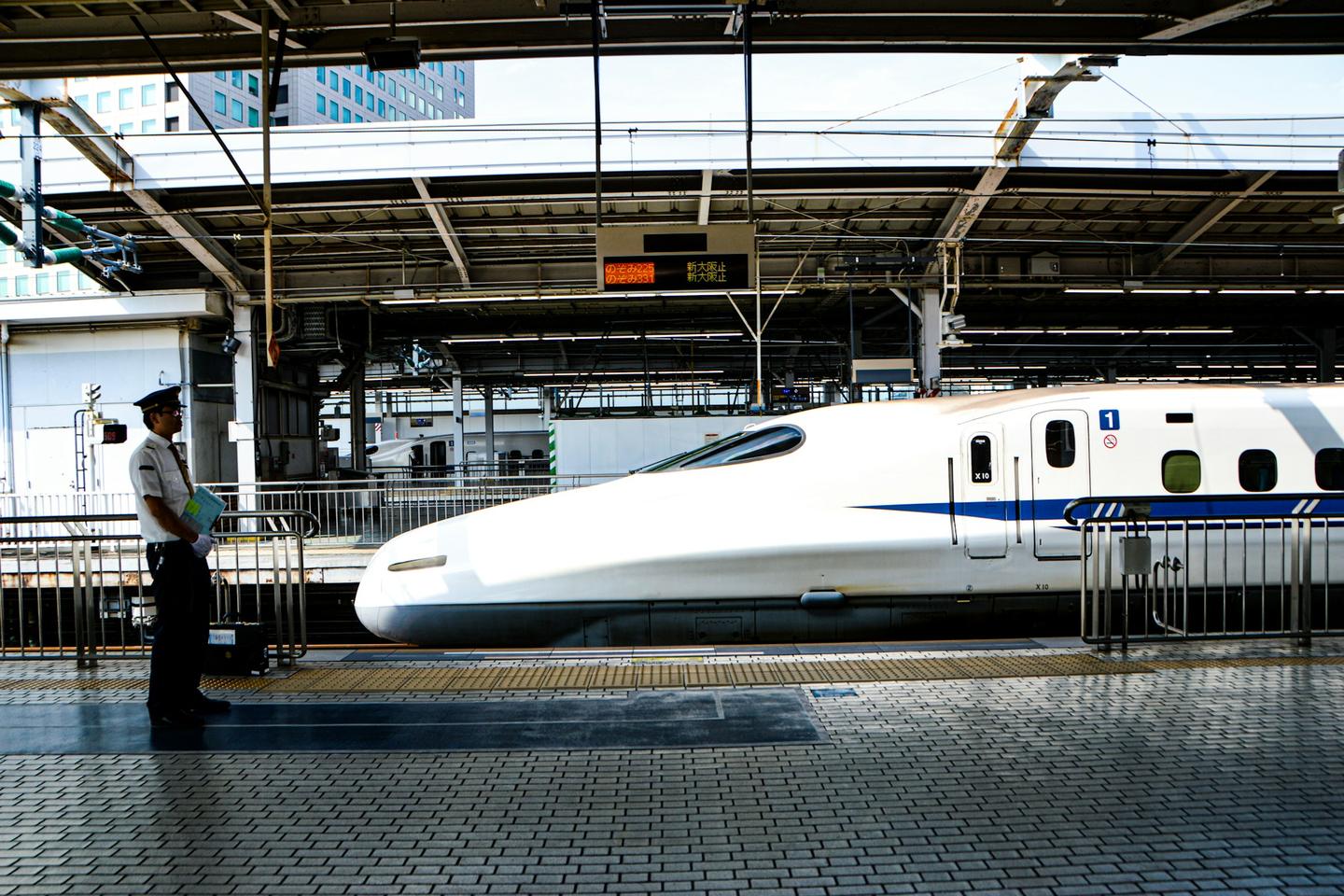
Japan's rail network makes domestic flights unnecessary on most routes. Tokyo to Kyoto takes 2 hours 15 minutes on the Nozomi; Tokyo to Osaka, 2 hours 30 minutes. Gran Class, Japan Rail's first-class cabin, adds attendant service, wide reclining seats, and a full food and beverage menu, and is worth booking on the longer legs.
For city travel and day trips, STAYGO arranges Toyota Alphard and Lexus LM private hire, the premium people-carrier standard in Japan. Tinted windows, captain seats, a professional driver, and door-to-door service from your hotel. For larger groups or longer journeys, the Mercedes-Benz V-Class is also available. This is how STAYGO Signature clients move.
Within cities, taxis are metered, clean, and reliable. Drivers wear white gloves and the doors open automatically. Tokyo's subway is genuinely excellent but takes orientation. For a first visit, supplementing with taxi or private car for anything involving luggage, complex routing, or tight timing is the practical choice.
ETIQUETTE: WHAT YOU NEED TO KNOW
Japan has a reputation for complex etiquette. In practice the rules that matter are few, and Japanese hosts expect visitors not to know them. Honest mistakes rarely cause offence. What registers is that you made the effort.
- Remove shoes when entering a ryokan room, traditional restaurant, or private home. Look for the entryway (genkan) and follow the host's lead
- Never tip. It is not expected and can cause discomfort
- Speak quietly in public spaces. Japan values a calm, low-volume environment
- Carry a small bag for rubbish. Public bins are rare
- At onsen, wash thoroughly at the shower station before entering the communal bath. This is non-negotiable
- Business cards (meishi) are exchanged with both hands and a slight bow. If you receive one, read it briefly before placing it respectfully on the table
For ryokan, kaiseki restaurants, and private cultural experiences, your STAYGO concierge briefs you on what that particular place expects before you arrive.
CURRENCY AND PAYMENTS
Japan uses the Japanese yen (JPY). For a technologically advanced country, its payment culture is still strikingly cash-based. Many of the best restaurants take cash only, particularly smaller omakase counters, traditional izakaya, and family-run places. So do rural ryokan, temple entrance fees, and local markets.
The most reliable source of yen for international visitors is 7-Eleven convenience store ATMs, which accept virtually all foreign cards with no fuss. Post office ATMs are also reliable. Airport exchange counters are convenient but offer worse rates. Carry a minimum of ¥30,000–50,000 in cash at all times; more during rural travel or at onsen resorts.
"The yen is currently at historically weak levels against the US dollar, Australian dollar, and British pound. The rooms that would cost far more at an equivalent Western hotel, and the omakase dinners at Michelin-starred counters, are all priced in that currency."
THE LANGUAGE BARRIER
English signage covers major transport hubs, tourist attractions, and most international hotel chains. Beyond those, English among service staff varies widely. Luxury ryokan that take international guests will usually have someone who speaks it. The best omakase restaurants, local sushi counters, and specialist shops often will not.
A translation app does not solve this. What solves it is someone who speaks Japanese arranging the table, briefing the restaurant beforehand, and staying reachable while you are in the country if something needs explaining. That is a large part of what STAYGO does.
Google Translate's camera function is genuinely useful for menus and signs. A pocket WiFi device or local SIM card (available at the airport) is essential for navigation and translation on the go.
DRESS AND PRESENTATION
Japan's luxury dining and ryokan culture has specific expectations about what you wear. High-end kaiseki restaurants and omakase counters expect smart casual at minimum: think what you would wear to a Michelin two-star in Paris. Open-toed shoes and sportswear are out of place, and visible tattoos cause problems at onsen and at many ryokan.
At traditional ryokan, a yukata, a lightweight cotton kimono, is provided for use in communal areas and at meals. Wearing it is normal, not a novelty. For temple and shrine visits, modest covered clothing is appropriate. In Kyoto's geisha district of Gion, quiet dress and quiet behaviour are expected, particularly in the evenings.
WHAT A SPECIALIST ACTUALLY CHANGES
In Japan the gap between what you can book yourself and what local knowledge opens is unusually wide. The best omakase counters do not take reservations online. They take a phone call in Japanese, often after an introduction. The finest ryokan run waiting lists measured in months, held through direct relationships. And none of the rest of it exists on Booking.com: the private temple visits, the after-hours museum tours, the artisan workshops in Kyoto's Nishijin weaving district.
On a first trip, STAYGO handles the logistics and makes the calls that have to be made in Japanese, so the trip you take is the one you planned rather than the one that happened to still be available.
"Arriving with the tables already secured, the cars already arranged, and someone in Tokyo you can message when a plan changes, is a different trip from arriving with a list of places you hope to get into. That is what STAYGO is for." A fourteen-day structure to plan against.
SOURCES AND HOW WE CHECKED
The entry rules on this page come from desk research of the official pages below. We did not contact the ministry or the agency. Rules differ by nationality and can change, so check the ministry's page for your passport before you travel.
- Ministry of Foreign Affairs of Japan, Exemption of Visa (Short-Term Stay): the countries and regions exempt from a visa and the period of stay for each
- Visit Japan Web, the Digital Agency's service for registering immigration and customs information before arrival
QUESTIONS, ANSWERED
Do I need a visa to visit Japan as a tourist?
Citizens of most Western countries, including the US, UK, EU nations, Australia, Canada, and New Zealand, can visit Japan visa-free for up to 90 days for tourism. Entry requirements occasionally change; confirm with the Japanese embassy for your nationality before travel. Japan uses a digital entry system (Visit Japan Web) which is worth registering with in advance to speed up arrival processing.
Do you tip in Japan?
No. Tipping is not part of Japanese service culture and in some contexts is considered rude. The price you pay covers service. This applies to restaurants, taxis, hotel staff, and ryokan attendants. At the highest level, the service at a luxury ryokan is simply what is expected, and tipping would be out of place. STAYGO handles gratuity arrangements for specific situations where a gesture is appropriate.
Is Japan easy to navigate without speaking Japanese?
Major transport hubs, tourist areas, and most luxury hotels operate well in English. However, many of the best restaurants, specialist shops, and ryokan do not, and much of what makes a Japan trip worth the flight sits in that second category. A specialist concierge handles all communication, arrangements, and on-the-ground logistics in Japanese, removing this barrier entirely.
What currency is used in Japan and is it a cash-based country?
Japan uses the Japanese yen (JPY). While card acceptance has improved significantly, Japan remains more cash-reliant than most Western countries, particularly at smaller restaurants, local shops, temples, and rural establishments. Travellers should carry yen at all times. 7-Eleven ATMs reliably accept international cards. With the yen at historically weak levels against the USD, AUD, and GBP, Japan currently represents exceptional value for international luxury travellers.
What is the dress code for luxury experiences in Japan?
Japan's luxury dining and ryokan culture has specific expectations. At high-end kaiseki restaurants and omakase counters, smart casual to formal attire is appropriate. Open-toed shoes and sportswear are out of place. At ryokans, a yukata (cotton robe) is typically provided and worn in communal areas. Temple and shrine visits call for modest, covered clothing. STAYGO briefs clients on dress expectations for each specific venue and experience.
PLAN YOUR FIRST TRIP TO JAPAN
Tell us your dates and what you want out of the trip. We will come back with what is realistic for those dates and what we would arrange.
Start planning →