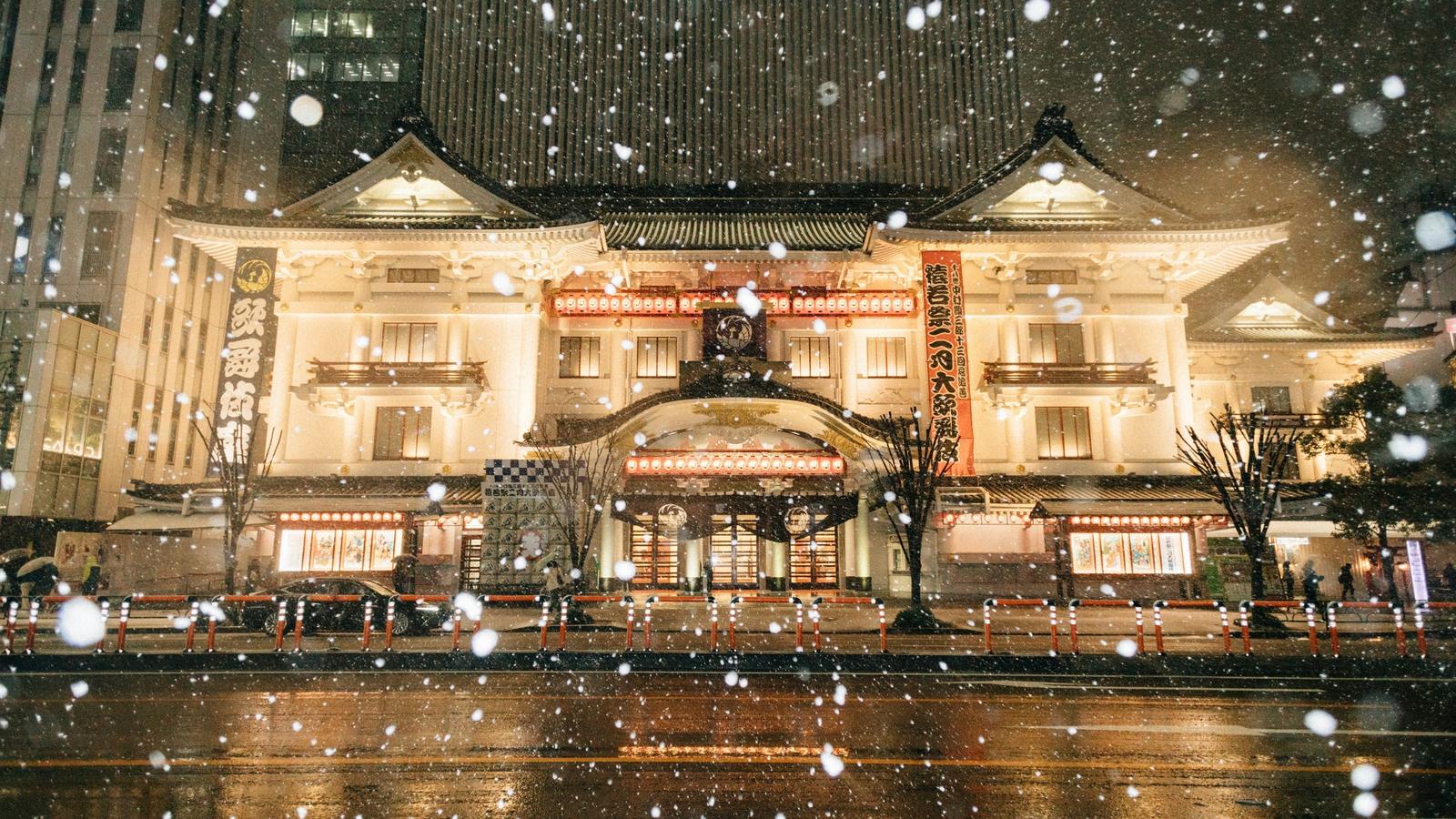
To see kabuki in Tokyo for the first time, go to Kabukiza in Ginza, which stages a new programme almost every month. Each month is split into two parts (a matinee from 11:00 and an evening part from 16:30) or three (from 11:00, 14:30 and 18:00). For November 2026, seats cost ¥5,000 to ¥20,000 and went on sale on October 14, 2026. If a full part feels long, a single act on the fourth floor costs from ¥1,500. An English captioning device costs ¥1,500 for a full part or ¥1,000 for a single act, in cash.
This guide covers what a first visit involves: choosing a part, the seats and what they cost, the single-act tickets, the English captions, eating in the intervals, what to wear, and the other Tokyo stages showing kabuki this winter. We checked every price, date and rule on Shochiku's official kabuki sites, the Kabukiza site and the National Theatre of Japan's site on October 14, 2026. The sources are listed at the end. If this is your first trip to Japan, the shape of the whole journey is in your first trip to Japan, planned from Tokyo.
Key points
- Kabukiza in Ginza runs a programme most months. November 2026 is in two parts (11:00 and 16:30); October and December 2026 are in three (11:00, 14:30 and 18:00).
- November 2026 seats cost ¥5,000 to ¥20,000, tax included; October and December cost ¥4,500 to ¥17,000. Sales open at 10:00 on the 14th of the month before.
- Single-act seats on the fourth floor let you watch one play. In October 2026 they cost ¥1,500 to ¥4,000, sold online from noon the day before and at a separate box office on the day.
- English captions on a rented device cost ¥1,500 for a full part and ¥1,000 for a single act, cash only, at Kabukiza.
- There is no dress code. You may eat at your seat in the intervals, and never during the play.
- The National Theatre has been closed since the end of October 2023 and aims to reopen in fiscal 2033. Its kabuki is staged at the New National Theatre meanwhile, next in January 2027.
HOW A MONTH AT KABUKIZA IS BUILT
Kabukiza is the theatre most people mean when they say kabuki in Tokyo. It is run by Shochiku, the company behind most of the kabuki staged in Tokyo, and a new programme opens there near the start of most months and runs for about three weeks. Each programme is divided into parts, and each part is a separate ticket with its own plays. You buy a seat for one part, and if you want to see the whole month you buy two or three tickets.
In some months the day is split in two: a matinee and an evening part. November 2026 is one of these. Its matinee starts at 11:00 and its evening part at 16:30, and the two together stage most of one long classic, Kanadehon Chūshingura, the story of the forty-seven retainers. The matinee takes the opening acts and the evening part continues the story to its end. Shochiku's own guidance is that a matinee or evening part usually runs for about four hours.
In other months the day is split in three, with shorter parts. October and December 2026 both run three parts, starting at 11:00, 14:30 and 18:00. October's published timings show what that means in practice: the first part ended at 13:37, the second at 17:00 and the third at 20:55. A three-part day suits a first visit very well, because two and a half to three hours, with one interval, is about right for a first time.
Each part is usually a mix: a drama of an hour or two, then something shorter, often a dance. Shochiku gives dances and short dramas as about 30 minutes to an hour, and long dramas as about one to two hours.
| Month | Dates | Parts and start times | Tickets on sale |
|---|---|---|---|
| October 2026 | October 2 to 20, no performance on October 9 | Three parts: 11:00, 14:30, 18:00 | On sale since September 14 |
| November 2026 | November 1 to 25, no performances on November 9 and 17 | Matinee 11:00, evening 16:30 | October 14 at 10:00 |
| December 2026 | December 2 to 25, no performances on December 9 and 17 | Three parts: 11:00, 14:30, 18:00 | November 14 at 10:00 |
| January 2027 | January 2 to 26, no performances on January 8 and 18 | Not yet announced | Not yet announced |
| February 2027 | February 2 to 26, no performances on February 9 and 18 | Not yet announced | Not yet announced |
| March 2027 | March 5 to 22 | Not yet announced | Not yet announced |
For the months from January to March 2027, Shochiku has published the dates. The plays, start times, prices and sale dates are not yet announced.
SEATS AND PRICES FOR NOVEMBER 2026
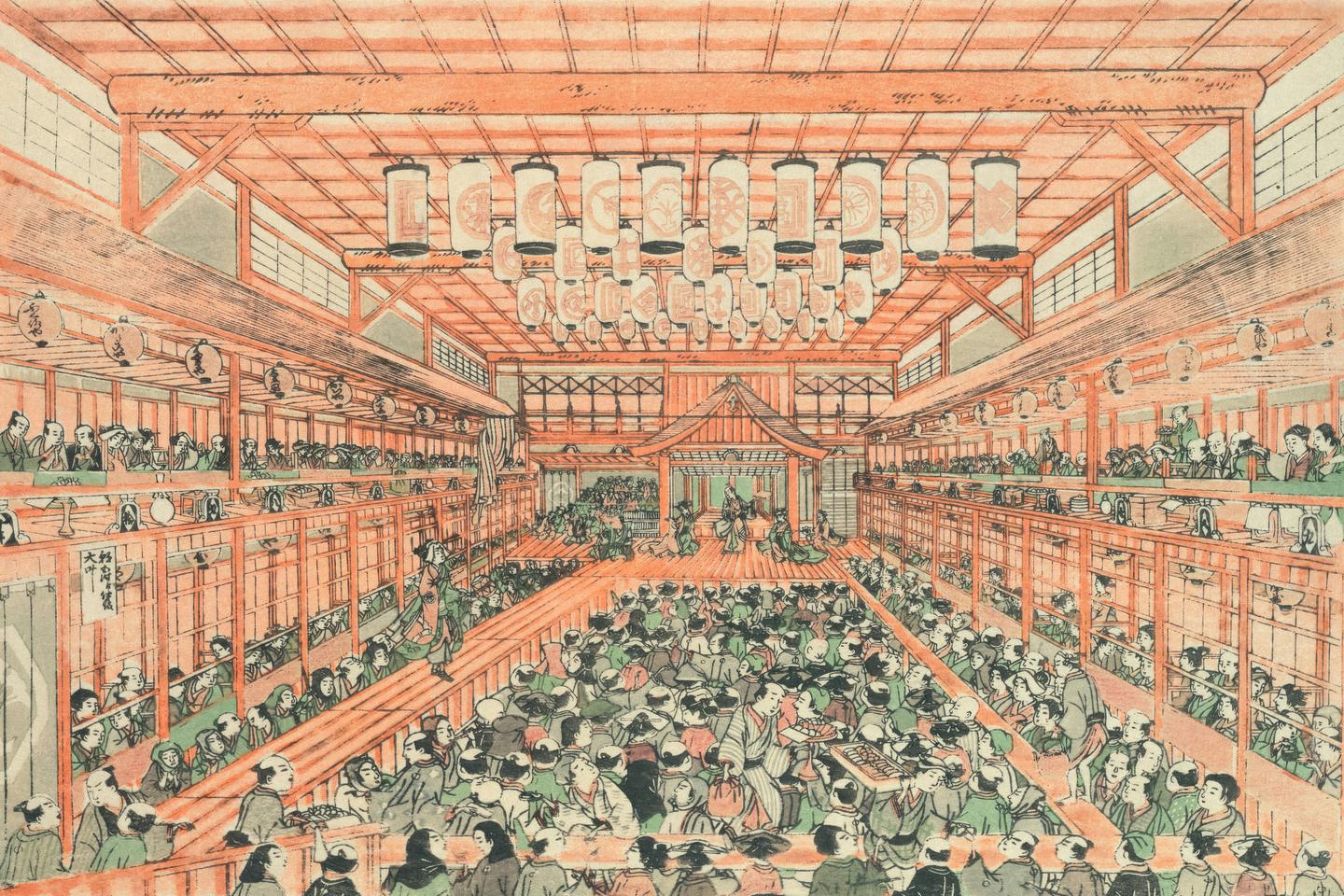
Kabukiza sells eight categories of seat for a full part. The prices change from month to month with the programme. These are the November 2026 prices, with October and December 2026 for comparison. All are tax included.
| Seat | November 2026 | October and December 2026 |
|---|---|---|
| Special Seat | ¥20,000 | ¥17,000 |
| Box Seat on the first floor | ¥20,000 | ¥17,000 |
| First Class | ¥18,000 | ¥16,000 |
| Second Class A | ¥15,000 | ¥13,000 |
| Second Class B | ¥14,000 | ¥12,000 |
| Second Class C | ¥9,000 | ¥8,000 |
| Upper Tier A | ¥6,500 | ¥6,000 |
| Upper Tier B | ¥5,000 | ¥4,500 |
For a first visit we usually suggest a First Class or Special Seat. The Box Seats are on the first floor; Shochiku's November and December pages note that tea is not served in them. The Special Seat and the Box Seat are not sold through Shochiku's multilingual online site, which is one reason it helps to have someone apply in Japanese.
Two other rules are worth knowing. If you are 30 or under, Kabukiza sells any remaining seat, of any category, at half price on the day. And for children, Shochiku states that a child of 3 or under who sits on an adult's lap needs no ticket, while a child of 4 or over needs one.
When tickets go on sale
For the three months on sale now, Shochiku opened sales at 10:00 on the 14th of the month before: September 14 for October, October 14 for November and November 14 for December. The box office in the theatre starts selling two days later. Shochiku's Japanese ticket site, Ticket Web Shochiku, takes applications around the clock once sales open. Its multilingual online site sells only the seats allocated to it, and for Kabukiza it stops selling the day before each performance.
Some days are taken by groups. In November 2026, the matinee of November 14 and the evening part of November 22 are booked out by private groups, although single-act seats are still sold on both. For a date that matters, apply on the morning sales open.
We apply for your seats in your names through Shochiku's own systems as soon as a month opens, and you pay the theatre's own price. If seats remain on the day, the box office also sells them at the door.
SINGLE ACT TICKETS ON THE FOURTH FLOOR
A single-act ticket, called hitomakumi in Japanese, lets you watch one play from a part. Shochiku sells them for most performances at Kabukiza, on the fourth floor. They suit a traveller who wants an hour of kabuki between other plans, or who is not sure about sitting through a full part. Each act is a separate ticket, and the seats are fully cleared after each act, so if you want two acts you buy two tickets and leave between them.
There are two ways in. Reserved fourth-floor seats are sold on Shochiku's single-act online site from 12:00 noon on the day before the performance, for every act at once, by credit card only, up to four per person, with a system fee of ¥110 per ticket. They cannot be changed or refunded after purchase. Further seats are sold on the day at the Single Act Box Office, on the left of the main entrance. In some months Shochiku also sells single-act seats on the second floor, called upgraded seats, though not on every day.
Single-act ticket holders enter by their own door, to the left of the main entrance, show the QR code on a phone or a printed copy on the fourth floor, and stay on the fourth floor. Levels 1 to 3 are closed to them.
| Act | Length | Fourth floor | Second floor upgrade |
|---|---|---|---|
| Part 1, Koi Tsukami | 51 minutes | ¥2,500 | ¥9,300 |
| Part 1, Yoshitsune Senbon Zakura, Kawatsura Hōgen Yakata | 71 minutes | ¥3,000 | ¥9,900 |
| Part 2, Moritsuna Jin'ya | 110 minutes | ¥4,000 | ¥13,800 |
| Part 2, Yamagaeri Makenu Kikyō | 15 minutes | ¥1,500 | ¥5,400 |
| Part 3, Yoshitsune Senbon Zakura, Tokaiya and Daimotsu no Ura | About 2 hours | ¥3,500 | ¥12,000 |
| Part 3, Yashiki Musume and Ōmi no Okane | About 30 minutes | ¥2,000 | ¥7,200 |
Prices and acts change every month, and Shochiku publishes the single-act list once the month's timings are fixed, which for October 2026 was the evening before opening. The November 2026 single-act list was not yet published when we checked. Older guides often quote ¥1,000 to ¥1,500 for a single act; in October 2026 the range was ¥1,500 to ¥4,000.
THE ENGLISH CAPTION GUIDE
Kabuki is performed in a stylised, older Japanese. At Kabukiza, Shochiku rents a handheld captioning device that shows translations of the dialogue and the sung lyrics, with notes on what is happening, in English or in Simplified Chinese. Since July 2024 it has cost ¥1,500 for a full part on levels 1 to 3 and ¥1,000 for a single act, paid in cash.
You can also buy a seat with the device included: Shochiku's English programme pages list a "ticket with captioning service" at ¥1,500 above the seat price. If you hold tickets for two single acts in a row, one device covers both, as long as they are in the same part. For a very short single act, Shochiku warns that captions may not be provided.
Shochiku also gives out a free English flyer with a short synopsis, and the printed programme sold in the theatre carries English synopses at the back. Read the synopsis of each play before the curtain; ten minutes of reading makes the first act far easier to follow.
A DAY AT KABUKIZA
Eating in the intervals
A meal in the interval is part of a day at Kabukiza. Intervals usually last 20 to 30 minutes, and the longest interval in each part, 30 minutes or more, is the one for meals; in October 2026 they ran 35, 25 and 30 minutes. You may eat and drink at your seat or in the lobby during an interval. You may not eat while a play is on, and Shochiku asks that you keep conversation low while you eat.
Bento
The simplest meal is a boxed bento. The theatre's shop Yagura, on the second basement level, sells them and opens 9:30 to 18:30 on performance days. Bento can also be ordered in advance on Kabukiza's site and collected at the bento counter on your lobby floor during the longest interval. Drinks are bought separately, at the drink counters on the first three floors. If you sit in a Box Seat, a bento ordered for the box is set on the shelf behind your seat before the meal interval.
Restaurants inside the theatre
Hanakago on the third floor is the main dining room, and it needs a reservation with the menu chosen in advance. Changes and cancellations close at 17:00 two days before, after which the full price is charged, and the kitchen states it cannot guarantee food free of allergens or make substitutions. Kitchō, also on the third floor, serves a shōkadō box during intervals, and a café on the first floor is open through the day. The theatre takes restaurant reservations in Japanese only, and we take care of that for you.
If you are in a three-part month and want a proper dinner after the 14:30 part, you will be out by about 17:00 and free for a table in Ginza. How Tokyo's harder tables are booked is in how Tokyo's best tables actually work.
What to wear
There is no dress code. Shochiku states that everyday clothes are fine, and asks only that hats and anything else that blocks the view behind you come off during the performance. Smart casual is a comfortable choice. Kabukiza also names some performances as kimono days: for January 2027, the matinee and evening parts of January 24 invite the audience to come in kimono. A general guide to Japanese customs is in Japan etiquette for luxury travellers.
Arriving
The theatre has no cloakroom. Coin lockers take bags, and valuables stay with you. Kabukiza stands above Higashi-Ginza station, with a direct connection from exit 3; Ginza station is about five minutes on foot.
Arrive early. Shochiku asks guests to come in good time, and some programmes make lateness costly. In the November 2026 matinee, a short prologue begins at about 10:50, before the 11:00 start, and during the fourth act, traditionally a scene the audience must not interrupt, entry to the seats is restricted. If you arrive late in November, you may miss the heart of the matinee.
On a practical day for a first visit, we would place a three-part afternoon seat after a slow morning in Ginza, collect the caption device, read the synopsis, and keep dinner for after the curtain. If you have only a few free hours, a single act fits at the end of a working day; the shape of a business week in the city is in the executive's Japan.
OTHER STAGES FOR KABUKI IN TOKYO
Heisei Nakamuraza in Asakusa
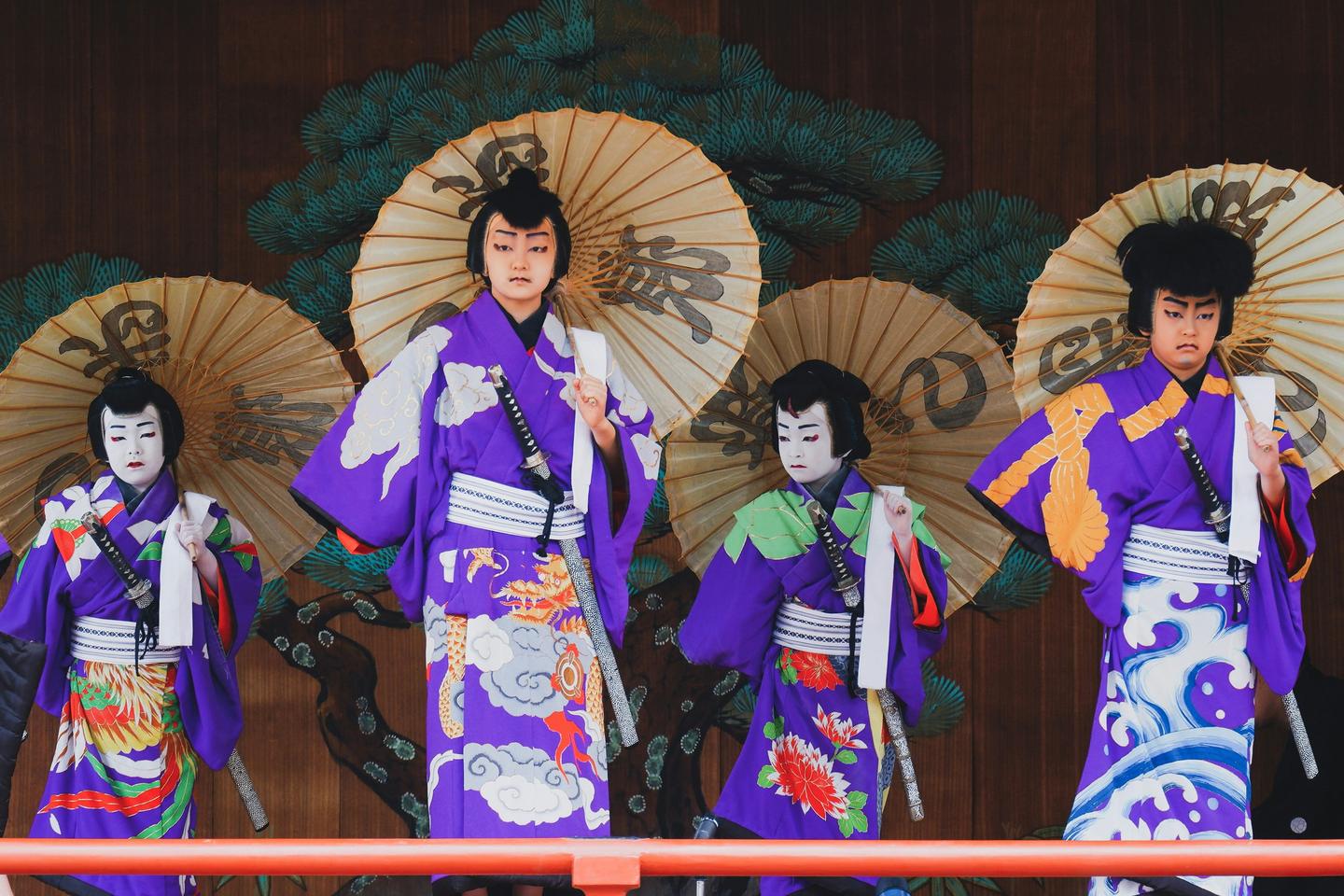
Until October 25, 2026, Shochiku is staging kabuki at the Heisei Nakamuraza, a temporary theatre in the grounds of Sensō-ji in Asakusa. Part 1 starts at 11:00 and Part 2 at 16:00. Seats cost ¥11,000 to ¥16,500, and a premium seat called Odaijin costs ¥36,000.
The National Theatre at the New National Theatre
The National Theatre of Japan closed at the end of October 2023 for rebuilding. Its official page, updated March 31, 2026, records two earlier tenders that failed, a new tender announced on March 31, 2026, and a target of reopening in fiscal 2033. While it is closed, it stages its own productions at other theatres. Its kabuki is staged at the Middle Theatre of the New National Theatre in Shinjuku: October 1 to 20, 2026, then January 8 to 26, 2027, with no performance on January 15.
The January 2027 production plays a single classic over most of a day, starting at 12:00 and ending at about 16:30. Seats cost ¥4,000 to ¥20,000, and sales open on December 13, 2026, at 10:00. An earphone guide in English is offered for a fee that the page does not state, and a bilingual programme costs ¥1,000.
New Year in Asakusa and Shinbashi
From January 2 to 26, 2027, Shochiku stages New Year kabuki with young leading actors at Asakusa Public Hall, at 11:00 and 15:00, with seats from ¥3,500 to ¥10,000, on sale from November 21, 2026. Shinbashi Enbujo, Shochiku's other theatre in central Tokyo, has New Year kabuki listed for January 2027, with dates, prices and sale date not yet announced, and a new production in April 2027, also with details not yet announced. Shinbashi Enbujo has no kabuki listed for October to December 2026.
WHAT STAYGO DOES FOR A KABUKI EVENING
We choose the month and the part with you, in light of the plays, and then the seats. We apply for them in your names through Shochiku's Japanese systems on the day sales open, secure the bento or the restaurant table for the interval, and set aside cash for the caption device. For a short visit, we watch the single-act list and buy the fourth-floor seats at noon the day before. We do not mark anything up. You pay the theatre at its own prices.
STAYGO's fee for planning is separate. The Signature plan is USD 3,500 for your group, for a trip of 7 to 14 days, and covers the whole trip: kabuki is one evening inside it. We take no commission on any arrangement, and you pay hotels, restaurants and theatres directly at their own rates.
SOURCES AND HOW WE CHECKED
We read Shochiku's official kabuki sites in Japanese and English, the Kabukiza site, Shochiku's single-act ticket site, and the National Theatre of Japan's site on October 14, 2026. We did not contact the theatres. Prices are tax included, change from month to month, and are those published for the months named. We did not use figures from ticket resellers, tour sites or press coverage.
- Kabuki Bito, Kabukiza: programmes from October 2026 to March 2027
- Kabuki Bito, November 2026 at Kabukiza: dates, times, prices, sale date, entry rule in Act 4
- Kabuki Bito, October 2026 at Kabukiza: timings, intervals, prices
- Kabuki Bito, December 2026 at Kabukiza: dates, prices, sale date
- Kabuki Bito, January 2027 at Kabukiza: dates and kimono day
- Kabuki Web, November 2026: English seat names, caption ticket, seats not sold online
- Kabuki Web, single acts for October 2026: single-act prices
- Kabuki Web, how to buy tickets: online, box office and single-act sales
- Shochiku single-act online tickets: sale time, payment, limit, fee, entry
- Kabuki Web, service for overseas visitors: caption device and prices
- Kabuki Web, Kabukiza information: intervals, eating, box offices, stations
- Kabuki Web, Q&A: dress, children, lockers, running times
- Kabukiza, eating: bento, restaurants and their rules
- Kabuki Web, Heisei Nakamuraza October 2026: dates, times, prices
- Kabuki Web, Asakusa New Year 2027: dates, times, prices, sale date
- Kabuki Bito, Shinbashi Enbujo: programmes announced
- National Theatre of Japan, rebuilding: closure, tenders, target reopening
- National Theatre of Japan: kabuki at the New National Theatre
- National Theatre of Japan, New Year kabuki 2027: dates, times, prices, sale date, English services
QUESTIONS FIRST TIME VISITORS ASK
How long is a kabuki performance at Kabukiza?
In a two-part month, the matinee and the evening part each run for about four hours. In a three-part month each part is shorter; in October 2026 they ran from about two and a half to three hours, with one interval.
How much is a single act ticket at Kabukiza?
The price changes with each act and each month. In October 2026, fourth-floor single-act seats cost ¥1,500 to ¥4,000, and reserved ones carried a ¥110 system fee.
Is there an English guide for kabuki in Tokyo?
Yes. At Kabukiza a handheld device shows English captions of the dialogue and lyrics with explanations, for ¥1,500 per full part or ¥1,000 per single act, paid in cash.
Is there a dress code for kabuki?
No. Everyday clothes are fine; you are asked to remove your hat during the performance, and some performances are named kimono days.
When does the National Theatre of Japan reopen?
The official target is a reopening in fiscal 2033. While it is closed, its kabuki is staged at the New National Theatre in Shinjuku.
LET US HOLD YOUR SEATS FOR THE KABUKI MONTH YOU WANT
Tell us your dates in Tokyo and how much of an evening you would like to give to the theatre. We will suggest the part and the seats, apply for them in your names when sales open, and arrange the interval meal.
Begin planning →