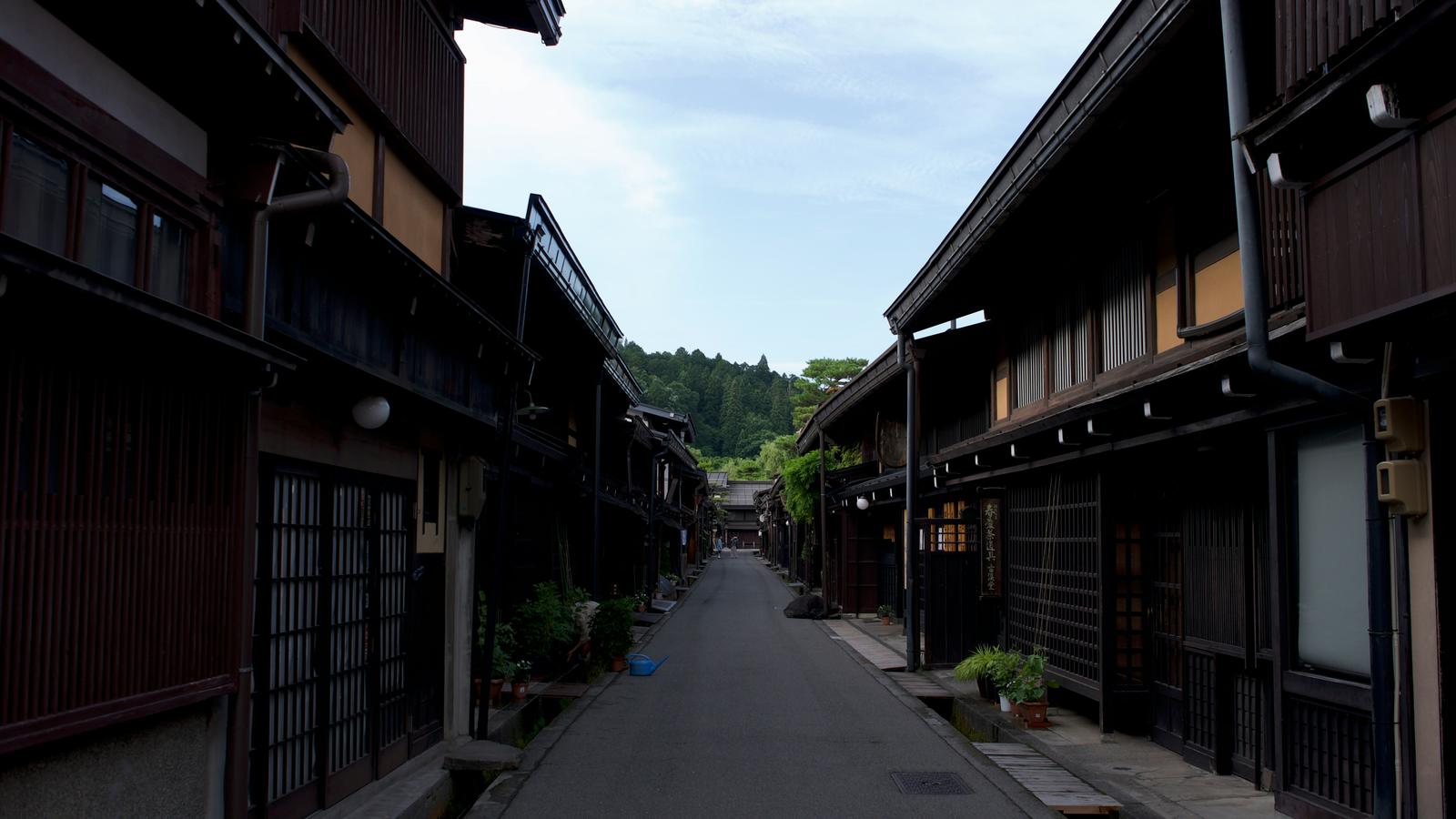
Takayama sits in the mountains of Hida, between Nagoya and the Sea of Japan coast, and it was built by people who work wood. Its streets of dark timber houses are the first thing visitors photograph. The reason to stay longer is what is made inside them: carvings in yew, trays under clear lacquer, chairs bent from beech, and the festival floats that the town has kept for centuries.
This article follows the crafts that make Takayama worth two or three nights, with what you see, who makes it and what you can take home, and closes with where to stay and how to arrive. We read the city's visitor statistics, the pages of the shrine, the museums, the makers and the inns, Japan's tourism agencies and a Spanish account on JNTO's site, and contacted none of them; the sources are at the end. For a night in the thatched village nearby, see Shirakawa-go Overnight Stay in 2027: How to Book and Visit →.
Key points
- In 2025 Takayama's lodgings counted 52,730 overnight guests from Spain, more than from any other European country in the city's table, while Spain made up 0.6% of foreign arrivals in Japan.
- From 757 the province of Hida could pay its tax in carpenters, about 100 a year sent to the capital. Their successors carved the festival floats and built the merchant houses you can enter today.
- The festival takes place every year on April 14 and 15 and on October 9 and 10. On other days real floats stand in the Yatai Kaikan, with the display changed three times a year.
- Ichii itto bori leaves yew unpainted with the chisel marks visible; Hida Shunkei lets the grain show through clear lacquer. Both were designated national Traditional Crafts in 1975.
- Hida Sangyo has made bentwood chairs from local beech since 1920 and keeps a gallery in the old town, with factory tours on some days.
LET US SHAPE YOUR NIGHTS IN TAKAYAMA →
WHY SO MANY SPANIARDS STOP IN TAKAYAMA
Takayama keeps a careful count. The city surveys its lodgings every year, and its report for 2025, published in February 2026, records 978,312 overnight guests from abroad, 27.1% more than in 2024. Guests from Spain numbered 52,730, up from 42,686 the year before. That is more than from any other European country in the city's table, ahead of the United Kingdom with 37,760 and Italy with 30,717, and fourth overall after Taiwan, China and the United States.
The proportion is what stands out. In the city's comparison, Spain made up 5.4% of Takayama's foreign guests in 2025, while Spanish visitors were 0.6% of all foreign arrivals in Japan, using the JNTO figures the city reproduces. Spaniards who travel to Japan come to Takayama far more often than most. Our reading is that the town answers a wish many of our Spanish guests share: to see how things are made, at a pace one can walk.
THE CARPENTERS WHO PAID HIDA'S TAXES
Japan's tourism authorities tell the story in their multilingual guide. In 757 the Yoro Code came into force with a special clause for Hida: instead of rice, the province could pay its tax in labour. About 100 carpenters and woodworkers went to the capital each year, in teams of five, four craftsmen and an apprentice who cooked and assisted. They worked on Todaiji, Ishiyamadera and Kasuga Taisha. The system ended in the Kamakura period, from 1185 to 1333, but the name Hida no takumi, the craftsmen of Hida, stayed with them.
The skill came home. When the old restrictions on what merchants could build were lifted at the end of the Edo period, wealthy families in Takayama hired these carpenters for houses they had never been allowed. Two stand side by side in Oshinmachi. The Kusakabe family served as merchants to the shogunate's local office; after their house burned in the fire of 1875, the master carpenter Kawajiri Jisuke rebuilt it in 1879 in the Edo manner, and it was designated an Important Cultural Property in 1966. It is now the Kusakabe Mingeikan, with folk crafts shown in its storehouses. Next door, the Yoshijima family dealt in silk, cocoons, finance and sake; their house was rebuilt in 1907 after a second fire, the main house by the carpenter Nishida Isaburo. Gifu Prefecture's guide describes light falling from the high window through layers of beams onto polished floors. In both houses, stand in the earthen entrance and look up.
For the farmhouses of the region, JNTO's Spanish site carries an account by Eva Guerrero of Hida no Sato, an open-air museum of more than thirty original buildings from Hida, which she walked almost alone among the cicadas.
THE FLOATS AND THE TWO FESTIVALS
The Takayama Festival is in fact two. In spring, on April 14 and 15, Hie Shrine holds its festival with 12 floats; in autumn, on October 9 and 10, Sakurayama Hachimangu holds its own with 11. The floats are national Important Tangible Folk Cultural Properties, and the festival belongs to the Yama, Hoko, Yatai float festivals inscribed by UNESCO in 2016. The dates do not move. The tourism association states that in rain the events are scaled down or cancelled, never postponed, and that inns in the town are full more than six months ahead. The autumn dates fall just before Spain's national holiday on October 12.
On any other day, the Takayama Matsuri Yatai Kaikan in the grounds of Sakurayama Hachimangu shows real autumn floats, and the shrine says it is the only hall that displays actual Takayama floats all year. The selection changes three times a year, in late March, late July and mid November. The shrine describes Hotei-tai, whose puppets of the monk Hotei and two children are worked by nine puppeteers on 36 strings, and Kinpo-tai, with flowers of the four seasons carved by Taniguchi Yoroku. Its great portable shrine weighs about two and a half tonnes and is said to need 80 bearers. Close up, a float brings joinery, carving, lacquer, metalwork and embroidery together on one frame.
YEW CARVING AND SHUNKEI LACQUER
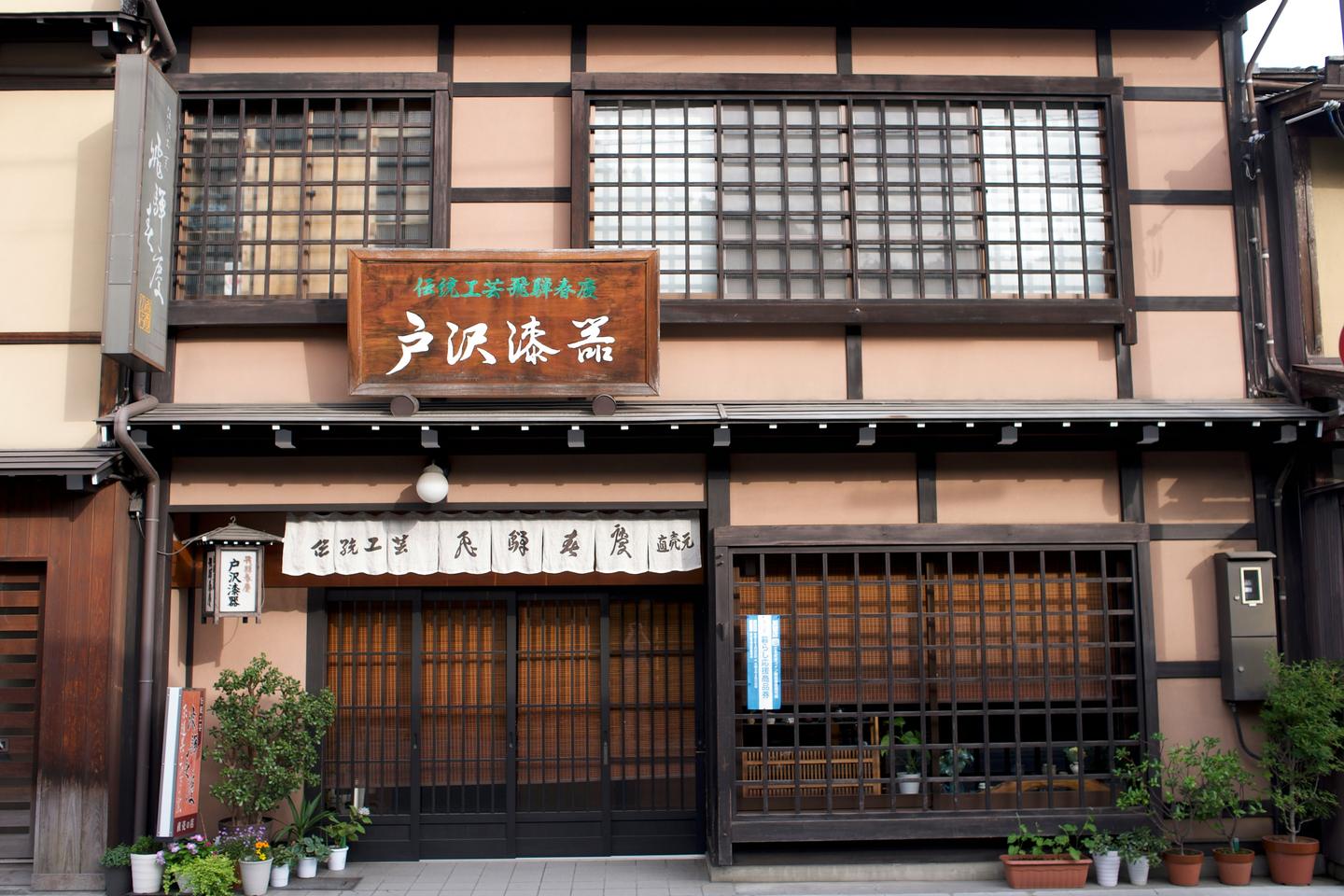
Ichii itto bori uses only ichii, the Japanese yew and the prefectural tree of Gifu. Nothing is painted. The carver chooses each block for its red heartwood, akata, and pale sapwood, shirata, places them in the design, and leaves the chisel marks visible; with time the wood darkens to a warm brown and takes on a sheen. The style is traced to Matsuda Sukenaga, a Takayama netsuke carver of the late Edo period, and was designated a national Traditional Craft on May 10, 1975. Pieces range from netsuke and zodiac animals to masks, tea utensils and Buddhist figures. For a birth year, an anniversary or a family name, we can ask a carver whether they would accept a commission; the answer and the time it takes are the carver's.
Hida Shunkei lacquer is transparent, so the grain of hinoki, sawara or horse chestnut shows through the finish. Takayama City's history traces it to the Keicho era in the early 1600s, when the carpenter Takahashi Kizaemon made a tray from split sawara and presented it to Kanamori Shigechika, later known as the tea master Kanamori Sowa, who had the lacquerer Narita Sanemon finish it in clear lacquer. It was designated a national Traditional Craft on February 17, 1975. A woodworker and a lacquerer share each piece: trays, tiered boxes, sweet dishes, tea utensils, flower vessels and document boxes. With use the tone of the lacquer changes and the grain grows more pronounced, so a tiered box or a tea tray keeps changing at home.
CHAIRS FROM THE BEECH FORESTS
Hida furniture began with wood nobody wanted. Hida Sangyo's history records that the beech of the surrounding mountains served for little more than charcoal and the teeth of wooden sandals, until a group of local people founded a company in 1920 to make bentwood chairs from it. In 1929 its bentwood chairs were shown at an international exhibition in Belgium. Today the company works with designers such as Kenya Hara, Kengo Kuma and Sori Yanagi, and makes custom furniture for hotels and other projects.
In the old town, its Yuhokan HIDA GALLERY on Kami-ichinomachi shows handwork and woodworking tools, open from 10:00 to 18:00 and closed on Wednesdays and the third Thursday. On some days the company runs a factory tour of about an hour from 13:00 at its first factory, with the machines, the timber and the craftsmen at work. A chair is a larger decision than a tray, and shipping to Spain is a question to settle with the shop before choosing; we handle that conversation for you.
Nissin Mokko, founded in Takayama in 1946, shows another side of the same skill. For the reconstruction of the Honmaru Palace at Nagoya Castle, opened to the public in June 2018, it supplied about 1,200 doors, shoji, fusuma and transoms in Kiso hinoki. For travellers coming up from Nagoya, the palace is a fine first look at Hida joinery before the train to the mountains.
WHERE TO STAY AND HOW TO ARRIVE
In the old town, TANIYA is a renovated annex of about a hundred years beside the Kusakabe house, let to one party per night. It has a tea room, an earthen-floored dining space, a courtyard garden, a bath made entirely of hinoki and furniture by local makers. Guests may use the Kusakabe house as a private lounge, and the house offers visits to an ancient yew forest and to local artisans. It suits those who want to sleep inside the craft this article describes.
Outside town, in Ichinomiya, Wanosato is a ryokan of four suites in four separate buildings along the Miyagawa river, a member of The Ryokan Collection. One villa is finished in Shunkei lacquer with a terrace and 108 square metres; another is an old house with an irori hearth over 110 square metres; a third is a thatched gassho-style villa of 80 square metres. It suits a slower stay with the river and the forest around you.
JNTO gives about 2 hours 20 minutes by train from Nagoya and around 1 hour 30 minutes from Toyama. From Kanazawa the road passes Shirakawa-go, so the three fit together in one route; for the city itself, see Kanazawa: The New Golden Route Stop That Rewards Slow Travel →. In a Signature journey of 7 to 21 days, we place Takayama for two or three nights and arrange the visits: the Yatai Kaikan on the first morning, the factory tour if a date falls within your stay, and time with a carver or a lacquer workshop where they agree.
SOURCES AND HOW WE CHECKED
We read the pages below on November 5, 2026. Travel times are JNTO's and are rounded. We did not contact any shrine, museum, maker, inn or other body.
- Takayama City, foreign visitor overnight statistics 2025 (Japanese): 978,312 foreign overnight guests, 27.1% up; Spain 52,730 (42,686 in 2024); figures for other countries
- Takayama City, overnight guests by country and region 2025 (Japanese): Spain 5.4% of Takayama's foreign guests and 0.6% of arrivals in Japan
- Japan Tourism Agency multilingual database, Hida no Takumi: Yoro Code of 757, about 100 carpenters a year in teams of five, Todaiji and other works, end in the Kamakura period
- Sakurayama Hachimangu, Takayama Matsuri Yatai Kaikan (Japanese): only permanent display of real floats, changes three times a year, Hotei-tai and Kinpo-tai, the portable shrine
- Sakurayama Hachimangu, English page: spring festival with 12 floats and autumn festival with 11
- Hida Takayama Tourism and Convention Association, Autumn Takayama Festival 2026 (Japanese): dates, no postponement in rain, inns full more than six months ahead, spring dates
- UNESCO, Yama, Hoko, Yatai, float festivals in Japan: inscription on the Representative List (decision 11.COM, 2016)
- KOGEI JAPAN, Ichii Itto Bori: yew only, no colouring, akata and shirata, Matsuda Sukenaga, designation on May 10, 1975, typical pieces
- KOGEI JAPAN, Hida Shunkei: transparent lacquer, Keicho origins, Takahashi Kizaemon and Kanamori Sowa, designation on February 17, 1975, typical pieces
- Hida Sangyo, company history (Japanese): unused beech, founding in 1920, bentwood chairs, exhibition in Belgium in 1929
- Hida Sangyo, Yuhokan HIDA GALLERY (Japanese): address in Kami-ichinomachi, hours and closing days, factory tour from 13:00 of about an hour
- Hida Sangyo, English site: designers Kenya Hara, Kengo Kuma and Sori Yanagi, custom furniture for projects
- Nissin Mokko, Nagoya Castle Honmaru Palace (Japanese): about 1,200 fittings in Kiso hinoki, opening in June 2018
- Kusakabe Mingeikan, official site (Japanese): merchants to the shogunate office, fire of 1875, rebuilt in 1879 by Kawajiri Jisuke, Important Cultural Property in 1966
- Gifu Prefecture tourism, Yoshijima house (Japanese): family trades, rebuilt in 1907, Nishida Isaburo, the skylight and beams
- TANIYA, official site: annex of about a hundred years beside the Kusakabe house, one party per night, yew forest and artisan visits
- JNTO, Japan luxury: Kusakabe Family residence and TANIYA: tea room, earthen dining space, hinoki bath, furniture by local artisans, the Kusakabe house as private lounge
- Wanosato, rooms: four suites in four buildings, villa sizes, Shunkei lacquer, irori and gassho-style villas
- The Ryokan Collection, Wanosato: membership, thatched minka a short walk from the main building
- JNTO, Takayama and around: about 2 hours 20 minutes from Nagoya and around 1 hour 30 minutes from Toyama by train
- JNTO Spain, Eva Guerrero on Hida no Sato and the Japanese Alps (Spanish): open-air museum of more than thirty original buildings
QUESTIONS TRAVELLERS ASK
How many nights should I spend in Takayama?
Two nights let you see the old town, the merchant houses and the floats in the Yatai Kaikan. Three leave time for a workshop or the factory tour, an inn outside town, and a day in the countryside without rushing.
When is the Takayama Festival?
Every year on April 14 and 15 at Hie Shrine and on October 9 and 10 at Sakurayama Hachimangu. The dates do not change, and the tourism association says inns in the town fill more than six months ahead. On other days, real floats are on display at the Takayama Matsuri Yatai Kaikan.
What can I take home from Takayama?
An unpainted yew carving in the Ichii itto bori style, a tray or tiered box in Hida Shunkei lacquer, or Hida furniture. A carving can sometimes be commissioned if the carver agrees, and for furniture, shipping should be settled with the shop before you choose.
How do I get to Takayama from Nagoya or Kanazawa?
JNTO gives about 2 hours 20 minutes by train from Nagoya and around 1 hour 30 minutes from Toyama. From Kanazawa the road passes Shirakawa-go, so many travellers combine the two.
Can I visit a furniture workshop in Takayama?
Hida Sangyo runs a factory tour of about an hour from 13:00 on some days, and its Yuhokan HIDA GALLERY in the old town is open most days. We check the dates against your stay and ask carvers and lacquer workshops on your behalf.
LET US SHAPE YOUR NIGHTS IN TAKAYAMA
Tell us when you would like to be in Japan and which crafts draw you. We will set out the nights, the inn, the festival or the floats on display, and the workshops we can ask, side by side with the reasons, so that you can choose.
Begin planning →We reply within 24 hours, in writing
Some of the restaurants and bars we arrange seat guests only by introduction or membership. We ask on your behalf; the table and the evening are the house's decision. We do not publish their names.