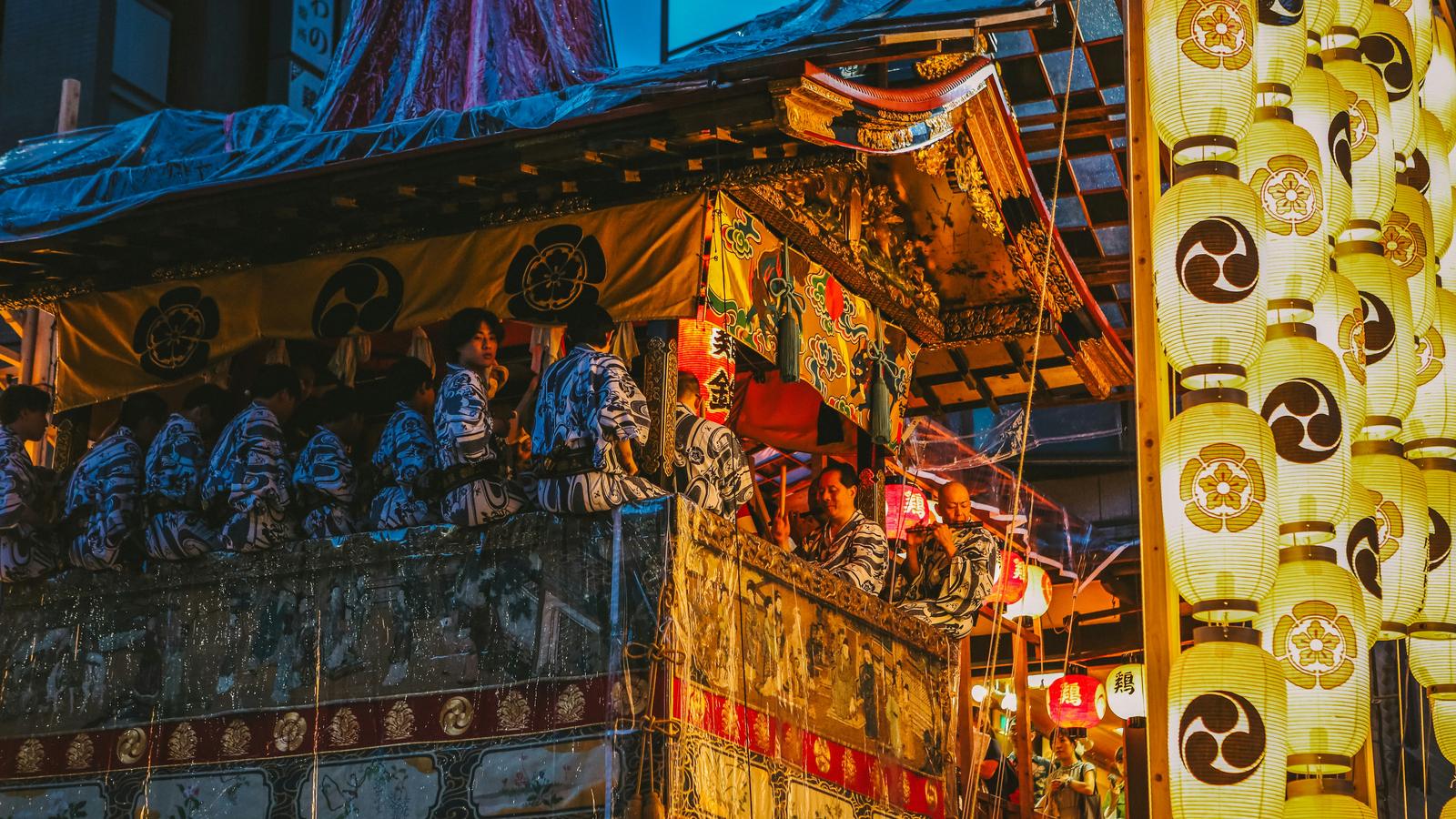
Japan's year runs on a calendar of festivals and seasonal customs, and most of them fall on fixed dates. The New Year opens it on January 1, Setsubun beans are thrown on February 3 in 2027, and cherry blossoms reach full bloom around March 31 in Tokyo and April 4 in Kyoto in an average year. Kyoto's Gion Matsuri fills July, with its float processions on July 17 and 24, and on August 16 five fires burn on the mountains around Kyoto to close Obon. November brings Shichi-Go-San for young children around the 15th and Tokyo's rake fairs, December the maples of Kyoto, and the year ends with temple bells on the night of December 31.
Below is the year month by month: what happens, where to see it and on which dates, with Japan's national holidays for 2026 and 2027 and the weeks when trains and hotels fill. We checked each date on October 22, 2026, on the official pages of the Japan Meteorological Agency, the National Astronomical Observatory, the Cabinet Office, the Ministry of Agriculture, JR Central and the shrines, temples, tourism associations and festival committees named; the sources are listed at the end. Where a date changes each year and has not been announced, we say so. For the seasons themselves, weather and light, see the best time to visit Japan by season.
Key points
- Fixed every year: Hinamatsuri on March 3, Children's Day on May 5, Tanabata on July 7, the Gion Matsuri processions on July 17 and 24 and the Gozan Okuribi fires on August 16.
- Setsubun falls on February 3 in 2027, the day before the start of spring on the old calendar. The harvest moon falls on September 15, 2027. Tokyo's Tori no Ichi rake fairs fall on November 7 and 19 in 2026.
- In an average year, cherry blossoms open around March 24 in Tokyo and March 26 in Kyoto, with full bloom around March 31 and April 4. Maples turn around November 28 in Tokyo and December 5 in Kyoto.
- At the New Year, Golden Week and Obon, JR Central runs every Nozomi bullet train reserved-only. The next period is December 25, 2026 to January 5, 2027.
- Some events sell seats or places in advance. In 2026 the Kyoto tourism association sold numbered seats for the Gion Matsuri processions from June 1, at ¥8,000 in the front row.
THE YEAR AT A GLANCE
The dates in this table are fixed unless the row gives a year. Blossom and leaf dates are the Japan Meteorological Agency's averages for 1991 to 2020; the real date moves with each year's weather.
| Month | Festival or custom | Where | Date |
|---|---|---|---|
| January | Shogatsu, the New Year; first visits to shrines and temples | Across Japan | January 1 |
| January | Nanakusa-gayu, rice porridge with seven spring greens | Homes and restaurants | January 7 |
| January | Kagami-biraki, opening the New Year rice cakes | Homes | January 11 |
| February | Setsubun, bean throwing on the eve of spring | Yoshida Jinja, Kyoto; Senso-ji, Tokyo; shrines and temples across Japan | February 3, 2027; Yoshida Jinja February 2 to 4 |
| March | Hinamatsuri, the doll festival | Homes across Japan | March 3 |
| March and April | Cherry blossom | Tokyo; Kyoto | Full bloom around March 31 in Tokyo and April 4 in Kyoto, average year |
| May | Children's Day and the Boys' Festival | Across Japan | May 5 |
| July | Tanabata, the star festival | Across Japan | July 7 |
| July | Gion Matsuri | Kyoto | July 1 to 31; processions July 17 and 24 |
| July | Hozuki-ichi, the lantern plant fair | Senso-ji, Tokyo | July 9 and 10 |
| August | Aomori Nebuta Matsuri | Aomori | August 2 to 7 |
| August | Sendai Tanabata Matsuri | Sendai | August 6 to 8 |
| August | Gozan Okuribi, the Obon fires | Kyoto | August 16, from 8 p.m. |
| September | Tsukimi, the harvest moon | Across Japan | September 15, 2027 |
| November | Tori no Ichi, the rake fair | Otori Jinja, Asakusa, Tokyo | November 7 and 19, 2026 |
| November | Shichi-Go-San, for children of three, five and seven | Shrines across Japan | Around November 15 |
| November and December | Autumn maples | Tokyo; Kyoto | Around November 28 in Tokyo and December 5 in Kyoto, average year |
| December | Hagoita-ichi, the battledore fair | Senso-ji, Tokyo | December 17 to 19 |
| December | Omisoka, New Year's Eve; temple bells at night | Temples across Japan | December 31 |
WINTER: JANUARY AND FEBRUARY
January. Shogatsu is the New Year. The Ministry of Agriculture describes it as the time to welcome Toshigami, the god of the new year, with a kagami-mochi of stacked rice cakes and dishes of osechi and zoni soup. Many people make a first visit of the year to a shrine or temple in the opening days of January, called hatsumode; for a visitor it is a chance to see the city in its New Year clothes, and nothing more is asked of you. On January 7 households eat nanakusa-gayu, rice porridge with seven young greens. On January 11 the kagami-mochi is taken down and broken with a wooden mallet, never a knife, then eaten in sweet red bean soup.
Many museums, palace grounds and restaurants take their own days off around the turn of the year, so we check each one before planning a day around it. For the lucky charms that appear at this season, the decorated rakes, arrows and rice cakes, see Japanese Lucky Charms: Maneki Neko, Kadomatsu and Wind Chimes →, and for the charms sold at shrines, Omamori: Japanese Shrine Charms and What Each One Is For →. What the eyes of a daruma doll mean is in Daruma Dolls: What the Eyes Mean and Where to Buy One →.
February. Setsubun is the day before Risshun, the start of spring on the old calendar, which once marked the new year. The National Astronomical Observatory's almanac puts Risshun on February 4, 2027, and Setsubun on February 3. Families throw roasted soybeans to drive out bad luck and eat one bean for each year of their age. In Kyoto, Yoshida Jinja holds its Setsubun festival over three days, February 2 to 4, with the tsuina rite of driving out demons on the afternoon of the eve and about 800 stalls on the 2nd and 3rd. In Tokyo, Senso-ji in Asakusa lists its Setsubun-e on the day itself.
SPRING: MARCH TO MAY
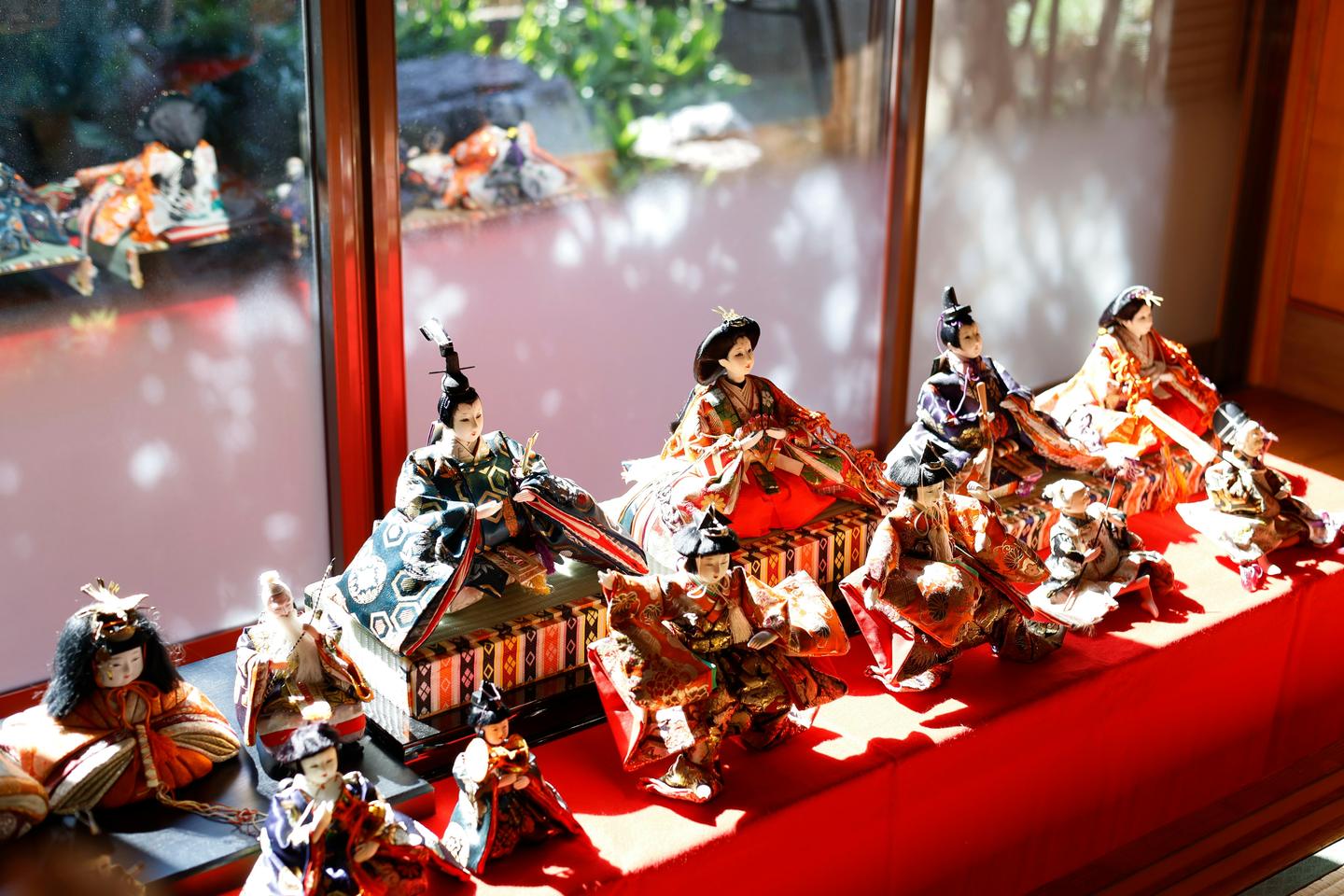
March. Hinamatsuri, on March 3, is the festival for girls. Families set out tiers of hina dolls and peach blossom and eat chirashi-zushi and clam soup. The spring equinox is a national holiday, March 21 in 2027, with March 22 added as a holiday because the 21st is a Sunday.
Cherry blossom. On the Japan Meteorological Agency's averages, the blossoms open around March 24 in Tokyo and March 26 in Kyoto, and reach full bloom around March 31 and April 4. In 2026 they came early: Tokyo opened on March 19 and peaked on March 28, Kyoto on March 23 and March 30. How cherry blossom compares with autumn, and the crowds each brings, is in cherry blossom or autumn leaves.
April and May. Golden Week, a run of national holidays, starts with Showa Day on April 29 and ends with Children's Day on May 5. Children's Day is also the Tango no Sekku, the Boys' Festival: families eat kashiwa-mochi wrapped in oak leaves, and some take a bath with iris leaves. In Kyoto, the Aoi Matsuri procession is on May 15; we cover it in our anniversary trip guide, which lists Kyoto's main festival dates.
SUMMER: JUNE TO AUGUST
June. June has no national holiday and is the rainy season on Honshu, so the festival calendar is quiet.
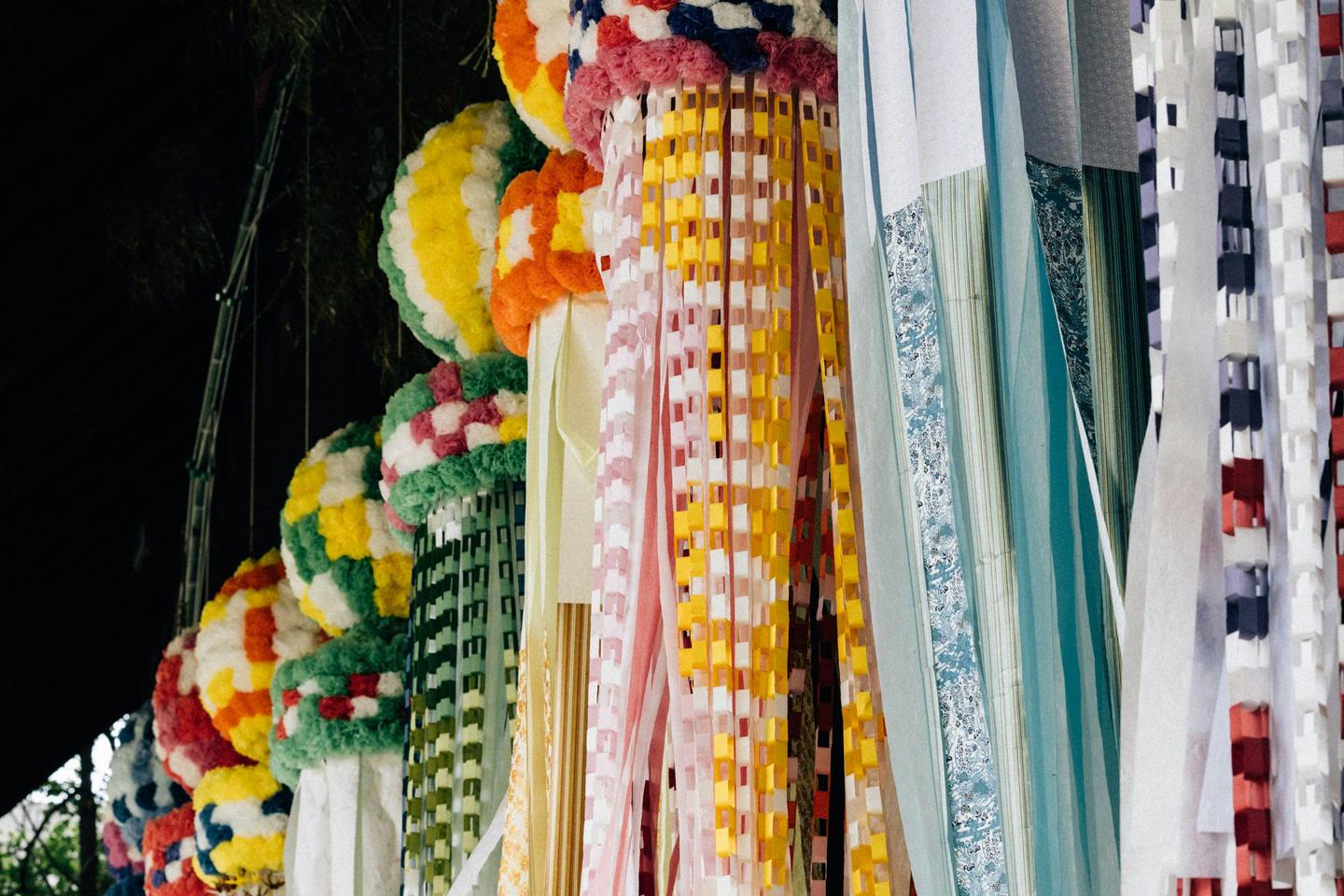
July. Tanabata, the star festival, is on July 7. It comes from the Chinese story of the weaver Orihime and the cowherd Hikoboshi, two stars kept apart by the Milky Way who may meet once a year, and the Ministry of Agriculture notes the custom of eating somen noodles, a stand-in for the Milky Way. Kyoto's Gion Matsuri, the festival of Yasaka Shrine, runs the whole month, from July 1 to 31. Its peaks are the processions of the floats on July 17 and July 24, and the evenings before them. In 2026 the Kyoto tourism association sold numbered seats along Oike-dori from June 1 at 10 a.m., at ¥8,000 in the front row and ¥6,000 behind. In Tokyo, Senso-ji holds its Hozuki-ichi, a fair of potted lantern plants, on July 9 and 10. The Sumidagawa fireworks were held on July 25 in 2026; the 2027 date had not been announced when we checked.
August. Sendai holds Tanabata a month late, closer to its place in the old calendar. Its Tanabata Matsuri runs August 6 to 8 every year, with bamboo decorations hung through the city centre, and Aomori's Nebuta Matsuri runs August 2 to 7, with large lit floats paraded at night from the 2nd to the 6th and by day on the 7th, followed by fireworks.
Obon, in mid-August, is the time when families welcome back the spirits of their ancestors, and many people travel home. On the night of August 16 Kyoto lights the Gozan Okuribi, five fires on the mountains that send the spirits back: the character dai at 8 p.m., then myo and ho at 8:05, the boat at 8:10, the second dai at 8:15 and the shrine gate at 8:20, each burning for about 30 minutes. Neon and outdoor signs across most of the city go dark for that hour.
AUTUMN: SEPTEMBER TO NOVEMBER
September. Tsukimi, moon viewing, is held on the night of the harvest moon, the 15th of the eighth month on the old calendar. Households set out fifteen round dumplings, shaped like the full moon, in thanks for the harvest. The National Astronomical Observatory gives the date as September 25 in 2026 and September 15 in 2027. Respect for the Aged Day and the autumn equinox are national holidays, September 20 and 23 in 2027.
October. Kyoto's Jidai Matsuri, a procession in the dress of each historical period, is on October 22, and is in our anniversary guide with Kyoto's other festivals.
November. Tori no Ichi is held at Otori Jinja in Asakusa on each day of the rooster in November, for 24 hours from midnight. In 2026 those days are November 7 and November 19. Stalls in the shrine grounds sell kumade, decorated bamboo rakes; the fair and its rakes are in Tori no Ichi: Tokyo's Kumade Rake Fair and Its Dates →. Shichi-Go-San celebrates children of three, five and seven. The Association of Shinto Shrines says it has been held on November 15 since the Edo period, and that on the holidays around that date shrine grounds fill with families and children dressed in their best. On the averages, maples in Tokyo turn around November 28.
DECEMBER: THE YEAR'S END
Kyoto's maples follow Tokyo's, around December 5 in an average year; in 2025 they turned on December 10. From December 17 to 19 Senso-ji holds its Hagoita-ichi, a fair of decorated hagoita battledores. Toji, the winter solstice, falls on December 22 in 2026 and 2027; households take a bath with yuzu citrus and eat simmered pumpkin.
Omisoka, December 31, is New Year's Eve. Families clean the house to receive the new year and eat toshikoshi soba, buckwheat noodles, in the evening. That night, temples ring their great bells 108 times, joya no kane, once for each of the worldly desires counted in Buddhist teaching. At Chion-in in Kyoto, 17 monks swing the great bell together on ropes. For New Year's Eve 2025, the temple offered 2,400 places in four groups, booked ahead at ¥3,000 each, to watch; visitors do not ring the bell. Senso-ji in Tokyo also rings its bell on Benten-yama on December 31.
HOLIDAYS AND BUSY WEEKS IN 2026 AND 2027
Three times a year much of Japan travels at once: the New Year, Golden Week and Obon. The clearest official marker is JR Central's rule for the Nozomi, the bullet train between Tokyo and Hakata by way of Kyoto and Osaka: in those weeks it runs with no unreserved cars. Reserved seats go on sale one month ahead at 10 a.m., and some can be booked a year ahead online.
| Period | National holidays | Nozomi reserved-only |
|---|---|---|
| November 2026 | November 3 and 23 | November 21 to 23 |
| New Year | January 1, 2027 | December 25, 2026 to January 5, 2027 |
| January to March 2027 | January 11; February 11 and 23; March 21, with March 22 as a holiday | January 9 to 11; March 20 to 22 |
| Golden Week 2027 | April 29; May 3, 4 and 5 | Not yet announced; April 24 to May 6 in 2026 |
| Summer 2027 | July 19; August 11 | Obon not yet announced; August 7 to 16 in 2026 |
| Autumn 2027 | September 20 and 23; October 11; November 3 and 23 | Not yet announced |
June and December have no national holiday. Obon is not a national holiday either, but the Nozomi rule shows how heavy the travel is. For how to plan around these weeks, see Japan's holiday blackouts, and for the weather and holidays month by month, the best time for a honeymoon in Japan.
WHERE STAYGO COMES IN
STAYGO plans private trips across Japan from Tokyo. Most of these festivals are public, and the busiest ones draw large crowds; what we can do is plan the days around them. Tell us the month you are coming and what draws you, a festival, a custom or a season, and we will look at what falls in your dates, which mornings and evenings are quieter, and where a guide who knows the festival would make it easier to follow. Ask us about seats for the Gion Matsuri processions, a place to watch the Okuribi fires, or a craftsman's workshop that makes the charms and decorations of the season, and we will ask what can be arranged for your dates. We arrange everything in your names, and you pay the hotels, restaurants, guides and hosts directly at their own rates, with no commission or markup from us. Trips of 7 to 14 days are planned on our Signature plan; longer or more complex trips are quoted as Bespoke.
SOURCES AND HOW WE CHECKED
We read the official pages listed below on October 22, 2026. We did not contact any shrine, temple or organiser, and we did not use dates from booking sites, guidebooks or press coverage. Festival dates that change each year are given only for the years their organisers have published; check again before you travel, as times and arrangements can change.
- Ministry of Agriculture, Forestry and Fisheries, aff December 2017: the year's customs and the foods eaten at each
- Ministry of Agriculture, kagami-mochi and Kagami-biraki: January 11 and why the rice cake is "opened"
- Ministry of Agriculture, seasons and rice cakes: kashiwa-mochi for May 5
- National Astronomical Observatory of Japan, 2027 almanac: Risshun on February 4 and Setsubun on February 3, 2027
- National Astronomical Observatory, 2026 almanac: the winter solstice on December 22, 2026
- National Astronomical Observatory, the 2026 harvest moon and harvest moon dates by year: September 25, 2026 and September 15, 2027
- National Astronomical Observatory, about Tanabata: the story of Orihime and Hikoboshi
- Japan Meteorological Agency, the rainy season: what it is and where it is declared
- Cabinet Office, national holidays: the holidays of 2026 and 2027
- JR Central, reserved-only Nozomi periods: the 2026 to 2027 periods and when tickets go on sale
- Japan Meteorological Agency, cherry blossom opening, full bloom and maple colour: averages for 1991 to 2020 and recent years in Tokyo and Kyoto
- Yoshida Jinja, Setsubun festival: the three days, the tsuina rite, the stalls and visitor numbers
- Senso-ji, annual events: Setsubun-e, Hozuki-ichi, Shichi-Go-San prayers, Hagoita-ichi and the New Year's Eve bell
- Kyoto City Tourism Association, Gion Matsuri, its 2026 paid seats, Gozan Okuribi, Aoi Matsuri and Jidai Matsuri: dates, lighting times and visitor notices
- Sumidagawa Fireworks Festival: held on July 25, 2026
- Sendai Tanabata Matsuri and Aomori Nebuta Matsuri: festival dates and schedule
- Otori Jinja, Asakusa, this year's Tori no Ichi: November 7 and 19, 2026, for 24 hours from midnight
- Association of Shinto Shrines, Shichi-Go-San: its origins and November 15
- Chion-in, the New Year's Eve bell: 17 monks, 108 strokes and the 2025 arrangements
QUESTIONS TRAVELLERS ASK
What is the biggest festival month in Japan?
July and August hold the most large festivals: Kyoto's Gion Matsuri through July with processions on July 17 and 24, Aomori's Nebuta Matsuri on August 2 to 7, Sendai's Tanabata on August 6 to 8 and Kyoto's Gozan Okuribi on August 16. It is also the hottest time of year.
When is Setsubun in 2027?
February 3, 2027, the day before Risshun, the start of spring on the old calendar, which the National Astronomical Observatory puts on February 4. Yoshida Jinja in Kyoto holds its festival from February 2 to 4.
Can visitors take part in New Year customs in Japan?
Yes. Shrines and temples are open to everyone in early January, and you can go to see the decorations without taking part in any prayer. Many museums and restaurants close for some days around January 1.
When are the busiest travel weeks in Japan?
The New Year, Golden Week and Obon. JR Central runs every Nozomi as reserved-only from December 25, 2026 to January 5, 2027; in 2026 it did the same from April 24 to May 6 and from August 7 to 16.
What is Shichi-Go-San?
A celebration for children of three, five and seven, held around November 15. Families visit shrines with the children in formal kimono, and the shrine grounds are busiest on the holidays near that date.
PLAN YOUR DATES AROUND THE JAPANESE CALENDAR
Tell us when you can travel and which festival or season you would like to see. We will come back with what falls in your dates, the quieter hours to see it and where a guide would help, and we will ask what can be arranged.
Begin planning →