Ask a family in Delhi, Mumbai or Bengaluru what they most want from Japan, and snow is often near the top of the list. The Japan National Tourism Organization says as much in its market handbook for India: many Indian travellers want to see snow, and the snow walls of the Tateyama Kurobe Alpine Route have drawn rapidly growing attention since 2023. Japan itself is drawing more of them each year. In 2025, 315,100 visitors came from India, 35.2 percent more than the year before and the most on record.
Japan offers that snow in two very different forms, at two times of year that match the Indian calendar. From December to February, Hokkaido turns white from the city streets to the hot spring valleys. From mid April, when the Alpine Route reopens through the Northern Alps, buses drive between walls of snow taller than a house while the plains below are already in spring. This article sets out both, with the numbers that decide when to go. We read the pages of JNTO, the Japan Meteorological Agency, the Alpine Route's operator, Hotel Tateyama, the Noboribetsu tourism association, a Hokkaido ryokan and the airlines' announcements on November 5, 2026, and contacted none of them; the sources are listed at the end. The full crossing of the Alpine Route, stage by stage, is in Tateyama Kurobe Alpine Route and Toyama: The Crossing, the Dam and the Gorge, and the festival in February in Sapporo Snow Festival 2027: Dates, Sites and Where to Stay.
Key points
- Hokkaido is the winter answer. Sapporo averages minus 3.2°C in January and receives 479 cm of snowfall over a year; Asahikawa, further inland, averages minus 7.0°C in January (Japan Meteorological Agency, 1991 to 2020).
- Tateyama is the spring answer. The Snow Otani walk on the Alpine Route ran from April 15 to June 25 in 2026, and the walls are tallest at the start: a ten-year average of 15.8 m in mid April, falling to 9.2 m by late June.
- The Alpine Route's reopening in April falls in India's long school holidays of April to June, which JNTO names as the busiest season for Indian travel to Japan.
- Hotel Tateyama, the hotel on the Murodo plateau, ended its overnight stays on August 31, 2026. A spring journey now sleeps in Toyama or on the Omachi side and gives the crossing a full day.
- Both journeys begin at Tokyo. JAL has flown daily between Narita and Delhi since January 17, 2026, and ANA resumed daily Mumbai to Narita flights from March 29, 2026.
LET US PLAN YOUR SNOW JOURNEY →
TWO SEASONS OF SNOW IN AN INDIAN YEAR
JNTO's handbook describes two peaks in Indian travel abroad. The first is the long school holiday from April to June, when families take two weeks or so for a long-haul journey to Europe, North America or Japan, partly to escape the heat at home; it is the busiest season for travel to Japan. The second is Diwali, in October or November depending on the year. Weddings, the handbook adds, gather in the pleasant months from October to March, and honeymoons follow them.
Snow fits both halves of that year. A family travelling over the December school break, or a couple married in the winter season, will find Hokkaido at its whitest. A family travelling in late April or May will find the Alpine Route freshly opened and its snow walls still at their height. The two can even be combined over two years, one winter and one spring, without repeating a single day.
HOKKAIDO FROM DECEMBER TO FEBRUARY
The Japan Meteorological Agency's normals give a clear picture of a Sapporo winter. January averages minus 3.2°C, with a daily high of minus 0.4°C and a low of minus 6.4°C. The city receives 137 cm of new snow in January and 479 cm over the whole year, and the snow on the ground is deepest in February, at 95 cm on average. Asahikawa, in the centre of the island, is colder still: minus 7.0°C on average in January, with nights at minus 11.7°C, and 557 cm of snow a year.
Those numbers sound severe to someone from the plains of India, yet a Hokkaido winter is gentle to the visitor who plans it well. Cities are built for snow, hotels are warm, and a car with a driver waits at every door. We plan each day with short walks in the open between long stretches indoors, keep the morning for the brightest light, and add an afternoon of rest after any long excursion. For the first touch of snow, a quiet garden or a riverside walk in the morning often means more than a crowded viewpoint.
SAPPORO AND OTARU
Sapporo makes the natural first base. Its Snow Festival, held in early February, is the best-known week of the Hokkaido winter, and our separate article covers its 2027 dates, the three sites and where to stay. Outside festival week, the city is quieter and its hotels easier, and the snow is the same.
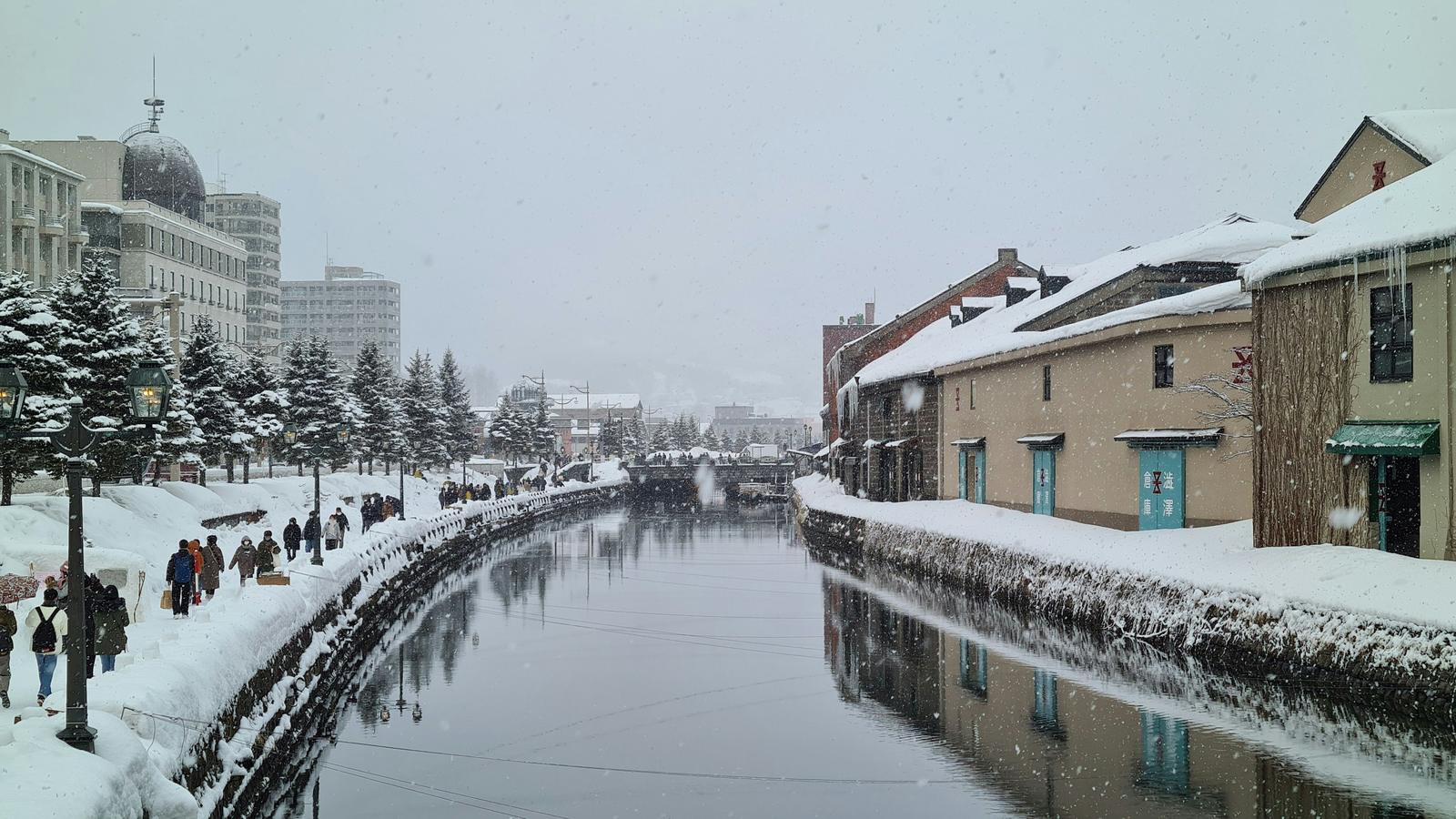
Otaru, a port town between Sapporo and the Shakotan coast, is the picture many Indian travellers already carry in their minds: a canal lined with old stone warehouses and the paths beside it banked with snow. We arrange it as a slow afternoon and early evening, with the car close by, a table reserved for an early dinner and the drive back to Sapporo after dark.
NOBORIBETSU AND A HOT SPRING IN THE SNOW
Noboribetsu Onsen lies about 1 hour 40 minutes by car from Sapporo and about an hour from New Chitose Airport. Its local tourism association describes it as a rare place where many different kinds of hot spring rise together. Most of them come from Jigokudani, the steaming volcanic valley at the head of the town, formed by volcanic activity about 10,000 years ago, and the springs have been used to heal and rest since the Edo period. In winter the steam rises over snow, and we time the visit to the valley for the softest light of the day.
Many Indian families prefer to bathe privately, as a couple or as a family, and rules for shared baths differ from one house to the next. We therefore choose rooms with their own bath where the house offers them, and confirm each policy in writing beforehand. For a ski holiday, Zaborin in Niseko gives each of its 15 villas its own indoor and outdoor hot spring bath, fed by the spring beneath the ryokan; our northern guide to private baths and powder is Hokkaido in Summer and Winter: Private Baths, Whisky and Powder, and ryokan customs are explained in Ryokans in Japan: A Guide for Indian Travelers.
TATEYAMA IN THE SCHOOL HOLIDAYS
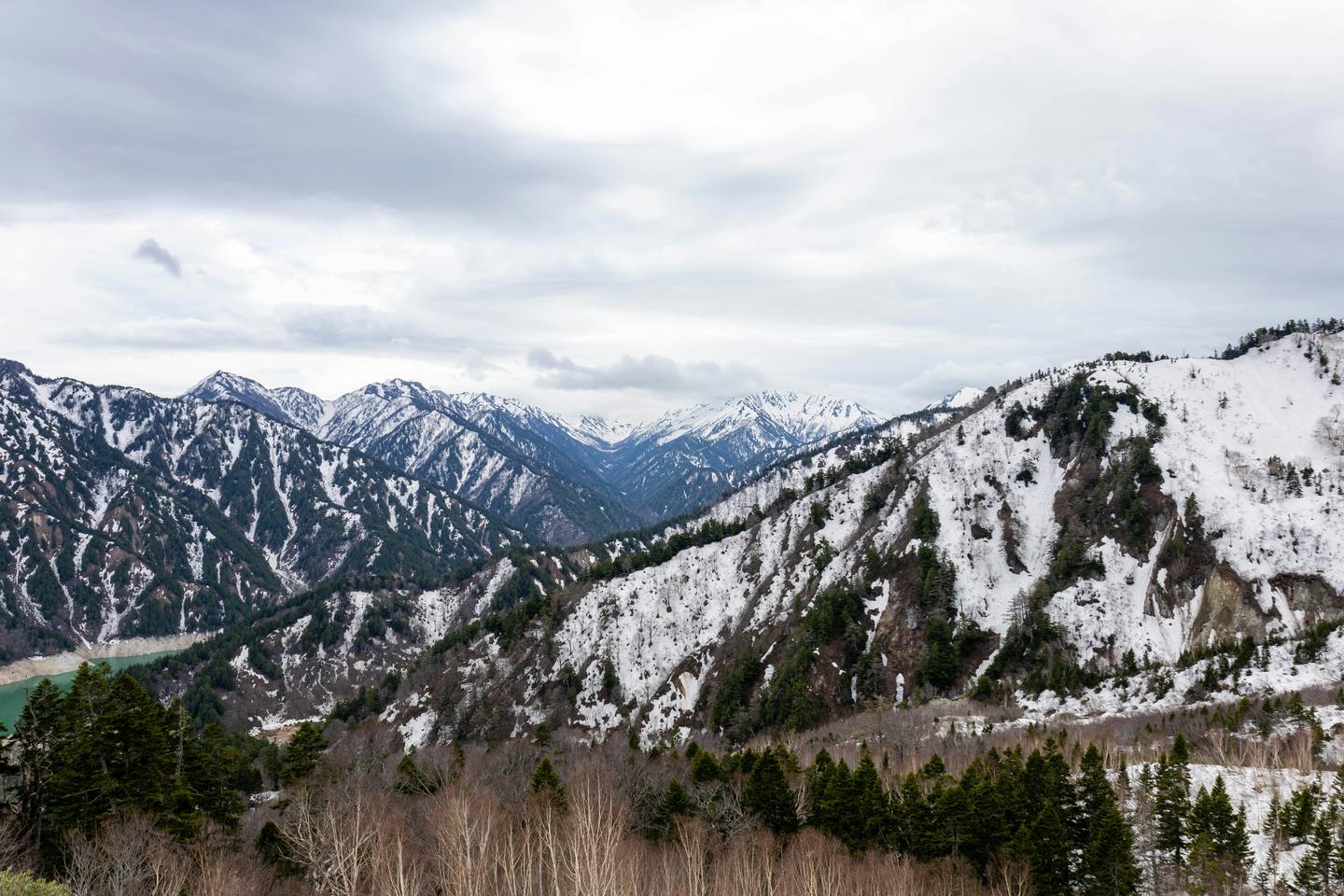
The Tateyama Kurobe Alpine Route crosses the Northern Alps between Toyama and Nagano. Its operator explains why the snow is so deep. The Murodo plateau, at 2,450 m, is one of the snowiest places in the world, with about 8 m of snow in a normal year, and at Otani the wind piles drifts that can approach 20 m. When the road is cleared each spring, a section of about 500 m runs between walls of snow more than 15 m high. This is the Snow Otani, and JNTO notes that the route's April reopening coincides with India's school holidays, which has added to its pull.
The timing matters more than most travellers expect. In 2026 the Snow Otani walk ran from April 15 to June 25, and the operator publishes the height of the wall at its tallest point. At the full opening it measured 16.0 m in 2025, 14.0 m in 2024, 13.0 m in 2023 and 18.0 m in 2022. Over ten years, the average falls from 15.8 m in mid April to 14.8 m in early May, 12.3 m in late May and 9.2 m in late June. For the tallest walls, the second half of April and the first days of May are the time to go; the operator also notes that the busiest days fall between the opening and the May holidays.
The wall stands on a working road used by buses, so walking is allowed only during the event's hours. From Murodo Terminal, the highest point is about 600 m downhill, roughly 15 minutes on foot. Down in Toyama city, April averages 12.3°C, so the same day moves from spring to deep snow and back again; we plan layers, sunglasses and shoes with grip for every member of the family.
WHERE TO SLEEP AND HOW TO CROSS
Hotel Tateyama, which opened at Murodo in 1972, ended its overnight accommodation on August 31, 2026, while its restaurants and shop stay open. For a family, the comfortable form of the journey is a night before the crossing in Toyama or on the Nagano side and a night after it at the other end, with the crossing itself as one long, unhurried day.
JNTO describes the usual route for Indian travellers: from Tokyo to Shinano-Omachi in Nagano, across the Alpine Route, and down to Toyama, often continuing to Kanazawa, Gokayama or Shirakawa-go. We keep a car waiting at each end and send the luggage ahead so that nobody carries more than a day bag through the mountains. The next nights can follow in Kanazawa: The Golden Route Stop to Slow Down or, for a farmhouse night, Shirakawa-go Overnight Stay in 2027: How to Book and Visit.
FOOD, COMFORT AND THE SHAPE OF THE TRIP
JNTO lists the gaps that Indian travellers notice outside the big cities: fewer authentic Indian restaurants, and vegetarian dishes that are not always marked as such. In Hokkaido and Toyama we write to every kitchen in advance with the family's rules, whether vegetarian, without onion and garlic, or Jain, and confirm the answers before the journey. The details are in Vegetarian and Jain Dining in Japan: A Luxury Traveler's Guide.
Within Signature, our planning for journeys of 7 to 21 days, a winter journey usually gives Hokkaido four to six nights after Tokyo, and a spring journey sets the Alpine Route between Tokyo and Kyoto with Kanazawa on the way. We arrange the hotels and ryokan, the cars and drivers, the guides and the luggage, and settle each in the simplest way available, usually on your hotel bill or on the day.
GETTING THERE FROM INDIA
Both journeys start in Tokyo. JAL began a daily Boeing 787-8 service between Narita and Delhi on January 17, 2026, alongside its Haneda to Delhi and Narita to Bengaluru flights, and shares codes with IndiGo on those routes. ANA resumed daily flights between Mumbai and Narita from March 29, 2026. From Tokyo, Sapporo is a short domestic flight, and Toyama and Nagano are reached by the Hokuriku Shinkansen.
SOURCES AND HOW WE CHECKED
We read the pages below on November 5, 2026. Travel times are rounded. We did not contact any operator, hotel, airline or other body.
- JNTO, Visit Japan market handbook 2025, India (Japanese): wish to see snow, Snow Otani, school holidays, Diwali, weddings from October to March, the usual Alpine Route itinerary, gaps in vegetarian food
- JNTO, visitor arrivals, December 2025 estimate (Japanese): 315,100 visitors from India in 2025, up 35.2 percent
- Japan Meteorological Agency, normals for Sapporo (Japanese): January temperatures, snowfall and snow depth
- Japan Meteorological Agency, normals for Asahikawa (Japanese): January temperatures and annual snowfall
- Japan Meteorological Agency, normals for Toyama (Japanese): April temperature
- Tateyama Kurobe Alpine Route, FAQ (Japanese): Murodo's altitude and snow, the 500 m section, wall heights by year and by month, walking only during the event
- Tateyama Kurobe Alpine Route, Snow Otani (Japanese): 2026 walk dates and events
- Hotel Tateyama, official notice (Japanese): overnight stays ended August 31, 2026, opened 1972
- Noboribetsu International Tourism and Convention Association: many spring types, Jigokudani, distance from Sapporo and New Chitose
- Zaborin, official site: 15 villas with private indoor and outdoor hot spring baths
- Travel Voice, JAL Narita to Delhi: daily from January 17, 2026, Haneda to Delhi and Narita to Bengaluru, IndiGo codeshare
- India Outbound, ANA in India: daily Mumbai to Narita flights from March 29
QUESTIONS TRAVELLERS ASK
When can we see snow in Hokkaido?
From December to February, with the deepest snow in February. Sapporo averages minus 3.2°C in January and receives 137 cm of new snow that month.
When are the Tateyama snow walls highest?
At the reopening in mid April. Over ten years the wall has averaged 15.8 m in mid April and 9.2 m in late June, so late April and early May are the best balance.
Can we walk the Snow Otani at any time?
Only during the walk event, which ran from April 15 to June 25 in 2026. The road is used by buses, so walking outside the event hours is not allowed.
Can we stay overnight on the Murodo plateau?
Hotel Tateyama ended its overnight stays on August 31, 2026. We plan the nights in Toyama or on the Nagano side and give the crossing a full day.
Will vegetarian and Jain meals be possible in Hokkaido and Toyama?
Yes, with notice. We write to each kitchen in advance with your family's rules and confirm the answers before you travel.
ASK US TO PLAN YOUR SNOW JOURNEY
Tell us when your family can travel, who is coming and how much cold everyone enjoys. We will set out a Hokkaido winter or a Tateyama spring with the reasons, so that you can choose the season and the shape of the days.
Begin planning →We reply within 24 hours, in writing
Some of the restaurants and bars we arrange seat guests only by introduction or membership. We ask on your behalf; the table and the evening are the house's decision. We do not publish their names.