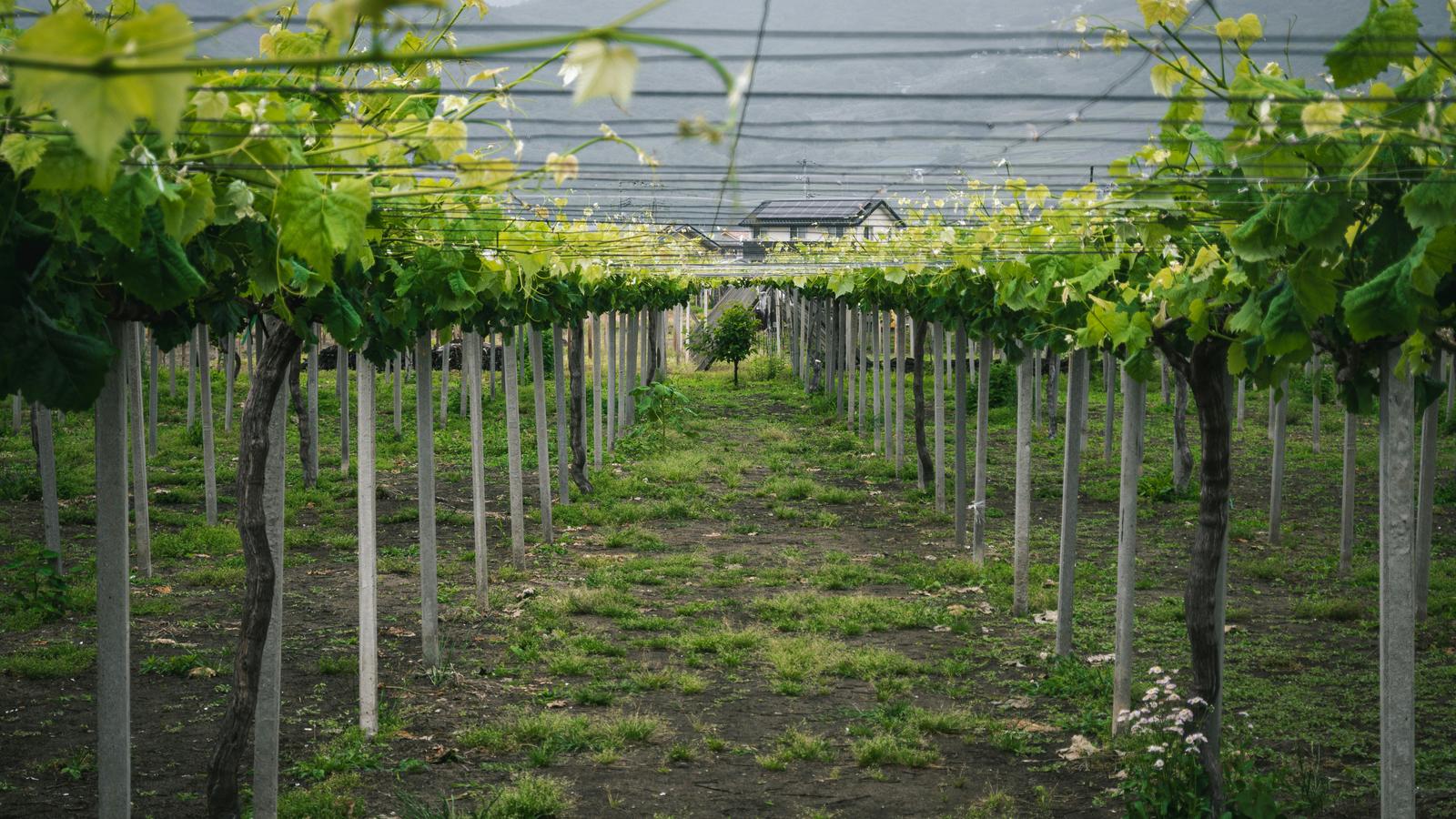
Japan's own white wine grows on high trellises in the valleys of Yamanashi, under the mountains west of Tokyo. Its grape is Koshu, grown in Japan for more than a thousand years, and its wines are dry and light, with a citrus scent and a lively acidity. In 2024 a Koshu was named Best in Show at the Decanter World Wine Awards, the first wine from Japan to win that title.
Below is what Koshu is, how wine came to Katsunuma, what the words on a Japanese label guarantee, which wineries welcome visitors and what their tastings cost, and how to spend an unhurried day among the vines from Tokyo. We read Japan's National Tax Agency, Yamanashi Prefecture, Koshu City, Japan's national tourism organisation, Decanter, The Japan Times, JR East's timetable and the wineries' own pages on November 2, 2026, and did not contact any winery; the sources are listed at the end. For sake and whisky, see Sake, Whisky, and Japan's Private Tastings →.
Key points
- Yamanashi has 85 wineries, more than any other prefecture, out of 519 in Japan, according to the National Tax Agency's latest survey. Almost all of Japan's Koshu grapes are grown there.
- GI Yamanashi, designated on July 16, 2013, was Japan's first geographical indication for wine. Since October 30, 2018, only wine made in Japan from Japanese grapes may be labelled Japan Wine.
- Koshu is picked from late September to mid October, and Yamanashi's new wine is released every year on November 3.
- Château Mercian in Katsunuma runs guided tastings at ¥3,000, ¥5,000 and ¥10,000, and Suntory Tomi no Oka a two hour premium tour at ¥8,000, tax included.
ASK US ABOUT A DAY IN THE VINEYARDS →
WHAT KOSHU IS
Koshu is Japan's oldest wine grape. Japan's national tourism organisation and Yamanashi Prefecture both date its cultivation back more than a thousand years, and the prefecture notes that a DNA study in 2013 found genes from European vines and from wild Chinese grapes. Two legends tell how it arrived: one places it with the monk Gyōki and the temple of Daizenji in Katsunuma, the other with a local man, Amemiya Kageyu, who found an unfamiliar vine growing wild. Koshu was registered with the International Organisation of Vine and Wine in 2010, which lets European labels name it, and the red grape Muscat Bailey A followed in 2013.
Its home is now almost entirely Yamanashi. The National Tax Agency's survey published in March 2026 records 3,567 tonnes of Koshu received by Japanese wineries, of which 3,377 tonnes were grown in Yamanashi, and the prefecture made more Japan Wine than any other, 3,762 kilolitres.
A CENTURY AND A HALF IN KATSUNUMA
Wine making in Yamanashi began in the 1870s. In 1877 Takano Masanari and Tsuchiya Ryūken founded the Dainihon Yamanashi wine company and travelled to France to learn the craft. Japan's tourism agency notes that their wines did not suit local tastes at the time, and the company closed in 1886, but the vineyards stayed. The wooden winery building that now houses Château Mercian's wine museum dates from 1904 and is the oldest of its kind in Japan. In 2019 Yamanashi declared itself Japan's wine prefecture.
WHAT THE LABEL TELLS YOU
Two words on a bottle carry real rules. Japan Wine, nihon wain, may only be used for wine made in Japan entirely from grapes grown in Japan; the National Tax Agency introduced this as the country's first wine labelling rule, in force since October 30, 2018. A place name on the label requires at least 85 percent of the grapes from that place.
GI Yamanashi goes further. Designated on July 16, 2013 as Japan's first geographical indication for wine, it requires every grape to be harvested in Yamanashi, sets a minimum sugar level in the juice, 14.0 percent for Koshu, and requires the wine to be made, aged and bottled in the prefecture and to pass a tasting panel. Yamanashi Prefecture notes that the indication was the first for any Japanese wine, after shochu and sake.
THE WINERIES TO VISIT
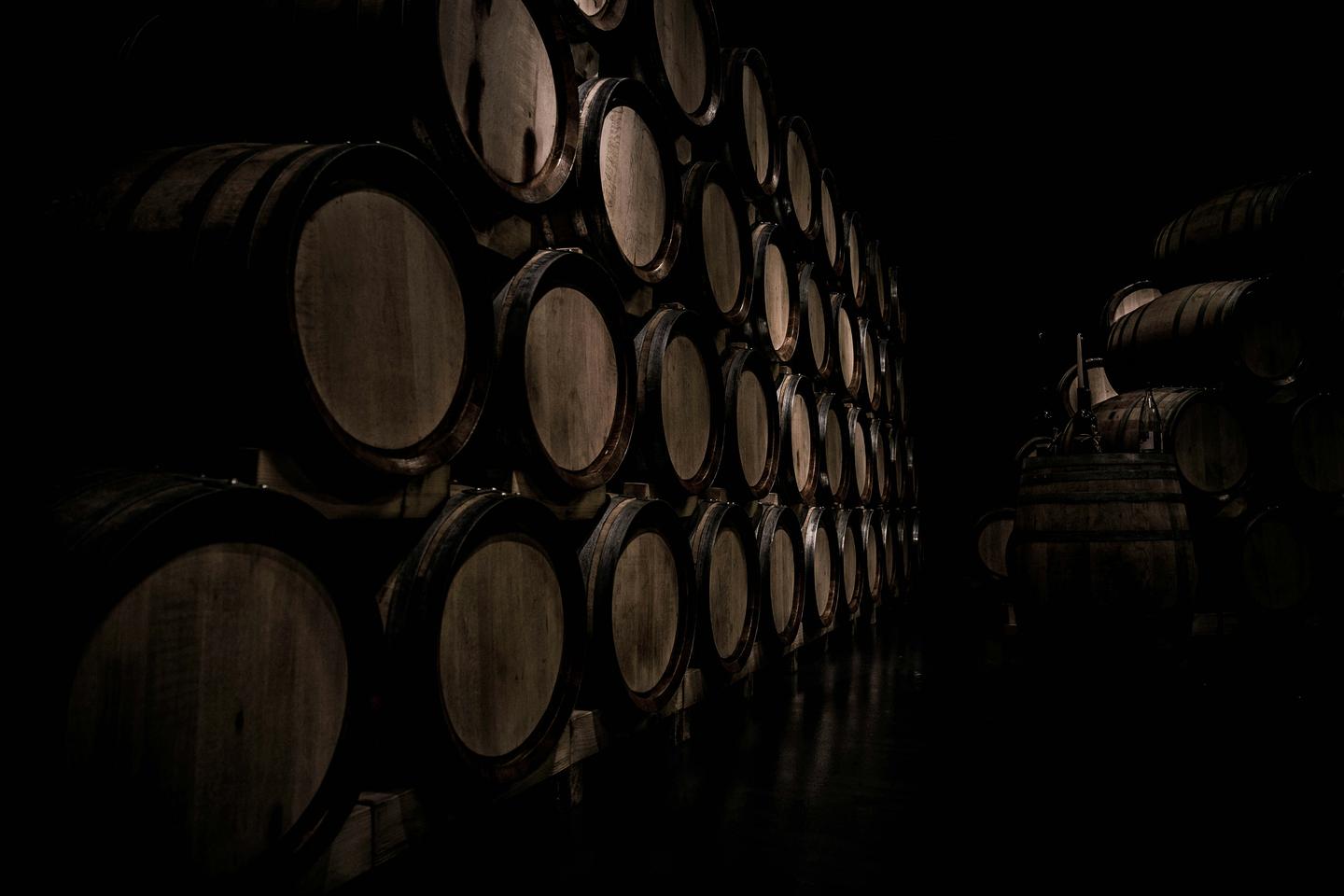
Château Mercian Katsunuma Winery offers three guided tastings for guests aged 20 and over, each for up to ten people: a 90 minute tour with four wines at ¥3,000, a 100 minute winemaker's tour with six at ¥5,000, and a 110 minute special tour at ¥10,000 that includes its top Koshu and red, tasted in a room of its own. Its gallery is open from 10:00 to 16:30 without a reservation.
On a hillside above Kofu, Suntory Tomi no Oka runs a premium winery tour on Fridays, weekends and holidays at 10:30 and 13:00, about two hours with four wines in the ageing cellar, at ¥8,000; its autumn harvest fair continues until November 29, 2026. Its Tomi Koshu 2022 was the Decanter Best in Show in 2024, chosen from 18,143 wines. In Katsunuma, Grace Wine, whose Cuvée Misawa Akeno Koshu 2013 won Japan's first Decanter World Wine Awards gold in 2014, does not show its vineyards or cellar but offers seated tastings in its shop.
Smaller houses keep their own hours. Lumière in Fuefuki shows a stone fermentation tank built in 1901, now a registered cultural property, on a one hour visit with three wines for ¥1,300. Marufuji, founded in 1890 and known for its Rubaiyat label, opens its cellar on weekend afternoons for ¥200 and pours five wines for ¥500. Manns Wine's Katsunuma winery, the largest producer in the prefecture, is open from 9:30 to 16:30. All prices are tax included.
WHEN TO GO
The Tokyo Regional Taxation Bureau gives the Koshu harvest as late September to mid October, and Yamanashi's new wines are released every year on November 3. Koshu City's Katsunuma grape festival brought 22 wineries to one park in 2026 and returns on October 2, 2027. Late autumn is quieter, with the leaves turning on the trellises, and the wineries stay open through the winter.
GETTING THERE
By car, Château Mercian gives about 80 minutes from Tokyo to the Katsunuma exit of the Chuo Expressway. By train, JR East's November 2026 timetable shows the Kaiji 11 limited express leaving Shinjuku at 9:30 and reaching Katsunuma-budōkyō at 10:55, with the Kaiji 40 leaving at 16:30 on weekdays and arriving in Shinjuku at 17:58. Japan's national tourism organisation reminds visitors that Japan does not allow driving after even a little alcohol, so a day of tasting needs a driver or a train and taxi.
A DAY AMONG THE VINES
The car leaves Tokyo after breakfast and climbs out of the city into the Kofu basin. The first glass is poured in a cool cellar in Katsunuma, beside the old wooden winery. Lunch is a long one, with a glass of Koshu, then a slow walk under the trellises where the last leaves are turning. In the afternoon a second, smaller house and a few bottles to take home, and Tokyo again by evening, the case already in the back of the car.
WHERE STAYGO COMES IN
For a day or a night in Yamanashi we arrange the car and driver so that everyone can taste, the winery tours and private tastings, lunch and, if you stay, an inn with a hot spring and a view of the mountains, with an interpreter where the cellar does not speak your language. We ask each house for the quietest hour, and we tell you plainly when a tour is already full. When you arrive, the glasses are set and the day runs at the pace you asked for. We arrange everything in your names, and you pay the wineries, restaurants, inns and drivers directly at their own prices, with no commission or markup from us. Trips are planned on the Signature plan, for 7 to 14 days, or as Bespoke for longer or more complex journeys.
SOURCES AND HOW WE CHECKED
We read the pages below on November 2, 2026: the National Tax Agency and Yamanashi Prefecture for the rules and figures; Koshu City and the prefecture's tourism site for the festival and the grape; the tourism organisations for history and travel; Decanter and The Japan Times for the awards and the market; JR East for trains; the wineries' own pages for tours and prices. We did not contact any winery.
- National Tax Agency, survey of wineries and wine production, March 2026 (Japanese): wineries by prefecture, Koshu grape volumes, Japan Wine production
- National Tax Agency, production standard for GI Yamanashi (Japanese): grapes, sugar levels, production in the prefecture
- National Tax Agency, wine labelling standard (Japanese): Japan Wine, the 85 percent rule, October 30, 2018
- Tokyo Regional Taxation Bureau, wine (Japanese): harvest calendar
- Yamanashi Prefecture, designation of GI Yamanashi (Japanese): July 16, 2013, Japan's first wine GI
- Yamanashi Prefecture, Yamanashi wine brochure: Koshu's history, OIV registration, the wine prefecture
- Yamanashi Prefecture, Yamanashi wine (Japanese): Yamanashi Nouveau on November 3
- Japan Tourism Agency, multilingual commentary: Château Mercian wine museum: 1877, Takano and Tsuchiya, the 1904 building
- Koshu City, Katsunuma grape festival (Japanese): 2026 and 2027 dates, tasting tickets
- Yamanashi tourism, about the Koshu grape (Japanese): the two legends
- Japan National Tourism Organization, The Here and Now of Japanese Wine: Koshu's age, drinking and driving
- Château Mercian Katsunuma Winery (Japanese): hours, tours, prices, driving time
- Suntory Tomi no Oka Winery, autumn harvest fair 2026 (Japanese): premium tour, days, price
- Grace Wine, history (Japanese): Akeno vineyard and the 2014 gold
- Lumière, winery tours (Japanese): the 1901 stone tank and prices
- Marufuji Rubaiyat, shop and tours (Japanese): cellar visit and tasting
- Yamanashi tourism, Manns Wine Katsunuma Winery (Japanese): hours
- Decanter, DWWA 2024 Best in Show: Suntory Tomi Koshu 2022
- Suntory, news release on the DWWA 2024 Best in Show (Japanese): the first for a wine from Japan, 18,143 entries
- The Japan Times, World-class white wines in the shadow of Mount Fuji, 2019: Koshu and the OIV list
- JR East, timetable for the Kaiji limited express, November 2026 (Japanese): Shinjuku and Katsunuma-budōkyō
QUESTIONS TRAVELLERS ASK
What is Koshu wine?
Koshu is a white wine grape grown in Japan for more than a thousand years, today almost entirely in Yamanashi. Its wines are usually dry and light. It was registered with the International Organisation of Vine and Wine in 2010, and a Koshu was named Best in Show at the Decanter World Wine Awards in 2024.
What does GI Yamanashi mean on a label?
It is Japan's first geographical indication for wine, designated on July 16, 2013. The grapes must all be grown in Yamanashi, the wine must be made, aged and bottled in the prefecture, and it must pass a tasting panel.
When is the best time to visit the Yamanashi wineries?
Koshu is harvested from late September to mid October, and Yamanashi's new wine is released on November 3. The Katsunuma grape festival returns on October 2, 2027. The wineries stay open through the winter.
How long does it take to reach Katsunuma from Tokyo?
About 80 minutes by car to the Katsunuma exit of the Chuo Expressway, according to Château Mercian. By train, the Kaiji limited express takes about an hour and a half from Shinjuku to Katsunuma-budōkyō.
Can we taste wine and still drive?
No. Japan does not allow driving after even a little alcohol, so a tasting day needs a driver, or a train and taxi.
ASK US ABOUT A DAY IN THE VINEYARDS
Tell us your dates in Tokyo. We will ask the wineries about a quiet tasting and a table for lunch, and come back with what they were able to confirm.
Begin planning →We reply within 24 hours, in writing
Some of the restaurants, bars and private places we arrange take guests only by introduction or membership. We do not publish their names.