Much of what makes Japanese food taste Japanese is fermented. Soy sauce, miso, mirin and sake all begin with koji, a mould the Japanese have cultivated for centuries, and the oldest methods still survive in a few places: soy sauce aged in cedar barrels on an island in the Seto Inland Sea, miso pressed under river stones in Okazaki, bonito smoked and dried into katsuobushi in Tokyo's oldest shops, and carp fermented in rice beside Lake Biwa. Each of these makers lets travellers see, taste or eat the result in its own way.
Below are four places to follow fermentation to its source, and a table in Tokyo that serves it. We read the makers' own pages, a ministry and a prefectural page, the MICHELIN Guide, a booking service, a newspaper, a tourism board interview and a magazine on October 31, 2026, and did not contact any of them; the sources are listed at the end. For the meal these flavours belong to, see Kaiseki Etiquette: What to Expect at a Kaiseki Dinner →.
Key points
- Koji, the mould Aspergillus oryzae, is behind miso, soy sauce, mirin, sake and amazake. Discover Japan notes that it has been named Japan's national fungus.
- Yamaroku Shoyu on Shōdoshima ferments soy sauce in cedar barrels and shows its moromi storehouse free, with no reservation needed. Both Yamaroku and Kakukyū say wood-barrel production is now under 1% of the whole.
- In Okazaki, Kakukyū ages Hatchō miso for two summers and two winters under about 3 tonnes of river stones per barrel, and gives free guided tours of about 50 minutes.
- Ninben, a katsuobushi house founded in Nihonbashi in 1699, serves katsuobushi dashi at its Nihonbashi Dashi Bar from 11:00 to 18:00.
- Funazushi, Shiga's fermented crucian carp, is salted in spring, packed in rice in midsummer and ready around the New Year.
ASK US ABOUT A FERMENTATION JOURNEY →
KOJI, THE MOULD BEHIND THE PANTRY
Koji is steamed rice, barley or soybeans on which a mould has been grown, and the mould most used in Japan is Aspergillus oryzae. The magazine Discover Japan, in a 2021 feature on fermentation, describes it as indispensable to miso, soy sauce, mirin, sake and amazake, while shochu also uses its black and white relatives. The same feature cites documents from the Muromachi period, some six centuries ago, describing koji merchants who grew the mould and sold it to breweries across the country, and notes that it has been named Japan's national fungus.
Almost every ferment in this article starts with koji or with the microbes that live alongside it in old wooden buildings and barrels. That is why the makers below talk about their storehouses as living things: the yeasts and bacteria in the wood and the beams give each house its own taste.
SOY SAUCE IN CEDAR BARRELS ON SHŌDOSHIMA
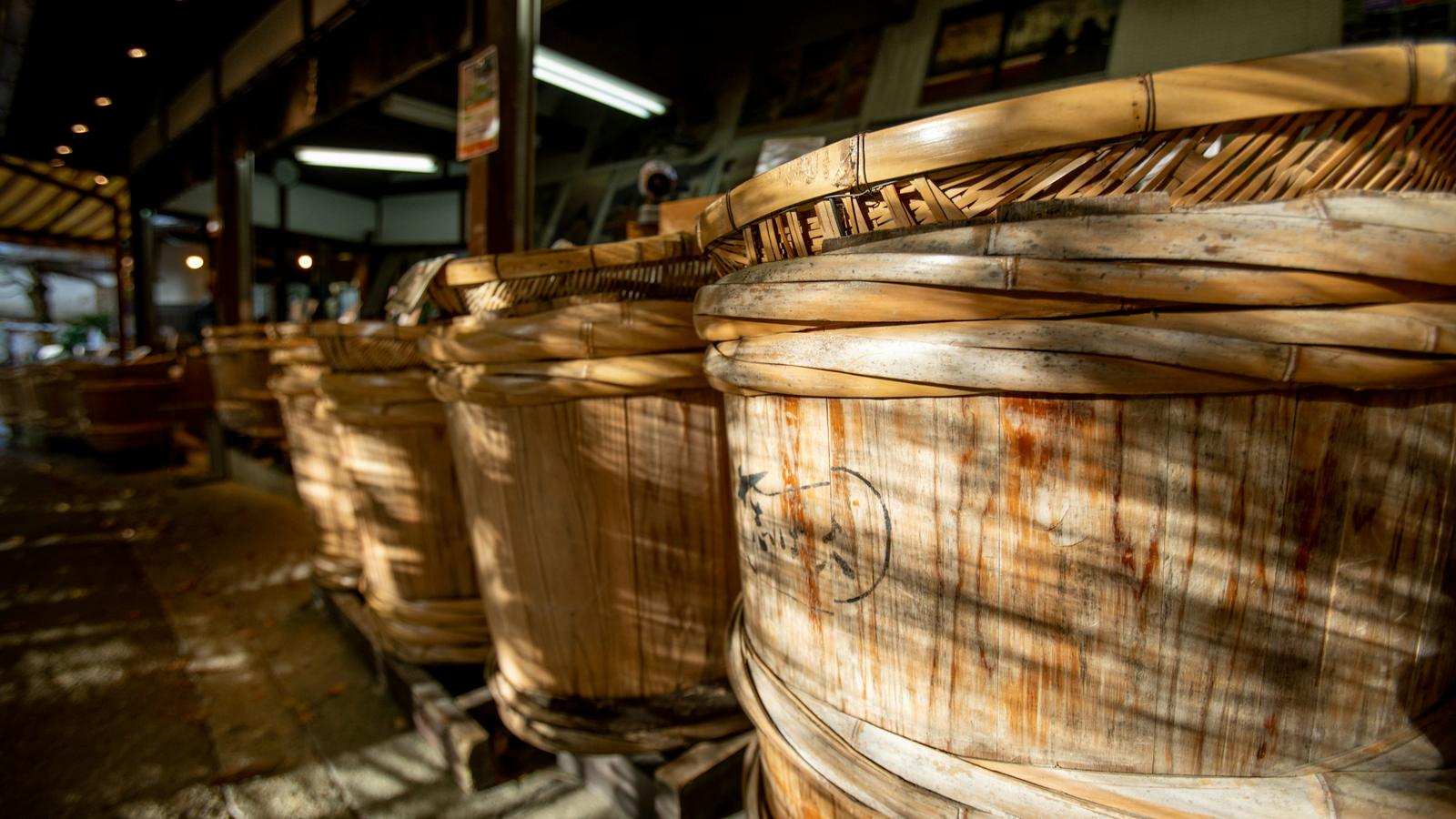
Shōdoshima, the largest island in the Seto Inland Sea, holds half of Japan's remaining wooden soy sauce barrels, as the Japan Times reported in 2016. Yamaroku Shoyu, a brewery of about 150 years on the south-east of the island, writes that microbes live in the surface of the cedar and that its storehouse has built up its own ecosystem of yeasts and lactic acid bacteria over more than a century. It adds that barrel-brewed soy sauce has fallen to under 1% of production in Japan, and runs a project to bring back barrel makers so that the craft survives.
Yamaroku shows visitors its moromi storehouse, where the mash ferments in the barrels, free of charge and without a reservation. It asks one thing of visitors: do not eat natto before you come, because the yeasts and lactic acid bacteria in the mash are strong against heat, drought and salt but weak against the natto bacterium, and soy sauce makers have kept it out for generations. Under the eaves, the brewery's tea house is open from 9:00 to 17:00 every day, with vanilla ice cream to pour its soy sauce over and, at weekends, a soy sauce pudding, each at ¥440. The island is about three hours by ferry from Kobe, or an hour from Takamatsu.
HATCHŌ MISO UNDER THE STONES OF OKAZAKI
Hatchō miso is named after Hatchō village, now a district of Okazaki in Aichi, where Kakukyū writes it has made miso the same way for some 380 years, through nineteen generations. The miso is made from soybeans and salt alone, packed into wooden barrels and aged for two summers and two winters. Kakukyū says each barrel holds about 6 tonnes of miso, topped with about 3 tonnes of river stones, some 350 of them, stacked in a cone by hand so that the moisture rises evenly through the miso. It takes a craftsman more than ten years to learn to stack them so that they stay standing for the two years of ageing, and only the two makers left in Hatchō still pile their stones this way.
Kakukyū says Hatchō miso can only be made in wooden barrels, because the microbes it has kept for generations live in the fibres of the wood. Its Hatchō Miso no Sato is open from 9:00 to 17:00, closed over the New Year, with free entry and a guided tour of about 50 minutes through the archive and the ageing storehouse, a tasting corner and a shop. The company publishes a guide to Hatchō miso in English and French. It is five minutes on foot from Okazaki-Kōen-mae Station, or about 30 minutes by car from Mikawa-Anjō on the Tōkaidō Shinkansen.
KATSUOBUSHI AND DASHI IN NIHONBASHI
Katsuobushi, smoked and dried bonito, is the base of the most common Japanese stock. Ninben, founded in Nihonbashi in 1699, still sells it there, and describes its finest grade, honkarebushi, as taking half a year to finish. At its main shop in Nihonbashi, guests can try shaving katsuobushi themselves.
Nearby, the Nihonbashi Dashi Bar on the ground floor of COREDO Muromachi 1 serves cups of katsuobushi dashi, with a lunch menu from 11:00 to 14:00. It is open from 11:00 to 18:00, every day except January 1. A cup of clear dashi at the counter, before a day of fermentation elsewhere, is the simplest way to taste what the rest of the journey is built on.
FUNAZUSHI AND THE LAKE OF SHIGA
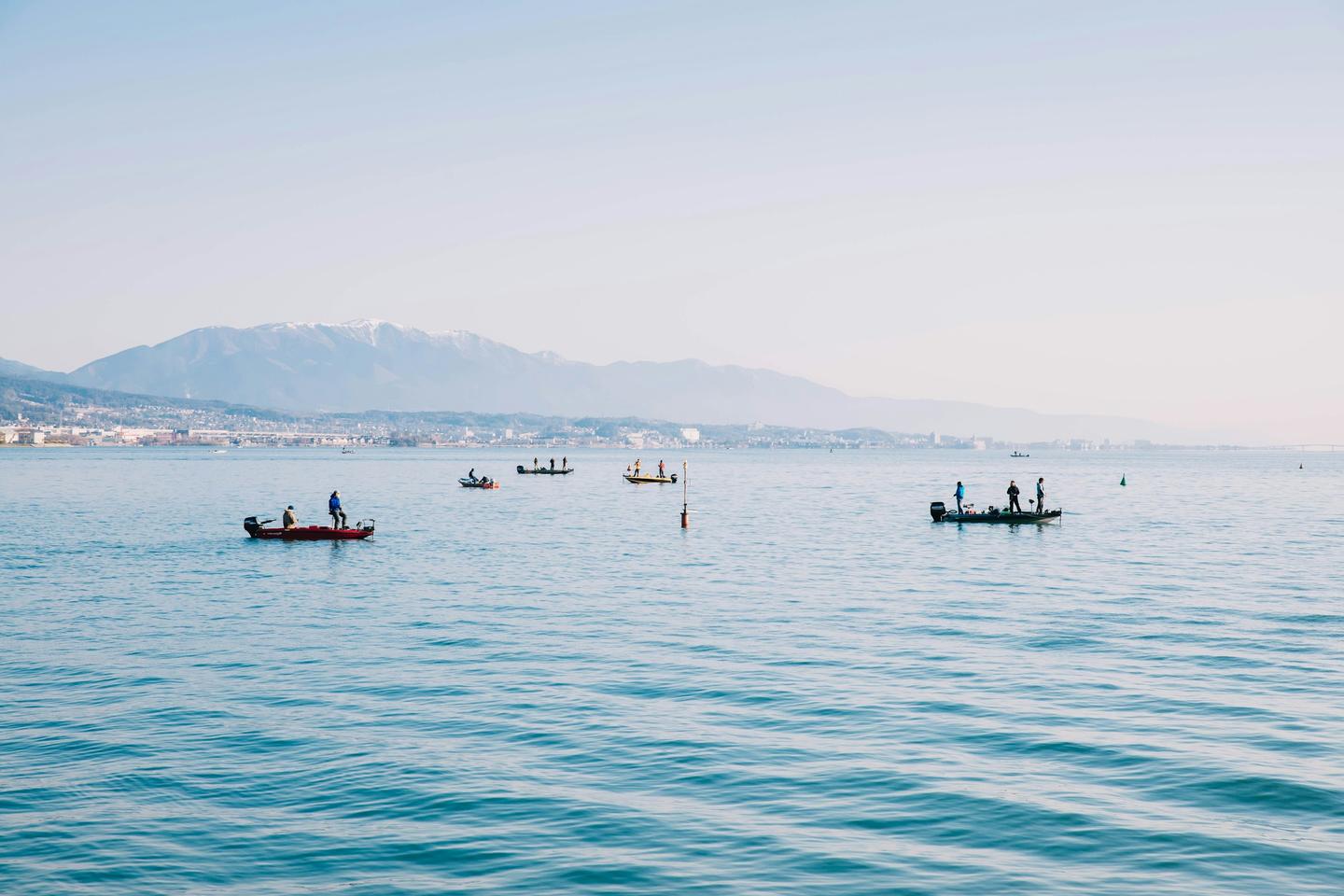
Funazushi is a nare-zushi, a sushi in which fish is preserved by fermenting it with rice. Shiga Prefecture explains that nigorobuna, a crucian carp of Lake Biwa caught in early spring, is salted, then washed in midsummer and packed in cooked rice to ferment with lactic acid; by the New Year it has turned sour and the bones have softened enough to eat. The Ministry of Agriculture, Forestry and Fisheries calls it Shiga's representative local dish, fermented with rice from the paddies around the lake, and notes that the north of the prefecture makes it saltier and the south sweeter.
On the shore of Lake Yogo, at the north end of Lake Biwa, Tokuyamazushi serves fermentation cooking as an auberge with rooms, and calls its own nare-zushi a departure from the usual funazushi. It takes reservations by telephone only, between 10:00 and 17:00, and asks guests not to film inside. The ministry's page also lists the other fish of the lake that are fermented the same way, and the Shiga Prefecture page notes that many households still pack their own funazushi from salted carp bought from fishmongers.
FERMENTATION AT THE TABLE
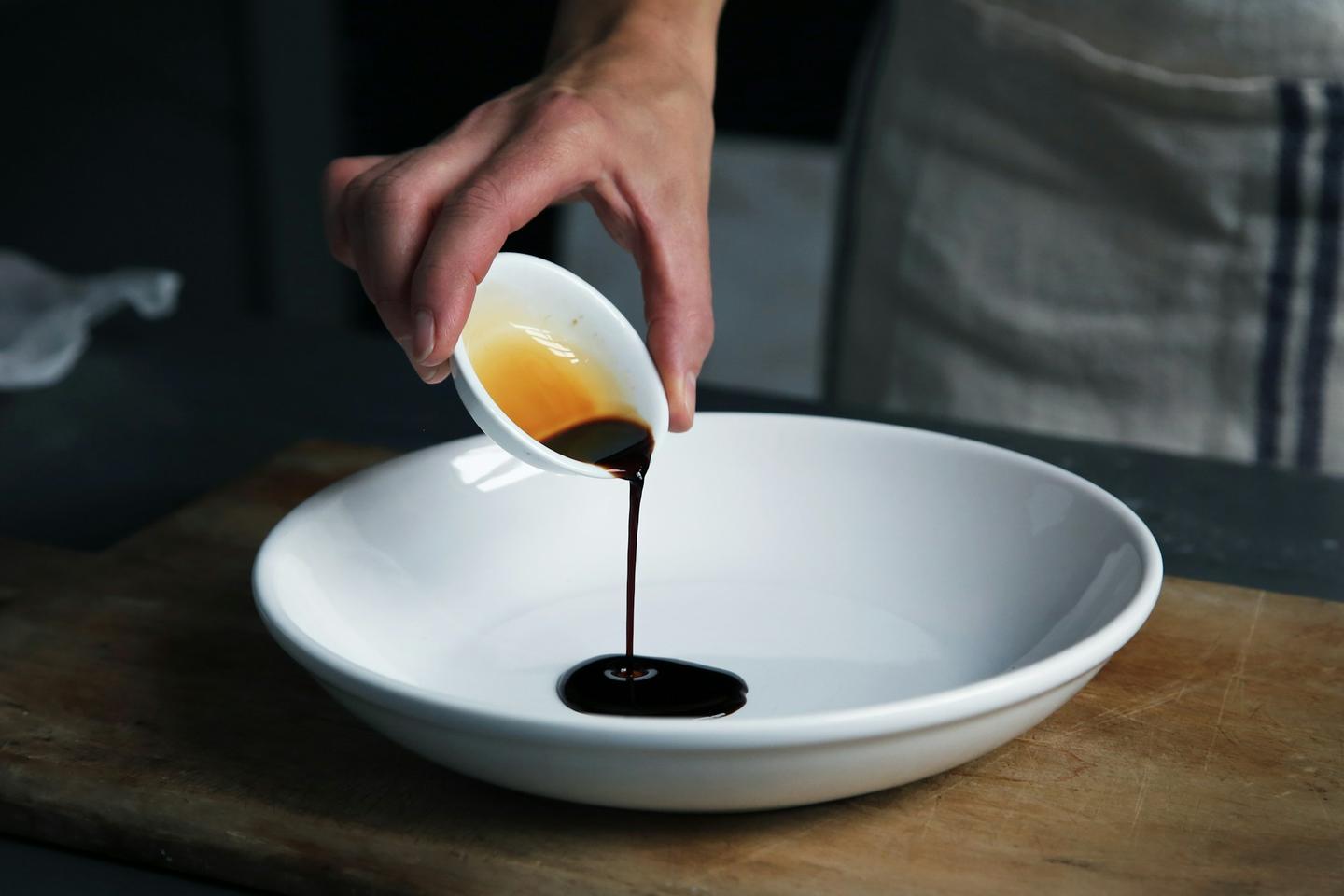
In Tokyo, Hyakuyaku by Tokuyamazushi in Ginza brings the cooking of the lake to the city. The 2026 MICHELIN Guide Japan lists it with one star, as Japanese cuisine in its highest price band, and notes a chef from Shiga with deep expertise in fermentation. TableCheck describes the restaurant as a fermentation experience and shows a course that changes with the seasons. A dinner here, before or after the lake, shows how a fermented flavour can sit inside a refined menu.
Elsewhere, fermentation runs through every kaiseki kitchen: miso in the soup, soy sauce in the sashimi, mirin in the glaze, pickles at the end. Once you have stood beside the barrels, the familiar tastes of a Japanese dinner begin to read differently.
HOW THE JOURNEY CAN RUN
A focused route takes four to six days. Begin in Tokyo with a morning at the Nihonbashi Dashi Bar and an evening in Ginza. Take the Shinkansen west and stop at Okazaki for Kakukyū's storehouse and a taste of the miso. Continue to Lake Biwa for a night beside the water. Then go on through Kobe or Takamatsu to Shōdoshima for two nights, with a morning at Yamaroku's barrels and the rest of the island, its olives and its Inland Sea views, around it.
With fewer days, two of these fit easily around Kyoto or Osaka: Lake Biwa is close to Kyoto, and Shōdoshima pairs well with the art islands of the Inland Sea.
WHERE STAYGO COMES IN
For a fermentation journey we arrange the visits the makers offer, the tables in Tokyo and by the lake, the trains, ferries and a car with a driver between them, and the inns where you stay. When you arrive at a storehouse, you are expected, the route between places is set, and the next table is the one you asked for. Where a maker takes visitors without a reservation, we time the day so that you arrive at a quiet hour. We arrange everything in your names, and you pay the makers, restaurants, inns and drivers directly at their own prices, with no commission or markup from us. Trips are planned on the Signature plan, for 7 to 14 days, or as Bespoke for longer or more complex journeys.
SOURCES AND HOW WE CHECKED
We read the pages below on October 31, 2026: the makers' and restaurants' own pages for hours, fees, methods and rules; a ministry and a prefectural page for funazushi; the MICHELIN Guide and a booking service for the Ginza restaurant; and a newspaper, a tourism board interview and a magazine for background. We did not contact any of them.
- Discover Japan, koji and the history of Japanese fermentation (Japanese, 2021): Aspergillus oryzae, what it is used for, Muromachi koji merchants, the national fungus
- Yamaroku Shoyu (Japanese): about 150 years, the living barrels and storehouse, under 1% barrel-brewed, the barrel makers' project
- Yamaroku Shoyu, visits and access (Japanese): free storehouse visits without reservation, the natto request, ferries
- Yamaroku Shoyu, tea house (Japanese): 9:00 to 17:00 daily, menu and prices
- The Japan Times, Kioke: the secret ingredient of soy sauce (2016): half of Japan's wooden soy sauce barrels on Shōdoshima
- Japan National Tourism Organization, interview with Yamaroku: natural wooden-barrel brewing at about 1% of production
- Kakukyū Hatchō Miso (Japanese): soybeans and salt, two summers and two winters, 380 years and nineteen generations
- Kakukyū, stone stacking (Japanese) and wooden barrels (Japanese): 6 tonnes of miso, 3 tonnes and 350 stones, two makers, ten years of training, under 1% in wood
- Kakukyū, Hatchō Miso no Sato tours (Japanese) and access (Japanese): free entry, 9:00 to 17:00, 50-minute guided tour, guides in English and French, stations
- Ninben (Japanese), its shops and Nihonbashi Dashi Bar: 1699, honkarebushi, shaving at the main shop, hours and closing day
- Shiga Prefecture, funazushi (Japanese): nigorobuna, salting and packing in rice, lactic fermentation, ready around the New Year
- Ministry of Agriculture, Forestry and Fisheries, local dishes of Shiga (Japanese): funazushi as Shiga's representative dish, rice from the lake's paddies, north and south
- Tokuyamazushi (Japanese): the auberge by Lake Yogo, nare-zushi, telephone reservations only, no filming
- MICHELIN Guide, Hyakuyaku by Tokuyamazushi: one star in the 2026 MICHELIN Guide Japan, Japanese cuisine, price band, fermentation
- TableCheck, Hyakuyaku by Tokuyamazushi: address in Ginza, a fermentation experience, seasonal course
QUESTIONS TRAVELLERS ASK
Can visitors tour soy sauce and miso makers in Japan?
Some makers welcome visitors. Yamaroku Shoyu on Shōdoshima shows its moromi storehouse free of charge without a reservation, and Kakukyū in Okazaki runs free guided tours of its archive and ageing storehouse from 9:00 to 17:00, closed over the New Year. Each maker sets its own rules, so ask before you go.
Why does Yamaroku ask visitors not to eat natto before a visit?
The brewery explains that soy sauce makers have always kept natto out, because the yeasts and lactic acid bacteria that ferment the mash are strong against heat, drought and salt but weak against the natto bacterium. It asks visitors not to eat natto before coming.
What is funazushi?
Funazushi is a nare-zushi from Shiga, made by salting crucian carp caught in spring and packing it in cooked rice around midsummer, where it ferments with lactic acid until about the New Year. Shiga Prefecture describes it as one of the representative tastes of the prefecture, eaten on special days.
Is there a Michelin-recognised restaurant built on fermentation?
Hyakuyaku by Tokuyamazushi in Ginza, which TableCheck describes as a fermentation experience, is listed with one star in the 2026 MICHELIN Guide Japan. Its parent, Tokuyamazushi, is an inn with fermentation cooking beside Lake Yogo in Shiga that takes reservations by telephone only.
How many days does a fermentation journey need?
A focused route takes four to six days: Tokyo for katsuobushi and a fermentation dinner, Okazaki for Hatchō miso, Lake Biwa for funazushi, and Shōdoshima for soy sauce. With fewer days, two of these fit easily around Kyoto or Osaka.
ASK US ABOUT A FERMENTATION JOURNEY
Tell us which flavours you would like to follow and how many days you have. We will ask the makers and the kitchens about visits and tables on your dates, and come back with what they were able to confirm.
Begin planning →We reply within 24 hours, in writing
Some of the restaurants, bars and private places we arrange take guests only by introduction or membership. We do not publish their names.