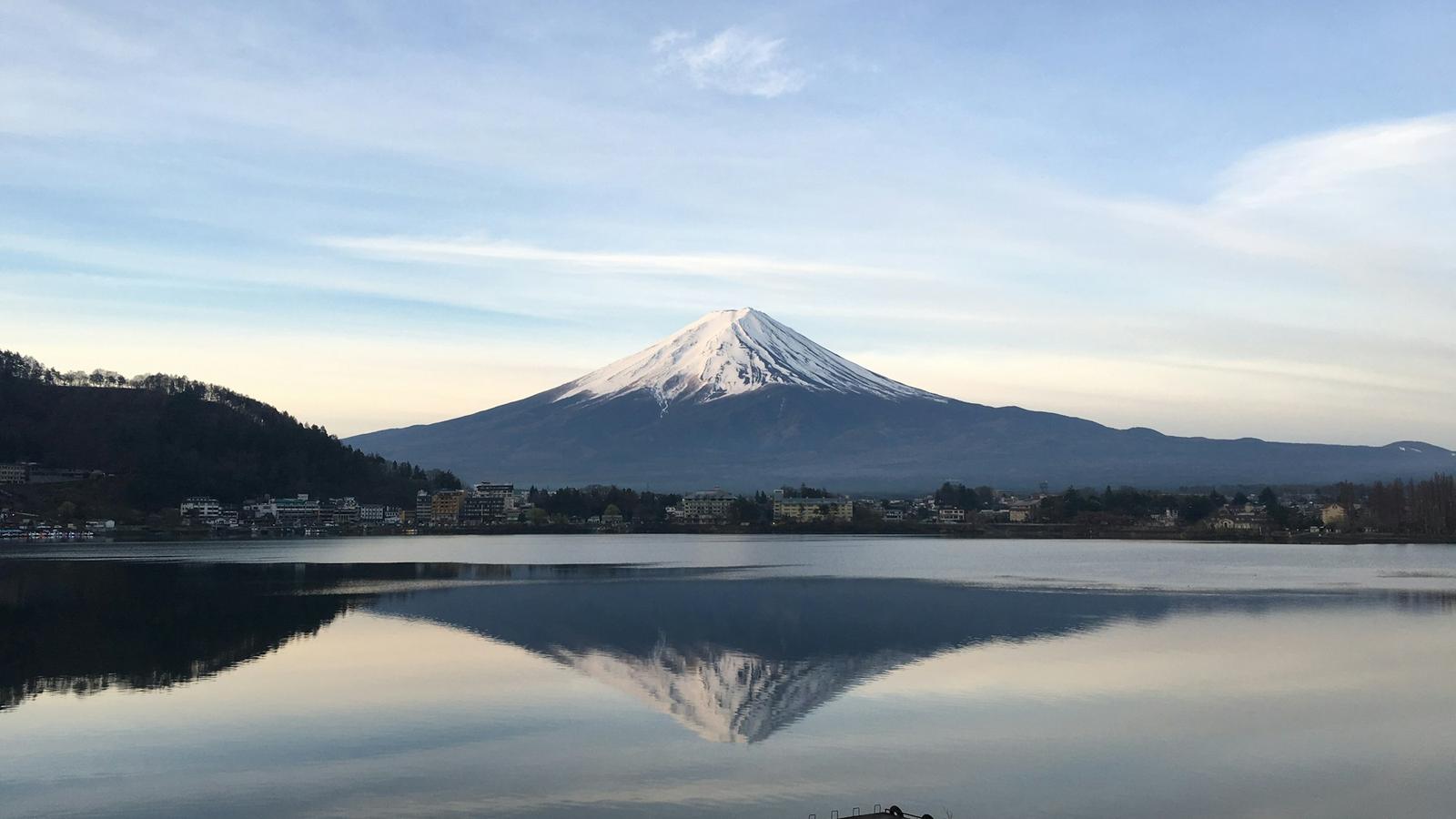
Mount Fuji is the most recognizable image in Japan and, in a practical sense, the most frequently misexperienced. In peak season, most visitors take the bus to the 5th station, look at cloud cover, take a photograph of a sign, and leave disappointed. The mountain did not fail them. Their approach to it did.
The mountain itself is not the draw. The view of it is. Fuji is a viewing experience, a landscape element, an object to be composed against sky or water or architecture. The travelers who have a genuinely extraordinary Fuji encounter share a common factor: they chose the viewpoint deliberately, arrived at the right hour, and were in the right season for clear air.
Key points
- For travellers whose priority is the view rather than the climb, winter (December to February) is the clear recommendation: the driest air, a snow-capped peak and the fewest visitors.
- The difference between a crowded and a private viewpoint is almost entirely timing. At the Chureito Pagoda, 398 steps up above the lake, arrive before 7am.
- The official climbing season runs July 1 to September 10. The Yoshida Trail is the most crowded, with midnight queues on the upper sections from mid-July, while the Subashiri and Gotemba trails are significantly quieter.
- If Fuji is the main objective of the day, base at Kawaguchiko. If it is one element alongside hot springs, art and mountain scenery, Hakone is the stronger choice.
THE PROBLEM WITH THE STANDARD APPROACH
The 5th station approach fails for compounding reasons. Fuji's summit is frequently cloud-covered from late morning onward through most of the year. The approach road to the 5th station is accessible by private car only before a certain hour in climbing season. After that it is buses only, on a schedule. The 5th station itself is a gift shop precinct with a restricted view. None of this is the mountain's fault.
The crowds are real and documented. During peak summer climbing season, the Yoshida Trail alone sees queues from midnight, thousands of people ascending in a line, headlamps stretching up the slope, waiting at bottlenecks. The 8th station huts run out of space for resting climbers. This is not an exaggeration; it is the current reality of the most popular trail.
"Most people who see Mount Fuji disappoint themselves. Not because Fuji is disappointing, but because they placed themselves in the wrong position at the wrong time, and then blamed the mountain."
BEST PRIVATE VIEWING SPOTS
The following viewpoints are all accessible without special permissions. The difference between a crowded and a private experience at each is almost entirely timing, arriving before the majority of visitors, which requires planning the night before rather than improvising on the day.
The widest and most varied viewing angles of any Fuji location. Multiple excellent viewpoints around the lake's northern shore. On still mornings, most common in autumn and winter, the lake surface reflects the mountain in a near-perfect inversion. The Chureito Pagoda viewpoint is technically in Fujiyoshida above the lake but is part of the same area: 398 stone steps to a five-story pagoda with Fuji behind. The most reproduced Fuji composition in photography. Arrive before 7am to have it to yourself.
A traditional thatched-roof village fed by eight spring-water ponds, with Fuji as the backdrop. The water in the ponds is snowmelt filtered through Fuji's volcanic rock, extraordinarily clear, often with the mountain reflected. Morning light from the east hits the western face of Fuji directly, making the 6–8am window optimal for photographers. Far less visited than Kawaguchiko despite being only minutes away.
On the south side of Fuji in Shizuoka Prefecture, Tanuki Lake is one of the least visited of the Fuji lakes and offers reflected mountain views from a different angle than the north-side locations. The quietness here is genuine even in peak season. Best approached from Hakone on a loop itinerary.
THE RIGHT SEASON
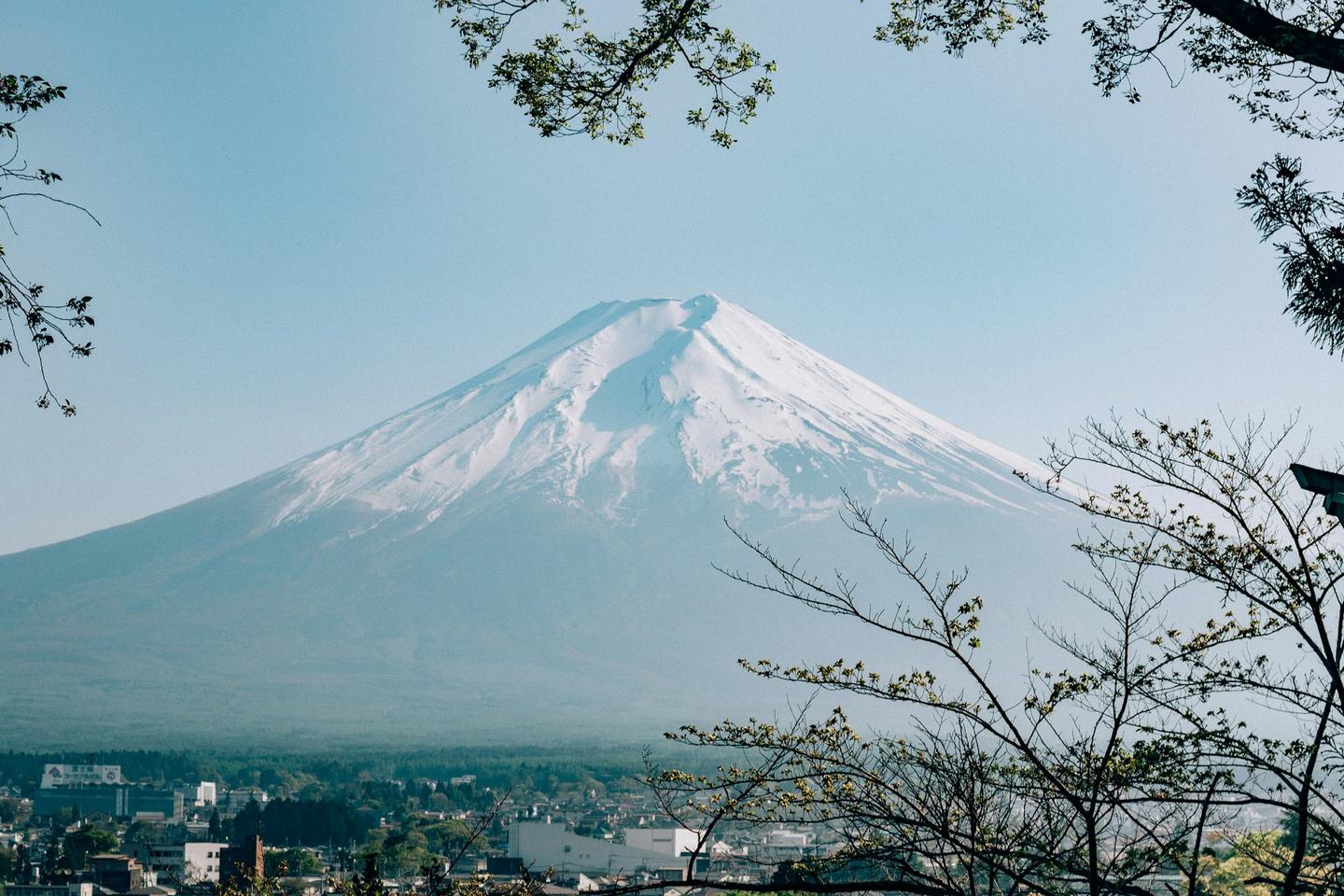
Winter is the clear recommendation for travelers whose priority is the view rather than the climb. The air is driest, the peak stays snow-capped throughout the season, and the number of visitors at any viewing location is a fraction of peak season. The light in winter, low angle, long shadows across the white cone, is also better for photography than the high summer sun.
Spring cherry blossom, typically late March to mid-April, produces the combination views that appear most frequently in photography: pink sakura in the foreground, white-capped mountain behind. These exist and they are genuinely beautiful. They also require arriving at the right spots at or before dawn during the 7–10 day bloom window. The crowds in spring are significant at every famous viewpoint.
CLIMBING SEASON
The official climbing season runs July 1 to September 10. The Yoshida Trail (Fuji-Yoshida side) is the most popular, and the most crowded. From mid-July onward, midnight queues on the upper sections are documented and expected. The Subashiri and Gotemba trails are significantly quieter, with Gotemba being the longest but the least congested by a wide margin.
For serious climbers, the goal is goraiko, arriving at the summit crater rim at sunrise. This requires a midnight start from the 5th station or an overnight stay in a mountain hut (which must be booked months in advance). The ascent takes 5–8 hours depending on pace and trail; the descent 3–5 hours. It is physically demanding. Altitude sickness above 3,000 meters is common, proper cold-weather gear is non-negotiable, and the final push above the 8th station is steep scrambling.
"Climbing Fuji is worth doing once. The Japanese have a saying: a wise man climbs Fuji once. A fool climbs it twice. The view from the crater at sunrise is extraordinary. Getting there in a long queue is the price."
HELICOPTER ACCESS
For photographers, for guests who want the extraordinary view without the physical commitment of climbing, or for travelers whose itinerary does not allow for a pre-dawn departure to a lake viewpoint, private helicopter flights offer something no ground-based viewpoint can: unrestricted aerial views of the crater itself.
The crater of Fuji, seen from the air, is a different visual experience than any ground view. The symmetry of the cone is only fully apparent from above; the crater lake (a rarity) is visible only from altitude. Charter operators in the Fuji-Hakone area offer private flights, priced by duration and route. STAYGO arranges these on request for Signature and Bespoke clients, including pre-dawn positioning if optimal crater photography in morning light is the goal.
Private charter from the Fuji-Hakone area. Aerial circumnavigation of the summit, with direct views into the crater. Available as an add-on to any Hakone or Fuji Five Lakes itinerary. Ideal for photography guests or couples who want an unrepeatable perspective. STAYGO handles the arrangements, briefing, and transfer from your accommodation. Available on request for Signature and Bespoke clients.
FIVE LAKES VS HAKONE
The two main bases for Fuji viewing serve different purposes and suit different itinerary types. The Fuji Five Lakes (north side, Yamanashi Prefecture) give closer, larger views of the mountain. The peak fills more of the frame. This is the better side for photography. Kawaguchiko, the most accessible of the lakes, has the infrastructure for an overnight stay with good dining options.
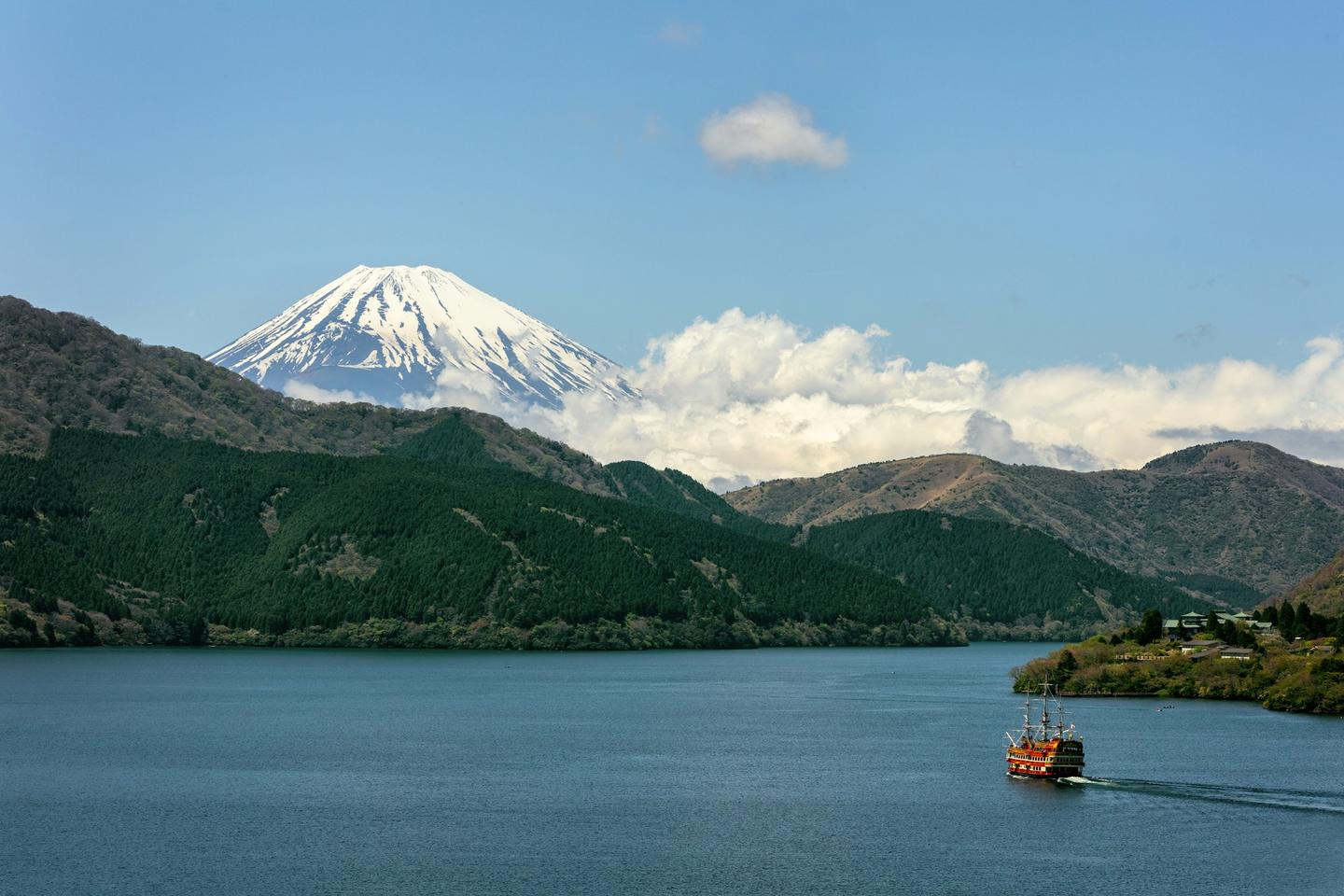
Hakone (east side, Kanagawa Prefecture) gives the classic silhouette view of Fuji across Lake Ashi, the mountain more distant but the composition more refined, with the lake and torii gate in the foreground. Hakone also offers ryokan accommodation, the Hakone Open Air Museum, the Owakudani volcanic valley, and the ropeway. It is a fuller destination in itself, with Fuji as a component rather than the only reason to be there.
The practical guidance: if Fuji is the primary objective of the day, base from Kawaguchiko. If Fuji is one element of a broader experience that includes hot springs, art, and mountain scenery, Hakone is the stronger choice. Both are day-trip distance from Tokyo (approximately 90 minutes); both support overnight stays that dramatically improve the early-morning viewing window.
DAWN LIGHT POSITIONING
The optimal photography window at any Fuji lake viewpoint is 30–45 minutes after sunrise. At this point, the eastern light hits the mountain's western face at a low angle, soft, directional, warm, while the water is still calm before wind picks up. This window is predictable and repeatable. It requires being in position before it opens.
From Tokyo, reaching Kawaguchiko in time for a winter or spring sunrise requires departing between 3:30 and 4:30am depending on the season. STAYGO can arrange private car departure from Tokyo or Hakone before 4am for pre-dawn positioning. The driver handles navigation; the guest can rest in the car. Arriving at the viewpoint in darkness, in quiet, and watching the mountain emerge from silhouette into full color as the sun rises is the Fuji experience that justifies the early start.
"Fuji at 4am, still dark, with the lake surface perfectly still and no one else at the viewpoint. Then the light arrives. That is the Fuji most people never see, not because it is hidden, but because it requires getting there first."
SOURCES AND HOW WE CHECKED
The climbing season and the number of steps come from desk research. We read the official pages below on October 5, 2026, and did not contact the prefecture or the city. The dates on the climbing site are those for the Yoshida Trail, and the site notes that the start can be delayed by weather or remaining snow.
- Official Website for Mt. Fuji Climbing, restrictions on the Yoshida Trail (2026): the climbing season of July 1 to September 10
- Fujiyoshida City official tourist guide, Arakurayama Sengen Park and the Chureito Pagoda (in Japanese): the 398 steps to the observation deck
QUESTIONS, ANSWERED
What is the best time of year to see Mount Fuji clearly?
Winter, December through February, offers the clearest air, the most reliably snow-capped peak, and the fewest crowds at all viewing locations. For travelers not planning to climb, this is the optimal viewing season. Spring cherry blossom season (late March to mid-April) offers spectacular combined views at certain locations but draws significant crowds. Summer is the climbing season but produces frequent cloud cover that obscures the peak for viewers below.
What is the best viewpoint for Mount Fuji photography?
Chureito Pagoda at Arakurayama Sengen Park gives the most reproduced composition, pagoda in the foreground, Fuji behind. Arrive before 7am. Kawaguchiko (Lake Kawaguchi) provides the widest range of viewing angles and the classic reflected Fuji on still mornings. Oshino Hakkai, the traditional thatched-roof village, is less photographed and gives a distinctive foreground in morning light. For the most exclusive perspective, a private helicopter charter provides unrestricted aerial views of the crater.
How much does a private helicopter flight over Mount Fuji cost?
The price of a private helicopter charter for aerial Fuji views depends on the operator, the duration and the number of passengers. STAYGO arranges these on request for Signature and Bespoke clients, including pre-dawn positioning for optimal light conditions and crater photography.
Is it better to see Mount Fuji from Hakone or the Fuji Five Lakes?
The Fuji Five Lakes (north side, Yamanashi Prefecture) give closer views with the mountain filling more of the frame, ideal for photography. Hakone (east side) gives the classic silhouette view across Lake Ashi, which is more distant but arguably more elegant. The choice often depends on the itinerary: Hakone pairs naturally with an overnight ryokan stay; the Five Lakes pair well with an early morning departure for Chureito Pagoda.
SEE FUJI THE WAY IT SHOULD BE SEEN
STAYGO positions you at the right viewpoint, at the right hour, in the right season, including helicopter charter, pre-dawn transfers, and private access arrangements.
Start planning →