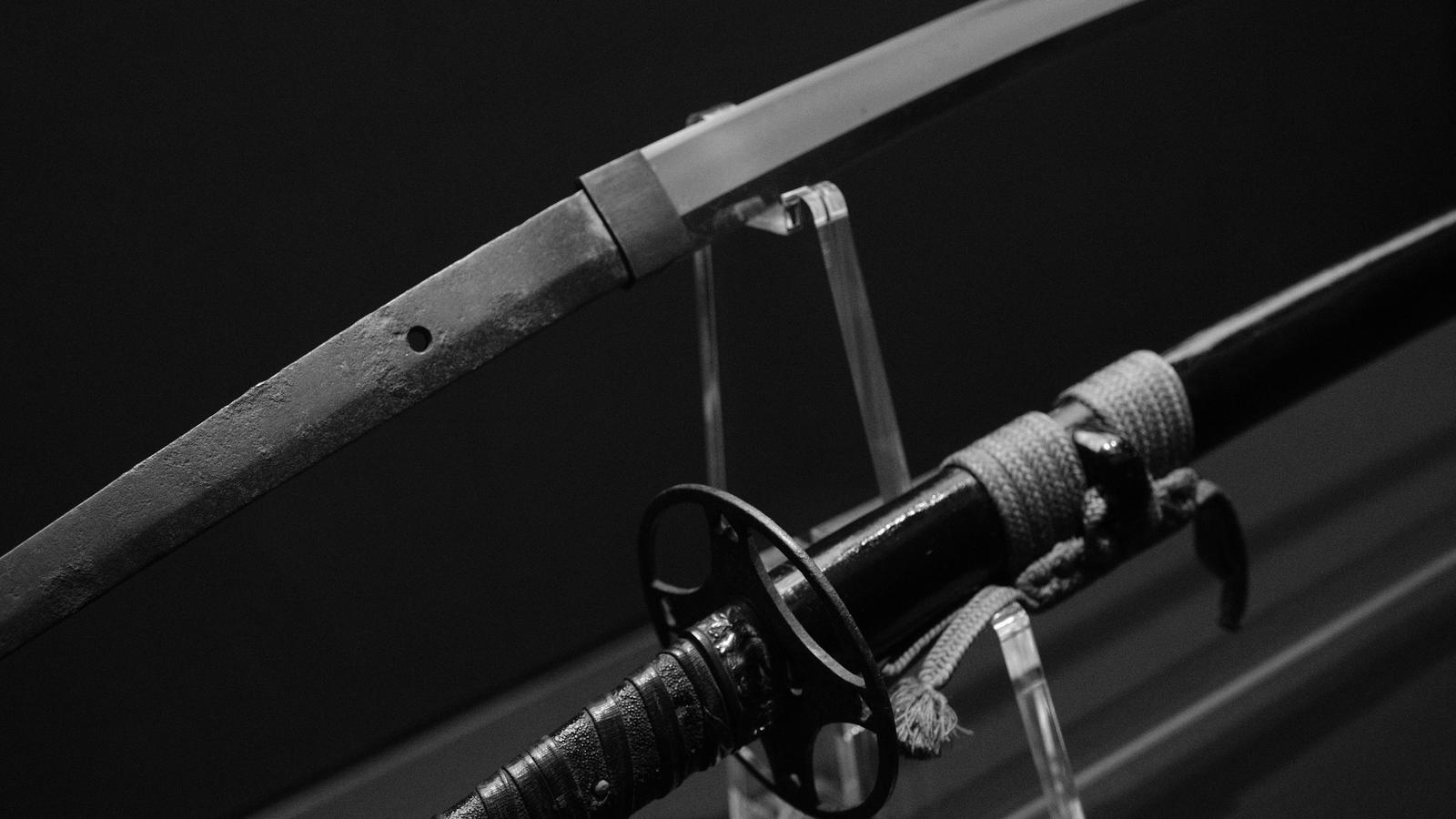
A Japanese sword is made by several hands. The smith forges the steel, a polisher spends days bringing out the pattern in it, and separate craftsmen make the collar, the scabbard and the wrapped hilt. In a few places in Japan you can watch that work in person: the forge at Bizen Osafune in Okayama, the sword town of Seki in Gifu, and, for the finished blades, the Japanese Sword Museum in Tokyo.
This article covers where and when the forging is shown, how a blade is looked at and held, and what Japan's rules ask of anyone who wants to take a sword home. We read the pages of Setouchi City, the Okayama and Gifu tourism bodies, the Japanese Sword Museum and its society, Japan's Agency for Cultural Affairs, the Tokyo and Saitama boards of education, nippon.com and Bungeishunju on November 5, 2026, and contacted none of them; the sources are listed at the end. For our own private morning at a forge north of Tokyo, see At a swordsmith's forge; for the craft towns of the Japan Sea side, see Kanazawa and Kaga.
Key points
- The Bizen Osafune Sword Museum shows traditional forging on the second Sunday of each month, in 30-minute turns of up to 15 people, with places taken by telephone about a month ahead.
- At Osafune a swordsmith, a lacquerer, a fittings metalworker and a collar maker work in view of visitors on most days, and polishers, a scabbard maker and a hilt wrapper come on set days.
- Seki has worked swords for about 700 years. Its museum, the Seki Traditional Swordsmith Museum, is closed for renovation from September 7, 2026 to March 31, 2027, while its forge stays in use.
- The Japanese Sword Museum in Ryogoku, designed by Fumihiko Maki and opened in January 2018, shows Kotetsu and Sukehiro from October 24 to December 20, 2026.
- Taking a sword out of Japan can call for a certificate from the Agency for Cultural Affairs, which takes ten working days in principle and longer at present, and the sword's Japanese registration must then be returned.
ASK US ABOUT A DAY AT THE FORGE →
THE FORGE AT OSAFUNE
Osafune, in the city of Setouchi in Okayama, is the home of the Bizen Osafune Sword Museum. The national treasure tachi known as Sanchomo, once the sword of Uesugi Kenshin and his son Kagekatsu, has belonged to the city since March 2020. It is shown about once a year; the showing for this year has ended and the dates for the next are not yet set.
The reason to come is the forge. On the second Sunday of each month the museum's smith heats tamahagane steel in the charcoal and hammers it out, at sessions from 11:00 and from 14:00, taken in turns of 30 minutes for up to 15 people. Watching is free with museum entry, which is 500 yen for adults. Places are taken by telephone from about a month before; for December 13, the line opens on November 10 at 9:00. Photographs are allowed without flash or tripods, and the museum asks visitors to avoid clothing that catches easily, because sparks fly.
On other days the site is still worth the trip. Four craftsmen work in the open studios on most days: a swordsmith, a lacquerer, a fittings metalworker and a maker of habaki, the metal collar at the base of the blade. Polishers, a scabbard maker and a hilt wrapper come on set days through the month. Okayama's tourism body counts about 40 swords on show across the two floors of the museum. We would plan Osafune for a forging Sunday where the dates allow, and a weekday otherwise, when the studios are quieter and the craftsmen have more time for questions.
SEKI AND ITS SEVEN HUNDRED YEARS
Seki, in Gifu, dates its sword work to the smith Motoshige, who settled there between the late Kamakura and early Muromachi periods. Gifu's tourism site counts about 200 smiths in Seki by the late Muromachi period. The second Kanemoto, known as Seki no Magoroku, and Izumi no Kami Kanesada are the names most often cited, and the Kanefusa line, smiths to Oda Nobunaga, now works in its 26th generation. Seki also makes knives and razors, and nippon.com notes that it accounts for about half of Japan's cutlery exports.
The Seki Traditional Swordsmith Museum shows traditional forging, with polishers and mounting craftsmen at work the same day, on the first Sunday of each month from February to September and in November and December, on January 2 for the first forging of the year, and on the day of the October cutlery festival. Adult entry is 300 yen, and free on the festival day, January 2 and November 8. The museum is closed for renovation from September 7, 2026 to March 31, 2027, though the forge itself stays in use. Whether the public forging days continue during the works is something we confirm with the city before we plan a Seki day.
THE SWORD MUSEUM IN RYOGOKU
In Tokyo, the finished blade is the subject. The Japanese Sword Museum of the Nihon Bijutsu Token Hozon Kyokai, the society for the preservation of Japanese art swords, stands at the edge of the Kyu-Yasuda garden in Ryogoku, in a building by Fumihiko Maki that opened in January 2018. It is open from 9:30 to 17:00 and closed on Mondays; adult entry is 1,000 yen and varies with the exhibition. Until December 20, 2026 it shows two masters of the east and the west, Kotetsu and Sukehiro.
The society also holds monthly viewings at the museum where members of the public hold real, sharpened swords in their own hands. Under the rules it published in 2019, these take place on the second Saturday of every month except August and December, and first-time participants must first pass a one-hour etiquette course, for about ten people at a time, aged 16 or over and with photo identification. It is the most direct way to meet a great blade, and we would suggest it to a guest with some Japanese or with an interpreter beside them.
HOW TO LOOK AT A BLADE
A blade is read in three things: its shape, its steel and the hardened edge, the hamon, which shows when the blade is tilted under a single light. In a museum, stand at the end of the case and move slowly along it until the light catches the edge. Osafune's own account of the making ends with the quench, when the blade is heated, plunged into water and takes its curve on its own, and with the moment the smith hands it to the polisher.
When you are invited to hold a sword, the society's rules are the guide. A blade is sharpened to its tip, so the slightest lapse can cause a serious injury, and its steel marks and rusts easily, so it is handled with care at every moment; you follow the instructor's word and wear clothing without hard metal parts and shoes you will not slip in. Tamahagane, the steel of the blade, is still smelted in the society's own tatara furnace in Okuizumo, Shimane, which burns for three days and nights, takes about 12 tonnes of charcoal and yields a bloom of about 2.5 tonnes.
BRINGING A SWORD HOME
In Japan a sword is registered as a work of art by the prefectural board of education, and the registration belongs to the sword, so anyone may hold a registered sword. The certificate must stay with the sword whenever it is held, carried or handed over, and even a registered sword may not be carried without a legitimate reason. Smiths themselves work under approval from the Agency for Cultural Affairs, which for a first approval asks for at least five years of training under an approved smith.
Taking a sword home counts as an export. Customs can ask for the Agency for Cultural Affairs' export certificate for antique works of art, which confirms that the piece is not a national treasure, an important cultural property or an important art object, none of which may leave the country in principle. The certificate takes ten working days from complete papers in principle, longer at present, is applied for by post only, and covers one export. Once the sword has left Japan, its registration certificate must be returned to the prefecture that issued it. We set this timetable against your departure date before you choose a blade.
A MORNING AT A WORKING FORGE
The public days at Osafune and Seki show the forging to a room of visitors. The quieter form is a morning in a working smith's own forge, with an interpreter, and time to ask about the steel. Some smiths open their forge to a small group; we ask on your behalf, and whether the forge can receive you, and when, is the smith's decision. At the museums we can ask whether a curator or one of the craftsmen can speak with you; that too rests with them.
Within Signature, our planning for journeys of 7 to 21 days for your group, Osafune fits a day between Kyoto and Hiroshima, Seki a day from Nagoya, and Ryogoku any morning in Tokyo. We arrange the cars, interpreters and the visits, and settle each in the simplest way available, usually on your hotel bill or on the day. For the other crafts we arrange, see Takayama and the Woodcraft of Hida and Private Japan.
SOURCES AND HOW WE CHECKED
We read the pages below on November 5, 2026. We did not contact any museum, smith, office or other body. Dates and fees can change, and the viewing rules are those the society published in 2019.
- Setouchi City, Bizen Osafune Sword Museum, forging and courses (Japanese): second Sunday forging, sessions from 11:00 and 14:00, 30-minute turns of 15, places taken by telephone about a month ahead, December 13 line opening, photography and clothing notes
- Setouchi City, museum visitor information (Japanese): hours, closing days, adult entry 500 yen
- Setouchi City, the craftsmen of Osafune (Japanese): resident swordsmith, lacquerer, fittings metalworker and collar maker; visiting polishers, scabbard maker and hilt wrapper
- Setouchi City, national treasure Sanchomo (Japanese): owned by the city since March 22, 2020, Uesugi Kenshin and Kagekatsu, shown about once a year
- Bizen Osafune Sword Museum, the procedure of making a Japanese sword: heating to about 1,300°C, folding, quenching and the curve, handing to the polisher
- Okayama Prefecture tourism, Bizen Osafune Sword Museum (Japanese): about 40 swords on show, second Sunday forging
- Gifu Prefecture tourism, Seki traditional forging days (Japanese): first Sundays, January 2, the cutlery festival, entry fees
- Gifu Prefecture tourism, Seki Traditional Swordsmith Museum (Japanese): about 700 years, renovation closure to March 31, 2027, forge in use, free days
- Gifu Prefecture tourism, the swordsmiths of Seki (Japanese): Motoshige, about 200 smiths in the late Muromachi period, Magoroku, Kanesada, the 26th Kanefusa
- nippon.com, Seki the cutlery town (Japanese): about half of Japan's cutlery exports
- Japanese Sword Museum (Japanese): address, hours, Kotetsu and Sukehiro exhibition to December 20, 2026
- Japanese Sword Museum, English site: adult entry 1,000 yen, closed Mondays, fees vary by exhibition
- NBTHK, sword appreciation etiquette course, 2019 (Japanese): second Saturday viewings, course rules, age, identification, the risks of handling
- Tokyo Metropolitan Government, Unique Venues, The Japanese Sword Museum: Fumihiko Maki, opened January 2018, overlooking Yasuda Garden
- Bungeishunju, May 2025, the tatara of Okuizumo (Japanese): three days and nights, 12 tonnes of charcoal, a bloom of about 2.5 tonnes
- Agency for Cultural Affairs, sword registration (Japanese): registration belongs to the sword, certificate kept with it, approval of smiths after five years of training
- Agency for Cultural Affairs, export certificate for antique works of art (Japanese): what it confirms, ten working days in principle, by post only, one export
- Tokyo Metropolitan Board of Education, exporting a registered sword (Japanese): export includes taking a sword home, return of the registration certificate
- Saitama Prefecture, sword registration (Japanese): no carrying without a legitimate reason, even when registered
QUESTIONS TRAVELLERS ASK
Can we watch a Japanese sword being forged?
Yes, on set days. The Bizen Osafune Sword Museum in Okayama shows traditional forging on the second Sunday of each month, with places taken by telephone about a month ahead. Seki in Gifu holds public forging on set Sundays, though its museum is closed for renovation until March 31, 2027.
Can we visit a swordsmith's own forge?
Sometimes. Some smiths receive a small group with an interpreter. We ask on your behalf, and whether and when the forge can receive you is the smith's decision.
Can we hold a real Japanese sword?
The sword preservation society holds monthly viewings in Tokyo where participants hold sharpened swords, after an etiquette course. A private forge visit may also include holding a finished blade.
Can we take a Japanese sword home?
Often, with paperwork. Customs can ask for an export certificate from the Agency for Cultural Affairs, which takes ten working days in principle and longer at present, and the Japanese registration certificate is returned once the sword has left. National treasures and important cultural properties cannot leave Japan in principle.
Which is better for a first visit, Osafune or Seki?
For the next few months, Osafune, because its forging days are set and its craftsmen work in the open studios on most days. Seki suits a day from Nagoya once its museum reopens.
ASK US ABOUT A DAY AT THE FORGE
Tell us when you are coming and what draws you to the sword. We will set out the forge days, the museums and the smiths we can ask, with the reasons, so that you can choose.
Begin planning →We reply within 24 hours, in writing
Some of the restaurants and bars we arrange seat guests only by introduction or membership. We ask on your behalf; the table and the evening are the house's decision. We do not publish their names.