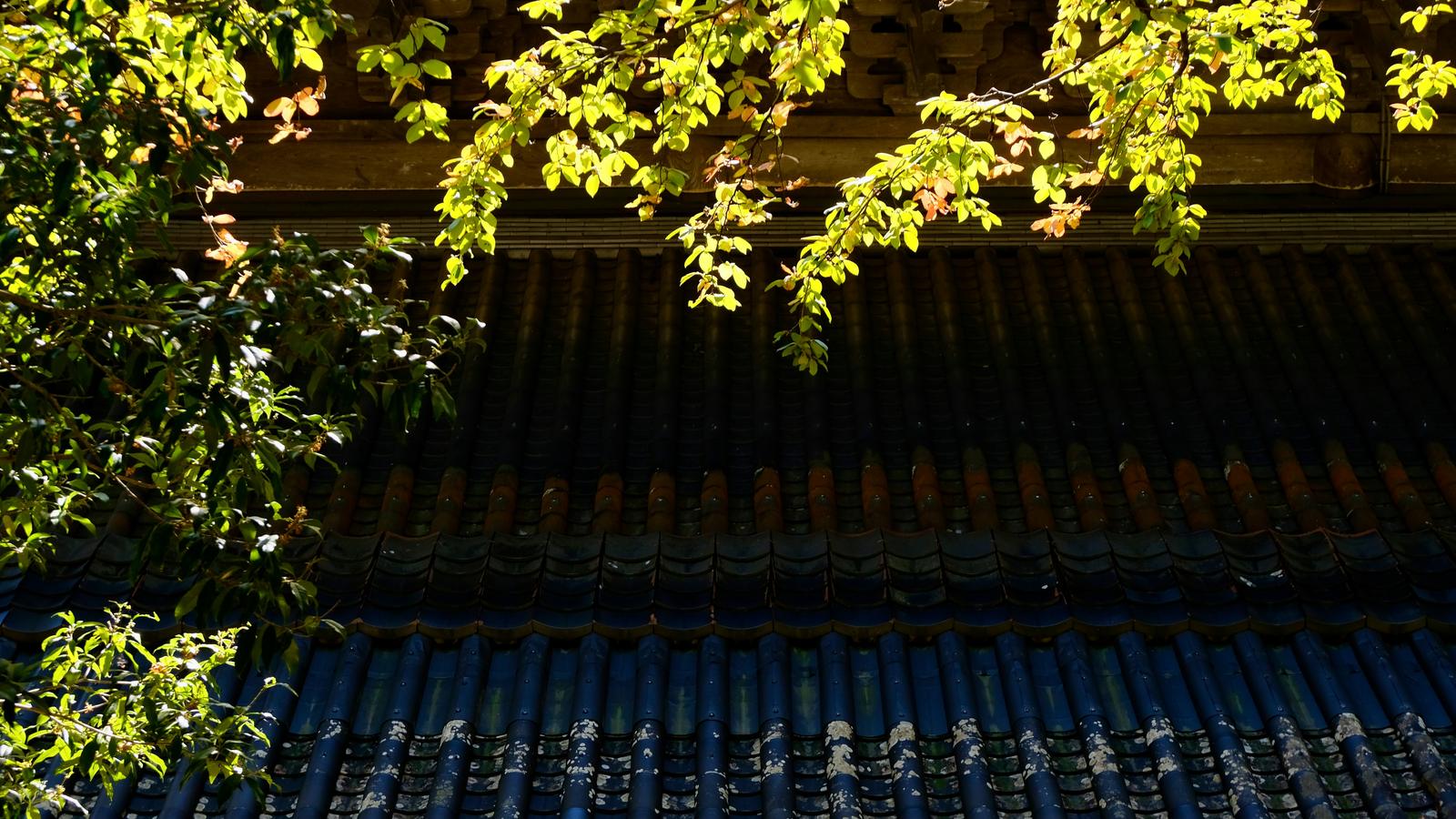
Since March 16, 2024, the Hokuriku Shinkansen has run beyond Kanazawa through Fukui to Tsuruga. The fastest trains reach Fukui from Tokyo in about 2 hours 51 minutes, and from Kanazawa the ride is about 23 minutes. From Kyoto, the limited express Thunderbird and a change to the Shinkansen at Tsuruga bring you to Fukui in about 1 hour 20 minutes. Fukui now fits easily as two or three nights between Tokyo, Kanazawa and Kyoto.
This guide covers the trains, Eiheiji, the Soto Zen head temple in a valley of cedars, and Hakujukan, the inn at its gate where guests can sit zazen in the afternoon and attend the monks' morning service. It also covers the Ichijodani ruins of the Asakura clan, the cliffs at Tojinbo on the Echizen coast, the paper, lacquer and knife workshops of the Echizen area, and a night at Awara Onsen. We read every time, fee and rule on the official pages, or the reservation sites named, on November 2, 2026, and the sources are listed at the end.
Key points
- The Hokuriku Shinkansen opened from Kanazawa to Tsuruga on March 16, 2024. Fukui is about 2 hours 51 minutes from Tokyo at the fastest, and the fastest Tokyo to Tsuruga trip is 3 hours 8 minutes.
- From Kyoto, JR West gives about 1 hour 20 minutes to Fukui and about 1 hour 35 minutes to Awaraonsen, on the Thunderbird to Tsuruga and the Shinkansen beyond.
- Eiheiji was founded in 1244 by Zen Master Dogen. It is open 8:30 to 16:30 every day except January 1, and admission is ¥700 for adults.
- Hakujukan, the 18-room inn about three minutes on foot from the temple, gives its guests free zazen at Eiheiji from 15:30 and a place at the morning service, meeting at the front desk at 4:40.
- The temple's own Sanzen program for international visitors is not offered from spring through fall 2026; Hakujukan's guests can still sit zazen and attend the morning service at the temple.
LET US ARRANGE YOUR DAYS IN FUKUI →
GETTING THERE BY SHINKANSEN
The 2024 extension added six stations after Kanazawa: Komatsu, Kagaonsen, Awaraonsen, Fukui, Echizen-Takefu and Tsuruga. For a trip through Fukui, three of them matter: Fukui for Eiheiji and Ichijodani, Awaraonsen for the hot spring town and the coast, and Echizen-Takefu for the craft villages.
From Tokyo and Kanazawa
The Japanese government's English magazine gives the fastest Tokyo to Tsuruga trip as 3 hours 8 minutes, up to 50 minutes shorter than before the extension. The Fukui Prefectural Tourism Association gives about 2 hours 51 minutes from Tokyo Station to Fukui on the Hokuriku Shinkansen, about 23 minutes from Kanazawa, and about 20 minutes between Tsuruga and Fukui. That makes Fukui a natural next stop after Kanazawa: a morning train, and you can be at the temple gate before lunch.
From Kyoto and Osaka
The line does not yet reach Kyoto or Osaka, so travellers from Kansai take JR West's limited express Thunderbird to Tsuruga and change to the Shinkansen there. JR West gives these approximate train times:
| Route | From Kyoto | From Osaka |
|---|---|---|
| To Tsuruga (Thunderbird only) | About 55 min | Not given |
| To Echizen-Takefu | About 1 hr 15 min | About 1 hr 40 min |
| To Fukui | About 1 hr 20 min | About 1 hr 45 min |
| To Awaraonsen | About 1 hr 35 min | About 2 hr |
JR West also sells a Hokuriku One-way Ticket to overseas visitors, covering the Thunderbird and the Shinkansen in ordinary reserved seats. On the page we read, Kyoto to Fukui was ¥5,000 and Osaka to Fukui ¥6,000 for an adult, as of February 5, 2025. It is sold only through travel agencies outside Japan, to passport holders entering as temporary visitors.
From the station to the temple
The Eiheiji Liner bus leaves Fukui Station's East Exit and reaches the temple in about 30 minutes, according to the prefectural tourism association. By car it is about 5 km from the Eiheiji Sando interchange on the Chubu-Jukan Expressway. A car with a driver also links the temple, Ichijodani and the coast in one day without waiting for buses; what that costs is set out in Private driver in Japan cost.
EIHEIJI
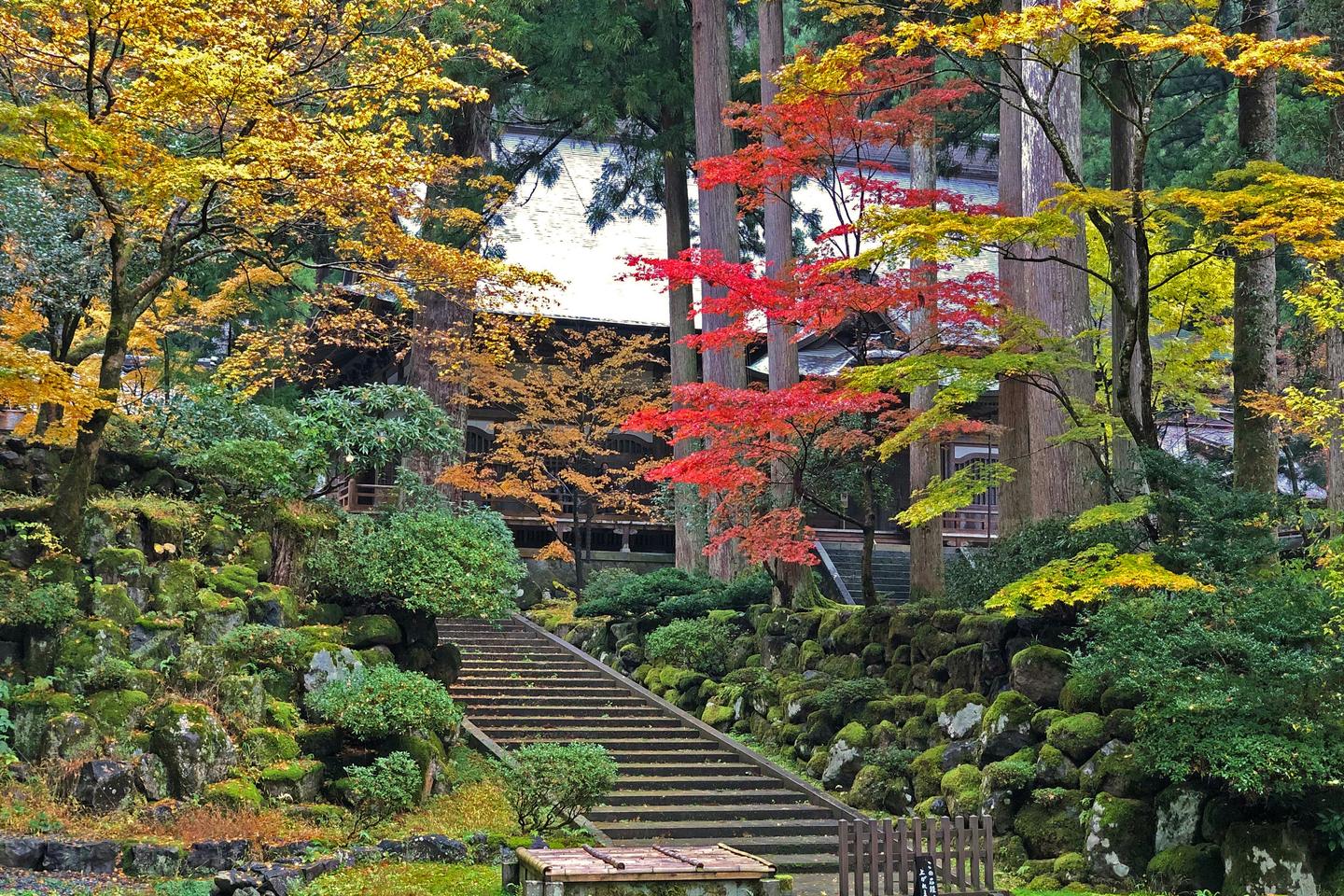
Eiheiji is one of the two head temples of the Soto school of Zen. Zen Master Dogen founded it in 1244 on land offered by Hatano Yoshishige, a samurai and lay follower. The prefectural tourism association counts more than 70 halls and towers in a deep mountain valley. The temple writes that over one hundred monks still practise shikantaza here, single-minded sitting, and that meals, cleaning and washing are part of the training.
This is a working monastery, and the visit is shaped by that. The temple asks visitors to dress neatly, keep quiet, especially near the zazen, lecture and ceremony halls, keep to the left in the corridors, stay on the wooden walkways and off the gardens, and not to photograph the monks.
- Hours. 8:30 to 16:30, open every day except January 1. The temple notes that hours can change with the monastic schedule.
- Admission. ¥700 for adults, ¥300 for elementary and junior high school students, free for children seven and under.
- Goshuin. The temple seal is ¥300, written in your own goshuin notebook in about 30 minutes; leave the notebook at reception before you walk the halls.
- Sanzen. The temple's overnight practice program for international visitors is not offered from spring through fall 2026, and the temple will post when it resumes.
Visitors from abroad often know Zen through the temples of Kyoto, which we cover in Zen meditation in Kyoto. Eiheiji feels different: a monastery in the mountains, where the day is set by the monks' practice.
A NIGHT AT HAKUJUKAN
Hakujukan stands about three minutes on foot from the temple, on the approach that Eiheiji, Fukui Prefecture and Eiheiji Town rebuilt together. Fujita Kanko runs it. It has 18 rooms, all of one Japanese and Western style; Ikyu lists them at about 40 m². It was built with cedar cut on the temple's grounds, its dining room serves shojin cuisine supervised by the temple, and the rooms look over the Eiheiji River.
The inn sets out the evening on its own page, and it follows the temple's rhythm:
- Afternoon zazen. Check in from 14:00 and be at the inn by 15:00. Guests sit zazen at Eiheiji's Kichijokaku from 15:30 to 16:30, free of charge, then walk back through the Jakkoen. If the temple cancels the session, the inn holds it in its own room from 15:30.
- The bath. The large bath, Kosuikai, is open 15:00 to 23:00 and again 5:00 to 9:00. The inner bath is a koto, water infused with fragrant woods and herbs in the proportions the temple uses, and the inn writes that the temple bell carries to the outdoor bath.
- Dinner. At 18:00 or 19:00, chosen at reservation: shojin cuisine with no meat, or a Japanese set menu with meat or fish. The restaurants at the temple gate close around 17:00, so dinner is at the inn.
- Sutra copying. From 19:30, in the inn's practice room or in your room; the paper is ¥880.
Check-out is 10:00, and the inn will keep luggage while you go back to the temple for the day. On November 2, 2026, Ikyu listed Hakujukan's standard plan, with the zazen session, the morning service, dinner and breakfast, from ¥44,000 for two guests including tax.
THE MORNING SERVICE
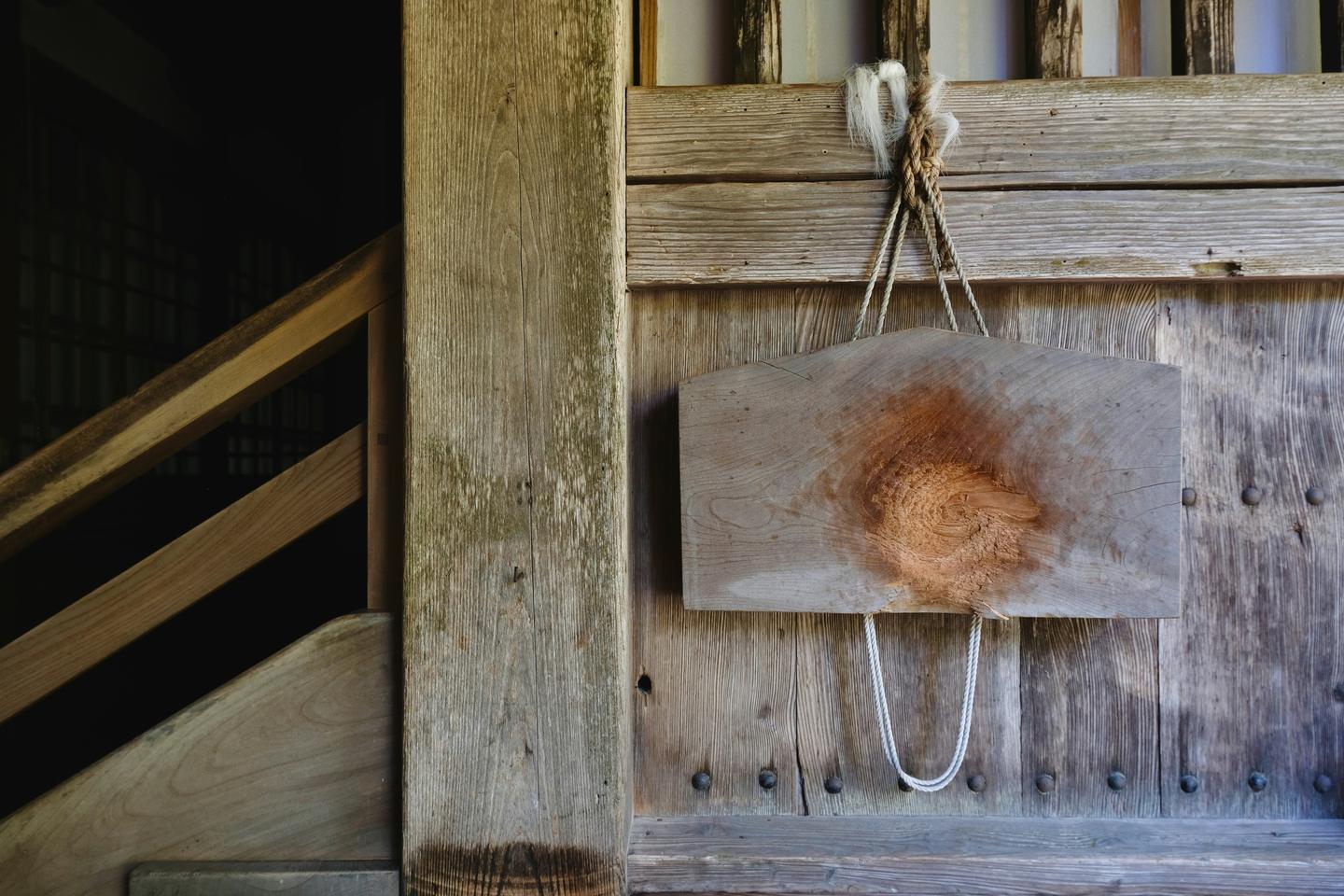
The day starts in the dark. Guests who signed up at the front desk by 17:00 the day before meet in the lobby at 4:40 and walk the few minutes up to the temple. The service is held in the Hatto, the Dharma hall at the top of the slope, and lasts about two hours. It is free for guests of the inn.
The corridors are cold underfoot, and the inn asks for socks and, in winter, warm layers. Inside, the monks chant, there are bows, and on some mornings a talk; you sit where you are shown and follow. When you come out the cedars are taking shape against a grey sky, the temple is still closed to day visitors, and breakfast at 7:00 is rice porridge with small side dishes. By the time the temple opens to day visitors at 8:30, you have already spent the early hours inside it.
- Dress. Loose clothes you can sit cross-legged in. The inn asks guests to avoid jeans, short skirts, sleeveless tops and shorts.
- Children. Children of preschool age are generally not admitted to the morning service.
- December and February. During Rohatsu Sesshin, December 1 to 8, 2026, the content of the morning service changes and the time is fixed the day before. Ikyu notes the same for Ho-on Sesshin, February 1 to 8, 2027, with the inn closed February 2 to 4.
Everything is optional. The inn writes that guests of any faith are welcome and that no preparation is needed.
ICHIJODANI AND THE ECHIZEN COAST
Ichijodani
For about a hundred years the Asakura clan ruled Echizen from the narrow valley of Ichijodani. Their fifth lord, Asakura Yoshikage, fell out with Oda Nobunaga, and Oda's army burned the castle and the town. Excavation has gone on since the 1960s, and Nippon.com reports that 2,343 excavated objects are Important Cultural Properties. The stone settings of the gardens of the Asakura residence, the Suwa residence and the Yudono are a national Special Place of Scenic Beauty: rocks in a quiet clearing, with the foundations of a lost town around them.
Part of the town has been rebuilt on its excavated plan as samurai houses and merchants' houses; Nippon.com gives the adult admission as ¥330. The Fukui Prefectural Ichijodani Asakura Family Site Museum, near the valley, is open 9:00 to 17:00 with last entry at 16:30, is closed on Mondays and over the New Year, and charges ¥700 for an adult; a joint ticket with the rebuilt town is sold. From Fukui Station's West Exit, a bus reaches the rebuilt town in about 30 minutes, and a connecting bus runs on to Eiheiji in about 15, which makes the two easy to pair.
Tojinbo and the coast
Tojinbo is a stretch of columnar jointing about 1 km long, where the rock stands in tall columns above the Sea of Japan. The prefectural tourism association lists it as a National Natural Monument, one of Japan's 100 best geological sites and one of Japan's top 100 sunsets. Late afternoon, when the light lowers over the water, is a good time to be there. The sightseeing boat runs 9:00 to 16:00, to 15:30 in winter, at ¥1,800 for an adult.
Tojinbo is about 45 minutes by bus from Awaraonsen Station, and the old port of Mikuni is about 10 minutes beyond. Further south along the Echizen coast, Echizen crab is landed; we cover the season and the ports in Snow crab in Japan.
PAPER, LACQUER AND BLADES
The area around Echizen-Takefu Station keeps three of Fukui's traditional crafts within a short drive of each other.
- Echizen washi. The Fukui Washi Industry Cooperative traces papermaking here back about 1,500 years, to a goddess, Kawakami Gozen, who is said to have taught it to the villagers by the Okamoto River. Okamoto Shrine still honours her, and its lower shrine was named an Important Cultural Property in 1984. Fukui Prefecture notes that the Echizen papermaker Iwano Ichibei was named a Living National Treasure in 1968, and his successor in 2000. The washi village is about 10 minutes by car from the Takefu interchange, or about 20 minutes by bus from Takefu Station.
- Echizen lacquer. Fukui Prefecture traces Echizen lacquer to a legend about 1,500 years old, from the Katayama area of today's Sabae. From the Edo period the makers took in maki-e from Kyoto and chinkin from Wajima, and the area grew into one of Japan's main producers of lacquerware for inns and restaurants.
- Echizen blades. The prefecture dates Echizen blacksmithing back about 700 years, to the Kyoto swordsmith Chiyozuru Kuniyasu, who stopped in Takefu and began making sickles there. Takefu Knife Village, completed in 1993, is a shared workshop of local makers about 10 minutes by car from Echizen-Takefu Station. It is open 9:00 to 17:00 and closes on irregular days; group classes are paused for now.
A morning here works well on the way between Eiheiji and Kyoto, since Echizen-Takefu is a stop on the same line toward Tsuruga.
AWARA ONSEN AND THE SEASONS
Awara Onsen
Awara Onsen began in 1883, when a well dug for irrigation brought up hot water, and it now has 74 source wells, according to the magazine Serai. The town is about 10 minutes by car from Awaraonsen Station, which put it on the Shinkansen in 2024, and it is the natural base for Tojinbo and the coast.
One example of the inns there is Kofuyuden Beniya. Jalan lists 17 rooms, each with a semi-open-air bath filled from the inn's own spring, with dinner and breakfast served in the room, and states that the inn holds one MICHELIN Key in the 2026 guide. How to read a ryokan's room types and what a night includes is in How to choose a ryokan in Japan.
Where to stay, by what you want
- For the temple. Hakujukan, so that you are at Eiheiji for the afternoon zazen and the morning service.
- For the coast and a hot spring. Awara Onsen, for Tojinbo at the end of the day and a ryokan night.
- For an easy onward train. Fukui city, by the Shinkansen station, between Eiheiji and Ichijodani.
The seasons
Each season changes the trip in a practical way. Autumn brings maple colour to the temple's slopes and mossy stone steps. Winter brings snow to the valley, very cold early mornings in the Hatto, the Sesshin weeks that alter the morning service in early December and early February, and the crab season on the coast; the shorter boat hours at Tojinbo also apply. Spring and early summer are green and mild, a good time for the walk between the gardens at Ichijodani. Winter travel in Japan more broadly is in our winter guide.
HOW WE ARRANGE FUKUI
We build two or three nights around the temple's hours and the trains, and arrange each part in your name.
- The trains. We tell you which Shinkansen and Thunderbird trains fit the plan. You buy the tickets yourself, or through our travel partner.
- Hakujukan. We arrange the room in your name and you pay the inn directly. We let the inn know in advance that you plan to sit zazen and attend the morning service, check whether your dates fall in a Sesshin week, and remind you to sign up at the front desk by 17:00.
- A car and driver. For the day that joins Ichijodani, the craft villages and the coast, we arrange a car with a driver from Fukui or from your inn.
- A guide. A licensed guide who knows the temple's history and the Asakura story can walk the halls and the ruins with you.
- The ryokan. At Awara Onsen we arrange the inn in your name, with dinner times set around your day at the coast, and you pay it directly.
SOURCES AND HOW WE CHECKED
Read on November 2, 2026. Prices include tax and are for one adult unless stated.
- Daihonzan Eiheiji, official site, Practice and Zen Village: founding, Dogen and Hatano Yoshishige, monks, hours, admission, goshuin, visitor rules, Sanzen notice, redevelopment of the approach and Hakujukan
- Hakujukan, how to spend your stay and FAQ: zazen times, sutra copying, morning service meeting time, length and sign-up, dress, children, meals, check-in and check-out, nearby restaurants
- Hakujukan, home, koto bath, access and Rohatsu Sesshin notice: operator, 18 rooms, bath hours, walking time to the temple, bus routes, December 2026 changes
- Ikyu, Eiheiji Temple Shinzennoyado Hakujukan and Japanese page: room size, standard plan rate for two, Ho-on Sesshin dates and closure
- Government of Japan, KIZUNA, the extended Hokuriku Shinkansen: opening date, new stations, fastest Tokyo to Tsuruga time
- Fukui Prefectural Tourism Association, access and home page: Tokyo, Kanazawa and Tsuruga to Fukui times
- Fukui Prefectural Tourism Association, Eiheiji Temple and Tojinbo Cliffs: halls and towers, Eiheiji Liner, Tojinbo length, designations, boat hours and fare, bus times
- JR West, Fukui travel times and Hokuriku One-way Ticket: Thunderbird and Shinkansen times from Kyoto and Osaka, local transfer times, ticket fares and conditions
- Fukui Prefectural Ichijodani Asakura Family Site Museum, visitor information: hours, closing days, admission, joint ticket
- Nippon.com, Ichijodani Castle (Japanese): Asakura history, excavation, gardens, rebuilt town admission, Important Cultural Properties
- Fukui Washi Industry Cooperative, the history of Echizen washi (Japanese) and access: Kawakami Gozen, Okamoto Shrine, access to the washi village
- Fukui Prefecture, traditional crafts of Fukui (Japanese, PDF): history of Echizen lacquer, washi and blades, Living National Treasures
- Takefu Knife Village: completion in 1993, hours, closing days, classes
- Serai.jp (Shogakukan), Awara Onsen (Japanese): 1883 origin, number of source wells
- Jalan, Awara Onsen Kofuyuden Beniya (Japanese): rooms, private baths, in-room meals, access, MICHELIN Key statement
QUESTIONS GUESTS ASK
How long does it take to get from Tokyo to Fukui?
About 2 hours 51 minutes on the fastest Hokuriku Shinkansen trains, according to the Fukui Prefectural Tourism Association. From Fukui Station, the Eiheiji Liner bus reaches the temple in about 30 minutes.
Can I join the monks' morning service at Eiheiji?
Yes, as a guest at Hakujukan. Sign up at the front desk by 17:00 on the day you arrive, and meet in the lobby at 4:40. The service is held in the Hatto, lasts about two hours and is free. It changes during the Sesshin weeks in early December and early February.
Can I sit zazen at Eiheiji without staying overnight?
The temple's Sanzen program for international visitors is not offered from spring through fall 2026. Hakujukan guests can sit zazen at the temple from 15:30 to 16:30, free of charge, on the afternoon they arrive.
How do I get to Fukui from Kyoto or Osaka?
Take the limited express Thunderbird to Tsuruga and change to the Hokuriku Shinkansen. JR West gives about 1 hour 20 minutes from Kyoto to Fukui and about 1 hour 45 minutes from Osaka.
How many days do I need in Fukui?
Two nights is a comfortable minimum: one at Hakujukan for the zazen and the morning service, and one at Awara Onsen for the coast. A third night adds a full day for Ichijodani and the craft villages around Echizen-Takefu.
LET US ARRANGE YOUR DAYS IN FUKUI
Send us your dates and where you will be before and after, Tokyo, Kanazawa or Kyoto. We will come back with two or three nights in Fukui set around the temple's hours and the trains, with the inns and their published rates, and we arrange the stay at Hakujukan, the car, the guide and the ryokan you choose. When you arrive at the temple gate, the inn will already know you are coming to sit. Tell us your dates, and we will begin from the temple's morning.
Begin planning →We reply within 24 hours, in writing
Some of the restaurants, bars and private places we arrange take guests only by introduction or membership. We do not publish their names.