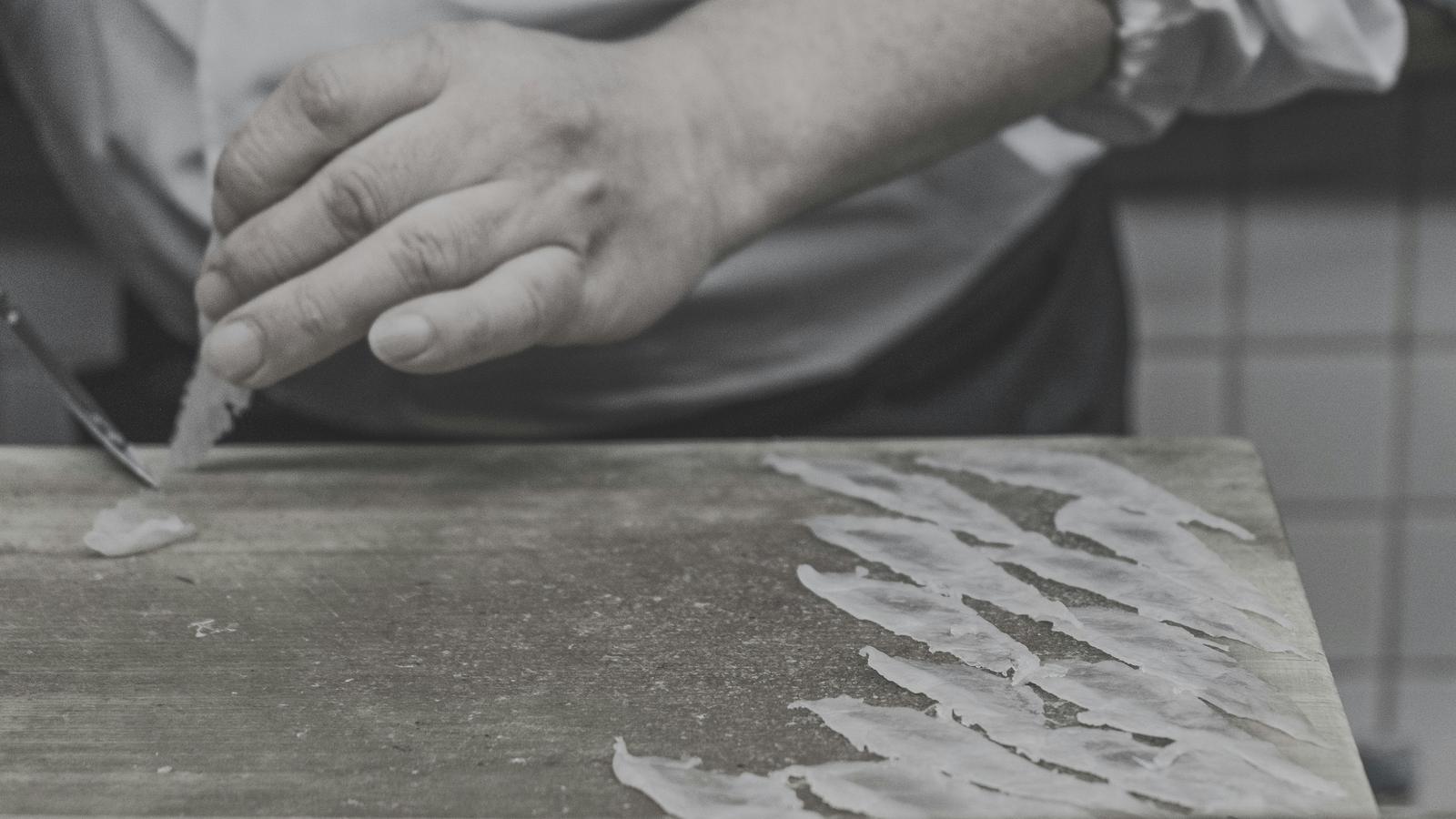
Fugu, the pufferfish, is the most carefully regulated dish in Japan and one of the most quietly loved. A full winter course is a slow evening: petals of raw fish so thin the plate shows through, a hot pot at the table, warm fin sake, and rice cooked in the last of the broth. The fish carries a poison that no cooking removes, which is exactly why every step from the market to the counter is licensed.
Below is how fugu is made safe, what a course includes and costs, when the season runs, and where to eat it: at the source in Shimonoseki, and at counters in Tokyo and Osaka. We read Japan's Ministry of Health, Labour and Welfare, the Tokyo Metropolitan Government, Shimonoseki City, Yamaguchi Prefecture, Japan's national tourism organisation, the Michelin Guide, a Kyodo News report and the restaurants' own pages on November 2, 2026, and did not contact any restaurant; the sources are listed at the end. For the shape of a Japanese dinner more generally, see Kaiseki Etiquette: What to Expect at a Kaiseki Dinner →.
Key points
- In Japan, fugu may only be served after it has been prepared by a processor certified by the prefectural governor. A 2019 national standard requires that certification to be earned by examination.
- Serving fugu liver is illegal, wild or farmed. The ministry counted 10 fugu poisonings in 2025, 9 of them at home, and no deaths.
- The first auction of the 2026 season was held in Shimonoseki on September 28, with a top price of ¥21,000 per kg. Japan's national tourism organisation calls November to February the best months in Shimonoseki.
- At Shunpanro, Japan's first licensed fugu restaurant, a full course costs ¥24,200 to ¥35,200, and the wild tiger puffer course ¥60,500, tax included, plus a 10 percent service charge.
WHY FUGU IS SAFE TO EAT
The poison is tetrodotoxin, concentrated in the organs and especially in the liver and ovaries. The ministry warns that salting, rinsing and heating do not weaken it, and that symptoms appear between about twenty minutes and three hours after eating. What makes a restaurant meal safe is the person at the board. The ministry states that the fugu served to the public in Japan is prepared by specialists certified by the prefectural governor, and the species, parts and fishing waters that may be eaten are set nationally.
In 2019 the ministry issued a national standard so that the certification would mean the same thing in every prefecture. The knowledge and skill must be proven by examination, not by experience alone: candidates identify the 22 edible species on paper, identify at least five real fish, and separate a whole fugu into its edible and inedible parts. Removed organs go into a locked container and are incinerated. In Tokyo the licence holder has been called a fugu handling supervisor since April 1, 2023, and a restaurant that handles unprepared fugu needs a separate certification from the local health centre.
The record shows where the risk lies. The ministry counted 10 fugu poisonings in 2025, with 15 patients and no deaths, and 9 of those cases happened at home. In 2003 there were 38 cases and 3 deaths.
THE LIVER, AND WHAT NOT TO ASK FOR
Fugu liver may not be sold or served in Japan, whatever the species and whether the fish is wild or farmed. Saga Prefecture twice proposed allowing liver from farmed tiger puffer, and both times Japan's Food Safety Commission found that its safety could not be confirmed. In December 2023 the ministry reminded every prefecture of the rule after a licensed restaurant served farmed tiger puffer liver to a few guests and caused a poisoning. A good fugu house will not offer it, and a guest should not ask.
THE COURSE, FROM TESSA TO ZOSUI
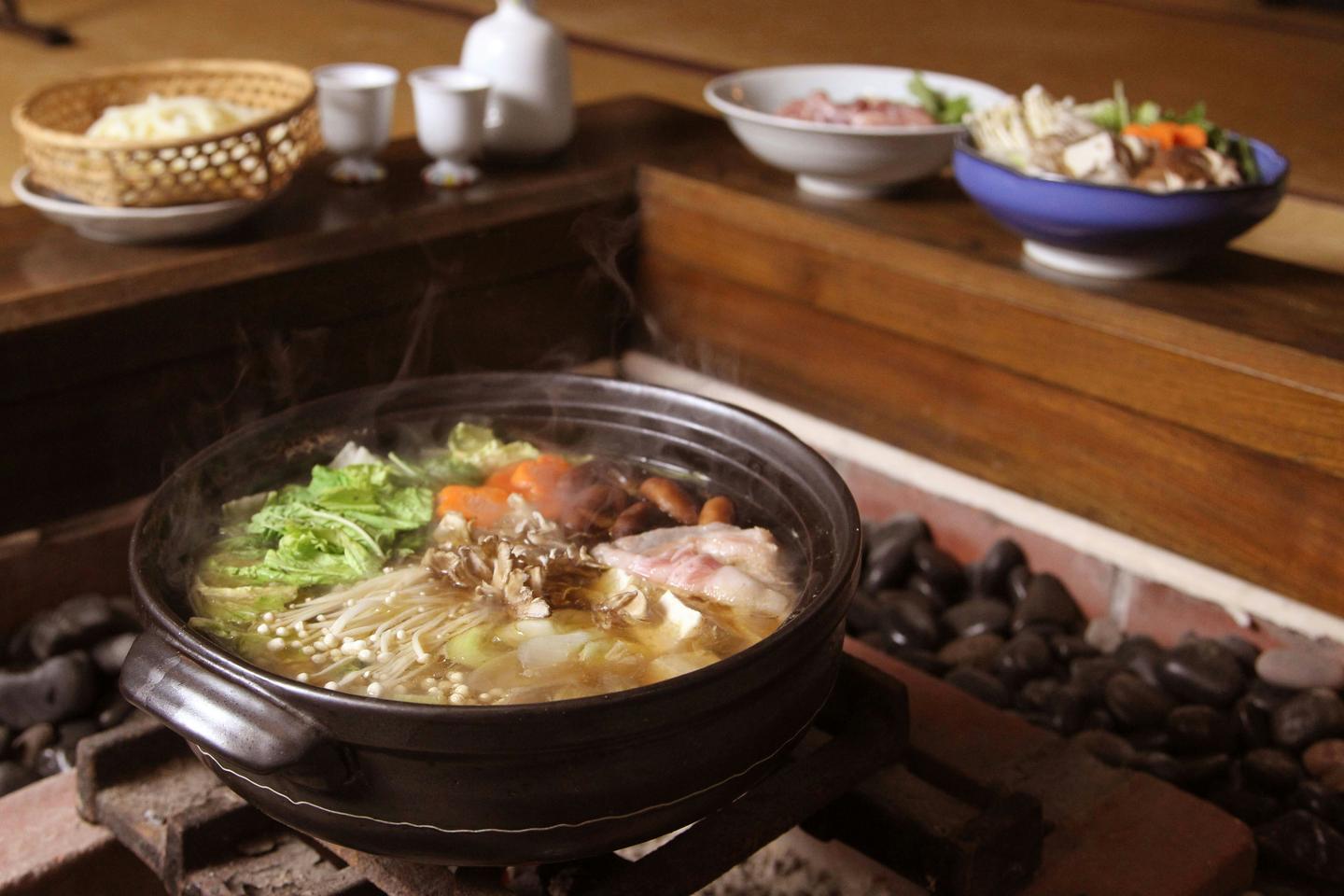
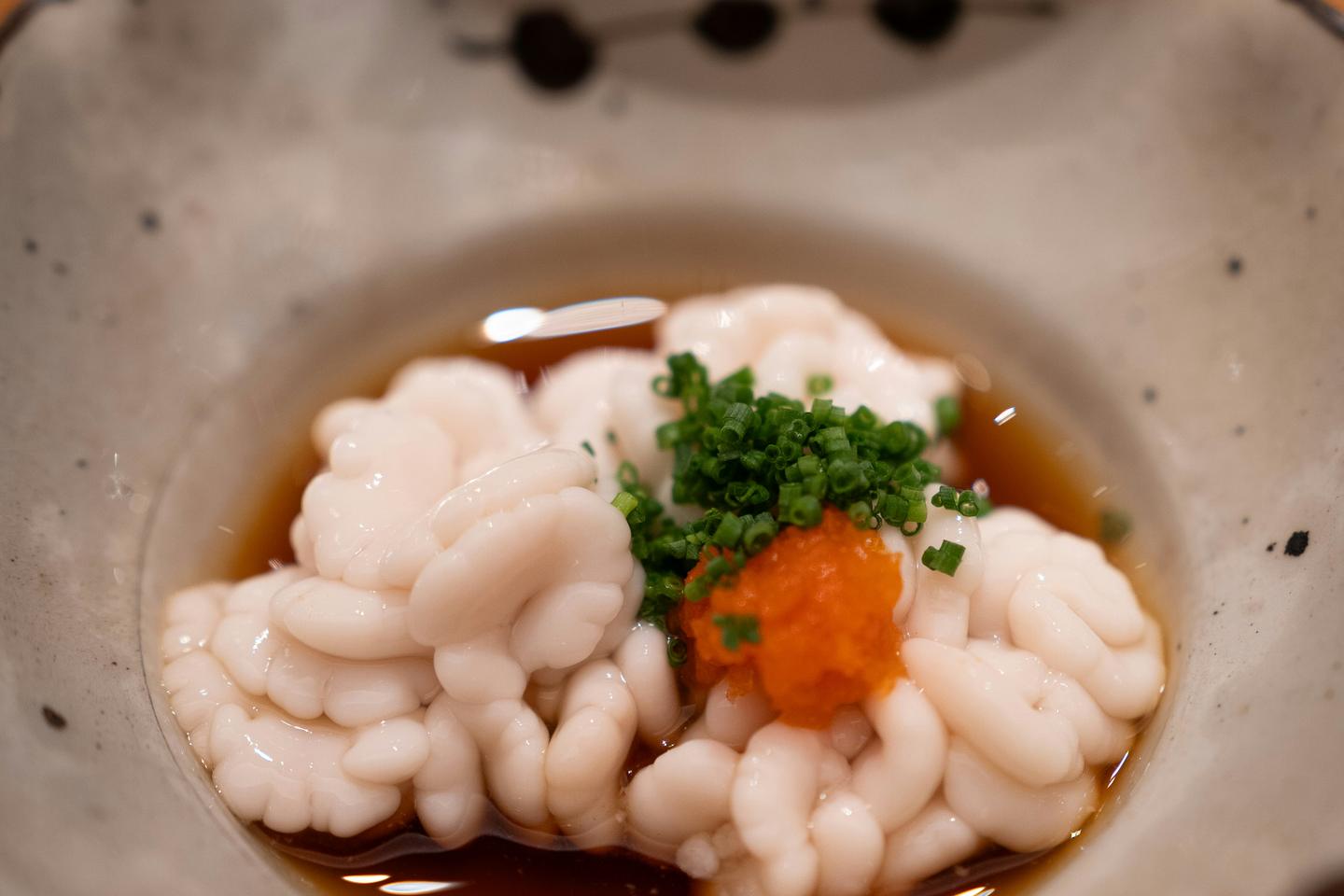
A fugu course follows the fish from raw to warm. It opens with usuzukuri, the sashimi Osaka calls tessa, sliced so thin it is laid out like a chrysanthemum. Then karaage, fried pieces on the bone; shirako, the milt, grilled or steamed with sake; and chiri, the hot pot of fugu and vegetables that Osaka calls tecchiri. The last of the broth becomes zosui, rice and egg cooked at the table. Hirezake, sake poured over a toasted fin, is the drink of the season.
The names come from Osaka. The city's tourism bureau explains that fugu was nicknamed teppō, the gun, because a bad one could kill, and that tessa and tecchiri come from that word. It also writes that Osaka accounts for about 60 percent of fugu eaten in Japan, and that an Osaka city ordinance lifted the local ban in 1947.
Shunpanro in Shimonoseki publishes a clear example. Its full course of thin sashimi, karaage, sake steamed milt, hot pot and zosui costs ¥24,200, ¥29,700 or ¥35,200 per person, and its wild tiger puffer course, made with fish bought at the Haedomari market, costs ¥60,500, all tax included, with a 10 percent service charge on top. Courses are for two or more and must be requested four days ahead. Fin sake is ¥1,320.
THE SEASON
Fugu is a winter dish. The ministry describes winter as the peak of fugu consumption, and Japan's national tourism organisation calls November to February the best season in Shimonoseki. The year begins earlier at sea: the longline fleet sails from Shimonoseki on September 1, and the first auction of the 2026 season took place at Haedomari before dawn on September 28. Kyodo News reported about 2,610 kg sold that morning and a top price of ¥21,000 per kg, about 20 percent higher than a year earlier, with wild fish down to about 110 kg after rough seas and warm water. Shunpanro does not serve its wild tiger puffer course from May to September or over the New Year.
SHIMONOSEKI, WHERE FUGU IS LANDED
Shimonoseki, at the western tip of Honshu, calls fugu fuku, the word for good fortune, and describes itself as the city that handles the most fugu in Japan. Its Haedomari market, opened in 1974, is the country's only market built around fugu. Yamaguchi Prefecture explains how its auction works: buyers and auctioneer grip fingers inside a black cloth tube to settle the price unseen. The floor is open only to the trade. Visitors can enter during the Fuku no Hi festival in February, held in 2026 on February 11 from 8:00 to 12:00, with sashimi for sale and a large fugu hot pot. Shimonoseki fuku was registered as a geographical indication in 2016.
The city's fugu history begins at Shunpanro. Yamaguchi lifted its ban on eating fugu in 1888, and Shunpanro writes that in that year Itō Hirobumi, Japan's first prime minister, made it the first licensed fugu restaurant. It stands near the Kanmon Strait, about ten minutes by car from Shimonoseki Station, and it also has guest rooms. Across the water in Kyushu, the tourism organisation gives fifteen minutes by train from Kokura to Shimonoseki. Further south, Usuki in Oita is known for tiger puffer raised in the fast currents of the Bungo Channel; its tourist association says the flesh is firm enough that it cannot be sliced thin, and that the town's fugu houses serve it all year.
TOKYO AND OSAKA
Fugu is served across Japan, and the Michelin Guide lists three restaurants under its fugu category. RyuGin in Hibiya, Tokyo, holds three stars and, from January to March, serves only its fugu course. Yoshiko in Kitashinchi, Osaka, holds one star and buys wild tiger puffer from Shimonoseki for a meal of peony cut sashimi, hot pot and zosui. Fugu Club miyawaki Bettei in Tsukiji, a Michelin selected restaurant, lists a course at ¥18,150 and a wild fugu course at ¥26,620, tax and service included, with wild fugu served from October 1, 2026 to March 31, 2027. Each house has its own rules on dates and party size, and the most sought after winter tables go first.
A WINTER EVENING
The car comes for you at dusk. At the counter the chef lays the sashimi out like a flower and leaves the platter in front of you while the pot comes to a simmer. The fin sake arrives with its lid on, smelling of the toasted fin. Then the milt, the hot pot, and at the end the rice stirred into the broth, eaten slowly from a warm bowl. Outside it is cold and very quiet, and the car is already at the door.
WHERE STAYGO COMES IN
For a fugu evening we arrange the table, the date in the season that suits your trip, the course and any changes it needs, and the car there and back, with an interpreter where the counter does not speak your language. In Shimonoseki we arrange the room at Shunpanro or nearby, the February festival at the market, and the day around the Kanmon Strait. We tell each house in advance about allergies and pregnancies, and we tell you plainly when a counter is already full. We arrange everything in your names, and you pay the restaurants, inns and drivers directly at their own prices, with no commission or markup from us. Trips are planned on the Signature plan, for 7 to 14 days, or as Bespoke for longer or more complex journeys.
SOURCES AND HOW WE CHECKED
We read the pages below on November 2, 2026: the Ministry of Health, Labour and Welfare and the Tokyo Metropolitan Government for the rules and statistics; Shimonoseki City, Yamaguchi Prefecture and Kyodo News for the market and the season; the tourism organisations for travel; the Michelin Guide, a reservation service and the restaurants' own pages for menus and prices. We did not contact any restaurant.
- Ministry of Health, Labour and Welfare, Serving Safe Fugu (Japanese): prefectural certification, the liver ban, the poison and cooking
- Ministry of Health, Labour and Welfare, national standard for fugu processors, 2019 (Japanese): examination, 22 edible species, locked disposal
- Ministry of Health, Labour and Welfare, fugu poisoning statistics (Japanese): cases, patients and deaths, 2003 to 2025
- Ministry of Health, Labour and Welfare, notice on fugu handling, December 2023 (Japanese): the farmed liver case, winter as peak season
- Ministry of Health, Labour and Welfare, Q&A on fugu liver (Japanese): the Saga proposals and the Food Safety Commission
- Ministry of Health, Labour and Welfare, natural toxins: fugu (Japanese): tetrodotoxin and symptoms
- Tokyo Metropolitan Government, fugu handling supervisor licence Q&A (Japanese): the 2023 change of name
- Chuo City Health Centre, handling fugu (Japanese): certification for restaurants
- Shimonoseki City, fuku (Japanese): Haedomari market, 1888, the geographical indication, the September send off
- Yamaguchi Prefecture, press release on the Haedomari first auction, 2023 (Japanese): the hidden finger auction and access to the floor
- Kyodo News, first fugu auction in Shimonoseki, September 28, 2026 (Japanese): volume, top price, wild catch
- Yamaguchi Prefecture tourism, Shimonoseki Fuku no Hi festival (Japanese): date, hours and place
- Japan National Tourism Organization, pufferfish cuisine in Shimonoseki: best season and train from Kokura
- Osaka Convention and Tourism Bureau, OSAKA-INFO (Japanese): Osaka's share, 1947, tessa and tecchiri
- Usuki City Tourist Association, tourism sheet, January 2026 (Japanese): Usuki fugu
- Shunpanro, cuisine and drinks (Japanese): courses, prices, service charge, fin sake
- Shunpanro, Shimonoseki main house (Japanese): the first licence, location and rooms
- Michelin Guide, Fugu / Pufferfish restaurants in Japan: RyuGin, Yoshiko, Fugu Club miyawaki Bettei
- OMAKASE, Fugu Club miyawaki Bettei: course prices and the wild fugu season
QUESTIONS TRAVELLERS ASK
Is fugu safe to eat in Japan?
At a licensed restaurant, yes. Fugu served to the public must be prepared by a processor certified by the prefectural governor, and since 2019 that certification is earned by examination. Japan's health ministry counted 10 fugu poisonings in 2025, most of them at home, and no deaths.
Can I ask for fugu liver?
No. Serving fugu liver is illegal in Japan, whether the fish is wild or farmed. Proposals to allow liver from farmed fish have been reviewed twice, and both times its safety could not be confirmed.
When is fugu season?
Winter. Japan's national tourism organisation calls November to February the best months in Shimonoseki, and the health ministry describes winter as the peak of fugu eating. The first auction of the 2026 season was held on September 28.
How much does a fugu course cost?
At Shunpanro in Shimonoseki, a full course costs ¥24,200 to ¥35,200 and the wild tiger puffer course ¥60,500, tax included, plus a 10 percent service charge. In Tokyo, Fugu Club miyawaki Bettei lists courses at ¥18,150 and ¥26,620, tax and service included.
Can visitors see the fugu auction in Shimonoseki?
The auction floor at Haedomari is open only to the trade. Visitors can enter the market during the Fuku no Hi festival in February, when fugu sashimi is sold and a large hot pot is served.
ASK US ABOUT A FUGU EVENING
Tell us when you will be in Japan. We will ask the fugu houses about a quiet table in the season, and come back with what they were able to confirm.
Begin planning →We reply within 24 hours, in writing
Some of the restaurants, bars and private places we arrange take guests only by introduction or membership. We do not publish their names.