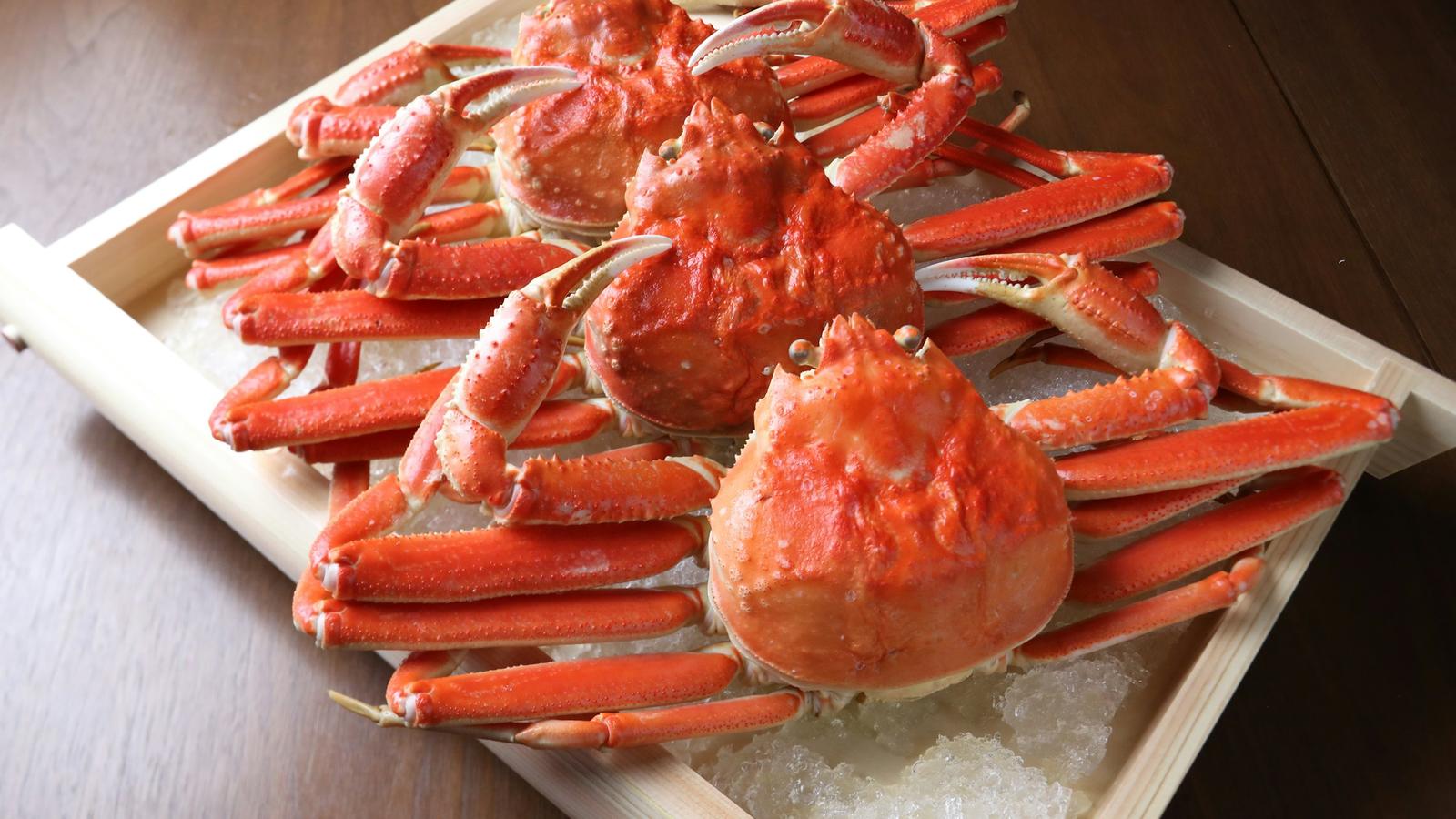
Snow crab, zuwaigani, is the winter crab of the Sea of Japan. Its season opens on November 6, and for the next few months the ports of Fukui, Ishikawa, Hyōgo and Tottori land it each night. Each region sells it under its own name, Echizen crab in Fukui, Matsuba crab on the San'in coast, Kanō crab in Ishikawa, and puts its own tag on the leg. At the first auction of the season the best crab can fetch millions of yen.
Below are the season dates, the tags and the brands, how the auctions set the price, and what a crab dinner at an inn by the sea is like. We read the Ministry of Agriculture's register of protected food names, Tottori Prefecture's pages and its fisheries research station, the Tourism Agency, an inn's own pages, a booking service, a travel magazine and press reports on October 31, 2026, and did not contact anyone. Dates and prices for the 2026 season are given only where an official page already shows them. For the meal itself, see Kaiseki Etiquette: What to Expect at a Kaiseki Dinner →.
Key points
- Snow crab season on the Sea of Japan opens on November 6. In Fukui, male crab is landed to March 20 and female crab to December 31.
- Echizen crab from Fukui wears a yellow tag, first used in 1997, and in 2018 became the first crab registered as a protected geographical name in Japan.
- Top grades are chosen by eye at the market. Tottori's Itsukiboshi must be at least 13.5 cm across the shell and 1.2 kg, and is less than 0.1 percent of the catch.
- At Kinosaki Onsen, one long-established inn publishes a crab dinner plan for November 7, 2026 to March 31, 2027, from ¥85,800 per person for two sharing, with about one crab per guest.
WHEN THE SEASON OPENS
On November 6 the boats go out, and the first crab reaches the markets that night and the next morning. Kyodo News, reporting the 2025 opening, gave Fukui's season as running to December 31 for female crab and to March 20 for male crab. The female, smaller and sold with its eggs, is called seiko in Fukui and kōbako in Ishikawa and Toyama. The travel site Nippon Tabi Magazine notes that from about mid February a softer, recently moulted male, known in Fukui as mizugani, also comes to market.
The most expensive weeks are the first. Kyodo reported from the Echizen fishing port in 2025 that the catch was smaller than usual and that a local fish seller felt prices were nearly double. December brings the year-end demand, and January to March the deepest winter on the coast, with snow on the roofs of the onsen towns.
THE TAGS ON THE LEGS
Each region attaches a tag to the leg of its male crab, printed with the name of the port. Nippon Tabi Magazine writes that Fukui began the practice in 1997, when Echizen crab was first sold with a yellow tag before auction, and that tagging then spread across the country. In 2018 Echizen crab was entered in the Ministry of Agriculture's register of geographical indications as number 69. The register describes crab kept cold from the moment it is caught until it is landed, so that the meat, the miso and the roe stay fresh, and a steep seabed off the Echizen coast that brings the fishing grounds close to shore.
Above the ordinary tag sit the top brands. Fukui's Echizen crab Kiwami, introduced in 2015, must weigh at least 1.5 kg when landed, measure at least 14.5 cm across the shell and 3 cm across the claw; Kyodo reported that 51 crabs, 0.02 percent of the male catch, met the standard in the previous season. Tottori's Itsukiboshi must be at least 13.5 cm across, weigh at least 1.2 kg raw at the market, have all its legs, bright colour and full meat. Ten market inspectors at five ports choose it, and Tottori says less than 0.1 percent of its crab qualifies. Ishikawa's top grade is called Kagayaki.
HOW THE PRICE IS SET
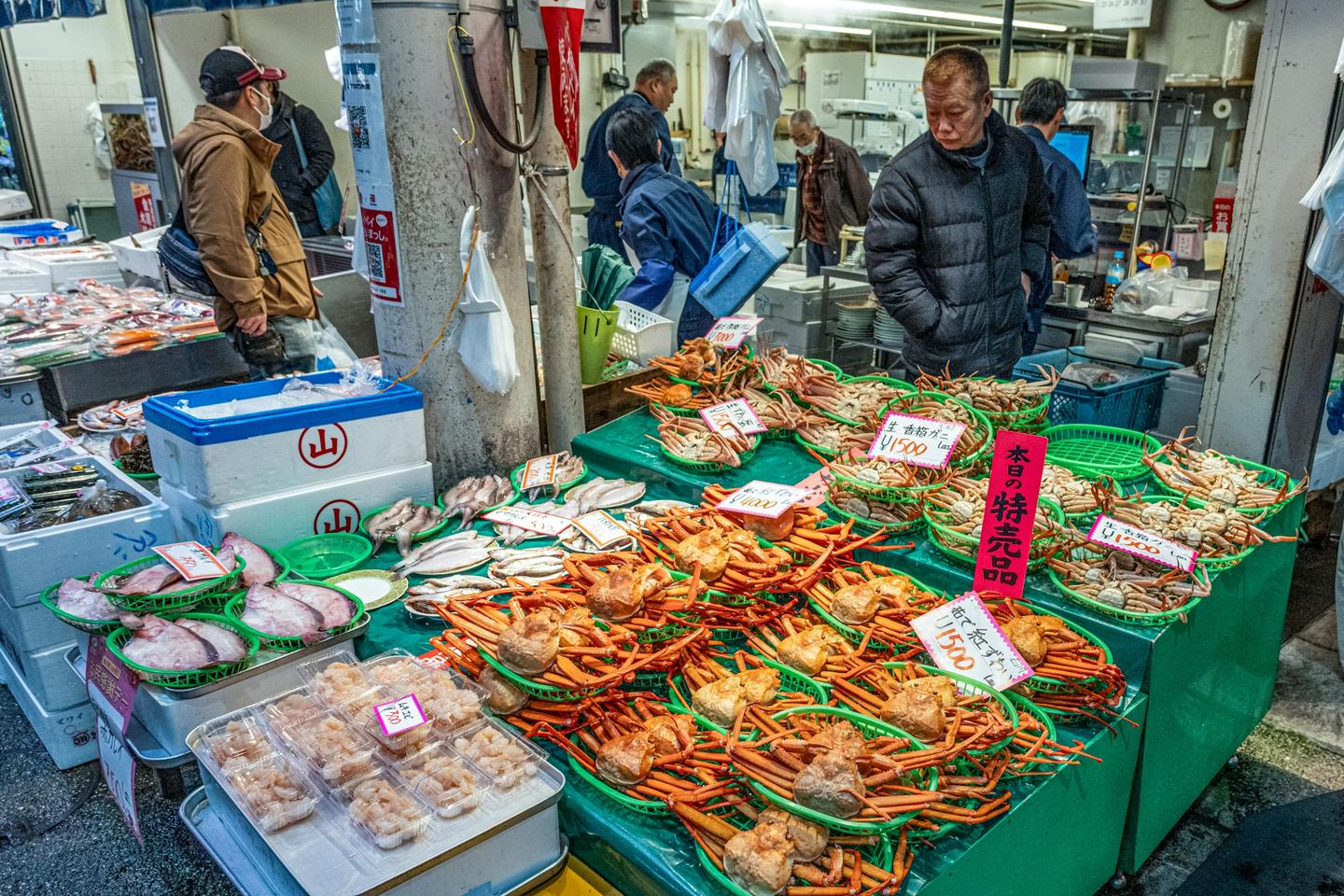
Snow crab is sold by auction at the port market. Tottori's fisheries research station described the first night of the 2025 season: its staff were at the Sakaiminato market at midnight as the trawlers came in, then went on to the other ports, where the inspectors judged the large crab one by one. At one port none passed for Itsukiboshi because of small scratches; at another a single crab of 14.2 cm and 1.22 kg was chosen and sold for one million yen.
The first auction is where records are made. Tottori Prefecture reports that in 2019 an Itsukiboshi sold at Tottori port for five million yen, the highest price in Japan at the time. On November 6, 2023, a crab sold for ten million yen at Hamasaka port in Hyōgo to the owner of a Kobe restaurant, as reported by the Mainichi. In 2025, Kyodo reported a Kagayaki sold for 4.5 million yen to a ryokan in Kanazawa. After the first week, prices settle with the catch and the weather.
ECHIZEN AND THE FUKUI COAST
The Echizen coast runs along the west of Fukui, where the hills drop steeply to the sea. Nippon Tabi Magazine notes that about 70 percent of Echizen crab is landed in Echizen town, at the ports closest to the fishing grounds, and that Mikuni is the other main port. In late winter the softer mizugani is a local dish worth asking for. The coast is reached by car from Fukui, and a driver lets you stop at the ports and come back to the inn before dark.
KINOSAKI AND THE SAN'IN PORTS
On the San'in coast the crab is Matsuba crab, landed at ports such as Tsuiyama, Kasumi and Hamasaka in Hyōgo and at Tottori's ports further west. Tottori Prefecture says its main ports land more crab than any others in Japan, and that Tottori City buys more crab per household than any other city. The onsen town for this coast is Kinosaki. Japan's Tourism Agency describes it as a town of seven public bathhouses, all within walking distance, about two and a half hours from Kyoto by train, or under an hour's flight from Osaka's Itami to Tajima airport and 20 minutes by car.
Nishimuraya, an inn in Kinosaki founded in the Ansei era about 165 years ago, publishes on its own reservation page a crab dinner plan for November 7, 2026 to March 31, 2027, from ¥85,800 per person for two sharing, tax included, using about one Matsuba crab per guest. The plan includes a pass to the town's public baths; the inn notes a separate bathing tax of ¥150 and bathing fee of ¥280, and that tag colours differ with the port where the crab was landed. Its sister inn, Nishimuraya Hotel Shogetsutei, set in a garden of 50,000 tsubo, is about five minutes by taxi from Kinosaki Onsen station, according to the booking service KNT.
HOW A CRAB DINNER UNFOLDS
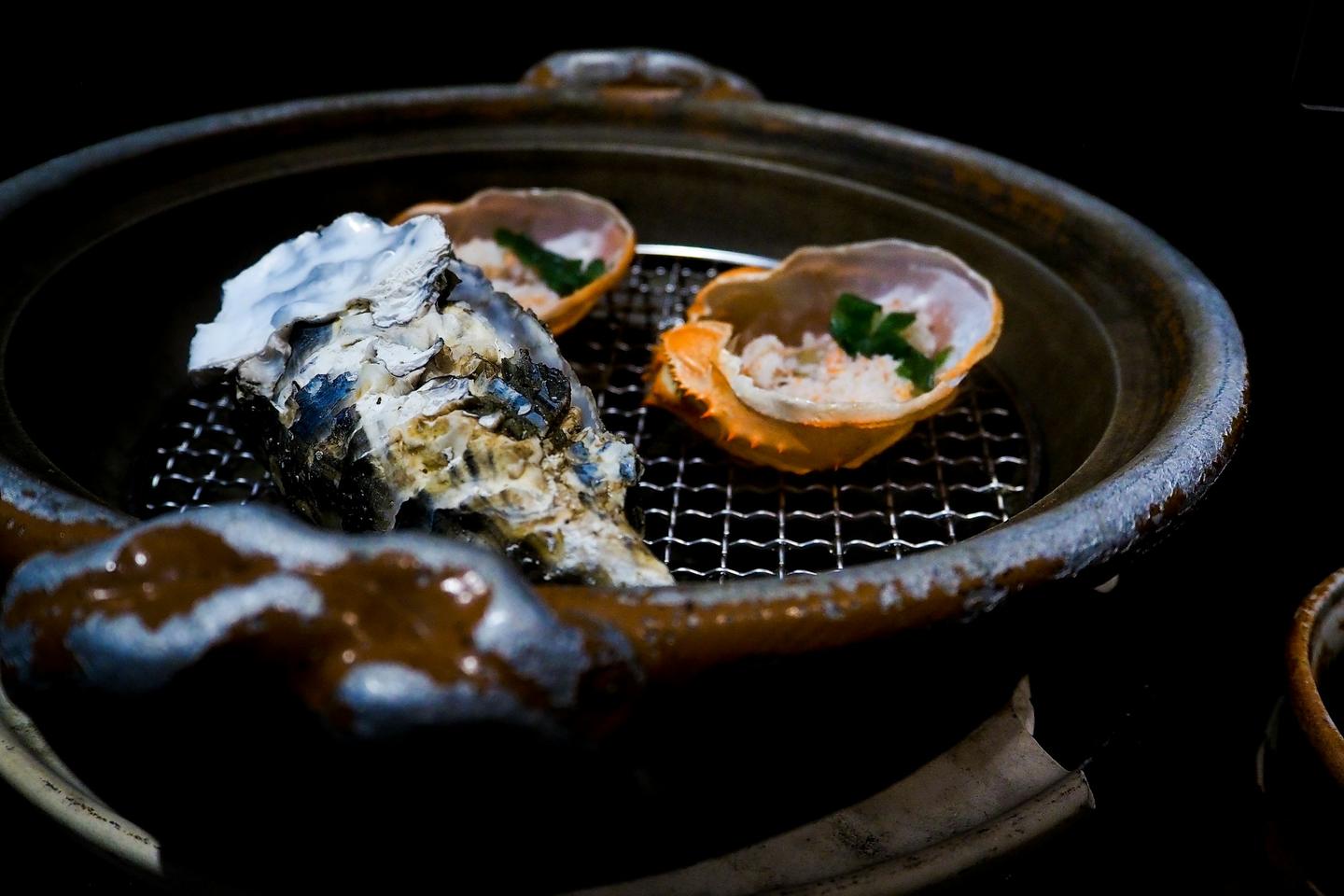
A crab dinner at an inn is a kaiseki built around one ingredient. Nishimuraya's published menu begins with an aperitif and a seasonal starter, then half a boiled crab, a soup, raw live crab with two or three local fish, a Tajima beef course, crab steamed with aromatics, and rice cooked in a clay pot in the room, with red miso soup, pickles and fruit. Tottori recommends five ways to eat crab: grilled, raw, boiled, in a hot pot with vegetables, and swished through broth as shabu-shabu.
The evening is slow. The crab comes course by course, and there is time for a bath before dinner and a walk through the lit town after it.
WHERE STAYGO COMES IN
For a crab journey we arrange the inn and the room, the crab dinner you want, from a single course to the top grade the inn can source that week, the train seats or the car and driver from Kyoto or Osaka, and a visit to a port morning market where one is open to visitors. When you arrive, the bath is ready, the dinner time is set, and the inn knows any dish you would like left out. We arrange everything in your names, and you pay the inns, drivers and guides directly at their own prices, with no commission or markup from us. Trips are planned on the Signature plan, for 7 to 14 days, or as Bespoke for longer or more complex journeys.
SOURCES AND HOW WE CHECKED
We read the pages below on October 31, 2026: the Ministry of Agriculture's register and Tottori Prefecture for brands and standards, Tottori's fisheries research station for the auctions, the Tourism Agency for Kinosaki, the inn's own pages for its 2026 to 2027 plan, a booking service, a travel magazine and press reports for the season and prices. We did not contact any port, market or inn.
- Ministry of Agriculture, Forestry and Fisheries, GI register no. 69, Echizen crab (Japanese): registration date, producer group, qualities and the link with the coast
- Tottori Prefecture, Itsukiboshi top brand (Japanese): the five standards, ten inspectors at five ports, under 0.1 percent, the 2019 price, five ways to eat, landings and consumption
- Tottori Prefectural Fisheries Research Station, the 2025 first auction (Japanese): the night of the opening, inspection and the one-million-yen crab
- Kyodo News via Akita Sakigake Shimpo, the 2025 opening (Japanese): Echizen port, the season in Fukui, Kiwami, the 4.5-million-yen Kagayaki
- Yahoo Lifestyle, citing the Mainichi, 2023: the ten-million-yen crab at Hamasaka
- Nippon Tabi Magazine, Echizen crab (Japanese): the yellow tag since 1997, Kiwami standards, names by region, mizugani, Echizen town's share
- Japan Tourism Agency, multilingual text on Kinosaki Onsen (Japanese): seven public baths, train time from Kyoto, Tajima airport
- Nishimuraya, Kinosaki (Japanese): the inn's history and its two houses
- Nishimuraya Honkan, Matsuba crab kaiseki plan (Japanese): plan dates, price, menu, bath pass and taxes, tag colours
- KNT, Nishimuraya Hotel Shogetsutei (Japanese): taxi time from the station and the garden
QUESTIONS TRAVELLERS ASK
When is snow crab season in Japan?
On the Sea of Japan coast the season opens on November 6. In Fukui, the season for male crab runs to March 20 and for female crab to December 31, according to the 2025 opening report. At Kinosaki, one long-established inn publishes its crab dinner plan from November 7 to March 31.
What is the difference between Echizen crab and Matsuba crab?
Both are snow crab, the same species. The name changes with the port: crab landed in Fukui is sold as Echizen crab, crab from the San'in coast of Tottori and Hyōgo as Matsuba crab, and crab from Ishikawa as Kanō crab. Each area attaches its own tag to the leg.
Why does snow crab cost so much?
The price is set at auction at the port each morning, and the top grades are rare. Tottori says its top brand, Itsukiboshi, accounts for less than 0.1 percent of its crab. First auctions draw record bids: one crab sold for 10 million yen at Hamasaka in Hyōgo on November 6, 2023.
Where can I eat snow crab near Kyoto or Osaka?
Kinosaki Onsen in Hyōgo is about two and a half hours from Kyoto by train, according to Japan's Tourism Agency, and many of its inns serve crab dinners in season. The Echizen coast in Fukui is another region, reached by car from Fukui.
Is the tag on the crab important?
The tag tells you where the crab was landed and, for the top grades, that it met the brand's standard. A ryokan in Kinosaki notes that tag colours differ by port. Ask to see the tag if you want to know where your crab came from.
ASK US ABOUT A CRAB JOURNEY
Tell us your dates between November and March. We will ask the inns on the coast about their crab dinners and rooms, and come back with what they were able to confirm.
Begin planning →We reply within 24 hours, in writing
Some of the restaurants, bars and private places we arrange take guests only by introduction or membership. We do not publish their names.