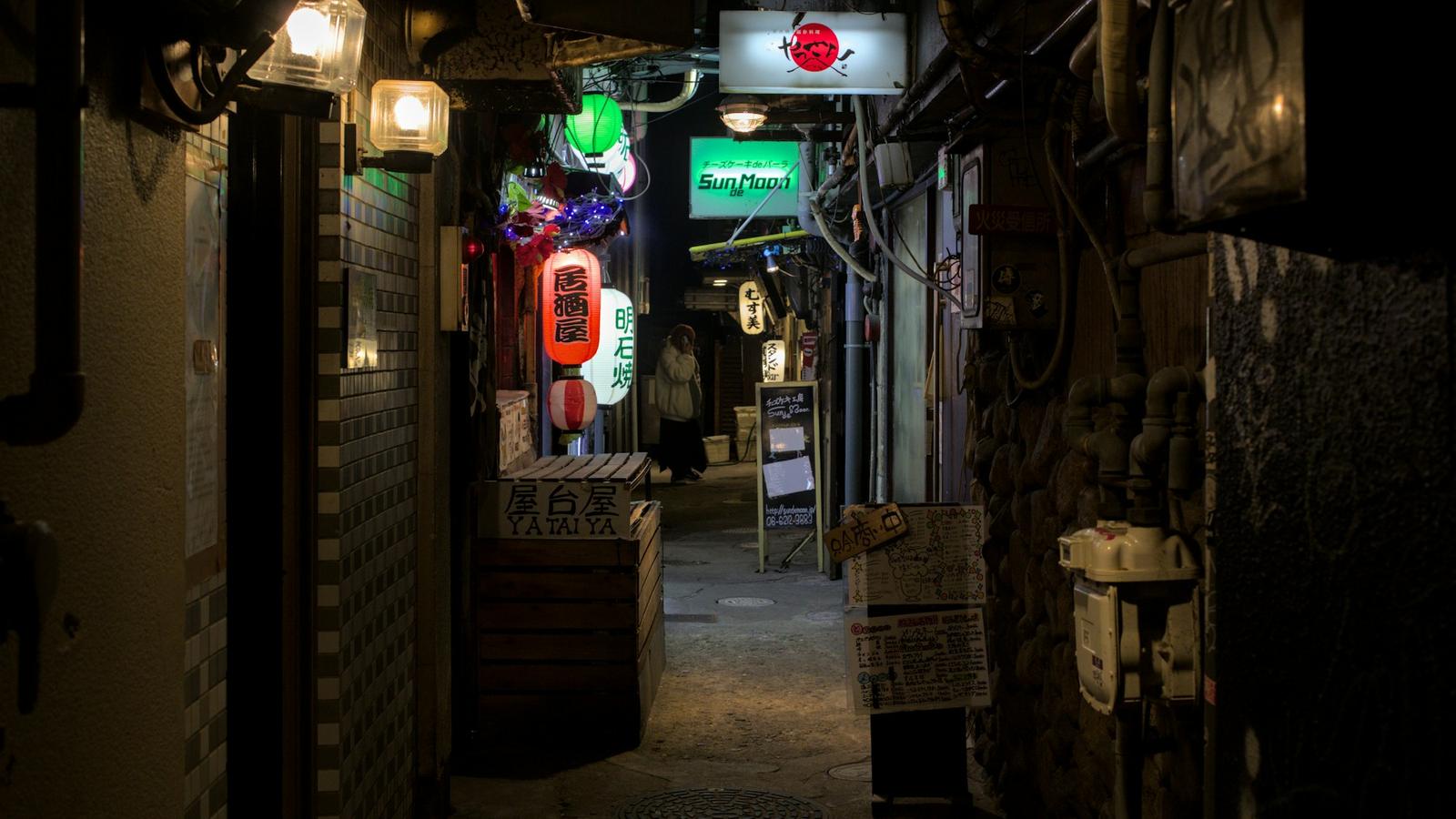
Japan's second food city has a reputation problem, not for the food, which is extraordinary, but for how it is usually presented to visitors. Most Osaka itineraries start and end at Dotonbori: the canal, the neon, the giant mechanical crab, the Glico running man. It is photogenic. It is not where Osaka's food culture lives.
The real Osaka (the one that Tokyo businesspeople fly down for, that culinary professionals reference when they discuss the highest density of serious dining per square kilometer in Japan) operates in Kitashinchi to the north and in pockets of Minami that most tourists walk past without noticing. This article is about that Osaka.
Key points
- Osaka's serious dining is in Kitashinchi, where many kappo counters take bookings only through a Japanese-speaking introduction, and in the back streets of Minami. Dotonbori is worth seeing once.
- For a trip built around food and culture, stay in Namba; for business mixed with leisure, Umeda. The two are about ten minutes apart on the Midosuji subway line.
- Nara and Kobe both work as day trips from an Osaka base.
THE REAL FOOD CITY
Osaka's claim to being Japan's true food city is older than Tokyo's culinary reputation. The concept of kuidaore, "eat until you drop", is an Osaka expression, not a Tokyo one. The city has a different relationship with food than any other in Japan: more direct, less reverential, warmer. A chef in Osaka is more likely to lean across the counter and ask what you thought of the last dish. A chef in Tokyo would never.
What this produces in practice is a dining culture of extraordinary depth that operates at every price point. The highest tier is concentrated in Kitashinchi. The tier below it, which would be the top of the scale in most cities, is spread through Namba, Shinsaibashi, and the backstreets of Nishi-Shinsaibashi. The tourist tier is Dotonbori. They are categorically different experiences.
"Osaka's food culture, at its best, exceeds Tokyo's in warmth and in creativity. The city simply doesn't advertise this as loudly, which is itself a form of confidence."
KITASHINCHI: WHERE TOKYO EXPENSE ACCOUNTS GO
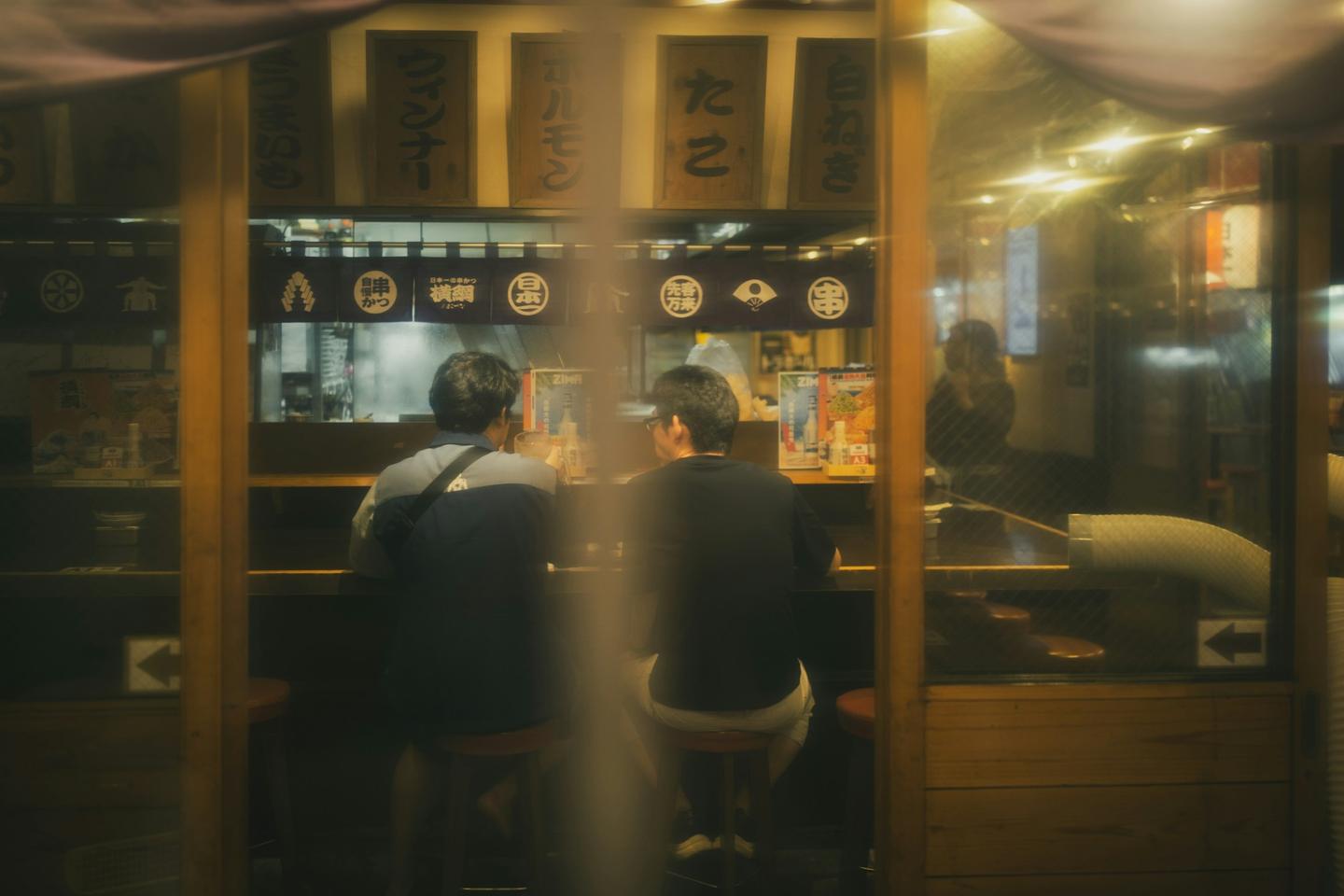
Kitashinchi, the district immediately north of Osaka's central business area, is where serious private dining happens in this city. The comparison that locals use (half proud, half resigned) is that Tokyo expense accounts come here. The district has the highest concentration of intimate kappo counters, private dining rooms, and introduction-only establishments in western Japan.
Kappo is an Osaka dining form: the chef cooks directly in front of you at a counter, composing dishes from whatever is best that day, in whatever order makes sense. There is no printed menu. The interaction between chef and guest is central to the experience. It is less formal than a full kaiseki progression, more personal, and often more surprising. Kitashinchi has dozens of counters operating at this level.
The practical challenge for international travelers: many of the best Kitashinchi establishments require a Japanese-speaking introduction. They are not listed on reservation platforms. Some do not have websites. A STAYGO introduction bypasses this entirely. We know which counters take foreign guests warmly and which require more negotiation.
A private kappo counter in Kitashinchi: eight to twelve seats, chef cooking two meters in front of you, courses composed moment by moment from the morning's market. No menu card. The chef will explain each dish if you ask. Through STAYGO's arrangement, English-fluent guidance is included. These counters fill on introduction alone and are not bookable through standard channels.
MINAMI: CHEAPER, AND JUST AS GOOD
Minami, the southern entertainment district that takes in Namba and Shinsaibashi, costs less than Kitashinchi and eats just as well. The trap is that its most visible offerings (the conveyor-belt sushi near the station, the chain tempura restaurants, Dotonbori itself) give no indication of what sits one or two streets back.
Kushikatsu (skewered, battered, and deep-fried proteins and vegetables) is Osaka's most distinctive contribution to Japanese cuisine. The famous chain is Daruma; it is worth visiting once for the experience. The serious kushikatsu counters are elsewhere: smaller, individually owned, with the cook standing behind the fryer deciding what comes next based on what's good today. The one rule, no double-dipping in the communal sauce, applies everywhere, and there is no exception.
Minami is also where Osaka's yakitori, standing sushi bars, and small izakaya culture operates at its best. The backstreets of Nishi-Shinsaibashi, particularly the lanes east of the main shopping boulevard, contain some of the city's most characterful small restaurants, places that have not changed their format in thirty years and have no intention of doing so.
Not the Dotonbori chain version. A proper kushikatsu counter in Minami: the cook behind the fryer, a short printed list of what is available today, the oil fresh and clean, the batter light. Skewers arrive in the order the cook decides: asparagus wrapped in wagyu, shrimp, lotus root, chicken skin, quail egg. It is one of the best-value dining formats in Japan.
WHERE TO STAY
Osaka's luxury hotel market is stronger than its reputation suggests. For international-standard luxury, the two clear leaders are The St. Regis Osaka (formal, precise service, central location on Honmachi) and Conrad Osaka, occupying floors 33 through 40 of Nakanoshima Festival Tower West with views over the Nakanoshima island and the river. The Conrad is one of the most visually arresting hotel positions in Japan.
The Ritz-Carlton Osaka is a long-established luxury option near Umeda, with a more classical European aesthetic. It remains excellent. If you would rather stay inside the city rather than above it, the machiya townhouse hotels in the Namba area (there are a small number of high-quality options) put you in the atmospheric south, within walking distance of Dotonbori, Hozenji Yokocho, and the backstreet dining that is the real reason to be in this part of Osaka.
Umeda (north) is Osaka's business hub: the main JR station, the underground shopping city, corporate towers. Efficient, clean, practical. Namba (south) is atmospheric: older streetscapes, more small restaurants, the canal, the night life. For travelers visiting Osaka primarily as a food and culture destination rather than on business, Namba is the right base. For travelers mixing business meetings with leisure, Umeda. The two areas are about ten minutes apart on the Midosuji subway line.
SHINSEKAI: THE OSAKA THAT WAS NEVER TIDIED UP
Shinsekai is not for everyone. The district (built in the early 20th century as an amusement area modeled on Paris and New York, then fallen into long decline) is rough around the edges, eccentric, and entirely genuine. The Tsutenkaku Tower at its center is surrounded by kushikatsu restaurants, retro pachinko parlors, and the kind of lived-in streetscape that no amount of urban redevelopment has yet touched.
Serious travelers find Shinsekai fascinating precisely because nobody has tidied it up for visitors. It is what parts of Osaka used to look like. The kushikatsu there is honest and cheap. The locals are blunt and friendly in equal measure. This is the Osaka-ben dialect and the Osaka manner: direct, self-deprecating, unexpectedly warm once you engage.
"Osaka-ben, the city's dialect, sounds rougher than standard Japanese to outside ears. What it actually is: directness, self-deprecating humour, and a refusal to take anything too seriously. It is the most hospitable city in Japan, disguised as the most abrupt."
DAY TRIPS: NARA AND KOBE
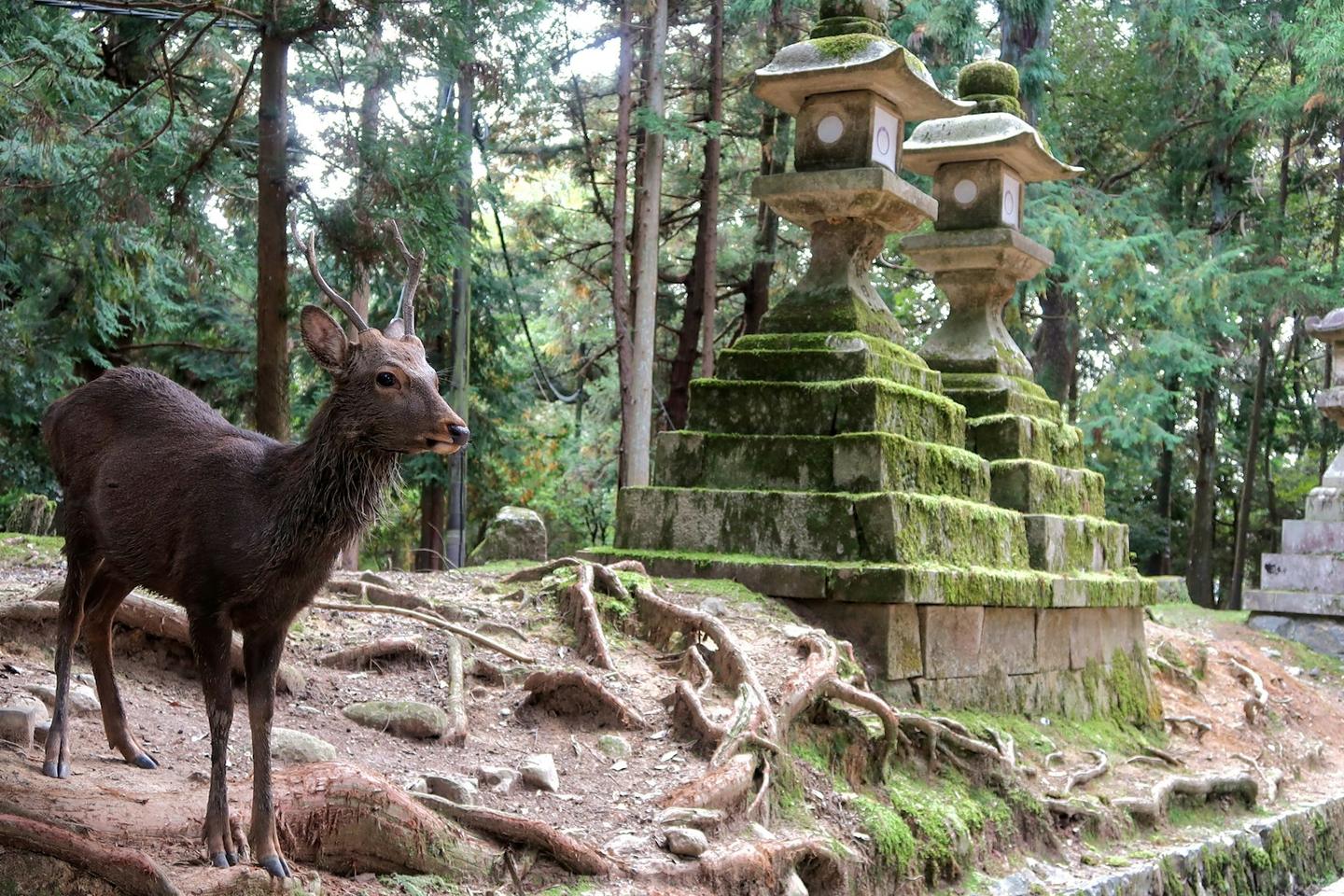
Osaka's position makes it an excellent base for two of Japan's most rewarding day trips. Nara, 45 minutes by Kintetsu express train, was Japan's first permanent capital and contains some of the country's oldest and largest Buddhist monuments. Todai-ji's Great Buddha hall is genuinely extraordinary in scale. Kasuga Taisha, with its thousands of stone and bronze lanterns, is one of Shinto's most atmospheric shrines. The deer that roam freely through the park are a designated national natural monument and entirely indifferent to visitors. They will take crackers from your hand and headbutt you for more.
Kobe, about 15 minutes by shinkansen from Shin-Osaka or about 30 minutes by Hankyu limited express from Umeda, is a different register entirely. The city's port history produced one of Japan's most cosmopolitan and architecturally distinctive streetscapes. The Kitano Ijinkan district, where foreign merchants built Western-style houses in the Meiji era, is unlike anywhere else in Japan. And Kobe beef (specifically, wagyu raised in Hyogo Prefecture and meeting strict certification criteria) is served here at its source. A lunch at a Kobe beef restaurant near the port is a straightforward, memorable half-day addition to an Osaka base.
WHAT TOKYO TRAVELERS MISS
Travelers who come to Osaka from Tokyo (or worse, who skip it entirely in favor of a longer Tokyo stay) consistently miss the specific thing that makes Osaka irreplaceable in a Japan itinerary: the warmth. Tokyo is a world-class city in every conventional sense. It is also a city of extraordinary reserve. Osaka is not. The shopkeeper who explains in gestures what you should try, the chef who leans over and asks genuinely how the meal is going, the stranger who helps with directions and then walks you there. This is Osaka's register, and it is distinct.
The concept of kuidaore captures something real: in Osaka, food is not performance. It is hospitality. The city's highest compliment is feeding you well and watching you enjoy it. This is different from Tokyo, where the compliment is an immaculate plate that asks nothing of you emotionally. Neither is better. They are different pleasures, and a serious Japan itinerary should include both.
QUESTIONS, ANSWERED
What is Kitashinchi and why do Tokyo business travelers go there?
Kitashinchi is Osaka's premier entertainment and dining district, located north of the city center. It has the highest concentration of private kappo counters and omakase restaurants in Japan outside Tokyo. Many establishments operate on introduction-only systems and require a Japanese-speaking intermediary. Tokyo expense accounts have fueled this district for decades. It is not tourist infrastructure.
Is Dotonbori worth visiting?
Dotonbori is worth seeing once as a spectacle: the neon, the Glico running man sign, the canal. It is not where serious food happens in Osaka. The notable dining is in Kitashinchi, parts of Minami away from the main tourist drag, and the private counters that do not advertise.
What is kappo dining and how is it different from kaiseki?
Kappo is an Osaka-born style of counter dining in which the chef cooks directly in front of guests, more interactive and less ceremonial than kaiseki. There is no printed menu; dishes are composed around the season and the chef's judgment. It is one of Japan's most distinctive dining formats and Osaka, particularly Kitashinchi, is its spiritual home.
Which luxury hotels are best in Osaka?
The St. Regis Osaka and Conrad Osaka (33rd to 40th floors, Nakanoshima skyline) represent the top tier of international luxury. The Ritz-Carlton Osaka is a long-established alternative near Umeda. For a more immersive experience, traditional machiya hotels in the Namba area place guests closer to the atmospheric south of the city.
OSAKA'S BEST COUNTERS REQUIRE AN INTRODUCTION
STAYGO arranges access to Kitashinchi kappo counters, serious kushikatsu, and the private dining that does not appear on any booking platform, alongside hotels, transport, and the full itinerary.
Start planning →