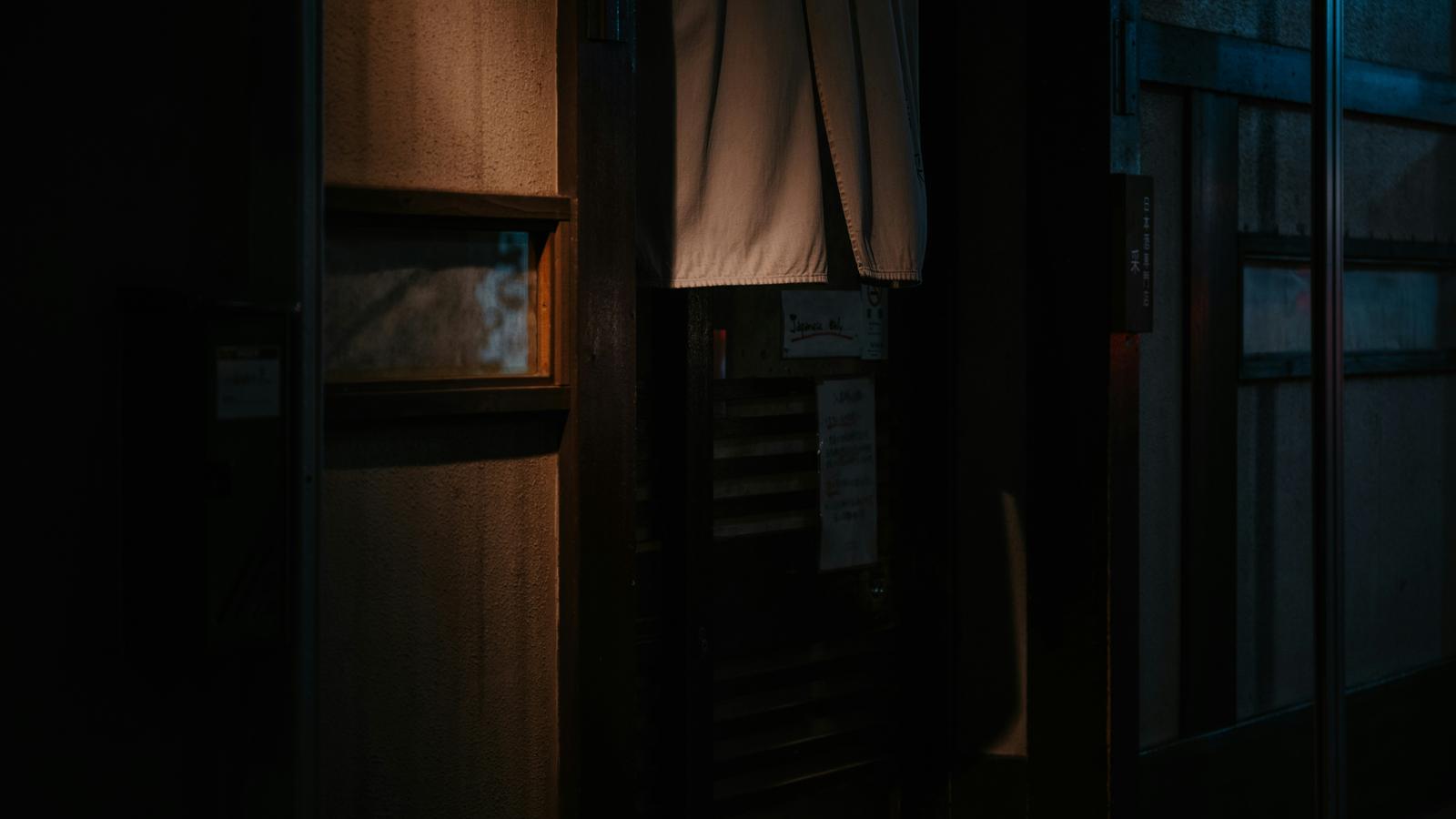
An introduction-only restaurant in Japan, called ichigen-san okotowari (first-time guests declined), takes a new guest only when someone the house already trusts vouches for them. The custom is strongest in Kyoto's ochaya teahouses, where the house pays for the whole evening on the guest's behalf and sends the bill two or three months later, according to a Kobe University study of the five Kyoto geisha districts. A visitor gets in through a regular, a hotel concierge, a host company or an arranger the house already knows: Sukiyabashi Jiro Honten in Ginza, for example, writes on its own site that overseas guests can reserve only through their hotel concierge. With no introduction at all, Gion Corner in Kyoto shows a maiko's dance every evening from ¥5,500.
This guide explains why the custom exists, how ochaya, counters, members-only bars and private clubs decide who comes in, how a visitor is introduced, the etiquette inside, and what to do without an introduction. We read every rule, study and price on the pages themselves on October 28, 2026, and the sources are listed at the end. For the booking side of restaurants that do take reservations, see how Tokyo's best tables actually work.
Key points
- Ichigen-san okotowari means a house takes new guests only through someone it already knows. It is firmest in Kyoto's ochaya, and found in some counters, members-only bars and clubs.
- The reasons are practical: a small room run by one chef or proprietress, an evening shaped to each guest, a home that is also a workplace, and payment on account.
- The ways in are a regular, your hotel concierge, a host company, an arranger the house knows, or a membership.
- Inside: be on time, cancel early, ask before photographs, skip perfume.
- Without an introduction, see maiko at Gion Corner (from ¥5,500), the dances or the Kamishichiken beer garden.
LET US ARRANGE A TABLE BY INTRODUCTION →
WHAT INTRODUCTION-ONLY MEANS
Ichigen is a first-time customer with no connection to the house, and okotowari means declining. A house that keeps the custom takes a new guest only through someone it already knows: a regular, a company, a hotel concierge or an arranger it trusts. The guest is new; the relationship is not. You meet it in four kinds of places.
- Kyoto ochaya. The teahouses of the five geisha districts, where geiko and maiko entertain at private banquets called ozashiki.
- Counter restaurants. Some sushi, kappo and kaiseki counters take new guests only through regulars, or overseas guests only through a hotel concierge.
- Members-only bars and restaurants. Open to members and their guests, often with no public address.
- Private clubs. A membership card at the door and written rules on guests.
When Sukiyabashi Jiro Honten lost its stars in 2019 after it stopped accepting general reservations, a Michelin spokesperson told the trade press that the guide's policy is to introduce restaurants where everybody can go to eat.
WHY THE CUSTOM EXISTS
Kumiko Nishio's 2006 study of the Kyoto geisha districts for Kobe University, built on interviews with teahouse owners, guests and suppliers, gives three practical reasons.
An evening shaped to the guest
The reason most often given is that a teahouse can tailor the evening only to a guest it knows: the food, which geiko and maiko to call, how the room is dressed.
A home as well as a workplace
The owner of a teahouse that is also an okiya told Nishio that the house is both home and workplace, where only women live, so letting in strangers is a matter of safety. A regular added that a closed room is restful only when everyone in it can be trusted.
Payment on account
At a Kyoto ochaya the guest does not pay on the night. The teahouse advances everything: food and drink, the geiko's and maiko's fees and gifts, a second venue, even the transport. The bill arrives often two or three months later, and under the older custom of sekki-barai accounts were settled four times or twice a year. Lending a whole evening on trust, the running account called tsuke, works only with guests the house can find again.
A small room and one chef
Outside the teahouses, many counters seat a handful of guests for one set course, and an empty seat cannot be resold at short notice. A 2018 report on restaurant no-shows, written by an industry study group with three ministries and agencies as observers, notes that unannounced no-shows are said to make up just under 1% of restaurant reservations in Japan. Chris Rowthorn, the author of InsideKyoto, notes that restaurants much prefer to deal with a known quantity, and that no-shows hurt small restaurants most.
Wanting the food understood
In a 2021 book excerpt on Bunshun Online, Oussouby Sacko, a university president who has lived in Japan for about 30 years, recounts a Kyoto restaurant that refused a French couple who called directly. The owner said the cooking needed explaining, and took foreign guests who came through their hotel concierge or with an interpreter.
HOW A KYOTO OCHAYA WORKS
An ochaya provides the rooms and the hospitality. The food is ordered from outside and the geiko and maiko are called in, so the teahouse acts as the coordinator of the whole evening. The travel guide japan-guide.com writes that new customers are accepted only if an existing customer serves as their guarantor, and that travel agencies and hotels now often serve as the go-between.
Nishio's study notes that teahouses do not publish prices for the room or the geiko's fees, and that the bill can reflect how long the guest has been coming. We quote no price for that reason; if you go through an intermediary, ask for the cost before the evening. Our guide to a maiko dinner in Kyoto covers the districts, the dances and the evening itself.
MEMBERS-ONLY BARS AND PRIVATE CLUBS
In a 2021 piece for Kodansha's Gendai Business, food journalist Toryu writes that membership spread among destination restaurants in Nishi-Azabu from around the bubble era, then to Roppongi, Ebisu and Ginza. The reasons he gives: fees bring steady income in a business that lives on daily sales, members return more often and cancel less, and the house chooses its guests. Some keep their address off every listing site and grow only through members bringing friends.
Private clubs write their rules down. The Tokyo American Club, for example, states that entry is possible only with a membership card, that guests must be registered by a member at the entrance, and that the dress code applies to guests too, with members expected to tell them in advance. At a bar or a club, the person who brought you is answerable for you.
HOW A VISITOR GETS IN
Every way in runs through a person the house already trusts.
- A regular. The oldest route: a guest the house knows makes the request for you.
- Your hotel concierge. Some restaurants say so in writing. Sukiyabashi Jiro Honten's reservation page says overseas guests can reserve only through their hotel's concierge, that it does not accept bookings by agents, and that you must show photo ID on arrival. InsideKyoto cautions that concierges have relationships with some restaurants and not with others.
- A host company. A Japanese company that entertains at a house can introduce its guests, as it would its own clients.
- An arranger the house knows. A travel company or concierge service with an existing relationship makes the request in your name and stands behind it.
- Membership. You join, if the rules allow, or a member brings you.
Whoever introduces you is vouching for you. A late cancellation or a broken house rule reflects on them and can cost them the relationship.
ETIQUETTE ONCE YOU ARE INSIDE
Arrive on time
Tabelog's etiquette guide notes that at many restaurants the meal begins only once every guest is seated. Pocket Concierge, the reservation service, warns that arriving late may get your reservation cancelled. Sushi Zai in Hiroo, for example, writes that a booking may be treated as cancelled if you are more than 15 minutes late and cannot be reached.
Cancellation
Some counters charge the full price for late cancellations. The same Sushi Zai page sets a 100% fee for cancellations within 72 hours. The 2018 no-show report explains the reasoning: for a set-course booking the loss can be the full course price, and for a seat-only booking a share of the average spend per guest is one guide. It asks diners to call as soon as they know they cannot come, because even a last-minute call lets the house offer the seat to someone else.
Photographs
Ask first. Tabelog says photos are generally fine once staff approve; Pocket Concierge notes that some restaurants ban photography so each dish is eaten at once. In Gion, the tea houses association and its neighbours ask visitors not to stop, touch, follow or photograph geiko and maiko without permission, and to stay off private property.
Perfume and dress
Leave perfume at the hotel; Tabelog and Pocket Concierge both advise against it, and Pocket Concierge says some restaurants refuse entry over a strong scent. It recommends smart casual, such as a collared shirt or jacket, and no T-shirts, shorts or sandals.
Paying
Tipping is not expected; Pocket Concierge notes that a service charge is usually on the bill. Payment on account belongs to long-standing regulars, so ask your introducer how the house expects to be paid. Our guide to Japan etiquette for luxury travellers covers gifts and the rest of the table.
WHEN YOU HAVE NO INTRODUCTION
Kyoto's geisha culture has several doors open to everyone.
- Gion Corner. Run by the Ookini Zaidan, the foundation behind the official site of the five geisha districts, it shows a maiko's Kyomai dance with tea ceremony, koto, kyogen and other arts at 6 pm and 7 pm daily (Tuesday to Friday only from December 1 to March 11). Adults 23 and over pay ¥5,500, tax included.
- The dances. Each district stages public dances, mostly in spring; dates are in our maiko dinner guide.
- The Kamishichiken beer garden. Kamishichiken, by Kitano Tenmangu, opens a beer garden from July into early September, where, Serai magazine reports, geiko and maiko in yukata visit the tables.
- Geiko and maiko at an event. The Ookini Zaidan sends geiko and maiko to company ceremonies and receptions on request.
- Restaurants that take reservations. Many fine counters take bookings on their own websites or through reservation services; InsideKyoto suggests reading the cancellation policy first. Lunch is often the easier first visit, as our Tokyo reservations guide explains.
HOW WE ARRANGE A VISIT
STAYGO has connections with several introduction-only restaurants, members-only bars and private places in Japan, and we can arrange a guest's visit to one of them within the trip. We do not publish their names. Tell us the city, the evening and what you enjoy; we confirm whether a visit fits your dates, explain the customs and how the evening is paid for, and arrange it in your name. Other private evenings are in private Japan.
SOURCES AND HOW WE CHECKED
We read each source below on October 28, 2026: a university study, an industry report, restaurants' and a club's own rules, reservation services, journalism, a travel guide and the geisha districts' own organisations. We did not contact the houses, and we confirm current terms when we arrange a visit.
- Kumiko Nishio, Kobe University discussion paper 2006-28 on the Kyoto geisha districts (Japanese): reasons for the custom, payment on account, billing
- No Show (unannounced restaurant cancellation) report, November 1, 2018 (Japanese): no-show share, cancellation fees, the request to diners
- Sukiyabashi Jiro, reservations at the main restaurant (Japanese): concierge-only booking for overseas guests, photo ID
- Sushi Zai, reservation page on TableCheck: 15-minute lateness rule, 100% fee within 72 hours
- Tokyo American Club, visiting the club: membership card, guest registration, dress code
- Pocket Concierge, dining etiquette in Japan: lateness, cancellation, perfume, photos, dress, service charge
- Tabelog, Japanese culture and etiquette guide: start times, photographs, perfume
- Restaurant Online (formerly BigHospitality), November 26, 2019: Michelin's policy on restaurants the public cannot book
- Bunshun Online, June 14, 2021, excerpt from Oussouby Sacko's book (Japanese): a Kyoto restaurant's reasons
- Gendai Business (Kodansha), November 4, 2021, Toryu (Japanese): history and reasons for members-only places
- InsideKyoto, Chris Rowthorn, how to make restaurant reservations in Japan: concierges, no-shows, booking direct
- japan-guide.com, geisha: guarantors, go-betweens, how an evening is put together
- Ookini Zaidan, Gion Corner tickets (Japanese) and geiko and maiko for events (Japanese): times, prices, programme, requests
- Kamishichiken Kabukai (Japanese): the beer garden season on the annual calendar
- Serai.jp (Shogakukan), July 17, 2017, Shinobu Nakai (Japanese): geiko and maiko at the Kamishichiken beer garden
- Gion manner, message from Southern Gionmachi: requests to visitors from the Gion Kobu tea houses association and neighbours
QUESTIONS GUESTS ASK
What does ichigen-san okotowari mean?
It means a house declines first-time guests with no connection to it. A new guest is welcome when someone the house trusts, such as a regular or a hotel concierge, introduces them.
Can a foreign visitor get into an introduction-only restaurant in Japan?
Yes, through someone the restaurant already knows: a regular, your hotel concierge, a host company or an arranger. Sukiyabashi Jiro Honten, for example, takes overseas guests only through their hotel concierge.
Why do Kyoto teahouses need an introduction?
A Kobe University study gives three reasons: the evening is tailored to a known guest, many teahouses are also homes, and the house advances every cost and bills two or three months later.
What happens if I cancel at an introduction-only restaurant?
Expect the house's fee, often the full course price for a late cancellation, and tell the restaurant or your introducer as soon as you know.
Where can I see geiko and maiko without an introduction?
At Gion Corner in Kyoto, with shows at 6 pm and 7 pm from ¥5,500, at the districts' public dances, and at the Kamishichiken beer garden in summer.
LET US ARRANGE A TABLE BY INTRODUCTION
Send us your dates, the cities on your route and the kind of evening you have in mind. We will tell you what fits, explain the customs and how the evening is paid for, and arrange the visit in your name.
Begin planning →We reply within 24 hours, in writing
Some of the restaurants, bars and private places we arrange take guests only by introduction or membership. We do not publish their names.