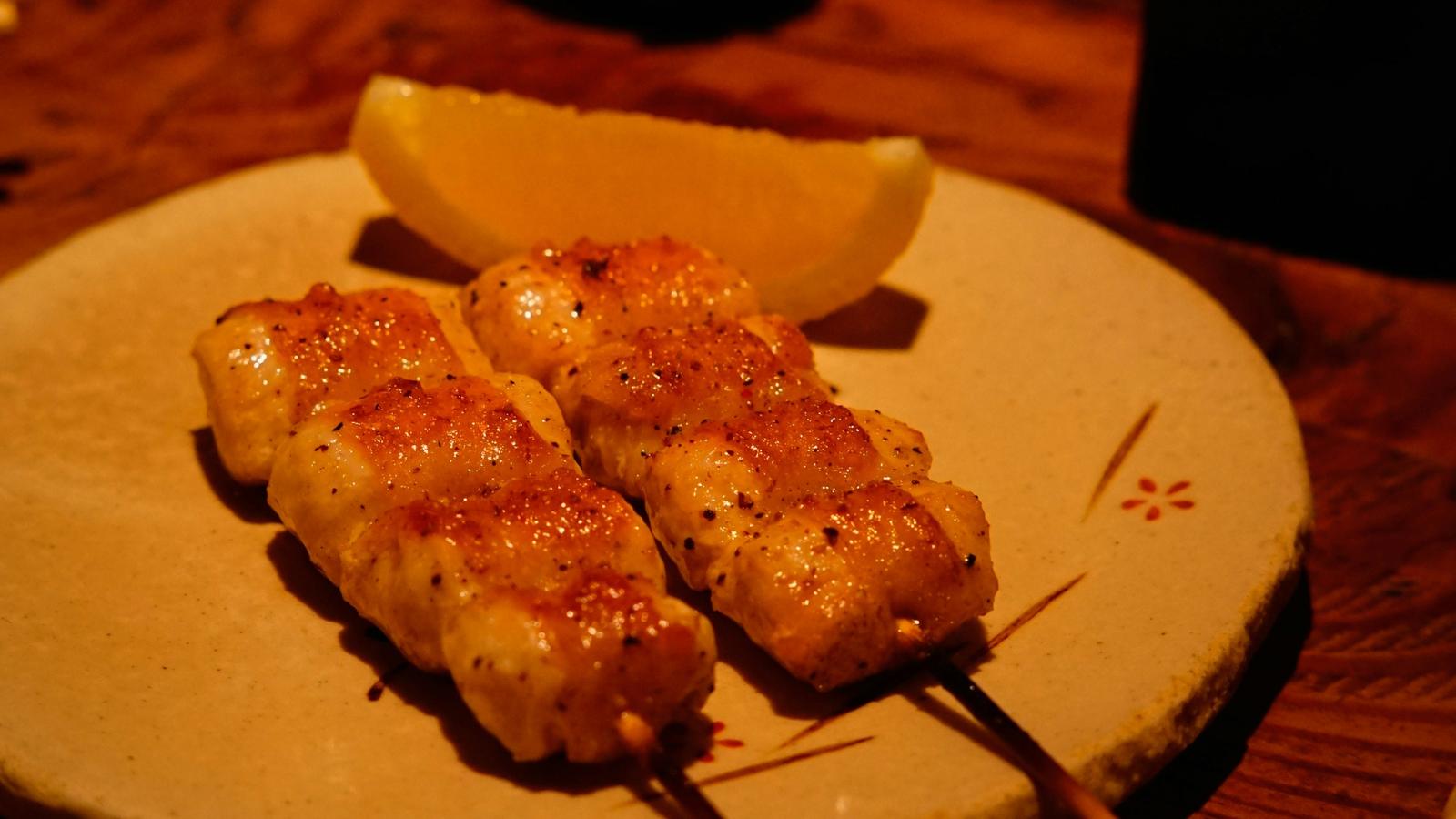
Yakitori began as food eaten with a beer under a red lantern, and in the alleys of Shinjuku it still is. At the counters Tokyo's keenest diners plan a week around, one bird is taken apart into dozens of cuts, grilled a skewer at a time over white oak charcoal, and poured for with Burgundy or a warmed junmai.
This article is about that counter: the charcoal, the cuts, the breeds, the counters the MICHELIN Guide lists, and what to drink. We read the pages of the MICHELIN Guide, the prefectures of Wakayama, Akita, Aichi and Kagoshima, the Kagoshima Prefectural Museum, the Japan Sake and Shochu Makers Association, the restaurant service Ikyu and JR East's magazine on November 5, 2026, and contacted none of them; the sources are listed at the end. For how Tokyo's harder tables are allocated, see How Tokyo's Most Sought-After Tables Actually Work; for sake at the brewery, see Sake, Whisky and Japan's Private Tastings.
Key points
- Kishu binchotan, the white charcoal of Wakayama made mainly from ubame oak, burns long and steady and answers to the fan. Wakayama made about 927 tonnes in 2023.
- One chicken gives more than 50 cuts, the MICHELIN Guide says, and the finest counters serve them as a sequence the chef decides.
- Hinai-jidori, Nagoya Cochin and Satsuma Jidori each have a prefectural pedigree: Akita raises its Hinai-jidori hens for at least 150 days, Nagoya Cochin was recognised in 1905, and Kagoshima built Satsuma Jidori over about ten years from 1990.
- On November 5, 2026 the MICHELIN Guide listed 13 yakitori restaurants in Tokyo and its surroundings. Yakitori Takahashi in Nihonbashi holds one star; Yakitori SANKA, Shutei Tanaka and Yakitori Abe hold a Bib Gourmand.
- Several of these counters are built around wine, and their chefs hold sommelier or sake qualifications.
ASK US FOR AN EVENING AT THE GRILL →
THE CHARCOAL UNDER THE SKEWER
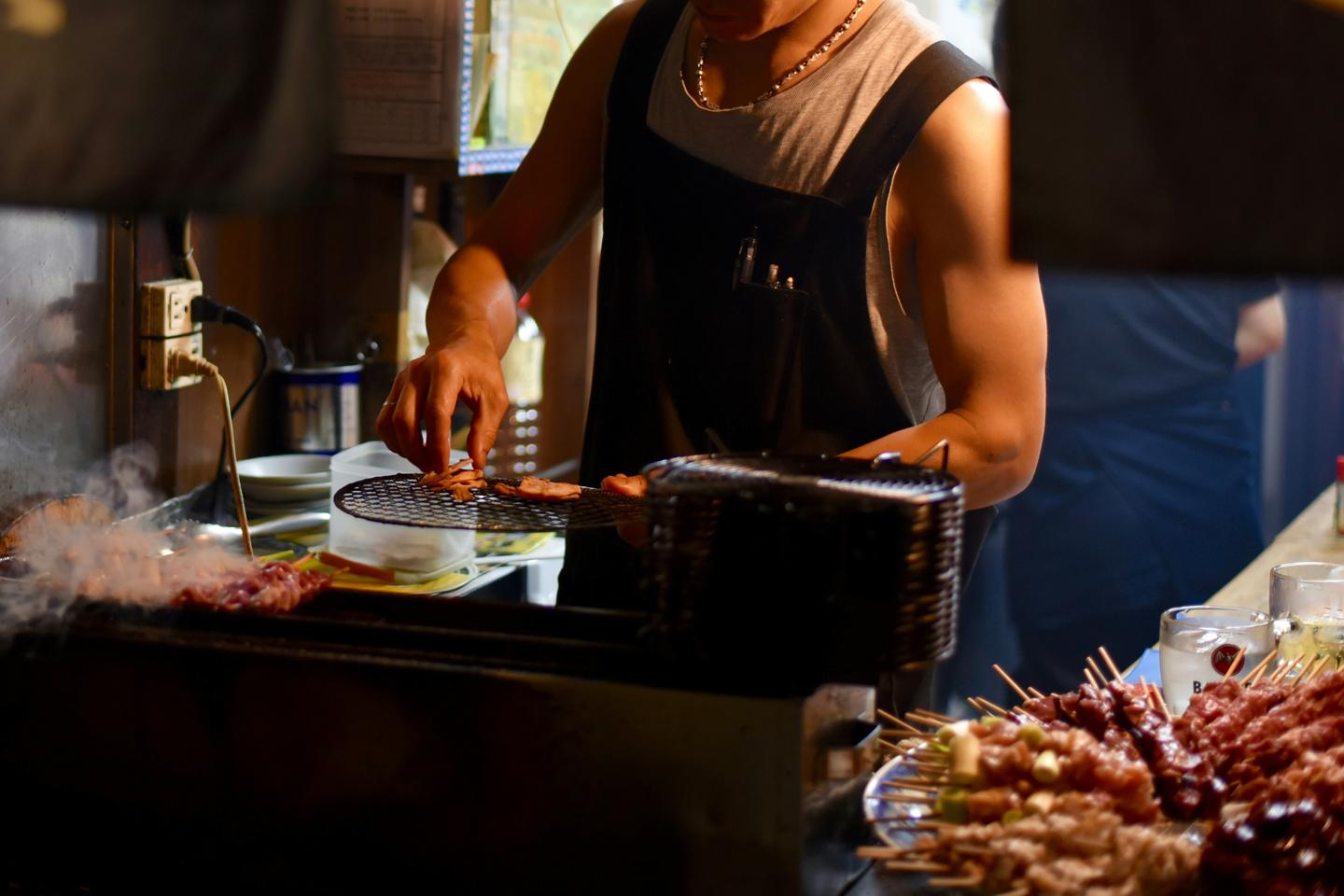
The fire at a serious yakitori counter is binchotan, a hard white charcoal. Wakayama Prefecture, home of Kishu binchotan, describes it as charcoal made from ubame oak and other oaks, perfected in Wakayama in the Edo period and made in much the same way today. The craft was designated an intangible folk cultural property of Wakayama in 1974, and the prefecture made about 927 tonnes in 2023.
What matters at the counter is how it burns. The prefecture notes that binchotan is slow to catch, holds a steady heat for a long time once lit, and is easy to adjust with a fan, which is why grill cooks favour it. Watch the chef's hand fan as it works. We think a seat directly in front of the grill is worth asking for, because the cooking is half the evening.
ONE BIRD, MANY CUTS
The MICHELIN Guide counts more than 50 cuts in a single chicken, and a course moves through many of them: thigh, thigh with leek, breast, skin, heart, liver, gizzard, tsukune, and the small cuts a kitchen has only a few of each night. Seseri, the meat around the neck, is one: JR East's magazine puts it at about 20 grams from one bird. Bird Land in Ginza is noted by the guide for the sot-l'y-laisse, the small oyster of meat by the thigh.
Seasoning is salt or tare, the sweet soy glaze, and the chef usually decides. At Yakitori Takahashi the guide describes a salt base, adjusted with chicken fat or vinegar; at Jimbocho Gokita the chef uses his own sauce in place of tare. Our suggestion is to let the first skewers come with salt, so that you taste the bird before the glaze.
THE BIRDS: HINAI, NAGOYA COCHIN AND SATSUMA
Akita's Hinai-jidori is a first-generation cross of the Akita Hinai-dori rooster and a Rhode Island Red hen. The prefecture's rearing standard requires at least 150 days from hatching for hens and 100 for roosters, with the birds on the floor or free range from day 28 at no more than five to a square metre. Nagoya Cochin, from Aichi, was bred by the Kaifu brothers, former retainers of the Owari domain, from local birds and the Buff Cochin, and was recognised on March 10, 1905 by the Japan Poultry Association as Japan's first domestic practical breed.
Kagoshima's Satsuma-dori, an Edo-period fighting bird, has been a national natural monument since August 24, 1943. The prefecture counts it as one of Japan's three great jidori and uses it as the parent of Satsuma Jidori, crossed with a Rhode Island Red hen and selected over about ten years from 1990. In Tokyo the counters name their birds: Bird Land uses jidori from Okukuji in Ibaraki, Yakitori Abe works mainly with Date chicken, Yakitori SANKA brings chicken and salt from Kochi, and Yakitori Takahashi favours game fowl. When a guest asks for a breed, we ask which counter is grilling it that season.
THE COUNTERS THE MICHELIN GUIDE LISTS
On November 5, 2026 the guide's Tokyo selection held 13 yakitori restaurants. Yakitori Takahashi, on a second floor in Nihonbashi, is the one with a star. The guide describes a chef of few words who watches the charcoal and every skewer, with small chicken dishes set between them. It closes on Thursdays and Sundays.
Bird Land, below ground near the Sukiyabashi crossing in Ginza, has the longest story. The guide credits its owner with being among the first to champion wine with yakitori and with bringing set menus to the counter, so that every part of each bird could be used. Yakitori Omino in Oshiage is built with its counter in a U around the grill. Among the Bib Gourmands, Yakitori Abe near Meguro has 14 seats, ten of them at the counter.
Our view: for a guest new to yakitori, Bird Land gives the history and a wine list in one evening. For a guest who has eaten yakitori many times, Takahashi shows how far the precision can go.
COURSE, OMAKASE AND WHAT TO POUR
Most of these counters serve a course, an omakase sequence the chef sets. At Yakitori Hinata in Azabujuban every course is omakase, and the guide advises telling the counter in advance about anything you would rather skip. That is a part we take care of: allergies and dislikes go to the counter in Japanese before the evening.
At Hinata you say what you like and a glass is chosen; at Gokita the evening begins with champagne and moves to French wines; at SANKA the chef is a certified sommelier with a sake diploma; Yakitori Abe keeps seven sakes, including one from Niigata, and wines from rosé to orange. For Japanese wine at its source, see Japanese Wine in Yamanashi.
For sake, the Japan Sake and Shochu Makers Association suggests a sake with a roasted aroma for grilled dishes, rich sake with rich food, and warm sake with warm food. Warmed to 40 to 50 degrees, it says, sake turns fuller. Our suggestion: a chilled glass for the salt-grilled breast and the lighter cuts, then a warmed junmai when the liver and the tare arrive.
HOW WE ARRANGE AN EVENING
We arrange the seats, send your dietary notes ahead in Japanese, and set the car so that you arrive as the first skewer goes on. Some counters seat new guests only by introduction; we ask on your behalf, and the evening is the house's decision. For more on that, see How to Get Into Introduction-Only Restaurants in Japan; for counters that run later, Late Dinners in Japan.
Within Signature (USD 3,500 for your group, journeys of 7 to 21 days), a yakitori evening often follows a night of kaiseki. The meal is settled on the day, in the simplest way available.
SOURCES AND HOW WE CHECKED
We read the pages below on November 5, 2026. We did not contact any restaurant, prefecture, association or other body. The MICHELIN Guide selection changes during the year; the stars and Bib Gourmands are as the guide showed them on that day.
- Wakayama Prefecture, Kishu binchotan (Japanese): ubame oak, Edo period, 927 tonnes in 2023, 1974 designation, steady heat and the fan
- Akita Prefecture, Hinai-jidori rearing manual (Japanese): parentage, 150 and 100 days, five birds per square metre from day 28
- Aichi Prefecture, Livestock Research Centre, Nagoya Cochin (Japanese): the Kaifu brothers, Buff Cochin, recognised March 10, 1905
- Kagoshima Prefecture, Kagoshima jidori brands (Japanese): Satsuma Jidori's parentage, developed from 1990 over about ten years
- Kagoshima Prefectural Museum, Satsuma-dori (Japanese): natural monument from August 24, 1943, Edo-period fighting bird
- MICHELIN Guide, yakitori in Tokyo and surroundings: 13 yakitori restaurants, one star and three Bib Gourmands
- MICHELIN Guide, Yakitori Takahashi: Nihonbashi, game fowl, salt base, closing days
- MICHELIN Guide, Bird Land: Okukuji jidori, wine, set menus, sot-l'y-laisse
- MICHELIN Guide, Yakitori Omino: Oshiage, the U-shaped counter
- MICHELIN Guide, yakitori in Tokyo with wine pairing menus: more than 50 cuts, Hinata, Gokita, SANKA and Bird Land
- Ikyu Restaurant, Bird Land Ginza (Japanese): Okukuji shamo grilled over binchotan
- Ikyu Restaurant, Yakitori Abe (Japanese): Date chicken, 14 seats, seven sakes, rosé and orange wines
- JR East media, on seseri (Japanese): neck meat, about 20 grams a bird
- Japan Sake and Shochu Makers Association, sake food pairings: roasted aroma with grilled dishes, warm with warm
- Japan Sake and Shochu Makers Association, how to serve sake: warmed sake at 40 to 50 degrees
QUESTIONS TRAVELLERS ASK
Which yakitori restaurant in Tokyo has a Michelin star?
On November 5, 2026, Yakitori Takahashi in Nihonbashi held one star. Yakitori SANKA, Shutei Tanaka and Yakitori Abe held a Bib Gourmand, among 13 yakitori restaurants in the Tokyo selection.
What is binchotan and why does it matter?
A hard white charcoal, in Wakayama made mainly from ubame oak. It burns long and steady and is easy to adjust with a fan, so the cook can control each skewer.
Is wine served at yakitori counters in Tokyo?
Yes. Bird Land, Yakitori Hinata, Jimbocho Gokita and Yakitori SANKA are listed by the MICHELIN Guide for wine with yakitori, and some chefs are certified sommeliers.
What makes Hinai-jidori different from ordinary chicken?
Its parentage and its rearing. Akita requires at least 150 days for hens and 100 for roosters, with floor or free-range rearing from day 28 at no more than five birds per square metre.
Can the course be changed for allergies or dislikes?
Usually the course is set, so the counter needs to know in advance. We send your notes in Japanese before the evening, and what the kitchen can change is its decision.
ASK US FOR AN EVENING AT THE GRILL
Tell us when you are in Tokyo, who is coming and what you like to drink. We will suggest the counters, with the reasons, and arrange the evening you choose.
Begin planning →We reply within 24 hours, in writing
Some of the restaurants and bars we arrange seat guests only by introduction or membership. We ask on your behalf; the table and the evening are the house's decision. We do not publish their names.