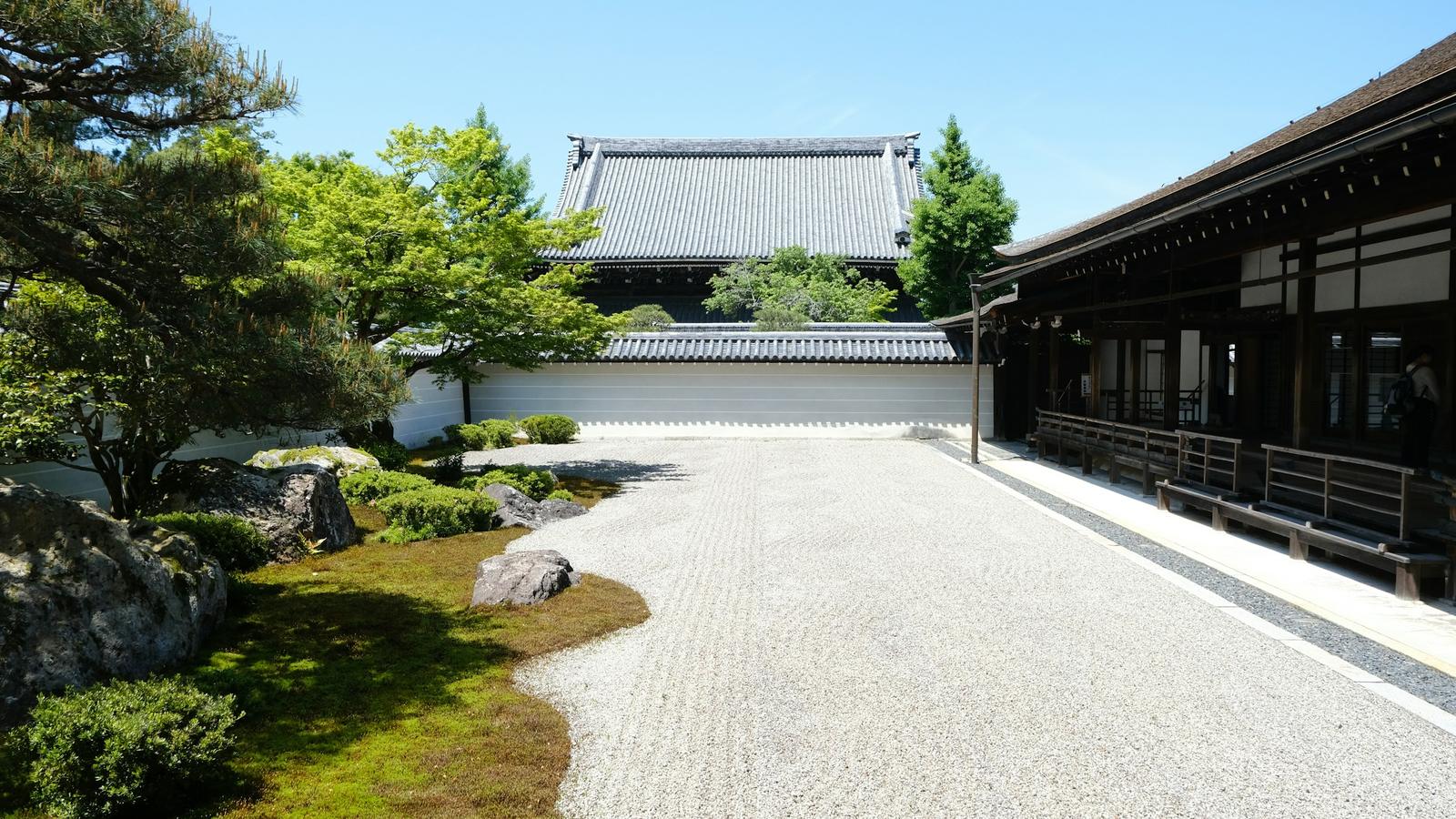
A wellness week in Japan works best as two nights in Tokyo, one night at a hot spring inn in Hakone, and three nights in Kyoto, with one quiet thing planned for each morning and the afternoons kept light. In Tokyo that means an early walk in the forest of Meiji Jingu, a stroll through Hama-rikyu Gardens and an evening at a hotel spa or a head spa. In Hakone it means a room with its own open-air hot spring bath. In Kyoto it means zazen in a temple hall, a Zen vegetarian lunch at Tenryu-ji, an early garden before the crowds and, on a Sunday, sitting with the monks of Tofuku-ji at 6:30 in the morning.
Below is the day by day plan, the travel times between each stop, what has to be reserved ahead and what each part costs. We read every opening time, fee and travel time on the official site of the temple, garden, inn or railway on October 15, 2026, and the sources are listed at the end. Nothing here promises a result for your health or skin; the plan is about time, place and rest.
Key points
- Seven days and six nights: Tokyo for two nights, Hakone for one, Kyoto for three. Each move is short: Shinjuku to Hakone-Yumoto takes 75 minutes on the fastest Romancecar, and JR Central puts Tokyo to Kyoto at about 130 minutes.
- Three things need a reservation well ahead: a guided forest therapy day in Okutama, the inn with a bath in the room, and a lunch at Shigetsu, Tenryu-ji's Zen vegetarian restaurant, which asks for two or three days' notice.
- Zazen in Kyoto can be booked for one person: Ryosoku-in runs a self-guided session from 9:30 to 10:15 for ¥4,000. Tofuku-ji's Sunday zazen runs from 6:30 to 7:00, with no reservation mentioned on the temple's page.
- Autumn is the busiest season in Kyoto's gardens. Tofuku-ji's special autumn viewing runs from November 14 to December 6 in 2026, and its garden fee rises from ¥500 to ¥600 on November 1, 2026.
THE WEEK AT A GLANCE
The plan assumes you land in Tokyo on day one and leave from Kyoto on day seven. Every day has one fixed point and room around it.
| Day | Morning | Afternoon | Evening | Night |
|---|---|---|---|---|
| 1 | Arrival | Check in and rest | Hotel spa treatment | Tokyo |
| 2 | Meiji Jingu forest at opening | Hama-rikyu Gardens, then a head spa | Early dinner close to the hotel | Tokyo |
| 3 | Romancecar from Shinjuku | Check in from 15:00, bath in the room | Dinner at the inn | Hakone |
| 4 | Last bath, slow breakfast | Odawara to Kyoto by Shinkansen | Hotel spa or a quiet walk | Kyoto |
| 5 | Zazen at Ryosoku-in, 9:30 | Rest, then a tea or a garden | Free | Kyoto |
| 6 | Tenryu-ji garden at 8:30 | Shojin lunch at Shigetsu | Free, or Kurama Onsen instead | Kyoto |
| 7 | Sunday zazen at Tofuku-ji, 6:30 | Hojo garden, then departure | Home | None |
DAYS ONE AND TWO IN TOKYO
The first evening is for recovery from the flight, so we keep it inside the hotel. A treatment at the hotel's own spa means nothing to find and no train to catch afterwards. We compare the spas, their treatment menus and who may use them in our guide to hotel spas in Tokyo and Kyoto.
Meiji Jingu at opening
Day two starts early, while the body is still on another time zone. Meiji Jingu's gates open with the sun, and the shrine publishes its hours month by month: 5:40 to 16:40 in October, 6:10 to 16:10 in November and 6:40 to 16:00 in December. The walk from the Harajuku side to the main shrine runs under tall trees on wide gravel paths. The inner garden, Gyoen, charges ¥500. We cover the forest itself, and guided forest walks further out, in our guide to forest bathing near Tokyo.
Hama-rikyu Gardens
After breakfast, cross the city to Hama-rikyu, a garden of ponds and pine trees at the edge of Tokyo Bay. The Tokyo Metropolitan Park Association publishes its hours as 9:00 to 17:00, with entry until 16:30, and the entrance fee as ¥300, or ¥150 for visitors aged 65 and over. It closes only from December 29 to January 1. The garden has two teahouses, Nakajima-no-ochaya on the pond and Hobai-tei; the park's outline page lists their capacity but not a tea price, so we confirm the price on the day.
An afternoon head spa
At a head spa, the hour is spent lying back at a basin while the scalp and neck are washed and massaged. We explain how to choose a salon and what a session involves in our guide to head spas in Tokyo. If you are pregnant, have a medical condition or sensitive skin, tell the salon before you book; the salon decides what it can offer.
If you would like a forest day instead
Day two can be replaced with a full day in the forest. In Okutama, at the western edge of Tokyo, the local foundation runs private forest therapy walks with a certified guide. Its English page sets the standard plan at ¥21,000 for one person, with a group discount, starting at 10:30 at the ticket gate of Okutama Station and finishing there at 15:00, with lunch and a tea break in between. The trip from Shinjuku takes about 100 minutes on weekends and holidays and about 120 minutes on weekdays. Replies can take several days and cancellation charges start at 30% from seven days before, so this is the first request we send once dates are set.
HAKONE AND THE MOVE TO KYOTO
Day three is a travel day, but a short one. Odakyu's Romancecar runs from Shinjuku to Hakone-Yumoto without a change, and Odakyu gives the fastest journey as 75 minutes; some trains take longer.
A room with its own open-air bath
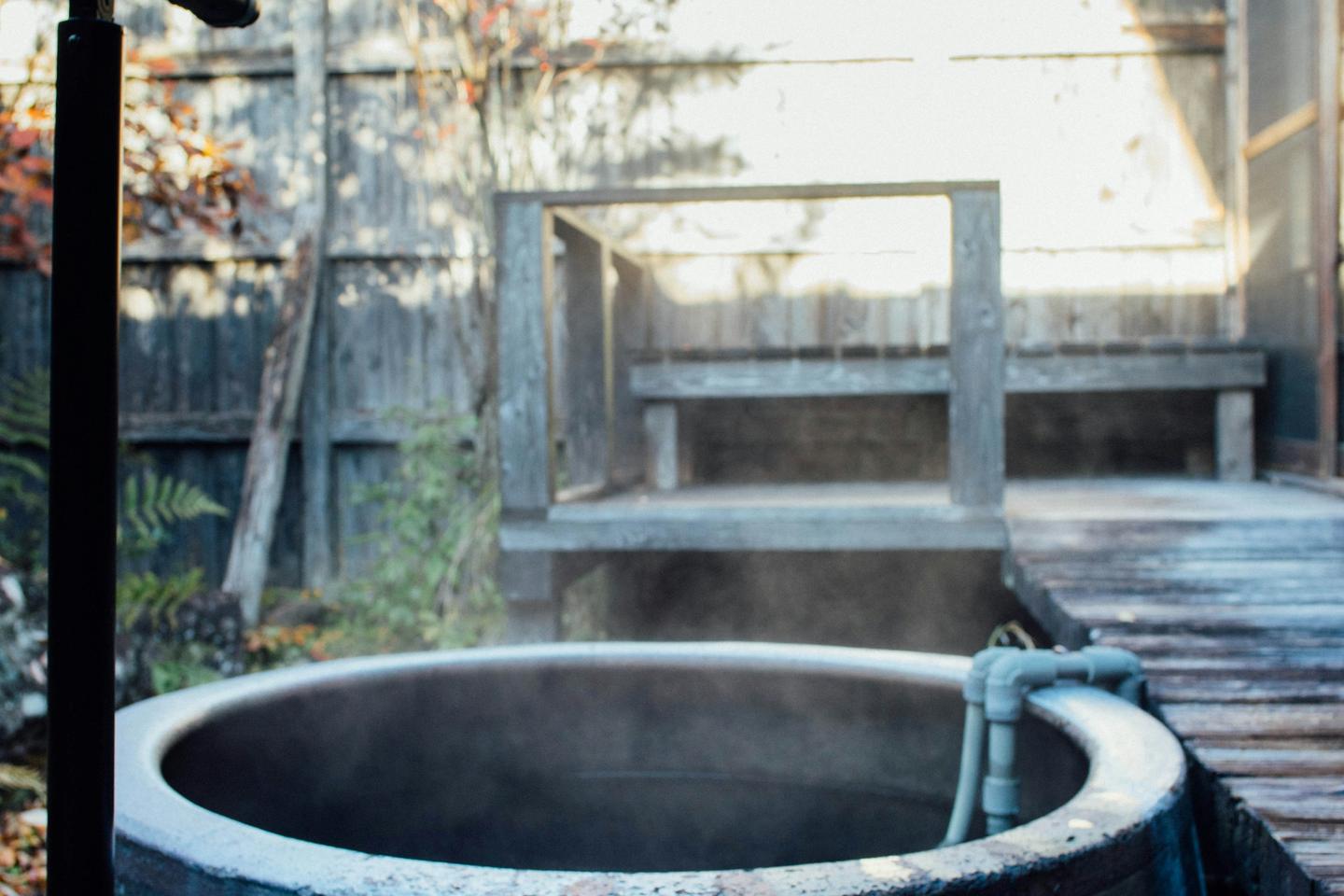
The Hakone night is built around the bath in your own room. Kinnotake Sengokuhara is one of the inns that offers this in every room: its official site describes nine rooms, each of a different design, with an open-air onsen in every room. Check-in is at 15:00 and check-out at 11:00, and the inn accepts guests aged 12 and over. The inn's rates are shown by date on its booking page, so we read them for your dates before we propose it. For more inns near Tokyo with a bath in the room, see our guide to ryokan with private onsen near Tokyo.
A private bath by the hour
If your room has no bath of its own, Hakone Yuryo is a day spa three minutes from Hakone-Yumoto Station by a free shuttle that runs every 10 to 15 minutes. It has 19 private rooms with an open-air bath, rented for 120 minutes. Rooms for two cost ¥10,400 on weekdays and ¥11,400 on weekends and holidays; the larger rooms for up to four cost from ¥12,400 to ¥15,400. Online booking opens one month ahead.
Day four to Kyoto
Take the last bath of the stay before breakfast, and leave after check-out. From Hakone-Yumoto, the Hakone Tozan Line runs down to Odawara, where the station has a ticket gate for the Tokaido Shinkansen, the line that continues to Kyoto. We choose the train from JR Central's timetable for your date and allow time at Odawara for the change, so nobody runs for a platform. From Tokyo, JR Central gives the trip to Kyoto as about 130 minutes. During JR Central's peak periods every seat on the Nozomi is reserved, so on those dates we check the seats before we fix the plan.
Arrive in Kyoto in the afternoon and do very little. If you would like a hot spring bath in your Kyoto room too, the choice is narrower than in Hakone; our guide to Kyoto ryokan with private onsen sets out the options in Arashiyama and the hills around the city.
THREE DAYS IN KYOTO
Day five, zazen at Ryosoku-in
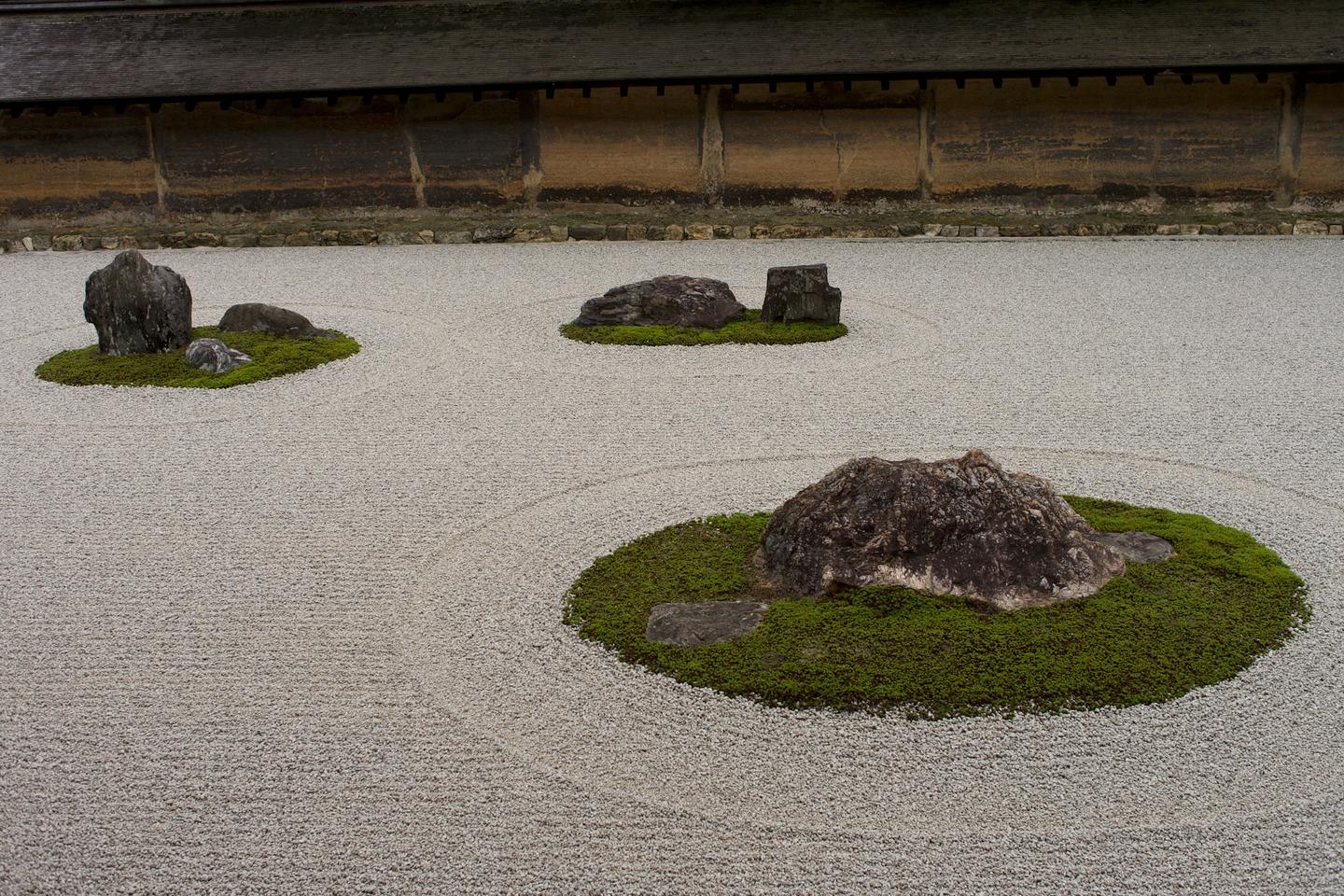
Ryosoku-in is a sub-temple of Kennin-ji, close to Gion, and it offers zazen to individuals, groups and private parties. Its individual session is self-guided and books through the booking page linked from the temple's site: it runs from 9:30 to 10:15 and costs ¥4,000. You check in between 9:20 and 9:25 at the entrance to the Bishamonten Hall, then sit on a cushion in the main hall and follow written instructions in a sealed envelope, beginning with a slow walk and continuing with about 20 minutes of seated meditation. The temple states that its staff speak Japanese only, and that there is no cancellation or refund once paid. For guided sessions in English, and for other temples that teach zazen, see our guide to Zen meditation in Kyoto.
For teaching in English, Shunko-in in the Myoshin-ji complex lists a 120 minute programme of zazen and tea called Kissako, and a private programme from two hours for up to five people. Both need a reservation. After the morning sitting, keep the afternoon for rest.
Day six, Tenryu-ji and Shigetsu
Arashiyama gets crowded by mid-morning, so arrive at Tenryu-ji when the garden opens at 8:30. The temple publishes its garden hours as 8:30 to 17:00, with last entry at 16:50, and garden admission as ¥500 for high school students and older; the buildings cost ¥300 more. The temple lists October 29 and 30, 2026 among its scheduled closings.
Lunch is at Shigetsu, the temple's own restaurant for shojin ryori, the Buddhist vegetarian cooking of Zen temples. It opens from 11:00 to 14:00 and closes on Thursdays. The temple lists three sets: Yuki at ¥3,800 with rice, soup and five side dishes, Tsuki at ¥6,500 with six, and Hana at ¥9,000 with seven. Tsuki and Hana need a reservation at least three days ahead for two or more guests, and Yuki at least two days ahead. Diners also pay the ¥500 garden admission, and the page says cards cannot be used for that fee.
Or a hot spring in the mountains
If a bath appeals more than a garden on day six, Kurama Onsen sits in the hills north of the city, a 10 minute walk from Kurama Station on the Eizan Electric Railway, with a free shuttle bus every day. Day visitors can use its indoor bath, sauna and open-air bath from 10:00 to 21:00, and the onsen states that guests with tattoos may bathe. Its day prices are published only as an image we could not read, and some days are closed or reserved, so we confirm both first.
Day seven, a Sunday at Tofuku-ji
If your last day falls on a Sunday, Tofuku-ji holds zazen in its Great Zen Hall every Sunday, except on days with memorial services, from 6:30 to 7:00 all year. Sitters are asked to be seated ten minutes early, in loose clothing, without short skirts, tight trousers or hooded tops, since the keisaku stick may be used on the shoulders. The page does not mention a fee or a reservation. If your last day is not a Sunday, swap it with day five so the sitting falls on the right day.
The temple grounds open for viewing at 9:00. The Hojo garden costs ¥500 for adults, rising to ¥600 from November 1, 2026. Then leave for the station or the airport.
WHAT TO RESERVE AND WHAT IT COSTS
Where a page did not say whether tax is included, we have not added it.
| Place | Published fee | Reservation |
|---|---|---|
| Meiji Jingu, inner garden | ¥500 | Not needed |
| Hama-rikyu Gardens | ¥300, 65 and over ¥150 | Not needed |
| Okutama forest therapy, standard plan in English | ¥21,000 for one person, group discount available | Needed; replies can take several days |
| Hakone Yuryo, private bath room for two, 120 minutes | ¥10,400 weekdays, ¥11,400 weekends and holidays | Online from one month ahead to 15:00 the day before |
| Ryosoku-in, self-guided zazen | ¥4,000 | Needed; no refund after payment |
| Tenryu-ji, garden | ¥500, buildings ¥300 more | Not needed |
| Shigetsu at Tenryu-ji | ¥3,800, ¥6,500 or ¥9,000, plus garden admission | Two or three days ahead depending on the set |
| Tofuku-ji, Hojo garden | ¥500, ¥600 from November 1, 2026 | Not needed |
Hotels, the inn and spa treatments are priced by date and menu, so we read them for your dates. Kyoto City also charges an accommodation tax per guest per night. Since March 1, 2026 it is set by the room price per person, excluding meals and consumption tax, and at a room price of ¥100,000 or more per person it is ¥10,000 per night.
SEASONS AND THE PACE
Autumn leaves and cherry blossom
The two seasons most people want are also the two when Kyoto's gardens are at their fullest. Tofuku-ji, known for its maples, runs a special autumn viewing from November 14 to December 6 in 2026, when its Tsutenkyo bridge opens at 8:30. The temple warns that photographs may be refused on the Tsutenkyo and Gaunkyo bridges in that period, and it notes that the autumn dates change every year. Spring cherry blossom weeks fill the same places.
In these seasons we move every garden visit to the opening hour, choose temples that open early, and keep the afternoons indoors or at the hotel. If you can travel outside those weeks, we look first at early summer and winter for the same gardens with fewer visitors around you, and at weekday nights for the Hakone inn.
Keeping the week slow
- One fixed time a day. If the morning has a booking, the afternoon has none.
- Send luggage ahead between hotels where the hotels offer it, so the train days are made with a light bag.
- Eat early. An early dinner and an early night make a temple sitting the next morning much easier.
- Leave a gap after arrival. Keep the first afternoon in Japan for sleep.
HOW STAYGO PLANS IT
We start from your dates and how you like to rest. Then we lay out the route and the times between each stop, choose the inn and hotels and check the rooms, baths and spas before we propose them, and check availability and the published rules at each temple, garden, spa and salon for your dates. We put together the requests to the spas, salons and temples, pass on dietary and health notes, and take your messages while you travel. Nothing is promised until each place has confirmed it.
You pay each hotel, inn, spa, temple and restaurant directly, at its own rates, and we add no markup or commission. Our Signature planning fee is USD 3,500 for your group, for trips of 7 to 14 days. Longer or more complex journeys are planned as Bespoke. More on our page about beauty and wellness travel in Tokyo and Kyoto.
SOURCES AND HOW WE CHECKED
We read each fee, opening time, rule and travel time on the official site of the place or the operator, or on a booking page linked from it, on October 15, 2026. Where a page did not publish something, the text says so. Fees, closures and timetables change, so we read them again for your dates before we finalise the plan.
- Meiji Jingu, opening hours: monthly hours and the inner garden fee
- Tokyo Metropolitan Park Association, Hama-rikyu Gardens: hours, entry fee, closed days and teahouses
- Okutama forest therapy, English: standard plan fee, meeting point, times and cancellation charges
- Okutama forest therapy, access: travel time from Shinjuku
- Odakyu Electric Railway, Romancecar: fastest time from Shinjuku to Hakone-Yumoto
- Kinnotake Sengokuhara, rooms: open-air onsen in every room, check-in, check-out and age rule
- Hakone Yuryo, hot springs: private bath rooms, fees, booking window and shuttle
- Hakone Navi by Odakyu, Odawara Station: Shinkansen and Hakone Tozan Line gates
- JR Central, Kyoto by Shinkansen: Tokyo to Kyoto in about 130 minutes
- JR Central, Nozomi in peak periods: all seats reserved during peak periods
- Ryosoku-in, zazen: individual, group and private formats
- Ryosoku-in booking page, linked from the temple's site: self-guided zazen time, fee, check-in and cancellation
- Shunko-in: Kissako and private programmes, group sizes and reservations
- Tenryu-ji, admission and access: garden hours, fees and 2026 closings
- Tenryu-ji, Shigetsu: hours, closed day, sets, prices and reservation rules
- Kyoto City, accommodation tax: bands from March 1, 2026 and what the room price covers
- Kurama Onsen: day bathing hours, tattoo policy and access
- Tofuku-ji, events: Sunday zazen time, place and dress
- Tofuku-ji, visiting guide: hours, garden fees, autumn period and photography
QUESTIONS ANSWERED
How should I split a wellness week between Tokyo and Kyoto?
We suggest two nights in Tokyo, one at a hot spring inn in Hakone and three in Kyoto. Hakone is 75 minutes from Shinjuku on the fastest Romancecar, and the Shinkansen from Odawara continues to Kyoto.
Can I do zazen in Kyoto on my own?
Yes. Ryosoku-in, near Gion, runs a self-guided session for individuals from 9:30 to 10:15 for ¥4,000, booked online; the temple's staff speak Japanese only and the instructions come in an envelope. Tofuku-ji holds zazen every Sunday from 6:30 to 7:00, and its page does not mention a reservation.
Do I need to reserve shojin ryori in Kyoto?
At Shigetsu, inside Tenryu-ji, yes. The two larger sets need at least three days' notice for two or more guests, and the simplest set at least two days. It serves from 11:00 to 14:00, closes on Thursdays, and diners also pay the ¥500 garden admission.
Is a ryokan with a bath in the room worth it for one night?
For a rest week, we think so: the bath is there from arrival to check-out. If the room has no bath, Hakone Yuryo rents private open-air bath rooms for two hours from ¥10,400 on weekdays.
When is the best time for a quiet wellness trip to Japan?
Autumn and cherry blossom season are the most beautiful and the most crowded. Tofuku-ji's 2026 autumn viewing runs from November 14 to December 6. If you travel then, plan each garden for its opening hour; for more room in the same places, consider early summer or winter.
PLAN A WEEK OF REST IN JAPAN
Tell us your dates and how you like to rest. We will come back with a day by day plan and the places we have checked for your dates.
Begin planning →