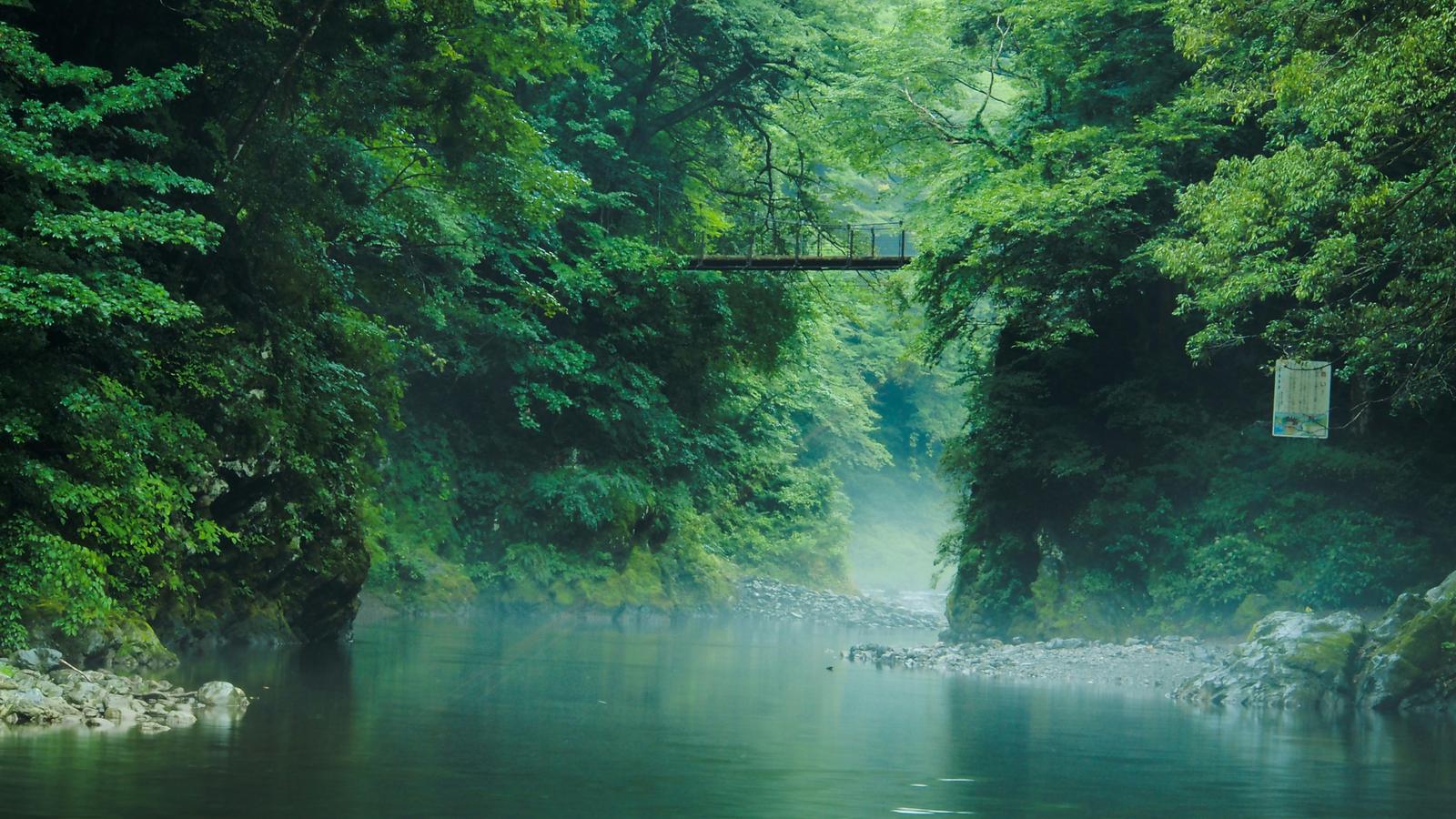
The best forest bathing near Tokyo with a guide is in Okutama, the certified forest therapy base inside Tokyo itself: a private standard plan with a certified guide runs from about 10:30 to 15:00 from Okutama Station, costs ¥11,000 per person for two (tax included, lunch and insurance included), and should be requested at least two weeks ahead. For a quiet hour on your own, Hinohara Tomin no Mori has a one-kilometre certified therapy road to a waterfall. With one night to spare, Akasawa in Nagano's Kiso Valley, where Japan's Forestry Agency held its first forest bathing event in 1982, offers a four-hour session with a certified therapist. With only a morning, the 70-hectare forest of Meiji Jingu is a minute's walk from Harajuku Station and free to enter.
This is the practical side: how to reach each forest, what a guided session involves, what it costs and how far ahead to ask. The ideas behind forest bathing are in our guide to wellness travel in Japan; here we stay with routes, fees and dates. We read every figure on the operators' own pages, the Forest Therapy Society's list of certified bases and the official tourism sites on October 14, 2026. The sources are listed at the end.
Key points
- Okutama's private standard plan is about four and a half hours on foot, 4 to 5 km, with lunch and insurance included. Per person it is ¥20,000 for one, ¥11,000 each for two and ¥9,000 each for three, tax included.
- Ask at least two weeks ahead for Okutama's private tours and for Akasawa's four-hour forest therapy session; Akasawa's shorter guided walks need at least a week.
- Okutama's walks go ahead in rain and stop only for weather advisories or warnings, with notice by the evening before.
- Akasawa is open from April 25 to November 8 in 2026. Its four-hour session is ¥15,000 per guide, for up to five people.
- Hinohara's therapy road and Meiji Jingu are self-guided. Hinohara is free to enter and open every day in October and November; Meiji Jingu is free and open from 5:40 to 16:40 in October.
FOUR FORESTS SIDE BY SIDE
The Forest Therapy Society, which certifies forest therapy bases and roads in Japan, lists two in Tokyo, Okutama and Hinohara, and Akasawa in Nagano. Its list also covers bases in Kanagawa, Saitama, Yamanashi and Gunma; we kept to four whose own pages publish enough to plan from.
| Place | Getting there | Guided | Length | Published fee | Ask ahead |
|---|---|---|---|---|---|
| Okutama, Tokyo | About 100 minutes from Shinjuku on weekends and holidays by the Holiday Rapid, about 120 minutes on weekdays, to Okutama Station | Yes, a certified guide, up to 7 people per guide | About 10:30 to 15:00, 4 to 5 km | ¥11,000 per person for two, tax included, with lunch | At least 2 weeks |
| Hinohara Tomin no Mori, Tokyo | JR Itsukaichi Line to Musashi-Itsukaichi, then about 75 minutes by bus | Self-guided | 1 km, about 20 minutes each way | Free entry | None |
| Akasawa, Agematsu, Nagano | JR Chuo Line to Agematsu, then about 30 minutes by the Akasawa bus | Yes, a Forest Therapy Society certified therapist | About 4 hours | ¥15,000 per guide, up to 5 people | At least 2 weeks |
| Meiji Jingu, Tokyo | A one-minute walk from Harajuku Station on the JR Yamanote Line | Self-guided | As long as you like within opening hours | Free; the inner garden ¥500 | None |
Okutama is the only one of the four with a guide and lunch inside a single published price, and the only one that works as a day trip with a guide.
OKUTAMA THE CERTIFIED BASE INSIDE TOKYO
Okutama sits at the western end of Tokyo, at the terminus of the JR Ome Line. Its forest therapy programme is run by the town's regional development foundation, and its walks are led by guides certified by Okutama Town.
The private standard plan
You meet the guide at Okutama Station at about 10:30 and finish there at about 15:05. The walk is 4 to 5 km on the Hikawa gorge and the Tokei Trail, lunch and insurance are included, and a blood pressure reading before and after is offered as an option. The foundation's Japanese page lists the fee per person, tax included:
| Group | Per person |
|---|---|
| 1 person | ¥20,000 |
| 2 people | ¥11,000 |
| 3 people | ¥9,000 |
| 4 people | ¥8,000 |
| 5 people | ¥7,000 |
| 6 or 7 people | ¥6,000 |
The foundation's English page shows the same plan at ¥21,000 for one person, with group discounts, so the figure in the written estimate is the one to rely on. Private tours can be led in English.
What the day is like
The foundation publishes a model day. After a short briefing at the station, you walk with the guide and your own party from Okutama Station through the Hikawa gorge to the Tokei Trail, stop for a bento made in the town, and spend the early afternoon on the Tokei Trail itself. On the way there is a forest tea break with herbal tea and biscuits and a breathing exercise the foundation calls the Okutama style of forest breathing. The day closes with a short questionnaire, the optional second blood pressure reading and a drive back to the station.
The five therapy roads
Okutama has five certified roads, and the guide chooses among them for your group. The Tokei Trail, the Fragrance Road, is about 1.3 km with about 50 m of climb, partly paved, made for forest therapy alone, and about 420 m of it is barrier-free. The Hatonosu Valley path is about 2.5 km and close to the station. The Okutama Lake road is about 12 km and almost flat along the lake, and it closes for winter from December to March. The Okutama Old Road follows the old highway for about 9 km with about 264 m of climb, and can be walked in part. The path to the Hyakuhiro Falls in the Kawanori valley is a proper mountain trail, about 1.8 km each way with 170 m of climb, and needs hiking gear.
How a booking works
Private tours take one person or more; one forest therapy guide leads up to seven. The foundation asks for requests in principle at least two weeks ahead, though shorter notice is sometimes possible. The order is an inquiry, an estimate, confirmation and payment by card or bank transfer, and then an itinerary with the list of things to bring, sent about a week before. The English page notes that replies can take several days and that some dates cannot be accepted. Cancellation charges begin seven days out: 30% from seven to two days before, 40% the day before, 50% on the day itself, and the full fee for a no-show.
One night in Okutama
The foundation also offers a one-night plan with forest therapy and yoga, with four meals and insurance included; its price depends on the inn and is quoted on request. Its English page lists two two-day plans at Arasawaya, a ryokan near Okutama Station: one with a wasabi field visit at ¥62,500 per person and one with soba making at ¥56,000, each for a minimum of two people. The inns the foundation names as its partner lodgings are Gyokusuisou and Arasawaya near Okutama Station, Hatonosu-so by the Hatonosu gorge, and Yamabato Sanso near Hatonosu Station.
For a bath after the walk, the foundation points to Moegi no Yu, a hot spring about ten minutes on foot from Okutama Station, closed on Mondays (or the next day when Monday is a public holiday). The English page also notes that guests with tattoos may be refused at hot springs and public baths in Japan. For the wider picture of bathing etiquette, see our guide to onsen.
HINOHARA A SELF GUIDED HOUR BY A WATERFALL
Hinohara Tomin no Mori is a forest park run by the Tokyo Metropolitan Government's management office on the slopes of Mount Mito, in the village of Hinohara. Its Otaki no Michi became the first certified forest therapy road in Tokyo in March 2007. It is 1 km long, about 20 minutes each way, laid with wood chips, and the gentlest path in the park. It ends at the Mito Otaki waterfall, which drops 35 m and can be seen up close from a footbridge.
There is no guided forest therapy programme with a published fee here, so this is a walk you take on your own. Entry is free. From September 1 to November 15 the park is open from 9:30 to 16:30, and from November 16 to March 15 from 9:30 to 16:00. It normally closes on Mondays, but stays open every day from October 1 to November 30 for the autumn leaves, as well as in Golden Week and from July 21 to August 31.
The route is JR Itsukaichi Line to Musashi-Itsukaichi, then about 75 minutes by the Nishi Tokyo bus. From April to November an express bus and a free connecting bus from Kazuma reach the park every day it is open; in March they run on weekends and holidays only, and from December to February there is no bus to the park at all. The return express leaves the park at 10:35 and 16:45, so a car is the easier way for a short visit.
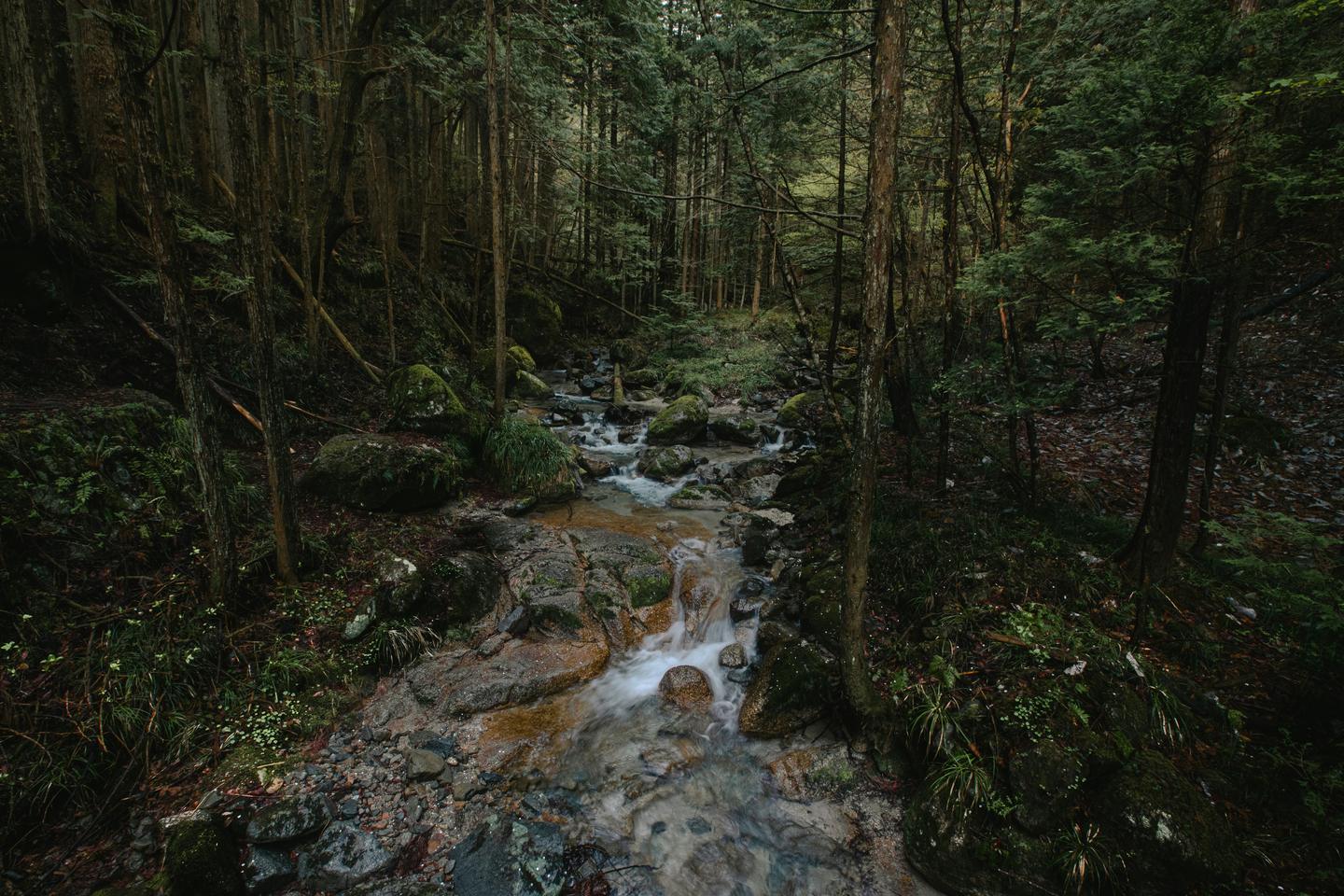
AKASAWA IN THE KISO VALLEY FOR ONE NIGHT AWAY
The Akasawa Natural Recreation Forest in Agematsu, Nagano, is a forest of hinoki cypress that the Agematsu Town Tourism Association describes as the birthplace of forest bathing: Japan's Forestry Agency held its first forest bathing event here in 1982. Nagano's official tourism site describes groves of 300-year-old cypress and lists Akasawa among the three most beautiful forests in Japan. A forest railway, the last running section of the Kiso valley's logging line, carries visitors into the woods for ¥1,000 per adult.
The guided programmes
The tourism association arranges three guided walks, led by members of a local forest NPO. Its Japanese page gives the fees per guide, not per person, and does not say whether tax is included:
| Programme | Length | Group | Fee | Ask ahead |
|---|---|---|---|---|
| Forest therapy guide | About 4 hours | 1 to 5, three recommended | ¥15,000 per guide; stress check ¥550 per person | At least 2 weeks |
| Forest bathing guide | About 2 to 3 hours | Up to 10 for the base fee | ¥10,000, then ¥1,000 per extra person | At least 1 week |
| Forest walk guide | About 120 minutes | Up to 10 for the base fee | ¥8,000, then ¥1,000 per extra person | At least 1 week |
The four-hour session is the full course, led by a therapist certified by the Forest Therapy Society; the association's English page says it usually runs from about 10:00 to 15:00 with an hour for lunch, and that the therapist guides you through the forest with all five senses. More than five people need a second guide. The same English page lists an English interpreter at ¥22,000 for the two to three hour walks and ¥33,000 for the full session. The Japanese page asks for payment in cash on the day, with bank transfer possible by arrangement; the two pages state different cancellation terms, so we confirm them in writing when we arrange the day.
Season and getting there
Akasawa is a seasonal forest. In 2026 it is open from April 25 to November 8, and closes for the winter after that. The Akasawa bus from Agematsu Station on the JR Chuo Line takes about 30 minutes, and the bus and the railway pause on some Wednesdays. For a first visit the association recommends starting between 9:00 and 10:00 or around 13:00, so that a late start does not run into dusk. With travel from Tokyo at both ends, this is a plan for one night in the Kiso Valley, with the session on the full day in between. If time is shorter, a night in a Hakone ryokan pairs a forest walk with a hot spring at less distance; our Hakone guide covers the area.
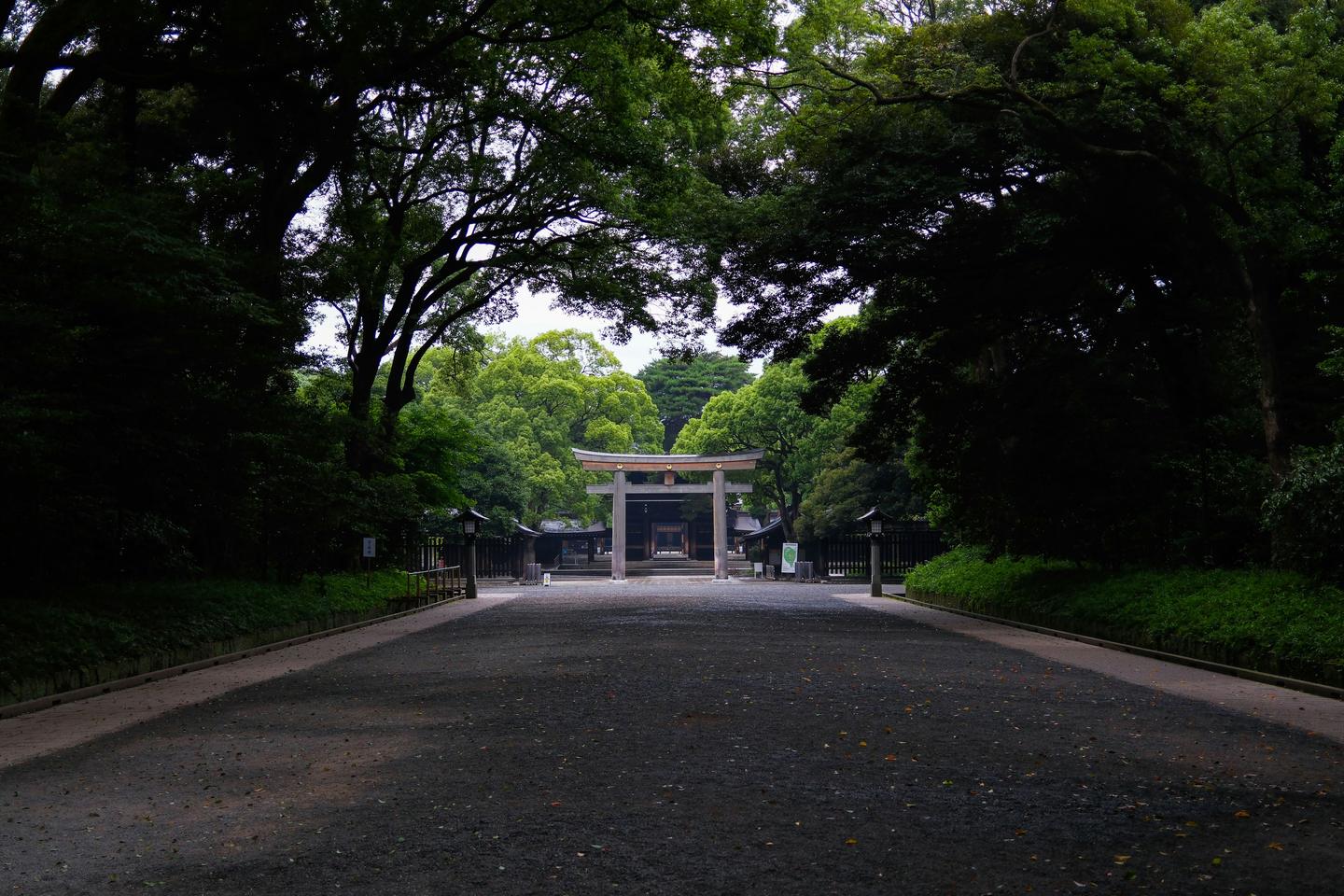
MEIJI JINGU WHEN YOU HAVE ONLY A MORNING
Meiji Jingu stands in a forest of about 70 hectares in the middle of Tokyo. There is no forest therapy programme and no guide to book, but it is the easiest forest to reach from any hotel in the city: the shrine gives the walk from Harajuku Station and Meiji-jingumae Station as one minute, from Sangubashi Station three minutes, and from Yoyogi Station and Kita-sando Station five minutes. It adds that the main buildings are at least another ten minutes on foot from the entrance.
Entry to the shrine grounds is free. The gates open at sunrise and close at sunset, so the hours change each month: 5:40 to 16:40 in October, 6:10 to 16:10 in November, and 6:40 to 16:00 in December. Some facilities inside open mainly from 9:00 to 16:00, and the inner garden, Meiji Jingu Gyoen, charges ¥500. For a quiet walk we suggest the first hour after the gates open, which leaves time to be back at the hotel for breakfast.
WHAT TO WEAR AND BRING
Okutama's foundation publishes the clearest list, and it suits the other forests too.
- Shoes good enough for hiking, and clothes you can move in. Long sleeves and long trousers even in summer, with layers to adjust as you warm up or cool down.
- A hat, rain gear or a folding umbrella, a towel and something to drink.
- Insect repellent and sunscreen; gloves, a knitted hat or a scarf in the cold months.
- A backpack, so that both hands are free on the path.
- For yoga, there is no changing room at Okutama: you practise in your walking clothes, and on wet days the session moves indoors or under a roof.
- For the Hyakuhiro Falls trail, basic hiking equipment. For Okutama's wasabi plan, boots for walking in a stream.
Okutama's guided walks go ahead in the rain and are cancelled only when a weather advisory or warning is issued, usually with notice by the evening before. Lunch depends on the tour, and allergies or a vegetarian diet need to be given at booking. Bears live in the area, but the foundation says sightings are rare.
WHEN TO GO
Autumn is the strongest season across all four forests, and also the shortest. Akasawa closes on November 8 in 2026, and Hinohara stays open every day only until November 30, after which its bus stops for the winter. Okutama's lake road closes from December to March, though the Tokei Trail and the gorge paths remain. Spring brings new leaves at Akasawa from its late April opening.
The mountains are cooler than the city. Okutama's foundation reminds walkers that the air cools by roughly 0.6 to 0.7 °C for every 100 m of height, and that its own monthly averages range from summer highs near 36 °C in August to winter lows near minus 9 °C in January. Meiji Jingu is open every day of the year, so it is the one forest that fits a winter visit or a single free morning between meetings. For how the seasons shape a wider trip, see our guide to Japan's seasons.
BEFORE YOU BOOK
These are the checks we run before we confirm a forest day for guests.
| Check | Why it matters |
|---|---|
| Lead time | Okutama and Akasawa's full session ask for two weeks; replies from Okutama can take several days |
| Language | Okutama's private tours can run in English; at Akasawa an interpreter is a separate fee |
| Day of the week | Hinohara closes on Mondays outside its busy periods; Akasawa's bus and railway pause on some Wednesdays; Moegi no Yu closes on Mondays |
| Season | Akasawa closes for winter after November 8, 2026; Hinohara's bus stops from December to February |
| Fee basis | Okutama charges per person and includes lunch; Akasawa charges per guide and does not state whether tax is included |
| Cancellation | Okutama's charges begin seven days out; Akasawa's two pages differ, so the terms are confirmed in writing |
| Diet and tattoos | Meals and allergies are set at booking; some hot springs refuse guests with tattoos |
When STAYGO plans a forest day, we send the request to the foundation or the tourism association, agree the route and the guide, and arrange it all in your names. You pay the guide fees, the inn and the bath directly at their own published rates; we add no markup and take no commission. Our planning fee for a Signature trip of 7 to 14 days is USD 3,500 for the group, and a forest day sits inside it alongside the rest of the trip. Our wellness trip outline shows how such a day fits into a longer stay.
SOURCES AND HOW WE CHECKED
We read each operator's and venue's own website, the Forest Therapy Society's list of certified bases, and the official Tokyo and Nagano tourism pages on October 14, 2026. We did not contact the operators. Fees are those published on that date and can change; where two official pages from the same operator differ, we have said so.
- Forest Therapy Society, list of certified bases: Okutama, Hinohara and Akasawa as certified places
- Okutama forest therapy, private tours: the standard plan, fees by group size, lead time, booking steps
- Okutama forest therapy, therapy roads: the five roads, lengths and climbs, the model day, the partner inns
- Okutama forest therapy, English page: the ¥21,000 figure, English-language tours, the Arasawaya two-day plans, cancellation charges, the note on tattoos
- Okutama forest therapy, questions and answers: what to bring, rain, temperatures, bears, Moegi no Yu
- Okutama forest therapy, access: travel times from Shinjuku
- GO TOKYO, Okutama forest therapy: certified guides, JR Ome Line to Okutama Station
- Hinohara Tomin no Mori, courses: the Otaki no Michi therapy road, its certification in March 2007, length and the waterfall
- Hinohara Tomin no Mori, access and hours: opening hours, closed days, bus route and seasonal service
- Hinohara Tomin no Mori, bus timetable: express departures from the park
- GO TOKYO, Hinohara Tomin no Mori: free entry
- Agematsu Town Tourism Association, guided walks: the three programmes, fees, lead times, payment
- Agematsu Town Tourism Association, Akasawa forest therapy in English: session times, interpreter fees, forest railway fare
- Agematsu Town Tourism Association, Akasawa Natural Recreation Forest: the 2026 season, the 1982 forest bathing event, the bus from Agematsu Station, Wednesday pauses
- Go NAGANO, Akasawa Natural Recreational Forest: the 300-year-old cypress, the three most beautiful forests, the logging railway fare, JR Chuo Line access
- Meiji Jingu, opening hours and admission: monthly hours, the Gyoen fee
- Meiji Jingu, about: the 70-hectare forest
- Meiji Jingu, access: stations and walking times
- Meiji Jingu, questions and answers: no admission fee
QUESTIONS ANSWERED
Where can I do guided forest bathing near Tokyo?
Okutama, at the western end of Tokyo, is a certified forest therapy base with guides certified by Okutama Town. Its private standard plan runs from about 10:30 to 15:00 from Okutama Station, about 100 minutes from Shinjuku on weekends and holidays and about 120 minutes on weekdays.
How much does a forest therapy tour in Okutama cost?
The foundation's Japanese page lists the private standard plan at ¥20,000 for one person, ¥11,000 each for two and ¥9,000 each for three, tax included, with lunch and insurance. Its English page shows ¥21,000 for one person.
How far ahead do I need to book?
At least two weeks for Okutama's private tours and for Akasawa's four-hour forest therapy session. Akasawa's shorter guided walks ask for at least a week.
Is there forest bathing in central Tokyo?
Meiji Jingu stands in a forest of about 70 hectares, a minute's walk from Harajuku Station. Entry is free, and in October the grounds are open from 5:40 to 16:40. There is no guided programme.
Does forest bathing go ahead in the rain?
In Okutama, yes. Walks are cancelled only when a weather advisory or warning is issued, usually with notice by the evening before.
A FOREST DAY IN YOUR JAPAN TRIP
Tell us your dates, how far you like to walk and what you eat. We will come back with the forest and route we would choose, the guide's fee as published, and where to bathe or stay afterwards.
Begin planning →