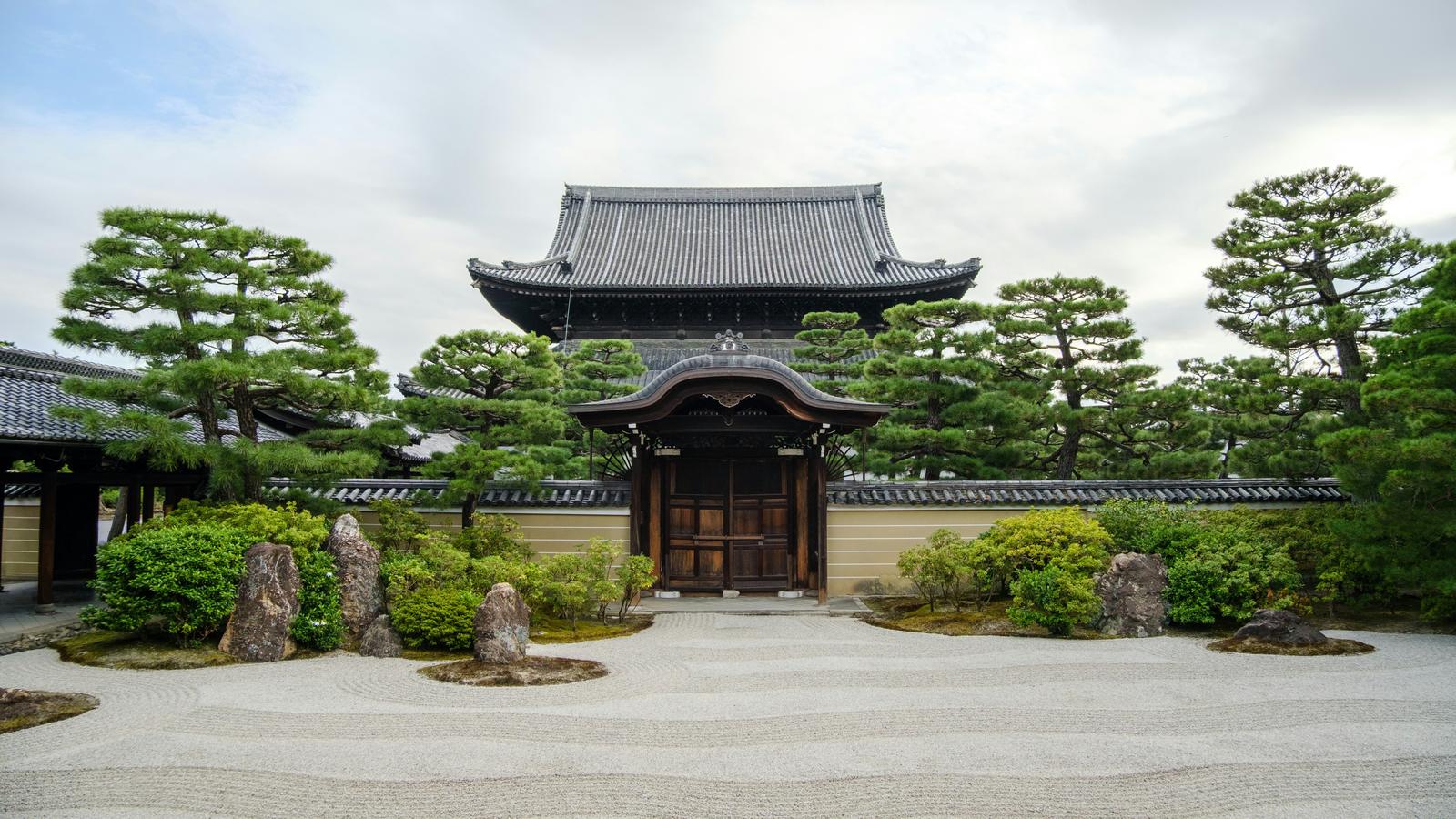
For zen meditation in Kyoto with English instruction, the clearest choices are Shunko-in in the Myoshin-ji complex, where a two-hour sitting with tea for about a dozen guests costs ¥22,000 per person before tax, and Ryosoku-in at Kennin-ji near Gion, where an 80-minute private or group session starts from ¥120,000. Taizo-in, also in Myoshin-ji, teaches zazen in English for ¥5,000 per person, but only to private groups of ten or more. Every English session needs a reservation in advance, and most run in the morning.
We read each temple's own website, the booking pages those websites link to, and Kyoto City's official visitor guide on October 14, 2026. Only programmes whose official pages state the language, the length, the fee and the way to reserve are in the main table. Two public sittings at Kennin-ji and Tofuku-ji, whose pages do not mention English, are listed separately for travellers who already sit. The sources are at the end. For the wider picture of temple stays, forest bathing and temple food, see wellness travel in Japan; this article is only about sitting zazen in Kyoto.
Key points
- Shunko-in's Kissako Zen and Tea session runs about 120 minutes in English for a group of at most 12, on fixed dates, usually 10:00 to 12:00, at ¥24,200 per person including tax.
- A fully private English session at Shunko-in is ¥220,000 for a group of one to five, tax included, and runs 120 to 150 minutes.
- Ryosoku-in's guided zazen lasts 80 minutes: 60 minutes of instruction, sitting, a Dharma talk and questions, then 20 minutes of free time. The fee starts from ¥120,000 per session, and the private page states English instruction is available.
- Taizo-in's English zazen is 90 minutes with a temple tour, ¥5,000 per person including tax, for groups of 10 to 80, booked two months to two weeks ahead.
- Shunko-in asks for socks and modest clothing and discourages short skirts. Tofuku-ji asks for loose clothing and no hoods, because the sitting may include the wooden stick.
WHERE TO SIT ZAZEN IN ENGLISH
Kyoto has hundreds of Zen temples, but few of them teach visitors in English, and fewer still publish what they charge. These are the ones that do, as their own pages showed them on October 14, 2026. Shunko-in and Taizo-in are sub-temples inside the Myoshin-ji complex in the Hanazono area of north-west Kyoto. Ryosoku-in is one of the 14 sub-temples of Kennin-ji, beside the Gion district, and it was founded in 1358.
| Temple and session | Session length | English | Published fee | How reservations work |
|---|---|---|---|---|
| Shunko-in, Kissako Zen and Tea Myoshin-ji, Hanazono | About 120 minutes | Yes, conducted in English | ¥22,000 per person plus tax (¥24,200 with tax) | Advance reservation required, by fixed date. Full fee charged for cancellations fewer than seven days before |
| Shunko-in, The Way of Zen, private Myoshin-ji, Hanazono | 120 to 150 minutes | Yes, conducted in English | ¥220,000 for a group of one to five, tax included, paid as a ¥110,000 deposit and a ¥110,000 balance | Listed dates at 14:00, other dates on enquiry. Deposit not refundable; full fee charged unless changes are notified at least two weeks ahead |
| Ryosoku-in, private zazen Kennin-ji, Gion | 80 minutes | English instruction available | From ¥120,000, up to 10 people | Request form on the temple's site with preferred date, time and number of guests |
| Ryosoku-in, group zazen Kennin-ji, Gion | 80 minutes | English not stated on the group page | From ¥120,000, up to 20 people | Request form on the temple's site |
| Ryosoku-in, self-guided zazen Kennin-ji, Gion | 9:30 to 10:15 | Written guidance in a sealed envelope; temple staff speak Japanese only | ¥4,000 per person | Advance booking on the temple's booking page. No cancellation or refund after payment |
| Taizo-in, Zen meditation with temple tour Myoshin-ji, Hanazono | 90 minutes | Yes, an English programme | ¥5,000 per person, tax included | Private groups of 10 to 80 only, booked two months to two weeks ahead by enquiry form. Deposit for ten people due one week before |
Two details in this table matter more than they appear to. Shunko-in's own schedule page gives the Kissako group a maximum of 12, while the individual date page we read gives 11; either way, it is a room of about a dozen people. And the private session at Shunko-in is listed by the temple at up to eight guests, while the ticket we read covers a group of one to five, so a party of six to eight is a question we put to the temple directly.
For a couple or a family of fewer than ten, Taizo-in's standard programme is out of reach, so for smaller parties we look first at Shunko-in or Ryosoku-in.
Public sittings for those who already sit
Two of Kyoto's head temples hold regular public sittings that cost little or nothing and need no reservation. Neither page mentions English. They suit someone with a sitting practice who is comfortable following a temple service without English guidance.
| Temple | When | What happens | Fee and booking |
|---|---|---|---|
| Kennin-ji, Senkokai | Second Sunday of each month, 7:30 to about 9:30. Next date November 8, 2026. No sitting in August | Two sittings of 20 minutes, sutra chanting, then a talk. The talk is cancelled for November 8 | Free, no reservation. Groups of ten or more asked not to come. The main hall cannot be visited on the day |
| Tofuku-ji, Sunday zazen | Every Sunday, 6:30 to 7:00, except on ceremony days | Zazen in the Daizendo meditation hall, often followed by an open-air talk of 30 to 50 minutes | No fee or reservation stated. Be seated 10 minutes before the start |
WHAT HAPPENS IN A SESSION
The published programmes differ in how much talking surrounds the sitting. Knowing the shape in advance helps you choose.
Ryosoku-in guided zazen
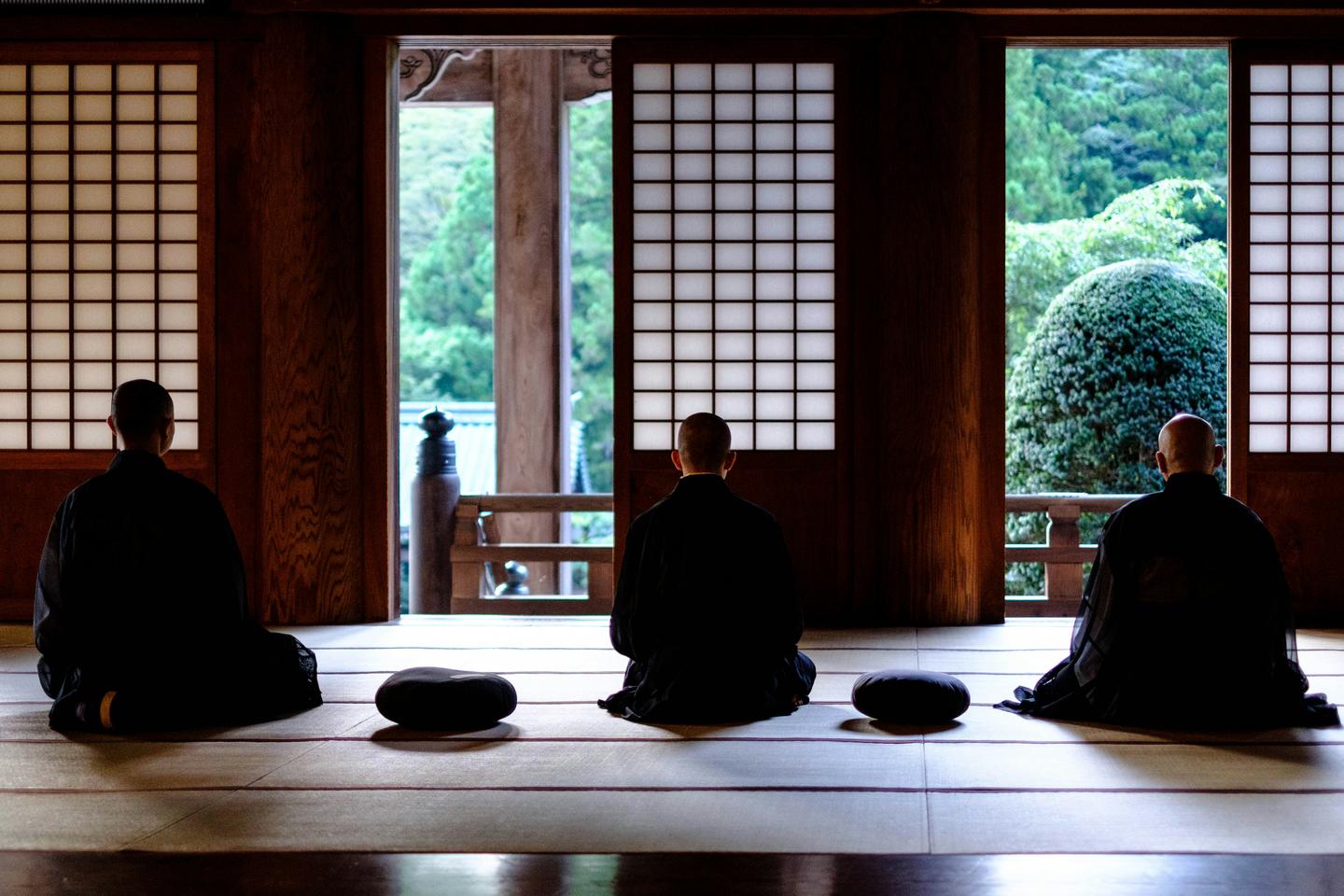
Ryosoku-in sets out its 80 minutes plainly: meditation instruction, zazen, a Dharma talk, and questions, all within the first 60 minutes, followed by 20 minutes of free time to keep sitting or to walk through the temple. The group programme is described as one for first-time participants, who learn specific techniques before they practise. The temple's home page describes the sitting as taking place overlooking its garden.
Ryosoku-in unguided zazen
The early session at Ryosoku-in has no teacher in the room. Guests check in at the Bishamonten Hall entrance between 9:20 and 9:25, walk slowly from 9:30 to 9:45, then sit on a cushion in the main hall from 9:45 to 10:05, following instructions left for them in a sealed envelope. One bell ends the sitting at 10:05 and guests leave the hall after the second. Phones are switched off before entering, and there is no conversation anywhere in the grounds. It suits people who prefer silence to instruction.
Shunko-in Kissako
Kissako means, in Shunko-in's own translation, "Have some tea." The session at Shunko-in opens with cold-infused tea made with traditional utensils from Asahiyaki, Kaikado and Kanaami-Tsuji, then moves into guided zazen, a tea appreciation that draws on all five senses, and Nanso meditation, a restorative practice associated with the teachings of Hakuin. A Dharma talk, open questions, and a guided visit to the garden and the prayer hall follow. The temple notes that no previous meditation or knowledge of Buddhism is needed. The conversation is in English with the head priest, without an interpreter.
Kennin-ji Senkokai
At Kennin-ji, the monthly public sitting is two periods of 20 minutes, sutras chanted together, and a talk by the head of the temple, ending around 9:30. It is the format of a working Zen temple, and its page does not mention English.
WHAT TO WEAR AND HOW TO SIT
Only two of these temples publish a dress code, and they agree on the essentials. Shunko-in requires socks, recommends modest clothing, and discourages short skirts for seated meditation. Tofuku-ji asks participants to come in loose clothing and says short skirts and tight trousers are unsuitable. It also asks people not to wear hoodies or anything with a hood, because the keisaku, the flat wooden stick a monk may use on the shoulders during zazen, should not land on one.
In practice that means trousers with some give, or a long full skirt, a top that does not ride up when you lean forward, and clean socks, since shoes come off at the entrance of every hall. Leave valuables at the hotel: Ryosoku-in warns that during its self-guided session you will be away from your belongings at times.
Cushions and chairs
The sessions are taught on cushions on the tatami. Ryosoku-in's self-guided page names the zafu, the round meditation cushion, and none of the zazen pages we read mentions chairs. If kneeling or sitting cross-legged for 20 minutes is difficult, that is something we ask the temple about before arranging the sitting. Ryosoku-in's sutra copying session, described below, states that chairs are provided for every participant and that sitting on the floor is not required, so it is a gentle alternative for anyone who cannot sit on the floor.
Arrive early and quietly
Tofuku-ji asks people to be seated ten minutes before its 6:30 start. Ryosoku-in's check-in window for the 9:30 session is five minutes long. Kennin-ji's November notice asks participants to arrive on time for the 7:30 start. Vehicles cannot enter the Kennin-ji grounds, and Ryosoku-in asks visitors to come by public transport or on foot from a car park outside.
FITTING ZAZEN INTO A KYOTO DAY
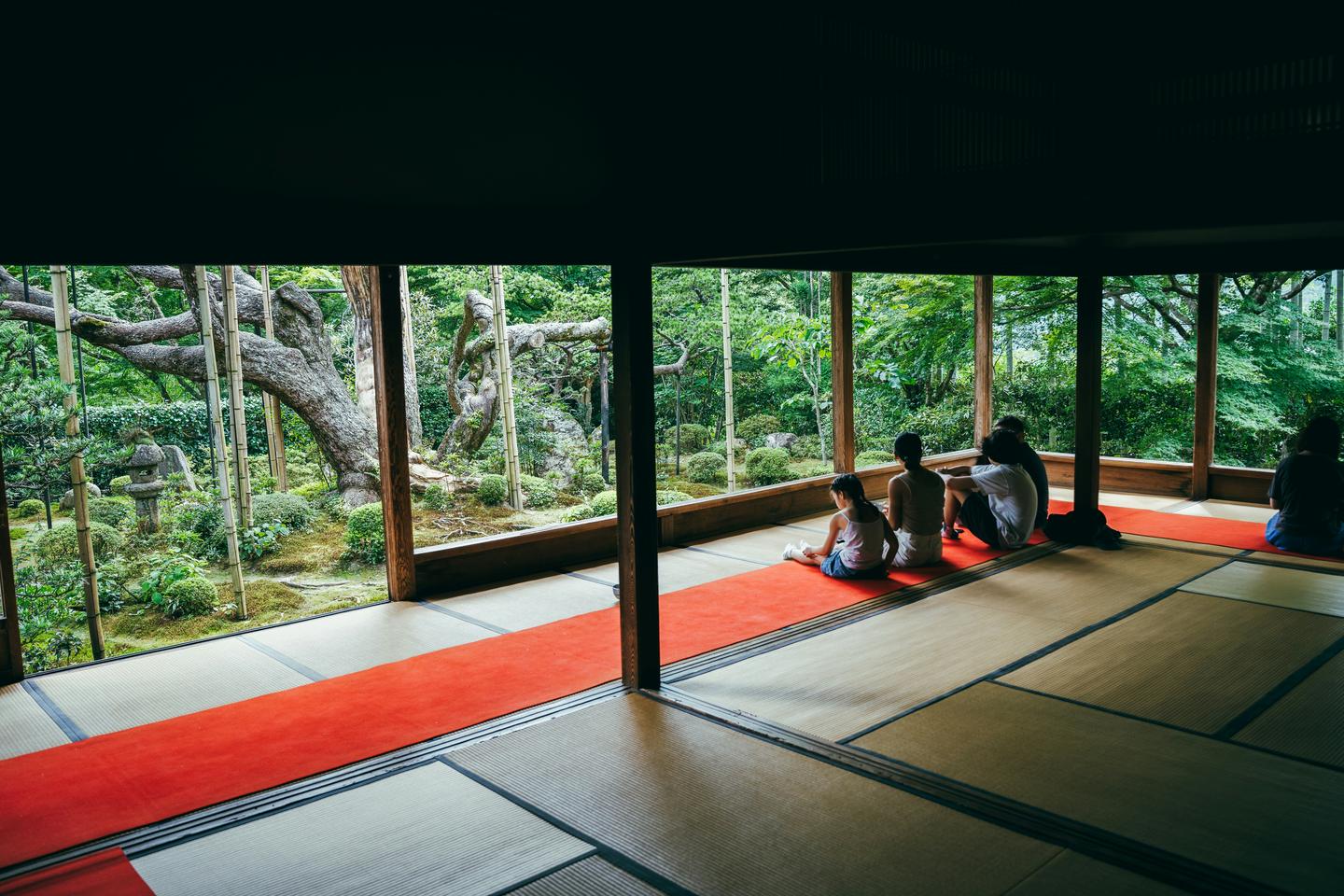
Kyoto's temples are at their quietest before the main gates open, and the sitting times follow that rhythm. Tofuku-ji sits at 6:30 on Sundays, Kennin-ji at 7:30 on the second Sunday, Ryosoku-in's self-guided session at 9:30, and most of Shunko-in's Kissako dates at 10:00. Taizo-in accepts groups at any time between 8:00 and 17:00. A morning sitting leaves the afternoon for the rest of the city, and the timing for each part of Kyoto is in our guide to Kyoto.
Pair the sitting with a garden in the same grounds
Myoshin-ji morning. Shunko-in and Taizo-in are both inside Myoshin-ji. Taizo-in is one of the few sub-temples there open all year, from 9:00 to 17:00 (16:00 from mid-December to the end of February), with general admission at ¥700, payable in yen only. Its dry landscape garden is credited to the painter Kano Motonobu, and it also has a twentieth-century pond garden, Yoko-en. A 10:00 Kissako at Shunko-in followed by Taizo-in's gardens fills a morning without a taxi in between.
Gion morning. Ryosoku-in sits within Kennin-ji, whose general admission is ¥800 until December 31, 2026, and ¥1,000 from January 1, 2027. The self-guided session ends at 10:15, which leaves time for Kennin-ji's own halls and gardens before the Gion streets fill.
Tofuku-ji Sunday. After the 6:30 sitting, the open-air talk usually follows, and the temple opens to visitors at 9:00. The Hojo garden is ¥500 per adult, rising to ¥600 from November 1, 2026. During the autumn season, November 14 to December 6, the Tsutenkyo bridge and Kaisando are ¥1,000 and the bridge opens at 8:30. That is also when the temple warns of heavy crowds, so a dawn sitting outside those weeks is the calmer choice.
Dates when sessions pause
Shunko-in will not hold any sessions from December 31 to January 4 because of New Year ceremonies, and it expects limited availability in January and February 2027 while a building beside its meditation room is restored. Kennin-ji does not hold its sitting in August. If your Kyoto dates fall in those windows, we look at Ryosoku-in first.
SHAKYO AND SHOJIN ALONGSIDE
Two quieter practices sit naturally beside zazen, and both temples that offer them say so on their own pages.
Sutra copying at Ryosoku-in
Ryosoku-in's shakyo session runs from 10:00 to 11:30 at ¥4,000 per person and is served with chilled Japanese tea. Each guest traces a sutra character by character, paying attention to breath and posture, and the finished copy is dedicated at a memorial service at the temple. Chairs are provided. Bookings open one month at a time, cannot be cancelled once confirmed, and arriving more than 15 minutes late counts as a cancellation. Kennin-ji's own sutra copying has been suspended for the time being. For another hands-on practice in the same spirit, an incense blending session in Kyoto works well on the same day.
Temple food with a sitting
Temple vegetarian cooking is covered in our wellness guide; here are the two places where it is published as part of a zazen visit. Taizo-in serves a fully vegan lunch with a temple tour, 90 minutes, from ¥8,500 per person, prepared by the Kyoto restaurant Ajiro, for groups of 10 to 30. Its own example combination of zazen, tour and lunch is ¥11,500 per person, and the chef can work to a budget or around allergies if told in advance. Shunko-in offers shojin ryori as an extra with its private programmes, and its overnight retreats include seasonal shojin ryori, zazen, calligraphy, tea and a night at the temple. Shunko-in does not publish a price for the meal or the retreat on its own pages.
PHOTOGRAPHY AND QUIET
Kennin-ji publishes the most detailed rules of any temple here, and they apply across Kennin-ji's grounds, where Ryosoku-in stands. Photographs are allowed with a handheld camera or phone only. Video is not allowed at all, including for social media. Tripods, monopods, selfie sticks, gimbals, action cameras fixed to the body and drones are banned. Visitors are asked to keep photography brief, to stand while taking pictures, and not to take group photographs. The temple adds that it may ask people who break the rules to leave.
Tofuku-ji asks visitors not to use tripods, not to eat or drink in the grounds, and not to sketch, and during the autumn opening it may ask people not to take photographs on the Tsutenkyo and Gaunkyo bridges. Ryosoku-in asks for phones to be switched off before entering for its self-guided sitting and bans video recording in its sound meditation. During any sitting, we suggest leaving the camera in the bag.
WHICH SESSION SUITS WHOM
First time, wanting to understand what Zen is. Shunko-in's Kissako. Two hours, in English, with time to ask questions, in a room of about a dozen people, at ¥24,200 each.
A couple or family who want the room to themselves. Shunko-in's private session at ¥220,000 for up to five, or Ryosoku-in's private zazen from ¥120,000 for up to ten. The Ryosoku-in session is shorter and more focused on the sitting; the Shunko-in one has more conversation and tea.
Someone who wants silence and no instruction. Ryosoku-in's self-guided sitting at ¥4,000, or the public sittings at Kennin-ji and Tofuku-ji for those who already know the form.
A party of ten or more. Taizo-in, where zazen, tea and a vegan lunch can be combined for the group.
Practical checks before you book
- Confirm that the date is listed. Shunko-in's group sessions run on fixed dates, and Ryosoku-in releases bookings one month at a time.
- Note the cancellation terms. Several sessions cannot be refunded once paid, and Shunko-in charges the full fee inside seven days.
- Ask about chairs before the day if sitting on the floor is difficult.
- Pack socks and loose, modest clothing, with no hood.
- Check closures: Shunko-in from December 31 to January 4, Kennin-ji's sitting in August, and Taizo-in's note that its single bilingual priest may be called to a funeral at short notice.
- Bring yen in cash for Taizo-in admission; it does not take cards.
HOW WE ARRANGE IT
We choose the session to suit how you sit and how much conversation you want, write to the temple with your dates and any questions about posture or chairs, and arrange it in your names. You pay the temple directly at its own published rate, with no commission or markup from us. A morning sitting then sits inside the rest of your Kyoto days, with a garden and lunch nearby. STAYGO's Signature plan is USD 3,500 for your group for a trip of 7 to 14 days; longer or unusual trips are quoted as Bespoke.
SOURCES AND HOW WE CHECKED
We read each temple's own website on October 14, 2026, along with the booking pages that those websites link to for their own programmes, and Kyoto City's official visitor guide. We did not contact the temples. Fees are as published on that date and can change; where a page showed tax separately, we say so. We did not use figures from booking sites, tour operators or press coverage.
- Shunko-in, Zen in Kyoto, October to December 2026: Kissako length, language, group size, dress code, cancellation, dates, private session dates, retreats, New Year and winter closures
- Shunko-in, official site: programme list, private session size, shojin ryori as an extra
- Shunko-in, Kissako booking page: fee of ¥22,000 plus tax, group size, cancellation
- Shunko-in, private session booking page: deposit and balance, group of one to five, 120 to 150 minutes, cancellation
- Ryosoku-in, official site: founding in 1358, sub-temple of Kennin-ji, zazen overlooking the garden, access by public transport
- Ryosoku-in, zazen: individual, group and private formats
- Ryosoku-in, private zazen: 80-minute programme, English instruction, up to 10 people, fee from ¥120,000
- Ryosoku-in, group zazen: programme for first-timers, up to 20 people, fee from ¥120,000
- Ryosoku-in, booking page linked from the temple's site: self-guided zazen times and fee, sutra copying times, fee and chairs, video rule
- Taizo-in, Experience Zen: English programmes, fees including tax, group size, booking window, deposit, cancellation, vegan lunch
- Taizo-in, visit: opening hours, admission, yen only
- Kennin-ji, experiences: Senkokai format, schedule and fee, sutra copying suspended
- Kennin-ji, November 2026 Senkokai notice: date, start time, no reservation
- Kennin-ji, admission fee change: ¥800 now, ¥1,000 from January 1, 2027
- Kennin-ji, photography rules: handheld only, no video, no tripods or selfie sticks
- Tofuku-ji, events: Sunday zazen time, place and dress guidance, open-air talks
- Tofuku-ji, visitor guide: hours, admission, autumn season, photography rules
QUESTIONS ANSWERED
Where can I do zen meditation in Kyoto in English?
Shunko-in in Myoshin-ji runs a two-hour Kissako session in English on fixed dates and private sessions on request. Ryosoku-in at Kennin-ji offers 80-minute private zazen with English instruction. Taizo-in in Myoshin-ji teaches zazen in English to private groups of ten or more.
How much does a zazen session in Kyoto cost?
On the temples' own pages in October 2026: ¥24,200 per person including tax for Shunko-in's Kissako, ¥220,000 for a private group of one to five at Shunko-in, from ¥120,000 per session at Ryosoku-in, ¥4,000 for Ryosoku-in's self-guided sitting, and ¥5,000 per person at Taizo-in for groups of ten or more. Kennin-ji's monthly public sitting is free.
What should I wear for zazen in Kyoto?
Loose, modest clothing and socks. Shunko-in requires socks and discourages short skirts. Tofuku-ji says short skirts and tight trousers are unsuitable and asks people not to wear anything with a hood.
Can I sit on a chair for zazen in Kyoto?
The zazen pages we read describe sitting on cushions and do not mention chairs, so this is worth asking the temple before booking. Ryosoku-in's sutra copying session provides chairs for every participant.
Do I need to book zazen in Kyoto in advance?
Yes, for every English-language session in this article. Taizo-in takes bookings two months to two weeks ahead, Ryosoku-in releases some sessions one month at a time, and Shunko-in requires advance reservation. Kennin-ji's monthly public sitting needs no reservation.
SIT ZAZEN IN KYOTO WITH THE RIGHT TEACHER
Tell us your Kyoto dates, if you have sat before, and if you would prefer a private room or a shared session. We will come back with the session we would choose, the garden and lunch around it, and what each part costs.
Begin planning →