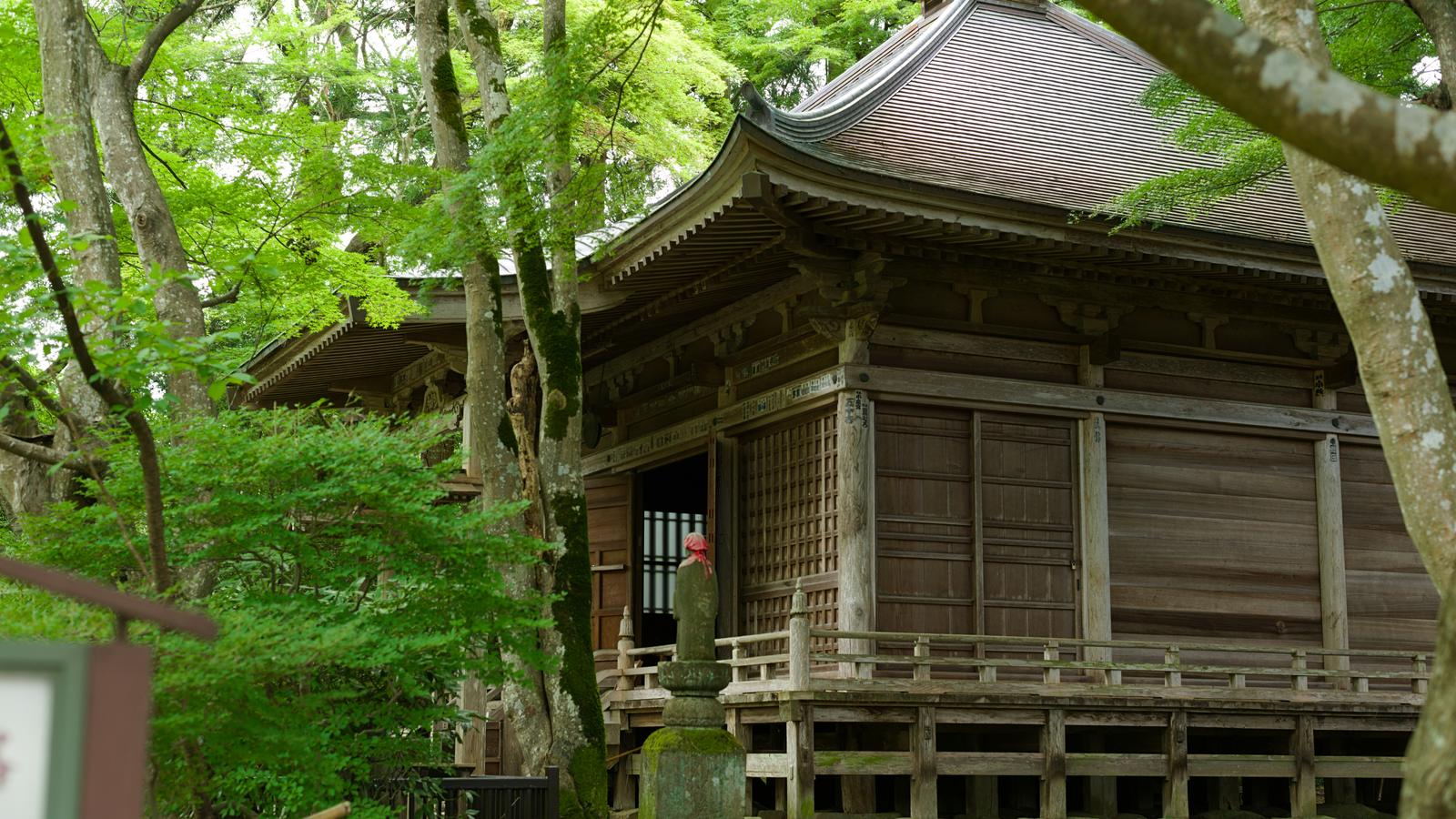
Once Tokyo and Kyoto are known, the question becomes where Japan still feels undiscovered. For Americans, the north is the clearest answer. In the Japan Tourism Agency's 2025 survey, none of the six Tohoku prefectures was visited by even one percent of American leisure travelers; Iwate, home to Hiraizumi, drew 0.2%, and Yamagata, home to Dewa Sanzan, 0.3%. Lonely Planet chose Tohoku for its Best in Travel 2027.
This article follows one thread through the region: the road the poet Matsuo Basho took in The Narrow Road to the Deep North, from the gold of Hiraizumi to the sacred mountains of Dewa. It covers what to see, when to go and how to travel between the two, which takes some planning. We read the official pages of the temples, the shrine, the tourism associations and the airport, and contacted none of them; the sources are listed at the end. For a wider view of the region, see Tohoku: Japan's Quieter North →.
Key points
- Hiraizumi was inscribed as a World Heritage Site in June 2011 for its temples and gardens representing the Buddhist Pure Land.
- Chuson-ji's Konjikido, the Golden Hall, was raised in 1124 and is gilded inside and out; it opens at 8:30 all year.
- Tokyo to Ichinoseki takes about 2 hours 10 minutes by Shinkansen, then 8 minutes by local train to Hiraizumi.
- On Mount Haguro, 2,446 stone steps climb through cedars past a five-story pagoda that is a National Treasure.
- Basho visited both on The Narrow Road to the Deep North; on Mount Haguro he lodged at Minamidani, a quiet site still reached on foot.
ASK US ABOUT A JOURNEY NORTH →
WHY THE NORTH FOR A SECOND JOURNEY
A first journey to Japan is shaped by the famous names. A second can be shaped by a story, and Tohoku has one of the best. From around 1100, three generations of the northern Fujiwara built at Hiraizumi a Buddhist capital that flourished for about a hundred years. Five centuries later Basho walked north to see what remained, and wrote that only Mount Kinkeisan kept its form.
The region rewards travelers who like to have a place nearly to themselves. Its temples are of the first rank and its landscapes are on a large scale, and in most seasons the visitors are few. The distances are real, which is why the order of the days and the choice of a private car matter more here than elsewhere.
HIRAIZUMI AND THE GOLDEN HALL
Chuson-ji says it was founded in 850 by Ennin, a monk of Mount Hiei, and greatly expanded from 1105 by Fujiwara no Kiyohira, who wished to honor equally all those who had died in the wars of the north. Its Konjikido was raised in 1124. The hall is covered in gold leaf inside and out, its inner sanctum inlaid with mother-of-pearl, and beneath its altar rest Kiyohira, Motohira, Hidehira and Yasuhira, four generations of the family.
The temple opens every day at 8:30, closing at 17:00 from March to early November and at 16:30 in winter. A ticket for the Konjikido, the treasure hall and the other halls costs ¥1,000 for adults. We plan the Golden Hall for the opening, walk up through the cedars in the early light, and keep the treasure hall for later, when the groups have moved on.
MOTSU-JI AND THE PURE LAND GARDEN
A short walk from Hiraizumi Station, Motsu-ji keeps a garden said to represent the Buddhist paradise on earth, around a broad pond. The grounds are doubly designated by the national government, as a Special Historic Site and a Special Place of Scenic Beauty. Together with Chuson-ji, Kanjizaio-in, Muryoko-in and Mount Kinkeisan, they make up the World Heritage property, inscribed in Paris in June 2011.
The garden changes with the calendar. On the fourth Sunday of May, Motsu-ji holds the Gokusui no En, a court poetry gathering beside a winding stream. Irises flower from June 20 to July 10, and the bush clover and autumn leaves festival runs from late September to mid November. Chuson-ji holds an outdoor bonfire Noh on August 14 and a chrysanthemum festival from October 20 to November 15.
ACROSS THE MOUNTAINS TO DEWA SANZAN
Dewa Sanzan, the three sacred mountains of Haguro, Gassan and Yudono, lie near Tsuruoka on the Sea of Japan side, across the Ou Mountains from Hiraizumi. There is no fast train between them, so we usually cross by private car, which also allows a stop for lunch along the way. To return, Shonai Airport near Tsuruoka has flights to Haneda; on the day we checked there were five, each about an hour and five minutes.
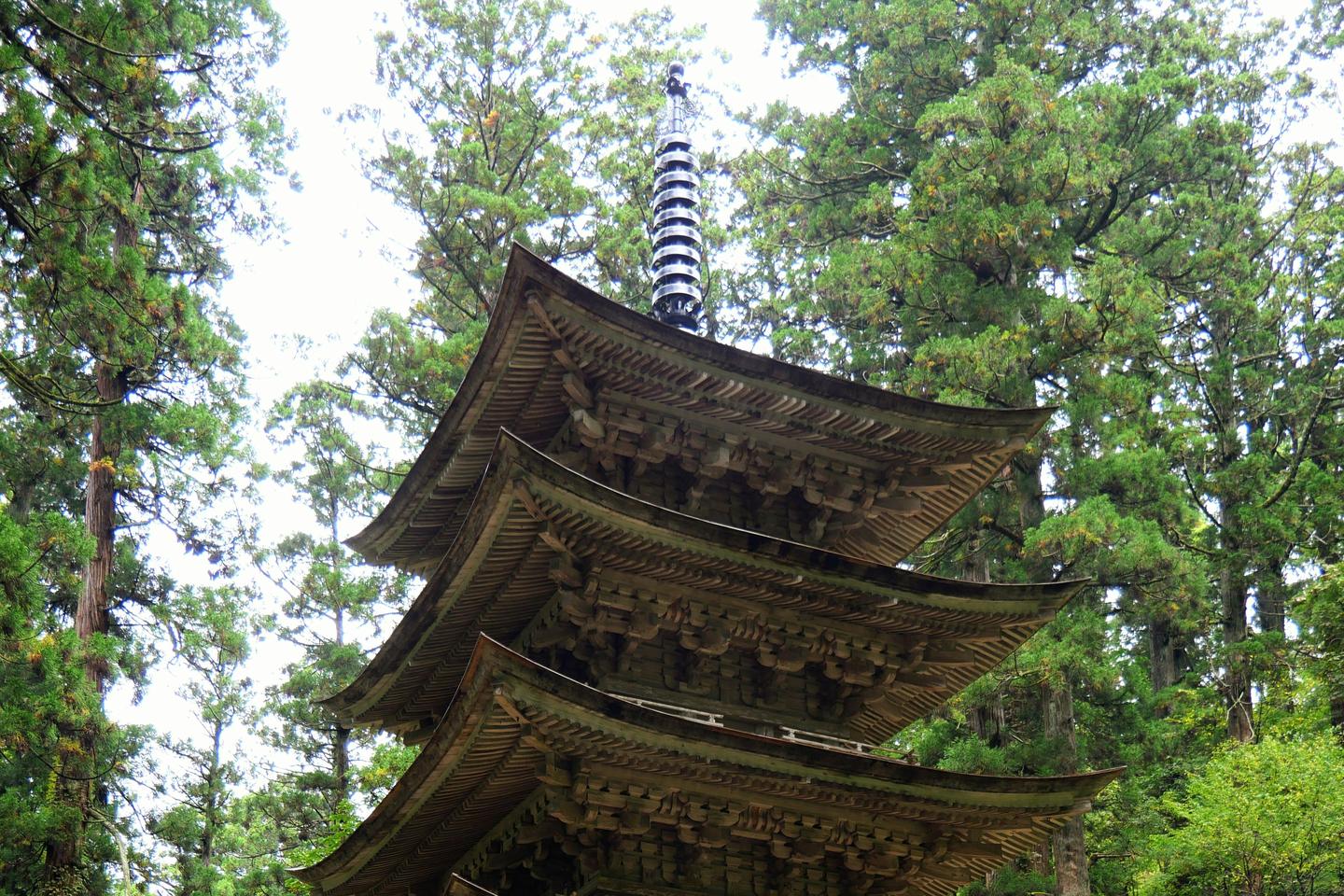
On Mount Haguro, the Zuishinmon gate opens onto 2,446 stone steps, about 1.7 kilometers through cedars, rising to the shrine at the summit. The five-story pagoda, about ten minutes from the gate along the steps, is a National Treasure and is said to be the oldest in Tohoku. Away from the main path, Minamidani is the site of the temple lodging where Basho stayed, now a moss-covered clearing reached by a side path. The training and pilgrim lodges of the mountains have their own article: Yamabushi Training at Dewa Sanzan →.
WHEN TO GO
Each season gives the route a different character. Late spring brings fresh green to the cedars and the poetry gathering at Motsu-ji. Summer is the season of the high mountains: the shrine at the summit of Gassan is open only from July 1 to September 15. Autumn is our favorite for Hiraizumi, with the chrysanthemums at Chuson-ji and the maples reflected in the pond at Motsu-ji. In winter, the stone steps of Mount Haguro are not cleared of snow and cannot be climbed, although the road to the summit shrine is kept open.
FOUR DAYS ALONG BASHO'S ROAD
Day one: Shinkansen from Tokyo to Ichinoseki, about two hours and ten minutes, and an afternoon at Motsu-ji. Day two: Chuson-ji at opening, then the rest of Hiraizumi at leisure. Day three: a private car across the mountains to Tsuruoka, and an evening on the Shonai plain. Day four: Mount Haguro early, the steps, the pagoda and Minamidani, then the flight from Shonai to Haneda. From Sendai, Ichinoseki is only about 32 minutes by Shinkansen, so the route also joins a wider journey through the north.
WHERE STAYGO COMES IN
Within Signature, our planning for journeys of 7 to 21 days, we place the north where it fits best, at the beginning or end of a stay in Tokyo, and draw the days with the times of the trains, the car and the flight. We arrange the inns, an English-speaking guide for the temples where one is wanted, the driver for the mountain crossing and the luggage sent ahead, and each is settled with the provider in the simplest way available, usually on your bill or on the day.
Quiet hours at a temple and seats at a seasonal event depend on the host. We ask on your behalf and tell you plainly what has been confirmed.
SOURCES AND HOW WE CHECKED
We read the pages below on November 5, 2026. Travel times are rounded. We did not contact any hotel, ryokan, temple, airline or other body.
- Japan Tourism Agency, Inbound Consumption Survey, 2025 confirmed tables (Japanese): visit rates of US leisure travelers, Iwate 0.2%, Yamagata 0.3%
- JNTO, Lonely Planet Best in Travel 2027 (Japanese): Tohoku and the Michinoku Coastal Trail chosen
- Chuson-ji, official site (Japanese): opening hours by season, admission ¥1,000
- Chuson-ji, History (Japanese): founded in 850 by Ennin, expanded from 1105 by Kiyohira, World Heritage in 2011
- Chuson-ji, Konjikido (Japanese): raised in 1124, gold leaf, mother-of-pearl, the four Fujiwara
- Motsu-ji, official site (Japanese): Pure Land garden, Special Historic Site and Special Place of Scenic Beauty
- Hiraizumi Tourism Association, World Heritage: inscribed in Paris in June 2011, the five components, Basho's words on Mount Kinkeisan
- Hiraizumi Tourism Association: Kiyohira moved to Hiraizumi around 1100, three generations over 100 years
- Hiraizumi Tourism Association, Access: Tokyo to Ichinoseki 2 hours 10 minutes, Sendai 32 minutes, Ichinoseki to Hiraizumi 8 minutes
- Hiraizumi Tourism Association, Events: Gokusui no En, iris festival, bonfire Noh, chrysanthemum festival
- Dewa Sanzan Shrine, Visiting (Japanese): Gassan open July 1 to September 15, pagoda ten minutes from the gate, steps closed in winter
- Shonai Kotsu, Haguro and Gassan bus line (Japanese): 2,446 steps over about 1.7 km, the pagoda a National Treasure and the oldest in Tohoku
- Dewa Sanzan Japan Heritage Council, Minamidani (Japanese): the lodging where Basho stayed on the Oku no Hosomichi journey
- Shonai Airport, official site (Japanese): five ANA flights to Haneda on November 5, 2026
QUESTIONS TRAVELLERS ASK
Is Hiraizumi worth visiting?
Yes, for travelers who have seen Kyoto. Its Golden Hall of 1124 and its Pure Land gardens are a World Heritage Site, and very few foreign visitors reach them.
How do you get to Hiraizumi from Tokyo?
Take the Tohoku Shinkansen to Ichinoseki, about two hours and ten minutes, then a local train for eight minutes to Hiraizumi.
How many days do Hiraizumi and Dewa Sanzan need?
Four days is comfortable: two for Hiraizumi, one to cross the mountains by car, and one for Mount Haguro before flying back to Haneda from Shonai.
When is the best season for Tohoku?
Autumn for Hiraizumi, with the chrysanthemum festival and the maples at Motsu-ji. Summer for the high mountains, since Gassan's summit shrine opens only from July 1 to September 15.
Can you climb Mount Haguro in winter?
The stone steps are not cleared of snow and cannot be climbed in winter, but the road to the summit shrine is kept open for cars with winter tires.
ASK US ABOUT A JOURNEY NORTH
Tell us when you would like to travel and how much of Japan you already know. We will draw the route north with the trains, the car and the flight home, and show where it fits beside Tokyo.
Begin planning →We reply within 24 hours, in writing
Some of the restaurants and bars we arrange seat guests only by introduction or membership. We ask on your behalf; the table and the evening are the house's decision. We do not publish their names.