The standard Japan itinerary, Tokyo, Kyoto, Osaka, possibly Hiroshima or Hakone, covers only a small part of the country. The rest exists for the traveler willing to detour, and nowhere offers a more compelling detour than Tohoku: the six prefectures that occupy the northern half of Honshu, two hours from Tokyo by Shinkansen, and almost entirely absent from the tourist circuits that have stretched southern Japan to its limits.
Tohoku is not undiscovered by Japanese travelers. The region's festivals, the Nebuta lantern floats of Aomori, Sendai's Tanabata, the Kanto pole-balancing in Akita, draw enormous domestic crowds in August. But the international tourist infrastructure that has overwhelmed Kyoto and Tokyo has not followed. The temples at Yamadera are visited by a fraction of the people who queue for Fushimi Inari. Ginzan Onsen, one of the most beautiful places in Japan, remains essentially unknown to Western travelers.
Key points
- Tohoku, the six prefectures of northern Honshu, is two hours from Tokyo by Shinkansen and almost entirely absent from the international tourist circuits.
- The best ryokan in Ginzan Onsen require booking six months to a year ahead for winter dates. The way to see the village is to arrive after dark in winter.
- In Sendai, eat gyutan at the specialist restaurants near Sendai Station. In Matsushima, see the islands by boat early in the morning; the oyster huts cook over charcoal from October through March.
- The 2,446 stone steps up Haguro-san take approximately 90 minutes at a considered pace, through cedar forest over 500 years old.
GINZAN ONSEN: THE MOST CINEMATIC VILLAGE IN JAPAN
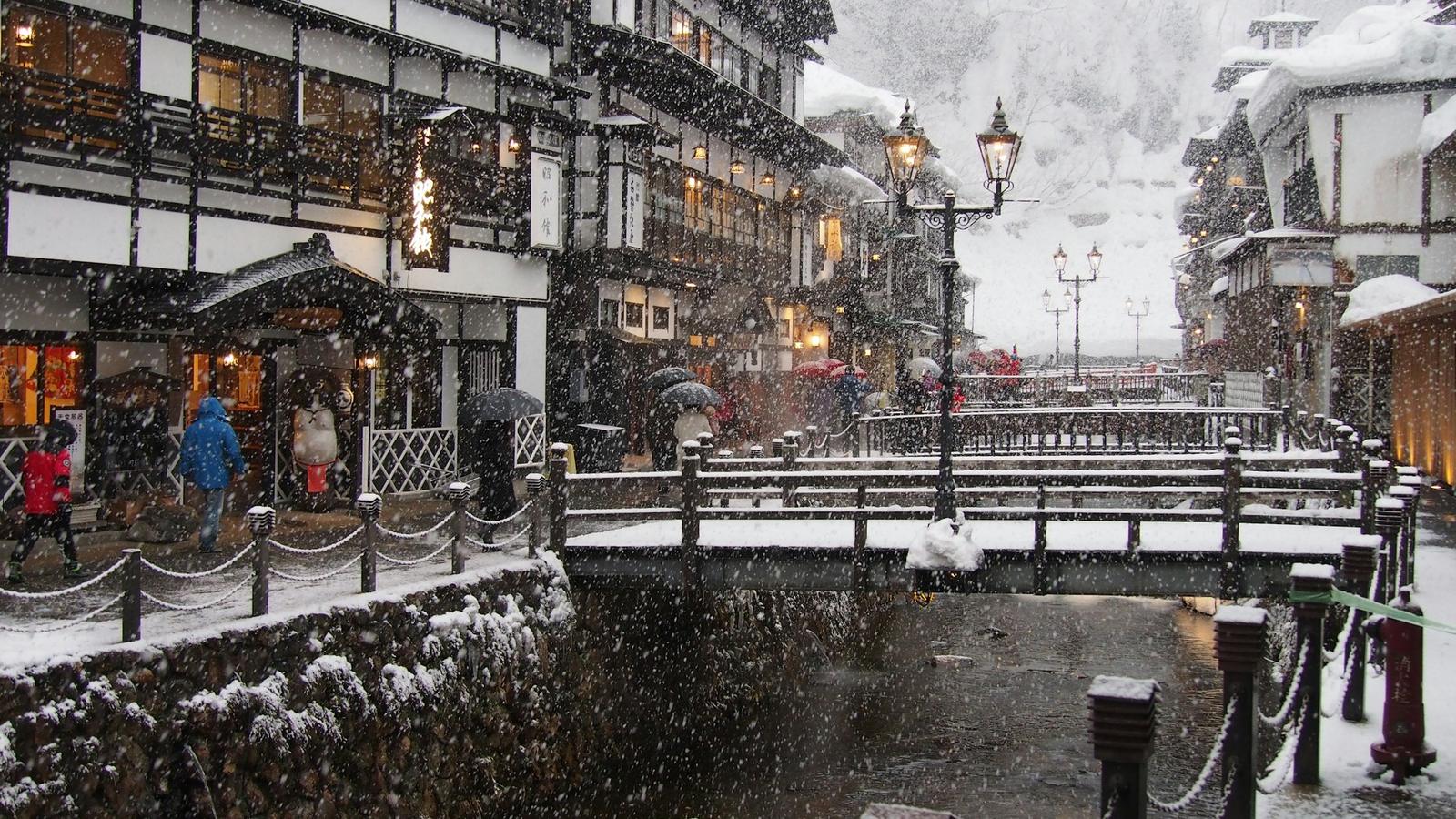
Ginzan Onsen sits in a narrow river gorge in Yamagata Prefecture, a row of wooden Taisho-era ryokan on each bank of a small river, with the sound of the hot spring water running underneath. In winter, paper lanterns light the snow-covered buildings after dark, and the image is one that serious Japan travelers describe as the closest thing to entering a woodblock print. It is widely considered the most cinematically beautiful onsen town in Japan, more cohesive than Kinosaki, more intact than Kurokawa, more atmospheric in winter than Hakone.
The village has perhaps a dozen ryokan. The best, Shinkamiya, Notoya, Fujiya, require booking six months to a year ahead for winter dates, particularly for rooms with private baths overlooking the river. The experience is unlike any other ryokan night in Japan: the absence of cars, the confined scale of the village, the common hot spring corridor shared between buildings, and the specific quality of winter lantern light on snow create conditions that simply do not exist anywhere on the standard tourist circuit.
The correct way to experience Ginzan Onsen is to arrive after nightfall in winter. The bus from Oishida Station takes approximately 40 minutes through the mountains. As the bus enters the valley and the lantern-lit village comes into view below the snow line, it is consistently described by STAYGO clients as the single most surprising moment of any Japan trip. STAYGO arranges private car transfers from Yamagata or Sendai for clients who prefer not to take the local bus.
SENDAI AND THE GYUTAN CULTURE
Sendai is Tohoku's largest city, a well-organized base for the region. The city offers one of the most satisfying food experiences in Japan: gyutan, grilled beef tongue, served in thin slices with barley rice and oxtail soup at the specialist restaurants near Sendai Station.
The gyutan restaurants of Sendai are a serious dining culture, not a tourist gimmick. The best, Kisuke, Tasuke, Rikyu, have been refining the same preparation for decades. The tongue is salted and aged, the slicing is precise, and the char from the grill is specific. STAYGO includes a dedicated gyutan dinner in every Sendai itinerary.
"Tohoku is what most of Japan was before the tourist infrastructure caught up: empty temples, genuine hospitality, and food that hasn't been adjusted for outside tastes."
MATSUSHIMA AND THE TEMPLE COAST
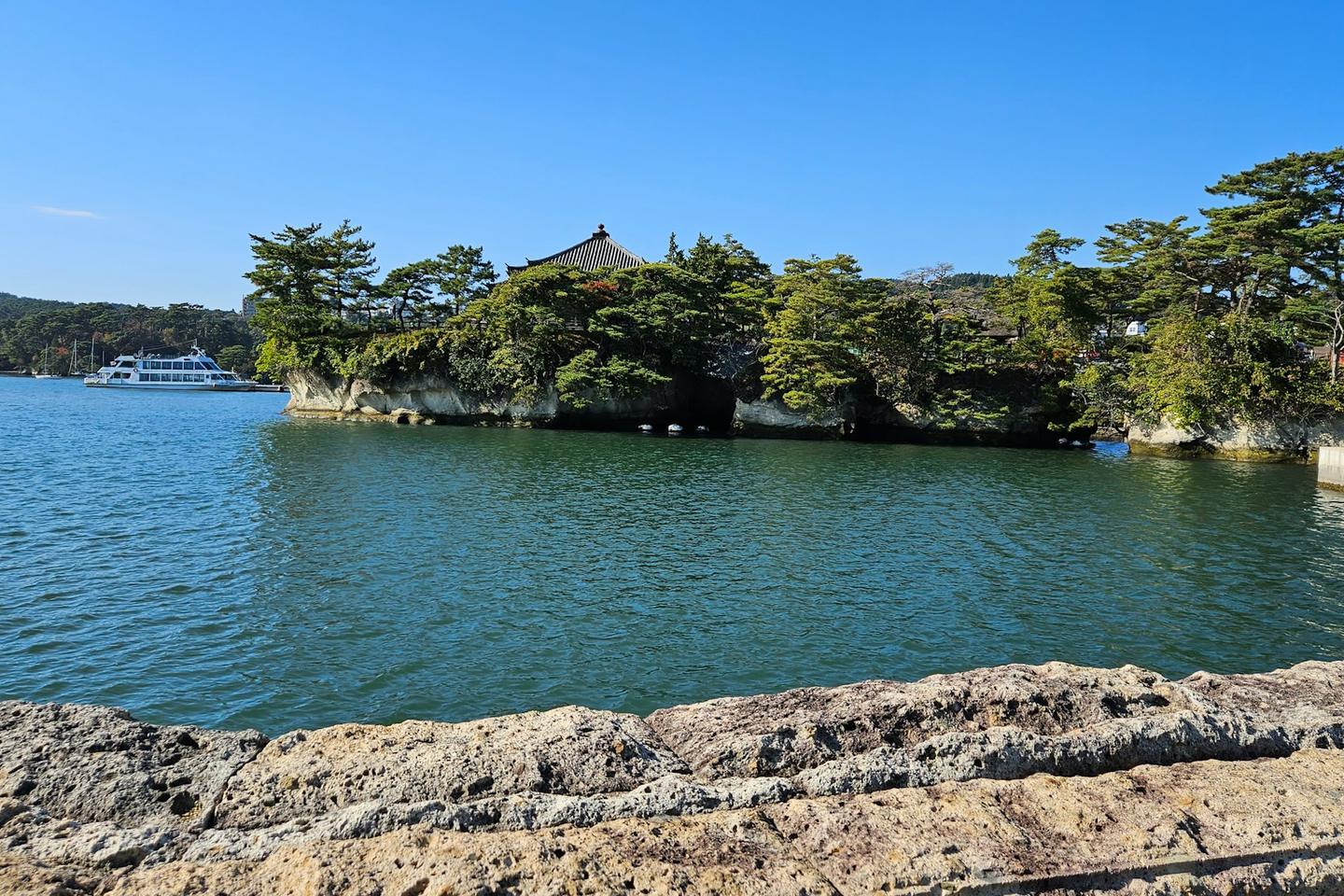
Matsushima, 'pine islands', is a bay of some 260 small islands, considered since the Edo period one of Japan's three most scenic views. The islands are best seen by boat in the early morning, before the day-trip crowds arrive from Sendai. Zuiganji temple is the finest Zen temple in Tohoku and one of the most undervisited significant temples in Japan.
Matsushima oysters, grown in the cold, nutrient-rich bay, are among the best in Japan. The oyster huts along the coast cook them simply over charcoal from October through March. STAYGO builds this stop into any Matsushima visit as the primary food experience of the morning.
DEWA SANZAN: THE MOUNTAIN PILGRIMAGE
The three mountains of Dewa, Haguro, Gas-san, and Yudono, form the sacred center of Shugendo, Japan's syncretic mountain ascetic tradition. STAYGO arranges private guided access to the Haguro-san pilgrimage, the 2,446 stone steps through ancient cedar forest to the summit shrine, and to the shukubo on the mountain, where the vegetarian kaiseki served by yamabushi is among the most distinctive meals available anywhere in Japan.
Gas-san is snow-covered until July. The Yudono-san shrine, the innermost of the three, prohibits photography and description. It is one of the few places in Japan where the prohibition feels entirely appropriate, because what you encounter there is not something that translates into language or images.
The stone staircase up Haguro-san passes through a cedar forest over 500 years old. The path takes approximately 90 minutes at a considered pace. The cedar is so dense the light changes quality within the first ten minutes. The forest floor is in permanent shade, covered in moss, and the sound of the mountain settles around the walker. At the summit: the five-story pagoda, the main shrine, and on clear days a view to the Japan Sea. STAYGO arranges guide accompaniment and shukubo accommodation for overnight stays.
A 7-DAY TOHOKU ITINERARY
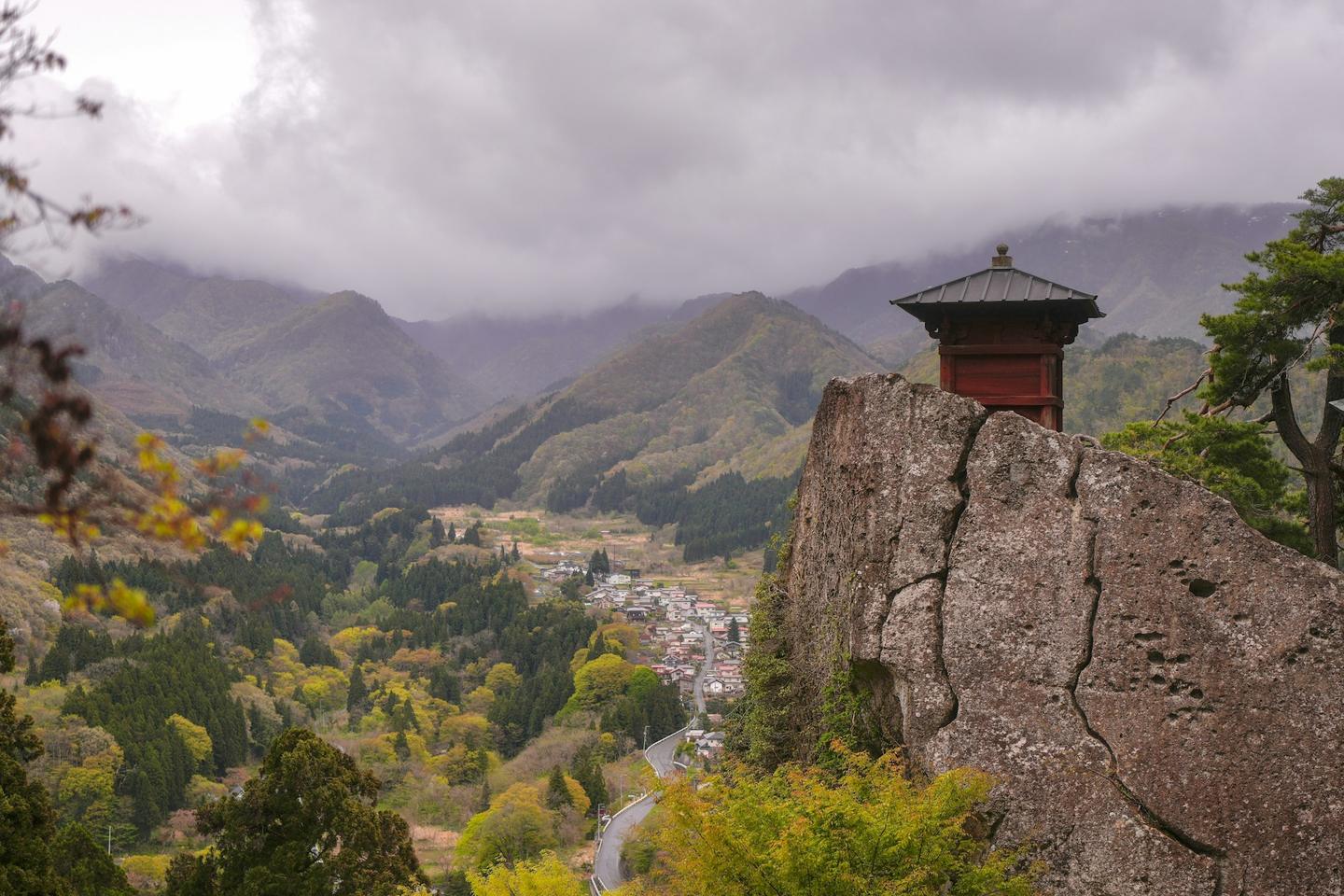
Day 1–2, Sendai: Arrive by shinkansen from Tokyo (90 min). Gyutan dinner on arrival. Matsushima morning with oysters and Zuiganji. Afternoon at Yamadera cliff temple.
Day 3–4, Ginzan Onsen: Private car transfer (via Yamagata, approx. 2 hrs). Two nights, minimum needed to experience morning and evening rhythms. Arrival after dark on Day 3 essential.
Day 5–6, Dewa Sanzan: Transfer to Tsuruoka. Private guided ascent of Haguro-san. Overnight shukubo. Day 6: Yudono-san, sake brewery in Shonai region.
Day 7, Return: Tsuruoka to Sendai by car, shinkansen to Tokyo. Or continue north to Aomori if Nebuta Festival timing aligns.
QUESTIONS, ANSWERED
How do you get to Tohoku from Tokyo?
The Tohoku Shinkansen connects Tokyo to Sendai in approximately 90 minutes, and to Shin-Aomori in around 3 hours. Most STAYGO Tohoku itineraries use the shinkansen for the main spine, Tokyo to Sendai, Sendai to Yamagata or Akita, and private vehicle for the regional exploration. The JR Pass covers all Tohoku Shinkansen services. A private car from Sendai reaches Ginzan Onsen in approximately 90 minutes.
What is Ginzan Onsen and why is it significant?
Ginzan Onsen is a small hot spring village in Yamagata Prefecture, built along a narrow river gorge with traditional wooden ryokan lining both banks. It is widely considered the most cinematically beautiful onsen town in Japan. In winter, the lantern-lit snow scene is one of the defining images of Japanese winter. The village has no new construction in the modern sense; the buildings date from the Taisho and early Showa periods. STAYGO recommends it as an alternative (or addition) to Hakone for clients who have already done the standard Hakone-Kyoto circuit.
When is the best time to visit Tohoku?
Tohoku is exceptional in two seasons: cherry blossom (late April, approximately two weeks after Tokyo's peak, Tohoku blooms later and is significantly less crowded) and winter (December to February for snow scenery, Ginzan Onsen lanterns, and Zao ropeway). Summer is also good for the Tanabata festival in Sendai and the Nebuta Festival in Aomori (early August), but these attract large domestic crowds. Autumn foliage (late October to mid-November) in Matsushima and the mountains is outstanding.
What food is Tohoku known for?
Sendai's gyutan (beef tongue), served grilled and sliced thin, is the region's most famous dish and is genuinely excellent at the specialist restaurants near Sendai Station. Yamagata is one of Japan's finest rice and sake producing regions. The Dewasanzan-affiliated sake breweries around Tsuruoka produce some of the country's most complex junmai daiginjo. Matsushima's oysters are outstanding from October through March. Wanko soba in Iwate (soba served in rapid succession, competitive-style) is an experience more than a meal. STAYGO includes one dedicated food element in every Tohoku itinerary.
PLAN YOUR TOHOKU ITINERARY WITH STAYGO
STAYGO designs Tohoku itineraries with private car transfers, Ginzan Onsen ryokan stays, guided Haguro-san pilgrimage access, and the food stops (gyutan, Matsushima oysters, Shonai sake) that make the region worth the detour.
Start planning →