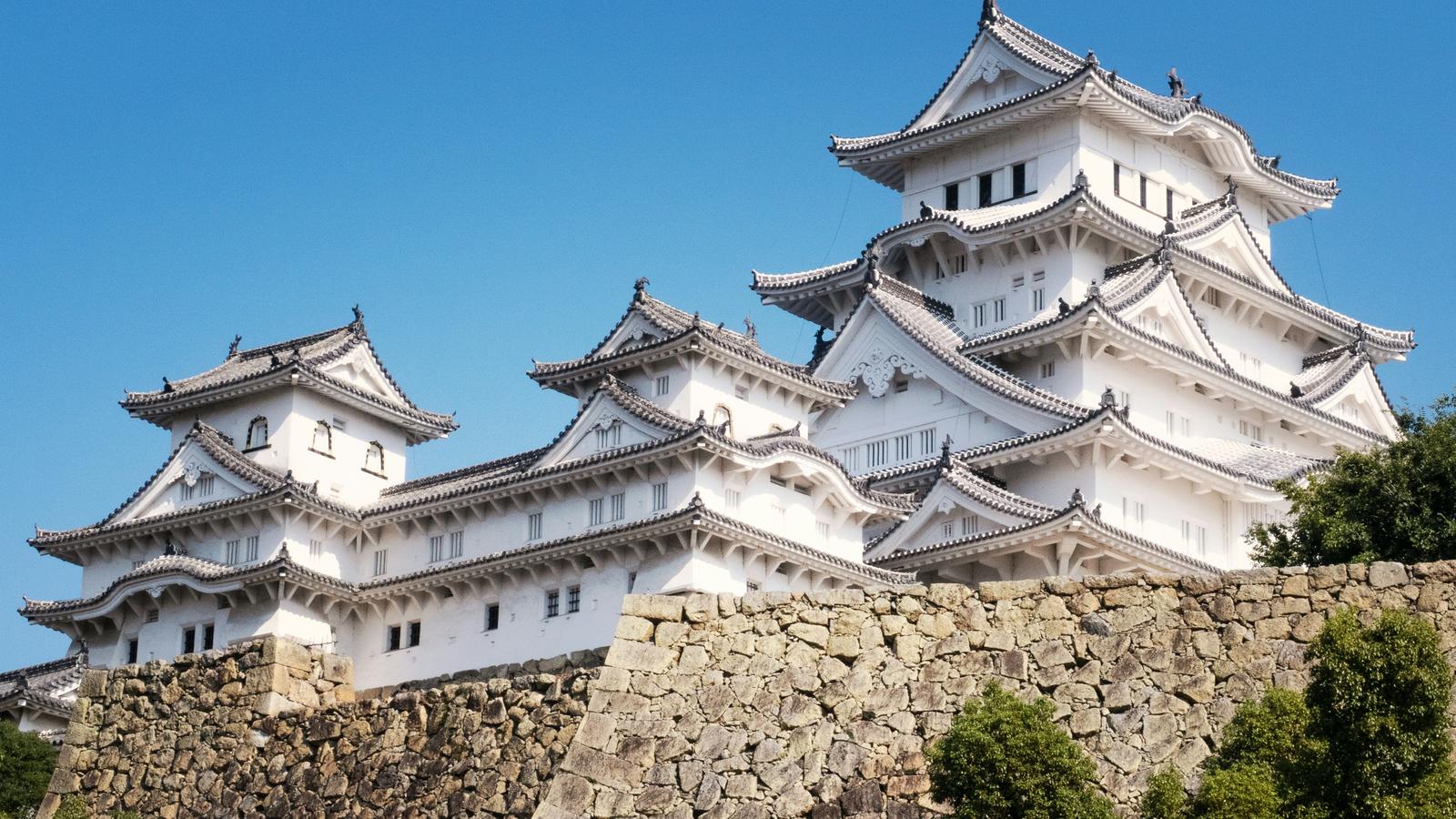
Hyogo is the prefecture just west of Osaka, and most travelers pass through it at speed on the Shinkansen. In the Japan Tourism Agency's 2025 survey, only 4.8% of American leisure travelers stayed or stopped there. Yet in Expedia's Unpack '27 report it ranked second in the world among rising destinations for 2027, with searches for flights and stays up 95%.
The reason is that Hyogo holds three of Japan's finest sights within a short journey of one another: the most celebrated castle in the country, a hot spring town on the Sea of Japan where guests walk between bathhouses in cotton robes, and one of the oldest spas in Japan, tucked behind Kobe. This article sets out how to see all three in three days, with the details that make each one memorable. We read the official pages of the castle, the towns and the inns, and contacted none of them; the sources are listed at the end.
Key points
- Himeji Castle is a National Treasure and, with Horyu-ji, one of Japan's first two World Heritage Sites, inscribed in December 1993.
- Since March 1, 2026, adults who do not live in Himeji pay ¥2,500 to enter the castle; under-18s enter free.
- Kinosaki Onsen has seven public bathhouses, and guests of its ryokan use all seven free between check-in and check-out.
- Arima Onsen is about an hour from Kyoto, Osaka and Himeji, with two kinds of water: the red-brown gold spring and the clear silver spring.
- A natural order is Himeji in the morning, two nights in Kinosaki, and a last night in Arima before flying home from Osaka.
HIMEJI CASTLE IN ITS FIRST HOUR
Himeji Castle is called the White Heron Castle for its pale walls and roofs, which seem to lift from the hill. It was never destroyed by war, earthquake or fire, and it is one of Japan's twelve castles with an original keep. The complex as it stands was completed in 1609, with more than eighty buildings and a six-story main keep. Himeji City records that it became a World Heritage Site in December 1993, together with Horyu-ji in Nara, the first two in Japan.
The castle opens at 9:00 and closes at 17:00, or at 18:00 from June to August, with the last entry an hour before closing; it closes only on December 29 and 30. The keep is climbed by steep wooden stairs, and the first hour is the time to do it, before the corridors fill. Since March 1, 2026, the city has charged adults who live elsewhere ¥2,500, reported as the highest fee for any castle keep in Japan, while children under 18 enter free. A combined ticket with Koko-en, the walled gardens beside the castle, costs ¥2,600, and the gardens make a quiet second hour after the climb.
TO THE SEA OF JAPAN
From Himeji, the journey turns north. Kinosaki Onsen is served by JR limited express trains from Himeji, as well as from Kyoto, Osaka and Sannomiya in Kobe, and all of them require a reserved seat. There are also daily flights from Osaka's Itami Airport to Tajima Airport, with a direct bus to the town. We usually send luggage ahead and travel light, so that the afternoon begins with a bath.
KINOSAKI: SEVEN BATHHOUSES AND ONE STREET
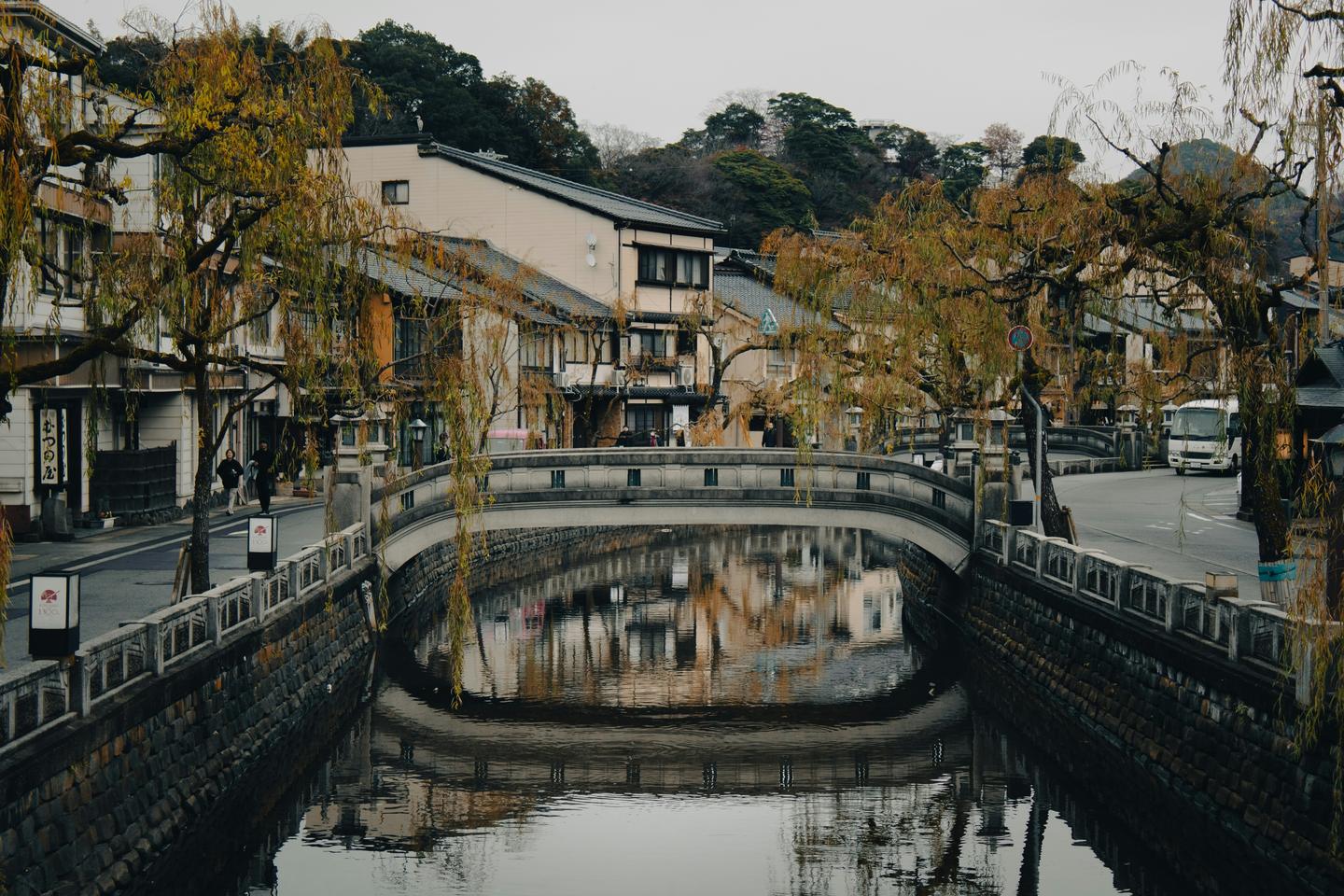
Kinosaki has been a hot spring town for some 1,300 years. A willow-lined canal runs through its center, crossed by stone bridges, and the old inns face the water. Legend says storks were seen healing their wounds in the marshes here, and bathhouses were built over the springs; Kono-yu was the first of them and has been rebuilt many times.
What sets Kinosaki apart is how the town is used. Guests at its ryokan receive a pass for the seven public bathhouses, or sotoyu, and use them freely between check-in and check-out. In the evening the street fills with guests in yukata and wooden geta, walking from one bath to the next. All seven are tattoo friendly, which is rare among Japanese baths.
Of the town's inns, we often begin with Nishimuraya Honkan, founded in the Ansei era of the 1850s and described by the house as the foremost purely Japanese inn of the San'in coast. Its Hiratakan wing, the work of a Showa-era sukiya architect, is a registered cultural property, and its rooms look onto a tended Japanese garden. In the cold months dinner turns to crab landed on this coast; the season and its tags are explained in Snow Crab in Japan: Echizen, Matsuba and Where It Is Landed →. We suggest two nights, so that one whole day belongs to the baths and the street.
ARIMA: THE GOLD AND SILVER SPRINGS
Arima Onsen sits in the hills behind Kobe and is counted among the three ancient hot springs of Japan. Its tourism association puts it about an hour from Kyoto, Osaka and Himeji, and about two hours from Kansai International Airport, which makes it a natural last night before a flight home.
Arima has two waters. The kinsen, or gold spring, is red-brown and rich in minerals; the public bathhouse Kin no Yu, opened in 2002, offers it at 42 and 44 degrees. The ginsen, or silver spring, is clear and carbonated. The most storied place to stay is Tosen Goshobo, which began in the Kamakura period as an inn called Yuguchiya and speaks of more than 800 years of welcome. Each November 2 and 3 the town holds a great tea gathering in memory of Toyotomi Hideyoshi, with the Omotesenke and Urasenke schools taking turns. If the last evening is for Kobe beef, our guide is Authentic Kobe Beef: How to Check It and Where to Eat It →.
THE THREE DAYS IN ORDER
Day one: leave Kyoto or Osaka early for Himeji, climb the keep in the first hour and walk through Koko-en, then take the limited express north to Kinosaki in the afternoon. Day two: a full day in Kinosaki, with the bathhouses in the morning, the canal and its shops after lunch, and dinner at the inn. Day three: a private car south through the countryside to Arima, an afternoon at the baths, and a last dinner in the hills, with Kansai Airport or Osaka within reach the next morning.
The order can be reversed for travelers arriving from Tokyo, and the route works in every season. Spring brings cherry blossoms to the castle grounds, while winter brings crab to Kinosaki and the warmest welcome to its baths.
WHERE STAYGO COMES IN
Within Signature, our planning for journeys of 7 to 21 days, we fit Hyogo between Kyoto and the flight home and draw the three days with their travel times. We arrange the inns, the reserved seats, the luggage sent ahead and a private car where the trains are slow, and each is settled with the provider in the simplest way available, usually on your inn bill or on the day.
The rooms with the best views at the best-known inns are few, and in crab season they go early. We ask for them on your behalf and tell you plainly what has been confirmed.
SOURCES AND HOW WE CHECKED
We read the pages below on November 5, 2026. Travel times are rounded. We did not contact any hotel, ryokan, temple, airline or other body.
- Travel Voice, Expedia Unpack '27 (Japanese): Hyogo second among rising destinations, searches up 95% from September 1, 2025 to July 27, 2026
- Japan Tourism Agency, Inbound Consumption Survey, 2025 confirmed tables (Japanese): 4.8% of US leisure travelers visited Hyogo
- Himeji City, Himeji Castle (Japanese): National Treasure, World Heritage in December 1993 with Horyu-ji, closed December 29 and 30
- japan-guide.com, Himeji Castle: completed in 1609, over eighty buildings, six-story keep, hours, combined ticket with Koko-en
- Kumamoto Nichinichi Shimbun (Kyodo), Himeji Castle fees (Japanese): ¥2,500 for adults from outside the city from March 1, 2026; under-18s free
- Visit Kinosaki: seven tattoo-friendly baths, 1,300 years of history, snow crab
- Visit Kinosaki, Access: limited express from Kyoto, Osaka, Sannomiya and Himeji, all seats reserved; flights from Itami to Tajima
- japan-guide.com, Kinosaki Onsen: free pass for ryokan guests, the stork legend, Kono-yu
- Nishimuraya Honkan, official site (Japanese): founded in the Ansei era, Hiratakan a registered cultural property
- Arima Onsen Tourism Association: one hour from Kyoto, Osaka and Himeji, two hours from Kansai Airport, the great tea gathering on November 2 and 3
- Feel Kobe, Gin no Yu: the silver spring, clear and carbonated
- Kobe Shimbun, Kin no Yu: red-brown gold spring, opened in 2002, baths at 42 and 44 degrees
- Tosen Goshobo, official site (Japanese): began as Yuguchiya in the Kamakura period, more than 800 years
QUESTIONS TRAVELLERS ASK
How much is Himeji Castle admission in 2026?
Since March 1, 2026, adults who do not live in Himeji pay ¥2,500. Children under 18 enter free. A combined ticket with Koko-en garden costs ¥2,600.
Is Kinosaki or Arima better for a first onsen stay?
Kinosaki, if you want the experience of a hot spring town, walking between seven bathhouses in yukata. Arima, if you want an old spa close to Osaka and Kobe for a last night before flying home.
How do you get from Himeji to Kinosaki Onsen?
JR limited express trains run to Kinosaki Onsen from Himeji, as well as from Kyoto, Osaka and Sannomiya. All seats are reserved, so we arrange them early in busy seasons.
Can ryokan guests use all the public baths in Kinosaki?
Yes. Ryokan guests receive a pass for the seven public bathhouses and use them free between check-in and check-out.
When is the best time to visit Hyogo?
Spring for cherry blossoms at Himeji Castle, and winter for crab and the baths of Kinosaki. Arima holds its great tea gathering on November 2 and 3.
ASK US ABOUT A HYOGO ROUTE
Tell us your dates and where your journey begins and ends. We will draw the three days around the castle and the two hot spring towns, with the trains, the car and the inns, so that you can see how it fits.
Begin planning →We reply within 24 hours, in writing
Some of the restaurants and bars we arrange seat guests only by introduction or membership. We ask on your behalf; the table and the evening are the house's decision. We do not publish their names.