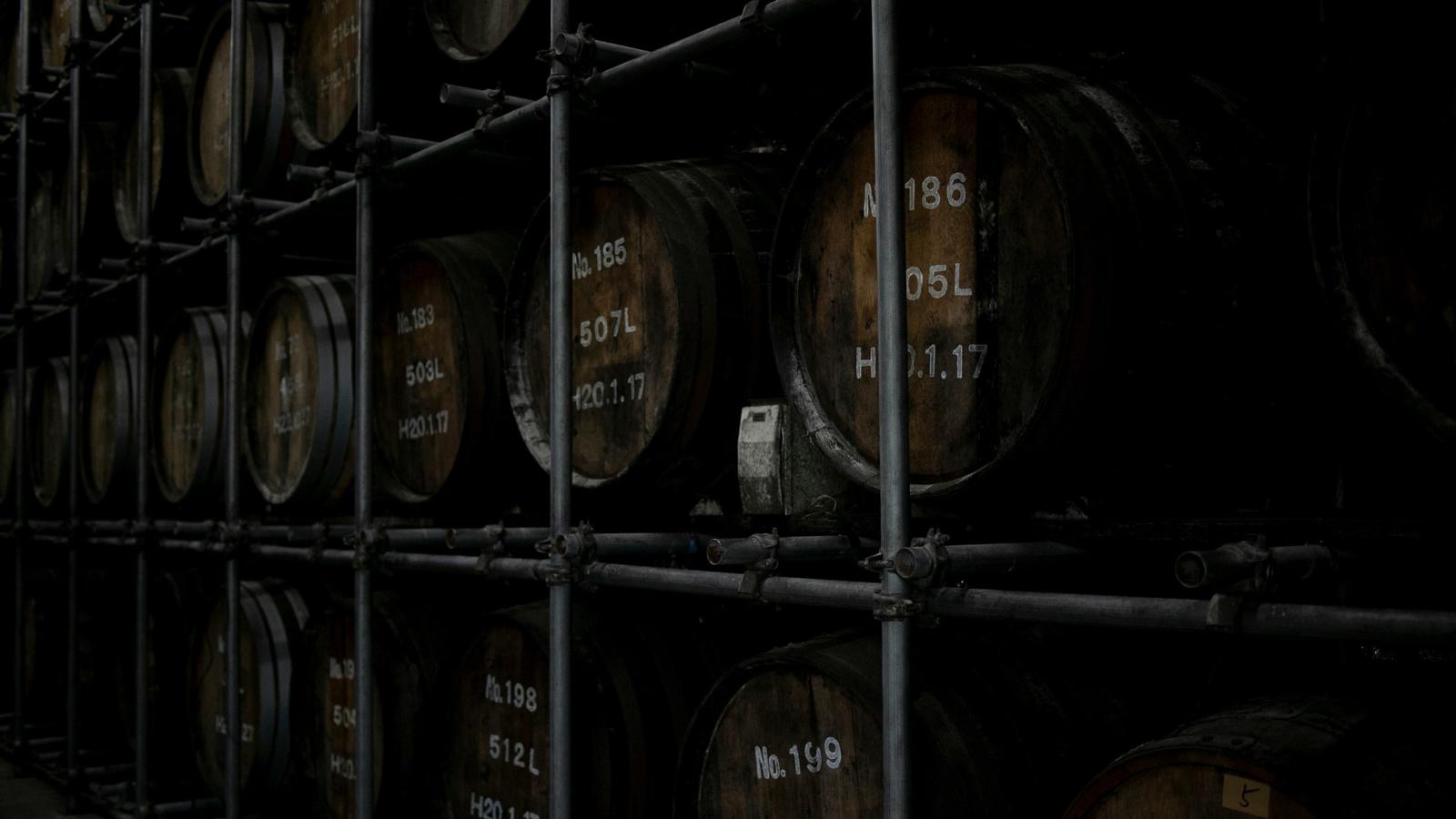
Kagoshima is Japan's shochu country. In the National Tax Agency's 2023 survey, 91 makers in the prefecture answered for 104,867 kilolitres of single-distilled shochu, more than any other prefecture, most of it from sweet potato. The spirit is distilled once, from a mash made with koji, and in Kagoshima it is often cut with water in advance and warmed in a black clay pot. For a guest who knows Cognac or single malt, it is a spirit tied by law to its place.
This article is about honkaku shochu at its source: the Satsuma sweet potato shochu of mainland Kagoshima, the brown sugar shochu of the Amami Islands, and the rice shochu of the Kuma basin across the border in Kumamoto. We read the pages of the National Tax Agency, Japan's statute database, JETRO, Kagoshima Prefecture, the Kuma shochu makers, two distilleries, two inns, and the magazines Serai and Wakaraku on November 5, 2026, and contacted none of them; the sources are listed at the end. For sake breweries and whisky distilleries, including Kagoshima's Kanosuke, see Sake, Whisky and Japan's Private Tastings; for Okinawa's awamori, see Okinawa from Singapore.
Key points
- Honkaku shochu is a legal name. It may be used only for single-distilled shochu of up to 45 percent alcohol made from permitted ingredients such as grain, sweet potato, koji or brown sugar, with nothing added but water.
- "Satsuma" has been a protected geographical indication since December 22, 2005. It requires sweet potatoes grown in Kagoshima, water drawn in Kagoshima, and distilling, storing and bottling inside the prefecture.
- Brown sugar shochu is made only in the Amami Islands, always with rice koji, a condition that dates from the islands' return to Japan in 1953.
- "Kuma", the rice shochu of Hitoyoshi and the Kuma district in Kumamoto, has been protected since June 30, 1995; the makers' association counts 27 distilleries.
- Kagoshima's own way of drinking it is maewari, shochu cut with water in advance, warmed in a kurojoka, a black clay pot.
ASK US TO SHAPE YOUR DAYS IN KAGOSHIMA →
WHAT MAKES A SHOCHU HONKAKU
Japan's Liquor Tax Act defines single-distilled shochu as a spirit of 45 percent alcohol or less, distilled in a pot still from a mash of grain or sweet potato with koji and water, or of koji alone, sake lees, or sugar with rice koji. The regulations on labelling then allow the word honkaku, which means authentic, only for shochu made in those ways. JETRO, the government's trade body, counts about 50 ingredients that the state accepts, from rice, barley and sweet potato to buckwheat and brown sugar.
A pot still carries the raw material into the glass, which is why a sweet potato shochu smells of the potato and a rice shochu tastes softly of rice. Nationally, sweet potato and barley make up about 45 and 44 percent of production, rice about 5 percent and brown sugar 2 percent, in the National Tax Agency's survey.
SATSUMA AND THE SWEET POTATO
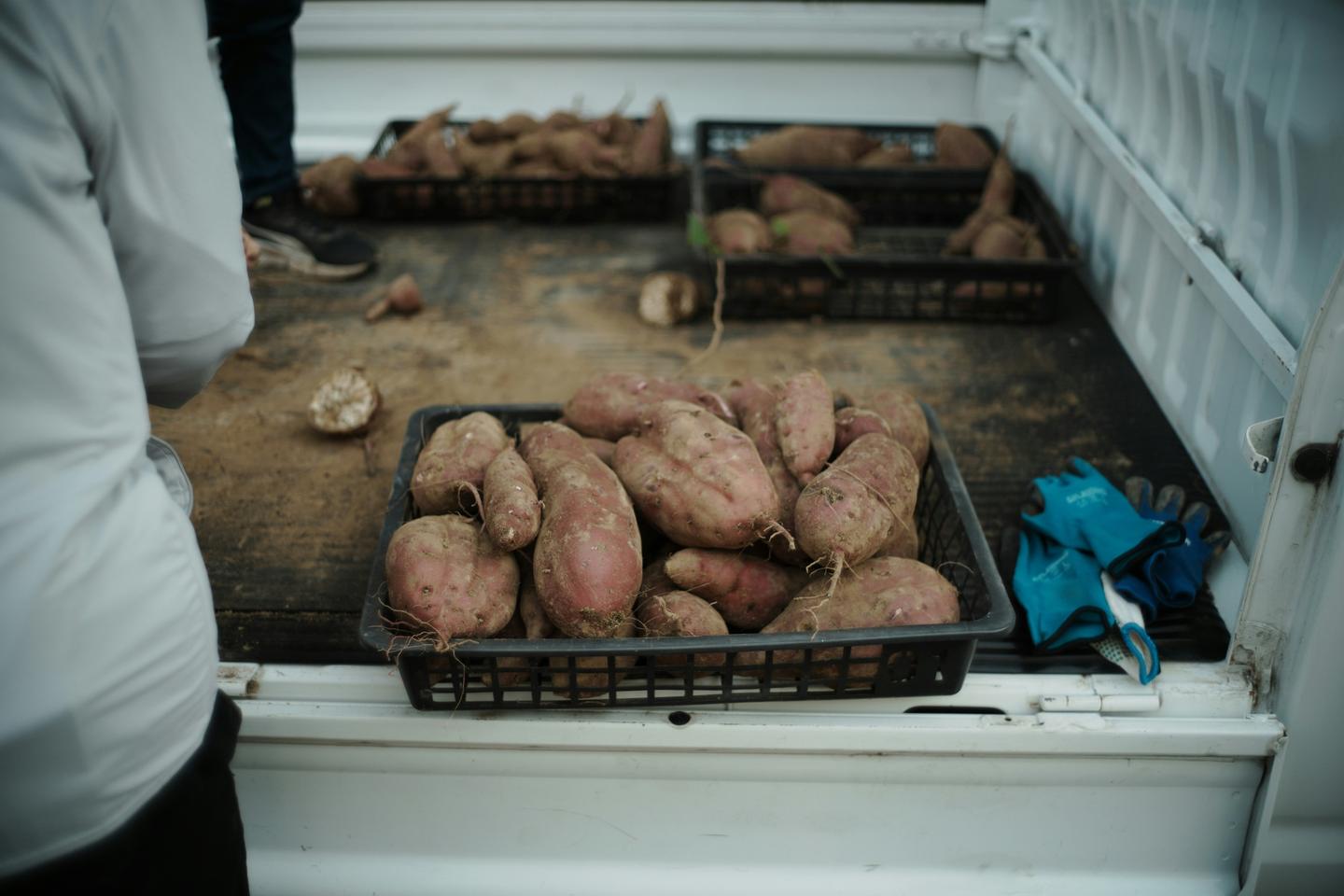
The sweet potato came to Satsuma from Ryukyu in the 17th century and was first grown there, which is why Japanese call it satsuma-imo. The National Tax Agency's standard for the Satsuma indication explains why it stayed: the volcanic shirasu plateaux that cover much of Kagoshima drain fast and keep the water table low, conditions that suit the potato, and Kagoshima is Japan's largest producer. The craft was set by the Kurose and Ata master distillers of today's Minamisatsuma, and refined from the Meiji era with black and white koji.
To carry the name Satsuma, a shochu must be made only from sweet potatoes harvested in Kagoshima, with koji of rice or of Kagoshima sweet potato, and with water drawn in the prefecture, and it must be fermented, distilled, stored and bottled there. The standard describes the result as a rich, rounded aroma from the potato and a sweet, full taste, smooth from the moment it leaves the still. The Amami Islands lie outside the Satsuma area.
AMAMI AND BROWN SUGAR SHOCHU
South of the mainland, the Amami Islands make shochu from brown sugar, and only there. Under American administration after the war, the islanders distilled their surplus brown sugar; when the islands returned to Japan in 1953, the spirit was accepted as shochu on condition that it be made in Amami from brown sugar together with rice koji, as Serai and Wakaraku both describe. Distillation leaves no sugar in the glass. In the National Tax Agency's survey every litre of brown sugar shochu came from Kagoshima. JETRO notes that Amami brown sugar shochu is protected as a regional trademark.
Tomita Shuzojo, founded in 1951, ferments in 32 large clay jars. Amami Oshima Kaiun Shuzo, founded in 1996 in Uken on the south of Amami Oshima, ages its Lento in tanks fitted with speakers, whose vibration is meant to soften the spirit, and shows guests through the distillery with a tasting afterwards.
KUMA AND THE RICE OF THE BASIN
Over the border in Kumamoto, the Kuma basin around Hitoyoshi has made rice shochu for about 500 years, since the method came from the continent in the age of the warring states, according to the Kuma Shochu Makers' Association, which counts 27 distilleries today. The basin is enclosed by the Kyushu mountains, cold in winter for its latitude and often deep in fog, and the Kuma River gives it soft water and good rice. The National Tax Agency's standard credits that isolation: when famine forced other regions away from rice, the makers here kept to it.
Kuma shochu must be made only from domestic rice and rice koji, with water drawn in the Kuma district or Hitoyoshi, and distilled, stored and bottled there. Distilled at normal pressure it smells toasty, of rice; distilled under reduced pressure it turns fruity. Kumamoto made about 60 percent of Japan's rice shochu in the National Tax Agency's survey. Hitoyoshi pairs naturally with the onsen inns of central Kyushu in Kyushu Onsen Ryokan: Yufuin and Kurokawa.
VISITING THE DISTILLERIES
A distillery visit in Kagoshima is about the clay jars. At Makurazaki, Satsuma Shuzo's Meijigura, a Meiji-era distillery, still ferments Satsuma Shiranami Meijigura in kame jars, and visitors watch the mash at work from a gallery above, with old vessels on display. It is open from 9:00 to 16:00, free of charge, and closed over the New Year; its 19.9-metre watchtower looks out over the town. On Amami Oshima, Serai describes Kaiun Shuzo's own sugar works, where cane is pressed and boiled down into brown sugar.
The smaller houses, where the master distiller works the jars by hand, decide for themselves whether and when to receive guests. We ask on your behalf, explain who you are and what you hope to taste, and plan the day around their answer. Iki shochu, a barley spirit made with rice koji on Iki Island in the Genkai Sea and protected with Kuma in 1995, belongs to the same family if the journey runs north to Fukuoka.
THE KUROJOKA AND THE KAGOSHIMA TABLE
JETRO suggests honkaku shochu on the rocks or cut with hot water, to bring out the raw material. Kagoshima's own way is maewari: the shochu is cut with water ahead of time, then warmed in a kurojoka, a black clay pot, and poured into small cups. At Shochu Bar S.A.O, near the Tenmonkan-dori tram stop in Kagoshima city and open since 2000, four clay jars behind the bar each hold a shochu cut with its own distillery's brewing water, which the owners collect on monthly visits to the distilleries, and the warming temperature changes with the season. An evening there, after dinner, shows how the spirit is meant to be drunk.
For the nights, the inns of Kirishima keep close to the land. Gajoen at Myoken Onsen, founded in 1970, rebuilt old thatched farmhouses as a village of eight rooms and cooks chickens from its own farm; Tenku, which the same founder opened in 2004 on a hilltop facing the Kirishima mountains, has five villas, each with an open-air bath, and grows more than thirty kinds of vegetables on its terraced fields. Both are described in Wellness in Japan: Onsen, Food and Nature in Kirishima. Within Signature, our planning for journeys of 7 to 21 days, Kagoshima and Amami usually take four to six nights after Kyoto or Fukuoka; we arrange the inns, the cars, the distillery visits and the evening counters, and each is settled in the simplest way available, usually on your hotel bill or on the day. For the forest island to the south, see Yakushima.
SOURCES AND HOW WE CHECKED
We read the pages below on November 5, 2026. We did not contact any distillery, inn, bar, agency or other body. The survey figures are from the National Tax Agency's 2023 questionnaire of shochu makers and cover the makers who answered.
- e-Gov, Liquor Tax Act, Article 3 (Japanese): the definition of single-distilled shochu, 45 percent or less, its permitted ingredients
- e-Gov, Enforcement Regulations of the Act on Liquor Business Associations (Japanese): the name honkaku shochu allowed only for the types in Article 3, item 10 (a) to (e)
- National Tax Agency, list of geographical indications for liquor (Japanese): Iki, Kuma and Ryukyu on June 30, 1995; Satsuma on December 22, 2005, Kagoshima without Amami city and Oshima district
- National Tax Agency, production standard for "Satsuma" (Japanese): shirasu plateaux, sweet potato from Ryukyu in the 17th century, Kurose and Ata toji, ingredients and process
- National Tax Agency, production standard for "Kuma" (Japanese): the basin, fog and soft water, rice only, normal and reduced pressure distillation
- National Tax Agency, survey of single-distilled shochu makers, 2023 questionnaire (PDF, Japanese): shares by ingredient, Kagoshima's 91 makers and 104,867 kl, brown sugar and rice shochu by prefecture
- JETRO, honkaku shochu (Japanese): about 50 permitted ingredients, the four shochu indications, Amami brown sugar shochu as a regional trademark
- Kuma Shochu Makers' Association (Japanese): 27 distilleries, about 500 years of rice shochu
- Satsuma Shuzo, Meijigura (Japanese): Meiji-era distillery, kame jar fermentation, hours, free entry, the 19.9 m watchtower
- Kagoshima Prefecture, Meijigura (Japanese): the mash seen from the upstairs gallery, vessels on display, opening hours
- Amami Oshima Kaiun Shuzo (Japanese): founded 1996 in Uken, Mount Yuwan water, sonic ageing, distillery tour and tasting
- Serai, Lento and Amami brown sugar shochu (2024, Japanese): made only in Amami, 1953, rice koji, the sugar works
- Wakaraku web, Shogakukan, brown sugar shochu (2024, Japanese): origin under American administration, the condition of brown sugar with rice koji, Tomita Shuzojo and its 32 jars, no sugar after distilling
- Serai, Shochu Bar S.A.O in Kagoshima (2025, Japanese): maewari with each distillery's water, warming in the kurojoka, opened in 2000
- Tenku, Kirishima (Japanese): opened 2004, five villas, more than thirty kinds of vegetables on terraced fields
- Gajoen, Myoken Onsen (Japanese): founded 1970, relocated thatched farmhouses, eight rooms, chickens from its own farm
QUESTIONS TRAVELLERS ASK
What is the difference between honkaku shochu and other shochu?
Honkaku shochu is distilled once in a pot still from permitted ingredients such as sweet potato, barley, rice or brown sugar with koji, at 45 percent or less, with nothing added but water. The single distillation keeps the taste of the raw material.
Is shochu the same as sake?
No. Sake is brewed and not distilled. Shochu is distilled, and is often drunk on the rocks or cut with water, hot or cold.
Where is brown sugar shochu made?
Only in the Amami Islands of Kagoshima, from brown sugar with rice koji. The condition dates from the islands' return to Japan in 1953.
Can we visit a shochu distillery?
Some receive visitors on set hours, such as Meijigura in Makurazaki, open from 9:00 to 16:00. Smaller distilleries decide case by case; we ask on your behalf and plan the day around their answer.
What is maewari?
Shochu cut with water in advance, then warmed in a kurojoka, a black clay pot. Some bars in Kagoshima cut each shochu with water from its own distillery.
ASK US TO SHAPE YOUR DAYS IN KAGOSHIMA
Tell us when you are coming, who is travelling and what you like to drink. We will set out the distilleries, the islands and the tables, with the reasons, so that you can choose.
Begin planning →We reply within 24 hours, in writing
Some of the restaurants and bars we arrange seat guests only by introduction or membership. We ask on your behalf; the table and the evening are the house's decision. We do not publish their names.