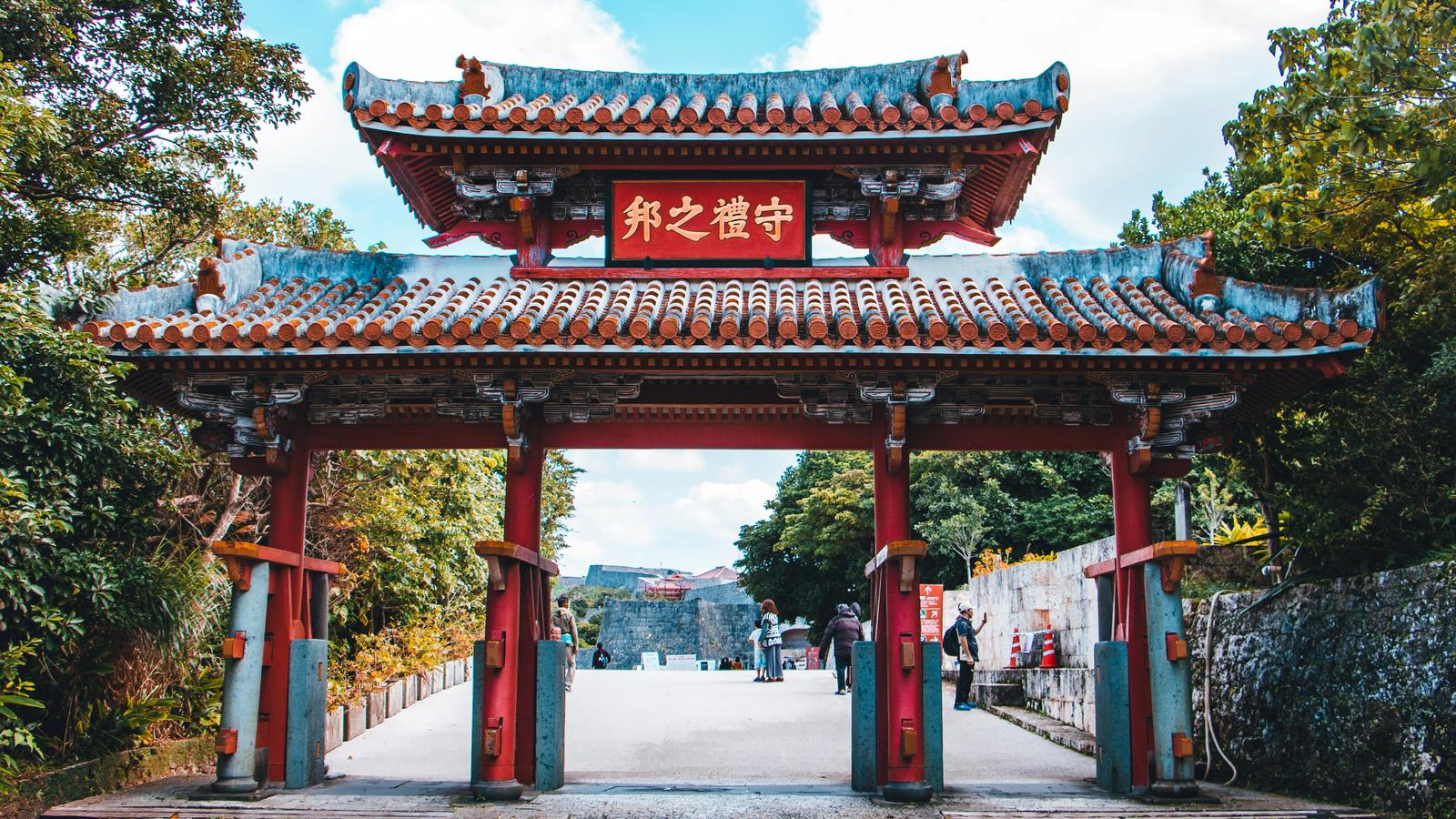
For a traveller from Singapore who already knows Tokyo, Kyoto and Hokkaido, Okinawa is the part of Japan that still feels new. The Japan National Tourism Organization notes in its 2025 market handbook that Okinawa held just 0.6% of the nights Singaporeans spent in Japan in 2023, and that interest is rising among repeat visitors because the islands are closer than the rest of the country. Lonely Planet has now placed Okinawa among its 50 best places to visit in 2027, as the pick for subtropical island culture, a year after The New York Times named it one of its 52 places to go in 2026.
This article is about that culture at its highest level: the court of the Ryukyu Kingdom and its castle at Shuri, the dance drama written for envoys from China, court cuisine and aged awamori, bingata dyeing, the humpback whales of the Kerama winter and the songs of Taketomi. We read the official pages of Naha Airport, Shurijo Castle Park, the National Theatre Okinawa, the Okinawa Convention & Visitors Bureau, the National Tax Agency, the Japan Meteorological Agency, the Zamami whale watching association and the hotels on November 5, 2026, and contacted none of them; the sources are listed at the end. The resorts, the sea crossings and the months by weather are set out in Okinawa Honeymoon: Islands, Resorts and When to Go (2026).
Key points
- Scoot flies from Singapore to Naha overnight. In November 2026 it leaves Changi at 02:15 or 01:10 on five days a week and lands in Naha at 08:35 or 08:00.
- The main hall of Shuri Castle, lost in the 2019 fire, opens to the public on November 23, 2026. Inside, visits run in reserved 30-minute slots.
- Kumiodori, the court dance drama first staged in 1719 for envoys from China, has been on UNESCO's intangible heritage list since 2010. The National Theatre Okinawa stages it with Japanese subtitles only.
- Kusu is awamori aged three years or more. Okinawa has 48 awamori distilleries, and "Ryukyu" has been a protected geographical indication for the spirit since 1995.
- Humpback whales winter in the Kerama Islands. The Zamami whale watching association's 2026 season ran from January 8 to March 25, and Naha's January averages a high of 19.8°C.
A DIFFERENT JAPAN, A NIGHT AWAY
The flight is the first reason. In the November 2026 timetable published by Naha Airport, Scoot's flight from Singapore leaves at 02:15 on Mondays, Thursdays and Sundays and at 01:10 on Wednesdays and Saturdays, and lands in Naha at 08:35 or 08:00. The return leaves Naha at 09:15 and reaches Singapore at 13:50. You sleep on the way, and the first day begins with breakfast by the sea.
The second reason is that Okinawa answers what JNTO says Singaporeans travel for: a climate unlike the year-round heat at home, and nature that a city state cannot offer. Repeat visitors who have done the cities and the snow find here a kingdom with its own language, music and food, which became a Japanese prefecture only in 1879. For a couple it is a culture journey with the sea at the door. For a family it fits the school calendar JNTO describes, a year-end break from about mid-November to late December and short breaks of about a week in spring and autumn.
THE KINGDOM AT SHURI
Through the roughly 450 years of the Ryukyu Kingdom, Shuri Castle was the royal palace, the seat of the Ryukyu government and the centre of a religious network of priestesses across the islands. Shurijo Castle Park describes it as a centre of the arts as well, where music and dance were performed and craftsmen worked. Its inner walls were finished in the early 15th century and its outer walls in the mid-16th, and its halls show the influence of both China and Japan. The king was removed in the spring of 1879, the castle burned in 1945, and the rebuilt castle, modelled on its form from the 18th century on, opened as a national park in 1992. The castle ruins are part of the Gusuku Sites and Related Properties of the Kingdom of Ryukyu, inscribed as a World Heritage site in December 2000.
The main hall, the Seiden, was lost again in the fire of 2019. After the completion ceremony on November 22, 2026, it opens to the public at noon on November 23. Inside, visits are limited to reserved 30-minute slots, and from January 2027 each month's slots go on sale at 13:00 on the 1st, two months ahead. We reserve your slot the day sales open and build the morning around it, with a guide who knows the court and its rituals.
THE COURT ON THE STAGE
Kumiodori was created for the court. The National Theatre Okinawa writes that Tamagusuku Chokun, a dance official of the Shuri government, was ordered to compose it, and that it was first performed in 1719 at the investiture of King Shokei, to entertain the envoys sent from China. It was designated an Important Intangible Cultural Property of Japan on May 15, 1972, the day Okinawa returned to Japan, and UNESCO inscribed it on November 16, 2010. UNESCO describes dramas sung in the old language of Okinawa to the three-stringed sanshin, with every role played by men.
The theatre stands in Urasoe, just north of Naha, and stages kumiodori and Ryukyu dance through the year; its programme lists kumiodori on November 28, December 5 and December 19, 2026. Its subtitles are in Japanese only, so we arrange a guide who explains the story before the curtain and sits with you. On another evening, Hoshinoya Okinawa's Utuimuchi Stay serves Ryukyu cuisine on dynasty-era lacquerware and follows it with Ryukyu dance to the sanshin.
COURT CUISINE AND AGED AWAMORI
Awamori is the islands' spirit. The Okinawa Convention & Visitors Bureau writes that a drink taken to be its prototype was being made around 1470, that it is made from Thai indica rice and black koji, and that it is thought to be Japan's oldest distilled spirit. Awamori aged for three years or more is called kusu, and it changes in flavour as it ages. There are 48 distilleries in the prefecture, and the National Tax Agency has protected "Ryukyu" as a geographical indication for distilled spirits made in Okinawa since June 30, 1995.
Hoshinoya Okinawa gives both sides of the table a private form. Its Ryukyu Court Cooking, from 10:00 to 14:30, has a chef guide you through Hanaika and Hiragaramachi, two of the seven court dishes once served in Ryukyu lacquerware, with vegetables picked from the hotel's garden; it takes two to four guests aged 10 and over and cannot adjust for allergies. From December 11, 2026 to February 28, 2027, its two-night Awamori Discovery, for one couple aged 20 and over, compares awamori aged in clay pots and in barrels in your room, visits a limestone cave and the Kamimura Distillery, and ends with a pairing dinner. Both are reserved at least 14 days ahead, which we do as soon as your dates are set. The making of sake and whisky on the mainland is covered in Sake, Whisky and Japan's Private Tastings.
BINGATA AND LACQUER
Bingata is the dyed cloth of the court. KOGEI JAPAN traces its origin to the 14th and 15th centuries and its making to the area around Shuri: a resist paste is laid through a cut paper stencil onto the cloth, the colours are brushed in from light to dark, and shading called kumadori gives the patterns depth. Women of the royal family and the warrior class wore it, and the royal government sent it to China and to the Edo shogunate as a gift of value.
At Hoshinoya Okinawa, the two-night Ryukyu Bingata Stay lets you dye your own piece with craftsmen in a private room, walk the bingata garden and watch Ryukyu dance; it is hosted in Japanese, and we arrange the interpreting. For one night, The Crimson Adorning Shurijo Castle brings a lacquerware workshop with Mr. Morita of the Nuri-ton lacquer studio, who tells the story of the castle's reconstruction, a chance to try chinkin, the gold inlay used at the castle, and a private Ryukyu dance performance, in Japanese and English. Placed on the day after your Shuri slot, it lets the castle you have just walked through speak again.
WHALES IN THE KERAMA WINTER
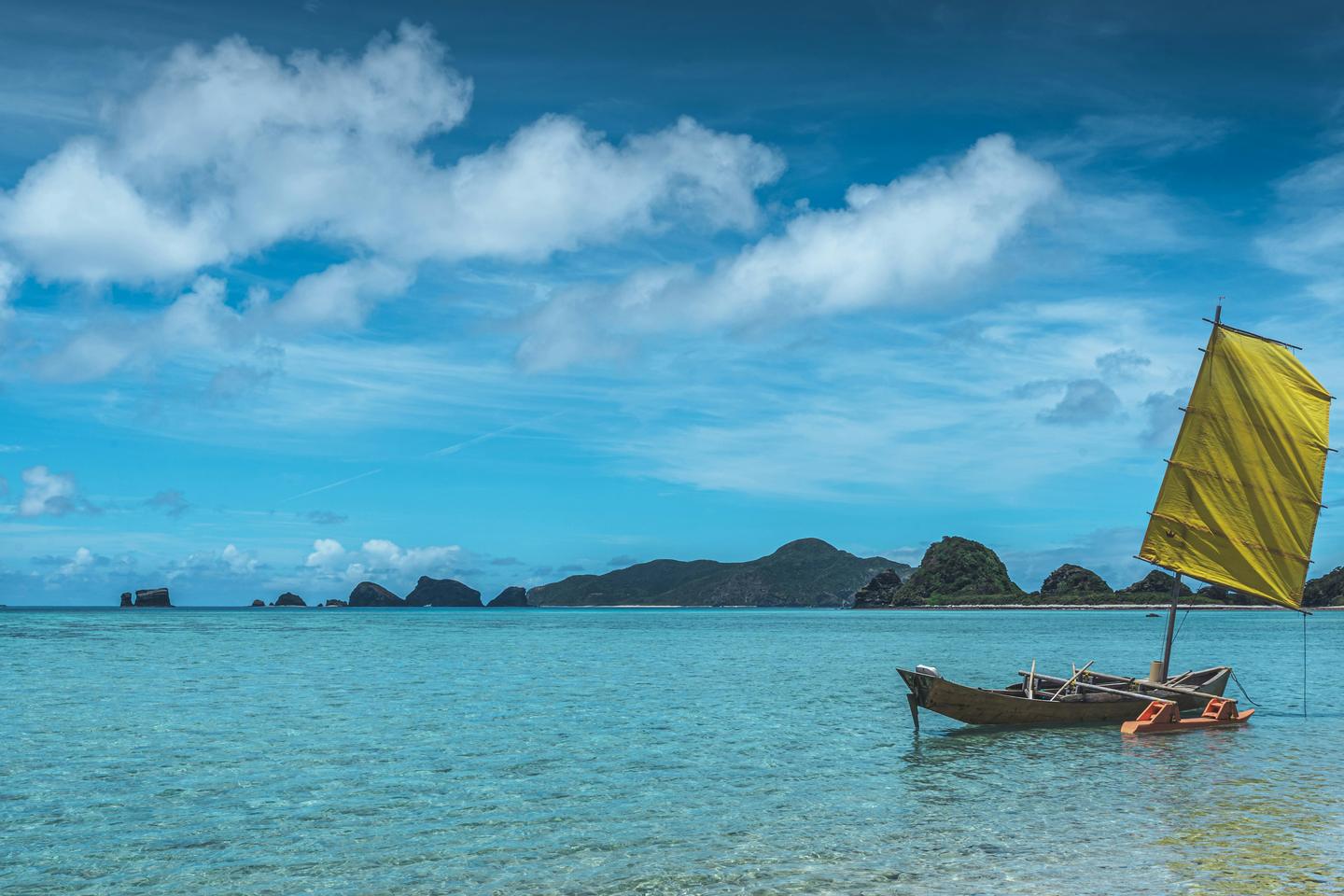
Winter is Okinawa's quiet strength for a guest from the equator. On the Japan Meteorological Agency's 1991 to 2020 averages, Naha in January has a mean of 17.3°C, a daily high of 19.8°C and a low of 14.9°C, cool enough for a jacket in the evening and warm enough to sit outside at noon. It is also when the humpback whales come. The Zamami Village Whale Watching Association, founded in 1991, runs its tours from the port terminal on Zamami in the Kerama Islands, with spotters watching the sea through binoculars from a lookout on the hill; its 2026 season ran from January 8 to March 25, and the dates move with the weather and the sea.
A season that runs into March fits the short spring school break of a Singapore family. We arrange the crossing from Naha and your places on the association's tour, and keep a spare day in case the sea closes. Hoshinoya Okinawa runs its own Whale Discovery from January 25 to February 28, 2027: two hours from 6:30 with a guide on board, binoculars and a short workshop on whale life, for one party of up to ten, in Japanese and English. The boat timetables to the Kerama Islands are in our Okinawa honeymoon guide.
THE OUTER ISLANDS AND THEIR SONGS
South of the main island, the culture changes again from island to island. On Taketomi in the Yaeyama Islands, Hoshinoya Taketomi Island spends every Tuesday evening with an island singer: talk over awamori, the sanshin, and the history of the island, in a gathering open to all ages. Its craft lessons pass on the island's own handwork, and in November 2026 it built a stay around the preparations and rites of the Tanadui festival, which it describes as an Important Intangible Folk Cultural Property. The village, the boats from Ishigaki and Miyako's villas with their own pools are covered in the honeymoon guide.
For a family that wants forest as well as sea, Kagoshima's Yakushima is a different island again, described in Yakushima: The Cedar Forest, the Jomon Sugi Hike and Where to Stay.
WHERE TO STAY AND HOW WE SHAPE IT
For a journey built on culture, Hoshinoya Okinawa in Yomitan is the natural base: its 100 rooms face the sea, its design draws on the Ryukyu Kingdom, and most of the programmes above run from it. For families it also has a Kids' Room with childcare for children aged 12 and under. The Ritz-Carlton, Okinawa, at Kise in Nago, about 70 km from Naha Airport, has 97 rooms on the grounds of an 18-hole championship golf course, Ryukyu dishes at breakfast and sanshin music at dinner in its restaurant Gusuku. The newest hotels across Japan are in New Luxury Hotels in Japan for 2026 and 2027.
A shape we like for five or six nights: arrive on the morning flight and rest by the sea; a day at Shuri with the main hall and an evening at the theatre; a day of court cooking or bingata; a day on the water for whales between January and March; and, for those with more time, three nights on Taketomi. Within Signature, our planning for journeys of 7 to 21 days, Okinawa can be the whole journey or sit beside Kyoto or Tokyo. We arrange the hotels, slots, guides, boats and cars and settle each in the simplest way available, usually on your hotel bill or on the day, and many Singapore guests prefer to talk with us on WhatsApp. Planning with children of different ages is in Luxury Family Travel in Japan.
SOURCES AND HOW WE CHECKED
We read the pages below on November 5, 2026. Distances are rounded. We did not contact any hotel, theatre, airline, association or other body.
- JNTO, Visit Japan market handbook 2025, Singapore (Japanese): 0.6% of nights in Okinawa, rising interest among repeaters, school breaks, climate and nature, WhatsApp
- Lonely Planet, 50 Best Places to Visit in 2027: Okinawa, best for subtropical island culture
- JNTO, press release of January 8, 2026: Okinawa among The New York Times' 52 Places to Go in 2026
- Naha Airport, monthly international schedule (Japanese): Scoot TR834 and TR835, November 2026
- Shurijo Castle Park, about Shuri Castle (Japanese): palace, government and ritual centre, walls, 1879, 1945, 1992, World Heritage in December 2000
- Shurijo Castle Park, main hall opening and reservations (Japanese): 2019 fire, opening on November 23, 2026, 30-minute slots, sales dates
- Shurijo Castle Park, official site (Japanese): completion ceremony on November 22, opening at noon
- National Theatre Okinawa, traditional performing arts (Japanese): Tamagusuku Chokun, 1719, Chinese envoys, 1972 and 2010
- National Theatre Okinawa, official site (Japanese): Urasoe, kumiodori dates in November and December 2026
- National Theatre Okinawa, English page: subtitles in Japanese only
- UNESCO, Kumiodori, traditional Okinawan musical theatre: inscribed 2010, old language, sanshin, male actors
- Okinawa Convention & Visitors Bureau, awamori (Japanese): around 1470, Thai rice and black koji, kusu, 48 distilleries
- National Tax Agency, geographical indications for alcohol (Japanese): Ryukyu, Okinawa Prefecture, June 30, 1995
- KOGEI JAPAN, Ryukyu bingata: 14th and 15th centuries, Shuri, stencil and kumadori, royal use and gifts
- Hoshinoya Okinawa, official site: Yomitan, 100 rooms, Ryukyu design
- Hoshinoya Okinawa, activities: programme list, dates and ages, Kids' Room
- Hoshinoya Okinawa, Ryukyu Court Cooking: hours, dishes, lacquerware, party size
- Hoshinoya Okinawa, Awamori Discovery: dates, clay pot and barrel ageing, cave and distillery, pairing dinner
- Hoshinoya Okinawa, Ryukyu Bingata Stay: two nights, craftsmen, hosted in Japanese
- Hoshinoya Okinawa, The Crimson Adorning Shurijo Castle: lacquer workshop, chinkin, private dance
- Hoshinoya Okinawa, Utuimuchi Stay: court cuisine and Ryukyu dance for one party
- Hoshinoya Okinawa, Whale Discovery: January 25 to February 28, 2027, 6:30 to 8:30
- Hoshinoya Taketomi Island, activities: island singer on Tuesdays, crafts, Tanadui festival stay
- The Ritz-Carlton, Okinawa, overview: Kise, Nago, 97 rooms, golf course, Gusuku, about 70 km from the airport
- Zamami Village Whale Watching Association (Japanese): founded 1991, 2026 season, spotters, Zamami port
- Japan Meteorological Agency, normals for Naha (Japanese): January temperatures
QUESTIONS TRAVELLERS ASK
Is there a direct flight from Singapore to Okinawa?
Yes. Scoot flies overnight from Singapore to Naha. In November 2026 it leaves at 02:15 or 01:10 on five days a week and lands at 08:35 or 08:00; the return leaves Naha at 09:15 and reaches Singapore at 13:50.
Can we see inside the main hall of Shuri Castle?
Yes, from November 23, 2026. Visits inside are by reserved 30-minute slot, and from January 2027 each month's slots go on sale at 13:00 on the 1st, two months ahead. We reserve the slot the day sales open.
When can we see whales in Okinawa?
In winter. The Zamami whale watching association's 2026 season ran from January 8 to March 25, and Hoshinoya Okinawa runs its own Whale Discovery from January 25 to February 28, 2027.
Can we watch kumiodori in English?
The National Theatre Okinawa subtitles its performances in Japanese only. We arrange a guide who explains the story before the performance and sits with you.
Is Okinawa warm in winter?
Mild. Naha's January averages a high of 19.8°C and a low of 14.9°C, so a light jacket is enough in the evening.
ASK US TO SHAPE YOUR OKINAWA
Tell us when you can travel, who is coming and which part of the Ryukyu story draws you most. We will set out the castle, the stage, the table and the sea with the reasons, so that you can choose the shape of the days.
Begin planning →We reply within 24 hours, in writing
Some of the restaurants and bars we arrange seat guests only by introduction or membership. We ask on your behalf; the table and the evening are the house's decision. We do not publish their names.