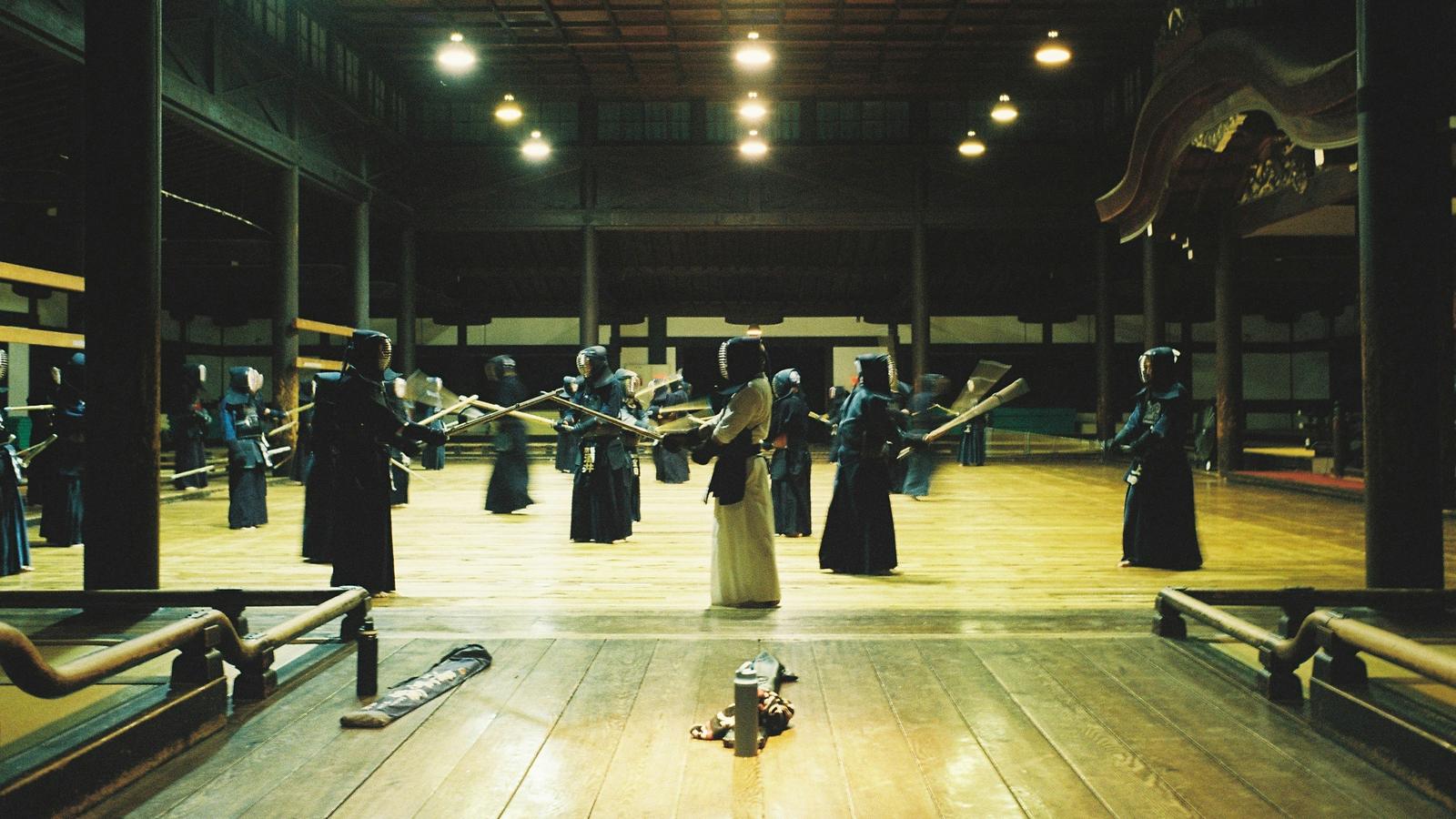
Japan's martial arts are still practised in the halls and shrines where they took their modern form. In Kyoto, kendo teachers of the sixth dan and above gather every May in a wooden hall built in 1899. At a temple on the other side of the city, archers once shot arrows the length of a 120-metre veranda, and each January young archers in kimono still shoot in its grounds. In Tokyo, the hall built for judo at the 1964 Olympics opens each new year with demonstrations of the modern budo.
This article is about watching kyudo, kendo and iaido at those places, and about the rarer thing: an hour of practice with a senior teacher. We read the pages of the All Nippon Kyudo Federation, the All Japan Kendo Federation, the Nippon Budokan, Meiji Jingu, Tsurugaoka Hachimangu, Sanjusangen-do, Kyoto City and a university on November 5, 2026, and contacted none of them; the sources are listed at the end. For sumo, see Grand Sumo Tournaments 2026–27; for a quieter discipline in the same city, see Zen Meditation in Kyoto.
Key points
- The former Butokuden in Kyoto, built in 1899 and designated an Important Cultural Property in 1996, hosts the All Japan Kendo Federation's annual demonstration tournament, held there since 1895 in its earlier form. In 2026 the 122nd ran from May 2 to 5.
- At Sanjusangen-do, the Omato tournament on the Sunday nearest January 15 recalls the Edo-period toshiya; about 2,000 archers take part, many of them turning twenty and shooting in kimono.
- The Nippon Budokan opened on October 3, 1964, and its new year Kagami-biraki, held since 1965, includes demonstrations of the nine modern budo, with free admission.
- Meiji Jingu's Shiseikan is a training hall for enrolled students and does not admit visitors who come only to watch.
- A private session with a senior teacher of kyudo, kendo or iaido can sometimes be arranged; we ask on your behalf, and whether to teach is the teacher's decision.
ASK US ABOUT A MORNING WITH A TEACHER →
KYOTO AND THE BUTOKUDEN
The former Butokuden stands in Okazaki, near Heian Shrine. Kyoto City records that it was built in 1899 as a hall for the martial arts, in the manner of a temple, and the national government designated it an Important Cultural Property in 1996. It is now part of the Kyoto City Budo Center, with a modern main hall, a kyudo range and a sumo ring beside it, and the city lets these halls for practice and tournaments.
The hall's great week is in early May. The All Japan Kendo Federation holds its demonstration tournament here, which its own rules describe as the continuation of the Butokusai demonstrations held since 1895. Only practitioners of the sixth dan and above who hold a teaching title may take part, with some allowance for members of overseas federations. In 2026 the 122nd tournament ran over four days, from May 2 to 5: the kata and jodo and iaido on the first day, then kendo bouts by grade, with the hanshi, the most senior teachers, on the last afternoon. For a guest who has practised, there is no closer view of kendo at its highest level. For a guest who has not, we suggest the first day, when the kata, jodo and iaido are shown and the forms are easiest to follow.
THE ARROWS OF SANJUSANGEN-DO
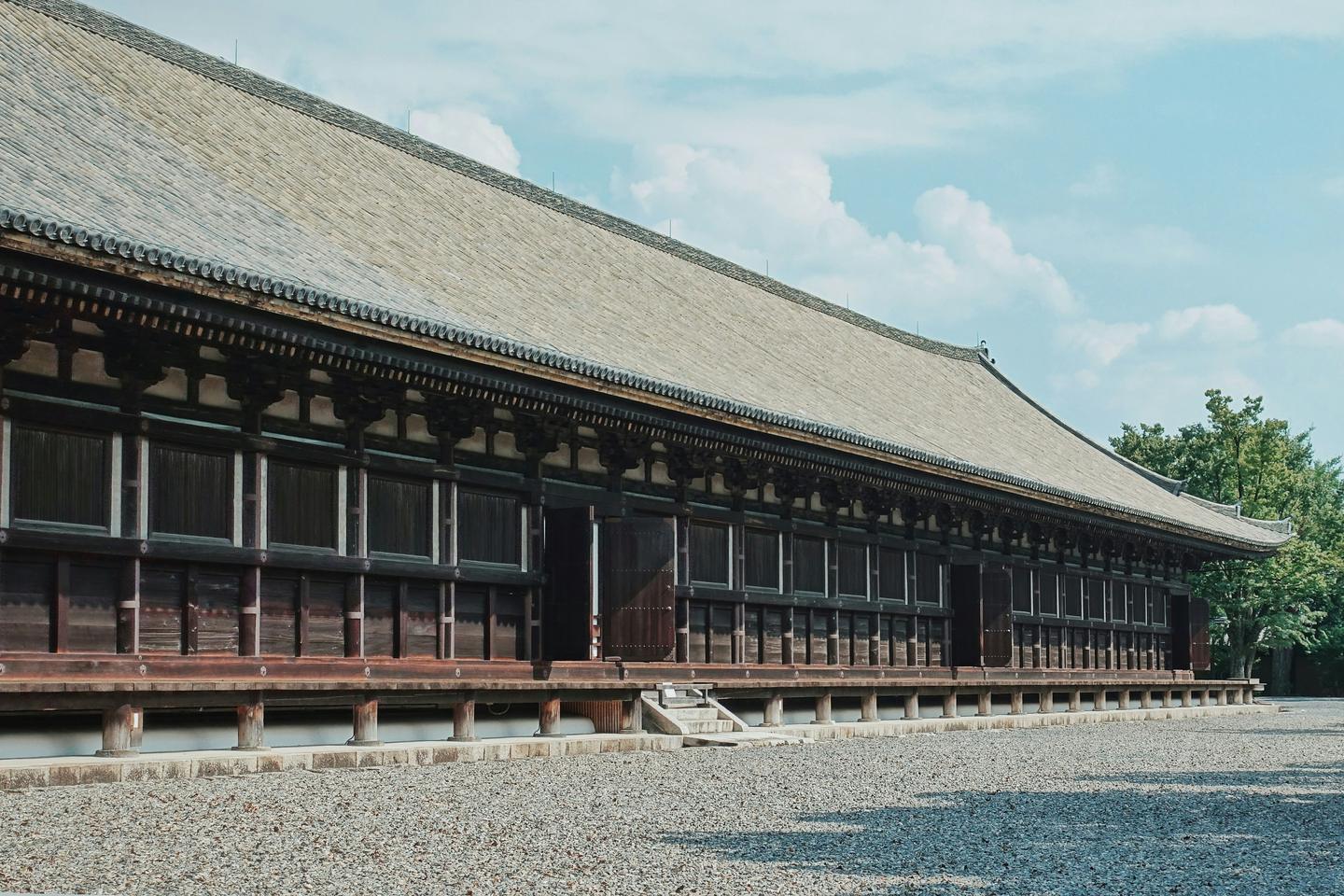
The main hall of Sanjusangen-do, rebuilt in the Kamakura period and a National Treasure, runs about 120 metres from north to south. The All Nippon Kyudo Federation tells its history: archers shot along the hall's west veranda in a test called toshiya, and in 1606 Asaoka Heibei sent 51 of 100 arrows the full length. The famous record belongs to Wasa Daihachiro, who shot 13,053 arrows within twenty-four hours and sent 8,133 of them through. The speed it demanded changed the archer's glove, and the reinforced thumb of today's glove comes from it.
The temple holds the Omato tournament on the Sunday nearest January 15, on the same day as its Yanagi no Okaji rite; in 2027 that Sunday falls on January 17, and the temple confirms the date in its news. About 2,000 archers come from across Japan, and those shooting in the year they turn twenty compete in kimono and hakama. Kanazawa Institute of Technology, reporting its student's win at the 72nd tournament, described the qualifying round: two arrows at a target one metre across, from 60 metres. The temple grounds are open without charge that day. We place a guest at the range early, while the first rounds are shot, and leave the hall of a thousand Kannon statues for the afternoon.
TOKYO: THE BUDOKAN AND MEIJI JINGU
The Nippon Budokan's own history records the opening ceremony on October 3, 1964, demonstrations of kendo, kyudo and sumo on October 15, and the Olympic judo from October 20 to 23. Its first Kagami-biraki was held on January 15, 1965. The new year ceremony continues each January with demonstrations of the nine modern budo and an opening practice, and admission is free. The Budokan also holds a demonstration of classical martial arts with 35 schools, a rarer view of the older schools.
Meiji Jingu's training hall, the Shiseikan, opened in October 1973 to mark fifty years of the shrine, and teaches kyudo, judo, kendo and a course of aikido and swordsmanship. It is a hall for its enrolled students. Its guidance says that it declines visitors who come only for sightseeing, so we do not suggest it as a place to watch. The shrine also hosts a national kyudo tournament offered to it, and the federation published the results of the 151st on November 4, 2026. For the Budokan's January and the season around it, see New Year in Japan.
YABUSAME IN KAMAKURA
At Tsurugaoka Hachimangu, mounted archery is the shrine's own rite. The shrine dates its annual festival to 1187, when the Azuma Kagami records a release of living creatures and yabusame before Minamoto no Yoritomo. On September 16, riders of the Ogasawara school in hunting dress gallop the course and shoot at three targets. A second yabusame is held in late April at the shrine's festival for its supporters, with a seating area for embassies and foreign residents of Japan. We have written about the September festival in A Second Japan Trip With Friends; for a guest drawn to archery, the April day is worth asking about.
A LESSON WITH A TEACHER
Kyudo has 143,759 members in its national federation, and kendo more than two million registered dan holders, so the practice is widespread. What is rare is an hour with a senior teacher who is free to teach one guest. In kyudo the form is set out as eight stages, from the placing of the feet to the moment after the arrow leaves. Iaido, which the kendo federation traces to the Muromachi period, centres on the moment the sword is drawn, and suits a guest drawn to the sword who would rather not spar.
We ask teachers on your behalf, in kyudo, kendo or iaido, and tell them who you are, what you have practised before and how long you are in the city. Whether to teach, where and for how long is the teacher's decision. Where it is possible, we arrange the session in a hall the city lets for practice, and see to the dress and equipment before you arrive. Within Signature, our planning for journeys of 7 to 21 days, a morning of budo usually sits beside a day of temples in Kyoto or a January visit to Sanjusangen-do; the teacher's fee and the hall are settled on the day, in the simplest way available. For other things in Japan that cannot be found online, see Private Japan.
SOURCES AND HOW WE CHECKED
We read the pages below on November 5, 2026. We did not contact any federation, shrine, temple, hall or teacher. The 2027 date of the Omato tournament is our reading of the temple's rule and is confirmed by the temple each year.
- Sanjusangen-do, annual events (Japanese): the Omato tournament on the Sunday nearest January 15, about 2,000 archers, new adults in kimono, grounds open without charge
- Sanjusangen-do, the precincts (Japanese): main hall rebuilt in the Kamakura period, about 120 metres, National Treasure
- All Nippon Kyudo Federation, history of kyudo (Japanese): toshiya, Asaoka Heibei in 1606, Wasa Daihachiro's 13,053 and 8,133 arrows, the glove
- All Nippon Kyudo Federation, overview (Japanese): 143,759 members at March 31, 2025
- All Nippon Kyudo Federation, the form (Japanese): the eight stages of shooting
- All Japan Kendo Federation, kendo, iaido and jodo (Japanese): 2,081,669 kendo dan holders and 98,685 in iaido at March 2025, iaido's origin in the Muromachi period
- All Japan Kendo Federation, Kyoto schedule 2025 (Japanese): the demonstration tournament at the Butokuden in the Kyoto City Budo Center
- Rules of the 122nd All Japan Kendo Demonstration Tournament (Japanese): May 2 to 5, 2026, continued from 1895, sixth dan and above, the programme by day
- Kyoto City, Budo Center (Japanese): the main hall, the former Butokuden, kyudo range and sumo ring, let for practice
- Kyoto City, designated cultural properties (Japanese): the former Butokuden, Important Cultural Property, July 9, 1996
- Kyoto City, Heian Shrine area profile (Japanese): built in 1899 as the Butokuden
- Nara National Research Institute for Cultural Properties, repair report on the former Butokuden (1987, Japanese): the city's record of the main hall's restoration
- Nippon Budokan, history (Japanese): opened October 3, 1964, Olympic judo and demonstrations, first Kagami-biraki on January 15, 1965
- Nippon Budokan (Japanese): Kagami-biraki with the nine modern budo, free admission, the classical martial arts demonstration with 35 schools
- Meiji Jingu, Shiseikan (Japanese): opened October 1973, four courses, visits only for those intending to enrol
- Tsurugaoka Hachimangu, festivals (Japanese): the festival dated to 1187, yabusame on September 16 by the Ogasawara school, the April yabusame with seating for embassies and foreign residents
- Kanazawa Institute of Technology, press release on the 72nd Omato tournament (Japanese): new adults, a one-metre target at 60 metres
QUESTIONS TRAVELLERS ASK
Can we watch kendo at the Butokuden in Kyoto?
The clearest chance is the All Japan Kendo Federation's demonstration tournament in early May, which in 2026 ran from May 2 to 5. At other times the hall is used by local clubs and for tournaments, and what is on depends on the week.
When is the archery at Sanjusangen-do?
On the Sunday nearest January 15. In 2027 that is January 17, and the temple confirms the date in its news. The grounds are open without charge that day.
Can a beginner have a private kyudo or kendo lesson?
Sometimes. We ask senior teachers on your behalf and tell them about your experience and your days in the city. Whether to teach, and how, is the teacher's decision.
Can we visit the Shiseikan at Meiji Jingu?
The Shiseikan is a training hall for its enrolled students and declines visitors who come only to watch, so we suggest the Budokan's new year demonstrations instead.
When is yabusame held in Kamakura?
Tsurugaoka Hachimangu holds yabusame on September 16 during its annual festival, and again in late April at its festival for supporters.
ASK US ABOUT A MORNING WITH A TEACHER
Tell us when you are coming, who is travelling and whether you have practised before. We will set out the halls, the days and the teachers we would ask, with the reasons, so that you can choose.
Begin planning →We reply within 24 hours, in writing
Some of the restaurants and bars we arrange seat guests only by introduction or membership. We ask on your behalf; the table and the evening are the house's decision. We do not publish their names.