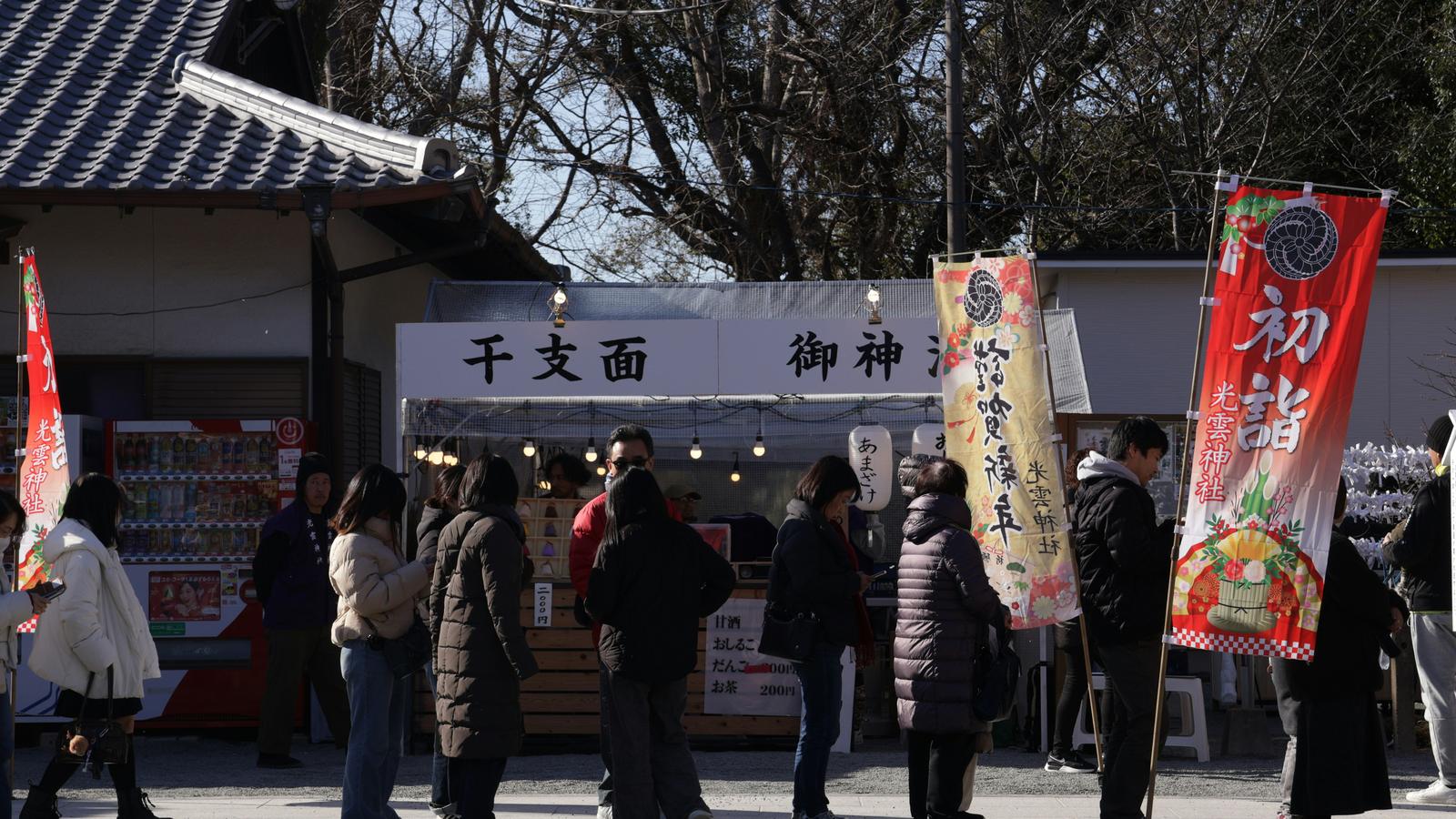
Over the 2026–27 New Year, many of Japan's sights close for part of the week from December 29 to January 3: the Tokyo National Museum closes from December 26 to 31 and reopens on January 1 from 12:00 to 20:00, the Kyoto Imperial Palace closes from December 28 to January 4, and Nijo Castle closes from December 29 to 31. Shrines do the opposite. The Tokyo tourism board says Meiji Jingu stays open through the night of December 31 and receives millions of visitors between New Year's Eve and January 3. Ryokan charge their highest rates of the year: at Gora Kadan in Hakone, a standard room for two with dinner and an osechi breakfast is ¥201,700 on January 3, against ¥139,700 on January 12, and the official booking page showed no rooms for the nights of December 31 to January 2.
This guide covers what closes and what stays open, how hatsumode works at Meiji Jingu and at Kyoto's shrines, where to hear the temple bell on New Year's Eve, what osechi is, how ryokan price the New Year, and how far ahead to arrange it. We read every rule and price on the official pages on October 28, 2026, and the sources are listed at the end. If you have not stayed in a ryokan before, how to choose a ryokan in Japan explains rooms, meals and baths first.
Key points
- Closures follow each venue's own calendar. Tokyo National Museum: closed December 26 to 31, 2026, open January 1 from 12:00 to 20:00. Kyoto Imperial Palace: closed December 28 to January 4. Nijo Castle: closed December 29 to 31, with the palace interiors also closed January 1 to 3.
- Meiji Jingu is open all night on December 31, according to the Tokyo tourism board, and its usual January gate hours are 6:40 to 16:20. The shrine had not published its 2026–27 New Year hours when we checked.
- In Kyoto, Yasaka Shrine lights the okera fire at 19:00 on December 31, and Chion-in rings its great bell from 22:20, with 17 monks striking it 108 times.
- Gora Kadan's New Year plan covers the nights of December 31 to January 3, went on sale on October 13, 2026, and serves osechi for breakfast. On October 28, only January 3 still had rooms.
- Arrange a New Year ryokan nine to twelve months ahead. Kinnotake opened its 2026–27 New Year dates on March 26, 2026, after a 94% occupancy rate the previous New Year.
LET US ARRANGE YOUR NEW YEAR IN JAPAN →
WHAT CLOSES AND WHAT STAYS OPEN
Shogatsu, the New Year, is the one week when most of Japan stops working at the same time. Offices, many restaurants and some sights close from around December 29, and families travel home or stay in. There is no single national rule for museums or shops, so each venue sets its own dates, and they differ by a few days. The ones below are taken from each venue's official page.
| Venue | Closed | Notes |
|---|---|---|
| Tokyo National Museum, Ueno | Dec 26 to 31, 2026 | Open January 1, 2027 from 12:00 to 20:00. From December 22 to 25 only the Horyu-ji Treasures Gallery and the Kuroda Memorial Hall are open. |
| Kyoto Imperial Palace | Dec 28 to Jan 4 | Also closed on Mondays. Admission is free and needs no advance registration. |
| Nijo Castle, Kyoto | Dec 29 to 31 | The grounds reopen on January 1, but the Ninomaru Palace and Honmaru Palace are closed to visitors December 26 to 28 and January 1 to 3. |
| Kyoto National Museum | Year-end and New Year holidays | The museum lists the closure without dates; it was not yet on the page we read. |
| Kikunoi Honten, Kyoto | Year-end and New Year break | Regular closures are the first and third Tuesdays; the restaurant notes a New Year break without giving dates. |
Restaurants. Restaurants that close for the New Year often post the exact days only a few weeks before, as Kikunoi does. A hotel restaurant is the simplest place to plan a meal on January 1, and we confirm its New Year hours with the hotel.
Department stores. Takashimaya Nihombashi, Takashimaya Kyoto and Isetan Shinjuku had not posted their New Year hours on their store pages when we checked. The first sale of the year, hatsuuri, draws long queues on the day it opens.
What stays open. Shrines and many temples are at their busiest. Trains and city hotels run as usual, and both are busy.
HATSUMODE AT MEIJI JINGU AND IN KYOTO
Hatsumode is the first visit of the year to a shrine or temple, to give thanks and pray for the year ahead. Most people go between the night of December 31 and January 3, and many keep going through the first half of January. At the shrine you rinse your hands and mouth at the water basin, offer a coin, bow twice, clap twice and bow once, and then buy a new omamori charm or draw an omikuji fortune.
Meiji Jingu, Tokyo
Meiji Jingu's gates open at sunrise and close at sunset, so the hours change each month: 6:40 to 16:00 in December and 6:40 to 16:20 in January. The Tokyo Convention & Visitors Bureau's listing says the shrine can be visited all night on December 31 and that millions of people come between New Year's Eve and January 3. The shrine holds its Saitansai rite early on the morning of January 1. Its own website had not yet published the 2026–27 New Year schedule on October 28; it usually appears in December, and we confirm it before we plan the day. Expect the walk from the gate to the main hall to take much longer than usual around midnight and on January 1 and 2.
The New Year Greeting at the Imperial Palace. On January 2 members of the Imperial Family greet the public from the balcony of the Chowa-den at the Imperial Palace in Tokyo. For 2026 the Imperial Household Agency listed five appearances between about 10:10 and 14:20, with entry through the Main Gate from 9:30 to 14:10, bag checks, and a request to bring as little as possible. The 2027 details had not been published when we checked.
Kyoto
Yasaka Shrine. The shrine at the top of Shijo-dori holds the year's closing rites on December 31: a purification rite at 15:00, then the Joyasai at 19:00, after which the sacred okera fire is moved to three lanterns in the grounds. Visitors light a length of rope from the flame and carry it home, a custom known as okera mairi. At 05:00 on January 1 the shrine holds the Okerasai, praying for protection from illness and misfortune in the new year, and on January 3 the karuta card game is offered at 13:00.
Fushimi Inari Taisha. The shrine's website does not publish New Year crowd figures or special hours. If you want the torii tunnel quietly, go early in the morning after January 4.
Quiet timing. If the queue matters more than the date, an early morning visit on January 4 to 7 keeps the New Year decorations and the stalls with far fewer people.
JOYA NO KANE ON NEW YEAR'S EVE
On the night of December 31, temples across Japan strike their bells 108 times, once for each of the worldly desires in Buddhist teaching, to see out the old year. The ringing is called joya no kane.
Chion-in, Kyoto. The head temple of the Jodo school publishes its bell ringing on its event page, which lists the 2026 ringing for Thursday, December 31 from 22:20 at the great bell tower. Seventeen monks pull together on a main rope and smaller ropes to swing the beam, and the temple says the purpose is to clear away the year's desires and greet the new year with a clear mind. A trial ringing takes place on Sunday, December 27 from 14:00. The page does not say how visitors enter or whether numbered tickets are used, so we confirm entry with the temple before the night.
Dressing for it. Kyoto at midnight in late December is cold, and the wait outside can run long. Warm layers, gloves and comfortable shoes matter more than anything else on the night.
OSECHI AND THE NEW YEAR TABLE
Osechi ryori is the New Year meal, packed into lacquered stacked boxes and eaten over the first days of January. Japan's Ministry of Agriculture, Forestry and Fisheries writes that the basic form of osechi took shape in the late Edo period, and that three small celebratory dishes have been essential from the start: black soybeans, for working diligently through the year; tazukuri, small dried sardines once used to fertilise the rice fields, for a good harvest; and kazunoko, herring roe, for many descendants. The other dishes in the boxes carry similar wishes, and families and regions vary them.
Ryokan and hotels serve osechi to their New Year guests. At Gora Kadan, guests staying the nights of December 31 to January 3 have osechi for breakfast, chosen for 8:00, 8:30 or 9:00, after a seasonal kaiseki dinner at 18:00 or 19:00. Two other dishes belong to these days: toshikoshi soba, the long noodles eaten on New Year's Eve, and ozoni, the soup with rice cakes eaten on New Year's morning. We ask the ryokan which of them it serves, and on which night.
NEW YEAR RATES AND MINIMUM STAYS AT A RYOKAN
Ryokan set a separate New Year period and price it above the rest of the winter. Gora Kadan in Hakone shows how this works on its official booking page. Its New Year plan, a seasonal kaiseki plan with dinner and breakfast, covers the nights of December 31, 2026 to January 3, 2027. It went on sale on October 13, 2026, is paid by credit card at the time of booking, and has check-in from 15:00 to 19:00 and check-out by 11:00.
| Night | Plan | Standard room Type A | Room with rock open-air bath |
|---|---|---|---|
| Dec 31, Jan 1, Jan 2 | New Year period | No rooms available | |
| Sun, Jan 3, 2027 | New Year period | ¥201,700 | ¥241,700 |
| Tue, Jan 12, 2027 | Regular period | ¥139,700 | Not compared |
For the same standard room, the New Year night costs ¥62,000 more, about 44% above a regular January weeknight. The bathing tax is charged on top of these prices. Larger rooms on January 3 ran up to ¥755,700 for two for the villa Shinonome.
Minimum stays. Each ryokan sets its own rule. Gora Kadan sells its New Year plan one night at a time, and we did not find a stated minimum on the plan page or in Kinnotake's announcement. Where a ryokan does set a minimum for the New Year, its plan page or its reply will state it, and it can decide whether a single night fits your route. Treat a ryokan's New Year terms, including cancellation, as different from its usual ones and read them before you pay.
Other ryokan we checked. On October 28 the official booking page of Asaba in Shuzenji returned no plans for the night of December 31, and Beniya Mukayu in Yamashiro Onsen showed no availability for December 30 to January 2. The pages do not say whether the nights are sold out or not offered online, so we ask the ryokan directly.
HOW FAR AHEAD TO ARRANGE
Ryokan: nine to twelve months. Kinnotake, which runs Kinnotake Sengokuhara, Kinnotake Tonosawa and Matsuzakaya Honten in Hakone, opened its 2026–27 New Year dates, December 28 to January 3, on its official site on March 26, 2026, and wrote that its previous New Year ran at 94% occupancy. When we checked Gora Kadan on October 28, fifteen days after its New Year plan went on sale, the nights of December 31 to January 2 showed no rooms. A spring decision for a New Year stay is not early.
City hotels: three to six months. A large hotel in Tokyo or Kyoto has many more rooms than a ryokan, so there is usually more choice later in the year. We still suggest fixing the hotel once the dates are set.
Restaurants: as soon as they publish. Each restaurant opens its January dates on its own schedule, and some close for the first days of the year. We plan dinners around the days each restaurant is open.
Trains. JR Central and JR West run every Nozomi on the Tokaido and Sanyo Shinkansen as reserved-only from December 25, 2026 to January 5, 2027, so passengers without a seat reservation cannot sit on a Nozomi. Seats can be reserved up to one year ahead through the railways' own online services for some seats and products. You buy the train tickets yourself, and we build the plan around the trains you choose. Our guide to Japan in winter covers the snow, the onsen towns and the weather around these dates.
HOW WE ARRANGE A NEW YEAR STAY
We arrange the ryokan, hotels, restaurants and guides in your name, and we write to each one in Japanese with the details that matter at New Year.
- The dates around the closures. We check each museum, palace and restaurant on your list against its own New Year calendar, and move the sights you want into the days they are open.
- The ryokan's New Year terms. Rate, minimum stay, cancellation, the osechi breakfast and what is served on December 31.
- Hatsumode and the bell. Which shrine and which hour suit your group, how long the queue is likely to be, and a car to the nearest point the police allow.
- Dietary needs. Osechi is a fixed set of dishes, many with fish and dashi. We tell the kitchen about allergies and vegetarian or halal needs well before the end of the year.
The festivals before and after New Year are in our Japanese festival calendar.
SOURCES AND HOW WE CHECKED
We read each page listed below on October 28, 2026. We did not contact the shrines, temples, museums or ryokan. Several venues publish their New Year details only in November or December, so we confirm the current hours and rates when we arrange the trip. Prices are as published, tax and service included, unless noted.
- Tokyo National Museum, visitor information: year-end closure and January 1 hours
- Imperial Household Agency, Kyoto Imperial Palace: closed days and admission
- Nijo Castle, official site: castle and palace closures
- Kyoto National Museum, visit: closed days
- Kikunoi, restaurants: regular and New Year closures
- Meiji Jingu, for visitors: monthly gate hours; annual events: Saitansai on January 1
- Tokyo Convention & Visitors Bureau, Meiji Jingu hatsumode: overnight opening on December 31, visitor numbers
- Imperial Household Agency, New Year Greeting: 2026 times, entry and rules
- Yasaka Shrine, events: December 31 and January rites and times
- Chion-in, joya no kane and trial ringing: dates, times, 17 monks, 108 strikes
- Ministry of Agriculture, Forestry and Fisheries, osechi: origin and the three celebratory dishes
- Gora Kadan, official booking, New Year plan: period, sale date, prices, osechi breakfast, availability
- Gora Kadan, official booking, January 12: regular-period price
- Kinnotake, New Year reservations: opening date, period and previous occupancy
- Asaba, official booking and Beniya Mukayu, official booking: New Year availability
- JR Central and JR West, reserved-only Nozomi periods: December 25, 2026 to January 5, 2027
QUESTIONS GUESTS ASK
Is Japan a good place to visit over the New Year?
Yes, if you plan around the closures. Shrines, temples and ryokan are at their most festive, while some museums, palaces and restaurants close for part of December 29 to January 3. The Tokyo National Museum, for example, closes December 26 to 31 and reopens on January 1.
Is Meiji Jingu open at midnight on New Year's Eve?
The Tokyo tourism board says Meiji Jingu can be visited all night on December 31, with millions of visitors between New Year's Eve and January 3. The shrine publishes its exact New Year schedule in December, so check it shortly before you go.
How much more does a ryokan cost at New Year?
At Gora Kadan in Hakone, a standard room for two with dinner and breakfast was ¥201,700 on January 3, 2027 and ¥139,700 on January 12, 2027, on the official booking page on October 28, 2026. That is about 44% more for the New Year night.
Do ryokan require a minimum stay over New Year?
It depends on the ryokan. Gora Kadan sells its New Year plan one night at a time. Where a ryokan sets a minimum for the New Year, its plan page or its reply will state it, so read the terms before you pay.
How far ahead should I arrange a New Year ryokan?
Nine to twelve months. Kinnotake opened its 2026–27 New Year dates in March 2026, and on October 28 Gora Kadan showed no rooms for December 31 to January 2, fifteen days after its New Year plan went on sale.
LET US ARRANGE YOUR NEW YEAR IN JAPAN
Send us your dates, the cities you have in mind, and who is travelling. We will come back with two or three ryokan or hotels that still have the New Year nights, their published rates and terms, and a plan for the days around the closures, and we arrange the one you choose.
Begin planning →We reply within 24 hours, in writing