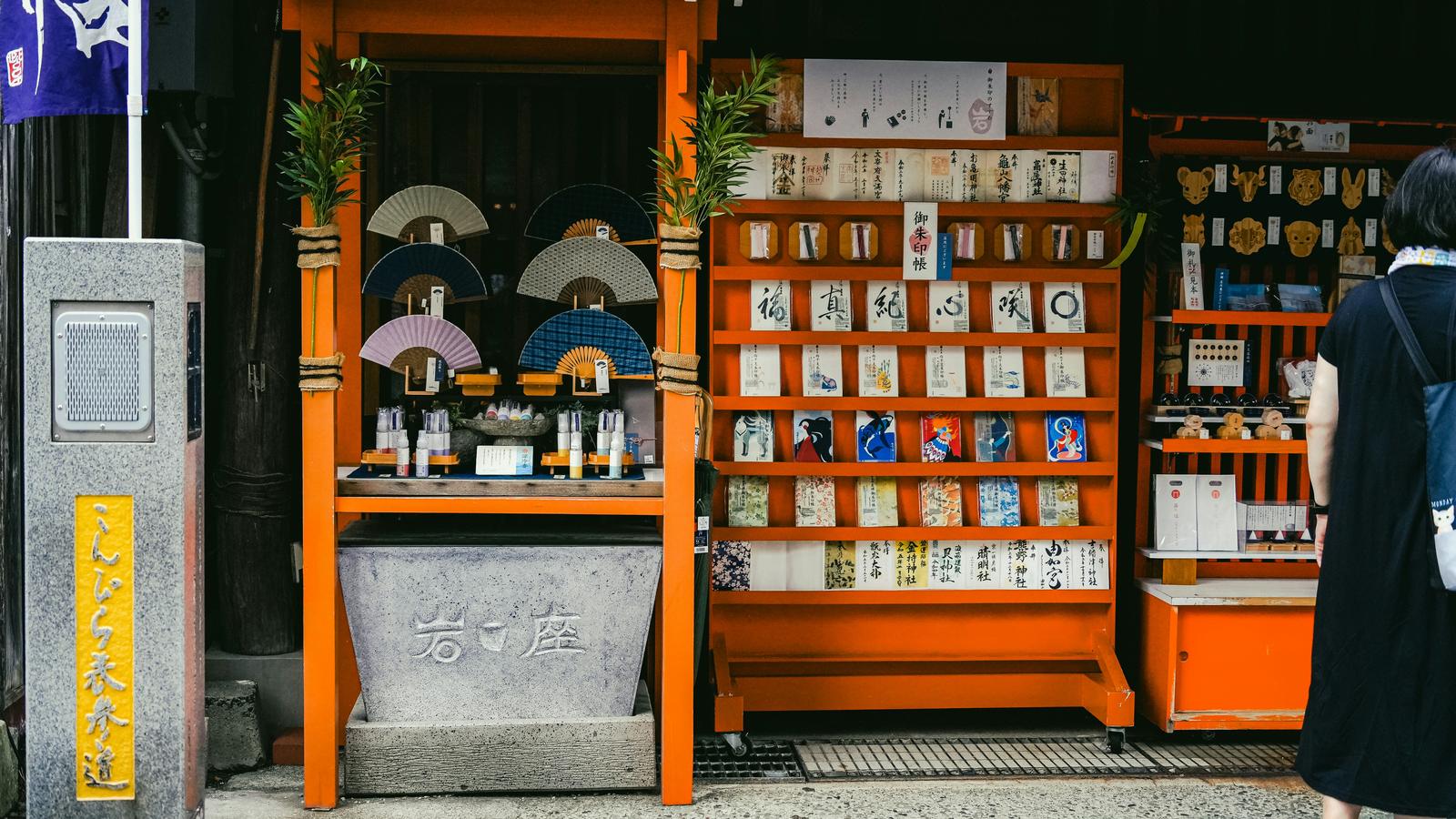
An omamori is a small charm, usually a brocade pouch with a slip of paper or wood inside, that a Shinto shrine or Buddhist temple gives to visitors for one wish: safe travel, a good match, an easy birth, success in exams, health or money. Each shrine is known for some wishes more than others. In Tokyo, Suitengu in Nihonbashi is the shrine for safe childbirth and conception, and Tokyo Daijingu near Iidabashi for finding a partner. In Kyoto, Fushimi Inari Taisha is the shrine for business, Kitano Tenmangu for study, and Yasui Konpiragu for cutting bad ties. Most omamori are offered for ¥500 to ¥2,000. The shrines ask you to keep one close, and to give it back after about a year or once the wish has come true.
Below are the kinds of omamori, nine shrines and a temple in Tokyo and Kyoto with what each is known for, the days when a charm is given only once a year, and how to carry one and return it. Each fact comes from the shrine's or temple's own website, read on October 22, 2026; the sources are listed at the end. For how to behave at a shrine or temple, see Japanese etiquette for visitors.
Key points
- Shrines speak of receiving an omamori, and call the money an offering, hatsuhoryo. Yasaka Shrine says the colour, shape and offering make no difference to what a charm does.
- You do not need to join a prayer ceremony to receive one. Several shrines list the charm and the ceremony separately.
- Suitengu gives its charm for safe childbirth as a 5-metre cotton belly sash, for ¥4,000. Its remaining Days of the Dog in 2026 are October 27, November 8 and 20, and December 2, 14 and 26.
- Kitano Tenmangu begins giving its plum-branch charm at midnight on January 1, limited to 10,000 branches, and its New Year pickled plums from December 13.
- Kitano Tenmangu and Yasaka Shrine ask that old charms go back to the shrine that gave them, or to a shrine near you, where they are burned with a prayer.
WHAT AN OMAMORI IS
Kitano Tenmangu explains it in two sentences: since ancient times people believed that keeping something filled with a god's power close to them would protect them from disaster and danger, and over time this became the omamori. Suitengu adds that each of its charms is placed before the god one by one before it is given. Because of this, the shrines speak of receiving an omamori, and call the money you hand over the hatsuhoryo, the first-fruits offering.
Buddhist temples give charms too. Senso-ji in Asakusa lists its own for good matches, safe birth, exams, travel and money, and calls them juyobutsu, things received; it also notes that some are given only on certain days.
Receiving one asks nothing of your beliefs. Suitengu and Yasaka Shrine list each charm with its offering, and Suitengu writes of people who "receive only the charm", without a prayer ceremony. Kitano Tenmangu's one request is to treat it with care.
WHAT EACH ONE IS FOR
Most shrines offer the same broad set of wishes. The examples below are from the shrines' own lists, with the offering each published on October 22, 2026.
| Wish | Common name | Example and offering |
|---|---|---|
| Money and luck with money | Kin'un mamori | Fushimi Inari Taisha, takara mamori, ¥1,500 |
| Business | Shobai hanjo mamori | Fushimi Inari Taisha, ¥1,000 |
| A good match, love | Enmusubi mamori | Tokyo Daijingu, lily-of-the-valley charm, ¥800 |
| Conception | Kosazuke or kodakara mamori | Suitengu, ¥2,000 |
| Safe childbirth | Anzan mamori | Suitengu, belly sash set, ¥4,000 |
| Warding off bad years | Yakuyoke mamori | Kitano Tenmangu, ¥1,000 |
| Safe travel and driving | Kotsu anzen mamori | Yasaka Shrine, overseas travel charm, ¥1,000 |
| Study and exams | Gakugyo or gokaku mamori | Kitano Tenmangu, gakugyo mamori, ¥1,000 |
| Health | Shintai kenko mamori | Yasaka Shrine, ¥800 |
SHRINES IN TOKYO AND WHAT THEY ARE KNOWN FOR
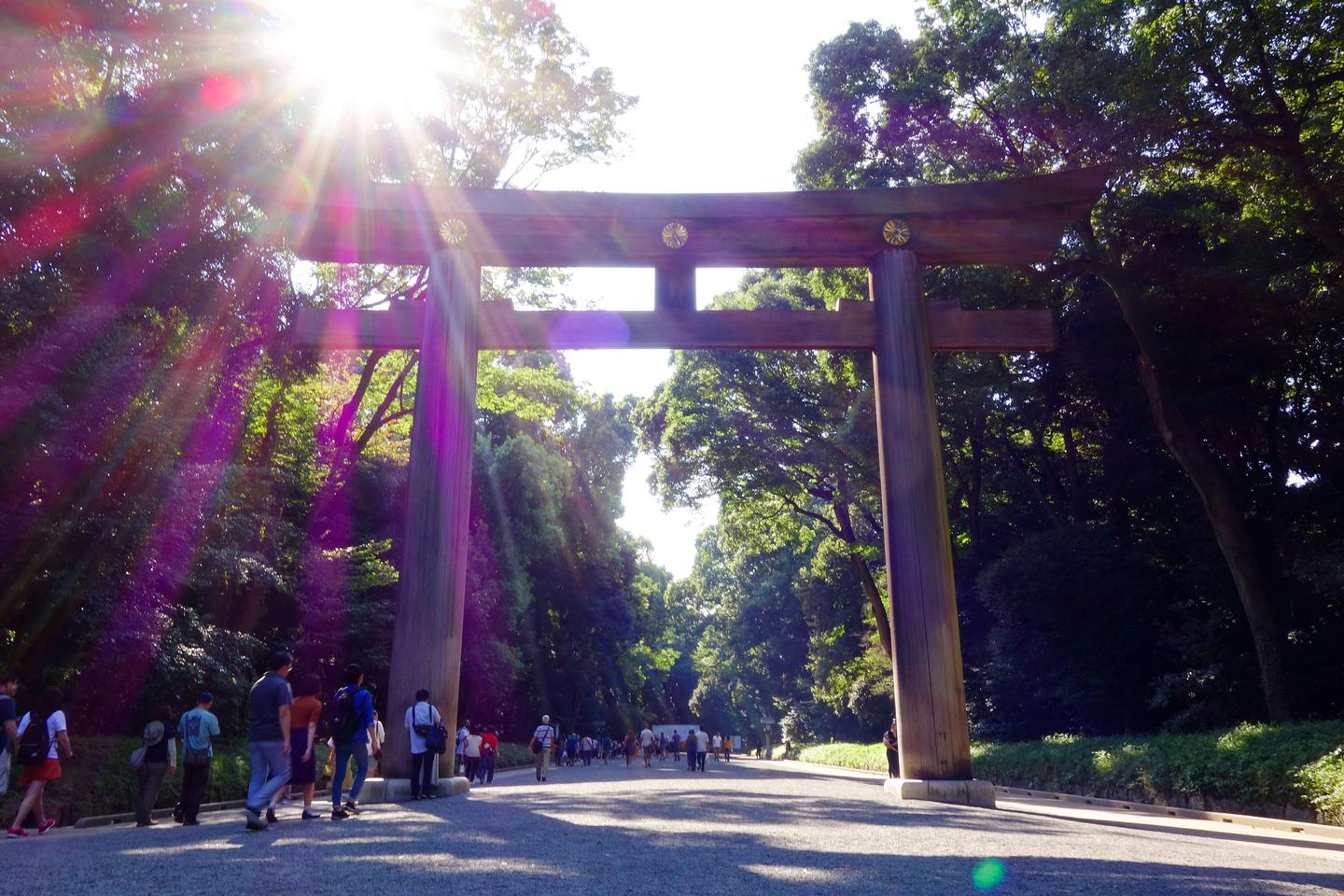
Meiji Jingu, Harajuku. The shrine to Emperor Meiji and Empress Shoken stands in a forest, about ten minutes' walk from each entrance to the main hall. Its best-known charm is the brocade charm for a sound body and mind. Its fortune slips, called Omigokoro, carry no good or bad luck; each holds one of thirty poems by the Emperor and Empress with an explanation, and the shrine has offered them in English since 1968.
Tokyo Daijingu, Iidabashi. Founded in 1880 as Tokyo's place to worship the gods of Ise, it is called "Tokyo's Ise". The Shinto wedding as most people know it began here, and because the three gods of musubi, the power that ties things together, are enshrined with the gods of Ise, it is known for good matches. It lists more than a dozen charms for love, most between ¥700 and ¥1,500.
Suitengu, Nihonbashi. Brought to Edo in 1818 by the lords of Kurume, Suitengu is the Tokyo shrine for safe childbirth and conception. Its charm for birth is the belly sash itself, cut from the same cotton as the rope of the shrine's bell. An expectant mother traditionally wraps it on the Day of the Dog in her fifth month, because dogs give birth easily. When you receive the conception charm, the shrine asks for your name and a priest reads it before the god the next morning.
Kanda Myojin, Sotokanda. The shrine of Daikoku, Ebisu and Taira no Masakado lists its main wishes as good matches, business, warding off misfortune and a happy home. Its business charms carry Daikoku and Ebisu, two of the gods of good fortune.
Senso-ji, Asakusa. This Buddhist temple gives its charms at the main hall and along the approach. Beside the general charms, the hall of Zenizuka Jizo gives one for money.
SHRINES IN KYOTO AND WHAT THEY ARE KNOWN FOR
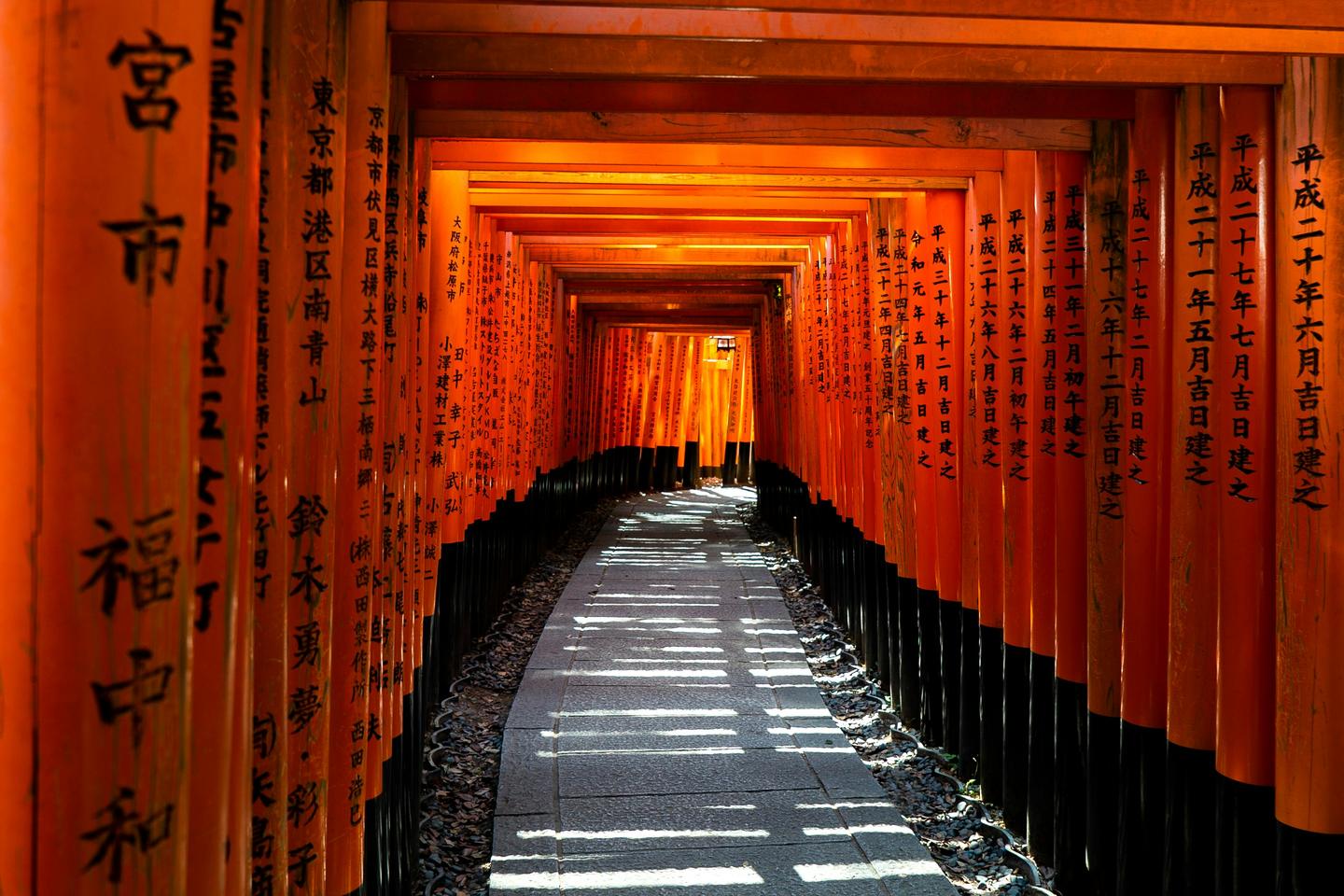
Fushimi Inari Taisha. The head of some 30,000 Inari shrines across Japan, famous for its thousands of gates. The shrine says each gate was given in thanks for a wish that "went through", and today about 10,000 line the paths up the mountain. In later centuries Inari came to be prayed to for business, a safe home, safe travel and the performing arts. Among its charms are the fukusen mamori, a "seed coin" for money, at ¥1,000, and a charm for business at ¥1,000.
Yasaka Shrine, Gion. The shrine of the Gion Festival lists charms for health, exams, work, beauty and travel abroad, among others. One, the enishi mamori, is made to be shared between a couple, family or friends, for a bond that lasts.
Shimogamo Shrine. In the Tadasu no Mori forest, the Aioi no Yashiro shrine within the grounds is the place for good matches, with two trees grown into one beside it. Some charms are given only at that shrine, such as the aoi-himo cord in the shape of the hollyhock crest. At the Kawai Shrine, also inside the grounds, visitors pray for beauty with a votive plaque shaped like a hand mirror, which they make up with their own cosmetics.
Kitano Tenmangu. The shrine to Sugawara no Michizane, the scholar honoured as the god of learning, is where Kyoto comes for exams. Its study charms range from ¥800 to ¥2,500 for one in a paulownia box, and it also gives boxes of pencils for exams.
Yasui Konpiragu, Higashiyama. This shrine cuts bad ties and ties good ones: with a partner, and also with illness, drink, tobacco or gambling. Visitors write their wish on a paper slip, crawl through the hole in a stone 1.5 metres high and 3 metres wide, front to back to cut the bad tie, then back to front to tie the good one, and paste the slip on the stone. The shrine adds that couples who come together will not be parted, and that their tie grows stronger. Its charms for cutting bad ties and for good matches are listed at ¥500.
THE DAYS PEOPLE QUEUE FOR
Some charms are given only on certain days, or only until they run out. These are the ones the shrines publish.
Suitengu on the Day of the Dog. The Day of the Dog comes round every twelve days in the Chinese zodiac calendar, and on it, the shrine says, the grounds are very busy with expectant mothers and their families. Suitengu publishes the dates; for the rest of 2026 they are Tuesday, October 27; Sunday, November 8; Friday, November 20; Wednesday, December 2; Monday, December 14; and Saturday, December 26. The wait for a prayer ceremony on those days is about 15 to 45 minutes on a weekday and 30 minutes to an hour and a half at the weekend, and at the weekend only the mother may go into the hall. The sash, though, is prayed over at dawn on a Day of the Dog and given every day, so a charm received on any other day carries the same prayer.
Kitano Tenmangu at New Year. From December 13, the day Kyoto begins preparing for New Year, the shrine gives its ofukuume, about six salted plums from the 1,500 trees in its grounds, at ¥700 for a packet, until they run out. Taken in the first tea of New Year's morning, they are said to keep you well all year. At midnight on January 1 it begins giving Omoi-no-mama, a cut plum branch that blossoms at home in a vase, at ¥1,000, limited to 10,000 branches. Its fair falls on the 25th of every month, and the last of the year on December 25 and the first on January 25 are the busiest, with about a thousand stalls and some 150,000 people.
Fushimi Inari Taisha at Hatsuuma. On the first Day of the Horse in February the shrine marks the day Inari first came down to the mountain, and from the day before, it says, the shrine overflows with visitors. At the shrine, visitors have long received the shirushi no sugi, a sprig of cedar, as a token for business and a safe home. The date moves each year with the calendar.
Tokyo Daijingu at Tanabata. From June 1 the shrine gives a star charm only for the Tanabata season, at ¥1,000, with paper strips for wishes until July 7.
Yasui Konpiragu at New Year. The horai-horai, an arrangement of rice ears and club moss with a talisman for the New Year, is given only between the shrine's last festival of the year on December 10 and its first on January 10, at ¥3,500, in limited numbers.
CARRYING ONE AND GIVING IT BACK
Suitengu asks that its charms be kept close to you. Meiji Jingu and Tokyo Daijingu make flat versions to keep in a wallet, and Yasaka Shrine makes card-shaped ones.
Yasaka Shrine answers the questions visitors ask most. Charms are received anew each year. The old one goes back to the shrine that gave it or to a shrine near you, where a priest reads a prayer and it is burned. Carrying charms from different shrines is fine. A charm can be given to someone else. And charms with a different colour, shape or offering do the same thing; choose the one that suits you.
Kitano Tenmangu adds when to return them. A charm for an exam or a safe birth goes back with thanks once the wish has been answered. The rest have no fixed end, but the custom is to receive new charms each year at New Year, when the year's god is welcomed. Fushimi Inari Taisha puts it simply: receive your charms afresh once a year. Kitano Tenmangu and Yasaka Shrine each have a nosatsujo, a place in the grounds for returning old charms, and Kitano says a shrine near your home will do if you live far away, after asking there first.
WHERE STAYGO COMES IN
STAYGO plans private trips across Japan from Tokyo. If an omamori matters to you, for a wedding, a child on the way or a year of exams at home, tell us which wish and which city, and we will suggest the shrine, the day and the time that suit your trip, and ask what can be arranged: an early hour before the crowds, or a guide who can explain the shrine quietly as you walk. We do not promise access or a private visit, and any prayer ceremony is for you to choose. We arrange everything in your names, and you pay guides and hosts directly at their own rates, with no markup from us. Trips are planned on the Signature plan or as Bespoke.
SOURCES AND HOW WE CHECKED
We read the official websites of each shrine and temple listed below on October 22, 2026. We did not contact any of them, and we did not use figures from guidebooks, blogs or press coverage. Offerings, dates and limits are those published on October 22, 2026, and can change. Two shrines we considered in Kyoto, Jishu Shrine and Mikane Shrine, are left out because we could not confirm their details on an official site.
- Kitano Tenmangu, charms, returning charms, Ofukuume and Omoi-no-mama and festivals: what a charm is, offerings, when to return, New Year charms, fair days
- Yasaka Shrine, charms and stamps: charms, offerings and answers to common questions
- Suitengu, charms, the Day of the Dog, 2026 calendar, to those receiving charms and about the shrine: sash, offerings, dates, waits and history
- Tokyo Daijingu, charms, about the shrine and monthly festivals: charms, offerings, history and the Tanabata charm
- Meiji Jingu, talismans, charms and fortunes and visiting: charms, Omigokoro and the grounds
- Kanda Myojin, charms and list of charms: deities, wishes and business charms
- Senso-ji, charms: kinds of charm and charms for certain days
- Fushimi Inari Taisha, charms, questions and February festivals: charms, renewing yearly, gates, wishes and Hatsuuma
- Shimogamo Shrine, charms and Aioi no Yashiro: matches, beauty and charms given only there
- Yasui Konpiragu, about the shrine, the stone and charms: cutting and tying bonds, the stone, offerings and the New Year charm
QUESTIONS VISITORS ASK
Can non-Japanese visitors or people of other faiths get an omamori?
Yes. Shrines list each charm with its offering at the counter, and none of the shrines we read asks about your beliefs. Suitengu writes of visitors who receive only the charm, without a prayer ceremony.
How much does an omamori cost?
Most are offered for ¥500 to ¥2,000; the shrines call the money hatsuhoryo, an offering. Suitengu's charm for safe birth, a 5-metre belly sash with two smaller charms, is ¥4,000. Yasaka Shrine says the offering makes no difference to what a charm does.
Which shrine is best for love or a good match?
In Tokyo, Tokyo Daijingu, where the Shinto wedding began. In Kyoto, the Aioi no Yashiro at Shimogamo Shrine, and Yasui Konpiragu, which cuts bad ties and ties good ones.
What do I do with an omamori after a year?
Return it to the shrine that gave it, or to a shrine near you, where it is burned with a prayer. Kitano Tenmangu says charms for an exam or a birth go back once the wish is answered, and others are usually renewed each New Year.
When is the Day of the Dog at Suitengu?
Every twelve days. Suitengu's remaining dates in 2026 are October 27, November 8 and 20, and December 2, 14 and 26. The grounds are very busy on those days.
A QUIETER HOUR AT THE SHRINE YOU CHOOSE
Tell us the wish and the city, and the dates of your trip. We will suggest the shrine and the hour, and ask what can be arranged for a calm visit with a guide.
Begin planning →