A ningen dock is a full day of preventive health screening, paid for by the person screened. The word borrows from a ship's dry dock: a vessel comes in after a long voyage to be looked over, and the society for ningen dock and preventive medicine writes that the first organised one was held on July 12, 1954, at the National Tokyo First Hospital. Two Tokyo centres that now say plainly how they receive visitors from abroad are the Keio University Center for Preventive Medicine in Azabudai Hills and Tokyo Midtown Clinic in Roppongi. Both take overseas guests only through medical travel companies they have approved, and both explain the main findings to you on the day.
Below is how a screening for an overseas visitor is arranged, what each centre publishes about its courses, prices and day, what the results are and are not, and how the night before and the day after can be kept quiet. We read the centres' own pages again on October 31, 2026, together with Medical Excellence JAPAN, which accredits medical travel companies, a facilitator run by JTB, two papers from Japanese medical journals, and reports from the travel and medical tourism press. We did not contact any of them; the sources are listed at the end. Nothing here is medical advice, and what a screening can tell you is for the centre's doctors to explain.
Key points
- Keio University Center for Preventive Medicine and Tokyo Midtown Clinic both receive overseas visitors only through medical travel companies they have approved. Tokyo Midtown Clinic says it does not take direct bookings from individuals abroad.
- Tokyo Midtown Clinic publishes its executive courses at ¥330,000 to ¥814,000 for residents of Japan and says the fees for visitors from abroad are different.
- At Keio, examinations start in the morning and usually finish between 3:30 and 5 pm, lunch is included, and a doctor explains the key findings the same day. A two-day package adds a colonoscopy.
- Keio requires a professional medical interpreter that it arranges, for a fee, and does not allow family or friends to interpret or to accompany you during the screening.
- Written reports follow by post, about three weeks later at Keio and about a month later at Tokyo Midtown Clinic. JMHC, JTB's facilitator, reminds visitors that results show what is suspected and that a diagnosis is made by examination at a medical institution.
ASK US ABOUT A SCREENING STAY →
WHAT A NINGEN DOCK IS
As one example of what the day holds, Keio's Basic Course combines a consultation, body measurements, sight and hearing, blood and urine tests with tumour markers, lung function, an abdominal ultrasound, an ECG, a low-dose chest CT and, if you choose, an upper endoscopy, and ends with a doctor explaining the results. The society for ningen dock and preventive medicine traces the organised form to the National Tokyo First Hospital, now the National Center for Global Health and Medicine, on July 12, 1954, followed by St. Luke's International Hospital and hospitals across the country. It registered July 12 as Ningen Dock Day in 2019.
Visitors from abroad have been coming for these screenings for more than a decade. A paper in the journal of the Japan Society of Ningen Dock by the health care centre of Kokura Memorial Hospital described screening 22 Chinese visitors between 2015 and 2017 and found that interpreters kept communication problems to a minimum. Doctors at the National Center for Global Health and Medicine wrote in 2022 that their centre had received 1,493 foreign visitors for a ningen dock in 2019, before the pandemic stopped such visits for two years. The trade journal IMTJ reported in 2019 that Chinese medical travellers to Japan came mostly for therapy and health checks, and that few arranged the trip on their own. In 2023 Alibaba's Japan arm began offering screenings to visitors from China on Tmall Global, chosen before the trip and taken during it, Travel Voice reported.
TWO TOKYO CENTRES THAT RECEIVE VISITORS
The Keio University Center for Preventive Medicine opened in 2012 as part of Keio University Hospital and moved to a larger floor of the Mori JP Tower in Azabudai Hills in November 2023. It is a screening centre only; it does not treat, prescribe or handle emergencies, and if a finding needs follow-up it recommends a hospital, which can be Keio University Hospital, about ten minutes away by car. It says its questionnaires, guides, consent forms and reports are available in English.
Tokyo Midtown Clinic is on the sixth floor of Midtown Tower, connected to Roppongi Station. It says it sees more than 50,000 people a year for screenings and that in January 2015 it became the first clinic in Japan offering general outpatient care and screening to be accredited by Joint Commission International for its outpatient programme. Its executive courses are held in private examination rooms, with a concierge who takes you from one test to the next, and it says English-speaking staff are on site.
| Keio University Center for Preventive Medicine | Tokyo Midtown Clinic, executive courses | |
|---|---|---|
| How visitors from abroad apply | Only through the centre's approved medical facilitators | Only through contracted agents; no direct bookings from individuals |
| Courses | Premium (2 days, with two MRI scans and a colonoscopy) or Essential (1 day, no colonoscopy), built on a Basic Course of about 3 hours | Super Midtown Dock, Plus, Royal and Royal Plus |
| Published fees | Not published in English | ¥330,000, ¥550,000, ¥594,000 and ¥814,000 for residents of Japan; fees for visitors from abroad differ |
| Length of the day | Morning start, usually finished between 3:30 and 5 pm | About 6 hours |
| Language | Professional medical interpreter arranged by Keio, for a fee | English-speaking staff on site; interpreters arranged by the agent |
| Results | Explained the same day; written report by post about three weeks later | Explained the same day as far as can be diagnosed; detailed report by post about a month later |
Keio's Premium package comes in two forms, one weighted toward the heart and blood vessels and one toward women's health, each with a second day for the colonoscopy. A PET-CT scan can be added; it is done at Keio University Hospital and takes another day. Tokyo Midtown Clinic describes the Royal course as adding about 78 blood test items to the Super Midtown Dock, with a blood test and a doctor's follow-up six months later, and the Plus courses as adding checks every three months through the year. Keio states that its programmes are not covered by Japanese health insurance.
HOW A VISIT IS ARRANGED FROM ABROAD
Both centres work through medical travel companies, and Medical Excellence JAPAN (MEJ) accredits such companies as AMTAC, Accredited Medical Travel Assistance Companies. Its list names JTB, Emergency Assistance Japan, BRISIAN and I-cell Networks, with two more on an interim list, and it describes their work as coordinating with the hospital, interpreting in several languages, arranging transport and accommodation, and acting as payment agent. It also recommends hospitals that receive medical travellers as Japan International Hospitals, searchable on a site of their own.
JMHC, the Japan Medical and Health Tourism Center run by JTB, sets out the steps for a screening. You apply with your preferred centre and dates, the facilitator confirms the date with the centre and sends the questionnaire to complete before you travel, and you pay the full amount in advance. After payment it issues a letter guaranteeing your identity, and it lists obtaining a medical stay visa among the preparations it supports. At Tokyo Midtown Clinic, payment goes to the agent in advance by bank transfer, and only tests added on the day are paid at the clinic. Keio's form says payment is due in full on the day of the visit, by cash or card, so ask your facilitator which applies to you.
Cancellation terms are published. Keio charges nothing up to 15 days before, 20% from 14 to 8 days, 30% from 7 days to the day before and 100% on the day, and the same applies to changes of date. Tokyo Midtown Clinic charges 10% of an executive course from a week before to the day before, 50% on the day and 100% if you do not appear. Keio takes appointments up to a year ahead.
THE DAY ITSELF
JMHC notes that check-in is usually early in the morning and asks visitors to arrive in Japan the day before and rest. Keio asks you to arrive 15 minutes before your time and says a late arrival can mean the examination is moved or cancelled. Fasting rules come with the preparation pack, which Keio sends about two weeks before with the questionnaires, and Tokyo Midtown Clinic sends its own notes on dietary restrictions in advance. One practical note from St. Luke's International Hospital's preventive medicine centre: anyone who has taken a GLP-1 or GIP drug such as Mounjaro in the past week cannot have the stomach examination there, because the stomach empties more slowly, and the centre asks people to discuss any pause with the doctor who prescribes it.
At Keio the morning begins with a consultation with a certified nurse, the tests follow, and lunch is served at the centre during a set break. A colonoscopy needs bowel preparation on the day, starting around 10 am, with the procedure after 1 pm, and Keio offers a private room with its own toilet or a semi-private booth for it. A private locker room costs ¥11,000. To keep the floor quiet, Keio does not allow family or friends to accompany you during the screening, and children aged 16 and under may not enter. It publishes age limits: upper endoscopy up to 85, colonoscopy up to 80, and no sedation over 80. MRI is not possible with a pacemaker, some metal implants or tattoos and permanent make-up with metallic pigment, so mention these when you apply.
At Tokyo Midtown Clinic a concierge meets you, takes you to the private examination room and walks you to each test. A doctor's consultation and the same-day explanation close the day, which takes about six hours in all. After a gastroscopy, the clinic asks you to wait 30 minutes to an hour before eating.
WHAT THE RESULTS ARE
Both centres explain the key findings before you leave. The full written report follows by post, about three weeks later from Keio and about a month later from Tokyo Midtown Clinic, and JMHC says results generally reach its clients one to one and a half months after they return home. JMHC is direct about what a screening can do: results indicate a suspicion, and the final diagnosis is made by examination at a medical institution. Keio says that some findings lead it to recommend further tests within three to six months, and that it will refer you to Keio University Hospital or another hospital when evaluation or treatment is needed. If a biopsy is taken during an endoscopy, it notes that restrictions may follow.
For a visitor, that means two things worth settling before the trip: which doctor at home will receive the report, and where you would want any follow-up to happen, in Japan or at home. Keio offers the image data on a CD for ¥1,100.
THE NIGHT BEFORE AND THE DAY AFTER
A screening day starts early and leaves little appetite for anything else, so the stay around it matters. Keio's own access page lists The Okura Tokyo, Janu Tokyo and The Ritz-Carlton Tokyo as hotels within easy reach of Azabudai Hills, and it notes that the Mori JP Tower has a covered taxi drop-off on its B1 floor, with covered access to the main lobby. Haneda Airport is 17 km away. Tokyo Midtown Clinic is reached directly from Roppongi Station.
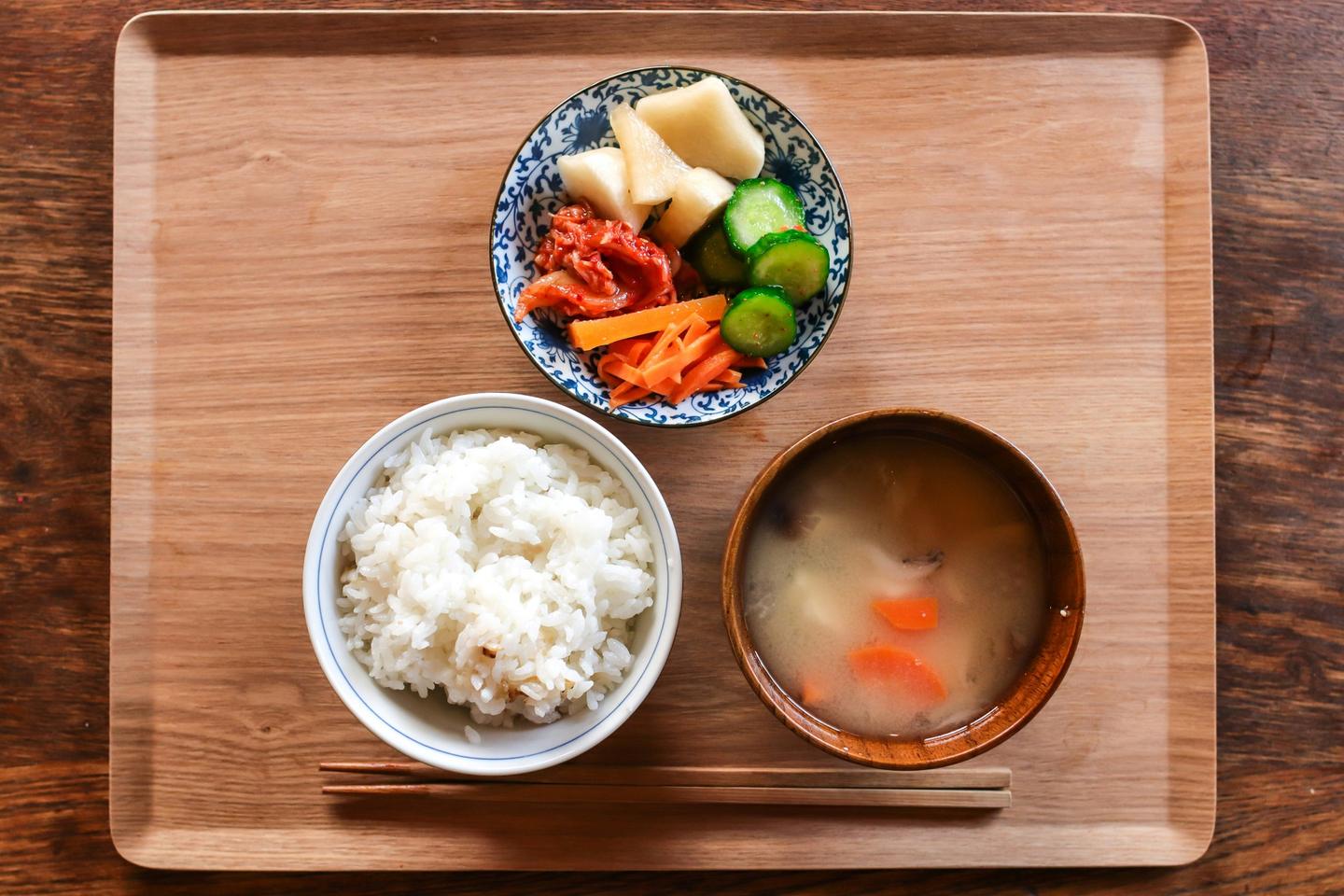
The evening before, a light dinner early enough to respect the fasting hour and a room that is quiet by nine. The morning of, the car at the door at the time the centre gives. After the results, nothing more demanding than a slow walk and a simple meal, such as rice, miso soup and a few small dishes, and the following morning left open, which is wise after sedation or a biopsy in any case. If the screening falls within a longer trip, it is easiest to place it near the start, so that any follow-up the doctors suggest can be fitted in before you leave Japan.
WHERE STAYGO COMES IN
STAYGO plans private trips across Japan from Tokyo. The screening itself goes through the centre's approved medical travel company, which handles the application, the payment and the interpreter; STAYGO is not one of these companies. What we arrange is everything around it: the hotel the night before, the car that knows the drop-off, a light dinner, and the days after, at a pace that suits how you feel. If you have already chosen a centre and a facilitator, tell us the date, and we will build the rest of the trip around it. We arrange everything in your names, and you pay hotels, drivers and restaurants directly at their own prices, with no commission or markup from us. Trips are planned on the Signature plan, for 7 to 14 days, or as Bespoke for longer or more complex journeys.
SOURCES AND HOW WE CHECKED
We read the pages below on October 31, 2026: the centres' own pages for courses, fees, rules and the shape of the day; Medical Excellence JAPAN and JMHC for how visits from abroad are arranged; the ningen dock society for its history; two journal papers and two trade reports for how visitors have used these screenings. We did not contact any centre, company or author. Fees, rules and timings are those published on that day and can change, and the fees for visitors from abroad come from the facilitator. We were unable to read the Ministry of Foreign Affairs page on the medical stay visa on that day, so we have only repeated what JMHC says about it.
- Keio University Center for Preventive Medicine, comprehensive medical check-up, FAQ and step-by-step guide: facilitators for overseas visitors, timings, lunch, fees for extras, cancellation, companions, age limits, results
- Keio University Center for Preventive Medicine, screening packages and appointment request: Premium and Essential packages, Basic Course, PET-CT, interpreter rule, payment
- Keio University Center for Preventive Medicine, access and Keio University Hospital: taxi drop-off, nearby hotels, distance from Haneda, history of the centre
- Keio University Center for Preventive Medicine, course menu (Japanese): colonoscopy preparation rooms
- Tokyo Midtown Clinic, executive medical service fees and courses (Japanese) and the flow of the day (Japanese): fees, length, concierge, results, cancellation
- Tokyo Midtown Clinic, services for visitors from abroad (Japanese): agents only, interpreters, payment, visitors a year, JCI accreditation
- Tokyo Midtown Clinic, health checkup FAQ (Japanese): dietary restrictions and eating after a gastroscopy
- St. Luke's International Hospital Affiliated Clinic, Center for Preventive Medicine (Japanese): notice of August 18, 2026 on GLP-1 and GIP drugs and the stomach examination
- Japan's society for ningen dock and preventive medicine, Ningen Dock Day (Japanese): the first organised ningen dock in 1954 and the origin of the name
- Medical Excellence JAPAN, Accredited Medical Travel Assistance Companies and Japan International Hospitals: the accredited companies and what they do
- JMHC, Japan Medical and Health Tourism Center (JTB), flow of medical consultation: application, advance payment, guarantee letter, visa, arriving the day before, results
- Lu J. et al., GHM Open, 2022: foreign visitors screened at the National Center for Global Health and Medicine in 2019
- Obuchi M., Official Journal of Japan Society of Ningen Dock, 2018: screening visitors from China at Kokura Memorial Hospital
- IMTJ, Why Chinese medical tourists are heading to Japan (2019): what visitors come for and how they arrange it
- Travel Voice, Alibaba starts medical tourism for visitors from China (2023, Japanese): screenings arranged before the trip and taken during it
QUESTIONS TRAVELLERS ASK
Can a tourist have a ningen dock in Japan?
Yes. Keio University Center for Preventive Medicine and Tokyo Midtown Clinic both receive visitors who live abroad, through medical travel companies they have approved. Tokyo Midtown Clinic says it does not take direct bookings from individuals abroad.
How much does a ningen dock cost in Tokyo?
Tokyo Midtown Clinic publishes its executive courses at ¥330,000 to ¥814,000 for residents of Japan and says the fees for visitors from abroad are different. Keio does not publish fees in English. Your facilitator gives the price for your course. Keio states that Japanese health insurance does not cover its programmes.
How long does a ningen dock take?
About six hours for Tokyo Midtown Clinic's executive courses. At Keio, examinations start in the morning and usually finish between 3:30 and 5 pm, and the Premium package adds a second day for a colonoscopy.
Will the results be in English?
Keio says its questionnaires, guides, consent forms and results reports are available in English, and a doctor explains the key findings on the day with a medical interpreter. The written report follows by post about three weeks later.
Do I need a medical visa for a health screening?
It depends on your passport and plans. JMHC, JTB's facilitator, lists obtaining a medical stay visa among the preparations it supports and issues a letter guaranteeing your identity after payment. Ask your facilitator before you settle your flights.
ASK US ABOUT A SCREENING STAY
Tell us the date your screening is set for, and we will arrange the quiet room the night before, the car to the door and the slow days after.
Begin planning →We reply within 24 hours, in writing
Some of the restaurants, bars and private places we arrange take guests only by introduction or membership. We do not publish their names.