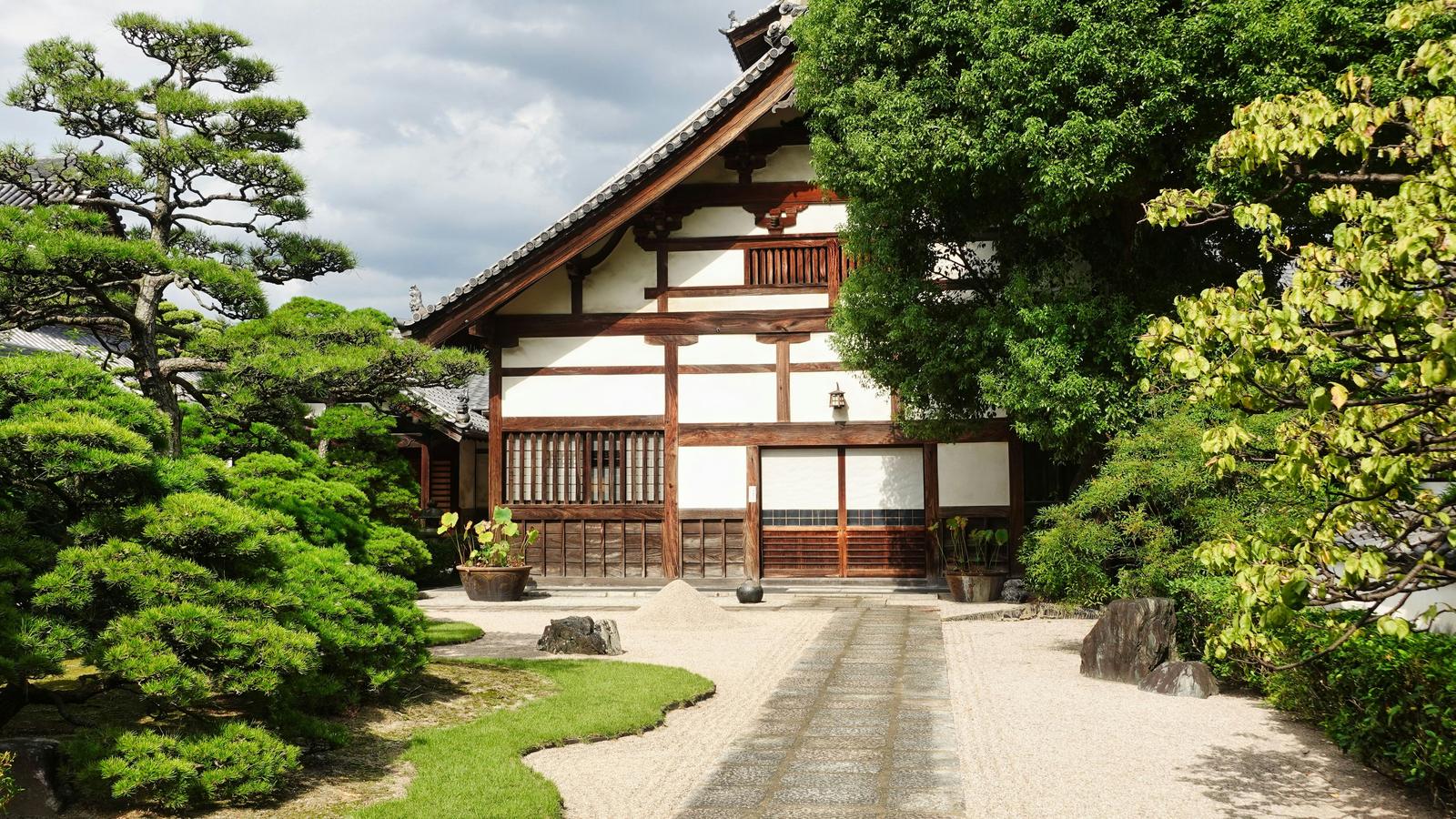
Some families travel to Japan as a household. Three generations, cousins, a nanny or two, and a wish to close one door at night and have everything behind it belong to them. A hotel floor can do much of this. A house does the rest: a garden that no one else walks through, a bath the family fills when it likes, and a kitchen where a chef cooks for them alone.
This article is about taking a whole place in Japan: a Kyoto townhouse rented whole, a villa with its own hot-spring bath, a house that stands apart within a ryokan, and the small inn taken for the night. We read the houses' and hotels' own pages, the Japan Tourism Agency's rules on home rentals, Kyoto City's accommodation tax, the Japan National Tourism Organization's statements on travellers from the Gulf and a Japanese trade paper, and contacted none of them; the sources are listed at the end. For a family that prefers ryokan suites, see Ryokan With a Private Onsen for the Whole Family →.
Key points
- Most whole houses in Japan are made for five or six. A large family takes two or three side by side, or several villas within one resort.
- At Amanemu on Ago Bay, three of the four villas are each described for up to six guests, and every villa and suite has a private onsen.
- Some ryokan now hold a house within the house: Gora Kadan's Bettei Suite Shinonome in Hakone, 254 m² for six, has its own open-air hot-spring bath and a private chef's kitchen.
- In Kyoto, machiya townhouses rented whole are intimate: Maana's two houses each sleep up to five, and its three Kiyomizu suites sit side by side.
- Rentals run under a hotel licence or the home-sharing law, which limits a house to 180 days a year. We arrange only places that state their licence.
ASK US ABOUT A HOUSE FOR YOUR FAMILY →
WHO TAKES A WHOLE HOUSE
Travellers from the Gulf often come as an extended family. Daisuke Kobayashi, head of the Japan National Tourism Organization's Dubai office, told the Jalan Research Center that family trips by whole kin groups are common, and that a family of ten can spend some ten million yen on a single journey. The same office says that visitors from the six Gulf Cooperation Council countries in 2025 were about double the 2019 figure. Travel Voice, a Japanese trade paper, reported that these families stay ten days to two weeks and usually have the journey made to order.
For a group of that size, privacy is the first thing a hotel cannot fully give. Corridors, lifts and breakfast rooms are shared. A house, or a cluster of villas, lets the family set its own hours for meals, prayer and sleep.
VILLAS WITH THEIR OWN HOT SPRING
Amanemu, Ise-Shima. The resort sits beside Ago Bay in the forested hills of Ise-Shima National Park. Aman describes its villas as having two bedrooms and generous living space indoors and out, and lists four of them: Tsuki, Mori and Nagi for up to six guests each, and Sora with dining for up to six. Each villa and suite has a private onsen. Two or three villas together hold a family of twelve to eighteen, and Ise Grand Shrine is close by.
AYA Niseko, Hokkaido. At the foot of the Grand Hirafu slopes in Kutchan, the penthouses are 277 to 373 m² and the residences 255 to 308 m², the residences with ski-in access and a private onsen. In summer the same rooms look over green fields toward the mountains.
Zaborin, Hanazono in Hokkaido. A ryokan made entirely of fifteen villas, each with an indoor and an open-air bath of natural spring water. Taking several villas gives each branch of the family its own house in the same forest.
A HOUSE WITHIN A RYOKAN
A few ryokan have built rooms that are, in practice, houses. At Gora Kadan in Hakone, the Bettei Suite Shinonome, opened in August 2025, is 254 m² for up to six guests, with a tea room, a dining room of twenty-five mats, a study, a private dry sauna, a private chef's kitchen and a panoramic open-air hot-spring bath over a stone garden. The family has the ryokan's service and its kitchen, and almost never meets another guest.
Its sister house at the foot of Mount Fuji, Gora Kadan Fuji, has three Villa Suites of 363, 260 and 241 m² among its forty-two suites. Taking all three villas is one way for a large family to have the house's quiet and its four dining rooms to themselves.
KYOTO TOWNHOUSES RENTED WHOLE
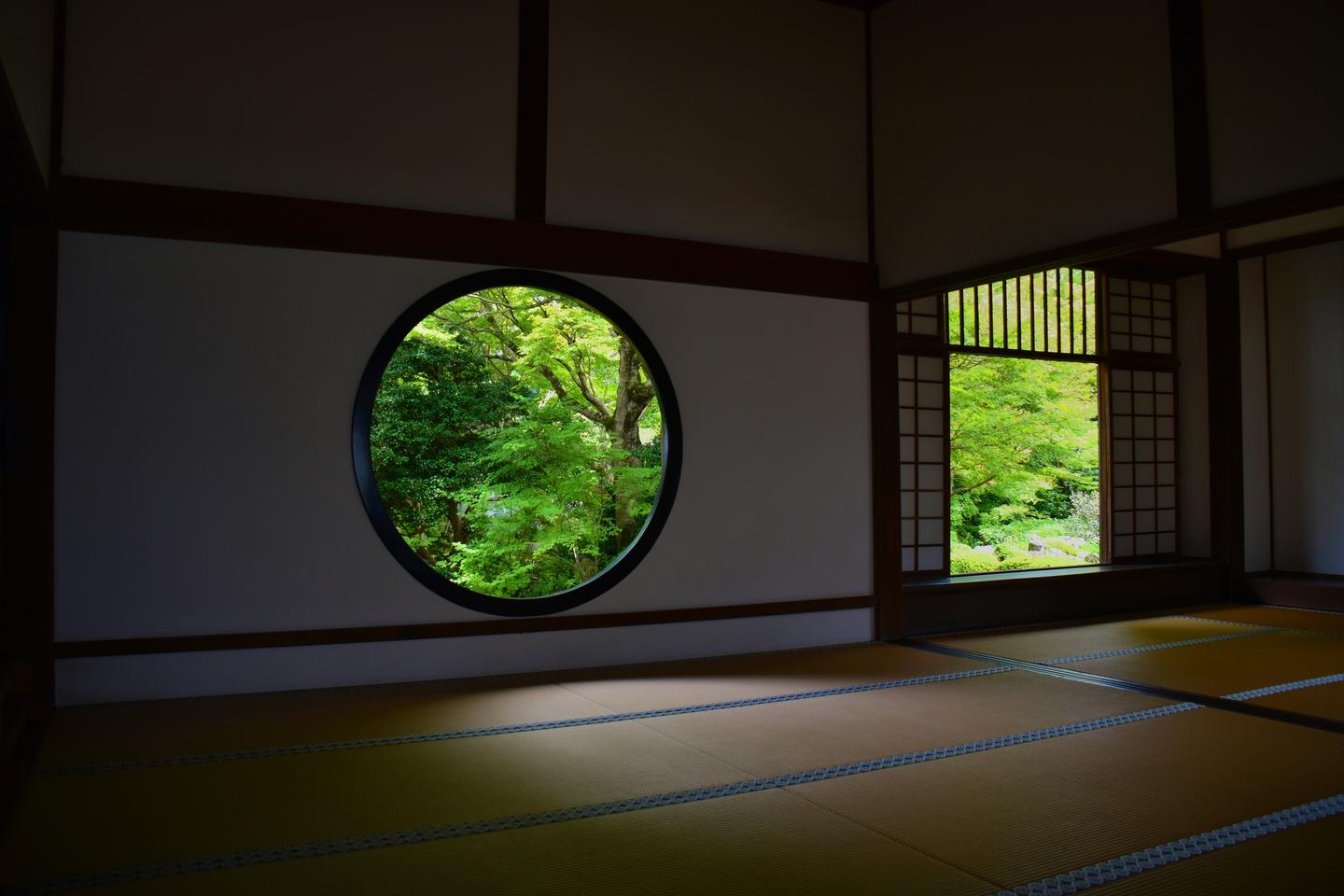
Kyoto's machiya, the narrow wooden townhouses of the old city, are the most Japanese way to have a house of one's own. They are also small, and the best are honest about it. Maana Kamo, a whole house by the Kamo River in Higashiyama, is 83 m² for up to five, with an oversized deep soaking tub. Maana Kyoto, a restored pre-war machiya near Kyoto Station, is 89 m² for up to five, its round tub facing a courtyard garden. Maana Kiyomizu, near Kiyomizu-dera, is three machiya suites side by side, sleeping two, four and two.
For a family of ten in Kyoto, we therefore think in pairs: two houses close together, or a house for the family and a hotel suite for the grandparents nearby, with meals brought together in one place.
THE SMALL INN, TAKEN FOR THE NIGHT
The rarest request is every room of a small ryokan on one night. Some houses of a handful of rooms will consider it, especially outside their busiest season, and the decision is always theirs. When it works, the family has the baths, the garden and the kitchen to itself, and dinner can be laid in one large room. We make the request with the dates, the number of guests and the ages, and propose a villa or a house within a ryokan alongside it, so that the journey never rests on one answer.
LICENCES, TAXES AND THE FINE PRINT
The licence. A whole house in Japan is let either under the Hotel Business Act, which requires a permit and has no limit on days, or under the Private Lodging Business Act of 2018, which requires a notification and limits a house to 180 days a year, with local rules that may restrict it further. We arrange houses that operate under a stated licence and are run by a known operator.
Accommodation tax per person. Kyoto City charges its accommodation tax per person per night according to the room rate. From March 1, 2026, a rate of 50,000 to under 100,000 yen per person per night carries 4,000 yen, rising to 10,000 yen at the top band. For a family of ten the tax is counted ten times.
Staff and service. A rented house may have no one on site at night. A villa within a resort or a house within a ryokan has the full staff a few steps away. For a family with small children or older parents, that difference often decides the choice.
Within Signature, our planning for journeys of 7 to 21 days, we put the houses side by side with the reasons for each, then arrange the stay, the chef, the cars and the luggage. Each is settled with the house or hotel in the simplest way available, usually on the day.
SOURCES AND HOW WE CHECKED
We read the pages below on November 5, 2026. We did not contact any house, hotel, ryokan or public body.
- Jalan Research Center, interview with JNTO's Dubai office (Japanese): extended-family trips, a family of ten and ten million yen, demand for spacious high-end ryokan
- Japan National Tourism Organization, memorandum with Emirates (Japanese): visitors from the GCC in 2025 about double 2019
- Travel Voice, on travellers from the Middle East (Japanese): families, ten days to two weeks, journeys made to order
- Amanemu, official site: Ago Bay, Ise-Shima National Park, two-bedroom villas
- Amanemu, Accommodation: four villas, up to six guests, a private onsen in each
- AYA Niseko, Accommodation: penthouse and residence sizes, private onsen
- Zaborin, Guest villas: fifteen villas with indoor and open-air spring baths
- Gora Kadan, Bettei Suite Shinonome: 254 m², up to six guests, private chef's kitchen, opened August 2025
- Gora Kadan Fuji, Stay: 42 suites and three villa suites
- Maana Kamo: whole house, 83 m², up to five
- Maana Kyoto: whole house, 89 m², up to five
- Maana Kiyomizu: three machiya suites side by side
- Japan Tourism Agency, Minpaku portal (Japanese): the 2018 law, the 180-day limit, permit and notification
- Kyoto City, Accommodation tax (Japanese): rates from March 1, 2026
QUESTIONS FAMILIES ASK
Can we rent a whole house for a large family in Japan?
Yes, though most houses sleep five or six. A large family usually takes two or three houses side by side, or several villas within one resort such as Amanemu or Zaborin.
Can a ryokan be taken for exclusive use?
Some small ryokan will consider a request for every room on one night, and the decision is theirs. We make the request with full details and propose a villa or a ryokan's house-style suite alongside it.
Which villas in Japan have their own hot-spring bath?
Among others, every villa at Amanemu has a private onsen, every villa at Zaborin has indoor and open-air spring baths, and Gora Kadan's Bettei Suite Shinonome has an open-air hot-spring bath.
Is it legal to rent a whole house in Japan?
Yes, under the Hotel Business Act with a permit, or under the 2018 Private Lodging Business Act with a notification and a limit of 180 days a year. We arrange only houses with a stated licence.
How is accommodation tax charged for a large family?
Per person per night. In Kyoto, from March 1, 2026, the tax depends on the rate per person, from 4,000 yen for 50,000 to under 100,000 yen up to 10,000 yen at the top band.
ASK US ABOUT A HOUSE FOR YOUR FAMILY
Tell us how many are travelling, their ages and the places you have in mind. We will propose houses, villas and ryokan suites side by side, with the reasons for each.
Begin planning →We reply within 24 hours, in writing
Some of the restaurants and bars we arrange seat guests only by introduction or membership. We ask on your behalf; the table and the evening are the house's decision. We do not publish their names.