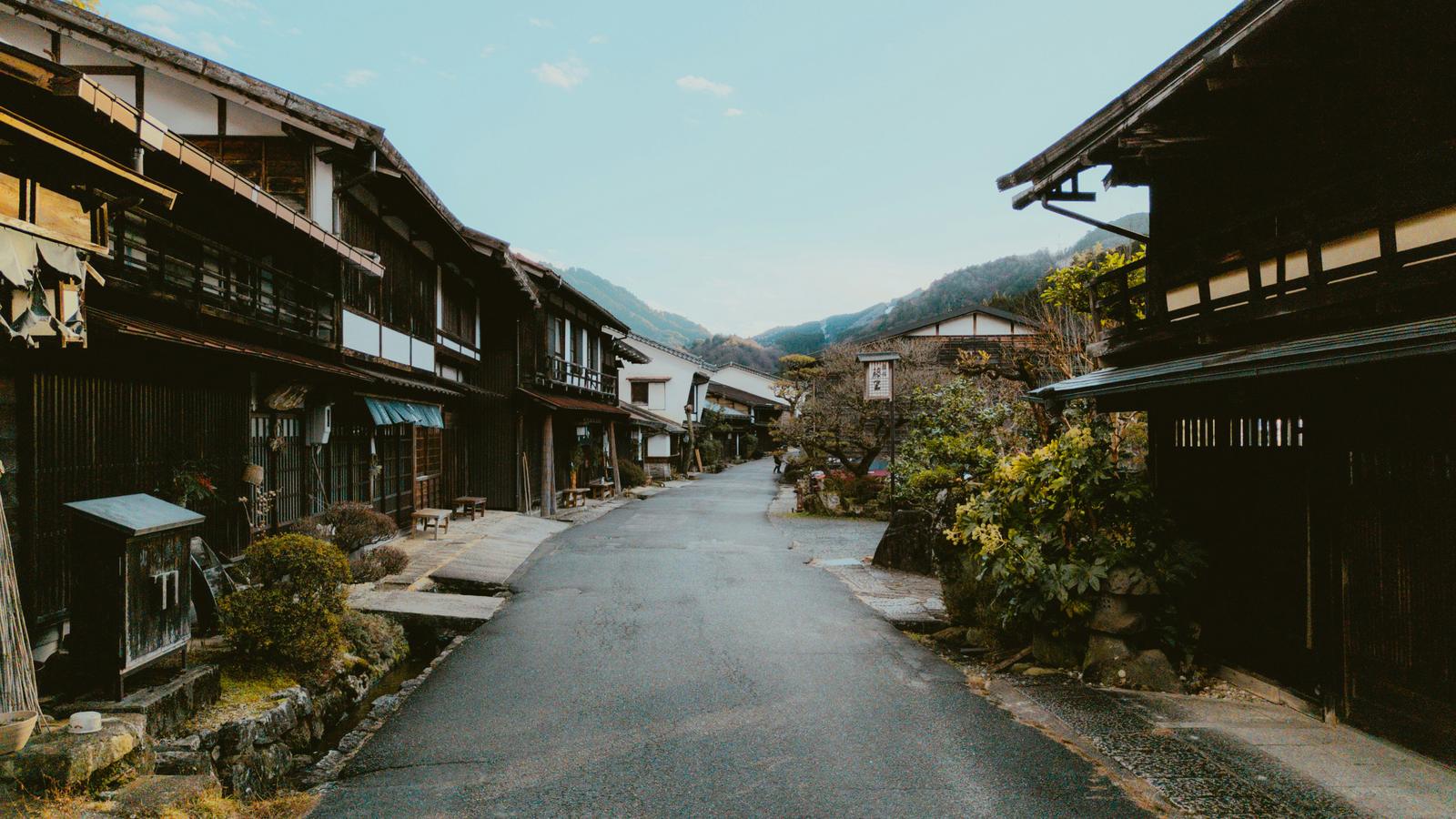
The walk from Magome to Tsumago follows about 9 km of the old Nakasendo highway between two Edo-period post towns, over Magome Pass at 790 metres, and takes two and a half to three hours at an easy pace. From March 20 to November 30, 2026, the tourist offices carry your luggage between the two towns for ¥1,000 a piece, so you walk with a day bag and find your cases waiting at the other end. Walk it in the morning: the Magome tourism association asks walkers to set off by 15:00 in summer and 14:00 in winter, because there are no lights on the trail.
This is how we plan the day for guests: which direction to walk, how to reach the trail from Tokyo, Kyoto or Takayama, what the luggage service and buses cost, and where to sleep. We checked every fare, timetable and rule on the official pages of the two tourism associations, Nagiso Town, the bus companies and JR Central on October 14, 2026. The sources are listed at the end.
Key points
- The trail is about 9 km and takes 2.5 to 3 hours. The highest point, Magome Pass, is 790 metres, on the border of Gifu and Nagano.
- Luggage moves between Tsumago and Magome for ¥1,000 a piece from March 20 to November 30, 2026. Hand it in between 8:30 and 11:30 and collect it between 13:00 and 17:00.
- Start from Magome. The climb to the pass is short and steep on the Magome side, and the long descent to Tsumago is gentle.
- Nakatsugawa station to Magome is 25 minutes by bus, ¥800. From Tsumago, the local bus reaches Nagiso station in 9 minutes.
- From April to November there is one bus a day from Takayama and Gero to Magome, arriving at 10:45, and one back from Tsumago at 15:00. It is the neatest way to walk the trail between Takayama and Kyoto.
THE TRAIL AT A GLANCE
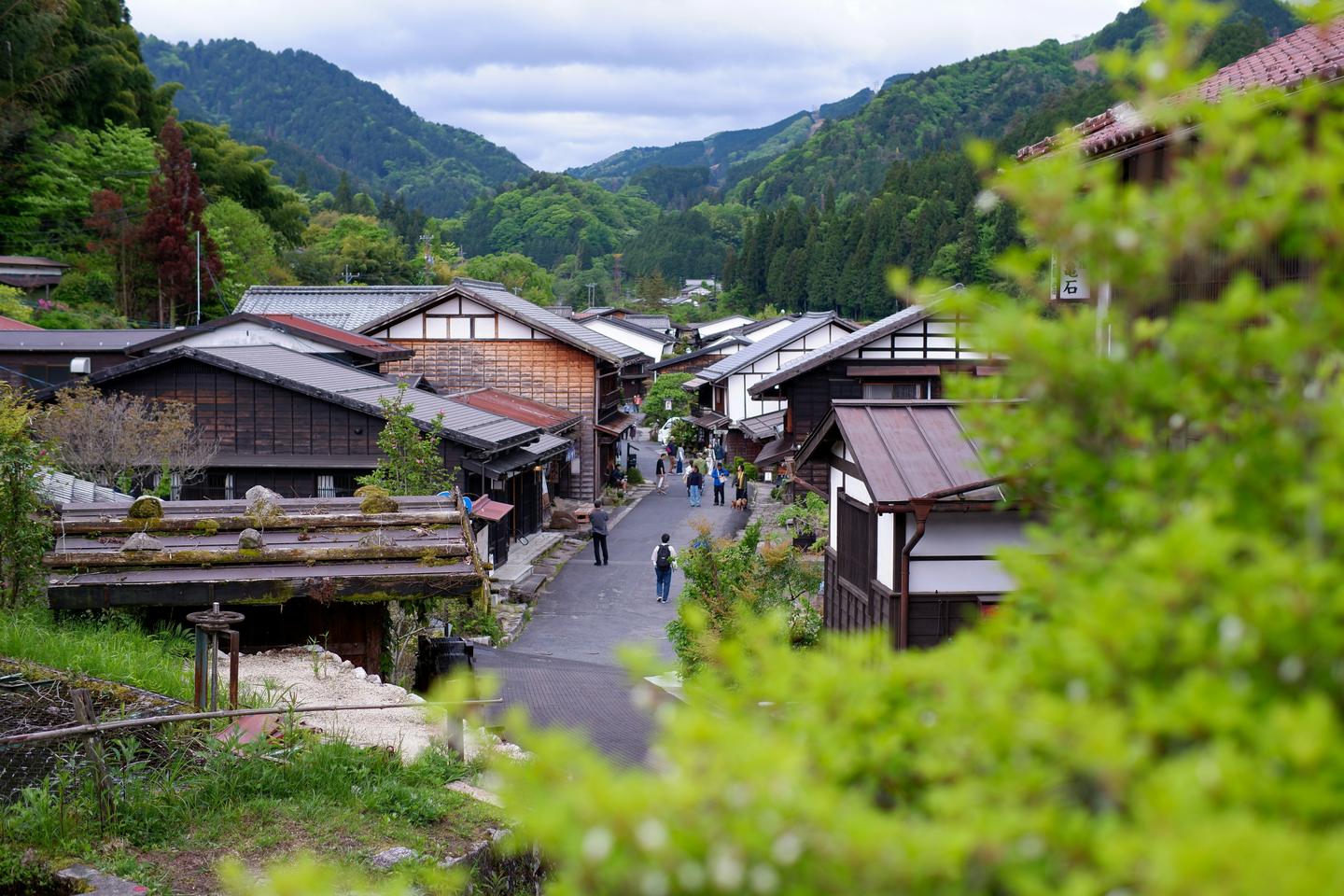
The Nakasendo joined Edo and Kyoto through the mountains, and where it runs through the deep Kiso Valley it was also called the Kiso Kaido. Tsumago was the 42nd of its 69 post towns counted from Edo. The stretch between Magome, in Nakatsugawa city in Gifu, and Tsumago, in Nagiso town in Nagano, keeps old stone paving, forest, two waterfalls, hamlets and a rest house from the middle of the Edo period. Tsumago's preservation project began in August 1968, the town was designated a preservation district for groups of traditional buildings in 1976, and its residents still keep the principle of not selling, not renting out and not pulling down the old houses. In both towns cars are kept out of the old street during the day.
| Item | What the official pages say |
|---|---|
| Distance | About 9 km, Magome to Magome Pass to Tsumago |
| Walking time | 2.5 to 3 hours |
| Highest point | Magome Pass, 790 m, on the Gifu and Nagano border |
| Shorter version | Magome Pass down to Tsumago only, all downhill, about 1.5 hours |
| Latest start | 15:00 in summer, 14:00 in winter, as there are no lights on the trail |
| Rest house | Ichikokutochi tateba teahouse, a mid-Edo building, free to rest in |
| Cars in the old streets | Not allowed from 10:00 to 16:00 in either town |
| Not suitable for | Wheelchairs and pushchairs; children aged 3 and under should be carried |
WHICH DIRECTION TO WALK
Both tourism associations describe the route from Magome to Tsumago, and that is the direction we recommend. According to the Tsumago association, the Magome side of the pass is a short, steep slope and the Tsumago side a long, gentle one. Starting in Magome, the climbing is over early, while you are fresh, and the rest of the walk is a long, easy descent. The association's shorter course is exactly that descent on its own, from the pass to Tsumago, about 1.5 hours.
Arriving in Tsumago is the better ending. In the late afternoon, once the day visitors have left, its street of wooden inns is at its quietest. If you stay the night in Tsumago, the walk becomes the way you arrive, as travellers on the old road once did.
The one case for walking the other way is the bus timetable from Takayama, described below, which also starts in Magome. For almost everyone, Magome first is simply easier.
THE WALK SECTION BY SECTION
Magome to Magome Pass
The walk begins in Magome's old street, which climbs through the town between inns and shops. Above the town, at Magome Kami-jinba, there is a wide view across to Mount Ena. The path then climbs the short, steep side of the pass, through the hamlet of Magome Toge, to Magome Pass itself, 790 metres, on the border of Gifu and Nagano.
Magome Pass to Ichikokutochi
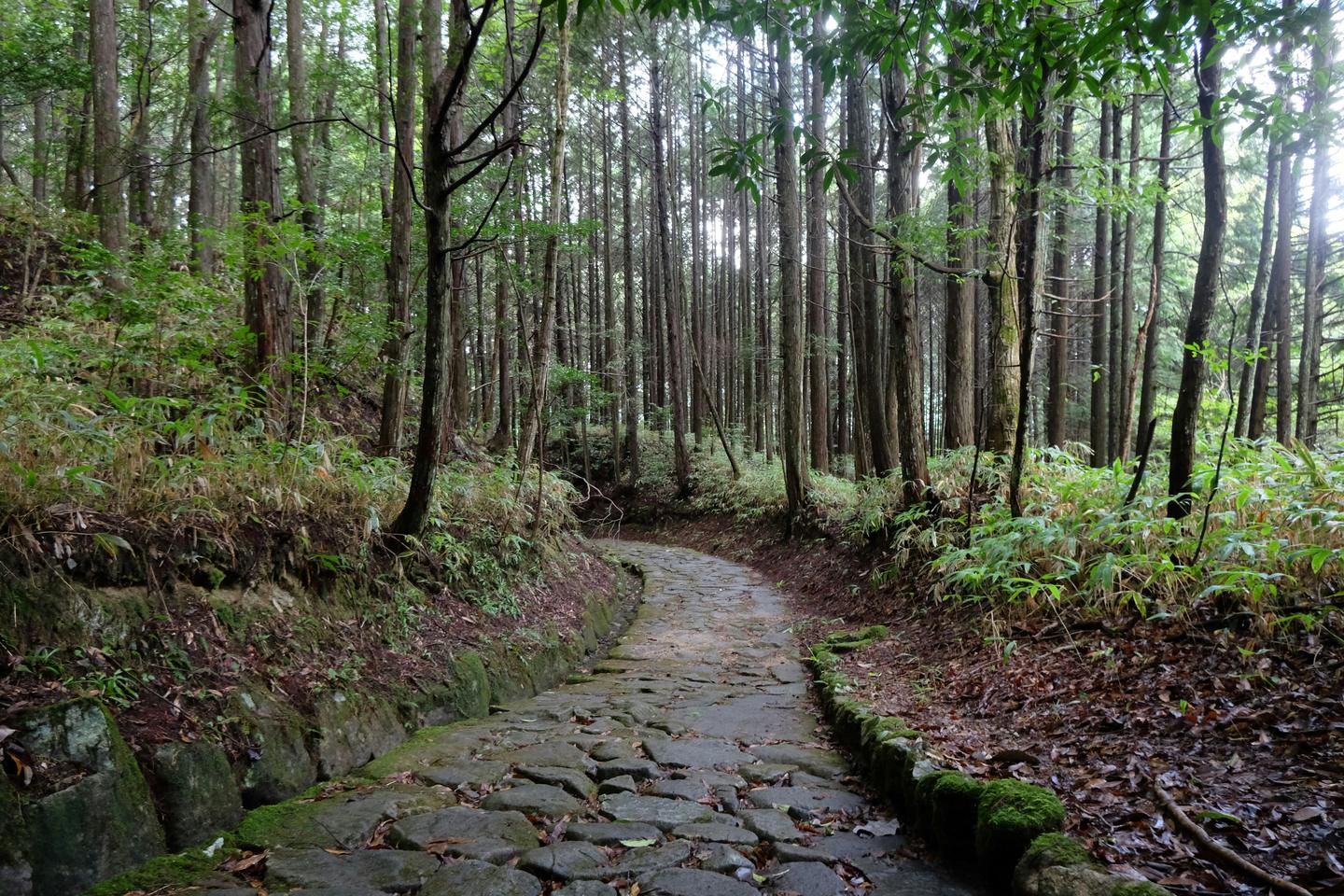
From the pass the path begins its long descent through the forest. The Ichikokutochi tateba teahouse, a mid-Edo building, is free to sit in and rest. Plan your break here: there are few places to buy anything along the trail, and the Magome association asks walkers to carry water or buy it where they can.
Ichikokutochi to Otsumago and Tsumago
Further down are the Otaki and Medaki waterfalls, which appear in the novel Musashi, and several stretches of old stone paving. The path passes through Otsumago, with the Fujiwara house, a prefectural treasure, on the hill above, and the hamlet of Shinmei, before it reaches Tsumago. The stone paving becomes slippery after rain, and the Tsumago association warns walkers to watch their footing on it.
THE LUGGAGE SERVICE
This is what makes the walk easy with a full trip's luggage. The tourist information offices in Tsumago and Magome carry bags between the two towns, through Otsumago, on the day.
| Item | Published terms |
|---|---|
| Season | March 20 to November 30, 2026 |
| Price | ¥1,000 per piece |
| Hand in | 8:30 to 11:30 |
| Collect | 13:00 to 17:00 |
| Outside these hours | A special run at ¥4,500 for up to three pieces, plus ¥1,000 for each piece over three, between 8:30 and 17:00 |
Two details matter. First, the hand-in window closes at 11:30, which suits a morning start and does not suit a late arrival from Tokyo. Second, the service runs only in season. Outside it, from December to mid-March, the bags need another plan: a car that carries them round by road, or sending them ahead by courier to your next hotel and walking with an overnight bag. For guests, we decide this when we plan the day and arrange it in advance.
HOW TO GET THERE
Magome and Tsumago sit on either side of the pass, each at the end of its own bus route from a station on the JR Chuo Line. Limited Express Shinano trains run from Nagoya toward Nagano roughly once an hour; on the weekday timetable JR Central published for March 2026, the first leaves Nagoya at 7:00 and the last at 20:40. Nagoya is on the Tokaido Shinkansen between Tokyo and Kyoto, so the trail sits between the two cities.
| Leg | Time and fare |
|---|---|
| Tokyo to Nagiso station | About 2 hours 40 minutes, Nozomi to Nagoya and Limited Express Shinano |
| Shin-Osaka to Nagiso station | About 1 hour 55 minutes, the same way through Nagoya |
| Nakatsugawa station to Magome | Kita-Ena Kotsu bus, 25 minutes, ¥800; on weekdays 12 buses from 7:42 to 18:30 |
| Magome to Tsumago by bus | Nagiso town bus, 26 minutes; four buses a day, five in Golden Week and the summer holidays |
| Tsumago to Nagiso station | Nagiso town bus, 9 minutes, or about 10 minutes by taxi |
| Takayama or Gero to Magome | Nohi Bus, one a day from April 1 to November 30, 2026; Takayama 8:00, Gero 9:12, Magome 10:45; ¥5,000 from Takayama, ¥4,000 from Gero |
| Tsumago or Magome back to Gero and Takayama | Nohi Bus, Tsumago 15:00, Magome 15:25, Gero 16:50, Takayama 18:00 |
The usual plan is to come in at Nakatsugawa, take the bus to Magome, walk, and leave from Nagiso. Both stations are on the Chuo Line, so the day runs in one direction without going back on yourself.
The Nohi Bus route is less well known. It links the Hida mountains to the Kiso Valley in one morning, and it fits a route that goes from Kanazawa or Shirakawa-go to Takayama and on to Kyoto, like our sample itinerary Japan End to End. Leave Takayama at 8:00, walk from Magome after 10:45, and you are in Tsumago in time for a late lunch. The bus cannot be used for the Magome to Tsumago section alone, and passengers boarding anywhere other than Takayama must buy a web ticket in advance.
A DAY BETWEEN TOKYO AND KYOTO
Here is how we usually build the walk into a trip moving between Tokyo and Kyoto. It takes one day and one night.
Day one
- Morning Shinkansen from Tokyo to Nagoya, then Limited Express Shinano to Nakatsugawa. Send the main luggage ahead to Kyoto the day before and travel with an overnight bag.
- Bus or car from Nakatsugawa station to Magome, 25 minutes by bus. Hand in any remaining bags at Magome by 11:30.
- Walk to Tsumago with a picnic or a stop at the pass. Arrive in the early afternoon.
- Collect the bags in Tsumago between 13:00 and 17:00. Walk the town in the late afternoon and stay the night.
Day two
- A slow breakfast and the town before the first buses arrive. Cars are kept out of the street from 10:00, so the early morning is quiet.
- Bus or taxi to Nagiso station, Limited Express Shinano to Nagoya, and the Shinkansen to Kyoto, arriving in the early afternoon.
For guests who prefer not to stay in the valley, the walk works as a long day from Nagoya with a car waiting at Tsumago. It is a fuller day, and it gives up the evening in Tsumago, which is the part most people remember.
WHERE TO STAY
The inns in Tsumago and Magome are the reason to stay: wooden buildings on the old street, dinner and breakfast served at fixed times, and a town that empties in the evening. They are traditional lodgings, and comfort is simple compared with a luxury ryokan. Shared baths, fixed meal hours and thin walls are part of the experience. For guests who want both, we usually suggest one night in the post town and the next in a ryokan with a private bath.
The closest choice for that second night is Gero Onsen, on the same Nohi Bus route and on the JR Takayama Line. Gero's larger ryokan include rooms with their own open-air baths; Yunoshimakan, for example, has annex rooms with open-air baths and runs its own shuttle bus. Rates for both the post-town inns and the Gero ryokan are not published in a form we can quote here, and they change by date and room, so we quote them when we hold your dates. How to choose between the kinds of ryokan is in how to choose a ryokan.
WHAT TO BRING AND WHAT TO KNOW
- Shoes with grip. Parts of the path are stone paving, which is slippery after rain.
- A bear bell. The Tsumago association notes that bears have been seen near villages and recommends carrying a bell. Bells can be rented at the Tsumago tourist office for a deposit of ¥2,100, of which ¥2,000 is returned, or bought for ¥2,000. The Magome office rents and sells them too.
- Water and a snack. There are few places to buy anything on the trail.
- A light rain jacket. There is nowhere to shelter on the way.
- Insect repellent in summer, and a warm layer in spring and autumn, when the temperature changes with the season and the altitude.
- Start before 14:00 in winter and before 15:00 in summer.
- Stay on the marked path. The signs are clear, and the associations ask walkers to follow them.
Autumn, from late October into November, is the most beautiful time on the trail, and the luggage service runs until November 30. Spring, from late March, is quieter. The summer holidays and Golden Week bring more walkers and the extra bus.
A GUIDE OR A DRIVER
The trail is well signed, and most guests walk it without a guide. A guide adds the history of the road, the inn system and the post towns, which are easy to walk past without noticing, and is worth having if that interests you. How guides are priced is in what a private guide in Japan costs.
A car with a driver is more useful. It replaces the two bus connections, meets you at Nakatsugawa or Nagoya, carries the luggage in winter when the service does not run, and waits at Tsumago. Hire cars in this area are priced by the hour and by vehicle, and we quote them for your dates. Moving between cities in comfort is covered in how we arrange transport.
HOW STAYGO PLANS IT
We plan the walk as one part of a whole journey, usually on the day between Tokyo and Kyoto or between Takayama and Kyoto. We choose the direction and the day, send the main luggage ahead, arrange the bags on the trail, secure the inn in your names and, if you want one, a car and a guide. You pay each inn, driver and guide directly at their own rates, with no commission or markup from us. Our Signature plan is USD 3,500 for your group for a trip of 7 to 14 days, and covers the whole route, of which this walk is one day.
SOURCES AND HOW WE CHECKED
We read the official pages of the Tsumago and Magome tourism associations, Nagiso Town, Kita-Ena Kotsu, Nohi Bus and JR Central on October 14, 2026. We did not contact them. Fares and timetables are those published for 2026 and can change; the luggage service and the Nohi Bus route run only in their seasons. We did not use figures from guidebooks, booking sites or blogs.
- Tsumago Tourism Association, walking: distance, walking time, Magome Pass, luggage service, bear bells, rest house, stone paving
- Tsumago Tourism Association, access: train times from Tokyo and Shin-Osaka, taxi and walking times from Nagiso, traffic restrictions
- Magome Tourism Association, hiking: distance, latest start times, what to carry, children, wheelchairs and pushchairs
- Magome Tourism Association, access: bus from Nakatsugawa and traffic restrictions in Magome
- Kita-Ena Kotsu, timetables and fares: Magome line timetable (October 1, 2025) and fare table (March 8, 2025)
- Nagiso Town, community bus: Magome line timetable and fares from April 1, 2026
- Nohi Bus, Magome and Tsumago line: season, timetable, fares and booking rule
- JR Central, Chuo Line departures from Nagoya: Limited Express Shinano departures, March 2026
- Yunoshimakan: rooms with open-air baths and shuttle bus
QUESTIONS ABOUT THE WALK
How long does it take to walk from Magome to Tsumago?
The Tsumago tourism association gives 2.5 to 3 hours for the 9 km between the two towns. Allow an extra half hour for the rest house and the towns at each end. The latest start is 15:00 in summer and 14:00 in winter.
Can our luggage be sent from Magome to Tsumago?
Yes, from March 20 to November 30, 2026. The tourist offices carry bags between the two towns for ¥1,000 a piece. Hand them in between 8:30 and 11:30 and collect them between 13:00 and 17:00.
Is it better to walk from Magome to Tsumago or the other way?
Magome to Tsumago. The climb from Magome to the pass is short and steep, the long descent to Tsumago is gentle, and Tsumago is the quieter town to arrive in and stay the night.
How do we get to Magome from Kyoto or Tokyo?
Take the Shinkansen to Nagoya and Limited Express Shinano to Nakatsugawa, then the Kita-Ena Kotsu bus to Magome, 25 minutes for ¥800. Tsumago's tourism association gives about 2 hours 40 minutes from Tokyo to nearby Nagiso station and about 1 hour 55 minutes from Shin-Osaka.
Is the Nakasendo walk hard?
It is a country walk on paths, quiet roads and stone paving, with one short, steep climb to the pass at 790 metres. Good shoes are enough. The associations ask that wheelchairs and pushchairs are not taken on the trail and that children aged 3 and under are carried.
WALK THE OLD ROAD AS PART OF YOUR JOURNEY
Tell us your dates and the route you have in mind. We will place the walk on the right day, arrange the luggage and the inn, and show you how it fits between Tokyo, Kyoto and the mountains.
Begin planning →