Australian travellers already know Japan well. Japan's tourism agency found that in 2025 they stayed an average of 13.2 nights on a leisure trip, and that more than four in ten had been before. Yet the Pacific coast of Tohoku barely appears in their journeys. In the same survey, about one leisure traveller from Australia in a hundred went to Miyagi, and fewer still to Iwate. That may change. Lonely Planet put Tohoku on its Best in Travel 2027 list and pointed to one way of seeing it: on foot, along the Michinoku Coastal Trail.
The trail runs 1,025 km from Hachinohe in Aomori to Soma in Fukushima, through four prefectures and 29 cities, towns and villages, and it opened along its whole length in June 2019. Few people walk all of it. This article is about walking the best of it well: a section a day, with a car at each end, your bags already at the inn, and a room worth returning to. We read the pages of the Ministry of the Environment, the Ministry of Land, Infrastructure, Transport and Tourism, the Forestry Agency, the trail association, Hachinohe's tourism body and two hotels on November 5, 2026, and contacted none of them; the sources are listed at the end. For the inland side of Tohoku, the onsen villages and the mountain temples, see Tohoku: Japan's Quieter North.
Key points
- The Michinoku Coastal Trail runs 1,025 km along the Pacific coast of Tohoku, from Kabushima in Hachinohe to Soma, and has been open end to end since June 2019.
- The Ministry of the Environment notes that many walkers head north in spring and south in autumn, and that some areas have snow from December to April.
- Five sections show the coast at its best: the Tanesashi grasslands, the 200-metre cliffs of Kitayamazaki, the white rocks of Jodogahama, the bay at Minamisanriku and the islands off Matsushima.
- Hachinohe is about 2 hours 45 minutes from Tokyo by Shinkansen, so the walk can begin on the day you leave Tokyo.
- Shops and rooms are scarce along parts of the route. Comfort here comes from a car that meets you, bags that travel ahead and the best room within reach of each day's end.
ASK US ABOUT THE MICHINOKU COAST →
A TRAIL BORN FROM THE COAST
The trail follows the Sanriku coast, the ria shore of deep bays and headlands that was struck by the tsunami of March 2011. Much of the trail lies within Sanriku Fukko National Park, whose name means the Sanriku Reconstruction National Park. The park itself is older than its name: it was designated as Rikuchu Kaigan National Park on May 2, 1955, and took its present name on May 24, 2013, two years after the disaster.
That history sits lightly on the path. The Japan Tourism Agency's description of the trail names meeting the people of the coast as one of its great pleasures, and many walkers remember the fishing harbours, the oyster rafts and the conversations as clearly as the cliffs. Miyagi alone produced 14 percent of Japan's farmed oysters in 2023, second only to Hiroshima, and the rafts are part of the view for much of the southern half.
WHEN TO WALK
The ministry notes that many walkers travel north in spring and south in autumn, following the season along the coast, and that from December to April some areas have snow. For a traveller from Australia the calendar is turned over: Japan's spring is your autumn, and Japan's autumn, from late September into November, is your spring. Arrivals from Australia in 2025 show the pattern, with about 96,000 visitors in each of September and October against about 50,000 in July and 41,000 in August.
Autumn suits this coast well. The air is clear, the grass on the Tanesashi headlands turns gold, and the inns are quieter than in the summer school holidays. We plan the sections in daylight, which grows short by November, and keep a spare day for wind or rain.
THE NORTHERN END AT TANESASHI
The trail begins at Kabushima in Hachinohe. From there the Hachinohe section follows the Tanesashi Coast for about 15 km, past rocks carved by the sea, sandy beaches, pine woods and open grassland above the shore. It is one of the gentlest stretches of the whole route and a fine first day.
Hachinohe is about 2 hours 45 minutes from Tokyo by Shinkansen, and the JR Hachinohe Line reaches Tanesashi Kaigan in about 35 minutes. We prefer a car: it meets you at the station, sets you down at Kabushima, and waits at the far end of the lawns with water and a dry layer.
KITAYAMAZAKI AND JODOGAHAMA
In Tanohata, in Iwate, the coast rises. The Forestry Agency describes Kitayamazaki as a wall of cliffs about 200 metres high that runs for 8 km, sometimes called the Alps of the sea, and notes that the Kitayamazaki nature trail drops more than 700 steps from the observation deck to the water. It is a walk for strong legs, and the climb back is the part to plan for. Two observation decks give the long view for anyone who prefers to keep the day shorter.
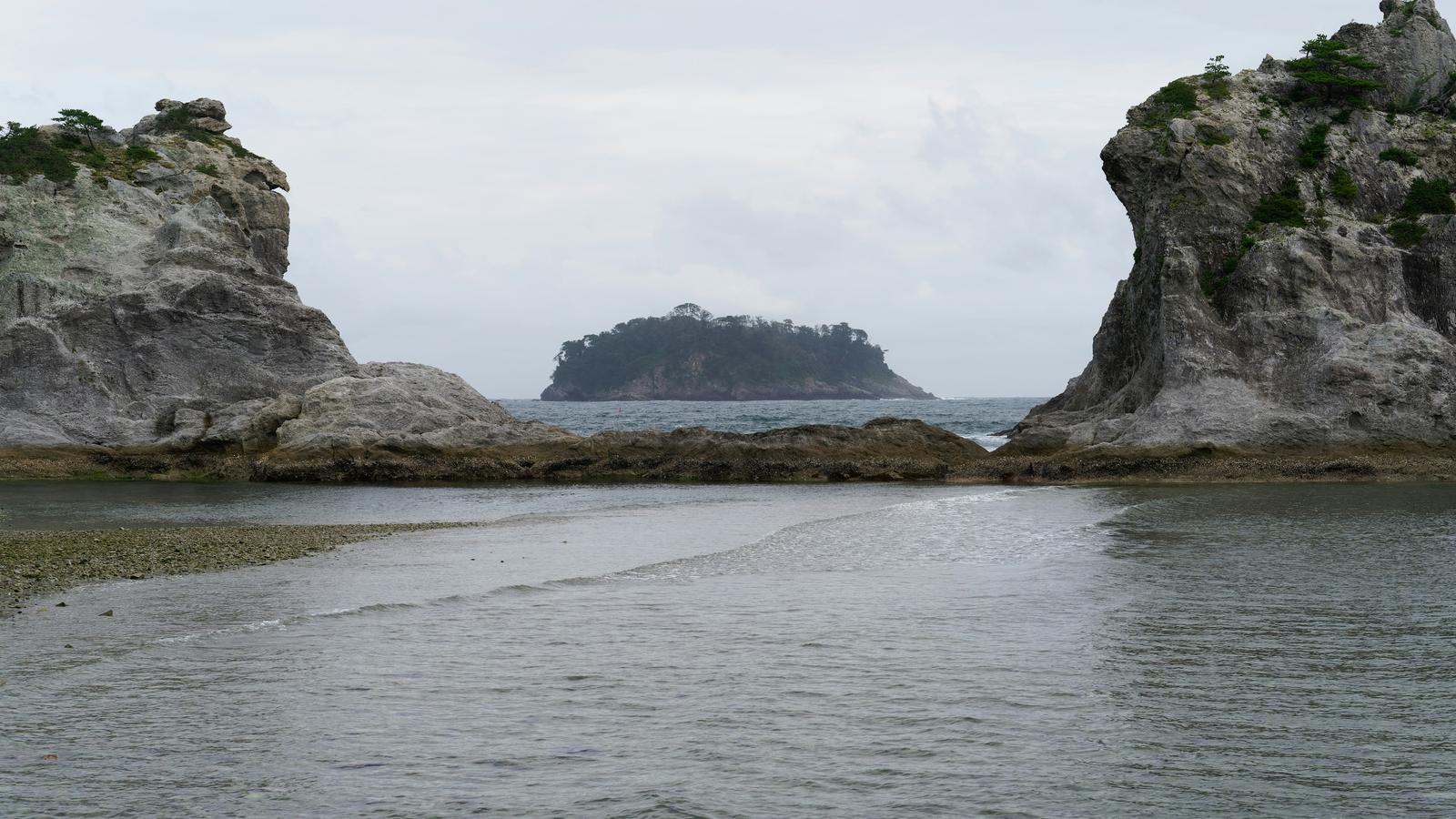
Further south, at Miyako, the pale rock stacks of Jodogahama stand in a calm bay with pines on their tops. It is a natural place to end a section, with the car waiting above the shore.
MINAMISANRIKU AND THE ISLANDS OF MATSUSHIMA
In Miyagi, the trail association suggests a two-night walk in Minamisanriku through old mountain-worship sites and farmland above Shizugawa Bay. Minamisanriku Hotel Kanyo stands on the bay, with an open-air bath that faces the water, and its staff run what they call a storytelling bus, a guided drive through the town. We think it is a good way to understand this part of the coast before walking it.
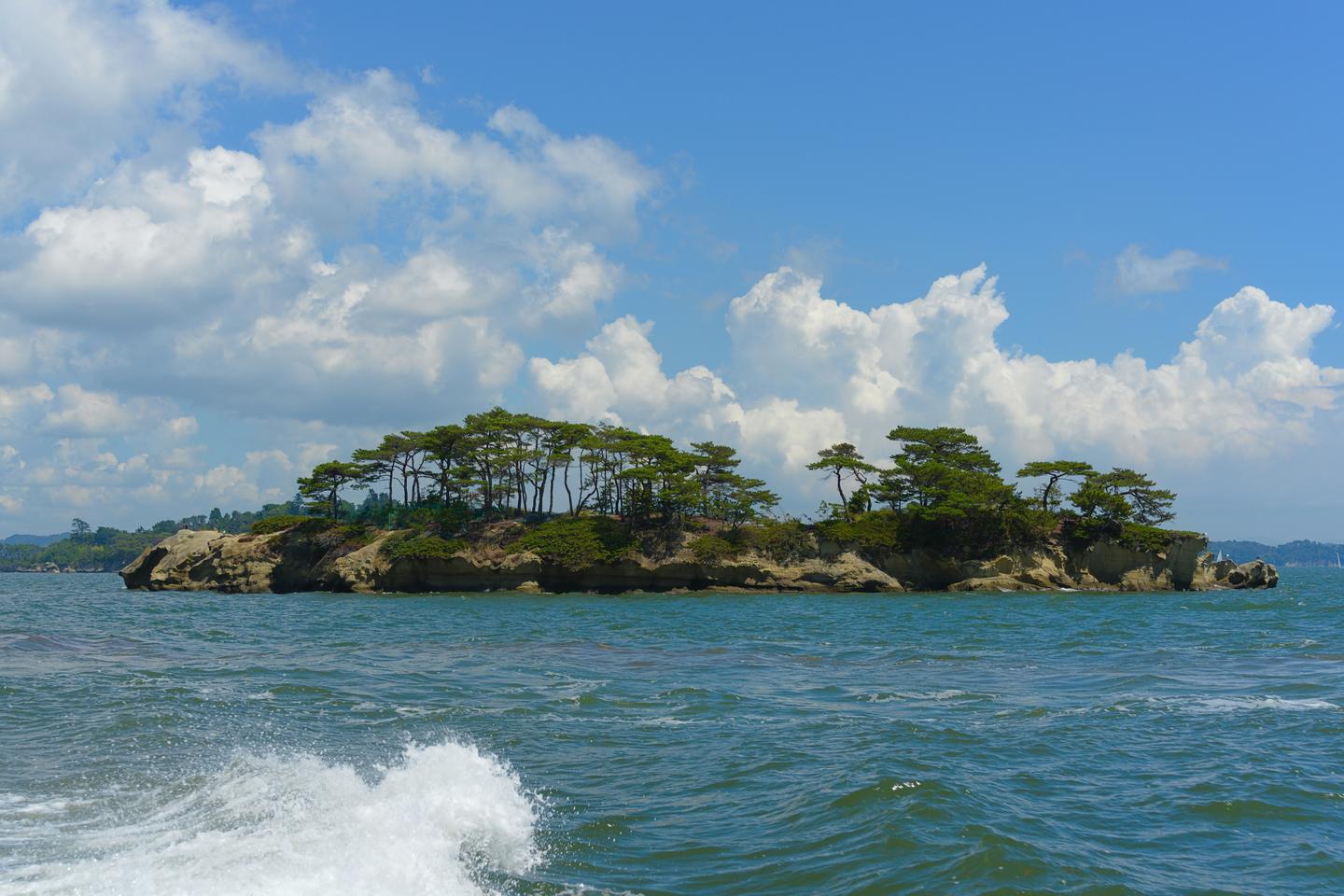
Near Sendai, the association's day course to the Urato Islands combines short ferry crossings with walking on islands where oyster farming and small fishing villages continue. The islands lie off Matsushima, whose pine-topped islets have been admired for centuries. In Matsushima, Matsushima Ichinobo faces the bay, with an open-air bath on its top floor and a garden spa with a sauna. It makes a comfortable last night before the short drive back to Sendai and the Shinkansen to Tokyo.
WALKING IN COMFORT
The trail was laid out for walkers who carry everything and camp in designated sites. We arrange it the other way round. Each morning a car takes you to the start of the day's section; each afternoon it meets you at the end. Your bags travel by car to the next inn. Days are kept between about 8 and 15 km on the easier stretches, shorter where the path climbs, so that there is time for lunch in a harbour town and a bath before dinner.
The ministry warns that shops are very scarce on some sections and that mobile signal is not everywhere, so we pack lunch and water with the inn the night before and carry a printed map as well as the trail's GPS data. Where a guide adds to the day, we arrange one who knows the section; the trail association's Natori Trail Center at Yuriage, south of Sendai, is the place to ask about the latest detours. Within Signature, our planning for journeys of 7 to 21 days, the coast usually takes four to six nights, often after Tokyo and before Kyoto. For bags that travel between hotels on the rest of the trip, see Luggage Forwarding in Japan.
SOURCES AND HOW WE CHECKED
We read the pages below on November 5, 2026. Travel times are rounded. We did not contact any ministry, hotel, association or other body. The Australian figures are for leisure travellers.
- Japan Tourism Agency multilingual database, Michinoku Coastal Trail: 1,025 km, Kabushima to Soma, about 15 km in Hachinohe along the Tanesashi Coast
- Ministry of the Environment, Michinoku Coastal Trail (Japanese): four prefectures and 29 municipalities
- Ministry of the Environment, trail FAQ (Japanese): whole route open June 2019, north in spring and south in autumn, snow December to April, scarce shops, camping only at designated sites
- Ministry of the Environment, Sanriku Fukko National Park overview (Japanese): designated 1955, renamed May 24, 2013
- Michinoku Coastal Trail Association: the trail's NPO, Natori Trail Center
- Michinoku Coastal Trail Association, model courses (Japanese): Minamisanriku two-night course, Urato Islands day course
- Forestry Agency, Tohoku office, Kitayamazaki (Japanese): cliffs about 200 m high for 8 km, more than 700 steps
- VISIT Hachinohe, access: about 2 hours 45 minutes from Tokyo, about 35 minutes to Tanesashi Coast
- Japan Travel, September 23, 2026: Tohoku and the Michinoku Coastal Trail on Lonely Planet's Best in Travel 2027
- Lonely Planet, Best in Travel 2027: the list
- Japan Tourism Agency, Consumption Trends Survey 2025 tables (Japanese): Australian leisure travellers, average nights, repeat visits and prefecture visit rates
- JNTO, visitor arrivals by month (Japanese): arrivals from Australia in 2025
- Fisheries Agency, oyster farming (Japanese): Miyagi 14 percent of farmed oyster production in 2023
- Minamisanriku Hotel Kanyo (Japanese): Shizugawa Bay, open-air bath, storytelling bus
- Matsushima Ichinobo (Japanese): top-floor open-air bath over the bay, garden spa
QUESTIONS TRAVELLERS ASK
How long is the Michinoku Coastal Trail?
About 1,025 km, from Kabushima in Hachinohe, Aomori, to Soma in Fukushima. It has been open along its whole length since June 2019.
Do I have to walk the whole trail?
No. We usually plan four or five of the finest sections over four to six nights, with a car between them and your bags sent ahead.
When is the best time to walk it?
Spring and autumn. Many walkers head north in spring and south in autumn, and some areas have snow from December to April.
How do we get to the start from Tokyo?
Hachinohe is about 2 hours 45 minutes from Tokyo by Shinkansen. From there the Tanesashi Coast is about 35 minutes by the JR Hachinohe Line, or a short drive.
Is the Kitayamazaki section difficult?
The path down to the sea is steep, with more than 700 steps from the observation deck. The observation decks themselves give the view without the climb.
ASK US TO SHAPE YOUR WALK ON THE COAST
Tell us when you would like to travel, how far you enjoy walking in a day and who is coming. We will set out the sections, the inns and the days between, with the reasons, so that you can choose the shape of the walk.
Begin planning →We reply within 24 hours, in writing
Some of the restaurants and bars we arrange seat guests only by introduction or membership. We ask on your behalf; the table and the evening are the house's decision. We do not publish their names.