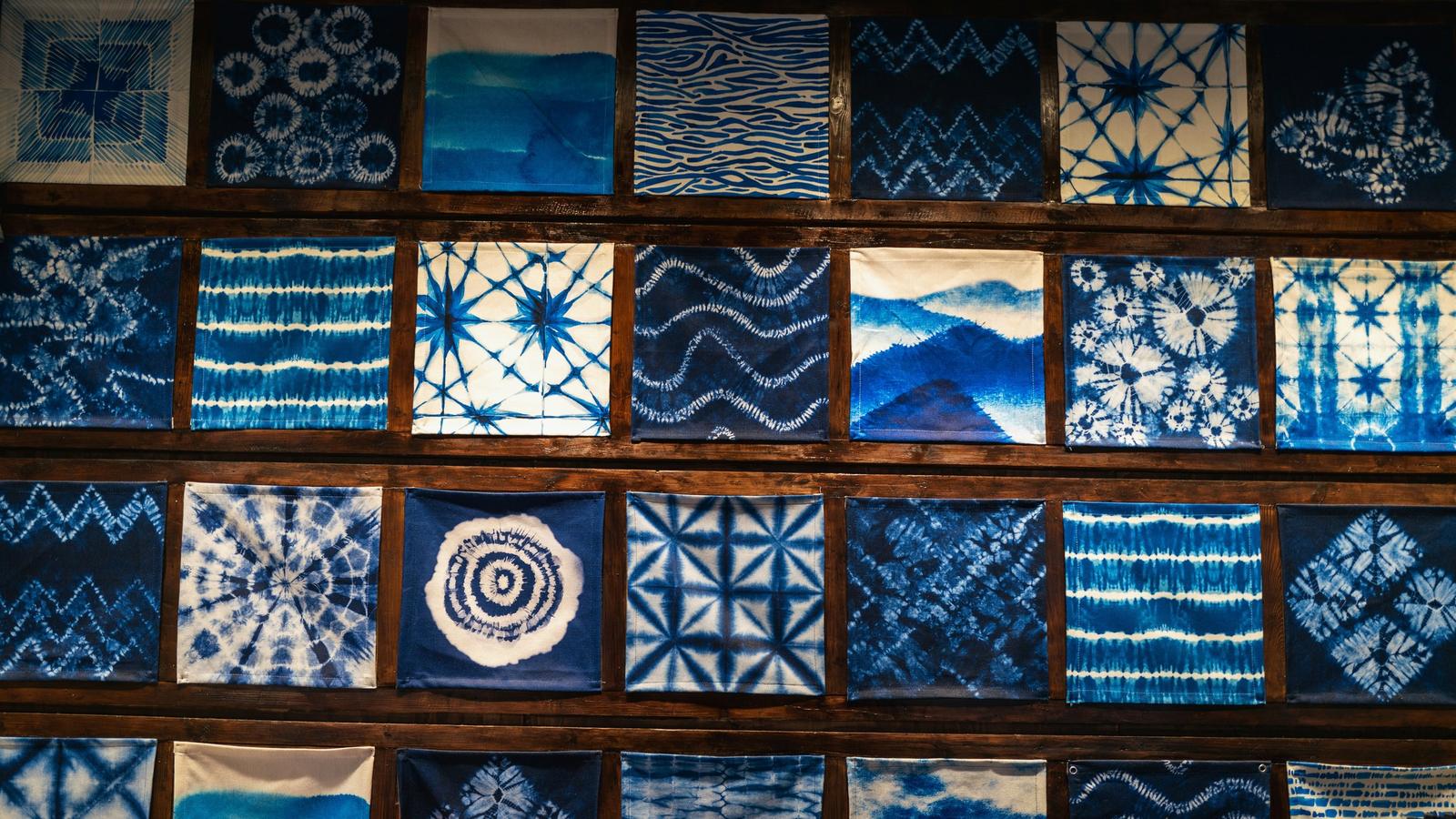
For several centuries much of the blue worn in Japan began on one river plain in Shikoku. Along the lower Yoshino River in Tokushima, craftsmen called aishi turned the leaves of the indigo plant into a fermented dye, sukumo, and merchants shipped it across the country. This is Awa indigo, and the prefecture says Tokushima still makes the majority of Japan's sukumo.
This article is for travellers who would like to see that blue at its source: the merchant house in Aizumi and the workshops of Kamiita that grow the plant, make the dye and dye the cloth. We read the pages of the Agency for Cultural Affairs, Tokushima Prefecture, the town of Aizumi, JNTO, two workshops, a hotel and a Japanese manufacturing magazine on November 5, 2026, and contacted none of them; the sources are listed at the end. Upstream, the same river runs through the gorges of the Iya Valley, and the two make a natural pair.
Key points
- Sukumo is the dye: indigo leaves dried and fermented for about 100 days and finished as the weather turns cold. From seed to dye takes almost a year.
- Nine towns and cities of the Yoshino River basin were recognised together as Japan Heritage in May 2019 for the story of Awa indigo.
- Ai no Yakata in Aizumi is the estate of the Okumura family, great indigo merchants, with indigo dyeing for visitors until 15:30.
- In Kamiita, BUAISOU (founded 2015) and Watanabe's each grow the plant, make their own sukumo and dye their own cloth.
- The finest way in is to dye a piece beside the dyer, or to ask a workshop to make one for you. Each workshop decides what it can offer.
ASK US TO SHAPE YOUR DAYS IN TOKUSHIMA →
THE BLUE OF THE YOSHINO RIVER
The Yoshino River floods often, and left its plain with rich soil and water beneath the ground. The Japan Heritage story for Awa indigo traces the plant here to the end of the Heian period, and the making of indigo dye to the castle town of Shozui in the late Muromachi period. Licensed by the Tokushima domain, its merchants supplied Osaka, Nagoya and Edo.
Tokushima's indigo fields reached about 15,000 hectares at their peak in 1903, before imported and synthetic indigo cut the trade back sharply. In May 2019 the Agency for Cultural Affairs recognised the story "The Home of Indigo, Awa" as Japan Heritage, on a joint application from nine cities and towns along the river, among them Aizumi and Kamiita. The prefecture has made July 24 its Day of Indigo.
SUKUMO AND THE AISHI
Indigo in Tokushima means two crafts. An aishi grows and harvests the plant, separates the leaves from the stems, and ferments the dried leaves into sukumo. A someshi, a dyer, then builds the dye vat from sukumo and lye and dyes the cloth.
The making of sukumo is slow. The prefecture describes heaps of leaves weighing several hundred kilograms to several tons, fermented for about 100 days and turned every five to seven days. The Japan Heritage text calls this bed of leaves the nedoko, and says the sukumo is finished around the first frost. From sowing to finished dye takes almost a year. To dye with it, the dyer adds wood ash lye, sake and wheat bran, and the microorganisms in the vat do the rest; JNTO's magazine notes that under one percent of the world's indigo-dyed goods are made by this natural fermentation.
Autumn and early winter are therefore the weeks when the work you see is the work that makes the dye.
AI NO YAKATA AND THE MERCHANT HOUSES
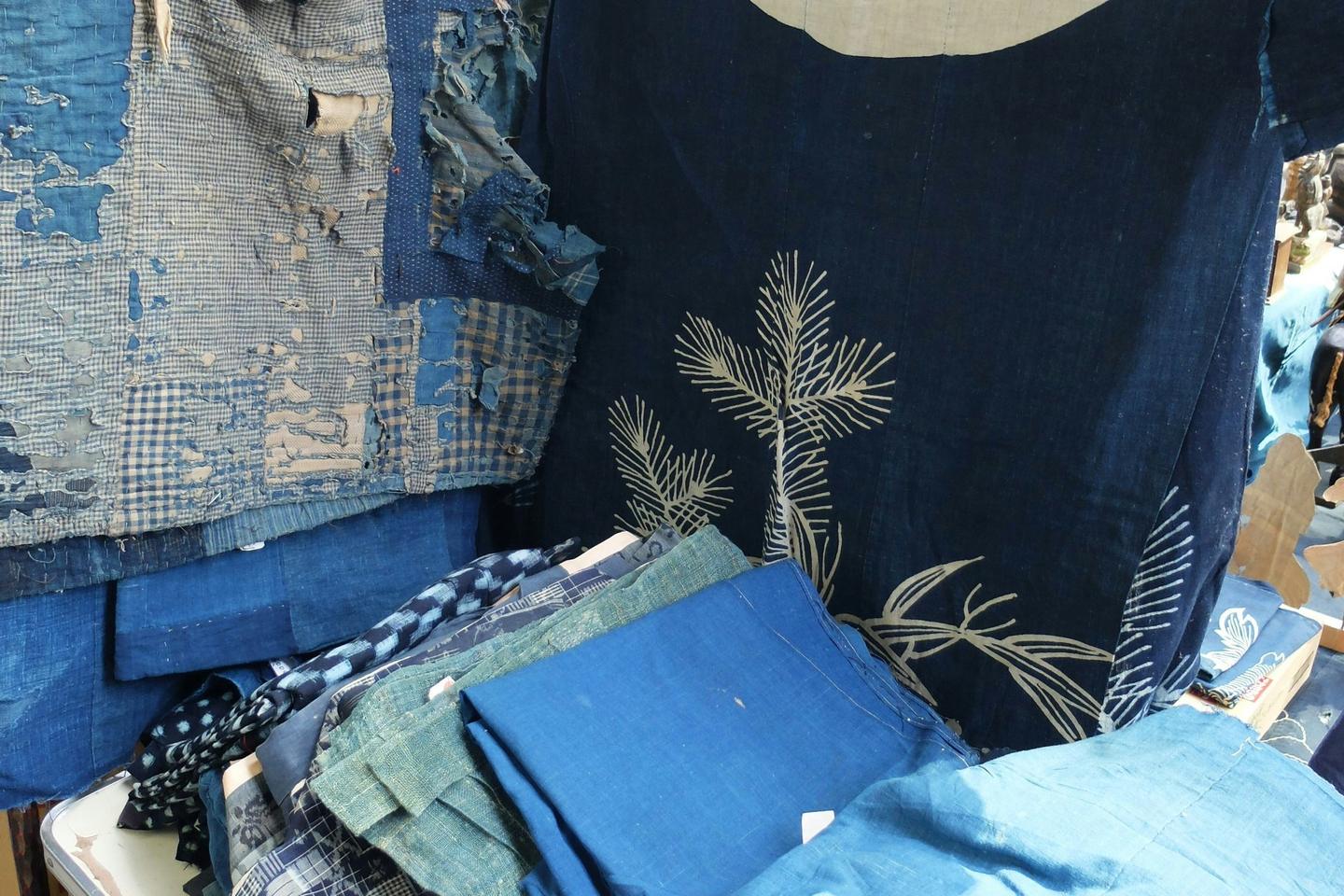
The clearest picture of the indigo fortune is Ai no Yakata, the history museum of the town of Aizumi. It stands in the former estate of the Okumura family, great indigo merchants; thirteen of the estate's buildings were given to the town in 1987 by the eleventh head of the family, together with some 130,000 family documents. It keeps the house, the papers and indigo folk materials designated by the state.
It opens from 9:00 to 17:00 and closes on Tuesdays (on the following day when Tuesday is a holiday), and the indigo dyeing for visitors takes its last guests at 15:30. It is the right first stop, before you meet the people who still do the work. Further up the river, the merchants' town of Wakimachi keeps its udatsu, the raised firewalls of its merchant houses; the Japan Heritage story counts them, with the Awa Odori dance, among the things the indigo trade left behind.
THE WORKSHOPS OF KAMIITA
Kamiita, a little upriver from Aizumi, is where the craft is most alive. BUAISOU was founded there in 2015 and does every step itself, from growing the indigo and making sukumo to dyeing, design and making. Its store in Takase opens from 11:00 to 17:30 and closes on Mondays and Tuesdays, and its gallery nearby opens on Fridays, weekends and holidays. On the third Saturday of each month it holds an open workshop, with places taken only through its online form.
Watanabe's, also in Kamiita, works the same way: its head is both aishi and dyer, and the workshop grows the plant, makes sukumo and dyes and makes its own pieces. Between the two, a visitor can follow the whole chain, from the field to the vat, in the hands of the people who tend it.
DYEING A PIECE, OR HAVING ONE MADE
The finest way to know Awa indigo is to dye with it beside the person who made the dye, in their workshop, a few people at a time. Cloth deepens with each dip and each turn in the air; JNTO's magazine counts around thirty for the deep shade called kachiiro. We would suggest a morning at Ai no Yakata, lunch, and an afternoon in Kamiita with a workshop that has agreed to receive you. For something to keep, we can ask a workshop whether it would dye a piece to your wish, a length of cloth or a gift for someone at home. We ask on your behalf; whether a workshop can take it on, and when, is its decision.
For the night, AoAwo Naruto Resort near Naruto has an Awa Indigo Room created with four of Tokushima's indigo dyers. From the indigo plain, the road and the rail run west along the Yoshino toward Oboke and the vine bridges of Iya, and on to Dogo Onsen; that route is in The Iya Valley in Shikoku. Within Signature, our planning for journeys of 7 to 21 days, Tokushima and Iya usually take three or four nights. We arrange the workshops, the car and the inns, and settle each in the simplest way available, usually on your hotel bill or on the day.
SOURCES AND HOW WE CHECKED
We read the pages below on November 5, 2026. We did not contact any workshop, museum, hotel or public body. The JNTO article dates from 2020; we used it for the craft only.
- Agency for Cultural Affairs, Japan Heritage story 081 (Japanese): the river, the merchants, the nedoko and the first frost, Wakimachi
- Tokushima Prefecture, prefectural bulletin July 2019 (Japanese): recognition in May 2019, the nine towns, July 24
- Tokushima Prefecture, Awa Ai: sukumo, share of production, 100 days, 15,000 hectares in 1903
- Tokushima Prefecture, About indigo (Japanese): turning every five to seven days
- Aizumi Town, Ai no Yakata (Japanese): the Okumura estate, documents, hours
- JNTO, Exploring the Origins of Aizome (2020): Watanabe's, the lye vat, kachiiro
- BUAISOU, About (Japanese): founded 2015, every step in house
- BUAISOU, Visit (Japanese): store and gallery in Kamiita, hours
- BUAISOU, Workshop: the monthly open workshop
- BUAISOU, Indigo Dyeing Service (Japanese): dyeing to order, currently paused
- MONOist, From office worker to aishi and dyer (Japanese, 2025): Watanabe's, aishi and someshi
- AoAwo Naruto Resort, Awa Indigo Room: the room made with four dyers
QUESTIONS TRAVELLERS ASK
Can we dye indigo ourselves in Tokushima?
Yes. Ai no Yakata in Aizumi offers indigo dyeing to visitors until 15:30, and BUAISOU in Kamiita holds an open workshop on the third Saturday of each month. For a quieter session with a dyer, we ask on your behalf; the workshop decides.
What is sukumo?
The dye itself: leaves of the indigo plant, dried and fermented for about 100 days by an aishi. From sowing to dye takes almost a year.
When should we go to see indigo being made?
Autumn and early winter, when the leaves are fermenting and the sukumo is finished around the first frost.
Can a workshop make a piece for us?
Some workshops dye pieces to order; BUAISOU's service for pieces sent to it is currently paused. We can ask a workshop whether it would take on a piece for you. The decision is the workshop's.
How does Tokushima fit with the Iya Valley?
They share the Yoshino River. A day or two on the indigo plain, then west along the river to Oboke and Iya.
ASK US TO SHAPE YOUR DAYS IN TOKUSHIMA
Tell us when you are coming, who is travelling and what you would like to bring home. We will set out the workshops, the merchant houses and the road to Iya, with the reasons, so that you can choose.
Begin planning →We reply within 24 hours, in writing
Some of the restaurants and bars we arrange seat guests only by introduction or membership. We ask on your behalf; the table and the evening are the house's decision. We do not publish their names.