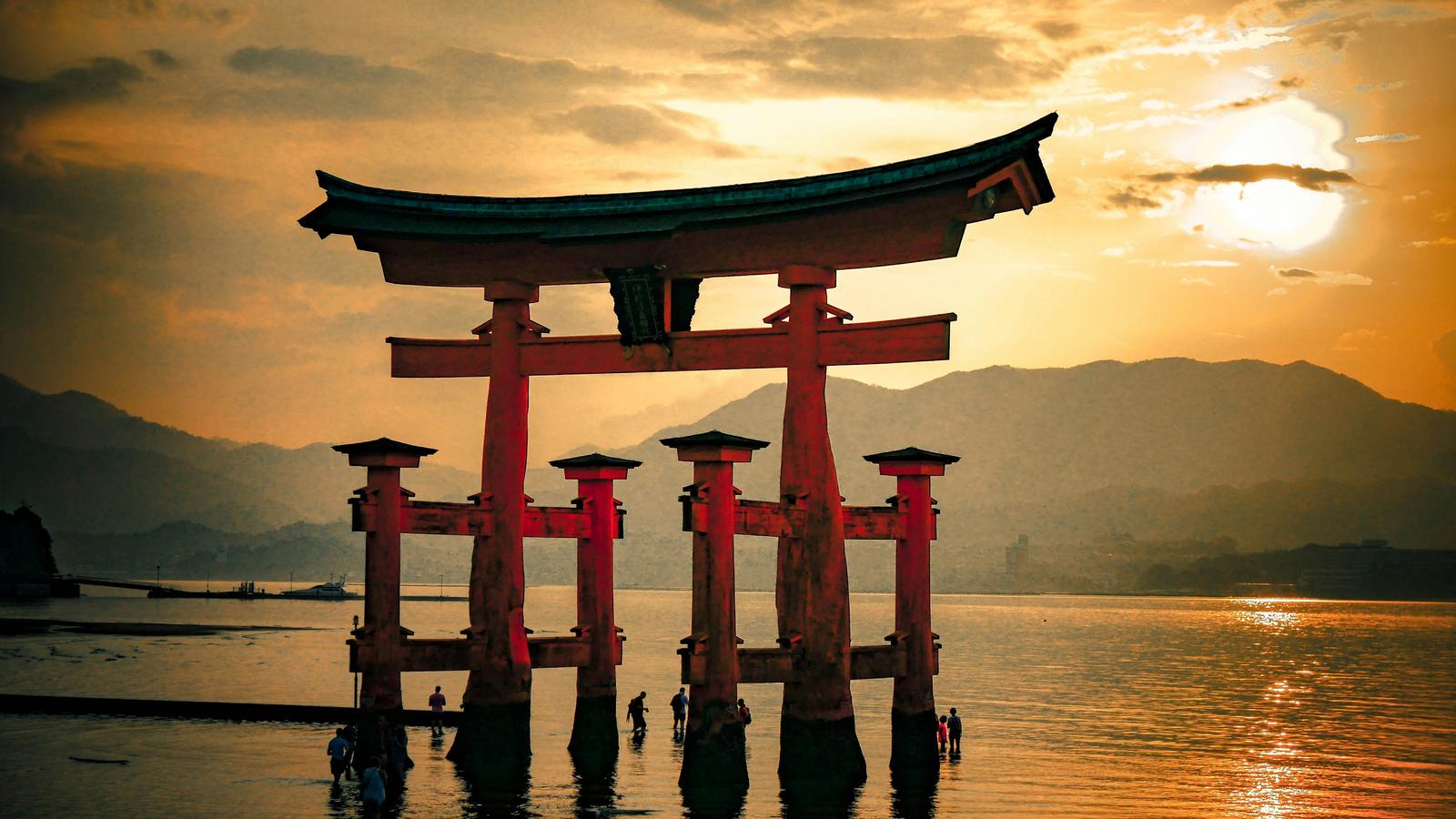
In January 2025, JNTO's office in Mexico City took a group of Mexican travel agencies to Hiroshima, Okayama and Osaka, and reported that Hiroshima was the part of the trip they valued most. Miyajima, they said, is a place where Japanese culture can be experienced with your own eyes and where clients feel the real culture of Japan. The Peace Memorial Park they called a very important experience, part of the history of Japan and of humanity, and a place they hoped many would visit. For travellers with the most to spend, the same report notes, agencies often add Naoshima.
Those three places sit within a few hours of each other, yet they are rarely joined well. This article sets out how we draw them into three days: the Peace Memorial Park and a night on Miyajima, the crossing to Naoshima, and a full day among its museums. We read the pages of the museums, the shrine, the city of Hatsukaichi, the ferry companies, Benesse Art Site Naoshima and Iwaso, and an interview with JNTO's Mexico office, and contacted none of them; the sources are listed at the end. For Hiroshima's food and the ryokan of Miyajima in more depth, see Hiroshima & Miyajima: Beyond the Atomic Bomb Narrative →.
Key points
- The Peace Memorial Museum opens at 7:30, and its audio guide is offered in Spanish and Portuguese among other languages.
- A direct boat leaves from beside the Atomic Bomb Dome for Miyajima, about 45 minutes, so the first day ends on the island without a change.
- A night on Miyajima gives the shrine at 6:30 in the morning; Iwaso, founded in 1854, stands beside the Momijidani stream.
- The Chichu Art Museum sells only timed tickets in advance and closes on Mondays; the Teshima Art Museum closes on Tuesdays from March to November.
- Guests of Benesse House can see its museum until 23:00, after the day visitors have gone.
DAY ONE: THE PEACE PARK
The Hiroshima Peace Memorial Museum opens at 7:30 every day of the year except December 30 and 31, and stays open until 19:00 from March to November. An early start gives the main building before the school groups arrive. The museum's audio guide is offered in several languages, Spanish and Portuguese among them, and volunteer guides from Hiroshima Peace Volunteers walk the park and the museum with visitors free of charge. In the extended evening hours, entry to the main exhibition requires an online reservation made in advance.
The park asks for an unhurried morning and a quiet lunch afterwards. Few of our guests want a full programme on this day, and we leave the afternoon open.
BY BOAT TO MIYAJIMA
From the Motoyasu pier, 150 metres south of the Atomic Bomb Dome, Aqua Net Hiroshima's World Heritage Sea Route runs straight to Miyajima in about 45 minutes. The boat moves slowly down the river through the city, then gathers speed as it reaches the sea. Seats are reserved until the day before, so we hold them when the day is set; on the day itself, tickets are sold only at the counter.
Since October 2023, the city of Hatsukaichi has collected a visitor tax of 100 yen for each entry to Miyajima, added to the boat fare, chartered boats included. The great torii, restored from June 2019 to December 2022, stands again in the water in front of the shrine.
A NIGHT ON MIYAJIMA
According to the boat companies' counts compiled by Hatsukaichi, 4,967,481 people came to Miyajima in 2025. Most arrive in the morning and leave by evening, and the island becomes another place once the last boats have gone. A night here is the reason to come by boat and stay.
Iwaso, founded in 1854, stands beside the Momijidani stream in the maple valley above the shrine. It keeps an early Showa main building whose rooms each have their own design, a newer wing looking onto the valley, and four detached single-storey cottages from the Taisho and Showa eras, along with its own hot spring, Wakamiya Onsen, rare on the island. Itsukushima Shrine, a World Heritage Site since 1996, opens at 6:30 all year, and the corridors at that hour belong to the few who slept on the island. The shrine notes that the gaps between the floorboards can catch high heels; flat shoes are kinder to the morning.
DAY TWO: ACROSS TO NAOSHIMA
The crossing from Miyajima to Naoshima runs through the mainland: the ferry to Miyajimaguchi, a car to Hiroshima Station, the Sanyo Shinkansen east to Okayama, and from Okayama the JR Uno Line to Uno, about 50 minutes, or a car to the port. Shikoku Kisen's ferry from Uno reaches Miyanoura on Naoshima in about 20 minutes, its passenger boat in about 15. The ferry and the passenger boat sell tickets at separate counters, a small detail that matters when luggage is involved, which is why we send the larger bags ahead.
Leaving Miyajima after the morning at the shrine puts you on Naoshima by mid-afternoon. Benesse House stands in four buildings, Museum, Oval, Park and Beach, all within the art site. The Museum building has ten rooms inside the museum itself; Oval, reached by a monorail from the museum, has six, both by Tadao Ando, and neither takes children aged five or under. Hotel guests can see the Benesse House Museum and Hiroshi Sugimoto's gallery until 23:00, ride a guests' bus between Miyanoura, the hotel and the Chichu Art Museum, and plan their days with the hotel's tour desk. Benesse Art Site Naoshima says guests will have access to more of its facilities from April 1, 2027.
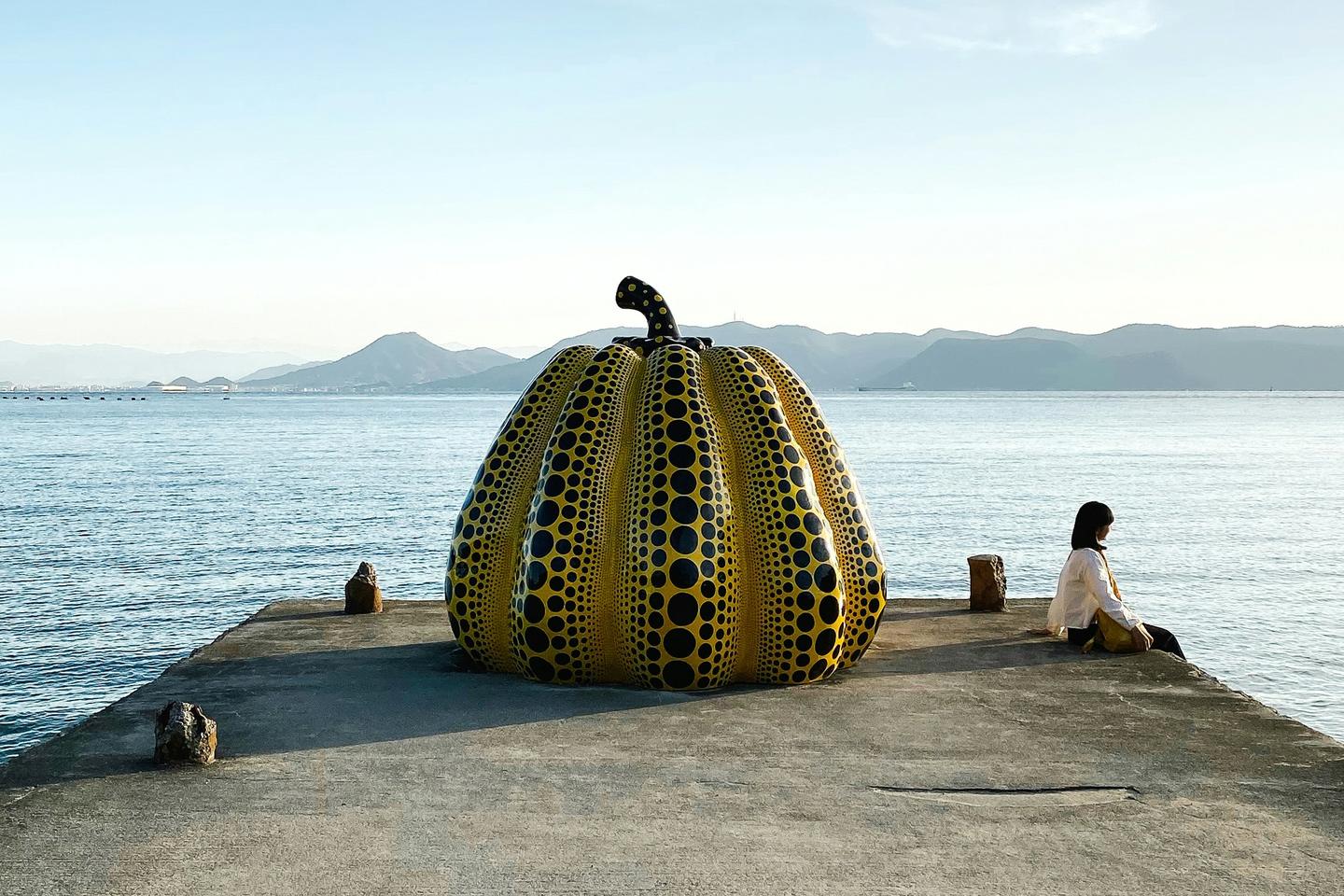
DAY THREE: CHICHU AND THE NEW MUSEUM
The Chichu Art Museum opens from 10:00 to 17:00, with last entry at 16:00. Every ticket is for a set date and time and must be bought in advance; when the online tickets sell out, none are sold at the door. We secure the time as soon as the dates are fixed and plan the morning around it, since Chichu is best seen without a train or boat to catch.
The Naoshima New Museum of Art, opened in spring 2025, is Tadao Ando's tenth building on the art site, open from 10:00 to 16:30. Those with a further afternoon can take the direct boat from Miyanoura to Ieura on Teshima, about 30 minutes, for the Teshima Art Museum, which also sells only timed tickets in advance. For the wider island trail, including Inujima, see Beyond Naoshima: Seto Inland Sea Art Islands →.
THE DAYS OF THE WEEK
On this route, the calendar decides the order. The Chichu Art Museum and the Naoshima New Museum of Art close on Mondays, opening on a holiday Monday and closing the next day instead. The Teshima Art Museum closes on Tuesdays from March to November, and from Tuesday to Thursday from December to February. A full day on Naoshima should therefore not fall on a Monday, and a visit to Teshima not on a Tuesday. When the dates are fixed by the flights, we move the order of the days so that no museum is missed.
The Setouchi Triennale, the art festival held across these islands every three years, ended its 2025 edition; the next is announced for 2028.
IF THE SEA ITSELF IS THE POINT
For those who would rather stay on the water, guntû is a floating inn of 17 wooden cabins designed by Yasushi Horibe, sailing from Bella Vista Marina in Onomichi on voyages of three, four and five days. Its four-day eastward route calls at Naoshima and Teshima, and bookings are open for voyages through May 2027. It suits a couple or a small family who want the Inland Sea at a slower pace; see Onomichi and Setoda: Hillside Temples, Lemon Islands and guntû →.
WHERE THE THREE DAYS FIT
JNTO's Mexico office reports that most visitors from Mexico still follow the Golden Route of Tokyo, Kyoto and Osaka, and that agencies are being asked more and more for regions beyond it. These three days fit naturally after Kyoto, in the second week of a long journey. From Naoshima, Okayama leads back to Kyoto or Tokyo, or west again to Kyushu; for that choice, see A Third Week in Kyushu or Okinawa →.
Within Signature, our planning for journeys of 7 to 21 days for one group of up to six, we draw these days with the museum times, the boats and the weekdays side by side. Hotels, ryokan, boats and drivers are arranged by us and settled with each of them in the simplest way available, usually on your hotel bill or on the day. Larger groups and longer journeys are planned as Bespoke.
SOURCES AND HOW WE CHECKED
We read the pages below on November 5, 2026. Opening hours and timetables change by season; we confirm them for your dates. We did not contact any museum, ryokan, boat company or other body.
- Kanko Keizai Shimbun, column by JNTO's Mexico office, September 2, 2025 (Japanese): the January 2025 study trip, Miyajima, the Peace Memorial Park, Naoshima, the Golden Route
- JNTO Mexico, Record of Mexican visitors in 2025, January 23, 2026 (Spanish): new regions beyond the most popular destinations
- Hiroshima Peace Memorial Museum, Hours and Admission: opening hours, closing days, evening reservations
- Hiroshima Peace Memorial Museum, Guide Services: audio guide languages, volunteer guides
- Aqua Net Hiroshima, World Heritage Sea Route: the pier, about 45 minutes, reservations
- JR West Miyajima Ferry: Miyajima to Miyajimaguchi
- City of Hatsukaichi, Miyajima visitor tax (Japanese): 100 yen per entry since October 2023
- City of Hatsukaichi, Miyajima visitor numbers (Japanese): 4,967,481 in 2025, torii restoration dates
- Itsukushima Shrine, official site: World Heritage since 1996
- Itsukushima Shrine, Admission: visiting hours from 6:30, the corridor floorboards
- Iwaso, official site (Japanese): founded 1854, the buildings, Wakamiya Onsen
- Shikoku Kisen, Uno to Miyanoura (Japanese): about 20 minutes by ferry, 15 by passenger boat
- Benesse Art Site Naoshima, Access: the Uno Line, the boat to Teshima
- Chichu Art Museum: hours, Monday closing, timed tickets only
- Naoshima New Museum of Art: opened spring 2025, Ando's tenth building on the site
- Teshima Art Museum: hours, closing days, timed tickets
- Benesse House, Guest benefits: the museum until 23:00, guests' bus, tour desk, April 2027
- Benesse House, Museum and Oval: rooms, the monorail, age limits
- Setouchi Triennale, official site: the next edition in 2028
- guntû, Routes: 17 cabins, Bella Vista Marina, the route to Naoshima and Teshima
QUESTIONS TRAVELLERS ASK
Can Hiroshima, Miyajima and Naoshima be done in three days?
Yes, at an easy pace: the Peace Memorial Park and a boat to Miyajima on the first day, a night on the island, the crossing to Naoshima on the second, and a full day among the museums on the third.
Is it worth staying a night on Miyajima?
For most of our guests, yes. The island is quiet after the last day visitors leave, and Itsukushima Shrine opens at 6:30 in the morning, long before the first boats are full.
Do you need tickets in advance for the Chichu Art Museum?
Yes. Every ticket is for a set date and time and must be bought in advance; when the online tickets sell out, none are sold at the door. The museum closes on Mondays.
How do you get from Miyajima to Naoshima?
By ferry to Miyajimaguchi, car to Hiroshima Station, the Shinkansen to Okayama, then the Uno Line or a car to Uno, and Shikoku Kisen's ferry to Miyanoura, about 20 minutes.
Is there an audio guide in Spanish at the Peace Memorial Museum?
Yes. The museum lists Spanish and Portuguese among the languages of its audio guide, and volunteer guides also show visitors around free of charge.
ASK US ABOUT THE INLAND SEA
Send us your dates and who is travelling. We will set the museum times, the boats and the days of the week side by side, with a night on Miyajima and the right day for Chichu, before anything is arranged.
Begin planning →We reply within 24 hours, in writing
Some of the restaurants and bars we arrange seat guests only by introduction or membership. We ask on your behalf; the table and the evening are the house's decision. We do not publish their names.