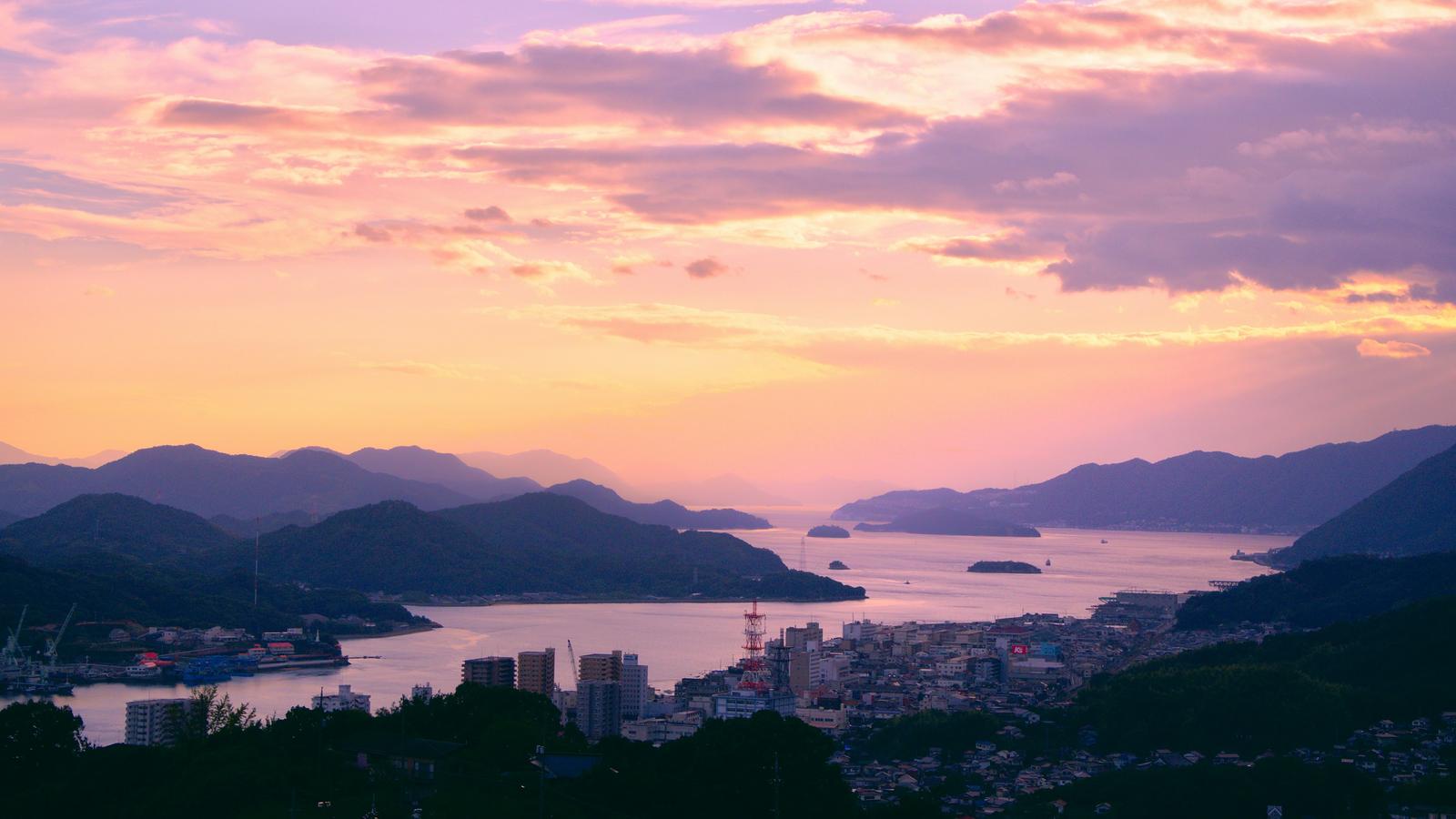
Onomichi and the island of Ikuchijima sit at the Honshu end of the Shimanami Kaido, the chain of bridges that crosses the western Seto Inland Sea to Shikoku. Onomichi is a port town built up a hillside, with temples linked by stone lanes and steps. Setoda, on Ikuchijima, is a small harbour town among lemon groves, about 40 minutes from Onomichi by car or by high-speed boat. Hiroshima Prefecture grows more than half of Japan's lemons, and Setoda is where many of them come from. Between the two you can stay in a restored merchant house, ride the bridges on an e-bike, or board guntû, a ship with 17 suites that sails out of Onomichi for two or three nights.
This guide covers the trains to Fukuyama, Shin-Onomichi and Mihara, the temple walk in Onomichi, the Shimanami Kaido by car or rented e-bike, Setoda and Kosanji, where to stay, guntû's voyages and prices, the seasons, and how a quiet day here can be put together. We read every time, fare and rate on the operators' and facilities' own pages, or on the travel agency listing named, on November 2, 2026. Hiroshima city and Miyajima are in Hiroshima and Miyajima, and the art islands of Naoshima and Teshima, further east, are in Beyond Naoshima.
Key points
- Nozomi trains on the Sanyo Shinkansen stop at Fukuyama, which Fukuyama City puts at about 3 hours 40 minutes from Tokyo and about 1 hour from Shin-Osaka. Azumi Setoda gives about an hour by car from Fukuyama Station to Setoda.
- From Onomichi, Setoda is about 40 minutes by car over the Shimanami Kaido, or about 40 minutes by high-speed boat from the pier in front of Onomichi Station. From Mihara Port the boat takes about 30 minutes.
- Electric-assist bicycles rent for ¥4,000 a day at the Onomichi Station terminal and the Setoda tourist office, and sport e-bikes for ¥8,000 a day at Onomichi Station, with helmets included.
- Azumi Setoda has 22 rooms in an 1876 merchant estate; Kinki Nippon Tourist showed rates from ¥57,052 per adult with breakfast on November 2, 2026. Its bathhouse across the street, yubune, opens to day visitors from ¥900.
- guntû sails from Bella Vista Marina in Onomichi at 15:00 and returns around 11:00 on the last day. On its list for December 2026 to May 2027, two-night voyages start at ¥625,000 per person, tax included, with meals and most drinks.
LET US ARRANGE YOUR DAYS ON THE INLAND SEA →
GETTING THERE
Three stations on the Sanyo Shinkansen serve this stretch of coast: Fukuyama to the east, Shin-Onomichi above the town of Onomichi, and Mihara to the west. Which one suits you depends on the train you take and where you are going first.
Fukuyama
Fukuyama is where the Nozomi stops. Fukuyama City's visitor guide gives about 3 hours 40 minutes from Tokyo and about 1 hour from Shin-Osaka. From the station it is about 40 minutes by car to central Onomichi, the figure guntû gives for the Onomichi hotels it recommends, and about an hour by car to Setoda, according to Azumi Setoda. guntû runs a car between JR Fukuyama Station and its marina for guests on the days they board and leave the ship.
Shin-Onomichi
Shin-Onomichi is the Shinkansen station for Onomichi itself. The Onomichi Tourism Association lists a bus of about 15 minutes between Shin-Onomichi and JR Onomichi Station; with luggage, a car is simpler.
Mihara
Mihara is the station for the sea route to Setoda. From Mihara Port the boat to Setoda takes about 30 minutes, according to Azumi Setoda, and Setoda Port is about a two-minute walk from the hotel. Hiroshima Airport is about an hour by car from Setoda.
From Onomichi to Setoda
The tourism association gives about 40 minutes by car from central Onomichi to the Ikuchijima-kita interchange over the Shimanami Kaido, and about 40 minutes on the high-speed boat bound for Setoda from the pier in front of Onomichi Station. From Setoda Port, Kosanji is about ten minutes on foot.
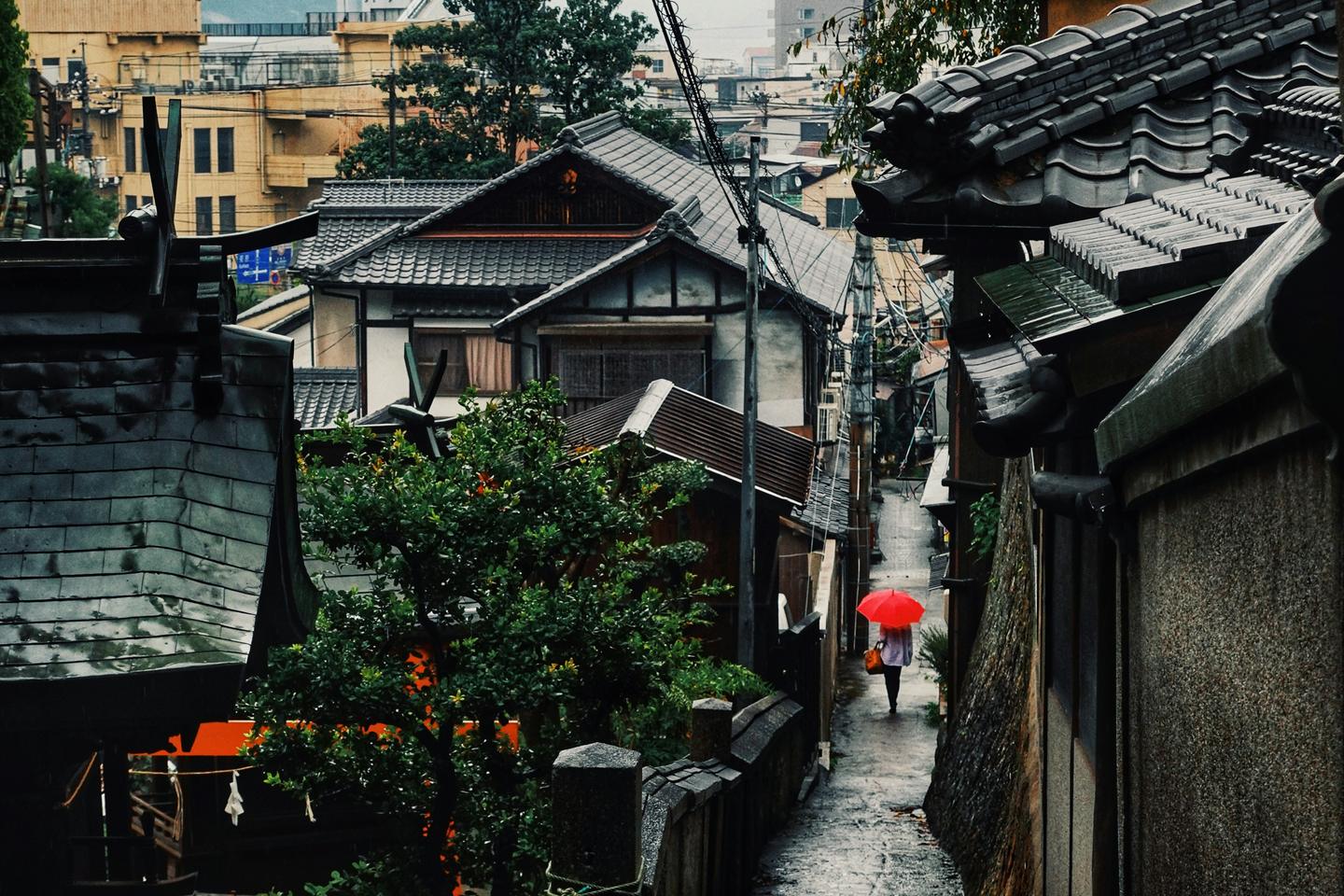
ONOMICHI'S TEMPLES AND LANES
Onomichi faces a narrow channel, with Mukaishima close enough across the water that small ferries take about five minutes to cross. Behind the waterfront the town climbs Senkoji-yama, and most of what visitors come for sits on that slope: temples, stone steps, narrow lanes between old houses, and views back over the channel.
- Senkoji. A Shingon temple halfway up Senkoji-yama, founded according to tradition in 806 by Kobo Daishi. Entry is free, and the main hall looks over the town. The tourism association gives about 15 minutes on foot from JR Onomichi Station to the base station of the ropeway, then about 10 minutes on the Path of Literature from the top.
- The temple walk. The association's Koji Meguri course runs about 2 km along stone-paved lanes from Jikoji, near the station, east to Kairyuji, and it suggests allowing about 3 hours. Along the way are Tenneiji, whose pagoda is an Important Cultural Property, and Saikokuji, the head temple of its school of Shingon.
- Jodoji. At the eastern end, Jodoji is said to have been founded by Prince Shotoku in 616. Its main hall and its Tahoto pagoda are National Treasures.
The walk is downhill if you start at the top. Taking the ropeway up, walking down past Senkoji and then east along the lanes keeps the climbing short and ends near the water.
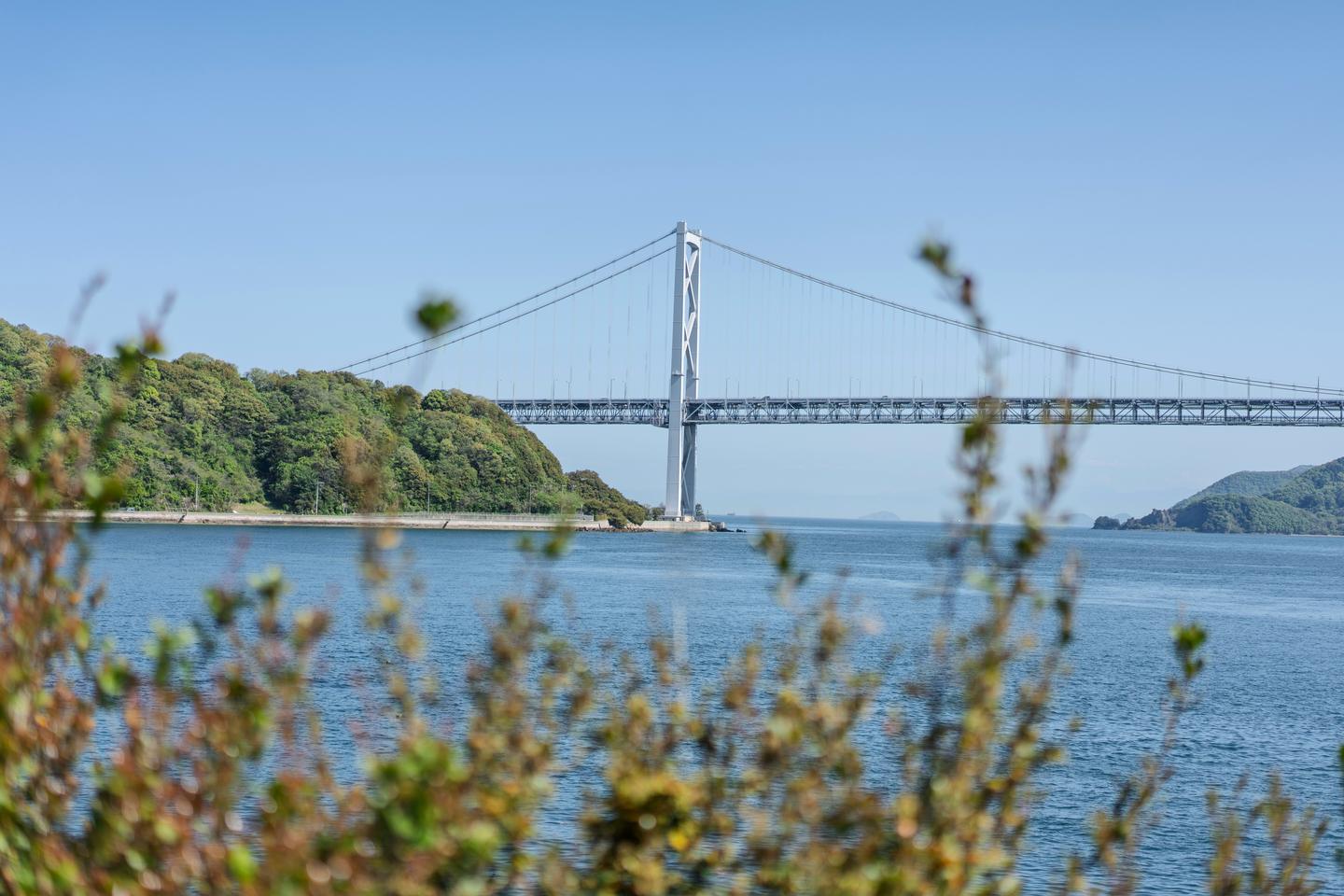
THE SHIMANAMI KAIDO BY CAR OR E-BIKE
The Shimanami Kaido was completed in 1999 as the last of the three expressway links between Honshu and Shikoku, according to guntû's notes on its central routes. The bridges carry paths for cyclists and walkers as well as the road, so the islands can be crossed slowly, by bicycle, or quickly, by car.
By car with a driver
A car takes Onomichi to Setoda in about 40 minutes and lets you stop on Mukaishima and Innoshima on the way. It also carries luggage, which matters if you are moving from an Onomichi hotel to Setoda the same day. What a driver costs for a full day is set out in Private driver in Japan cost.
By rented e-bike
Shimanami Japan runs the official rental terminals along the route. On the rates we read:
| Type | Rate | Where to rent, near Onomichi and Setoda |
|---|---|---|
| Cross bike or city bike | ¥3,000 | All terminals; multi-day rental possible |
| Electric-assist bicycle | ¥4,000 | Onomichi Station, Setoda tourist office, Setoda Sunset Beach; multi-day rental possible |
| E-bike | ¥8,000 | Onomichi Station; riders 145 cm and taller; return the same day, before closing |
All three types can be returned at any terminal. Helmets come free with the bicycle. The Onomichi Station terminal opens 8:00 to 19:00 from March to November and 8:00 to 18:00 from December to February; the two Setoda terminals open 9:00 to 17:00. If a bicycle breaks down, the operator's staff come out and swap it free of charge.
The comfortable way to ride is one way. Take the e-bike from Onomichi, cross to Mukaishima by the short ferry, ride the bridges to Setoda, and leave the bicycle at the Setoda tourist office, while your bags go ahead by car.
SETODA, LEMONS AND KOSANJI
Setoda is the harbour town on Ikuchijima, the island that Time Out called Japan's lemon island, with about 600 orchards. The Ministry of Agriculture's prefectural summary puts Hiroshima first in Japan for lemons: 5,782 tonnes of the national harvest of 10,486 tonnes in 2022, grown mainly on the islands. Monocle described Ikuchijima as producing about a third of Japan's lemon crop. The groves run up the slopes behind the town, and Monocle singled out the gelato at Dolce Setoda.
Kosanji
Kosanji is a Jodo Shinshu temple built by Kosanji Kozo, a former Osaka businessman, in gratitude to his mother, and it is known as the Mother's Temple. Fifteen of its halls and towers were registered as Tangible Cultural Properties in 2003, and the temple has been a registered museum since 1953. On the hill above is the Miraishin no Oka garden.
- Hours. 9:00 to 17:00, last entry 30 minutes before closing, every day of the year. The Shiozeikaku residence opens 10:00 to 16:00.
- Admission. ¥1,800 for adults, ¥1,200 for high school and university students, free for junior high school age and under. Shiozeikaku is ¥500 extra.
WHERE TO STAY
Azumi Setoda
Azumi Setoda occupies the estate of the Horiuchi family, Setoda merchants who made their fortune in shipping and salt. The hotel says the house was built in 1876 with craftsmen and materials from across Japan, including carpenters from Kyoto. The restoration is by Shiro Miura of Rokkakuya, who trained at Nakamura Sotoji Komuten in Kyoto. The 22 rooms are set around gardens behind fences, with hinoki baths; the two-storey rooms are about 70 m². The hotel lists a MICHELIN Key on its own page.
- Rates. On Kinki Nippon Tourist's plan list on November 2, 2026, plans with breakfast started at ¥57,052 per adult and plans with dinner and breakfast at ¥80,011, for one or two adults in a room, depending on date and room.
- Times. Check-in 16:00 to 22:00, check-out 12:00.
- Tax. Hiroshima Prefecture's accommodation tax, introduced on April 1, 2026, is ¥200 per person per night on rates of ¥6,000 or more and is paid at the hotel.
yubune
Across the street is yubune, a public bathhouse with 14 simpler rooms of its own. It has an indoor bath, a cold bath and a sauna, and an island scene painted across a whole wall; Time Out credits the mosaic to the artist Mai Miyake. Day visitors are welcome from 10:00 to 20:00, last entry 19:30, and on Tuesdays from 17:00 to 20:00. Day use is ¥900 for adults, ¥1,200 at weekends and on holidays. Azumi Setoda lists yubune access among its guests' amenities.
In Onomichi
guntû's own guide recommends two places in town for the night before or after a voyage. ONOMICHI U2 is a converted port warehouse on the waterfront, about five minutes on foot from the station, with a hotel, a restaurant, a bar and shops. LOG, renovated by Bijoy Jain's Studio Mumbai, is a former apartment block halfway up the stone stairs toward Senkoji, with a hotel, a café and bar, a gallery and a shop. A night in Onomichi and a night or two in Setoda make a natural pair. For choosing between a hotel and a ryokan more generally, see How to choose a ryokan in Japan.
GUNTÛ, THE FLOATING INN
guntû is a ship built as a ryokan. It has 17 suites, all with terraces close to the waterline, designed by the architect Yasushi Horibe in wood and plaster. On board there is a dining room, a six-seat sushi counter facing the windows, a lounge serving Japanese sweets, a communal bath with a view off the stern and steam and dry saunas, and treatment rooms. Its home port is Bella Vista Marina in Onomichi, and the ship returns only there; at night it anchors off islands and in bays.
- The voyage. Check-in is at the Setouchi Lounge at 13:30 and the ship leaves at 15:00, passing through the Onomichi Strait. It returns around 11:00 on the last day. Off-ship visits to islands go by small boats carried at the stern.
- The routes. For December 2026 to May 2027 guntû lists eight routes of two or three nights, sailing west to Miyajima and the Kutsuna Islands, around the Shimanami islands with their tidal straits, or east.
- The price. Per person, tax and service included, two-night voyages start at ¥625,000 and three-night voyages at ¥925,000, rising by suite and date; the guntû Suite at the bow runs above ¥2,000,000 per person. The price covers meals, drinks including alcohol except some rare wines, and off-ship activities. Spa treatments and travel to the marina are extra.
- Rules. Guests must be at least 15 years old. A voyage runs only if at least 14 guests have reserved.
- Getting there. On boarding and leaving days, guntû sends a car between the marina and JR Fukuyama Station or Hiroshima Airport.
guntû made its first voyage in 2017, as Tokyo Weekender recorded. Between the off-ship visits, the time is spent on the open deck, on the engawa beneath the gabled roof, or on your own terrace, with the islands passing slowly.
THE SEASONS AND A QUIET DAY
The Ministry of Agriculture describes southern Hiroshima as warm, sunny for much of the year, with annual rainfall under 1,500 mm and an average temperature around 16°C. guntû's price list gives Onomichi's 2025 averages: highs of about 12°C in December and 10°C in January, rising to 18.8°C in April and 22.6°C in May. Spring and autumn are the easy seasons for riding the bridges; in summer, ride early and spend the middle of the day indoors or on the water. Winter is clear and cold, and the bathhouse and saunas come into their own.
A day from Onomichi to Setoda
The morning starts at the top of Senkoji-yama, before the ropeway is busy, with the channel still grey below. You walk down past Senkoji and along the lanes to Jodoji while the town opens its shutters. A car has already taken your bags to Setoda. At the station terminal two electric-assist bicycles are waiting in your sizes, and the ferry crosses to Mukaishima in five minutes. The bridges come one after another, with long views over islands and shipyards, and lunch is on Innoshima. By mid-afternoon you leave the bicycles at the Setoda tourist office, walk through the lemon groves to Kosanji, and reach Azumi Setoda for check-in at four. In the evening there is yubune across the street, then dinner, and a harbour that has gone quiet.
HOW WE ARRANGE ONOMICHI AND SETODA
We plan the days around the train you arrive on, the ferry and terminal hours above, and how far you want to ride, and we arrange each part in your name.
- The train. We tell you which Shinkansen and station fit the plan. You buy the tickets yourself, or through our travel partner.
- A car and driver. We arrange a car from Fukuyama, Shin-Onomichi or Mihara, between Onomichi and Setoda, and for the luggage on a cycling day.
- The bicycles. We arrange electric-assist bicycles or e-bikes at the terminals that suit your route, and a car that can meet you on the way if the day gets long.
- A guide. A licensed guide can walk the Onomichi temples with you, or show you Kosanji and Setoda.
- The stay. We arrange Azumi Setoda, a room in Onomichi, or a guntû voyage in your name, and you pay the hotel or guntû directly.
SOURCES AND HOW WE CHECKED
Read on November 2, 2026. Prices include tax and are for one adult unless stated.
- Azumi Setoda, official site: Horiuchi family, 1876 estate, architect, rooms and baths, access times from Mihara Port, Fukuyama Station and Hiroshima Airport, MICHELIN Key, yubune access
- Kinki Nippon Tourist, Azumi Setoda plan list and facility page: rates, check-in and check-out, Hiroshima accommodation tax, 22 rooms, two minutes from Setoda Port
- yubune, official site: bathhouse hours, day-use fees, baths and sauna, 14 rooms
- guntû, official site and access: 17 cabins, architect, facilities, home port, car service from Fukuyama and Hiroshima Airport
- guntû, Itinerary and Price List, December 2026 to May 2027: routes, departure and return times, prices and what they include, age and minimum number of guests, Onomichi temperatures, Shimanami Kaido history, Onomichi hotels
- Ikyu, guntû: suites, address of the Setouchi Lounge, shuttle on boarding days
- Onomichi Tourism Association, temples and shrines (Japanese): temple walk course, Jodoji, Tenneiji, Saikokuji
- Onomichi Tourism Association, Senkoji (Japanese): founding, free entry, walking times via the ropeway
- Onomichi Tourism Association, travel times in Onomichi (Japanese): car, bus and boat times to Setoda, ferry to Mukaishima, bus to Shin-Onomichi
- Fukuyama City, visitor guide (Japanese): Shinkansen times to Fukuyama from Tokyo and Shin-Osaka, Nozomi stop
- Shimanami Japan, rental cycles and terminals (Japanese): bicycle types and rates, helmets, return rules, terminal hours, breakdown support
- Kosanji Temple and Museum, official site (Japanese): history, hours, admission, Shiozeikaku
- Ministry of Agriculture, Forestry and Fisheries, outline of Hiroshima Prefecture's agriculture (Japanese): lemon harvest and national rank, climate
- Monocle, Azumi Setoda (issue 146, Time to get going): Azumi Setoda, Dolce Setoda and Ikuchijima's share of Japan's lemons
- Time Out, Japan's lemon island Ikuchijima is reinventing itself with community-based tourism: about 600 orchards, yubune mosaic
- Tokyo Weekender, guntû floating ryokan: first voyage in 2017
QUESTIONS GUESTS ASK
Which Shinkansen station is best for Onomichi and Setoda?
Fukuyama, if you are coming on a Nozomi: Fukuyama City gives about 3 hours 40 minutes from Tokyo and about 1 hour from Shin-Osaka, and it is about 40 minutes by car to Onomichi and about an hour to Setoda. Shin-Onomichi is closest to Onomichi itself, and Mihara Port has the boat to Setoda, about 30 minutes.
Do I need to be a strong cyclist to ride the Shimanami Kaido?
No. Electric-assist bicycles rent for ¥4,000 a day at the Onomichi Station terminal and the Setoda tourist office, and sport e-bikes for ¥8,000 a day at Onomichi Station. You can ride one way from Onomichi to Setoda and leave the electric-assist bicycle there, with a car carrying your bags.
How much does a night at Azumi Setoda cost?
On Kinki Nippon Tourist's listing on November 2, 2026, plans with breakfast started at ¥57,052 per adult and plans with dinner and breakfast at ¥80,011, for one or two adults in a room. Rates vary by date and room, and Hiroshima's accommodation tax of ¥200 per person a night is paid at the hotel.
How long is a guntû voyage and what does it cost?
Two or three nights. The ship leaves Bella Vista Marina in Onomichi at 15:00 and returns around 11:00 on the last day. For December 2026 to May 2027, two-night voyages start at ¥625,000 per person and three-night voyages at ¥925,000, including meals, most drinks and off-ship activities.
Can I visit Kosanji on a day trip from Onomichi?
Yes. The high-speed boat from the pier in front of Onomichi Station takes about 40 minutes to Setoda, and Kosanji is about ten minutes on foot from the port. The temple opens 9:00 to 17:00 every day, and adult admission is ¥1,800.
LET US ARRANGE YOUR DAYS ON THE INLAND SEA
Send us your dates and where you are coming from. We will come back with a plan for Onomichi and Setoda built around the trains, the boats and the season, with the stays that fit it and their published rates, and we arrange the car, the bicycles, the guide and the stay you choose.
Begin planning →We reply within 24 hours, in writing
Some of the restaurants, bars and private places we arrange take guests only by introduction or membership. We do not publish their names.