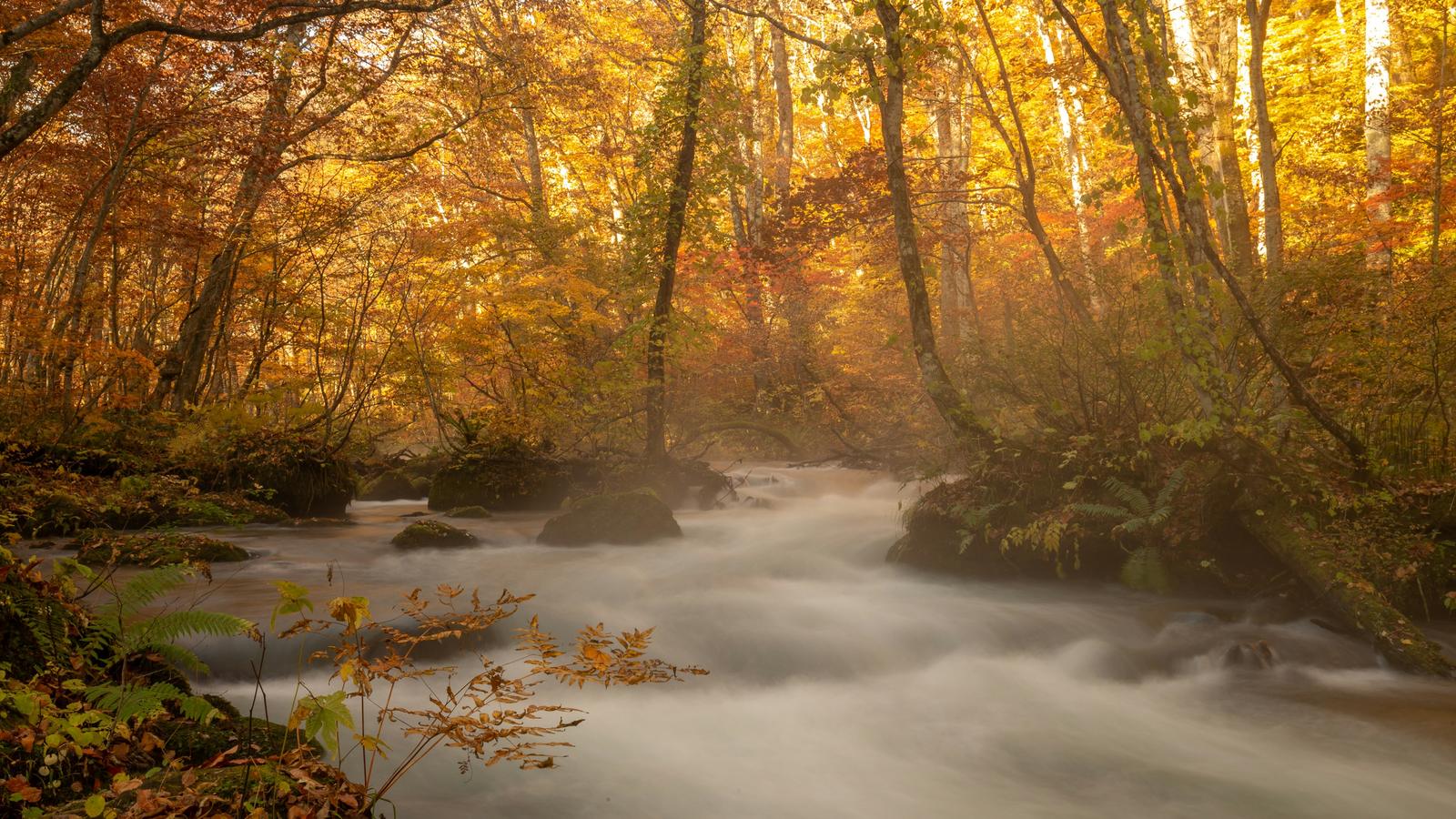
Two weeks in Japan is enough for Tokyo, Kyoto and one or two places between them, at an unhurried pace. Three weeks is a different kind of trip. The extra seven days rarely mean seven more sights; they usually mean one more region seen properly, fewer nights spent packing, and days with nothing planned that make the rest of the journey better. Whether that is worth it depends on where you are flying from, the season, and what you want the trip to feel like at the end.
This article compares the two lengths in practice: what a fortnight holds, what a third week adds, how jet lag and the seasons change the arithmetic, and two shapes for a 21-day journey with travel times taken from the railways' own timetables. We read official timetables, the Japan Rail Pass's own price list, the U.S. Centers for Disease Control and Prevention on jet lag, the Japan Meteorological Agency, Kyoto City and the Benesse Art Site, and contacted none of them; the sources are listed at the end. For shorter trips, see How Many Days in Japan? →, and for a full fortnight day by day, A 14-Day Luxury Japan Itinerary →.
Key points
- Fourteen days suits a first journey through Tokyo, Hakone or the mountains, and Kyoto, with three or four places to stay.
- A third week adds one region in depth, Hokkaido, the far north of Honshu, the Inland Sea or Kyushu.
- Over 21 days, five places to stay with three nights or more in each keeps the travel days few and the rest days real.
- Jet lag weighs more on a short trip: the CDC gives an average adjustment of about one hour a day after flying east and one and a half hours after flying west.
- Costs that run per night, such as Kyoto's accommodation tax, which rose on March 1, 2026, grow with the length of stay, while some costs, such as a rail pass, do not rise in step.
ASK US ABOUT TWO WEEKS OR THREE →
WHAT FOURTEEN DAYS HOLDS
A fortnight is the classic first journey: Tokyo for four or five nights, a night or two in Hakone or the mountains, two in Kanazawa, and Kyoto for four or five, with a day in Nara. It works because the distances are short and the trains fast. It also asks a good deal of the traveller. With four places to stay, there are three or four travel days, and the arrival and departure days are partly spent in transit. The trip that remains is about ten full days, and most of them have a plan.
That is not a criticism. For many people a full, well-paced fortnight is exactly right, and our sample Japan End to End → is built that way.
The farther visitors travel, the longer they tend to stay. The Japan Tourism Agency’s survey of visitor spending gives, for 2025 and for trips made for sightseeing and leisure, an average of 7.1 nights across all visitors, and longer stays from Europe, North America, Australia and India: 10.0 nights for visitors from India, 10.7 from the United States, 12.5 from Canada, 12.8 from the United Kingdom, 13.2 from Australia, 15.2 from Germany and 16.5 from France. The averages are counted from the dates of arrival and departure. Three weeks is longer than most trips, though by less than it may seem.
WHAT A THIRD WEEK ADDS
The most useful thing a third week buys is depth in one more region. Japan's regions are distinct enough that adding one changes the character of the whole trip: the volcanic lakes and port towns of Hokkaido, the beech forests of the far north, the art islands of the Inland Sea, the hot spring towns and volcanoes of Kyushu. Each needs at least three nights to be more than a glimpse.
The second is fewer changes of hotel. Over 21 days, five places to stay is a comfortable number: three or four nights in most, and a week in one. Each change costs half a day, so five places means four travel days in three weeks, against three or four in two.
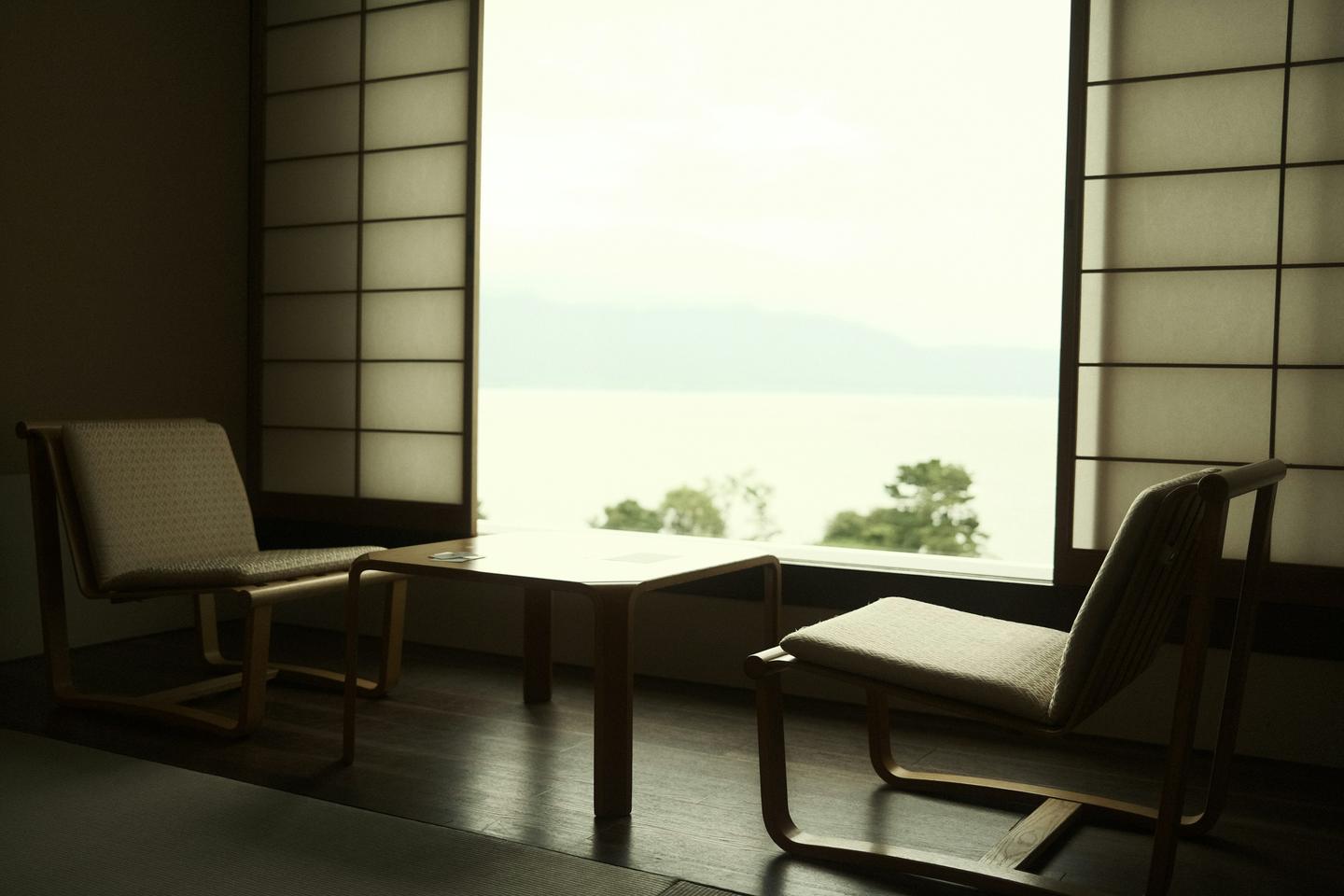
The third is rest. On a fortnight, a day with nothing planned can feel like a day lost. Over three weeks, one free day each week is part of the design: a slow morning at the inn after a long travel day, an afternoon for a bath and a walk, a day to repeat a place you liked.
JET LAG AND THE SEASONS
The longer the flight across time zones, the more a third week helps. The CDC's Yellow Book gives an average rate of adaptation of about one hour a day after flying east and about one and a half hours after flying west. For a traveller arriving from Europe or India, flying east, the first days in Japan are partly spent catching up, and on a fortnight those days are a large share of the trip. A third week leaves the same adjustment but a longer stretch of the journey with the body settled.
The seasons also move. In autumn the colour comes down the country from north to south over several weeks, and a longer journey can follow it. In early summer the rainy season matters: the Japan Meteorological Agency gives the normal dates for the Kanto region, around Tokyo, as about June 7 to July 19, while Hokkaido is not among the regions for which the Agency publishes rainy season dates, one reason a northern route suits June and July.
TWO SHAPES FOR TWENTY-ONE DAYS
The first runs north to Tokyo. Our sample Hokkaido to Tokyo → uses five places, each for three nights or more: Sapporo for four nights, Lake Toya for three, Hakodate for three, Oirase in the far north of Honshu for three, and a last week in Tokyo. The travel days are short by the railways' timetables: the limited express from Sapporo to Toya and from Toya to Hakodate each takes about an hour and fifty-five minutes on JR Hokkaido; the Hokkaido Shinkansen runs from Shin-Hakodate-Hokuto under the strait to Shin-Aomori in about an hour on JR East; and the Tohoku Shinkansen from Shichinohe-Towada to Tokyo takes about three hours and ten minutes.
The second runs west and south from Tokyo and Kyoto. After a week between the two cities, the Inland Sea and Kyushu take the third week: a night or two on an art island, where the Chichu Art Museum on Naoshima admits visitors by timed reservation only, then Hiroshima, Hakata, about an hour and five minutes onward by the Sanyo Shinkansen on JR West's timetable, and the hot spring town of Yufuin, a little over two hours from Hakata on JR Kyushu's Yufuin no Mori limited express. Our month-long sample A Month in Japan → follows a similar path at a slower pace.
| 14 days | 21 days | |
|---|---|---|
| Regions | Tokyo, one stop between, Kyoto | The same, or a different route, plus one region in depth |
| Places to stay | Three or four | About five, three nights or more in most |
| Travel days | Three or four | About four |
| Days with nothing planned | One or two | About one a week |
WHAT THE EXTRA WEEK COSTS
The costs that run per night grow with the stay. Kyoto is a clear example: since March 1, 2026, the city's accommodation tax is ¥4,000 per person per night where the room rate is ¥50,000 to under ¥100,000, and ¥10,000 per person per night from ¥100,000, according to Kyoto City. Other costs do not rise in step. The Japan Rail Pass, for those who use one, is priced on its official site at ¥80,000 for 14 days and ¥100,000 for 21 days in ordinary class bought online, and ¥110,000 and ¥140,000 in the Green Car, so the third week of rail travel costs much less than the first two.
STAYGO's own planning fee does not change between the two. Signature covers journeys of 7 to 21 days for one travelling party of up to six, at USD 3,500 for the group, and journeys of 22 days or more are planned as Bespoke.
WHERE STAYGO COMES IN
STAYGO plans private journeys across Japan. If you are weighing two weeks against three, tell us when you can travel, where you are flying from and what you most want to see, and we will draft both shapes so that you can compare them: the places to stay, the travel days with times from the railways' own timetables, and where the free days fall. The hotels, restaurants, guides and drivers are arranged by us and settled with each of them in the simplest way available, usually on your hotel bill or on the day.
SOURCES AND HOW WE CHECKED
We read the pages below on November 3 and 4, 2026. Travel times are from the railways' own timetables for November 2026 and are rounded; we did not contact any railway, hotel or other body.
- Japan Rail Pass, Types and prices: 7, 14 and 21 days, ordinary and Green Car, online and overseas prices
- CDC Yellow Book, Jet Lag Disorder: about 1 hour a day after eastward travel, 1.5 hours after westward
- Japan Meteorological Agency, rainy season in Kanto-Koshin (Japanese): normal start about June 7, end about July 19
- Japan Meteorological Agency, rainy season 2026 (Japanese): the twelve regions with published dates, from Okinawa to northern Tohoku, without Hokkaido
- Kyoto City, Accommodation tax (Japanese): rates from March 1, 2026
- JR Hokkaido, train times, Hokuto limited express (Japanese): Sapporo to Toya and Toya to Hakodate, about 1 hour 55 minutes
- JR East, timetable for November 2026 (Japanese): Shin-Hakodate-Hokuto to Shin-Aomori about 1 hour, Shichinohe-Towada to Tokyo about 3 hours 10 minutes
- JR West, Hiroshima station timetable (Japanese): Hiroshima to Hakata about 1 hour 5 minutes
- JR Kyushu, Hakata station timetable (Japanese): Yufuin no Mori to Yufuin, a little over 2 hours
- Benesse Art Site Naoshima, Chichu Art Museum: timed reservation, no counter sales when sold out
- Ministry of the Environment, Tohoku office, Towada-Hachimantai access (Japanese): road access from Shin-Aomori and Shichinohe-Towada to Lake Towada
- Japan Tourism Agency, Inbound Consumption Survey, 2025 calendar year, final figures (Japanese): average nights for sightseeing and leisure, by nationality
QUESTIONS TRAVELLERS ASK
Is three weeks in Japan too long?
Not if the time goes into seeing one region in depth. Over 21 days, five places to stay with three nights or more in most, and one free day a week, makes a journey that feels unhurried to the end.
What should I add with a third week?
One more region seen properly: Hokkaido, the far north of Honshu, the Inland Sea or Kyushu. Each needs at least three nights to be more than a glimpse.
How does jet lag change the choice?
On a short trip it takes a larger share of the days. The CDC gives an average adjustment of about one hour a day after flying east and one and a half after flying west.
Is a 21-day Japan Rail Pass worth it?
It depends on the route, but the price rises slowly with length. On the official site the ordinary pass costs ¥80,000 for 14 days and ¥100,000 for 21 days when bought online.
Does STAYGO's fee change for three weeks?
No. Signature covers journeys of 7 to 21 days for one travelling party of up to six, at USD 3,500 for the group. Longer journeys are planned as Bespoke.
ASK US ABOUT TWO WEEKS OR THREE
Send us your dates, where you are flying from and what you most want to see. We will draft a fortnight and a three-week journey side by side, with the places to stay, the travel days and the free days, so that you can choose.
Begin planning →We reply within 24 hours, in writing
Some of the restaurants and bars we arrange seat guests only by introduction or membership. We ask on your behalf; the table and the evening are the house's decision. We do not publish their names.